
Evil Eye Protection Rituals: Symbols, Prayers and Traditional Practices
Pillar Article
Quick Summary
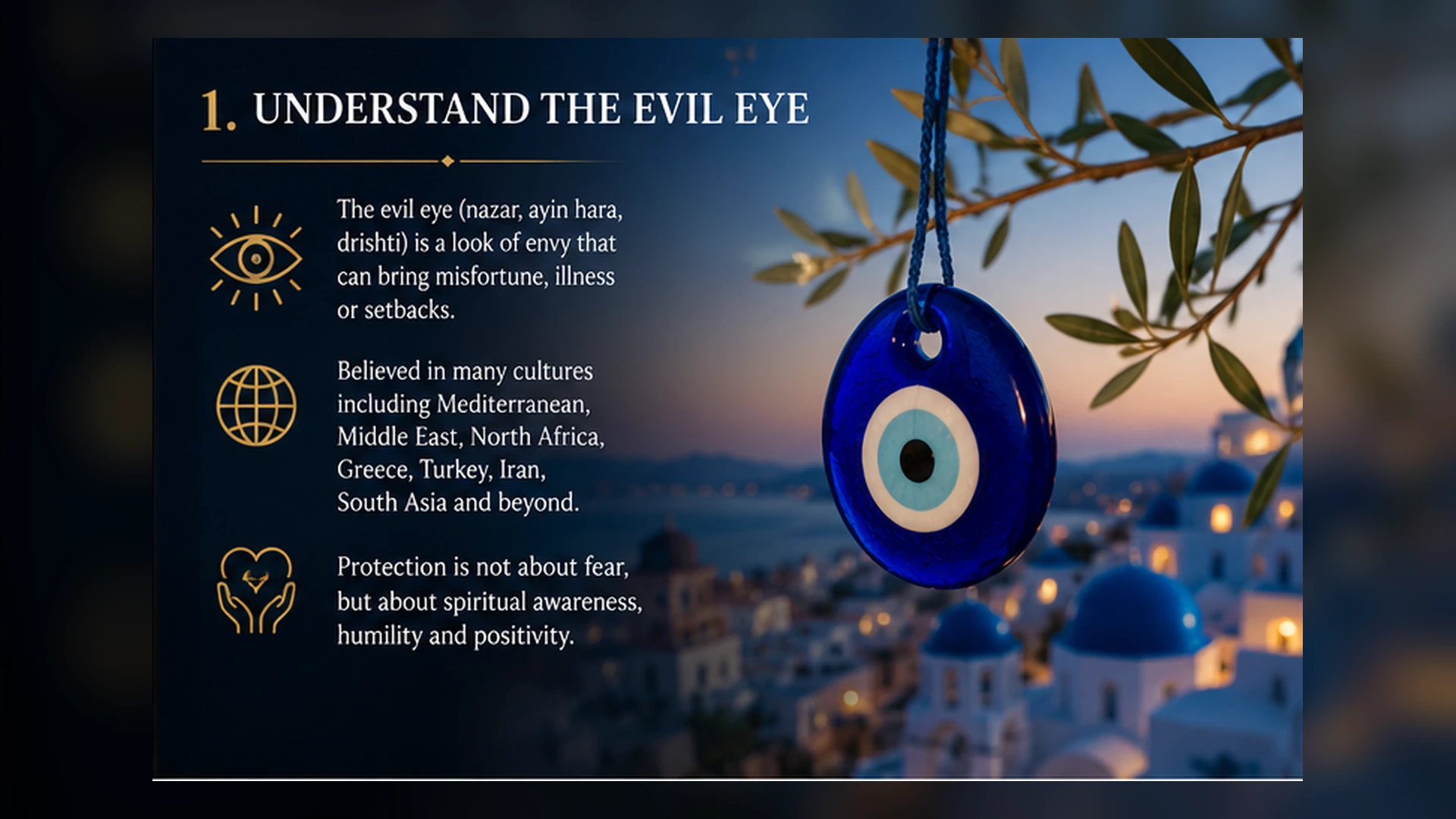
The evil eye is one of the world's most widespread ideas about envy, admiration and vulnerability. Across parts of the Mediterranean, West Asia, North Africa, the Balkans, Jew...
The evil eye is one of the world's most widespread ideas about envy, admiration and vulnerability. Across parts of the Mediterranean, West Asia, North Africa, the Balkans, Jewish communities and South Asia, people have used eye beads, hand-shaped amulets, prayers, blessings, modest speech, black marks, red threads or household customs in the hope of preventing harm associated with an envious or overly admiring gaze.
The similarity of the concern does not mean that every culture uses the same ritual. A Turkish nazar bead is not the evil eye itself. A Moroccan khamsa is not identical to an ancient Egyptian Eye of Horus. Islamic ruqyah is not the same practice as a Jewish red string, a Greek Orthodox prayer or a South Asian drishti custom. Even within one religion, communities and scholars may disagree about amulets, protective objects and which practices are permitted.
This guide explains the meaning and history of evil-eye beliefs, compares major symbols and prayer traditions, and offers a safe way to respond when the fear becomes personal. It treats these customs as important cultural and religious evidence without claiming that a gaze has been scientifically shown to cause illness, accidents or business loss.
Quick Answer
| In one paragraph Evil eye protection rituals are culturally specific prayers, symbols and customs intended to guard against harm associated with envy or an admiring gaze. Common examples include the Turkish nazar bead, the hamsa or khamsa hand, Jewish practices concerning ayin hara, Islamic prayer and ruqyah, Greek Orthodox prayer and South Asian nazar or drishti customs. These traditions should not be merged, and none should replace medical care or justify accusing another person. |
|---|
AncestralTemple.com offers Protection Rituals and spiritual guidance for readers seeking a personalized approach. Spiritual support should be voluntary, transparent and compatible with healthcare, practical safety and the reader's own religious tradition.
Evil Eye Meaning: What Does the Belief Describe?
The phrase evil eye describes a belief that a look connected with envy, jealousy, hostility or intense admiration can bring misfortune. The feared harm may concern health, children, beauty, fertility, animals, homes, crops, relationships or commercial success. In many communities, the person believed to give the eye is not always imagined as consciously performing magic; the danger may be described as arising from unchecked envy, excessive praise or a glance whose power is not fully intentional.
The English phrase can therefore hide several different ideas. It may mean a supernatural force, a moral warning about envy, a folk explanation for sudden misfortune, a religious category addressed through prayer, or a symbol of cultural identity worn without literal belief. A blue eye pendant may function as protection for one wearer, family heritage for another and fashion for a third.
Anthropologists have often connected evil-eye beliefs with situations in which prosperity is visible and social comparison is intense. That interpretation can help explain why customs frequently surround babies, weddings, livestock, new homes and successful businesses. It does not prove that envy physically causes the event attributed to it.
| Term | Context and meaning |
|---|---|
| Evil eye | English umbrella term for harm believed to result from an envious or powerful gaze. |
| Nazar | A word used in Turkish, Persian, Arabic, Urdu, Hindi and related contexts for sight, gaze or the feared glance; meanings vary by language. |
| Nazar boncugu | Turkish term commonly used for the blue-and-white eye bead intended to avert the gaze. |
| Ayin hara | Hebrew expression for the evil eye, often linked with envy and addressed in Jewish texts and folk practice. |
| Al-ayn | Arabic expression for the eye; Islamic discussions commonly address the evil eye together with envy and protective recitation. |
| Mati or vaskania | Greek terms associated with the evil eye and the religious or folk practices used in response. |
| Malocchio | Italian term for the evil eye; regional practices and protective gestures vary. |
| Drishti or nazar | South Asian terms used in diverse Hindu, Muslim, Sikh and regional folk contexts concerning an inauspicious gaze. |
A Brief History of Evil-Eye Symbols
Eye-shaped and apotropaic objects have a long history, but it is risky to treat every ancient eye image as the direct ancestor of today's blue nazar bead. The Metropolitan Museum of Art preserves Eastern Mediterranean glass eye beads dated to the fourth century BCE. Other Greek and Roman objects combined eyes, hands, phallic forms or gestures as devices intended to repel danger. [1][2]
Major Evil-Eye Symbols and What They Mean
| Symbol | Documented context | Common interpretation | Important caution |
|---|---|---|---|
| Nazar bead | Turkey and wider Eastern Mediterranean / West Asian circulation | Concentric blue, white and dark eye design used to avert the feared gaze | The bead is a protective response, not the evil eye itself. |
| Hamsa or khamsa | North Africa and the Levant among Muslim, Jewish and some Christian communities | Hand-shaped amulet; khamsa means five | Names, inscriptions and religious interpretations vary. It is not exclusively owned by one modern community. |
| Eye of Horus / Wedjat | Ancient Egypt | Eye symbol associated with restoration, health and protection | Not historically identical to the nazar bead. |
| Red string | Some Jewish folk and mystical contexts; also other regional traditions | Worn as a protective token in particular communities | Jewish authorities and individuals disagree about origin and religious status. |
| Cornicello and mano fica | Italy and older Roman/Mediterranean contexts | Horn or hand forms used apotropaically | Regional, historical and sometimes sexual symbolism requires context. |
| Black dot, bead or thread | Parts of South Asia | Used in some families for children, homes, vehicles or businesses | Not universal to Hinduism or South Asia; practice differs by family, region and religion. |
| Decorative eye motifs | North African textiles, pottery and architecture | Patterns may be understood as protective as well as decorative | Do not call every geometric design an evil-eye symbol without provenance. |
The Nazar Bead in Turkey and the Eastern Mediterranean
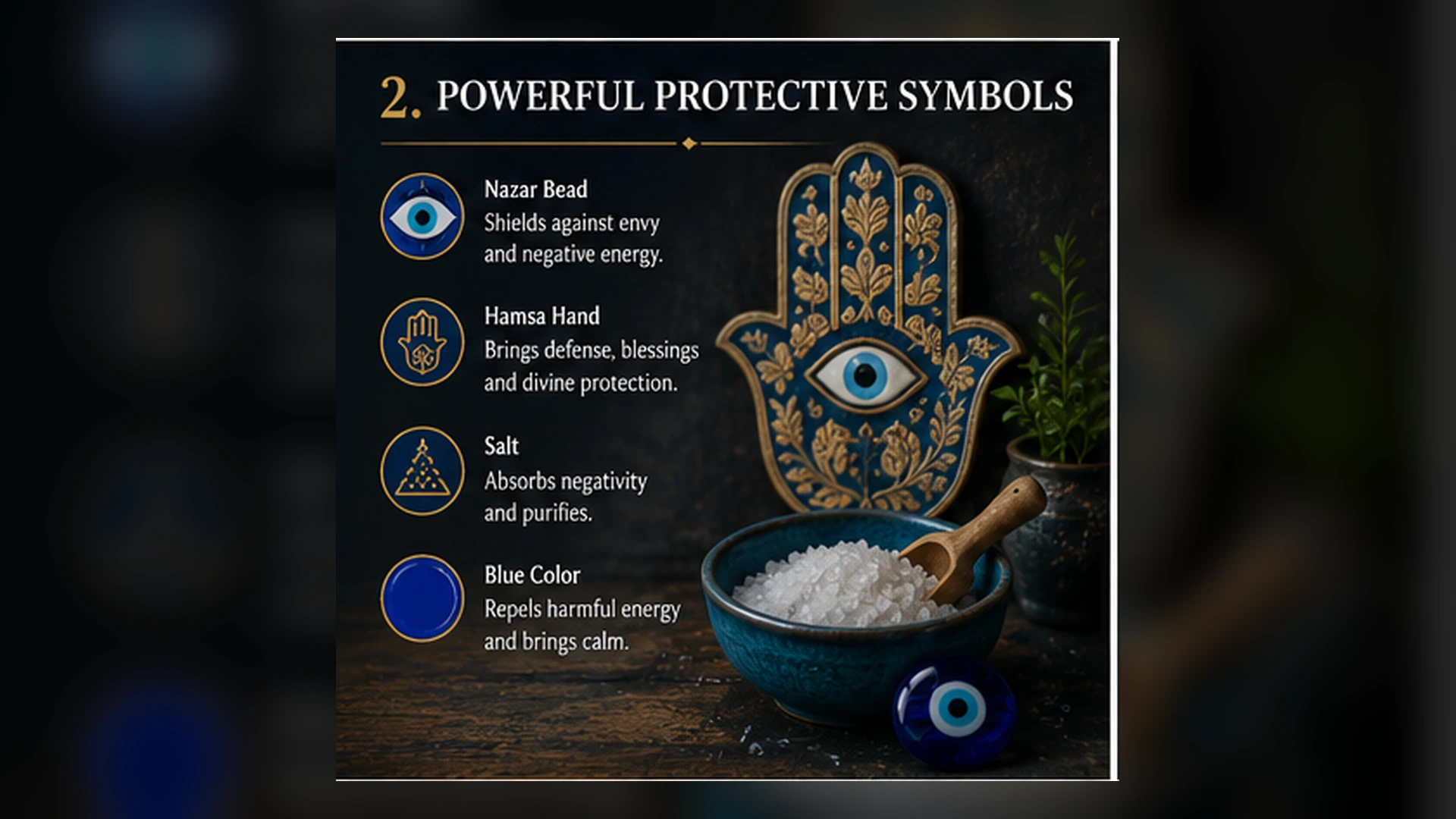
The familiar blue eye bead is widely associated with Turkey and is often called nazar boncugu. It may be worn as jewelry, attached to a child's clothing, hung in a home, placed in a vehicle or displayed in a business. Modern versions circulate globally as souvenirs and fashion accessories.
Museum collections show that contemporary use is not limited to one object type. The British Museum records a Turkish pilgrim amulet combining an eye bead with alum and ribbon, acquired near the Eyup shrine in Istanbul, and also preserves modern evil-eye stickers collected in Dushanbe. [4] These records illustrate how protective imagery travels through pilgrimage, commerce and everyday life.
The bead should not be described as an Islamic commandment. It exists within Muslim-majority societies, but many Muslim scholars reject amulets and teach reliance on prayer, Quranic recitation and remembrance of God instead. A Turkish household may therefore display nazar beads as custom while a religiously conservative household refuses them.
Color also deserves caution. Blue is prominent in modern nazar beads, but evil-eye protection across history has used many materials and colors. There is no scientifically established color that blocks envy or misfortune.
Hamsa and Khamsa: A Shared Hand Symbol
The hamsa or khamsa is a hand-shaped symbol used in parts of North Africa and the Levant. Khamsa means five in Arabic, referring to the five fingers. Modern English often calls it the Hand of Fatima in Muslim settings or the Hand of Miriam in Jewish settings, but historical use crossed religious boundaries.
The British Museum preserves hand amulets from Morocco and Gaza and notes that such objects may have been used by Muslims or Jews against the eye of envy. Another Moroccan example is described as a symbol used by Jews, Christians and Muslims. [5][6] The Metropolitan Museum also records a Moroccan Amazigh ornament whose abstract hand form was worn for protection from the evil eye. [7]
This shared history is a reason for precision rather than ownership arguments. A hand pendant without provenance may be modern jewelry. An object with Quranic text, Hebrew letters, a fish, an eye or local geometric forms may carry a more specific religious or regional identity. The wearer should not invent a sacred meaning that contradicts the community from which the object comes.
Jewish Traditions: Ayin Hara, Speech and Folk Protection
In Jewish tradition, ayin hara means the evil eye. Rabbinic and later Jewish sources discuss the danger of envy, excessive display and the gaze of others. Modern Jewish explanations often treat the idea both as a supernatural belief and as a moral warning against jealousy, boasting or drawing attention to blessing. [9]
Folk protections have included the hamsa, red strings, amulets, prayers and verbal formulas. These practices are not universally accepted. My Jewish Learning notes both the continuing popularity of red-string bracelets and the wider history of Jewish amulets, while also recording opposition from authorities such as Maimonides. [10]
A responsible summary is therefore not “Judaism requires a red string.” Jewish families should follow their own community, rabbi and inherited practice. Non-Jewish readers can learn from the ethical themes - humility, gratitude, avoiding envy and protecting privacy - without copying a sacred inscription or presenting a souvenir as a guaranteed spiritual device.
Islamic Views: Al-Ayn, Dua, Dhikr and Ruqyah
Islamic texts and scholarship discuss al-ayn, the evil eye, and hasad, destructive envy. Common protective responses include recitation of Quran, daily remembrance of God, supplication and ruqyah using permitted Quranic passages and prayers. Surah al-Falaq asks refuge from the harm of an envier when envy is expressed, and Muslim practice commonly includes the final chapters of the Quran among protective recitations.
Muslim authorities differ about amulets. One influential Sunni legal position represented by Islam Question and Answer rejects eye beads and wearable amulets, even while affirming prayer and ruqyah. [11] Museum evidence, however, documents centuries of Quranic prayer scrolls and amulet cases used across Islamic societies. [12] The historical fact that Muslims used an object does not settle whether every legal school or scholar considered it permissible.
For a Muslim reader, the safest guidance is to consult a trusted local scholar and avoid commercial practitioners who claim secret knowledge, demand large payments or identify an alleged sender. Accusing a neighbor or relative without evidence can create fear, slander and family conflict. Prayer should direct dependence toward God rather than toward a seller's promise.
Greek Orthodox and Mediterranean Christian Contexts
In Greek, the evil eye may be called mati or vaskania. Blue eye charms, spoken formulas and oil-and-water tests appear in folk practice, but they should not be confused with official church guidance.
The Greek Orthodox Archdiocese of America notes that an Orthodox prayer concerning vaskania exists, yet it also cautions that illness can have physical or psychological causes and that healing prayer may be more appropriate than confidently declaring an evil-eye affliction. The same source rejects secret magical readers who exploit fear. [13]
This distinction is valuable for Christians in any tradition. Some believers may treat an eye charm as cultural jewelry; others regard it as superstition or incompatible with faith. A reader seeking religious guidance should ask clergy from their own church rather than assume that a symbol is universally Christian or universally forbidden.
South Asian Nazar and Drishti Practices
Across India, Pakistan, Bangladesh, Nepal, Sri Lanka and diaspora communities, the words nazar and drishti can refer to a harmful or inauspicious gaze. Customs differ among Hindu, Muslim, Sikh, Jain, Christian and regional communities. They may involve black beads, a small black mark placed away from the center of a child's face, protective threads, lemons and chilies at an entrance, prayers, temple ash or household acts intended to draw away attention.
Government gazetteers from Maharashtra preserve historical descriptions of such customs, including black beads, marks, protective figures on buildings and smoke or fire practices using chilies, salt and other materials. [14] These records are evidence of local belief, not medical advice or a recommended modern ritual. They also contain colonial-era language and generalizations that require critical reading.
There is no single “Hindu evil-eye removal ritual.” A family custom in Maharashtra cannot automatically represent Tamil, Gujarati, Bengali, Punjabi, Nepali or Sri Lankan practice. Some actions also create real hazards: smoke can irritate lungs, heated materials can burn skin and small beads can choke children. Cultural respect includes adapting or declining a practice when safety requires it.

North African and African Contexts
North Africa is part of the Mediterranean and has extensive documented evil-eye traditions. Moroccan and Algerian jewelry, textiles, pottery and architectural designs may use hands, eyes, five-part patterns or strong contrast as protective forms. The British Museum describes a Moroccan cloak whose eye motif was intended to protect the wearer and notes that Jewish men could use the same textile while orienting the design differently. [15]
These examples should not be expanded into a claim that “Africans use the hamsa” or that all African protection traditions concern the evil eye. Africa contains many thousands of communities and religious histories. A Moroccan Amazigh ornament, an Egyptian amulet, an Ethiopian Christian prayer case and a Ugandan family blessing are different objects with different authorities.
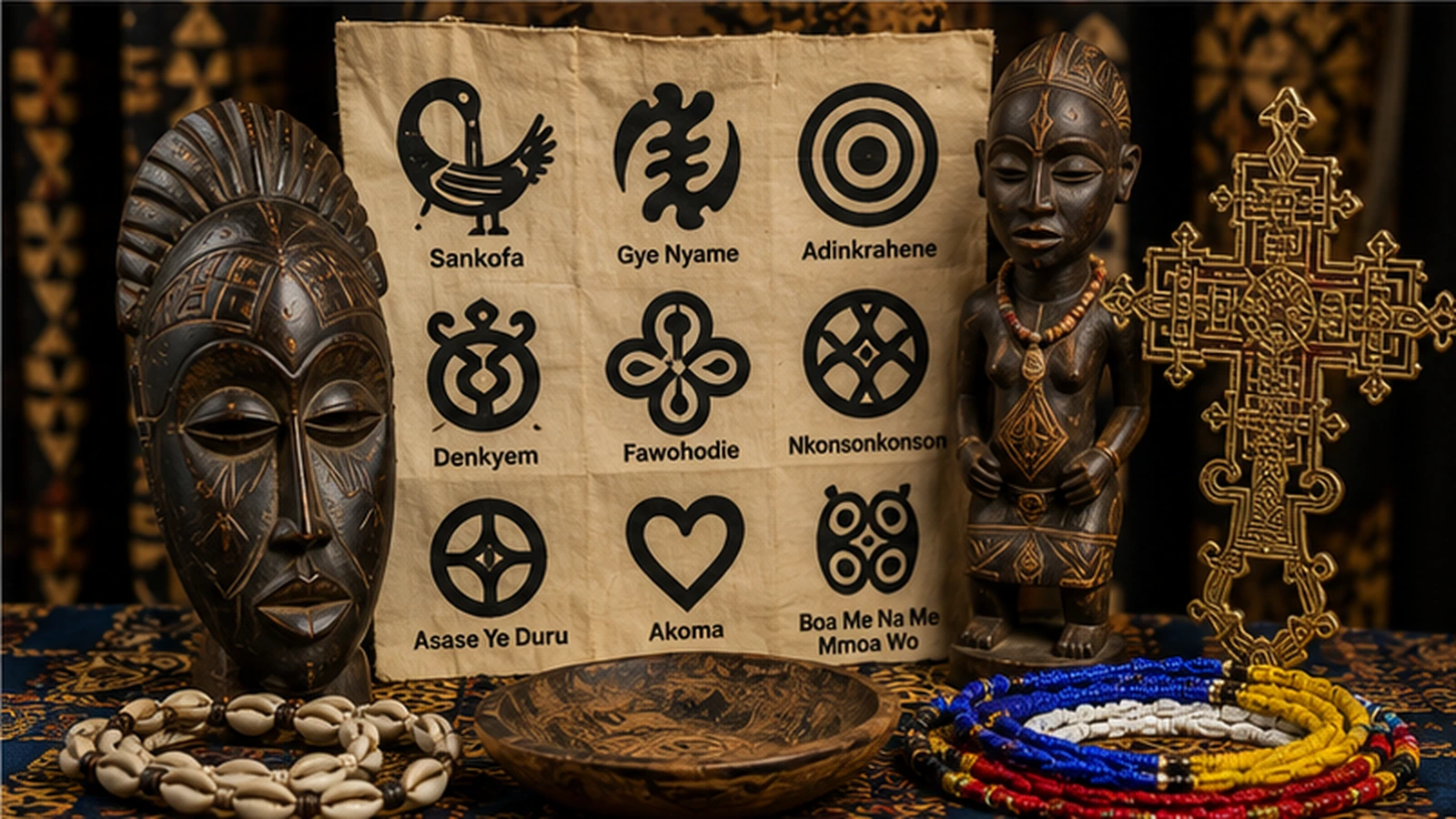
AncestralTemple.com's Protective Necklaces and Historical African Protection Ceremonies articles provide broader context for culturally specific African protective objects and community practices. The present article should remain focused on traditions explicitly documented in connection with the envious gaze.
Prayer, Amulet and Ritual Are Not the Same Thing
An evil-eye article can become confusing because the words prayer, charm, amulet, blessing and ritual are often treated as synonyms. They describe different forms of practice. A prayer addresses God or another recognized sacred authority. An amulet is a physical object believed to carry or display protective meaning. A blessing may be spoken over a person, child, home or object. A ritual is the larger ordered action in which words, objects, people and timing are brought together.
The distinction matters inside traditions. A Muslim who accepts ruqyah may reject every wearable charm. A Jewish family may keep a hamsa as inherited folk art while a rabbi discourages claims of magical power. A Greek Orthodox Christian may request a priest's healing prayer while rejecting the oil-and-water test used by a neighborhood reader. A South Asian household may preserve a black-bead necklace as family custom without treating it as a universal religious command.
Authority also differs. Some prayers are public and may be recited by any believer. Other rites belong to clergy, initiated specialists or elder-led family customs. A museum object proves that an object existed and was understood as protective; it does not automatically authorize a modern reader to reproduce the ritual, write sacred words they do not understand or sell a guaranteed protection service.
| Form | What it is | Responsible boundary |
|---|---|---|
| Prayer or recitation | Words directed to God or used within a recognized religious practice | Use the language and guidance of the reader's own faith; do not invent scripture. |
| Amulet or jewelry | A carried or worn object associated with protection, identity or memory | Check provenance, religious disagreement, child safety and marketing claims. |
| Household custom | A family action connected with praise, children, entrances, food, thread, marks or blessings | Name the region and family; avoid presenting it as universal. |
| Clergy-led rite | Prayer or pastoral response led by a priest, imam, rabbi or other authorized figure | Confirm the leader's role and whether the rite is official, folk or disputed. |
| Commercial service | A paid consultation, object or ceremony | Require transparent pricing and reject diagnosis, accusation or guaranteed results. |
| Personal reflection | A modern act of gratitude, prayer, privacy or intention | Label it as a personal adaptation rather than an ancient traditional ritual. |
How to Wear or Display an Evil-Eye Symbol Respectfully
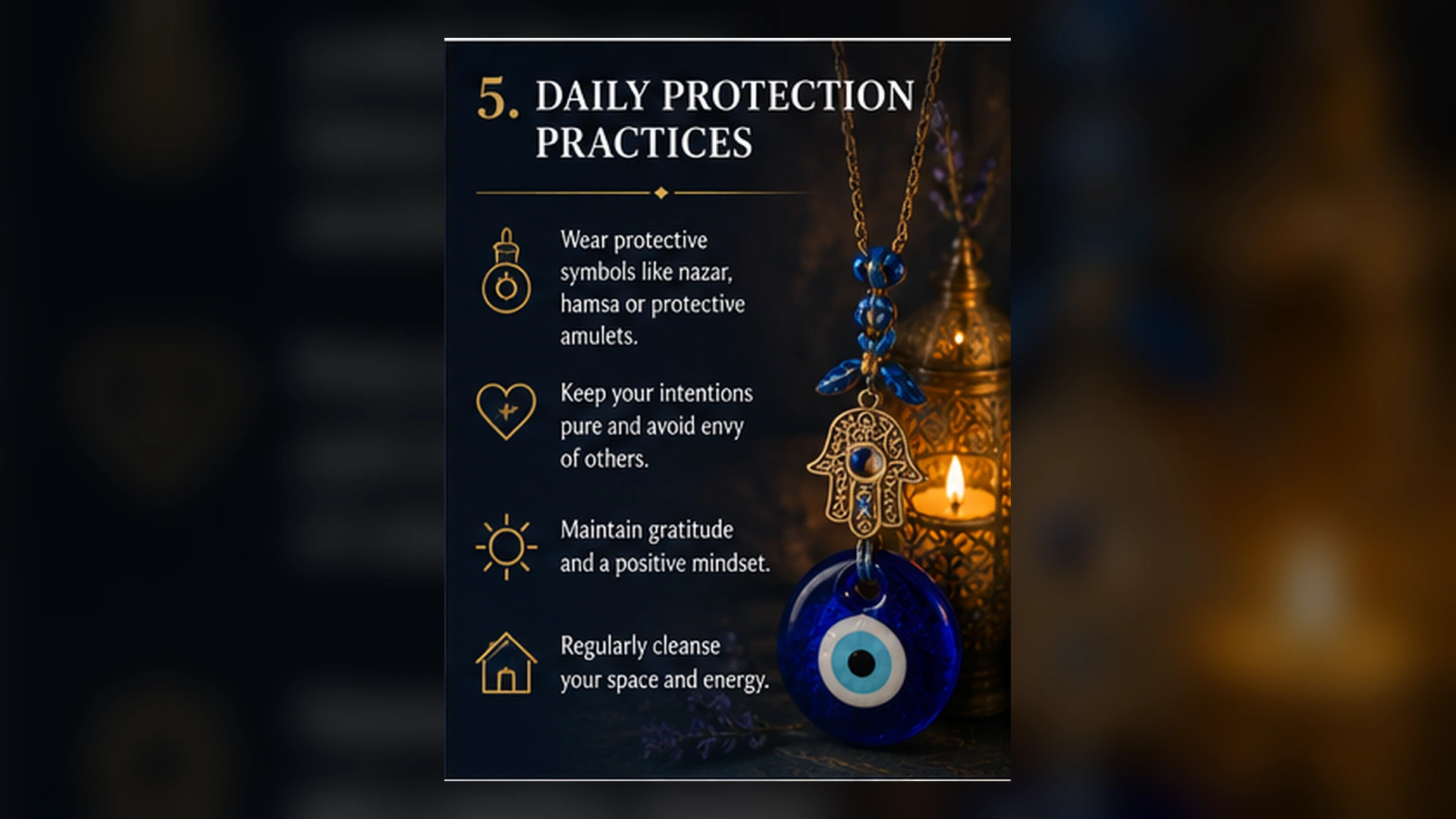
A symbol can be worn respectfully when the wearer knows what it is, avoids false claims and does not reduce a living culture to decoration. Ask where the object was made, what the seller says it represents and whether sacred writing or community-specific imagery is present. A mass-produced blue eye bead is not the same as a hand-inscribed prayer case or an inherited family amulet.
Context is especially important with the hamsa. The hand can appear in Muslim, Jewish, Christian and Amazigh settings, and modern jewelry frequently blends eyes, Hebrew letters, Arabic calligraphy, fish or decorative geometry. A buyer should not announce that every version has one fixed meaning. When an inscription cannot be read, do not wear it until someone competent has identified it.
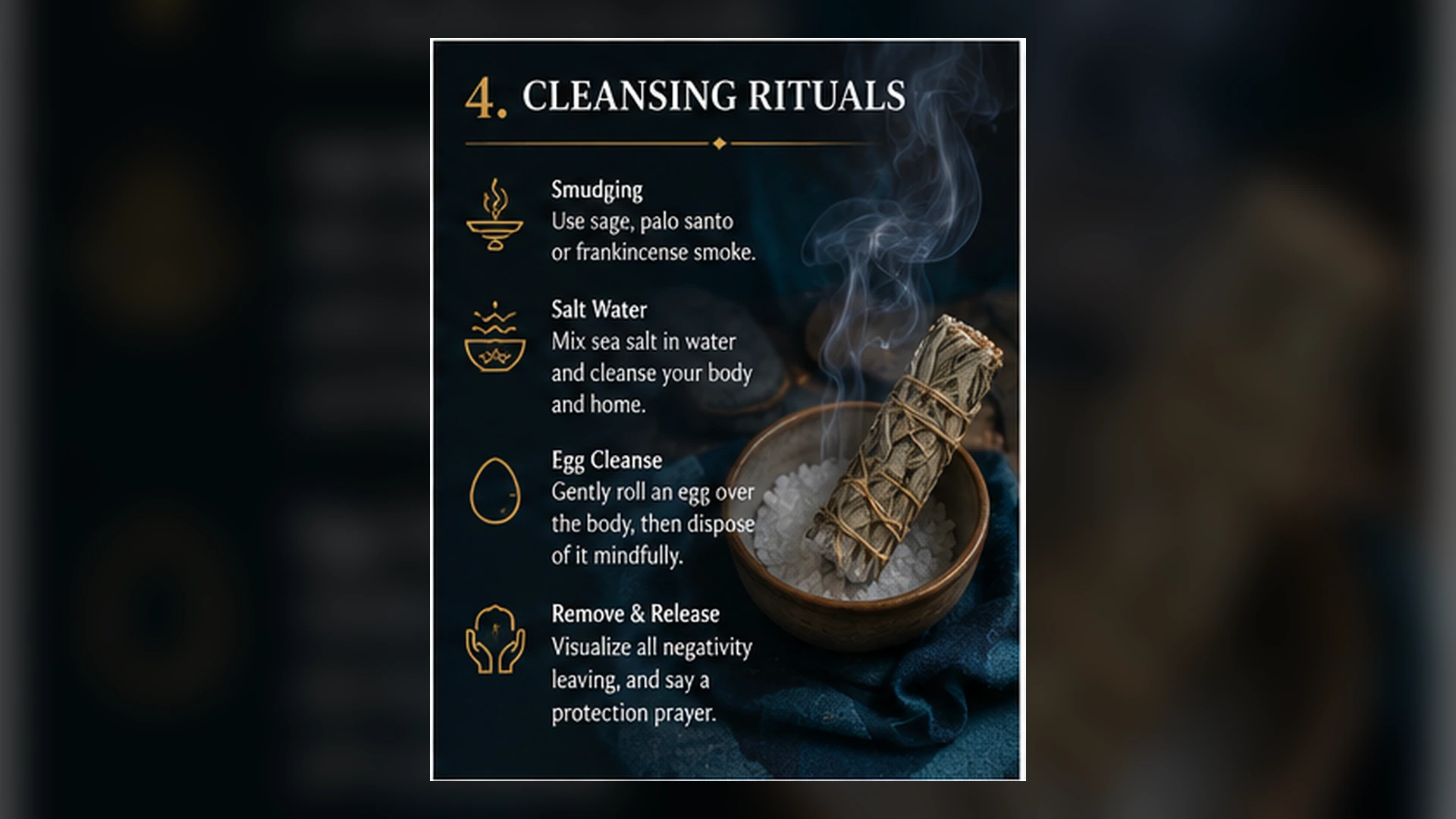
Respect also includes ordinary care. Secure wall ornaments so they cannot fall. Keep cords, pins, glass beads and metal pendants away from infants. Remove jewelry before activities where it can catch, overheat or injure the skin. Do not place objects where they interfere with worship rules, workplace safety, vehicle visibility or rental agreements.
Finally, avoid using a protective symbol as a public accusation. Hanging a nazar in a shop can express heritage or welcome. Pointing it toward a named neighbor because you believe that person is dangerous turns a cultural object into a tool of hostility.
A Safe Modern Reflection for People Outside a Specific Tradition
People sometimes want a meaningful response to envy but do not belong to a religion or family that has an established evil-eye ritual. The following is an original, non-denominational reflection rather than a traditional ceremony. It does not diagnose spiritual attack and should not be presented as ancient knowledge.
Clean and ventilate the room, then place one personally meaningful object on a table - a family photograph, a plant, a written value or a simple bowl of water. Name three blessings without exaggerating them for social display. Acknowledge one practical vulnerability that needs attention, such as a medical appointment, account security, a difficult conversation or a business review. Write one boundary about privacy and one act of generosity that reduces fear-driven isolation. Close with words such as: “May gratitude guide what I share, wisdom guide what I protect and evidence guide the actions I take.”
The purpose is not to repel a supernatural force. It is to transform anxiety about other people's attention into gratitude, privacy, practical responsibility and ethical conduct. Readers whose faith provides established prayer should use that tradition instead.
Is the Evil Eye Scientifically Proven?
No controlled scientific evidence has established that another person's gaze transmits a force that causes illness, infertility, accidents or business failure. The evil eye is best described as a culturally and religiously significant belief rather than a scientifically verified mechanism.
That does not make the experience meaningless. A person may be responding to real envy, social tension, harassment, family competition or fear after an unexpected event. Ritual can provide comfort, identity and a structured way to pray. The danger begins when the belief becomes a diagnosis that replaces evidence or identifies an innocent person as the cause.
Physical symptoms require ordinary assessment. Fever, pain, breathing problems, seizures, persistent crying in an infant, sudden weakness or mental-health changes should not be delayed while a family searches for a ritual explanation. Likewise, repeated fear that many people are watching, cursing or targeting you can become severe anxiety. The World Health Organization notes that intense, excessive and difficult-to-control fear can interfere with daily life and that effective treatments exist. [16]
How to Respond Safely When You Fear the Evil Eye
1. Name the concern without declaring a cause. Say “I feel worried after this event” rather than “that person harmed me with their eyes.”
2. Check practical explanations first. Seek medical care for symptoms, inspect the home for hazards, review business records and address real conflict or harassment.
3. Do not accuse or confront a suspected person. There is no reliable test that identifies who supposedly gave the evil eye, and accusations can cause violence, stigma or broken relationships.
4. Use only practices from your own faith or family tradition. Ask a recognized clergy member, elder or knowledgeable relative what is public, permitted and safe.
5. Choose low-risk expressions. Prayer, gratitude, modest speech, wearing inherited jewelry, displaying a culturally appropriate symbol or giving charity can be meaningful without exposing anyone to smoke or injury.
6. Avoid exploitative specialists. Warning signs include guaranteed results, escalating fees, demands for secrecy, claims that many relatives are enemies, pressure to stop medicine or requests for intimate items and personal data.
7. Seek mental-health support when fear dominates daily life. Support does not require mocking your culture; a good clinician can respect belief while helping reduce distress and improve safety.
| Smoke and fire safety Burning incense, candles, herbs or chilies creates indoor particulate matter. The U.S. Environmental Protection Agency recommends ventilation when candles or incense are used. Smoke-free alternatives are especially important around babies, older adults, asthma, pregnancy, pets and small rooms. [17] |
|---|
Evil Eye Protection for Children, Homes and Businesses
Children often receive special protection because they are admired, physically vulnerable and central to family hopes. This can include prayer, modest praise, a small symbol, a thread or a black mark in particular communities. Safety must come first: do not place loose beads, pins, cords or choking hazards on an infant, apply unknown substances to skin or eyes, expose a child to smoke, or delay pediatric care.
For a home, culturally appropriate options may include a prayer at the doorway, a family blessing, a securely mounted symbol, charity, hospitality and ordinary privacy. The symbol should not block exits, electrical equipment or fire alarms. Renters should follow building rules and avoid damaging doors or shared property.
Businesses may display nazar beads, khamsas or religious blessings according to the owner's culture. No object replaces clear signs, fair pricing, customer service, hygiene, security, bookkeeping and lawful marketing. A sudden decline in sales is not proof that a competitor cast the eye.
Common Misconceptions
| Claim | More accurate explanation |
|---|---|
| The blue eye is the evil eye | The blue eye bead is generally intended to avert or reflect the feared gaze. |
| Every eye symbol has the same meaning | The Wedjat, nazar, Christian eye imagery and decorative eyes have different histories. |
| The hamsa belongs to only one religion | Hand amulets have been used by Muslim, Jewish and Christian communities in parts of North Africa and the Levant. |
| Anyone can perform a traditional removal ritual | Many practices belong to families, clergy or recognized specialists, and some instructions are private or disputed. |
| A broken charm proves it absorbed harm | Breakage can result from material stress or impact; the protective interpretation is a belief, not measurable evidence. |
| Praise always causes harm | Many communities use blessings or humble language after praise, but admiration is not scientific proof of danger. |
| Medical symptoms should be treated spiritually first | Urgent or persistent symptoms require healthcare; prayer can accompany care but should not delay it. |
| Fear identifies the sender | Anxiety, coincidence and conflict can feel convincing. There is no reliable method for identifying a supposed sender. |
People Also Ask
What is the evil eye?
The evil eye is a belief that envy, hostility or intense admiration expressed through a gaze can cause harm. Its meaning varies by culture and religion.
What is the difference between nazar and the evil eye?
The evil eye is the feared harmful gaze. Nazar can refer to the gaze itself in several languages, while the Turkish nazar bead is an object intended to protect against it.
Is the hamsa the same as the evil eye?
No. The hamsa or khamsa is a hand-shaped protective symbol. It may contain an eye motif, but the hand and eye have different histories.
What prayer protects from the evil eye?
Prayer depends on the reader's religion. Muslims commonly use Quranic recitation and dua; some Orthodox Christians request a priest's prayer; Jewish communities may use their own prayers and customs. Follow recognized guidance in your tradition.
Can Christians wear an evil eye symbol?
Christian views differ. Some wear it as cultural jewelry; others reject it as superstition. A person seeking religious guidance should ask clergy from their own church.
Is the evil eye scientifically proven?
No. The belief is culturally important, but a harmful force transmitted by a gaze has not been established through controlled scientific evidence.
How do I remove the evil eye?
Do not begin by accusing someone. Check health and practical causes, use safe prayer or customs from your own tradition, and consult a trusted religious leader if desired.
What does it mean when an evil eye bracelet breaks?
Some wearers interpret breakage as protection having occurred, but ordinary wear, impact or weak materials are sufficient explanations.
Can the evil eye affect a baby?
Some cultures believe babies are especially vulnerable. Regardless of belief, symptoms in a baby require prompt medical assessment, and protective objects must not create choking, strangulation or skin risks.
Can a nazar protect a business?
It may express heritage, prayer or intention for an owner, but it does not replace ethical service, security, accounting and marketing.
Key Takeaways
The evil eye is a widespread belief about harm associated with envy or an admiring gaze, not one universal religion.
The nazar bead is generally a protective object, not the evil eye itself.
Hamsa or khamsa hand amulets have been used across Muslim, Jewish and Christian communities in parts of North Africa and the Levant.
The Eye of Horus belongs to ancient Egyptian religion and should not be treated as identical to a Turkish nazar bead.
Islamic, Jewish, Greek Orthodox and South Asian practices contain internal diversity and disagreement.
No scientific evidence has established that a gaze transmits a harmful force.
Prayer and symbols should never replace healthcare, practical investigation or mental-health support.
Never accuse a supposed sender or pay a practitioner who guarantees diagnosis and removal.
Children require smoke-free, non-toxic and choke-safe adaptations.
Cultural accuracy begins by naming the exact region, religion, family and historical period.
Conclusion
Evil-eye traditions endure because they give communities a language for envy, fragility and the fear that visible blessings can attract danger. The symbols are memorable: an eye that looks back, a hand that blocks harm, a thread that marks belonging, a prayer that places vulnerability before God. Their value is cultural, relational and religious even when their supernatural claims cannot be scientifically confirmed.
The most respectful approach avoids two extremes. It does not mock every wearer as irrational, and it does not turn every illness or setback into evidence that another person attacked them. It asks where the symbol came from, who authorizes the prayer, what the family believes and whether the practice is safe.
A responsible protection practice should leave a person calmer, more grounded and more capable of taking practical action. It should not create enemies, dependence or fear. When prayer, heritage and evidence are held together, the tradition can be understood without sacrificing health, safety or human dignity.
Article Information
- Publisher
- Ancestral Temple
- Editor
- Ancestral Temple
- Last updated
- Jul 30, 2026
- Last reviewed
- Jul 30, 2026
- Content version
- 292a1c8ab0
This educational article should be read as cultural and spiritual information, not as medical, legal, financial, or emergency advice.
Helpful Related Guidance
About the Author
 Ancestral Temple
Spiritual guide and practitioner with decades of experience in ancestral wisdom, rituals, and divine guidance.
Related Posts
View All











Comments
We'd love to hear your thoughts.