
Plants Used for Spiritual Protection: Cultural Meanings and Traditions
Quick Summary
Plants used for spiritual protection are found in many religious and cultural traditions, but they do not form one universal system. A sprig of rue worn against the evil eye in par...
Plants used for spiritual protection are found in many religious and cultural traditions, but they do not form one universal system. A sprig of rue worn against the evil eye in parts of the Mediterranean or Brazil does not carry the same history as mugwort hung during China’s Dragon Boat Festival, tulsi grown in a Hindu household courtyard, or sage used in a specific Indigenous purification ceremony. The plant may look similar in each setting—leaf, branch, resin, smoke or living shrub—but its meaning comes from the community that names, prepares and authorizes its use.
Protective plant traditions can involve cleansing a person or place, marking a doorway, creating a sacred boundary, remembering ancestors, consecrating worship, discouraging harmful influences or expressing a prayer for safety. In other cases, a plant is protective because it is evergreen, thorny, strongly scented, resilient, associated with a deity, or connected to a founding story. These meanings are cultural and religious interpretations, not scientific proof that a plant can block invisible forces.
This guide explains documented examples from Africa, the African diaspora, Europe, Asia and Indigenous North America. It also distinguishes spiritual belief from botanical safety. Some culturally important plants can irritate skin, poison people or animals, worsen indoor air when burned, or be endangered by commercial harvesting. Responsible study therefore requires both cultural respect and practical caution.
Specific culture or historical context: Contemporary East African educational setting focused on comparative ethnobotany and cultural stewardship; no invented ceremony.
People shown: One Black African researcher and one older Black African cultural custodian, both naturally posed.
Location: A lush community botanical garden in Uganda with labelled beds, though no readable text should appear in the image.
Clothing: Contemporary modest clothing; the elder may wear locally appropriate woven fabric without costume-like exaggeration.
Architecture: Simple garden shelter and nursery benches in the background.
Objects: Field notebook, hand lens, woven collecting basket and living plants; no crystals, spell books or fantasy symbols.
Lighting: Soft early-morning natural light with realistic greenery and skin tones.
Composition: Wide 16:9 editorial frame, people on one side and diverse plants filling the rest, leaving safe crop space.
SEO-friendly filename: plants-spiritual-protection-cultural-traditions.webp
Image title: Plants Used for Spiritual Protection Across Cultures
Alt text: African ethnobotany researcher and cultural custodian examining protective plants in a community garden
Caption: Plants associated with protection receive their meanings from specific communities, histories and religious traditions.
Recommended placement: After the introduction and before the Quick Answer.
Article section supported: Introduction and cultural-context framing.
Important elements to avoid: Embedded text, fantasy glowing plants, mixed ceremonial costumes, occult symbols, identifiable restricted ritual objects, logos, watermarks, distorted hands or a staged “witchcraft” aesthetic.
Quick Answer
Plants traditionally associated with spiritual protection include rue, rosemary, mugwort, calamus, tulsi, sage or sagebrush, cedar, frankincense-producing trees and many locally specific African and Afro-diasporic plants. Their meanings differ by community and may involve cleansing, sacred boundaries, prayer, ancestry or protection from misfortune. No plant has scientifically proven supernatural protective power, and some are toxic or culturally restricted.
What Does “Spiritual Protection” Mean in Plant Traditions?
Spiritual protection is a broad modern English phrase. In a particular community, the actual concept may be expressed through a local religious vocabulary: blessing, consecration, purification, cooling, strengthening, shielding, ancestor care, divine favor, protection from envy, or restoration of right relationship. Translating all of these ideas as “protection magic” can erase important differences.
A plant can be protective without being worn as a charm or burned as smoke. It may be planted at a household entrance, kept near a shrine, carried in a procession, added to a ritual bath by an authorized practitioner, placed in a sacred grove, woven into a ceremonial object, or protected from harvesting because it belongs to a deity or ancestor. In some traditions, the plant’s living presence matters more than any recipe made from it.
It is also important to separate three overlapping ideas. Cleansing removes or transforms a condition understood as pollution, disorder or unwanted influence. Protection establishes a boundary or relationship intended to prevent harm. Blessing asks for well-being, favor or sacred presence. One plant may appear in all three contexts, but the meanings are not identical.
| Concept | Main cultural function | How plants may appear | Important caution |
|---|---|---|---|
| Cleansing | Removal or transformation of ritual, moral or spiritual impurity | Washing, sprinkling, smoke, prayer, bathing or renewal rites | Not the same as medical disinfection |
| Protection | Boundary, defense, strengthening or prevention of harm | Doorway plants, carried leaves, sacred smoke, planted guardians or authorized ritual use | A cultural belief, not scientifically measurable “energy shielding” |
| Blessing | Request for well-being, grace, fertility, peace or divine presence | Consecration, prayer, offerings, household worship or festival customs | Does not guarantee outcomes |
| Remembrance | Maintaining bonds with ancestors, the dead or community history | Funerary plants, memorial herbs, shrine plants or family gardens | Meanings vary greatly by religion and region |
| Stewardship | Protecting a species, grove or landscape because it is culturally important | Taboos, restricted harvesting, sacred groves and community rules | May support conservation but should not be romanticized |
Why Certain Plants Become Symbols of Protection
Strong scent and smoke
Aromatic leaves, woods and resins can mark a transition from ordinary to sacred space. Their smell makes the ceremony perceptible, while smoke can carry prayers or signal purification in some traditions. The cultural meaning does not depend on proving that smoke removes supernatural forces.
Evergreen growth and resilience
Plants that remain green through difficult seasons can symbolize continuity, endurance and life. Communities may read botanical persistence as a moral or spiritual quality.
Thorns, bitterness and defensive forms
Thorns, pungent sap, bitter taste or a plant’s ability to resist grazing can become metaphors for guarding boundaries. These physical features may inspire symbolic associations, but they do not create one universal meaning.
Doorways and thresholds
Homes, compounds, shrines and village entrances are culturally important boundaries. Plants placed there can identify the threshold, invite blessing, discourage harm or display religious identity.
Relationships with deities and ancestors
Some plants are sacred because they are linked to a deity, spirit, ancestor, founding narrative or lineage. In such cases, the plant’s meaning cannot be separated from theology and community authority.
Healing, hygiene and seasonal danger
Protective customs sometimes combine practical and symbolic concerns. Aromatic plants may repel insects, while seasonal festivals may address disease, heat or environmental risk. The practical use and spiritual interpretation should be described separately.
Protective Plants in West and Central African Religious Traditions
Africa does not have one protective-plant tradition. Ethnobotanical research in Benin and Gabon documents hundreds of ritual plant species connected with Vodoun, Bwiti and other religious practices. Researchers recorded 414 ritual plant species in Benin and 256 in Gabon, with only part of the repertoire shared between the two countries. The scale of this diversity is a warning against reducing African spirituality to a few marketable “power herbs.” [1][2]
In these traditions, plants may contribute leaves, fibers, seeds, oils, pigments, resins, vessels or sacred wood. Raffia palms, oil palms, gourds, kola-related species and locally important forest plants can be embedded in ceremonies, offerings, divination, initiation and community identity. A plant’s role may depend on its species, the part collected, the season, the person authorized to gather it and the ritual relationship in which it appears. [1][15]
Some knowledge is restricted. The Benin and Gabon research found taboos and harvesting rules associated with scarce ritual plants, showing that secrecy or prohibition can also function as resource management. Publishing a recipe without understanding these restrictions can violate both cultural authority and conservation practice. [2]
For an educational article, the responsible approach is therefore to explain patterns—sacred groves, authorized gathering, plant-based ritual objects, protective boundaries and conservation—without pretending that a list of species can replace community instruction.
Specific culture or historical context: Contemporary West or Central African ritual ethnobotany and conservation, inspired by documented research in Benin and Gabon.
People shown: Black African elder custodian, two younger community members and one local botanist; respectful collaboration.
Location: Shaded nursery at the edge of a village or forest, with diverse native plants.
Clothing: Everyday regional clothing suitable for gardening; no generic “tribal” costumes.
Architecture: Simple timber shade structure and woven fencing.
Objects: Seedling pots, woven baskets, watering can and field notebook; no exposed restricted ritual objects.
Lighting: Filtered daylight under a nursery canopy.
Composition: Wide documentary frame emphasizing people caring for plants and the variety of species.
SEO-friendly filename: african-ritual-plants-protection-conservation.webp
Image title: African Ritual Plants and Cultural Stewardship
Alt text: West African cultural custodians caring for ritual plants in a community nursery
Caption: In Benin and Gabon, ritual plant knowledge includes community authority, harvesting rules and conservation responsibilities.
Recommended placement: After the West and Central African traditions section.
Article section supported: African ritual ethnobotany, restricted knowledge and conservation.
Important elements to avoid: Invented sacrifice, sensational occult imagery, skulls, blood, random masks, mixed national clothing, exposed secret practices, text, logos or watermarks.
Afro-Brazilian Traditions: Plants, Axé and Protective Space
Afro-Brazilian religions such as Candomblé and Umbanda developed through African, Indigenous and European histories in Brazil. Research with religious communities on Santa Catarina Island describes plants as carriers of axé—a concept of vital or sacred force—and documents uses in baths, smoke cleansing, head-washing rites, healing and the protection of social spaces. [3]
The study found that some plants understood as protective were cultivated near places where people gathered. It also noted Dieffenbachia and Sansevieria species used for protection, sometimes without direct body contact. This detail matters because cultural use does not automatically mean botanical safety. Dieffenbachia sap and tissues contain calcium oxalate crystals that can cause severe irritation, swelling and painful exposure if chewed or handled carelessly. [3][12]
Rue, known as arruda in Portuguese, also appears in Brazilian religious and market contexts. Ethnobotanical researchers observed vendors wearing sprigs of rue against the evil eye and connected the practice with traditions found in Bahia and among some Candomblé practitioners. [4] The plant’s meaning, however, should not be separated from the communities that maintain those traditions.
Rue and Protection From the Evil Eye
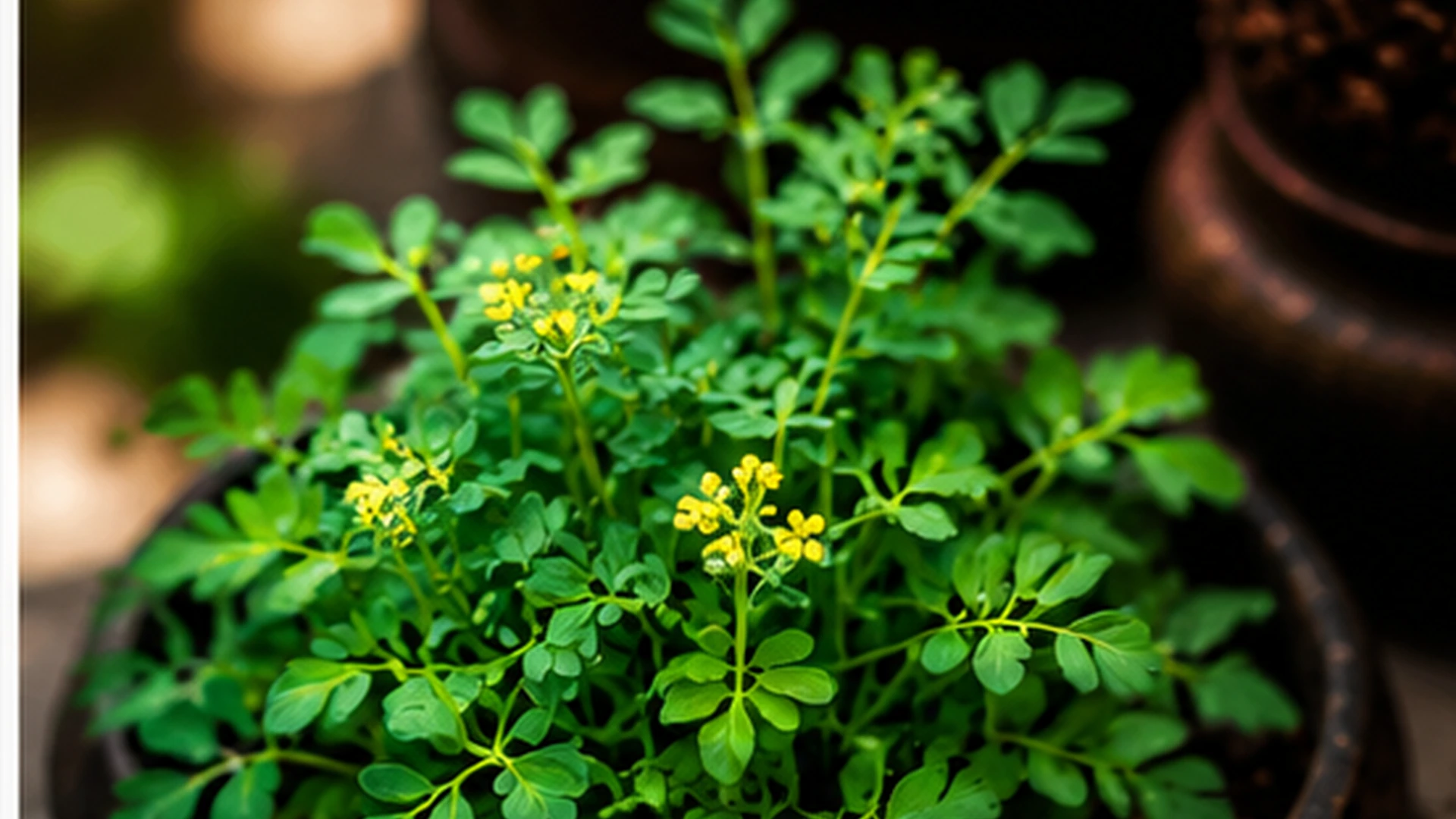
Rue (Ruta graveolens) is one of the most widely documented plants associated with protection from the evil eye in Mediterranean, Iberian and Latin American folk traditions. In rural communities of northwestern Portugal, researchers found rue kept in home gardens and used as a protector of people and animals against misfortune and the evil eye. Rosemary and common sage were also kept nearby in some households. [11]
The evil eye is not one identical belief everywhere. It may refer to harm attributed to envy, excessive praise, a hostile gaze or disturbed social relationships. Rue may be worn, planted, carried or used by a recognized practitioner, but the details differ among families, regions and religions.
Rue also requires a strong safety warning. The plant can cause skin reactions, especially with sunlight, and published reviews describe significant toxicity concerns, including risks during pregnancy. It should never be presented as a harmless tea or universal home remedy. [14]
Rosemary in European Memory and Protective Folklore
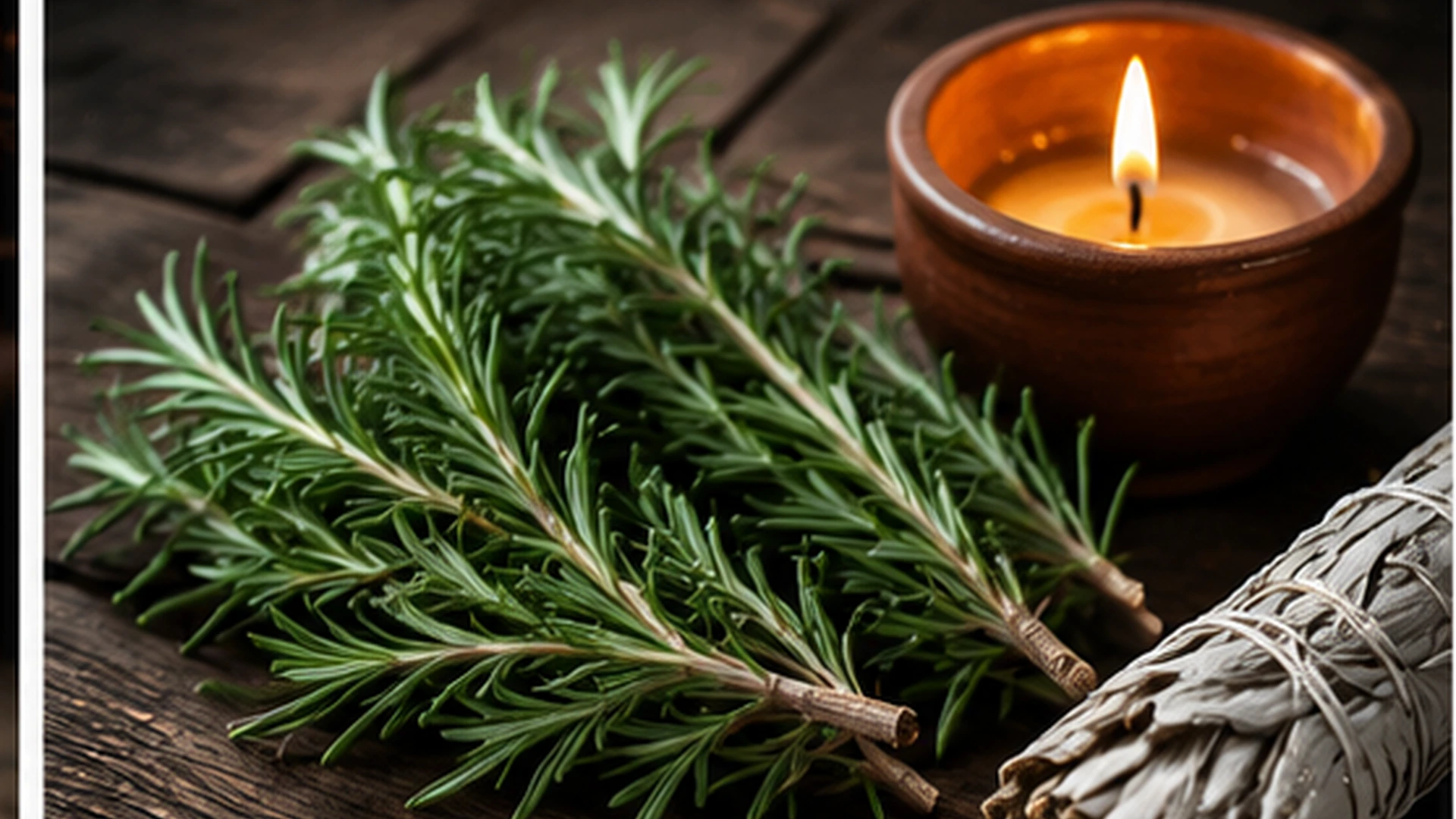
Rosemary (Salvia rosmarinus) has long been connected with remembrance, fidelity, funerals and weddings in parts of Europe and the Mediterranean. University extension sources summarize its use as a symbol of memory, love and friendship, while later European folklore also associated it with protection from evil spirits and bad dreams. [10][11]
These meanings are historically layered. Rosemary in a funeral procession, a wedding garland, a household garden and a modern spiritual shop may represent different things. Calling it simply “the protection herb” hides its equally important associations with memory and mourning.
Rosemary is a familiar culinary plant, but concentrated essential oils and smoke are not the same as ordinary food use. An article about cultural meaning should not convert folklore into medical dosage instructions.
Specific culture or historical context: Contemporary rural Iberian or Mediterranean household informed by documented ethnobotanical traditions.
People shown: One older local gardener and a younger family member.
Location: Stone or plaster courtyard with herb beds and a wooden doorway.
Clothing: Ordinary work clothing appropriate to the region.
Architecture: Accurate rural Iberian or Mediterranean domestic architecture.
Objects: Clay pots, pruning basket and fresh herbs; no magical labels or commercial spell products.
Lighting: Warm late-afternoon natural light.
Composition: Wide 16:9 scene with doorway, rue and rosemary all clearly visible.
SEO-friendly filename: rue-rosemary-protection-folklore-traditions.webp
Image title: Rue and Rosemary in Household Protection Traditions
Alt text: Mediterranean family tending rue and rosemary in a traditional courtyard garden
Caption: Rue is associated with protection from the evil eye in several regions, while rosemary also carries meanings of memory, fidelity and mourning.
Recommended placement: After the rue and rosemary sections.
Article section supported: Mediterranean and Iberian plant traditions.
Important elements to avoid: Bottled potions, occult altars, readable charms, gothic fantasy, unsafe handling, embedded text, logos or watermarks.
Sage, Sagebrush and Cedar in Specific Indigenous Traditions
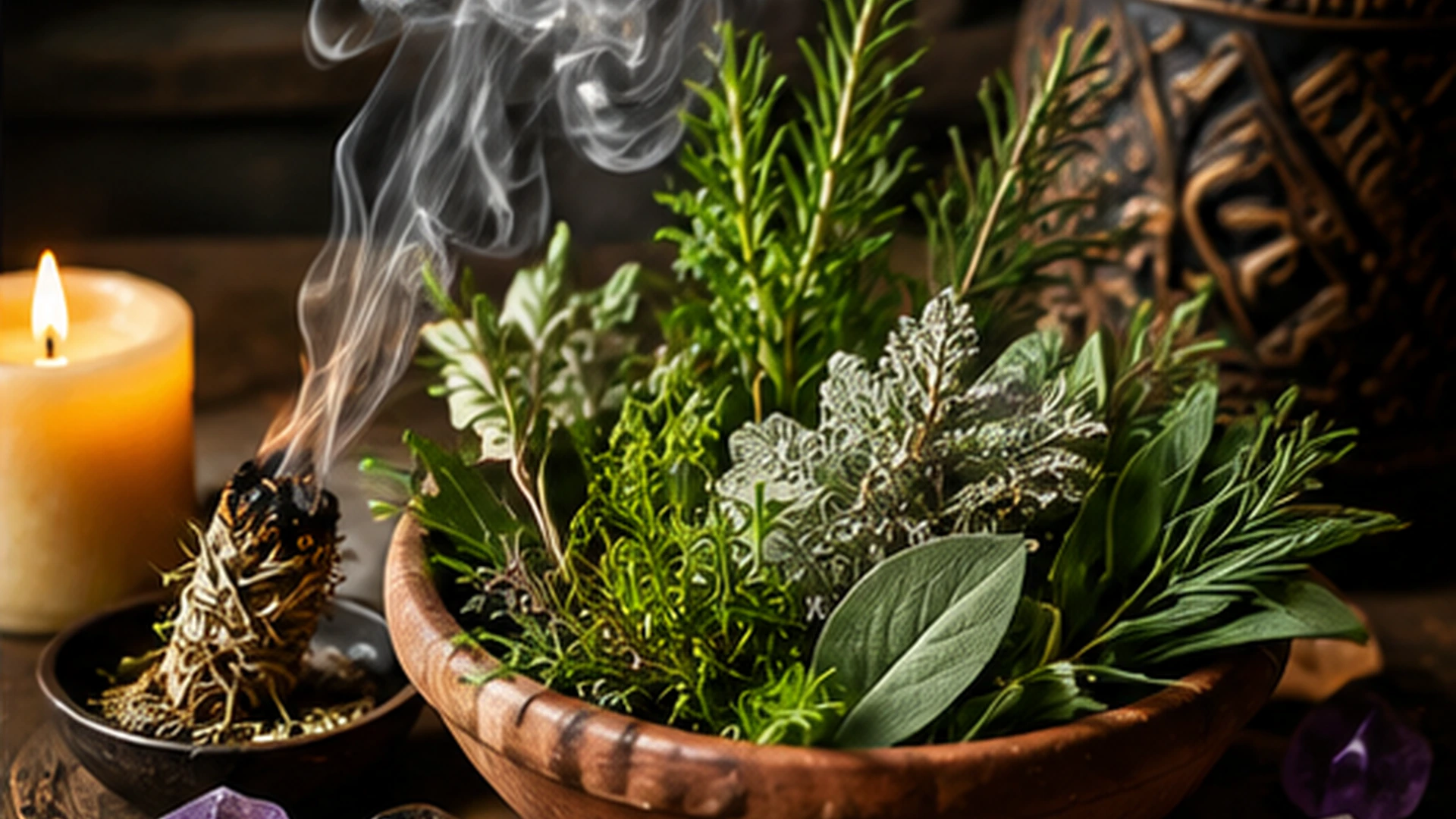
The word sage can cause confusion because it refers to different plants. The National Park Service documents white sagebrush (Artemisia ludoviciana) as culturally important for physical and spiritual cleansing among Apsáalooke, Cheyenne, Arapaho and Lakota communities, with varied uses that include bathing, smoke and ceremony. [5] This is not the same species as California white sage (Salvia apiana), and neither plant represents all Indigenous peoples.
Cedar also has deep cultural importance among particular Indigenous nations, including Anishinaabe communities, but its meanings and protocols differ by place and teacher. Public educational resources can acknowledge cedar as a sacred or culturally significant plant while leaving community-specific prayers, harvesting methods and ceremonial instructions to authorized knowledge holders. [8]
The modern commercial term smudging is often applied too broadly. It can flatten many distinct Indigenous practices into a single wellness product and encourage overharvesting. Respectful writing should name the nation or community, identify the plant species when possible, avoid copying prayers or ceremony, and support Native-led sources and growers.
Mugwort and Calamus During China’s Dragon Boat Festival
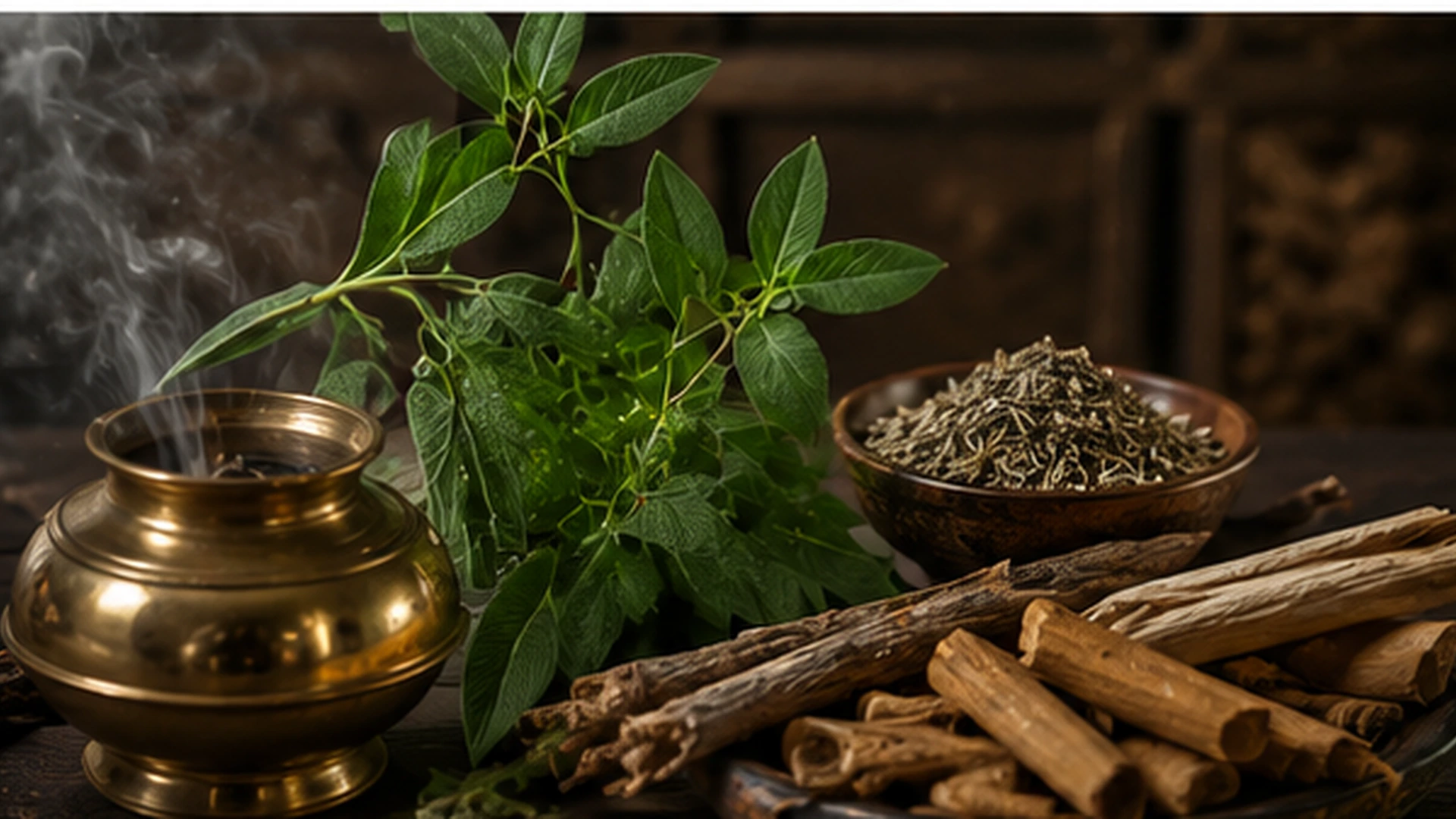
During the Dragon Boat Festival, or Duanwu, households in parts of China hang mugwort and calamus at doors and windows. Government cultural resources describe the plants as auspicious and connect them with warding off evil, discouraging insects and protecting health during a season historically associated with heat, pests and disease. [6]
This example shows how symbolic and practical functions can overlap. Strongly aromatic plants can repel some insects or mark seasonal hygiene concerns, while the festival gives them additional meanings of safety, luck and cultural continuity. The custom is not evidence that the plants literally remove supernatural entities; it is a living tradition that joins family memory, seasonal ecology and religious folklore.
Mugwort also appears in many other Asian and European traditions. Those uses should not be merged automatically with Duanwu customs, because the same common name can refer to different species and religious histories.
Specific culture or historical context: Contemporary Duanwu festival custom in China.
People shown: Three generations of a Chinese family, naturally participating.
Location: Home courtyard in Hunan, Zhejiang or another region where the custom is publicly documented.
Clothing: Contemporary everyday clothing; no generalized ancient costume.
Architecture: Regionally plausible courtyard doorway and wooden details.
Objects: Fresh mugwort, calamus, cord and a basket; optional zongzi leaves in the background.
Lighting: Bright but soft morning light.
Composition: Wide 16:9 doorway scene showing the threshold symbolism clearly.
SEO-friendly filename: mugwort-calamus-dragon-boat-festival-protection.webp
Image title: Mugwort and Calamus at the Dragon Boat Festival
Alt text: Chinese family hanging mugwort and calamus at a doorway for the Dragon Boat Festival
Caption: Duanwu customs connect mugwort and calamus with household protection, seasonal health and cultural continuity.
Recommended placement: After the mugwort and calamus section.
Article section supported: Chinese Dragon Boat Festival traditions.
Important elements to avoid: Japanese or Korean clothing mixed into the scene, fantasy spirits, readable signs, realgar drinking, exaggerated temple imagery, logos, watermarks or distorted plants.
Tulsi in Hindu Household and Temple Traditions
Tulsi, or holy basil (Ocimum tenuiflorum), is sacred in many Hindu traditions and is commonly cultivated near homes and temples. Educational botanical sources describe it as associated with devotion, purity, meditation and protection, and connect the plant with the goddess Tulasi and, in many traditions, with Vishnu or Krishna. [7]
The living plant often matters as much as the leaf. A household tulsi platform or courtyard plant can organize daily worship and mark the home as a devotional space. Reducing tulsi to an ingredient in a generic protection bath would miss its relationship to Hindu theology, domestic ritual and the care of a living sacred plant.
Hindu practice is diverse. Not every Hindu household maintains tulsi in the same way, and the exact prayers, offerings and festival customs vary by region, sect and family.
Frankincense Trees, Resin and Sacred Atmosphere
Frankincense is an aromatic resin obtained from Boswellia trees, including Boswellia sacra in southern Arabia. UNESCO’s Land of Frankincense in Oman preserves landscapes and archaeological sites that testify to the resin’s long-distance trade across the ancient and medieval world. [9]
In Christian, Islamic and other religious settings, incense can mark prayer, honor sacred presence, consecrate space or accompany communal worship. These uses are often described loosely as protective because they create a sacred atmosphere, but the theological meaning belongs to each tradition. Frankincense should not be advertised as a scientifically verified shield against misfortune.
Harvesting also matters. Resin comes from living trees in specific dryland ecosystems. Ethical sourcing should consider species identification, legal trade, worker conditions and sustainable tapping rather than treating incense as an unlimited spiritual commodity.
Other Protective Plant Patterns Around the World
Palms and boundary markers
Across sub-Saharan Africa, palms appear in ritual objects, offerings, divination and ceremonial materials. Their significance differs by species and culture; palm leaves should not be assigned one universal protective meaning. [15]
Thorny and defensive plants
In many folk traditions, thorns or sharp leaves symbolize guarding a boundary. The symbolism may be intuitive, but exact uses require local evidence.
Evergreen branches
Evergreens can represent endurance and continuity in winter or during funerary seasons. Their protective meaning depends on the religious calendar and community history.
Aromatic household plants
Basil, rosemary, rue, lavender and other fragrant plants may be grown near entrances or used in family traditions. Modern spiritual shops often combine these plants into new systems that should be described as contemporary interpretations, not ancient universal practice.
How Protective Plants Are Used in Cultural Traditions
| Form | Possible function | Documented type of example | Caution |
|---|---|---|---|
| Living plant | Cultivated near a home, shrine, courtyard or sacred grove | Tulsi in household worship; protective plants near social spaces | The plant may require ongoing care and religious authority |
| Branch or leaf | Hung at a threshold, carried, woven or placed near an object | Mugwort and calamus at Duanwu; household rue | Do not assume one placement works across cultures |
| Water preparation | Leaves may be washed, infused or used by authorized practitioners | Ritual baths and sprinkling in some African and diaspora traditions | Not a medical or hygiene recipe; some plants are toxic |
| Smoke or incense | Aromatic materials are burned to mark prayer, cleansing or sacred space | Frankincense; some sage and plant-smoke traditions | Smoke affects indoor air; ventilation and health conditions matter |
| Amulet or bundle | Plant fibers, seeds, roots or leaves may be carried or enclosed | Varies across folk and religious traditions | Restricted items should not be copied from photographs or tourism |
| Sacred landscape | A grove, tree or plant population is protected as part of community heritage | Sacred groves and restricted ritual plants | Respect access rules and conservation law |
Common Misunderstandings About Protective Plants
| Misunderstanding | More accurate explanation |
|---|---|
| “There is one best plant for protection.” | Protective meaning is culturally specific. The “best” plant in one tradition may be irrelevant or restricted in another. |
| “If a plant is sacred, it is safe to eat or burn.” | Sacred status does not remove botanical toxicity, allergies, smoke exposure or drug interactions. |
| “Sage is one plant and one ceremony.” | Sage, sagebrush and white sage are different plants, and Indigenous practices vary by nation and region. |
| “African traditions use the same protective herbs.” | Africa contains thousands of communities and highly diverse plant-religion systems. |
| “A commercial bundle gives anyone authority to perform a ritual.” | Religious authority, initiation, language and community relationships may be essential. |
| “A practical effect proves the spiritual claim.” | An aromatic plant may repel insects while also carrying symbolic meaning; one does not scientifically prove the other. |
| “Old traditions never change.” | Living traditions adapt through migration, religious change, trade, urban life and environmental pressure. |
Cultural Respect and Ethical Boundaries
Name the community, not just the continent. Identify the country, language group, religious tradition and region whenever reliable evidence allows.
Use public sources from custodians and researchers. Museum labels, community publications, ethnobotanical studies and official heritage sources are stronger than anonymous spiritual lists.
Do not publish restricted instructions. Avoid copying prayers, initiation formulas, secret plant combinations or private ritual sequences.
Separate description from imitation. Readers can learn what a tradition means without performing it.
Respect Native and local plant sovereignty. Support community-led growers, cultural educators and conservation programs.
Avoid cultural blending. Do not place Yoruba, Hindu, Chinese and Indigenous North American plants on one fictional altar and call it an ancient universal ritual.
Credit modern adaptation honestly. Contemporary spiritual practices can be meaningful, but they should not be falsely labeled as unchanged ancient tradition.
Plant Safety, Smoke and Scientific Limits
No controlled scientific evidence shows that a plant can block curses, evil spirits, envy or “negative energy” as a measurable physical force. These claims belong to religion, folklore and personal testimony. The scientifically responsible approach is to describe the belief without promising an outcome.
Botanical safety is separate from spiritual meaning. Dieffenbachia can cause painful mouth, skin and eye exposure. Rue has documented toxicity and phototoxicity concerns. Other plants may interact with medicines, affect pregnancy, trigger allergies or harm pets. Common names are unreliable, so correct species identification matters. [12][14]
Burning herbs, resins or incense creates smoke and fine particles. The U.S. Environmental Protection Agency’s reviews and research summaries identify incense as a potential source of indoor particulate matter, carbon monoxide and volatile compounds. People with asthma, respiratory illness, pregnancy, infants or limited ventilation may be especially vulnerable. [13]
Responsible safety guidance is simple: do not ingest an unfamiliar plant, do not apply sap or essential oils to skin without expert guidance, keep toxic plants away from children and animals, ventilate smoke, use fire-safe containers, and contact a poison center or clinician after an exposure.
Conservation and Responsible Sourcing
Ritual plant traditions can support conservation when communities protect sacred groves, restrict harvests or maintain home gardens. The Benin and Gabon research found that ritual restrictions were often associated with scarce species, suggesting that religious rules can contribute to local resource management. [2]
Commercial demand can also cause harm. Wild-harvested sage, resin, roots, bark and slow-growing plants may be collected faster than they recover. Buyers should prefer legally sourced, cultivated or community-approved materials and avoid threatened species.
The most respectful choice is sometimes not to buy the plant at all. Learning its history, supporting a community nursery, donating to habitat protection or growing a locally appropriate non-sacred species can be more responsible than importing a culturally restricted plant.
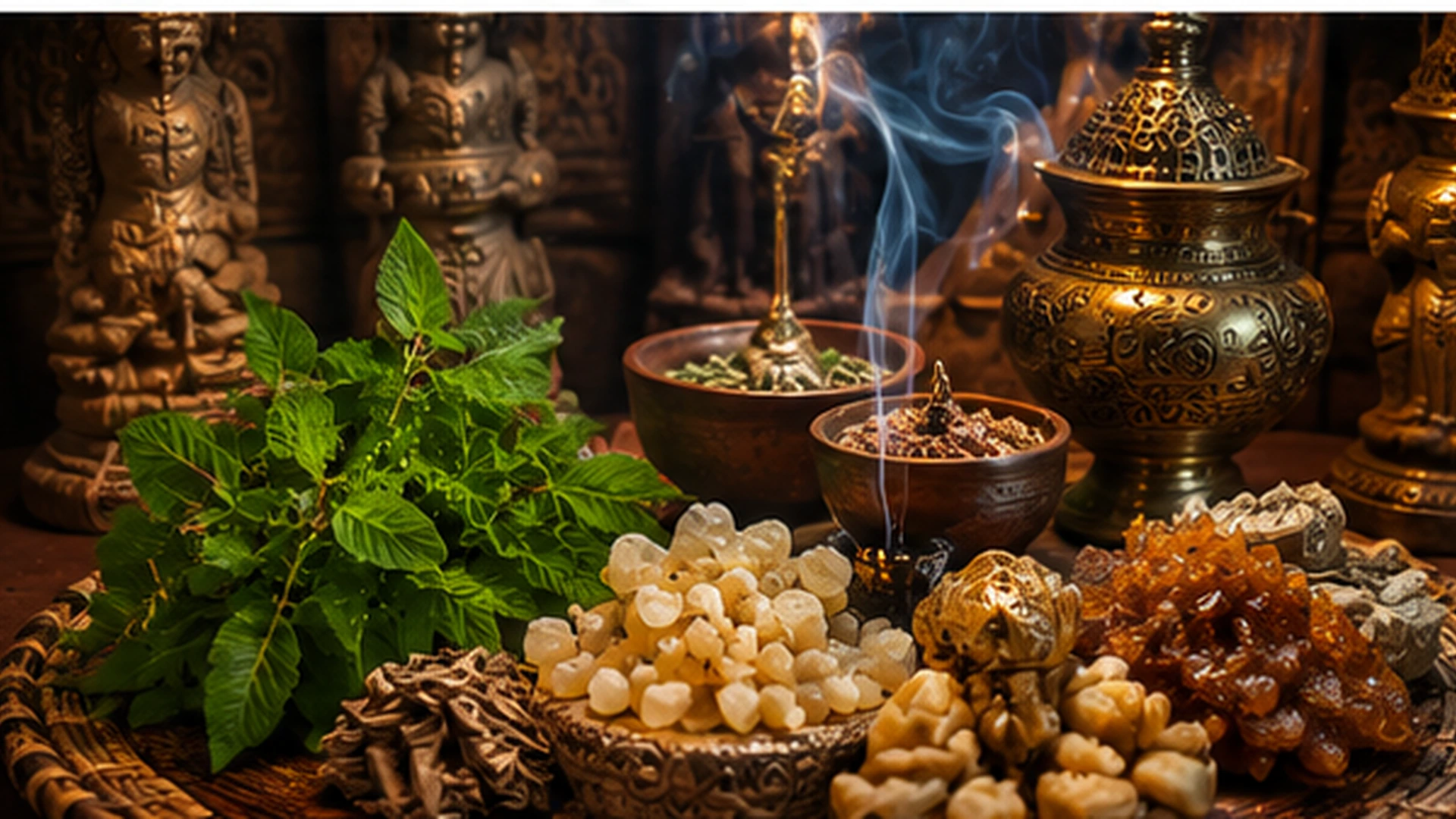
Specific culture or historical context: Contemporary community-led conservation in Uganda or West Africa, connecting cultural value with habitat protection.
People shown: Women and men of different ages, including one elder and younger nursery workers.
Location: Community nursery beside a healthy forest edge or wetland.
Clothing: Practical gardening clothes with subtle locally appropriate fabrics.
Architecture: Shade house, seedling tables and water collection system.
Objects: Seedling pots, plant tags with no readable text, watering cans and field notebook.
Lighting: Bright soft morning light after rain.
Composition: Wide 16:9 frame with people in foreground and restored landscape behind.
SEO-friendly filename: sacred-plants-conservation-responsible-sourcing.webp
Image title: Protective Plants, Conservation and Responsible Sourcing
Alt text: African community nursery protecting culturally important plants through conservation and responsible cultivation
Caption: Respect for spiritually important plants includes habitat protection, sustainable harvest and community authority.
Recommended placement: After the conservation section and before People Also Ask.
Article section supported: Conservation, ethical sourcing and final responsibility.
Important elements to avoid: Commercial bundles, endangered plants being uprooted, generic charity imagery, fantasy rituals, readable brand labels, logos, watermarks or staged poverty.
People Also Ask
What plants are used for spiritual protection?
Documented examples include rue, rosemary, mugwort, calamus, tulsi, sage or sagebrush, cedar, frankincense-producing trees and many locally specific African and diaspora plants. Their meanings and authorized uses differ by culture.
Which herb is traditionally associated with protection?
Rue is strongly associated with protection from the evil eye in several Mediterranean, Iberian and Latin American traditions. It is not universally used and can be toxic.
Is rosemary considered a protective plant?
In parts of European folklore, rosemary was associated with protection from evil spirits and bad dreams. It is also historically important as a symbol of remembrance, fidelity and mourning.
Why is mugwort hung at doors?
During the Dragon Boat Festival in parts of China, mugwort and calamus are hung at doors or windows as auspicious plants associated with protection, health and the repelling of insects or harmful influences.
Is sage used for spiritual cleansing?
Some Indigenous nations use particular sage or sagebrush species in cleansing and ceremonial contexts. These traditions differ by nation, and “sage” should not be treated as one universal plant or ritual.
What does tulsi symbolize?
In many Hindu traditions, tulsi is a sacred living plant associated with devotion, purity, household worship and protection. Practices vary by region, sect and family.
Can plants scientifically block negative energy?
No scientific method has demonstrated that a plant blocks curses, spirits or negative energy. Such claims should be described as religious belief, folklore or personal testimony.
Are protective herbs safe to burn?
Not always. Smoke from herbs and incense can increase indoor particulate and chemical exposure. Ventilation, fire safety and respiratory health should be considered.
What is the difference between cleansing and protection?
Cleansing removes or transforms a condition understood as impurity or disorder. Protection establishes a boundary or relationship intended to prevent harm. A tradition may use the same plant for both, but the meanings differ.
How can I learn about sacred plants respectfully?
Use community-led and scholarly sources, name the specific culture, avoid copying restricted rituals, support ethical growers and distinguish cultural belief from scientific evidence.
Frequently Asked Questions
Do protective plants work the same way in every culture?
No. The meaning of a plant depends on the community, religion, language, history and ritual authority involved.
Can I create my own protection ritual with any herb?
A personal reflective practice should not be presented as an authentic ceremony from another culture. Avoid copying restricted prayers, sacred objects or community-specific procedures.
Are African protective plants one unified category?
No. Research in Benin and Gabon alone documents hundreds of ritual plant species and different religious systems.
Why is rue connected with the evil eye?
In several Mediterranean, Iberian and Latin American traditions, rue is believed to guard against envy, misfortune or the evil eye. The precise practice varies.
Is rue safe to drink?
Rue can be toxic and has significant pregnancy and skin-sensitivity concerns. This article does not recommend ingestion.
Is Dieffenbachia a protective houseplant?
Some Afro-Brazilian religious communities document it as a protective plant, but it is toxic and can cause severe irritation. Cultural meaning does not make it safe to touch or ingest.
Is white sage the same as sagebrush?
No. California white sage is Salvia apiana, while white sagebrush is often Artemisia ludoviciana. Common names can be misleading.
Can non-Indigenous people burn white sage?
The ethical issue is not only the plant but also cultural authority, commercial appropriation and harvesting. Learn from Native-led sources and avoid imitating restricted ceremonies.
Why are plants placed near doors?
Doorways are social and spiritual thresholds. Plants may mark a boundary, invite blessing, display identity or symbolize protection.
Is frankincense a plant or a resin?
Frankincense is an aromatic resin tapped from Boswellia trees. The tree, landscape, harvest and trade are all part of its history.
Does incense purify indoor air?
Burning incense creates smoke and particles; it should not be treated as an air-cleaning method. Ventilation and reduced exposure are important.
Can protective plants replace medical care or security?
No. Spiritual practices cannot replace medical treatment, emergency services, locks, fire safety, legal help or other practical protection.
Are plant traditions always ancient?
No. Some are old, some have changed through migration and trade, and others are modern spiritual adaptations.
How should sacred plants be photographed?
Ask permission, avoid private ceremonies, do not reveal restricted objects, and follow local rules about people, shrines and harvest sites.
Can I grow tulsi at home?
Tulsi is widely cultivated, but its Hindu religious meaning should be represented accurately and not reduced to a generic magic plant.
What should I do after touching an irritating plant?
Wash exposed skin, avoid touching the eyes, and seek poison-control or medical guidance if symptoms occur.
Key Takeaways
No universal list of protective plants exists; meanings are culturally specific.
Rue, rosemary, mugwort, calamus, tulsi, sage or sagebrush, cedar and frankincense are documented examples, but each belongs to a different context.
Africa contains highly diverse ritual plant systems; regional and community names matter.
Protective, cleansing and blessing functions overlap but should not be treated as identical.
Sacred or traditional use does not prove supernatural effects or guarantee physical safety.
Some plants are toxic, and smoke can worsen indoor air quality.
Restricted knowledge, harvesting rules and cultural permission must be respected.
Conservation and community stewardship are part of responsible spiritual-plant education.
Conclusion
Plants used for spiritual protection reveal how communities connect the living world with memory, morality, worship, household boundaries and ideas about danger. Rue can express concern about envy; mugwort can mark a seasonal festival; tulsi can organize devotional life; sage or cedar can belong to specific Indigenous ceremonial relationships; and African ritual plants can be inseparable from initiation, sacred groves, conservation and community authority.
The similarities are real—aroma, thresholds, evergreen life, prayer and protection recur in many places—but similarity does not prove a single origin or interchangeable ritual. The safest and most respectful approach is to learn the correct plant, name the specific tradition, follow cultural boundaries, protect habitats and separate spiritual meaning from scientific or medical claims.
Final Summary
Plants associated with spiritual protection are culturally specific symbols and ritual materials, not universally effective supernatural tools. Documented examples include rue, rosemary, mugwort, calamus, tulsi, sage or sagebrush, cedar, frankincense-producing trees and many African and Afro-diasporic plants. Responsible study requires accurate species identification, community context, safety awareness, permission, conservation and clear separation between living belief and scientific evidence.
Research Sources and Further Reading
[1] The Cultural Importance of Plants in Western African Religions. Economic Botany / ethnobotanical research on plant importance in Vodoun and Bwiti contexts in Benin and Gabon.
[2] Evidence of a Link Between Taboos and Sacrifices and Resource Scarcity of Ritual Plants. Journal of Ethnobiology and Ethnomedicine. Field research on restrictions, scarcity and conservation in Benin and Gabon.
[3] “The Plants Have Axé”: Investigating the Use of Plants in Afro-Brazilian Religions of Santa Catarina Island. Journal of Ethnobiology and Ethnomedicine. Community-based study of Candomblé, Umbanda and related traditions.
[4] What’s in a Name? Revisiting Medicinal and Religious Plants at an Amazonian Market. Journal of Ethnobiology and Ethnomedicine. Documents arruda/rue, market practice and evil-eye protection.
[5] Native Plant Garden, Little Bighorn Battlefield National Monument. U.S. National Park Service. Public educational account of white sagebrush and culturally specific Plains traditions.
[6] Dragon Boat Festival cultural resources on mugwort and calamus. Shanghai and regional Chinese government cultural portals. Public documentation of doorway plants, health symbolism and festival customs.
[7] Holy Basil — Ocimum tenuiflorum. Washington College Center for Environment and Society. Botanical and cultural overview of tulsi in Hindu practice.
[8] The Cultural Significance of Cedar. U.S. National Park Service educational material featuring Anishinaabe historian Eric Hemenway.
[9] Land of Frankincense. UNESCO World Heritage Centre. Official account of Boswellia sacra landscapes and the historical frankincense trade in Oman.
[10] Herb Garden Plants: Rosemary. Penn State Extension. Botanical and historical overview of rosemary symbolism and use.
[11] Ethnobotanical Inventory of Plants Used by Mountainous Rural Communities in Northwest Portugal. Peer-reviewed study documenting rue, rosemary and sage in ritual and protective household contexts.
[12] Dieffenbachia and Philodendron: Popular but Poisonous. Poison Control. Clinical safety guidance on calcium oxalate exposure.
[13] Candles and Incense as Potential Sources of Indoor Air Pollution; related incense research summaries. U.S. Environmental Protection Agency. Indoor-air evidence concerning particulate matter, carbon monoxide and volatile compounds.
[14] Traditional Uses, Phytochemistry, Pharmacology and Toxicology of Ruta graveolens: A Critical Review. Peer-reviewed review summarizing rue toxicity, phototoxicity and pregnancy concerns.
[15] Ritual Uses of Palms in Traditional Medicine in Sub-Saharan Africa: A Review. Journal of Ethnobiology and Ethnomedicine. Comparative review of palm species and ritual roles.
Article Information
- Publisher
- Ancestral Temple
- Editor
- Ancestral Temple
- Last updated
- Jul 26, 2026
- Last reviewed
- Jul 26, 2026
- Content version
- ac38b3bf58
This educational article should be read as cultural and spiritual information, not as medical, legal, financial, or emergency advice.
Helpful Related Guidance
Explore This Topic
Related Topic Cluster
Dreams & Symbolism
About the Author
 Ancestral Temple
Spiritual guide and practitioner with decades of experience in ancestral wisdom, rituals, and divine guidance.
Related Posts
View All












Leave a Comment
We'd love to hear your thoughts.