
Understanding Purification Practices Through History
Quick Summary
Purification practices have appeared in many historical and religious settings, but they have never carried one universal meaning. This guide examines ancient Egyptian lustration, Jewish immersion, Christian baptism, Islamic ablution, Hindu sacred bathing, Shinto misogi, Ethiopian Timkat, and other traditions while distinguishing ritual purity from hygiene and moral judgment.
Understanding Purification Practices Through History explains the meaning, background and cultural context of purification practices through history in clear educational language. The article answers the main topic near the beginning, preserves the original examples and highlights important distinctions for respectful understanding.
Purification practices are among the oldest documented forms of religious and ceremonial preparation.
Across different periods, people have washed their bodies, immersed themselves in water, sprinkled sacred spaces, burned aromatic substances, changed clothing, fasted, removed prohibited foods, or completed prescribed acts before approaching a temple, joining a religious community, entering a new stage of life, or returning to ordinary social participation.
These practices may appear similar from the outside. Water is poured. Hands are washed. Smoke rises. A person changes clothing or crosses a threshold.
Their meanings, however, are not interchangeable.
Ancient Egyptian priests preparing to approach a divine image were acting within a temple system very different from Jewish immersion in a mikveh. Christian baptism is not simply a continuation of Roman lustration. Islamic wuḍūʾ is not an ordinary hygiene routine. Hindu pilgrimage bathing and Shinto misogi belong to different understandings of sacred geography, divine presence, purity, and religious responsibility.
Purification traditions should therefore not be arranged as though humanity began with “primitive magic” and gradually progressed toward modern religion or science.
They are better understood as distinct systems through which communities define readiness, belonging, sacred order, transition, responsibility, and renewal.
Key Points
- Purification practices have existed in many historical societies, but they do not share one origin or meaning.
- Ritual purity is different from physical cleanliness and moral innocence.
- Ancient Egyptian purification could involve water poured over living people, royal figures, divine images, or the deceased.
- Greek and Roman traditions used purification before particular sacrifices, initiations, or returns to civic and religious participation.
- Jewish purity traditions include immersion in a mikveh under defined religious conditions.
- Christian baptism connects water with initiation, purification, death to an old life, and spiritual rebirth.
- Islamic wuḍūʾ and ghusl prepare worshippers for prayer and other acts, while tayammum provides a prescribed alternative when water cannot be used.
- Hindu sacred bathing at Kumbh Mela is connected with pilgrimage, religious merit, and liberation within specific traditions.
- Shinto misogi uses water in a structured rite of purification led according to shrine practice.
- Ethiopian Orthodox Timkat commemorates the baptism of Jesus and should not be described as a generic African water-cleansing festival.
- Sacred or blessed water is not automatically safe to drink.
- Purification practices should never be used to justify abuse, humiliation, unsafe immersion, or withholding medical care.
Clear Definition
Purification practices are culturally or religiously defined actions intended to prepare, restore, cleanse, consecrate, or move a person, object, place, or community from one recognized condition into another.
Plain-Language Meaning
Purification is often a way of saying:
“You are preparing for something sacred.”
“You are leaving one condition and entering another.”
“This place or object is being set apart.”
“You are ready to participate again.”
“You are beginning a new stage.”
The act may involve washing, but purification is not always about removing physical dirt.
Purity Is Not One Universal Idea
The English word purity can hide several very different concepts.
Physical Cleanliness
Physical cleanliness concerns visible dirt, bodily substances, germs, chemicals, waste, or environmental contamination.
It belongs primarily to hygiene, sanitation, and public health.
Ritual Purity
Ritual purity is a condition defined by a particular religion or cultural institution.
A person may be physically clean but still require immersion, ablution, waiting, prayer, or another prescribed act before participating in a ceremony.
A ritually impure person is not automatically immoral, contaminated in a medical sense, or socially inferior.
Moral Purification
Moral purification may involve repentance, forgiveness, ethical change, restitution, or the abandonment of harmful behaviour.
Some traditions connect moral renewal with water or washing. Others clearly distinguish ritual preparation from forgiveness of wrongdoing.
Social Restoration
Purification may restore someone to a family, congregation, office, age group, or community after an important transition.
The primary concern may be social status rather than personal sin.
Consecration
Consecration sets a person, place, or object apart for a sacred purpose.
It may involve purification, but the two terms are not identical.
Why Purification Practices Developed
Purification ceremonies help communities make invisible changes visible.
A person’s intentions cannot always be seen. Neither can a change in ritual status, religious identity, grief, repentance, or readiness.
A public action gives that change a recognizable form.
Water can be poured. Clothing can be changed. A room can be entered. A period of waiting can end. A prayer can be spoken. A person can emerge from immersion.
These actions create a clear boundary between before and after.
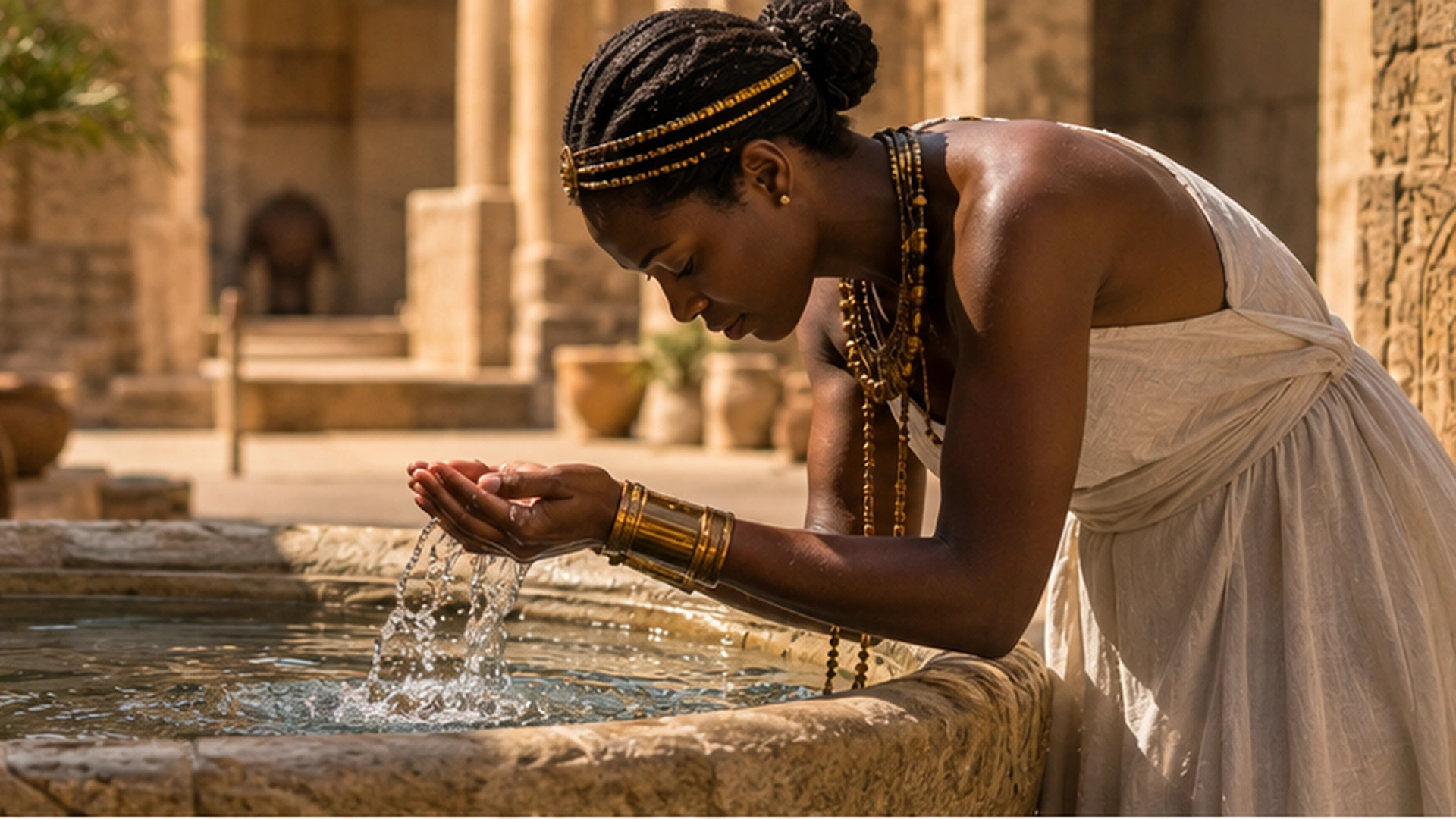
Ancient Egyptian Purification
Ancient Egyptian religious life provides some of the earliest surviving visual evidence for purification with water.
A relief in the Metropolitan Museum of Art shows a royal woman undergoing purification as water is poured over her head. Other Egyptian representations show liquids poured over living people, royal figures, and mummies.
Purification in ancient Egypt did not mean only washing away dirt.
Temple service required priests to approach divine images in a state regarded as appropriate for sacred proximity. The divine image was treated as a living presence within the temple and was washed, clothed, adorned, and presented with offerings. Priestly purity was therefore connected with religious office and access to the deity.
Water could also carry associations with life, renewal, and the restoration of the deceased. Metropolitan Museum research on Egyptian lustration notes that pouring water could communicate more than cleansing; in funerary and temple contexts, it could symbolize the giving or renewal of life.
This historical evidence should not be simplified into the claim that “ancient Africans believed water removed evil.”
Ancient Egypt was an African civilization with institutions, deities, priesthoods, royal ideologies, funerary traditions, and historical changes spanning thousands of years. A temple purification, royal ceremony, and funerary rite were not automatically the same practice.
Purification in Ancient Greek and Roman Worlds
Ancient Greek traditions used purification in preparation for particular religious activities and after conditions understood as religious pollution.
Water, washing, sacrifice, smoke, and other actions could appear in purification, depending on the location and circumstance. Greek evidence also records purification connected with sanctuaries, initiation, homicide, childbirth, death, and contact with particular forms of pollution. Academic research emphasizes that Greek purification was not a single standardized ritual used identically everywhere.
In some Greek and Roman mystery cults, ritual purity was required before initiation. The Metropolitan Museum notes that purification formed part of traditions connected with the cults of deities such as the Mother of the Gods and Isis.
The Latin term lustratio is commonly associated with rites that purified or ritually prepared individuals, armies, fields, cities, or communities.
Roman purification practices could therefore have civic and political dimensions. The subject was not always a private worshipper seeking personal spiritual cleansing. A ritual might concern the ordered relationship between a community, its gods, its territory, and its institutions.
It would be misleading to claim that Christian baptism simply replaced Roman lustration.
Christianity developed within Jewish and Greco-Roman environments, but baptism gained its meaning from Christian teachings about Jesus, repentance, participation in Christ, the Holy Spirit, and entry into the church.
Historical contact does not make two rituals identical.
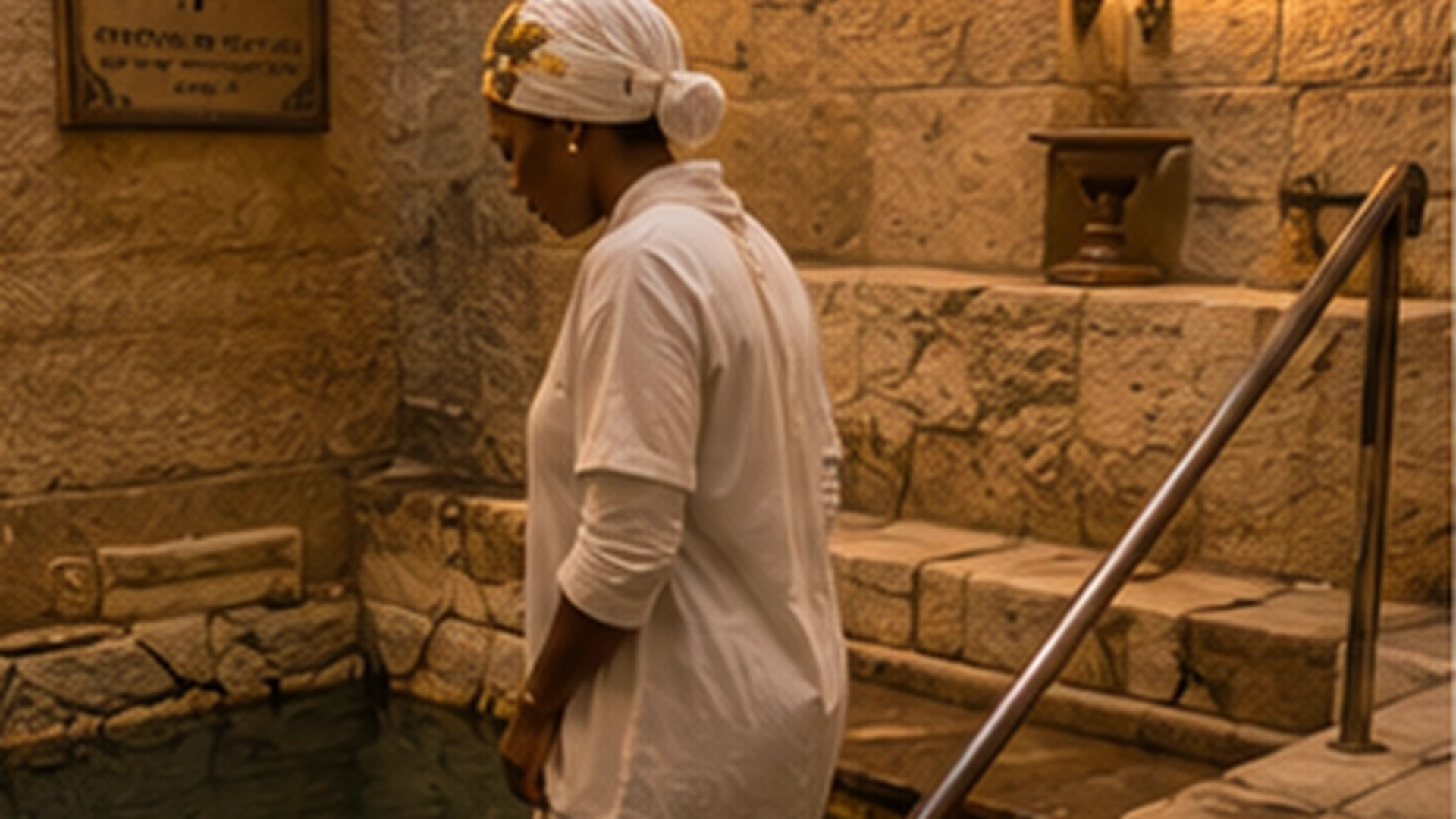
Jewish Purity Traditions and the Mikveh
Jewish purity traditions developed from biblical law, later rabbinic interpretation, community practice, and changing historical circumstances.
A mikveh is a ritual immersion pool constructed according to Jewish legal requirements. Traditional rules require sufficient water for full immersion and connect the water with naturally gathered rainwater, a spring, or another qualifying source. Archaeological remains of mikvaot survive at ancient and medieval Jewish sites.
Immersion has served several purposes in Jewish life.
Historically and in continuing Orthodox practice, these may include:
- Conversion to Judaism
- Aspects of family-purity observance
- Preparation by particular men before festivals or Shabbat in some communities
- Immersion of certain utensils
- Historical preparation connected with the Jerusalem Temple
The uses and interpretations differ among Orthodox, Conservative, Reform, Reconstructionist, and other Jewish communities. Contemporary Jewish communities have also developed additional mikveh ceremonies for transitions such as recovery, mourning, or major life changes.
The Hebrew concept of tumah, commonly translated as ritual impurity, should not be equated with dirtiness or wickedness.
Jewish educational sources emphasize that ritual purity is a defined religious status rather than a general judgment about cleanliness or moral worth.
This distinction is particularly important when discussing menstruation, childbirth, bodily discharge, and death.
Language that describes women as spiritually dirty or shameful misrepresents the structure of the tradition and can reinforce harmful stigma.
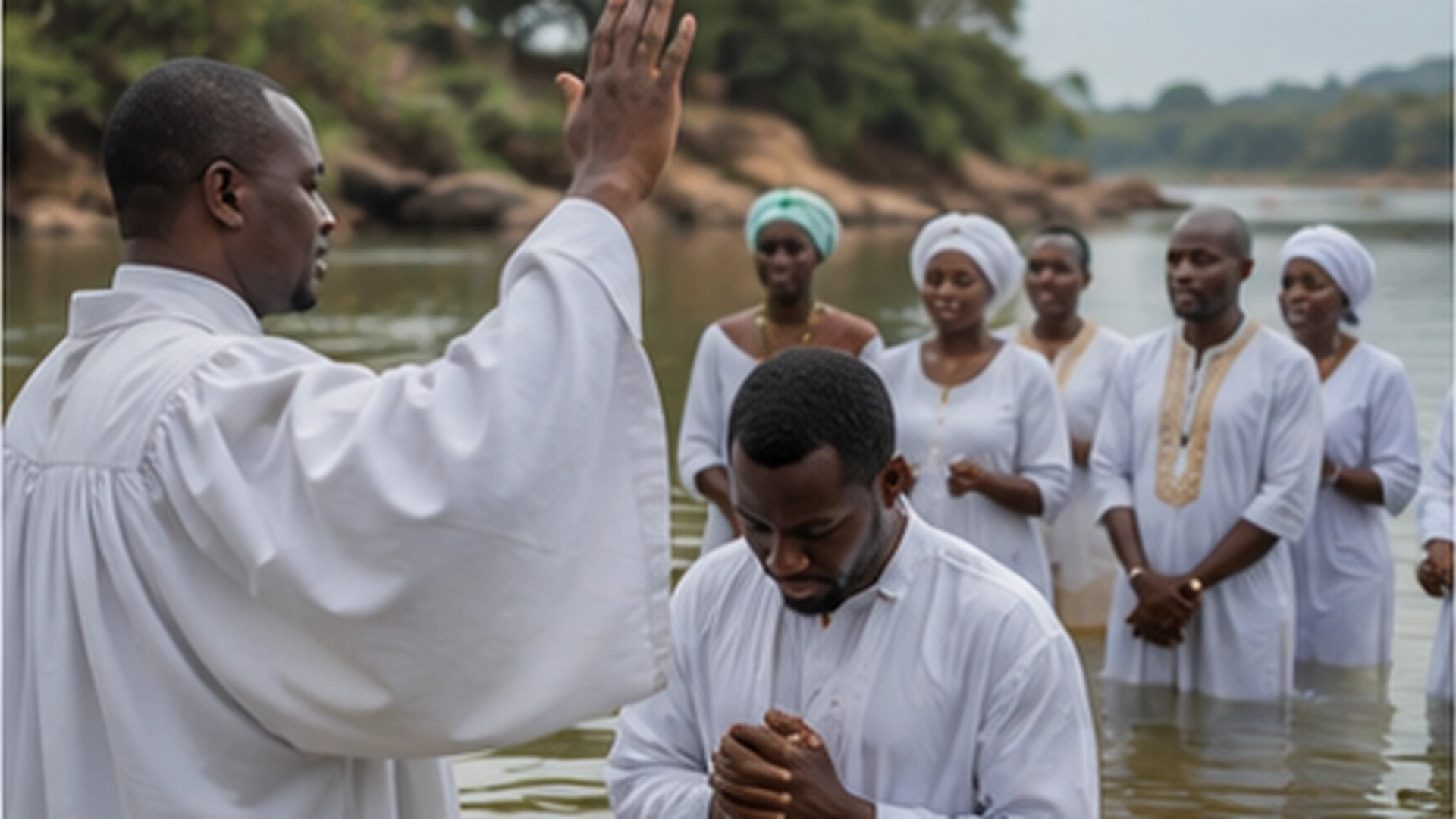
Christian Baptism and Purification
Christian baptism emerged in the first centuries of Christianity as the central water rite of initiation into the Christian community.
Different denominations understand its timing, method, and theological effects differently.
Some baptize infants. Others baptize only people who personally profess faith. Baptism may involve full immersion, partial immersion, pouring, or sprinkling.
In Catholic teaching, immersion signifies death, purification, regeneration, and renewal. Baptism is understood as entry into Christian life and new birth in the Holy Spirit.
Orthodox, Anglican, Lutheran, Methodist, Baptist, Pentecostal, African Independent, and other Christian traditions may emphasize overlapping but distinct meanings.
These can include:
- Forgiveness
- Participation in Christ’s death and resurrection
- Entry into the church
- New birth
- Covenant
- Public profession of faith
- Reception of the Holy Spirit
- Adoption into the Christian community
Baptism should therefore not be described merely as “washing bad energy away.”
That language may sound familiar in commercial spiritual content, but it fails to reflect Christian theology and denominational differences.
Ethiopian Orthodox Timkat
Timkat, the Ethiopian Orthodox Tewahedo celebration of Epiphany, commemorates the baptism of Jesus Christ in the River Jordan.
The observance includes processions, worship, the movement of covered tabots, and the blessing of water. UNESCO recognizes Ethiopian Epiphany as intangible cultural heritage.
Timkat connects purification and renewal with:
- The baptism of Jesus
- Ethiopian Orthodox scripture and liturgy
- Public religious identity
- Community participation
- Church authority
- The annual religious calendar
It should not be called a general African cleansing ceremony.
The tabot is sacred within Ethiopian Orthodox practice and is governed by religious boundaries. It should not be treated as a decorative object, exposed casually, or reproduced without regard for church expectations.
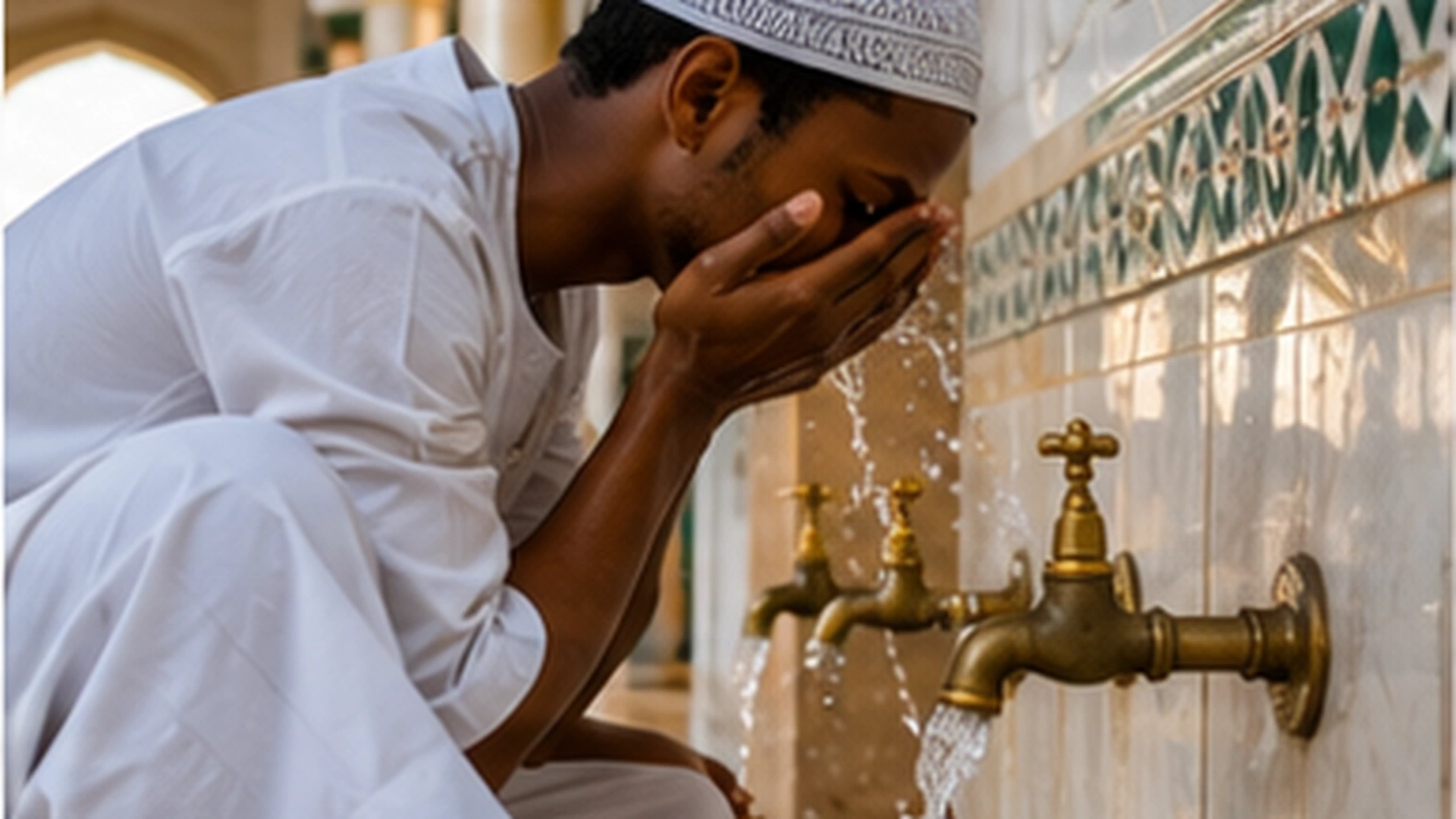
Islamic Wuḍūʾ, Ghusl, and Tayammum
Islamic purification includes clearly defined practices connected with worship.
Wuḍūʾ is the prescribed ablution commonly performed before formal prayer. Qur’an 5:6 instructs worshippers to wash the face and arms, wipe the head, and wash the feet. The same passage addresses full washing in particular circumstances and allows purification with clean earth when water is unavailable or cannot appropriately be used.
Ghusl is a full ritual washing required in defined circumstances.
Tayammum is a prescribed use of clean earth or dust as an alternative under qualifying conditions.
These practices show that purification is not dependent on an assumption that water possesses independent magical power.
Islamic purification is structured through intention, religious law, worship, accessibility, and obedience to Allah.
Wuḍūʾ also should not be reduced to ordinary hygiene.
A person may wash for physical cleanliness without performing wuḍūʾ, while a valid ablution follows religious requirements that may differ according to legal school and circumstance.
Muslim communities across Africa, Asia, Europe, and the Americas share Islamic sources while differing in architecture, water access, local custom, and legal interpretation.
Ablution facilities in a mosque in Kampala may look different from those in Dakar, Cairo, Istanbul, or Jakarta without becoming a different religion.
Hindu Sacred Bathing and Kumbh Mela
Water has major religious significance across diverse Hindu traditions.
Rivers may be understood as sacred landscapes, manifestations of divine presence, pilgrimage destinations, or sources of ritual renewal.
Kumbh Mela brings immense numbers of pilgrims to designated locations where participants bathe or take a dip in sacred rivers. UNESCO describes the gathering as a major peaceful pilgrimage in which ritual bathing is central. Devotees may understand bathing as connected with liberation from sin and the cycle of birth and death.
Hindu traditions are internally diverse.
Not every Hindu participates in Kumbh Mela. Not every river has the same status. Different families, regions, lineages, temples, and philosophical schools interpret purity and pilgrimage differently.
The Ganges should also not be described as merely a natural river used for bathing.
Within Hindu traditions, Ganga may be understood as a goddess and sacred presence.
At the same time, religious sacredness and microbiological safety are different questions. A river may be spiritually sacred while also facing sewage, chemical pollution, or disease risk.
Shinto Harae and Misogi
Purification is central to many Shinto practices in Japan.
The broader concept of harae or harai refers to purification, while misogi commonly involves water.
Japan’s official tourism organization describes misogi at Shirayama-Hime Shrine as a structured Shinto purification ceremony led by priests and involving cold water connected with the sacred environment of Mount Hakusan.
Participants are guided through particular words and actions. The practice belongs to shrine authority, religious history, and a relationship with nature and kami.
Misogi should not be reduced to:
- Cold-water therapy
- A fitness challenge
- A social-media endurance activity
- Generic meditation
- An invented “samurai cleanse”
A person standing beneath a waterfall for a photograph is not necessarily performing an authorized Shinto rite.
Cultural context, preparation, leadership, intention, and place matter.
Purification Beyond Water
Water is prominent, but purification has never depended on water alone.
Different traditions may use:
- Smoke or incense
- Fire or lamps
- Earth or dust
- Salt
- Oil
- Herbs
- Fasting
- Dietary restrictions
- Changed clothing
- Prayer
- Sacrifice
- Waiting periods
- Confession
- Restitution
- Community reconciliation
These materials do not carry automatic universal meanings.
Smoke may symbolize prayer in one tradition, remove ritual pollution in another, and function primarily as fragrance elsewhere.
Earth appears in Islamic tayammum under defined conditions, but this does not mean that every ceremony involving soil is a form of Islamic purification.
Oil may consecrate in one religious setting while serving an ordinary cosmetic or medicinal role in another.
Purification of People, Objects, and Places
Purification does not always focus on the human body.
People
A person may prepare for prayer, initiation, pilgrimage, marriage, religious office, burial work, or return to ordinary participation.
Objects
Clothing, utensils, statues, sacred vessels, tools, or offerings may require prescribed preparation.
Buildings
Temples, churches, shrines, homes, and gathering spaces may be cleaned, blessed, fumigated, or reconsecrated.
Land
Fields, construction sites, city boundaries, and public areas may be ritually marked or restored.
Communities
A ceremony may concern an entire city, army, lineage, congregation, or age group rather than one individual.
Understanding the subject of purification is essential.
A ritual preparing a priest for temple service is different from one restoring a community after conflict.
Who Has Authority to Purify?
The answer varies by tradition.
A practice may be performed by:
- The individual worshipper
- A priest
- A rabbi
- An imam
- A pastor
- A shrine custodian
- A family elder
- A lineage head
- A healer
- A diviner
- A recognized ritual specialist
- A group of initiated participants
These roles should not be combined.
An elder is not automatically a healer. A healer is not automatically a diviner. A priest may hold authority within one institution but not another.
Some purification practices are personal and public.
Others require restricted knowledge, initiation, sacred office, or community permission.
How Purification Practices Change Over Time
Traditions change when communities experience:
- Migration
- Urbanization
- Conversion
- Colonial rule
- Religious reform
- New technologies
- Water scarcity
- Public-health restrictions
- Interfaith marriage
- Environmental damage
- New legal systems
- Diaspora life
A ritual once performed at a river may move to a prepared pool.
A large public ceremony may become a household observance. A prayer may be translated for younger generations. A congregation may redesign ablution facilities to conserve water or improve accessibility.
Adaptation does not automatically make a tradition false.
However, a newly invented commercial practice should not be advertised as an unchanged ancient African, Egyptian, Jewish, Hindu, or Indigenous ceremony without evidence.
Common Misconceptions
“All Purification Practices Remove Sin”
False.
Some concern ritual readiness, religious status, social transition, sacred access, community order, or preparation rather than moral wrongdoing.
“Ritual Impurity Means Dirtiness”
False.
Ritual impurity is defined by a tradition’s religious system. It may exist even when a person has bathed and is medically clean.
“All Ancient Cultures Used the Same Cleansing Ritual”
False.
Ancient Egyptian, Greek, Roman, Jewish, African, Asian, and other practices had different institutions, materials, deities, and meanings.
“Christian Baptism Is Just an Ancient Pagan Washing Ceremony”
False.
Christianity developed within historical environments where washing rites existed, but Christian baptism is defined through Christian scripture, theology, and community identity.
“Wuḍūʾ Is Only About Hygiene”
False.
It is a prescribed Islamic preparation for worship, even though it also involves physical washing.
“Sacred Water Cannot Carry Disease”
False.
Religious meaning does not remove bacteria, parasites, chemicals, or sewage.
“Anyone Can Recreate an Indigenous Purification Ritual”
False.
Some ceremonies are restricted to community members, initiated participants, or authorized specialists.
“Purification Guarantees Protection or Healing”
False.
A ceremony may provide meaning, hope, identity, or spiritual support, but it cannot guarantee health, fertility, wealth, legal success, or protection from every danger.
Public Health and Practical Safety
Purification practices should not expose participants to preventable harm.
The World Health Organization explains that unsafe drinking water and inadequate sanitation contribute to illnesses including diarrhoeal disease, hepatitis A, typhoid, and other infections. Water that appears clear may still be contaminated.
Before drinking, entering, or sharing natural water, communities should consider:
- Local water-quality advice
- Sewage contamination
- Schistosomiasis or other parasite risk
- Flooding
- Strong currents
- Dangerous animals
- Chemical pollution
- Open wounds
- Drowning risk
- Safe access for children and older adults
Smoke, incense, candles, and fire also require ventilation and supervision. Household air pollution and repeated exposure to smoke can harm respiratory and cardiovascular health.
Chemical cleaning should remain separate from symbolic cleansing. The CDC warns never to mix bleach with ammonia or other cleaners because dangerous gases may be released.
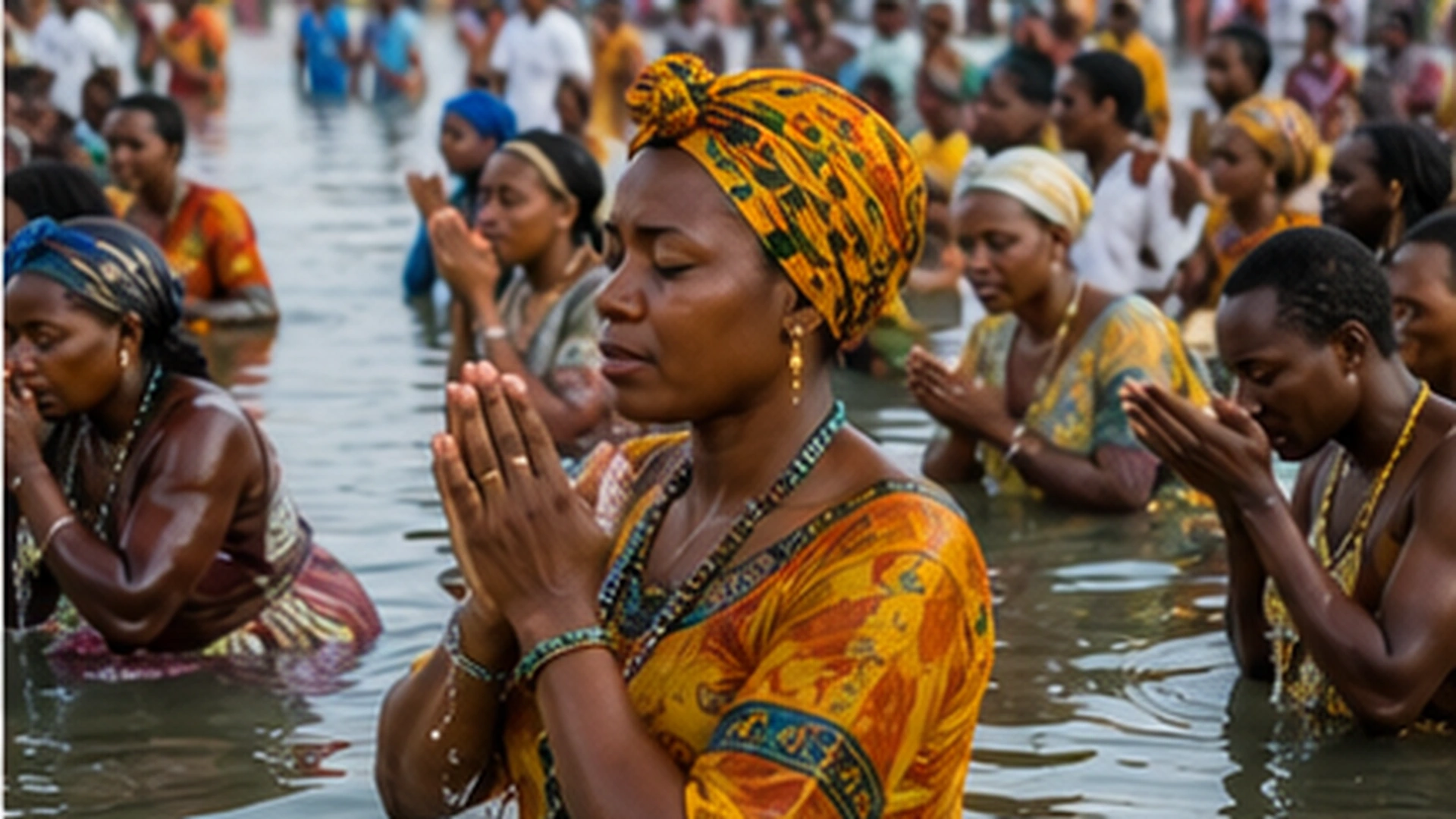
Ethical Boundaries
Purification should never be used to justify:
- Forced bathing or immersion
- Physical restraint
- Sexual abuse
- Humiliation
- Violence
- Child endangerment
- Drinking contaminated substances
- Burning toxic materials
- Withholding medical treatment
- Punishing menstruating women
- Isolating disabled people
- Financial exploitation
- Threats involving curses or spirits
- Secret filming
- Publishing restricted prayers
- Claims of guaranteed healing
No person should be labelled dirty, cursed, spiritually contaminated, or responsible for family misfortune merely because they are ill, grieving, menstruating, disabled, infertile, or experiencing mental distress.
Medical symptoms require appropriate health care.
Abuse, coercion, and immediate danger require safeguarding, legal, medical, or emergency assistance.
How to Study Purification Practices Respectfully
Name the Tradition Precisely
Write:
“In ancient Egyptian temple practice…”
“In Islamic wuḍūʾ…”
“Within Ethiopian Orthodox Timkat…”
“In this Jewish mikveh context…”
Avoid saying:
“People in Africa cleanse themselves by…”
Identify the Type of Purity
Ask whether the practice concerns:
- Hygiene
- Ritual status
- Moral repentance
- Sacred access
- Social reintegration
- Consecration
- Protection
- Transition
Identify the Authority
Explain who performs the practice and why that person is recognized.
Separate Public and Restricted Knowledge
A public festival may still contain private prayers, sacred objects, or restricted actions.
Distinguish Evidence From Belief
Use wording such as:
“Participants understand the water as blessed.”
“The ceremony symbolizes renewal.”
“Historical sources depict…”
Avoid presenting supernatural effects as experimentally verified facts.
Do Not Mix Unrelated Traditions
A visual representation should not place an Ethiopian Orthodox cross, Yoruba shrine materials, Jewish ritual objects, Shinto clothing, and Islamic prayer arrangements into one fictional ceremony.
That creates misinformation rather than cultural inclusion.
Key Takeaways
- Purification practices have a long history but no single origin.
- Physical cleanliness, ritual purity, moral renewal, and consecration are different concepts.
- Ancient Egyptian lustration could communicate both purification and the renewal of life.
- Greek and Roman purification could prepare individuals or communities for religious participation.
- Jewish mikveh immersion operates within defined religious law and does not imply moral dirtiness.
- Christian baptism symbolizes initiation, purification, death, and new life in different denominational ways.
- Islamic wuḍūʾ, ghusl, and tayammum are prescribed forms of preparation for worship.
- Hindu pilgrimage bathing and Shinto misogi belong to distinct sacred landscapes and institutions.
- Ethiopian Timkat is a specifically Ethiopian Orthodox commemoration of Christ’s baptism.
- Purification may involve water, smoke, earth, clothing, fasting, food, prayer, or waiting.
- Sacred water is not automatically medically safe.
- Private or initiatory practices should not be copied or published without permission.
- Purification should support dignity, never abuse or exclusion.
- Spiritual practices do not replace medical care, sanitation, or public safety.
People Also Ask
What is the historical purpose of purification practices?
They have been used to prepare people for worship, restore ritual status, mark transitions, consecrate objects, renew communities, and express moral or spiritual change.
Are purification rituals the same as cleaning?
No. Cleaning removes dirt or contaminants, while ritual purification changes a religiously defined status or prepares someone for sacred participation.
Which ancient civilizations practised purification?
Documented examples appear in ancient Egyptian, Mesopotamian, Greek, Roman, Jewish, South Asian, East Asian, and many other societies.
Why is water so common in purification traditions?
Water visibly washes, refreshes, supports life, and allows immersion, making it a powerful symbol of transition and renewal.
Do purification rituals guarantee protection?
No. They may express faith or cultural meaning, but they cannot guarantee healing, safety, wealth, fertility, or protection from every misfortune.
Frequently Asked Questions
1. What are purification practices?
They are culturally or religiously defined actions used to prepare, cleanse, restore, consecrate, or move a person, object, place, or community into a different recognized condition.
2. How far back do purification practices go?
Visual, archaeological, and written evidence from ancient civilizations shows that purification was already part of temple, funerary, civic, and household religion thousands of years ago.
Related Cultural Guides
For more context, continue with water as a symbol of purification, sacred herbs in traditional ceremonies, responsible ceremonial plant sourcing and a cultural overview of spiritual cleansing.
Article Information
- Publisher
- Ancestral Temple
- Editor
- Ancestral Temple
- Last updated
- Jul 26, 2026
- Last reviewed
- Jul 26, 2026
- Content version
- 3cfe95b0b2
This educational article should be read as cultural and spiritual information, not as medical, legal, financial, or emergency advice.
Helpful Related Guidance
Explore This Topic
What Is Spiritual Cleansing · Traditional Cleansing Herbs Used Around The World
About the Author
 Ancestral Temple
Spiritual guide and practitioner with decades of experience in ancestral wisdom, rituals, and divine guidance.
Related Posts
View All

Leave a Comment
We'd love to hear your thoughts.
This is a strong historical overview and provides many opportunities for future topic clusters.
The final section on respectful study would be useful for bloggers and documentary creators.
The article clearly showed why wuḍūʾ should not be reduced to ordinary handwashing.
The image placeholders are positioned well for illustrating separate historical contexts.
I appreciated the careful treatment of Ethiopian Orthodox sacred boundaries.
The glossary made terms such as tumah, harae, and lustration easier to follow.
The article correctly avoided describing every African tradition as ancestor worship.
Could you create a detailed article about community purification after conflict or crisis?
The section on purification beyond water opened several possibilities for related articles.
I liked that Christian baptism was described with denominational differences in mind.
The article made a strong case for identifying the authority who performs a ceremony.
The warning about incense, indoor smoke, and ventilation was practical.
I learned that ancient Egyptian water rituals could symbolize life as well as cleansing.
The article avoided fear-based language and promises of supernatural results.
Please write more about how migration changes purification practices in African diaspora communities.
I appreciated the reminder that old objects should not be cleaned or altered without expert knowledge.
The explanation of tayammum showed that purification is about religious law and intention, not only water.
The article would fit well within a broader knowledge hub about religious symbols.
The definition of consecration helped distinguish it from ordinary cleansing.
Could you write a separate article about smoke and incense in purification practices?
I liked that purification was connected with communities and places, not only individuals.
The Jewish mikveh section was informative and respectful about menstruation.
I enjoyed the historical progression without the article suggesting that one religion evolved directly from another.
The ethical boundaries were necessary, especially the warning against forced immersion.
The article correctly explained that sacred water and medically safe water are different categories.
Please consider an article about women, childbirth, and ritual status in different traditions.
The common misconceptions section addressed many oversimplifications found online.
The article was long but easy to read because the paragraphs were short.
I appreciated the warning against mixing unrelated religious symbols in illustrations.
The article respected differences among Muslim communities without treating local customs as religious requirements.
Could you write more about purification of sacred objects and religious spaces?
The comparison between ritual, moral, and social purification was one of the strongest sections.
I liked that Islamic purification was not described as a magical use of water.
The explanation of the tabot and the need for cultural boundaries was important.
Please write a follow-up focused on ritual purity and women without using stigmatizing language.
The idea that purification makes an invisible transition visible was clearly explained.
I appreciated the safety information about natural water and public-health risks.
The section on ancient Greek and Roman practices was balanced and avoided claiming that Christianity simply copied them.
Could you create a separate article about purification traditions documented in ancient African kingdoms?
The article would be helpful for students comparing ancient and modern religious practices.
I liked the reminder that similar actions do not automatically have the same religious meaning.
The explanation of wuḍūʾ, ghusl, and tayammum was concise and respectful.
Thank you for presenting Timkat as Ethiopian Orthodox Christianity rather than a general African cleansing ritual.
I appreciated that ancient Egyptian purification was discussed within its temple and funerary contexts.
The distinction between physical cleanliness and ritual purity made the rest of the article much easier to understand.