
Cord-Cutting Rituals Explained: Symbolism, Ethics and Modern Spiritual Practice
Pillar Article

Quick Summary
A cord-cutting ritual is a symbolic practice used to represent releasing an emotional attachment, relationship, memory, expectation or repeated pattern. Contemporary versions may i...
A cord-cutting ritual is a symbolic practice used to represent releasing an emotional attachment, relationship, memory, expectation or repeated pattern. Contemporary versions may involve visualization, thread, scissors, writing, candles, bathing, movement or a spoken statement. The “cord” is usually treated as a metaphor for attention, obligation, grief, fear or spiritual connection.
The practice is popular in modern witchcraft, New Age spirituality, meditation spaces and therapeutic-adjacent online culture. That popularity has also produced exaggerated history and certainty claims. Knot magic, binding, severing, purification and farewell ceremonies have long histories, but the familiar social-media format of two candles tied together by string should not automatically be described as an unchanged ritual from ancient Egypt, Africa, Celtic religion or Indigenous traditions.
A responsible explanation also separates personal meaning from scientific evidence. There is no established scientific evidence that invisible energetic cords literally connect two people or that cutting a thread changes another person’s mind. Symbolic actions can nevertheless provide structure, a sense of agency and a defined moment for emotional expression. Their value depends on context and should not be confused with guaranteed healing, safety, reconciliation or control.[4][5]
Cord cutting is therefore best approached as an optional symbolic marker. It may accompany a real boundary, a grief process or a decision to redirect attention. It should never replace communication when communication is safe and appropriate, psychotherapy, medical care, legal advice, digital security or a domestic-abuse safety plan.
Quick Answer
A cord-cutting ritual is a modern symbolic practice for marking release from an attachment, relationship or pattern. Practitioners may cut thread, visualize a connection dissolving, write a farewell statement or use another structured act. The ritual can support reflection or a boundary, but it cannot scientifically prove an “energy cord,” control another person, erase memory or replace therapy and safety planning.
What Is a Cord-Cutting Ritual?
In contemporary spiritual language, a cord is an imagined link between a person and someone or something that continues to occupy emotional attention. The object of release might be an ex-partner, a deceased loved one, a friendship, a family role, a workplace, a fear, an addiction-like pattern, an old identity or an outcome that cannot be forced.
The word cutting does not always mean hatred, permanent estrangement or denial that a relationship mattered. Many practitioners use it to mean changing the form of a connection: releasing responsibility for another adult’s choices, ending repeated checking, separating memory from daily behavior or allowing grief to exist without directing every decision.
Common modern versions include:
visualizing a cord dissolving, loosening or returning to each person;
cutting a length of thread while naming a boundary;
writing and tearing a statement about what is being released;
washing hands or bathing as a transition marker;
moving objects from one side of a room to another;
closing a journal, deleting a draft message or changing a digital routine;
using a candle as a focus point, although an open flame is unnecessary.
These forms share a basic ritual structure: preparation, focused attention, a symbolic action and a closing step. The structure gives the experience a beginning and an end. That can be meaningful even when the practitioner treats the cord purely as a metaphor.
What the Cord Symbolizes
The cord is powerful because it turns an invisible experience into something a person can see and handle. Relationships involve memory, attention, habits, promises, fear, affection and social obligations. A physical thread can represent those overlapping ties without claiming to measure them.
Attachment and attention
After a breakup or conflict, attention may repeatedly return to the same person. Checking a phone, replaying conversations or imagining alternative outcomes can become a daily loop. The cord may symbolize that loop rather than the relationship itself.
Obligation and responsibility
A person may feel responsible for rescuing, monitoring or emotionally regulating another adult. Cutting the cord can represent returning responsibility to its proper owner. It does not remove duties toward children, dependants, legal agreements or shared property.
Identity
Some relationships shape how a person understands themselves: spouse, caregiver, employee, student, believer or family peacemaker. A ritual may mark the difficult transition from one identity to another.
Grief and unfinished communication
The cord may represent words that were never said or a goodbye that could not happen. In grief work, symbolic objects and farewell actions can create a bounded opportunity to express emotion, although research usually measures the whole therapeutic intervention rather than the ritual element alone.[4]
Boundaries
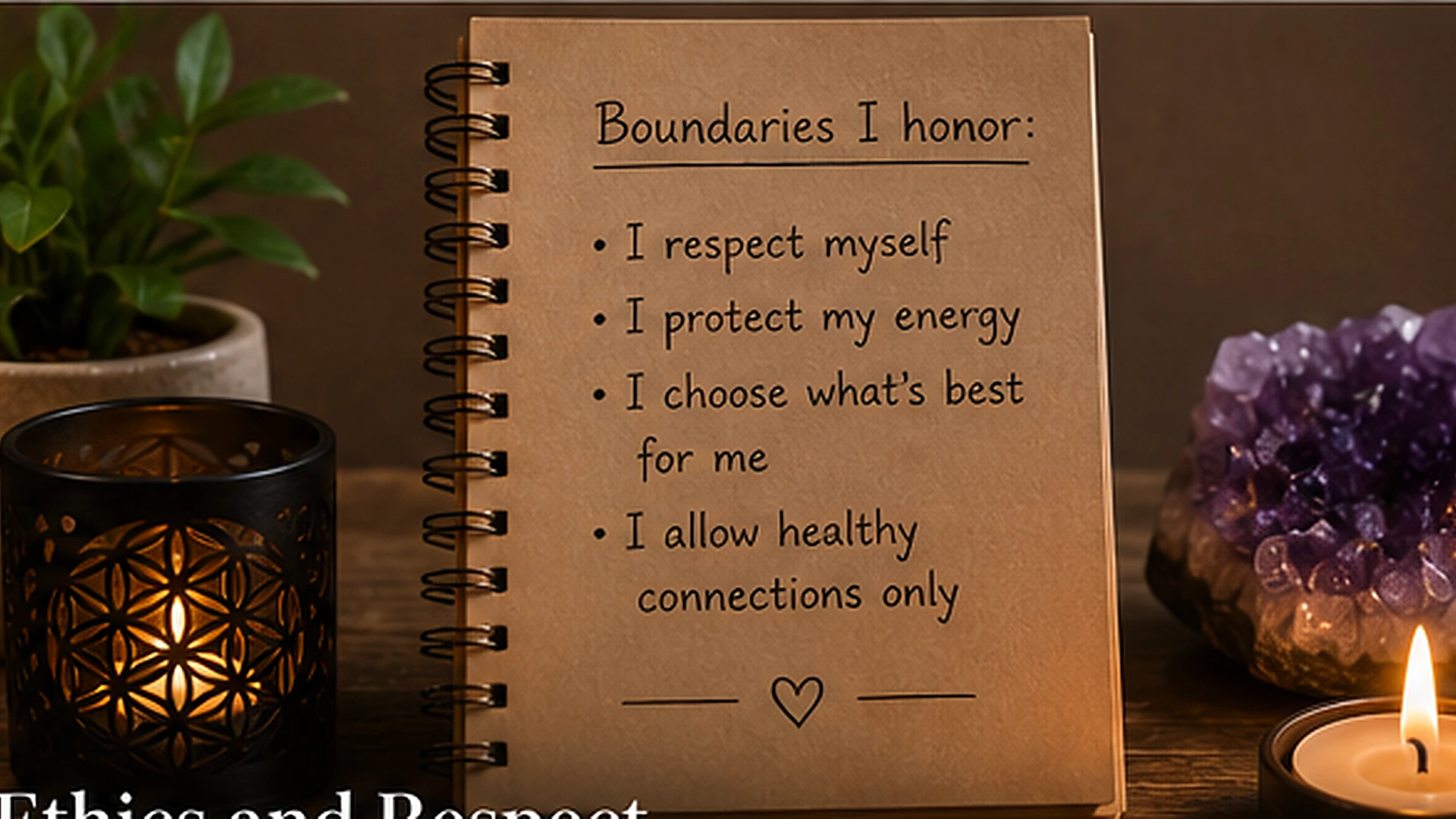
A boundary is a statement about one’s own actions: “I will not answer messages after midnight,” “I will not discuss this subject,” or “I will contact a support person if I feel unsafe.” Cord cutting is most ethically useful when it points toward such concrete choices.
Are Cord-Cutting Rituals Ancient?
The simple answer is that symbolic cords are ancient, but the familiar modern cord-cutting ritual does not have one documented universal origin.
Human communities have long used knots, threads, bindings, severing gestures, purification rites and farewell ceremonies. A knot can represent union, restriction, memory, protection or a vow. Cutting can represent release, sacrifice, transition or the end of an obligation. These broad themes appear in many places because cord is an ordinary material and tying is a common human action.
That does not prove that every historical knot or severing rite was “energy cord cutting.” Similar materials can serve different purposes. A marriage cord, healing thread, protective knot, legal bond, funerary tie and modern breakup ritual should not be collapsed into one lineage.
Modern Wicca itself emerged in the twentieth century as a creative religious synthesis. Recent scholarship describes Gerald Gardner as central to shaping Wicca from multiple Western and Eastern sources rather than recovering an unchanged prehistoric religion.[1] Historians of modern Paganism have likewise shown that contemporary ritual can be religiously meaningful while still having modern forms and histories.[2]
The language of invisible energetic attachments also fits the fluid, hybrid character of contemporary spirituality, in which meditation, occultism, therapy vocabulary, social media and individualized belief interact.[3] The exact phrase and format are difficult to date because many practices circulate through oral teaching, workshops and online posts rather than formal institutions.
A historically honest article can therefore say: cord cutting is a contemporary ritual family that draws on old metaphors of binding and release. It should not claim that a specific two-candle method was universally practiced by ancient Egyptians, Celts, Africans, Hindus, Buddhists or Indigenous peoples without direct evidence.

Modern Spiritual Beliefs About Energy Cords
Many contemporary practitioners describe cords as channels through which emotion, attention or “energy” moves between people. Some distinguish loving cords from draining cords; others believe that every close interaction creates a temporary link. In visualization practices, the cord may be imagined at the heart, abdomen, throat or another symbolic location.
These descriptions belong to spiritual belief, not established anatomy or physics. No recognized medical test can detect an interpersonal energy cord, and a flame’s height or the speed at which string burns cannot reliably reveal another person’s feelings. Candle behavior is shaped by wick length, wax, drafts, spacing, cord material and heat.
Believers may still find the imagery useful. A metaphor does not need to be literal to organize thought. Saying “I feel tied to this outcome” can communicate a real psychological experience. Problems arise when a practitioner presents an interpretation as certainty: “The cord returned, so your ex is attacking you,” “The black smoke proves a curse,” or “You must pay for repeated cleansing.” Such claims can increase fear, dependency and financial exploitation.
A responsible spiritual practitioner should state the limits of interpretation, avoid diagnosing curses or mental illness, respect privacy and encourage practical support when the situation involves stalking, abuse, bereavement, compulsive behavior or severe distress.
Does Cord Cutting Work?
The answer depends on what “work” means.
Literal energetic claim
There is no established scientific evidence that a ritual severs a measurable invisible cord between two people, changes the other person’s emotions or causes them to stop thinking about the practitioner. A ritual cannot ethically promise control over someone else.
Symbolic and emotional function
Research on ritual and loss suggests a more modest possibility. Experiments have found that mourning rituals may reduce reported grief partly by increasing a sense of control.[5] A scoping review of ritual elements in evidence-informed grief interventions identified writing, symbolic communication, farewell ceremonies, meditation and object-based actions. Many full treatments showed improvement, but the authors emphasized that effects were generally measured for the entire intervention rather than the ritual component by itself.[4]
This distinction is important. A cord-cutting act may be one useful moment within journaling, therapy, social support, time and behavior change. It should not be advertised as a clinically proven treatment on its own.
Behavior and boundaries
The ritual is most likely to have practical meaning when followed by observable action: muting notifications, returning belongings safely, changing routines, ending repeated checking, asking for support, setting a communication limit or beginning counseling. Without such action, the symbolic moment may fade quickly.
Rumination and avoidance
Repeatedly performing the same ritual can become a way of checking whether one is “fully detached.” Research on complicated grief links rumination and experiential avoidance with persistent distress.[6] If every unwanted thought is treated as proof that the cord has reattached, the ritual can reinforce the very monitoring it was meant to reduce.
Successful release does not mean never remembering, never grieving or never feeling a bodily response. It means memories and emotions gradually become less controlling and a person regains the ability to choose what happens next.
Cord Cutting After a Breakup, Estrangement or Bereavement
Different losses require different language.
After a breakup, a cord-cutting ritual may mark the end of waiting, bargaining or checking. It is not evidence that the relationship meant nothing. It also does not settle shared finances, housing, custody, workplace contact or legal obligations.
After family estrangement, the goal may be a limited boundary rather than permanent severance. A person might release the expectation that a relative will apologize while remaining open to safe, accountable change. Family systems are complex; one dramatic ritual should not be used to pressure others into choosing sides.
After bereavement, “cutting” may feel wrong because many grieving people want to preserve a continuing symbolic bond. Grief rituals can honor, let go of a traumatic moment or support self-transformation.[4][7] The bond with the deceased can change without being erased. A more suitable image might be loosening a knot, placing a letter in a memory box or carrying forward a value the person taught.
There is no moral requirement to perform cord cutting. Some people prefer prayer, therapy, memorialization, community support, exercise, art, legal closure or simply time. A ritual should serve the person’s values rather than become another test they can fail.

Ethics: Autonomy, Consent and Privacy
Cord cutting is ethically strongest when it concerns the practitioner’s own attention, conduct and boundaries.
A person does not need an ex-partner’s permission to stop sending messages, redirect attention, remove a private reminder or perform a personal symbolic act. The ritual is about the practitioner’s choices. It should not claim to invade the other person’s mind or remove their free will.
The following uses are ethically concerning:
declaring that the ritual will make someone forget, suffer, return or lose another relationship;
secretly taking hair, clothing, photographs, passwords or other personal material;
posting the ritual online with identifying information to shame the other person;
interpreting every coincidence as surveillance, psychic attack or renewed attachment;
charging escalating fees to remove cords that supposedly keep returning;
telling a vulnerable person that ordinary grief proves possession, a curse or spiritual contamination;
using spiritual language to avoid accountability for one’s own harm.
Consent also matters in group practice. A facilitator should explain the activity, allow people to opt out, avoid touching without permission and never pressure participants to disclose trauma. The exercise should not be sprung on employees, students or clients as if everyone shares the same metaphysical worldview.
Privacy is especially important during breakups and family conflict. Written names, photos, messages and recordings may expose sensitive information. A ritual can use neutral symbols instead of another person’s image or belongings.
Abuse, Stalking and Trauma: A Ritual Is Not a Safety Plan
When a relationship involves coercive control, threats, stalking or violence, the priority is safety—not achieving a feeling of energetic completion.
Leaving or reducing contact can increase danger in some abusive situations. The National Domestic Violence Hotline recommends individualized safety planning based on the survivor’s circumstances, including communication, trusted contacts, escape routes, technology and children.[8] A public ritual, confrontation or announcement of “cutting the cord” may be unsafe if it alerts an abusive person.
A survivor is never responsible for ending another person’s abusive behavior. Ritual language should not imply that abuse continued because the survivor failed to sever an attachment strongly enough. Trauma responses, financial dependence, housing, immigration status, disability, children and fear can all shape what options are available.
A private symbolic act may offer comfort, but it should sit alongside practical resources. Depending on the situation, those may include a domestic-violence advocate, legal advice, secure communication, medical care, trusted friends, emergency services or trauma-informed therapy. The safest timing and method may be very different from an online ritual tutorial.
For non-abuse-related distress, SAMHSA recommends basic coping supports such as self-care, reaching out to trusted people and using healthy stress-management strategies.[9] Persistent panic, inability to function, self-harm thoughts, severe sleep disruption or overwhelming trauma symptoms deserve professional attention.

Candle and Fire Safety
Viral cord-burning videos often tie string between two candles and interpret how the flames behave. This setup introduces a real fire risk because thread can ignite, fall, pull a candle over or spread flame across wax, paper, fabric or furniture.
The U.S. Fire Administration warns that open-flame candles can cause home fires, recommends flameless alternatives and advises keeping lit candles at least 12 inches from anything that can burn.[10] Fire services also advise using stable heat-resistant holders, supervising flames continuously and keeping candles away from children and pets.[11]
The safest option is not to burn a cord. Use scissors, tear paper, untie a knot, move two objects apart or use an LED candle. If a practitioner chooses an open flame for an unrelated devotional reason, the flame should not be connected to suspended string or placed near paper, curtains, loose clothing or flammable ritual material.
Flame behavior is not a reliable divination system. Drafts, wick length, wax composition, candle distance and cord fibers affect what happens. A fast burn does not prove that a relationship was toxic, and a candle that relights another object is a fire event—not a spiritual message.
A Safer, Non-Coercive Reflective Practice
The following exercise is designed as symbolic reflection, not supernatural instruction. It uses no fire and does not name or attempt to influence another person.
1. Define what is actually being released
Choose a pattern within your control: repeated checking, an expectation of apology, an urge to argue, responsibility for another adult’s emotions or a commitment that has ended. Avoid statements about controlling another person.
2. Name what remains
Release does not erase facts. Shared parenting, legal obligations, grief, lessons, affection or memories may remain. Write one sentence acknowledging what must still be handled responsibly.
3. Choose a symbol
Use a short length of ordinary thread, a paper strip or a drawn line. The symbol represents the pattern, not the person’s soul, body or identity.
4. State a boundary and an action
Examples include: “I will not check this account for seven days,” “I will communicate only through the agreed channel,” or “I will contact a friend rather than send another message.” A realistic action gives the ritual a practical anchor.
5. Cut, tear or untie
Perform one simple action. There is no need to interpret how the fibers fall or repeat the act until it feels perfect.
6. Close the exercise
Dispose of the material normally, wash your hands, take several breaths or step outside. Then complete the practical action you named.
7. Review without testing
After several days, ask whether the boundary helped. An unwanted memory does not mean the ritual failed. Adjust the real-world plan rather than treating every emotion as a reattached cord.
Aftercare and Emotional Responses
People may feel relief, sadness, anger, numbness, doubt or nothing unusual after a ritual. None of these reactions proves that an energetic event occurred. The action may simply make the loss more emotionally visible.
Helpful aftercare can include eating, resting, walking, talking with someone trustworthy, limiting social-media checking and writing down the next practical step. A person should not drive, use alcohol or handle flames while overwhelmed.
The goal is not emotional purity. Grief and attachment often return in waves. A ritual can mark a decision, but the nervous system and daily habits may take longer to change.
Seek qualified support when distress persists or interferes with sleep, work, eating, parenting or safety. A therapist can help distinguish grief, trauma, obsessive rumination, depression, anxiety and relationship patterns. Spiritual support and clinical care can coexist when neither is presented as a substitute for the other.
Common Misunderstandings
“If I remember the person, the cord returned.” Memory is not evidence of a metaphysical reconnection. Emotional learning fades unevenly.
“The other candle burned faster, so I know what they feel.” Candle behavior is influenced by physical conditions and cannot read another person’s mind.
“I need to repeat the ritual until I feel nothing.” Repetition can become compulsive checking. Feeling something does not mean a boundary is invalid.
“Cord cutting means I must hate or block everyone.” Release can mean changing expectations, limiting a topic or ending one behavior. The appropriate boundary depends on safety and context.
“A ritual can replace a breakup conversation.” When direct communication is safe and ethically required, a private ritual does not remove responsibility to communicate clearly. In unsafe relationships, confrontation may not be advisable; seek safety guidance.
“All cultures practiced this exact rite.” Binding and severing symbols are widespread, but the recognizable modern format has no single universal ancient origin.
“A practitioner can guarantee permanent removal.” No ethical practitioner can promise control over thoughts, grief, another person or future contact.
Key Takeaways
Cord cutting is a symbolic modern practice for release, boundaries and transition.
Historical knot and severing traditions should not be treated as proof of one universal ancient cord-cutting ceremony.
There is no scientific evidence for measurable interpersonal energy cords or control of another person through ritual.
Symbolic ritual may provide structure, expression and perceived agency, especially when paired with real behavior change.
Consent, privacy and non-coercion are central ethical standards.
In abuse or stalking situations, personalized safety planning comes before spiritual closure.
Burning string between candles is unnecessary and introduces avoidable fire risk.
Memories and emotions returning do not mean a cord has “reattached.”
Therapy, advocacy, legal support, community and time may be more important than the ritual itself.
People Also Ask
What does a cord-cutting ritual mean spiritually?
It usually symbolizes releasing an attachment, expectation, emotional pattern or sense of obligation. Spiritual practitioners may describe the connection as energetic, while others use the cord only as a metaphor.
Are cord-cutting rituals ancient?
Knots, cords, bindings and severing gestures are ancient and widespread, but the recognizable modern cord-cutting ritual does not have one proven universal ancient origin. Many current forms reflect modern witchcraft, New Age spirituality, visualization and therapeutic language.
Does cord cutting make someone leave you alone?
No ritual can guarantee another person’s behavior. If unwanted contact continues, use practical boundaries, platform controls, documentation, legal advice or safety resources appropriate to the situation.
Can cord cutting be done without candles?
Yes. Thread and scissors, paper tearing, visualization, journaling, movement or simply closing a digital channel can provide symbolism without an open flame.
Can cord cutting help with grief?
A symbolic act may help some people express grief or mark a transition. Research on ritual elements in grief treatment is promising but does not prove that cord cutting alone treats prolonged grief.
Is cord cutting ethical?
It is generally most ethical when focused on one’s own attention, choices and boundaries. Claims of controlling, punishing, spying on or changing another person raise serious ethical concerns.
Frequently Asked Questions
What should I say during a cord-cutting ritual?
Use language about your own action, such as “I release the expectation that I can control this outcome” or “I choose not to continue this pattern.” Avoid declarations about forcing another person to feel or behave differently.
Why did I feel worse afterward?
The ritual may have brought grief, anger or fear into focus. Rest, seek support and avoid interpreting distress as proof of spiritual attack. Persistent or severe symptoms deserve professional support.
Should I keep the cut cord?
There is no universal rule. Keeping it, discarding it or recycling paper are symbolic choices. Avoid littering, burying synthetic material or leaving ritual items in public or ecologically sensitive places.
Is no contact the same as cord cutting?
No contact is a behavioral boundary involving communication. Cord cutting is symbolic. A person may use one without the other, depending on safety, shared responsibilities and professional guidance.
Can a practitioner cut a cord for me?
A facilitator may guide reflection, but they cannot verify a literal cord or guarantee permanent results. Avoid practitioners who create fear, demand repeated payments or discourage medical, legal or psychological help.
What is the difference between release and avoidance?
Release acknowledges the experience and chooses a new direction. Avoidance attempts to suppress every thought or feeling. Healthy change often includes tolerating some grief while reducing harmful behavior.
Conclusion
Cord-cutting rituals give physical form to a familiar human experience: feeling tied to a relationship, memory, responsibility or outcome that must change. Thread, visualization and farewell language can create a clear moment of decision. For some people, that structure supports reflection and a renewed sense of agency.
The practice becomes misleading when metaphor is presented as measurement, modern ritual is labeled universally ancient or a candle is treated as evidence of another person’s mind. It becomes harmful when it encourages coercion, fear, repeated payment, unsafe fire, public shaming or the belief that a survivor caused abuse by failing to sever a bond.
A responsible cord-cutting practice focuses on the practitioner’s own choices. It names what is being released, identifies what still requires care, and leads to a concrete boundary or support step. The deepest change usually happens after the symbolic cut—through time, honest grief, safety, community and repeated actions that make a different life possible.
Article Information
- Publisher
- Ancestral Temple
- Editor
- Ancestral Temple
- Last updated
- Jul 30, 2026
- Last reviewed
- Jul 30, 2026
- Content version
- 4dbdab3d54
This educational article should be read as cultural and spiritual information, not as medical, legal, financial, or emergency advice.
Helpful Related Guidance
About the Author
 Ancestral Temple
Spiritual guide and practitioner with decades of experience in ancestral wisdom, rituals, and divine guidance.
Related Posts
View All












Comments
We'd love to hear your thoughts.