
Love Attraction Rituals for Singles: Meaning, Ethics and Traditional Practices
Pillar Article
Quick Summary
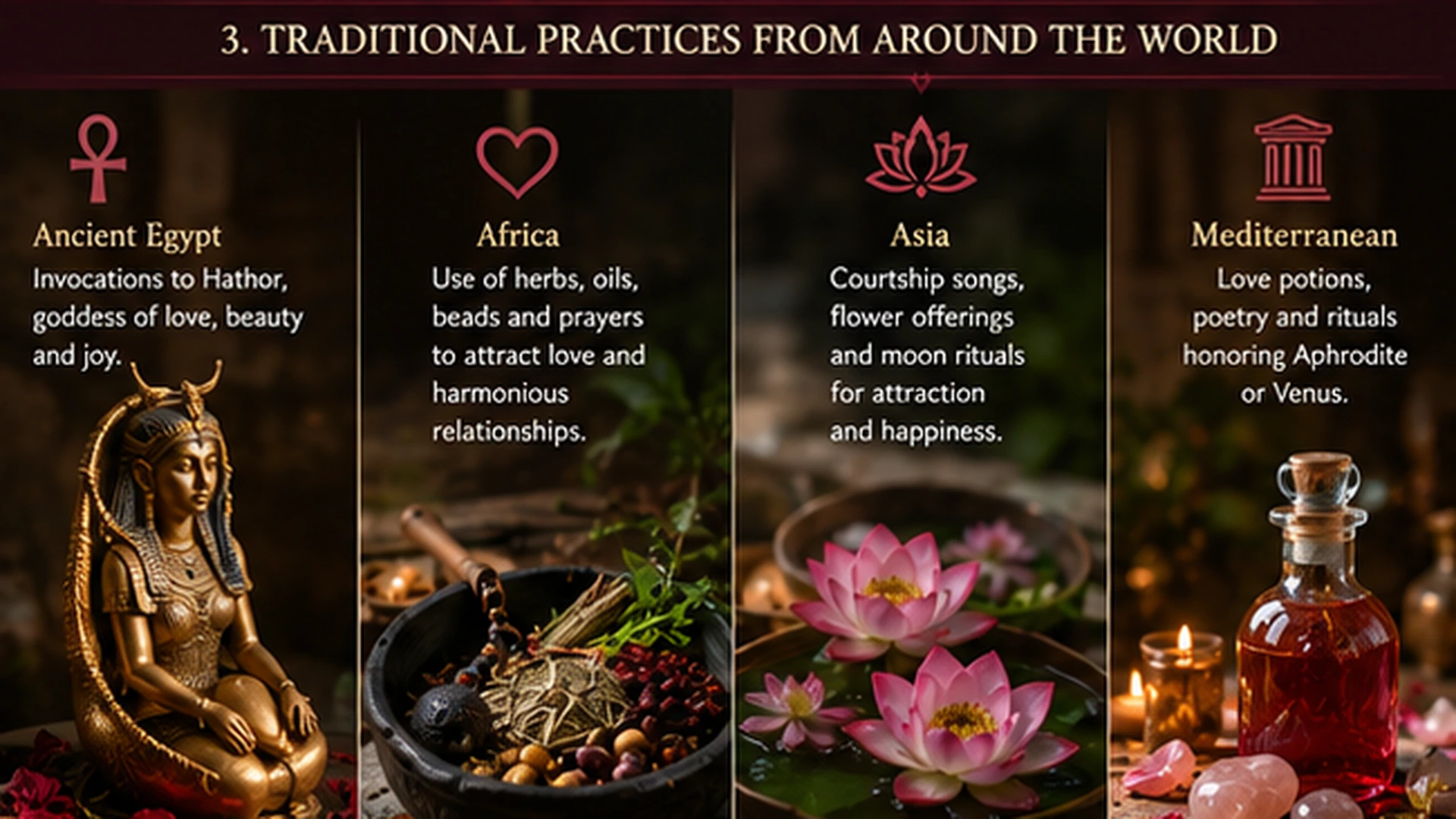
Love attraction rituals for singles are symbolic practices used to express readiness for companionship, clarify relationship intentions or seek spiritual support in meeting a compa...
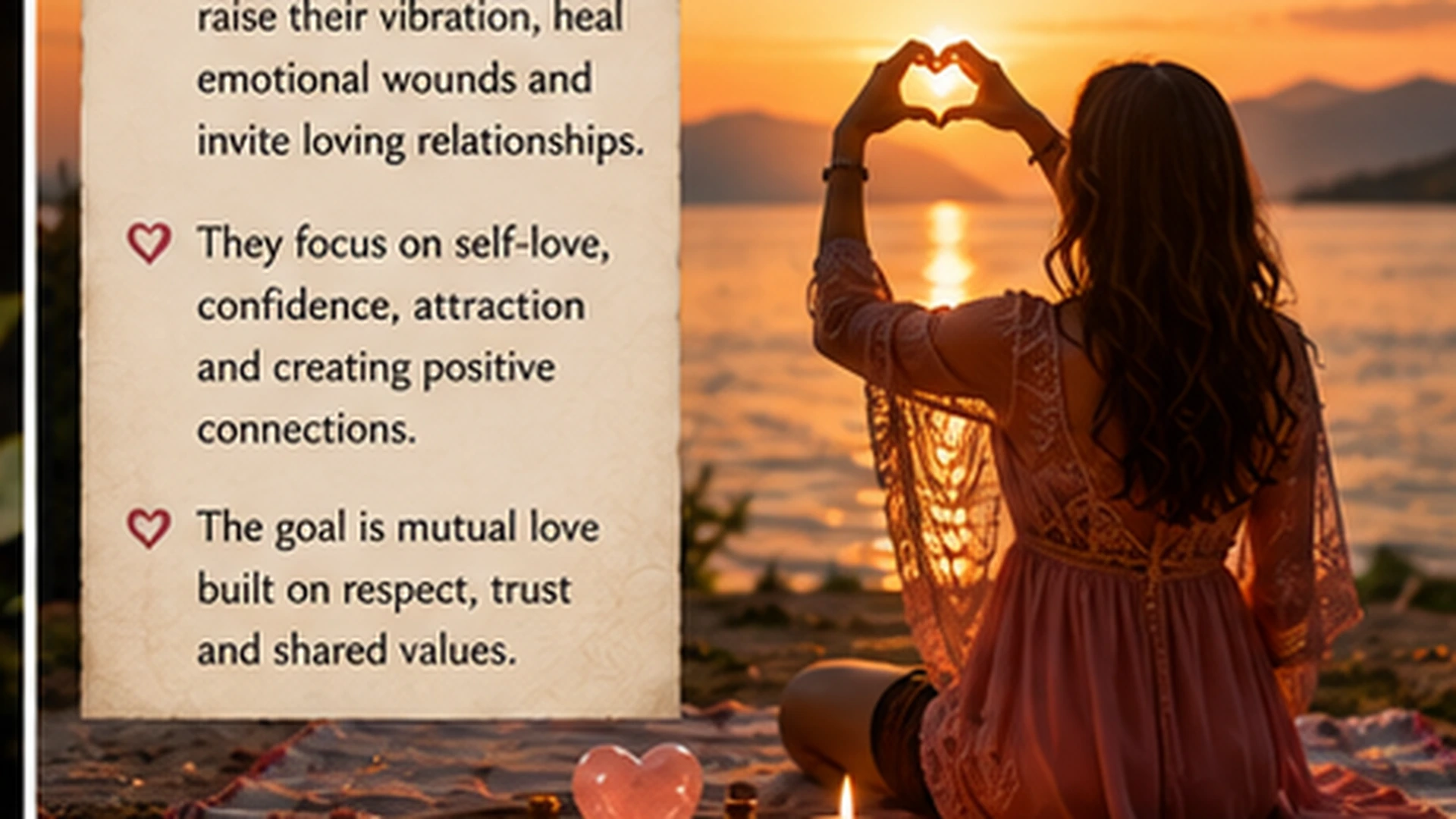
Love attraction rituals for singles are symbolic practices used to express readiness for companionship, clarify relationship intentions or seek spiritual support in meeting a compatible partner. Across history, people have approached love through prayer, offerings, songs, adornment, poetry, festivals and magic. These practices did not all mean the same thing, and they should not be treated as one universal formula.
A responsible modern approach begins with a clear boundary: no ritual can ethically remove another person's freedom to choose. Practices aimed at controlling a named person, breaking an existing relationship or creating dependence are different from rituals that help a single person cultivate openness, confidence, discernment and honest opportunities to meet others.
This guide explains the meaning of love attraction rituals, looks at documented cultural examples and offers a consent-centered practice for singles. It does not promise supernatural results, guarantee marriage or replace communication, community participation, dating judgment or professional support when relationships become distressing.
Quick Answer
| Quick Answer An ethical love attraction ritual focuses on the person performing it: clarifying values, releasing unhealthy patterns, praying or setting an intention for a mutually willing partner, and taking practical steps to meet people. It should never target a named person, claim to override consent or promise guaranteed love. Traditional practices vary by culture and must be described in their own historical and community contexts. |
|---|
What Is a Love Attraction Ritual?
A love attraction ritual is a structured symbolic act connected with the hope of meeting, recognizing or becoming ready for a romantic partner. The word "ritual" can describe many things: a formal religious ceremony, a household prayer, a community festival, a personal intention-setting practice or a historical magical operation. These categories should not be collapsed into one.
In some traditions, a person might visit a shrine, offer flowers, wear meaningful adornment, join a seasonal festival or ask elders and relatives to assist with introductions. In other settings, written charms, spoken formulas or binding objects were used in attempts to influence desire. The historical record therefore includes both reciprocal practices and highly controlling ones.
For a single person today, the safest and most constructive meaning of attraction is not "make a particular person obey me." It is "help me become visible, emotionally prepared and discerning enough to meet someone who freely chooses me too."
Attraction, Blessing and Compulsion Are Not the Same
| Practice | Primary purpose | Focus | Ethical assessment |
|---|---|---|---|
| Self-preparation ritual | Clarifies values, confidence and readiness | The practitioner | Compatible with consent when no one is targeted |
| Prayer for a suitable partner | Asks for guidance or an appropriate relationship | An unknown future partner and the practitioner's path | Ethical when it leaves the outcome open |
| Courtship or matchmaking custom | Creates socially recognized opportunities to meet | Families, peers or community participants | Ethical when adults retain choice and can decline |
| Mutual couple blessing | Supports an existing, freely chosen relationship | Both partners | Requires participation and agreement from both |
| Binding or domination spell | Attempts to compel, isolate or fix another person's desire | A named person | Conflicts with autonomy and modern consent standards |
The World Health Organization describes healthy sexual relationships as respectful and free from coercion, discrimination and violence. CDC relationship education similarly emphasizes equal power, trust, open communication, respect, personal space and boundaries. These principles provide a practical modern test: a spiritual practice should support agency and mutual choice, not replace them. [1-3]
What Singles Are Often Seeking Beneath the Ritual
Requests for a love ritual often carry more than one need. A person may be lonely, recovering from rejection, worried about age, comparing themselves with married friends or uncertain about how to meet people. Others may want spiritual reassurance that their life is not permanently blocked.
A ritual can create a meaningful pause in which those feelings are named. It can help a person decide what kind of relationship they want, what behavior they will no longer accept and what practical changes they are prepared to make. Its value may lie in attention, symbolism, community support and commitment rather than in a guaranteed supernatural mechanism.
Clarity about desired values rather than fixation on appearance or status alone.
Confidence to participate in social, religious, professional or community spaces.
Release from an unavailable former partner or repeated unhealthy pattern.
Patience without withdrawing from real opportunities to meet people.
Discernment about compatibility, communication, safety and boundaries.
Hope that remains connected to practical action and personal responsibility.
Love and Attraction in Historical Context
UNESCO defines rituals and social practices as community activities linked to identity, worldview, memory and important stages of life. Courtship, marriage, greeting, gift exchange, songs and festivals can all carry ritual meaning, but their forms change as communities change. Some are public; others are restricted or require cultural authority. [4]
Historical love practices must also be interpreted through the social realities of their time. Ancient texts may preserve prayers, poetry and coercive magic, but they do not automatically provide appropriate instructions for modern relationships. Museums and academic studies are valuable because they show objects and texts in context rather than presenting every old practice as timeless wisdom.
Ancient Egypt: Hathor, Love Poetry and Desire
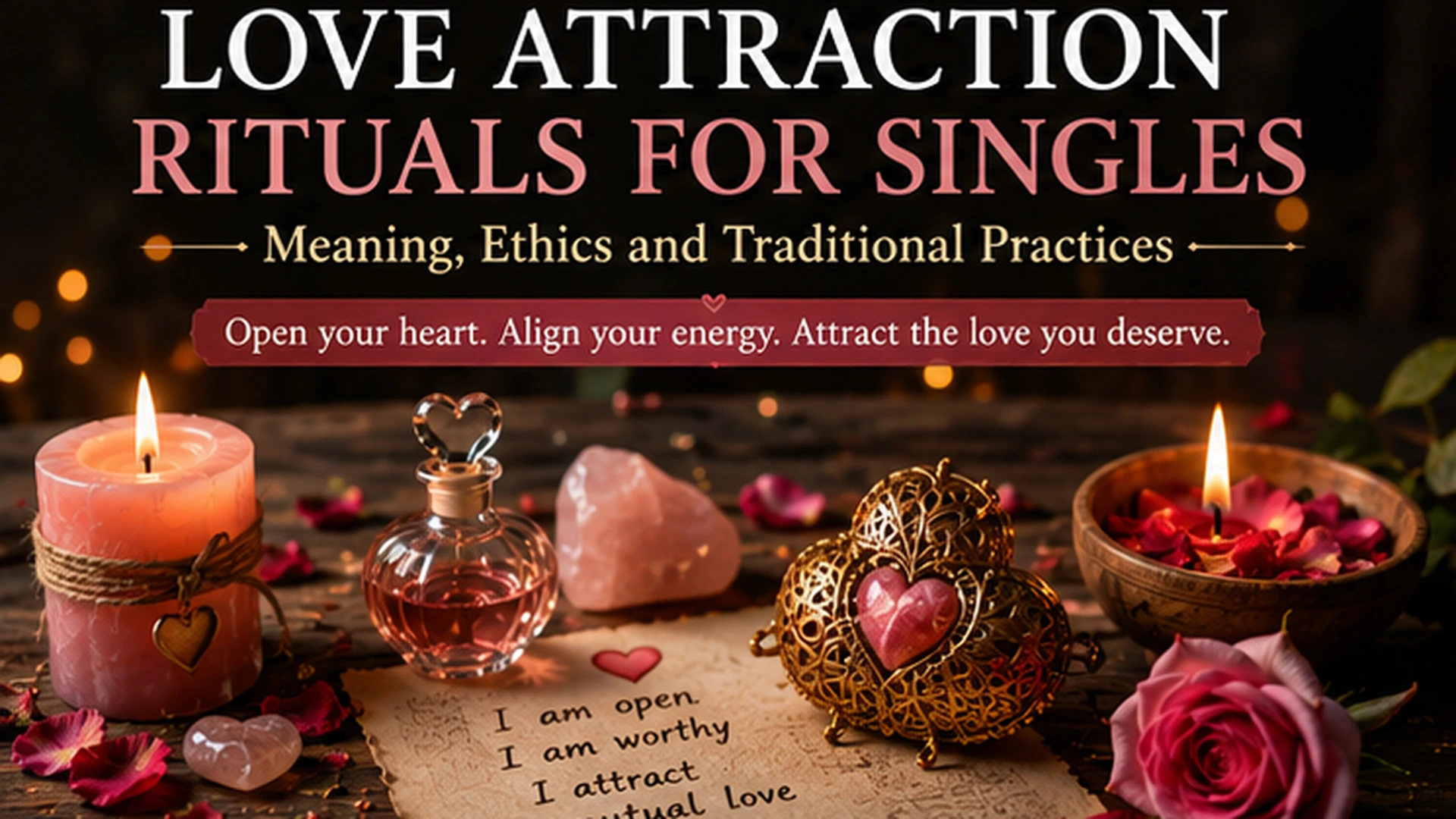
Ancient Egyptian love poetry celebrated longing, admiration, beauty and the desire for closeness. The Metropolitan Museum of Art notes that some poems invoke Hathor, a goddess associated with love and sexuality, in hopes of securing a lover's desire. The British Museum also identifies Hathor with love, joy, music and beauty. [5-6]
Mirrors, music, jewelry, flowers and fragrance could carry associations with beauty, celebration and divine favor. A museum object decorated with Hathor's emblem, for example, reflects the goddess's connection with love and beauty, but it does not prove that every mirror was a love spell. Objects could have overlapping domestic, cosmetic, devotional and protective meanings.
The surviving poetry is especially useful because it reminds modern readers that attraction was expressed through voice, metaphor and mutual admiration, not only through magical objects. It is more accurate to speak of a cultural world in which love, beauty, fertility, music and devotion overlapped than to claim that ancient Egyptians followed one standardized "love attraction ritual."
Ancient Greece and Rome: Devotion, Charms and Binding Magic
Aphrodite or Venus and Eros or Cupid were prominent divine figures associated with love, desire and fertility in Greek and Roman cultures. People could make offerings, dedicate objects or participate in cult practices connected with these deities. Museum collections preserve thousands of images that show how widely their symbolism circulated. [7]
The ancient Mediterranean also produced erotic magical texts and binding tablets. Academic research shows that love magic was practiced by different people and that literary stereotypes about who performed it do not necessarily match papyri and archaeological evidence. Some surviving operations attempted to cause sleeplessness, urgency or forced attachment in a desired person. [8]
These sources are historically important, but they should not be romanticized. A coercive ancient spell reflects the anxieties and power relations of its society; age alone does not make it ethical. A modern educational article can explain such evidence while refusing to convert it into a recipe for manipulating someone today.
Yoruba Osun Traditions: Fertility, Beauty and Sacred Custodianship
The Osun-Osogbo Sacred Grove in southwestern Nigeria is recognized by UNESCO as a living Yoruba sacred landscape associated with Osun, a deity linked with fertility. The grove contains sanctuaries, sculptures and ritual spaces maintained through community institutions and cultural responsibilities. [9]
Modern popular culture often reduces Osun to a generic "goddess of love" and then circulates invented offerings or rituals. That simplification ignores Yoruba cosmology, divination, priestly knowledge and the authority of practitioners. A visitor or reader can learn from public heritage information, but private or initiated practices should not be reconstructed from social-media fragments.
For an article about singles, Osun is best discussed as an example of how beauty, fertility, water, prosperity, devotion and community identity can intersect in a living tradition. It is not responsible to claim that one online formula represents all Yoruba people or that an offering automatically produces a romantic partner.
North and East African Adornment: Visibility, Status and Courtship
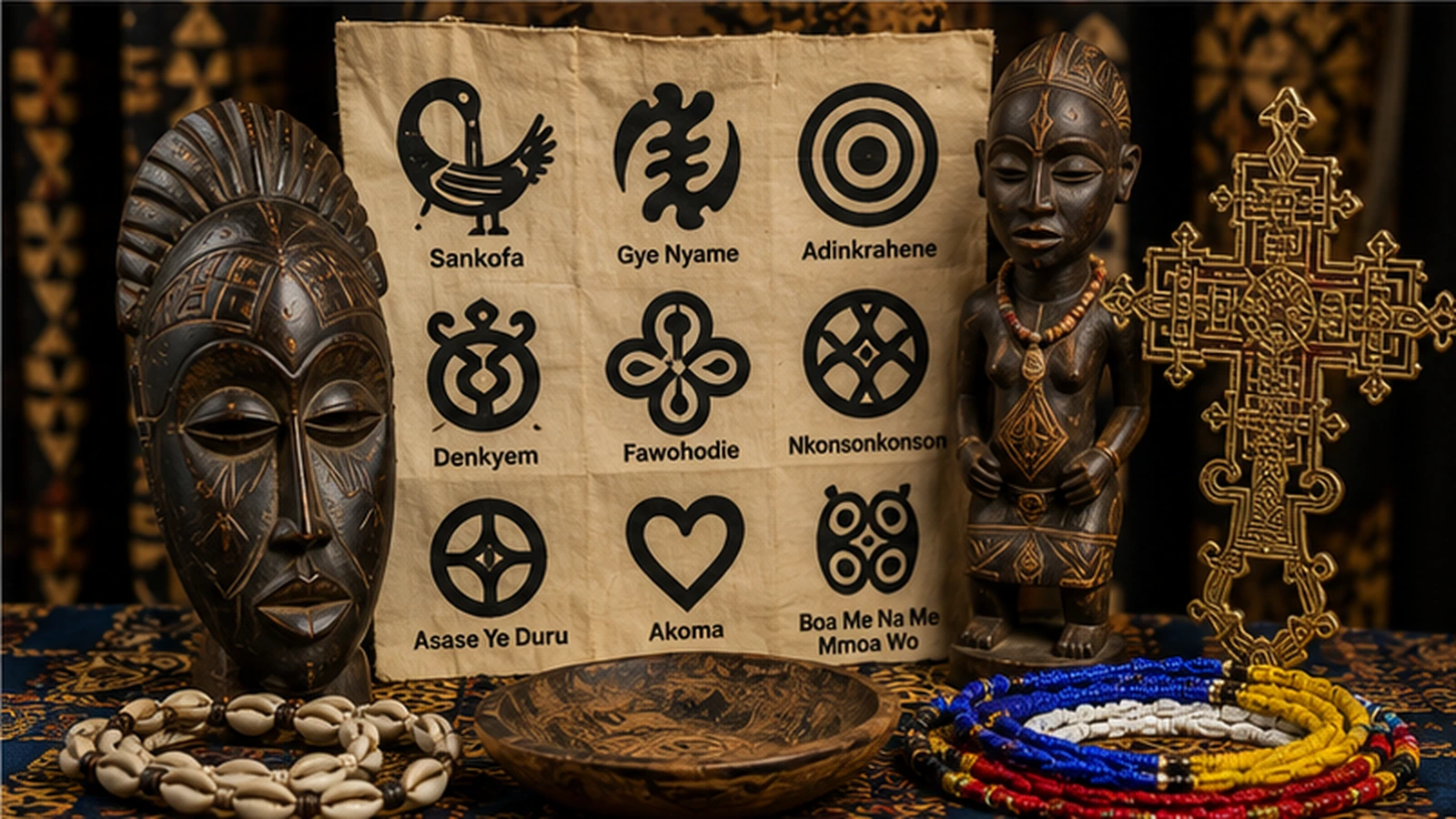
Adornment can communicate readiness, family standing, age, beauty or social identity without functioning as a spell. The Smithsonian National Museum of African Art documents a Draa Valley necklace from southern Morocco in which silver ornaments could contain scented resin intended to enhance a wearer's allure and also serve protective functions. Such jewelry was especially associated with weddings and public gatherings, and it also represented portable family wealth. [10]
A Turkana multistrand necklace in the same museum is identified as a form worn by unmarried girls of marriageable age. Its meaning is social and visual: it conveys status and life stage. It should not be turned into a claim that all East African beadwork is a love charm or that colors have one universal romantic code. [11]
These objects show that attraction may be expressed through presentation, scent, craftsmanship and public participation. They also show why cultural specificity matters. A necklace can signal age or marital status in one community, while a visually similar object elsewhere may have a completely different meaning.
Courtship Songs and Public Social Traditions
Not every love tradition centers on an object. UNESCO records Xoan singing in Phu Tho, Viet Nam, where one festival form alternates male and female voices in courtship singing. The practice belongs to a broader spring-festival tradition with guilds, leaders, dance, drums and clappers. [12]
Dondang Sayang, associated with communities in Malaysia, uses sung quatrains to share love, kindness, joy and sorrow. Performers demonstrate poetic skill in a public art form that strengthens community bonds. [13]
These traditions make an important point for singles: attraction is often social and performative. People meet through music, festivals, family gatherings, work, worship, learning and public celebration. A private ritual may clarify intention, but relationships still require opportunities for two people to notice, speak and choose.
From Courtship to Community Recognition
Wedding traditions should not be confused with rituals for attracting an unknown partner, but they show how communities recognize a relationship once mutual and family decisions have been made. UNESCO's description of the zaffa presents a bridal procession involving preparation, adornment, music, flowers and symbolic blessings as a couple moves from single to married life. The specific acts vary among participating communities. [14]
This transition matters ethically. Attraction is only the beginning. A durable relationship requires agreement, communication, public responsibility and, in many cultures, the participation of relatives and elders. The existence of elaborate wedding blessings does not justify bypassing a potential partner's choice during courtship.
What Do Offerings Mean in Love Traditions?
An offering is not simply a payment placed into the spiritual world. Depending on the tradition, it may express gratitude, hospitality, devotion, remembrance, beauty, sacrifice, community obligation or a request made with humility. The same material can mean different things in different cultures.
| Material or act | Possible meanings | Responsible use |
|---|---|---|
| Flowers | Beauty, seasonality, affection, impermanence or devotion | Use locally grown, non-invasive flowers; never assume one flower has a universal meaning. |
| Water | Clarity, life, hospitality, renewal or connection with a sacred place | Do not pour substances into rivers, springs or protected sites without permission. |
| Food or sweets | Hospitality, celebration, gratitude or communal sharing | Avoid leaving food outdoors where it harms wildlife or violates site rules. |
| Fragrance or resin | Presence, adornment, prayer, memory or social allure | Check allergies, ventilation, sourcing and cultural context. |
| Lamps or candles | Attention, hope, divine presence or focused intention | Use a stable holder, never leave flame unattended and follow local fire rules. |
| Jewelry or cloth | Beauty, status, life stage, family connection or protection | Do not copy restricted designs or claim a borrowed object has the same meaning outside its community. |
| Song or poetry | Expression, courtship, praise, wit or community participation | Respect authorship, language and the social setting in which the form is performed. |
For a private modern practice, an offering can be understood as a symbol of the values the person intends to cultivate. A flower may represent care, water may represent emotional clarity and a candle may represent attention. This is a personal interpretation, not a claim that the object belongs to an ancient universal system.
The Core Ethics of a Love Attraction Ritual
1. Do Not Target a Named Person
A consent-centered ritual does not use another person's photograph, private information, bodily material or personal belongings in an attempt to influence them. It does not ask for an ex-partner to return regardless of their wishes or for someone to leave a current relationship.
2. Leave the Outcome Open
An ethical intention might ask for a kind, emotionally available and compatible partner. It does not demand one exact face, workplace, nationality or social status. Leaving the outcome open reduces fixation and allows the practitioner to evaluate real compatibility.
3. Protect Privacy and Boundaries
Spiritual curiosity never justifies checking someone's phone, monitoring their location, creating fake accounts, pressuring mutual friends or repeatedly contacting a person who has declined. Ritual language should not hide behavior that would otherwise be recognized as stalking or harassment.
4. Avoid Guaranteed Claims and Financial Exploitation
No responsible practitioner can guarantee that a specific person will call, marry or remain faithful. Claims that failure means the client must buy repeated "cleansings," secrecy payments or increasingly expensive materials are warning signs. Spiritual services should state limits, prices and expectations clearly.
5. Respect Cultural Authority
A public museum description is not permission to reproduce a restricted ceremony. Some prayers, songs, shrine protocols and offerings belong to initiated specialists, families or communities. Responsible learning means naming sources, acknowledging uncertainty and avoiding invented combinations of unrelated traditions.
6. Connect Symbolic Practice With Real Action
A ritual cannot introduce two people if the practitioner remains completely isolated. Healthy attraction requires some combination of visibility, conversation, honest presentation, listening and willingness to accept either interest or refusal.
A Modern Consent-Centered Love Ritual for Singles
| Important The practice below is a modern reflective exercise, not a reconstruction of any specific African, Egyptian, Greek, Yoruba or Indigenous ceremony. It is designed to support clarity and action without targeting another person or promising supernatural results. |
|---|
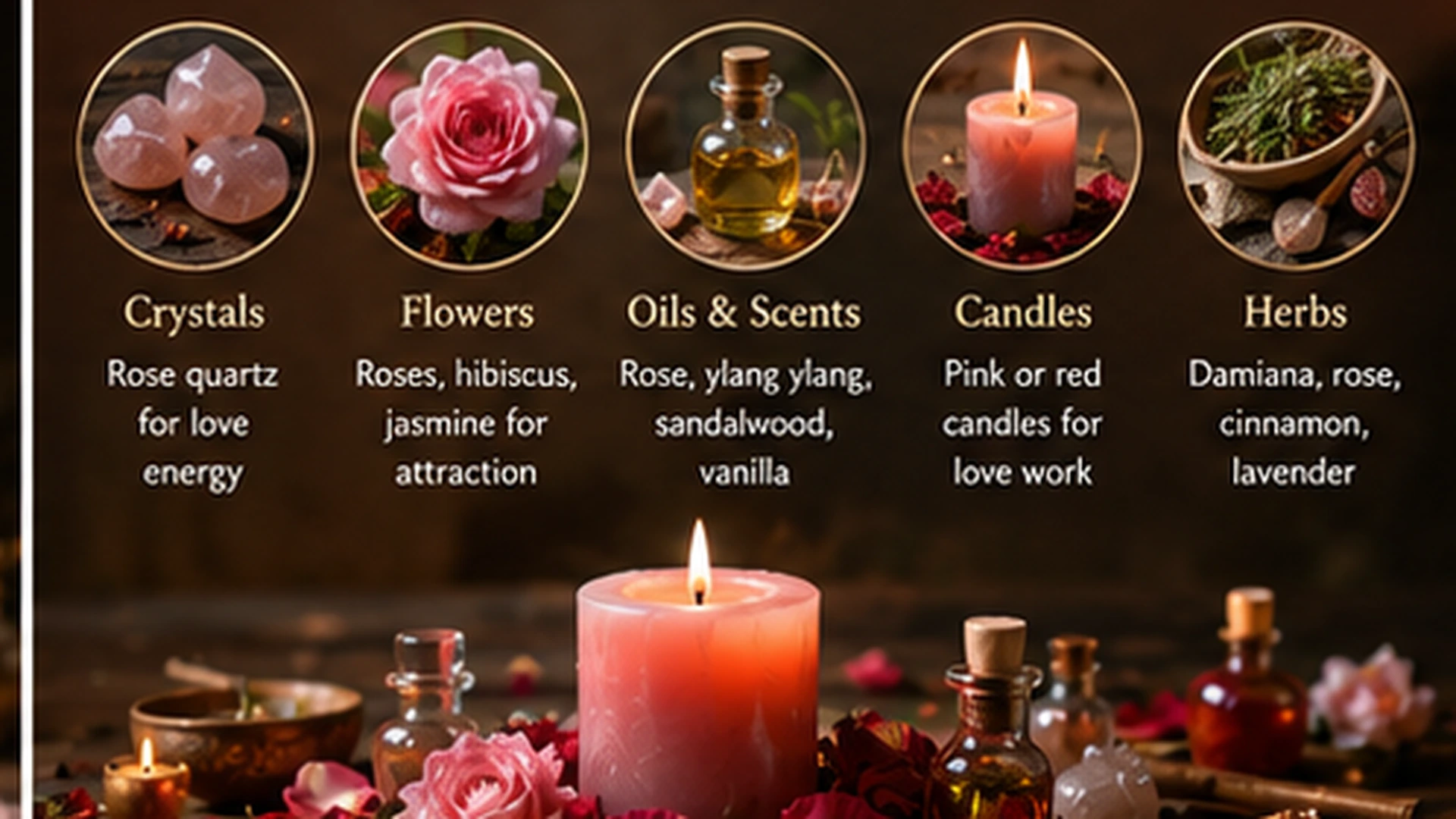
What You May Use
A clean, quiet space.
A notebook and pen.
A bowl or glass of clean water as a personal symbol of clarity.
One locally sourced flower or a small green plant as a symbol of care and growth.
An optional unscented candle in a stable holder, used only where flames are safe and permitted.
A calendar or phone for scheduling one real social action after the ritual.
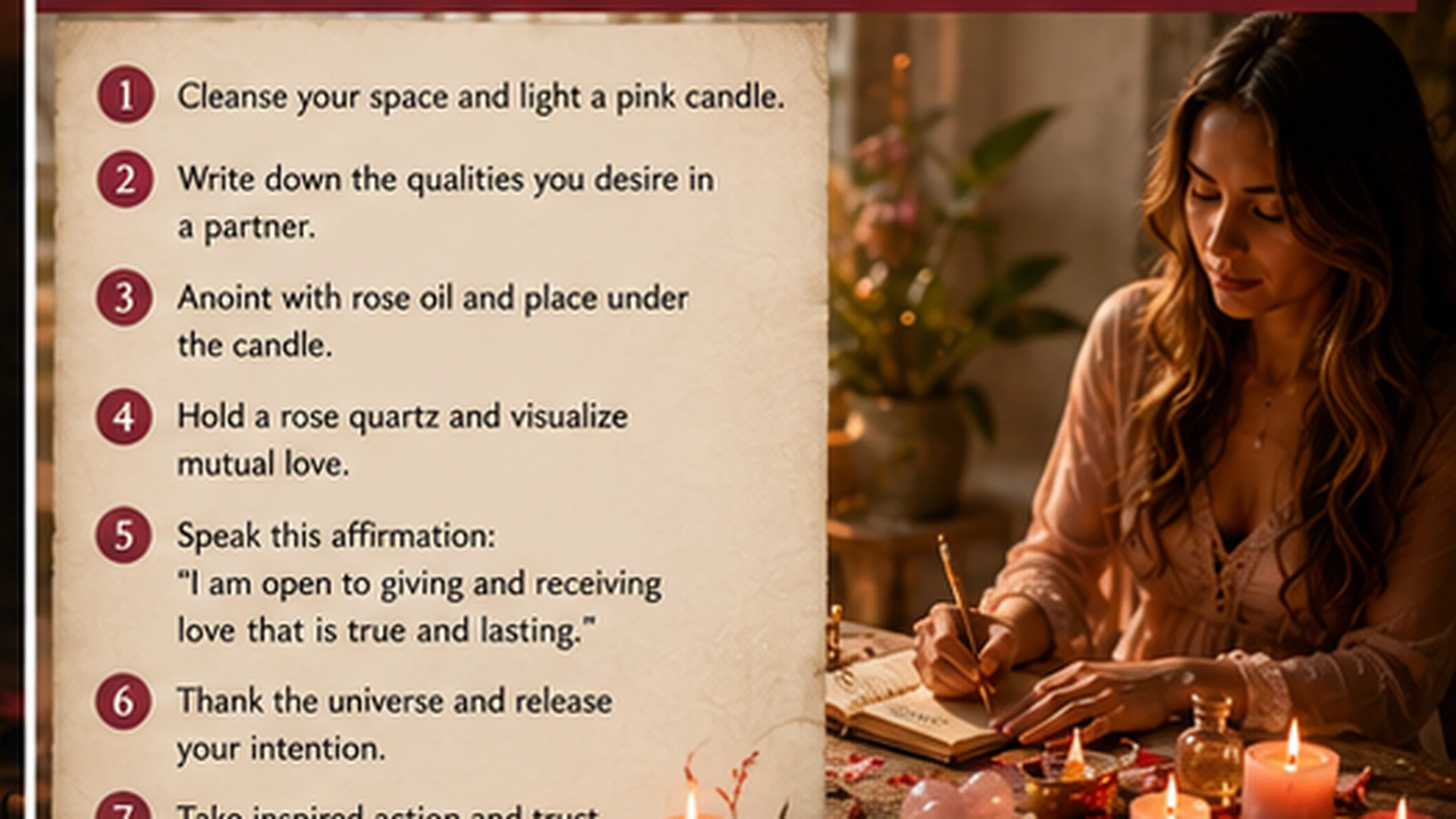
Step 1: Prepare Without Performing for Anyone
Tidy the space and silence unnecessary notifications. The purpose is not to create a dramatic display. It is to give your full attention to what you are asking from yourself and from a future relationship.
Step 2: Name the Relationship Qualities
Write five qualities that describe the relationship rather than the person's appearance. Examples include honesty, emotional availability, shared responsibility, affection, spiritual compatibility, patience or respect for family. Then write three boundaries you will protect.
Step 3: Examine What You Are Ready to Offer
For each desired quality, identify how you will practice it. A person asking for honest communication should be willing to communicate honestly. Someone seeking reliability should consider how they handle time, promises and conflict.
Step 4: Use a Simple Symbol
Place the water and flower or plant in front of you. If using a candle, light it safely. Let water represent clear judgment, the plant represent steady care and the flame represent attention. These meanings are chosen for this personal exercise and are not presented as universal ancient codes.
Step 5: Speak an Open Intention
You may use your own words, prayer tradition or a statement such as: "May I recognize and welcome a relationship built on mutual choice, honesty and care. Help me release unavailable connections, act with courage and respect every person's freedom, including my own."
Step 6: Release the Named Target
If one particular person keeps entering your mind, do not make them the object of the ritual. Write what they symbolize - companionship, attention, security or excitement - and return to the underlying quality. This preserves the distinction between desire and entitlement.
Step 7: Choose One Practical Action
Before closing, schedule one realistic action within the next seven days. Examples include attending a community event, updating an honest dating profile, asking trusted friends about introductions, joining a class, returning to a faith or cultural community, or speaking with a counselor about repeated relationship patterns.
Step 8: Close and Evaluate
Extinguish the candle, drink or responsibly discard the water and keep the flower or plant where you will see it. After one month, review whether the practice increased clarity, confidence and healthy action. Do not judge it only by whether a romantic partner appeared immediately.
How to Tell Whether the Practice Is Helping
The most useful outcomes are behavioral and emotional. A ritual may be helping when you feel less compelled to chase unavailable people, communicate more clearly, participate in more social opportunities and notice whether potential partners respect your boundaries.
You can describe the relationship you want without naming one person who must provide it.
You accept a refusal without retaliation, repeated messaging or spiritual blame.
You take practical steps to meet people while maintaining safety and judgment.
You recognize attraction without confusing it with compatibility.
You are less willing to accept secrecy, disrespect or inconsistency because you fear being alone.
You can pause dating when you need healing rather than treating a relationship as an emergency.
Warning Signs That a Love Practice Has Become Unhealthy
Stop and seek trusted support when a ritual increases obsession rather than clarity. Spiritual language can sometimes intensify a fixation by making every coincidence feel like proof that a person is destined to belong to you.
Repeatedly checking a person's social media, location or relationships.
Spending money you cannot afford because someone promises a guaranteed result.
Believing rejection only means you must perform a stronger ritual.
Avoiding friends, sleep, work or daily responsibilities while waiting for signs.
Feeling instructed to threaten, blackmail, isolate or secretly dose another person.
Using dangerous fire, smoke, unknown herbs or substances on the body.
Experiencing severe anxiety, hopelessness or thoughts of harming yourself or someone else.
A counselor, trusted religious leader, culturally recognized practitioner or relationship-abuse service may be more appropriate than another ritual, depending on the problem. Immediate safety concerns require local emergency or crisis support.
Common Misunderstandings
"Traditional" Does Not Mean Universal
There is no single African, Egyptian, Greek or Indigenous love ritual. Traditions belong to particular languages, communities, time periods and religious systems. Combining unrelated objects into one invented ceremony may look visually impressive but produces misinformation.
Self-Love Is Not a Guarantee of Partnership
Self-respect can improve boundaries and choices, but it does not create a moral rule that every emotionally healthy person will quickly find a partner. Timing, location, social networks, chance and compatibility all matter.
Attraction Is Not the Same as Compatibility
Strong chemistry can exist alongside incompatible values, poor communication or unsafe behavior. A useful ritual should strengthen discernment, not encourage the person to ignore evidence because the attraction feels spiritually significant.
A Rejection Is Not Proof of Spiritual Blockage
Another person may decline because of their own preferences, timing, commitments or lack of interest. Treating every refusal as an enemy attack, curse or blockage can prevent emotional recovery and respect for boundaries.
People Also Ask
What is a love attraction ritual?
It is a symbolic practice intended to express readiness for love, seek spiritual guidance or support confidence and social openness. Ethical versions focus on the practitioner and an unknown mutually willing partner, not control of a named person.
Can a ritual make someone fall in love with you?
No reliable evidence shows that a ritual can guarantee another person's love, and attempting to override their choice is unethical. A ritual can help you clarify intentions and take healthier social actions.
What makes a love ritual ethical?
It respects consent, does not target a specific person, avoids deception or pressure, leaves the outcome open, makes no guaranteed claims and connects spiritual reflection with honest behavior.
What did ancient cultures use for love and attraction?
Documented examples include love poetry, devotion to deities associated with love, adornment, fragrance, offerings, courtship songs and also coercive magical texts. The meaning depended on culture and historical context.
What offerings symbolize love?
Flowers, water, fragrance, lamps, food, jewelry, cloth, song and poetry can carry meanings related to affection, beauty, hospitality or devotion. No object has one universal meaning across all traditions.
How can singles attract a healthy relationship?
Clarify values and boundaries, increase safe opportunities to meet people, communicate honestly, accept refusal, seek introductions from trusted networks and evaluate compatibility over time.
Are love spells and prayers for marriage the same?
No. A prayer for guidance or a suitable willing spouse leaves the outcome open. A binding spell usually claims to compel a named person and raises different ethical concerns.
What is the difference between attraction and binding magic?
Attraction can be framed as increasing openness, visibility or opportunity. Binding magic attempts to fix another person's desire or behavior. The second conflicts with autonomy.
Frequently Asked Questions
Should I use a photograph of the person I want?
No. A consent-centered practice avoids using a target's image, private data or personal belongings. Focus on relationship qualities and your own behavior.
Can I perform the ritual during a particular moon phase?
You may choose a personally meaningful time, but no moon phase guarantees love. Avoid presenting modern timing preferences as universal ancient rules.
Do I need rose petals or expensive materials?
No. A notebook, water and one local flower or plant are enough for the reflective exercise in this article. Expensive materials do not make an intention more ethical or effective.
Can I ask for an ex-partner to return?
You can reflect on what you learned and whether communication would be appropriate, but you cannot ethically demand their return. If contact is welcome, use direct and respectful communication.
What if I already know the person I like?
You may ask for courage, clarity and respectful communication. The appropriate next step is a considerate invitation or conversation that gives them an easy way to decline.
Are African love rituals all connected with Osun?
No. Africa contains thousands of communities and religious traditions. Osun belongs to Yoruba religion and should not be used as a generic label for African love practices.
Did ancient Egyptians have love spells?
Surviving Egyptian texts include love poetry, prayers and magical material related to desire, but practices varied across long periods. Historical evidence should not be converted into a modern coercive recipe.
Is wearing perfume a ritual?
Fragrance can be part of adornment, worship, hospitality or personal routine. It becomes ritualized when used in a structured symbolic context, but its meaning remains cultural and personal.
Can a practitioner guarantee marriage?
No. Marriage depends on two people's choices and wider circumstances. Guaranteed claims are a major warning sign.
How often should I repeat the modern ritual?
Repeat it only when reviewing your values or actions is useful, such as monthly. Repetition should not become compulsive or replace real social engagement.
What if the ritual makes me more anxious?
Stop. Remove the materials, return to ordinary routines and speak with someone trustworthy. A practice that increases fear, obsession or loss of functioning is not serving you.
Can this ritual replace therapy or relationship advice?
No. It is a reflective spiritual exercise. Therapy, medical care, legal advice or domestic-violence support may be necessary for problems outside its scope.
Key Takeaways
Love attraction rituals have included prayer, poetry, adornment, offerings, festivals and magic, but they are not one universal tradition.
Historical evidence includes coercive practices that can be studied without being recommended.
An ethical ritual focuses on readiness, values, discernment and an unknown mutually willing partner.
Consent, boundaries, equal power and honest communication remain essential regardless of spiritual belief.
Cultural practices should be named specifically and not copied from restricted or decontextualized material.
The practical value of a ritual is measured by clarity and healthy action, not guaranteed romantic results.
Conclusion
Love attraction rituals for singles can be meaningful when they help a person slow down, understand what they want and approach relationships with hope and responsibility. History shows many ways people have expressed desire - through Hathor poetry, Aphrodite devotion, adornment, scent, public song, family recognition and magic. It also shows that longing can lead people toward practices that attempt to control others.
The ethical line is therefore simple: seek connection without claiming ownership. Ask for clarity, courage and the opportunity to meet a compatible person. Present yourself honestly. Participate in community. Respect every answer. A ritual may mark the beginning of that process, but mutual love begins only when two people freely choose to build it together.
Final Summary
| Final Summary A responsible love attraction ritual is a personal commitment to readiness, discernment and reciprocal relationship values. It may use simple symbols, prayer or journaling, but it should not target, bind or deceive another person. Cultural traditions deserve specific research and community respect, while modern singles still need practical opportunities, communication and consent. |
|---|
Article Information
- Publisher
- Ancestral Temple
- Editor
- Ancestral Temple
- Last updated
- Jul 30, 2026
- Last reviewed
- Jul 30, 2026
- Content version
- 1a56ee7f51
This educational article should be read as cultural and spiritual information, not as medical, legal, financial, or emergency advice.
Helpful Related Guidance
About the Author
 Ancestral Temple
Spiritual guide and practitioner with decades of experience in ancestral wisdom, rituals, and divine guidance.
Related Posts
View All






Comments
We'd love to hear your thoughts.