
What Is Spiritual Cleansing? Meaning, Purpose and Cultural Context
Pillar Article
Quick Summary
The phrase spiritual cleansing can describe many different practices: washing before prayer, bathing in a sacred river, receiving a blessing, burning incense, cleaning a home, conf...
The phrase spiritual cleansing can describe many different practices: washing before prayer, bathing in a sacred river, receiving a blessing, burning incense, cleaning a home, confessing wrongdoing, fasting, reconciling with relatives or participating in a community ceremony. These actions may look similar from a distance, but they do not share one universal meaning.
In one tradition, cleansing prepares a person to approach a shrine. In another, it marks conversion, repentance, a life transition or restoration after a period of ritual impurity. Some communities understand cleansing in relation to ancestors, misfortune or social balance. Others focus on readiness, discipline, forgiveness or a renewed commitment to ethical conduct.
This guide explains common methods while keeping their cultural settings separate. It also offers a safe framework for readers who want a simple personal practice without copying restricted ceremonies or treating spiritual claims as scientific facts.
Quick Answer
| In one paragraph Spiritual cleansing rituals are culturally recognized practices intended to symbolize purification, preparation, renewal, protection, reconciliation or restored balance. Methods may include water, prayer, smoke, cleaning, fasting, offerings or community action. There is no single universal cleansing ritual, and spiritual interpretations should not replace hygiene, healthcare, mental-health support, legal help or practical problem-solving. |
|---|
Spiritual Cleansing at a Glance
| Question | Answer |
|---|---|
| Core meaning | A symbolic or religious movement from an unprepared, burdened or disrupted condition toward readiness, renewal or restored relationship. |
| Common subjects | A person, household, object, sacred place, family or community. |
| Common methods | Water, prayer, recitation, smoke or incense, cleaning, fresh clothing, fasting, offerings, charity, confession and reconciliation. |
| What gives it meaning | The community, language, theology, authorized leader, occasion, participants and responsibilities connected to the act. |
| What it is not | A universal recipe, medical treatment, scientific measurement of “energy,” guaranteed curse removal or substitute for accountability. |
| Best first question | Which named tradition or community does this practice belong to, and is it public, private or restricted? |
What Does Spiritual Cleansing Mean?
Spiritual cleansing is a broad English expression for practices that participants understand as removing, resolving or transforming a condition that makes a person, place or community unready for sacred, social or personal renewal. The condition may be described as ritual impurity, pollution, sin, grief, misfortune, conflict, spiritual burden, disorder or simply the residue of an earlier stage of life.
The word cleansing can be misleading when it is interpreted too literally. Ritual impurity is not always dirt, disease or moral wrongdoing. In many religious systems it is a temporary status connected with an event, bodily condition, death, worship, travel or contact with a sacred boundary. A person may be physically clean yet ritually unprepared, or ritually prepared without claiming that all physical hazards have disappeared.
A careful definition therefore has two parts. First, cleansing is symbolic or religious: it communicates preparation, renewal or restored order. Second, it is social: a community recognizes who may perform it, when it is needed, what materials are appropriate and what responsibilities follow.
Spiritual Cleansing, Ritual Purity and Ordinary Cleaning
| Term | Typical meaning | Important limit |
|---|---|---|
| Spiritual cleansing | Broad modern English label for symbolic renewal, protection, preparation or restoration. | Meaning depends on belief and culture. |
| Ritual purification | A prescribed religious process for moving into an authorized or prepared state. | Often governed by detailed community rules. |
| Physical cleaning | Removal of dirt, waste, pathogens or contaminants through observable processes. | Requires appropriate cleaning, sanitation or repair. |
| Emotional reset | A personal practice for reflection, calm, grief or recommitment. | May be helpful but is not proof of supernatural change. |
| Exorcism or deliverance | Specific religious practices concerning spirits or evil within certain faiths. | Not a synonym for every cleansing ritual and may require authorized clergy. |
Why Cleansing Rituals Appear Across Cultures
Rituals help people mark changes that ordinary language may not fully express. UNESCO describes social practices and rituals as activities that structure community life, reaffirm identity and connect important events with a community’s worldview and memory. Living heritage is transmitted across generations but is also continuously recreated by the communities that recognize it. [1][15]
Preparation for worship. Washing, prayer or blessing can separate ordinary activity from entry into a shrine, mosque, church, temple or ceremonial place.
Life transitions. Cleansing may accompany birth, marriage, initiation, conversion, return from travel, recovery, mourning or the beginning of a new year.
Moral and relational repair. Confession, apology, restitution, charity or reconciliation can make cleansing a commitment to changed behavior rather than a private feeling.
Community reintegration. Some ceremonies restore a person or family to recognized social participation after illness, conflict, exclusion or a culturally defined condition.
Protection and readiness. Participants may ask for divine, ancestral or communal protection, or seek a sense of readiness before a demanding event.
Memory and identity. Repeated rituals can preserve language, roles, sacred places and relationships between generations.
What Gives a Cleansing Ritual Its Meaning?
A cleansing ritual is not defined by an object alone. A bowl of water, a candle, a plant or a white garment may be sacred in one setting, ordinary in another and inappropriate in a third. Meaning is created through relationships among words, actions, people, place and responsibility.
The first factor is vocabulary and worldview. A community may speak of purity, blessing, repentance, restoration, protection, readiness or reconciliation. Translating every term as “energy cleansing” can erase theology and history. The local word often explains whether the concern is bodily preparation, moral conduct, ritual status, social repair or communication with divine or ancestral beings.
The second factor is authority. Some actions can be performed by any worshipper; others require a priest, elder, ritual specialist, initiated member, family custodian or designated attendant. Authority may come from ordination, lineage, apprenticeship, community recognition or a religious office. Buying the same material does not transfer that authority.
The third factor is occasion and sequence. Washing before prayer differs from immersion during conversion, and a household blessing differs from a ceremony after death or conflict. Rituals often have an opening, prescribed action, prayer or witness, and a closing. Removing one dramatic element from that sequence can change or empty its meaning.
The fourth factor is place and community recognition. A river, shrine, mosque, church, family compound or heritage landscape can carry relationships and memories that cannot be reproduced in a rented room or commercial retreat. UNESCO’s community-based approach is useful here: living heritage exists because communities recognize, maintain and transmit it, not because outsiders declare it authentic. [1]
The final factor is what follows. Cleansing may create obligations: attend worship, keep a vow, avoid harm, make restitution, care for a sacred place, support relatives or live according to renewed commitments. When a commercial service promises an instant result without responsibility, it may be selling the appearance of ritual rather than the social and ethical work that gives ritual weight.
| Private experience and community ritual are not the same A person may create a private reflective routine that feels cleansing. That experience can be meaningful without being presented as an ancient, Indigenous, African, Hindu, Shinto or other community-owned ceremony. |
|---|
Common Spiritual Cleansing Methods and Their Meanings
The same material can carry different meanings in different traditions. Water may signify preparation, rebirth, conversion, repentance or removal of ritual impurity. Smoke may be an offering, a prayer carrier, a marker of sacred space or a culturally specific medicine. The method alone never explains the ritual.
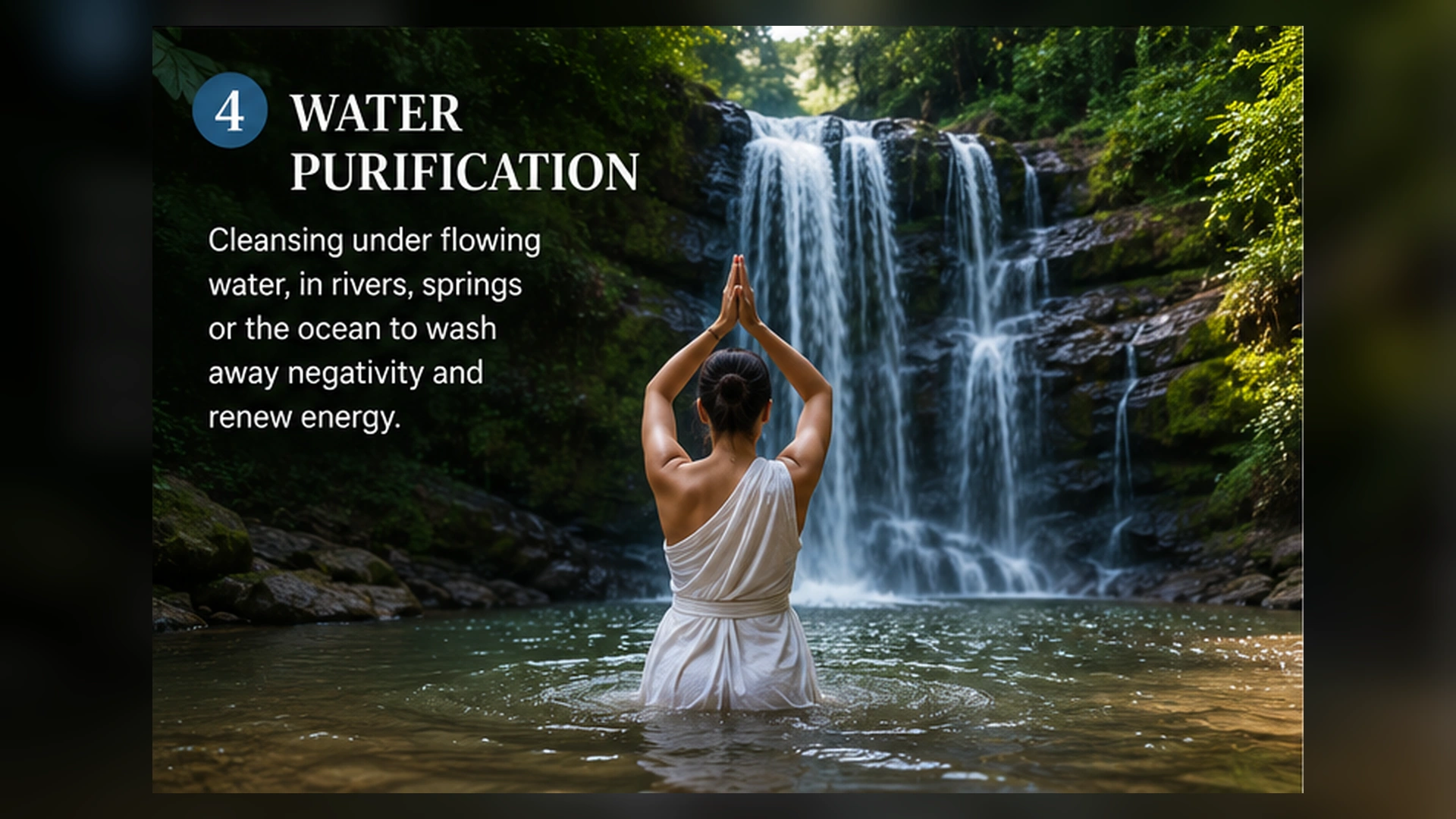
Water, washing and immersion
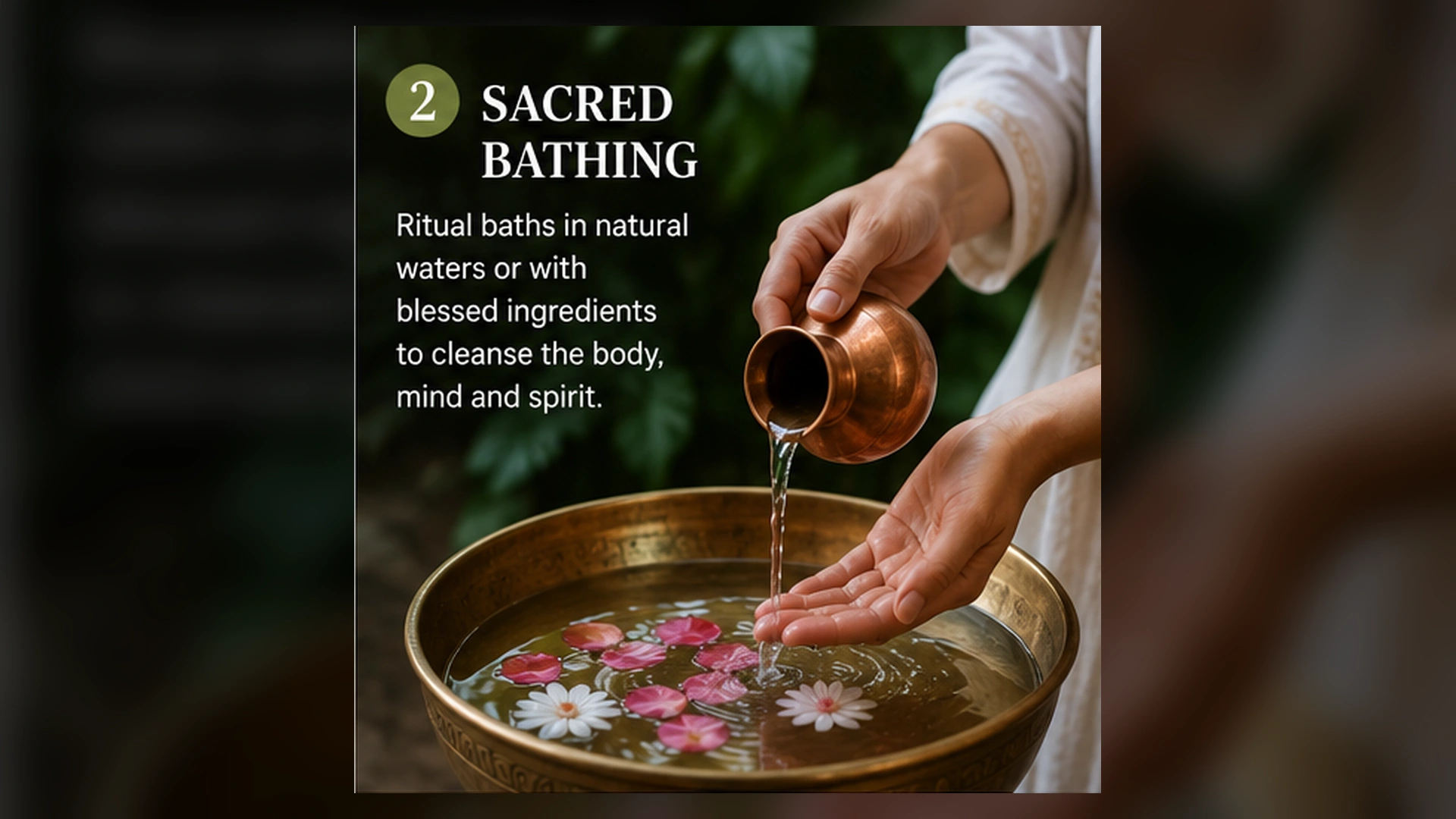
Hands may be washed before worship; the body may be immersed, bathed, sprinkled or anointed. Water commonly signifies life, renewal and readiness, but a shrine basin, a mikveh, wudu and baptism are not interchangeable.
Prayer, confession and recitation
Words can identify the purpose of the ritual, ask forgiveness, express gratitude or commit the participant to a changed course. Some prayers are public; others belong to clergy, families, initiates or language communities and should not be reproduced without permission.
Smoke, incense and aromatic plants
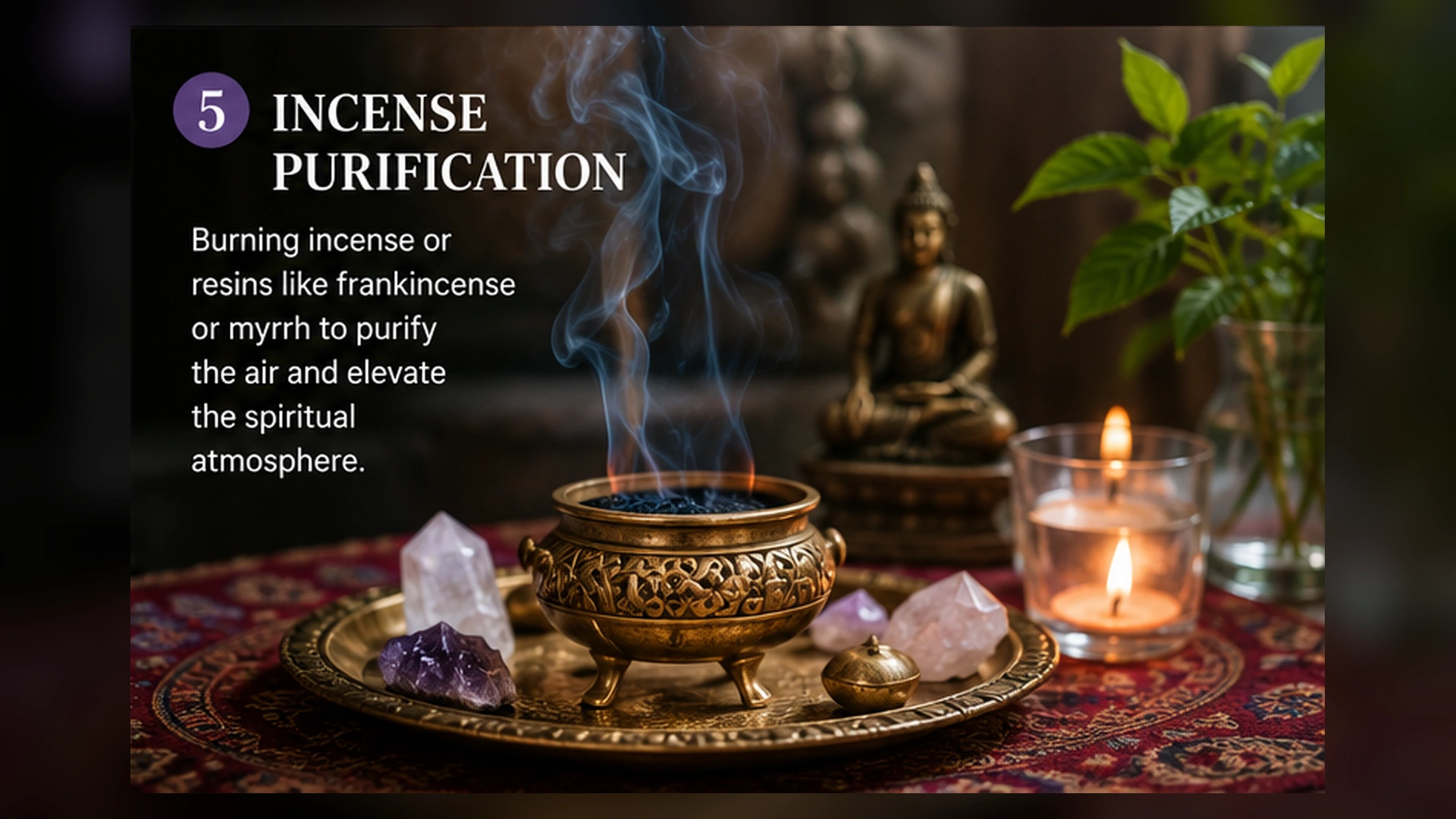
Burning incense, resins or plants may accompany offerings, prayer or purification. Materials and protocols are culturally specific. Smoke is not required for cleansing, and indoor combustion creates health and fire concerns.
Cleaning, sweeping and fresh clothing
Removing rubbish, washing a floor, opening a room, laundering cloth or changing garments can mark a transition while also producing ordinary physical cleanliness. The symbolic act does not replace repairs, pest control, safe water or mold removal.
Fasting, silence and restraint
Some traditions use temporary abstinence, quiet, sexual restraint, dietary rules or retreat to focus attention and prepare for worship. These practices are not suitable for everyone and may require religious and medical guidance.
Offerings, charity and service
Food, flowers, money, time or labor may be offered as gratitude or dedication. In many settings, giving to people in need is more important than accumulating ritual objects.
Reconciliation and restitution
A ceremony may be incomplete without apology, returning property, repaying debt, ending harmful behavior or accepting community responsibilities. Symbolic cleansing should not erase accountability.
Sound, movement and communal participation
Chanting, bells, drumming, song, processions or coordinated movement can focus attention and create shared participation. These forms may be public, restricted or protected cultural expressions.
| A useful rule Ask what the action means in its own tradition before asking how to copy it. Similar-looking materials do not create the same ritual. |
|---|
Cultural Examples of Cleansing and Ritual Purification
These examples demonstrate variety. They are not a menu from which unrelated elements should be combined. Each practice belongs to a history, vocabulary and community of authority.
Shinto Harae, Misogi and Temizu in Japan
In Shinto, harae refers to purification of accumulated defilement through rites and recitations. Kokugakuin University’s Encyclopedia of Shinto describes misogi as ablution of the whole body associated with removing misfortune, transgression and pollution; it also distinguishes misogi from harae even though the two are often linked. [2][3]
Visitors commonly encounter temizu or chōzu, the washing of hands and mouth before approaching a shrine. This public act is a preparation for worship, not a general wellness bath. More demanding forms of misogi, including cold-water practice, may involve training, supervision and specific religious settings. Readers should not attempt extreme cold-water immersion or enter sacred water without local authorization.
Hindu Sacred Bathing and Kumbh Mela
Hindu traditions contain many forms of purification, with major differences among regions, sects, households and temples. Water may be used in daily bathing, temple worship, pilgrimage and rites of passage. It is inaccurate to reduce these practices to a single “Hindu cleansing bath.”
UNESCO describes Kumbh Mela as a vast pilgrimage gathering in which participants bathe or take a dip in a sacred river. Devotees understand the act within Hindu teachings about sin, liberation, memory and pilgrimage. It is also a major social and cultural institution transmitted through religious teachers, families and communities. [4]
A private bath with commercially marketed herbs is not the same as pilgrimage bathing. Anyone visiting a sacred river should follow local rules, avoid pollution, respect crowd and water-safety guidance and never assume that untreated water is medically safe to drink.
Islamic Wudu, Ghusl and Tayammum
In Islam, tahāra refers to ritual purity. The Qur’an instructs believers preparing for prayer to wash the face, arms and feet and wipe the head; it also addresses full washing and the use of clean earth when water is unavailable. These practices are known through developed legal and devotional traditions as wudu, ghusl and tayammum. [5]
Ablution is not a generic method for “clearing negative energy.” It prepares Muslims for specified acts of worship and is governed by Islamic teaching. Non-Muslim readers can learn from the discipline and symbolism without imitating prayer forms as a wellness trend.
Jewish Mikveh and Ritual Immersion
A mikveh is a Jewish ritual pool used for immersion. Uses differ by community and may include conversion, family-purity observance, preparation for marriage or holidays and contemporary life-cycle rituals. Reform Judaism describes mikveh as a ritual immersion associated with significant transitions, while other Jewish communities follow more specific legal requirements. [6]
Mikveh practice includes privacy, preparation and community rules. It should not be presented as a public spa experience or copied without guidance from an appropriate Jewish community or rabbi.
Christian Baptism, Holy Water and Repentance
Christian traditions use water in different ways. Baptism is a sacrament of initiation rather than a repeatable home-cleansing method. The Catholic Catechism describes immersion or washing in baptism as symbolizing death, purification, regeneration and new life. [7]
Some churches also use holy water, blessings, confession, fasting, anointing and prayers of repentance. Catholic teaching identifies blessings and sprinkling with holy water as sacramentals connected with prayer and the sanctification of life’s circumstances. [8] These practices should be explained within their church tradition, not blended with unrelated concepts of energy or magic.
A Ugandan Example: The Lango Male-Child Cleansing Ceremony
Africa does not have one cleansing system. Any responsible discussion must name the community, region, language, historical setting and source of authority.
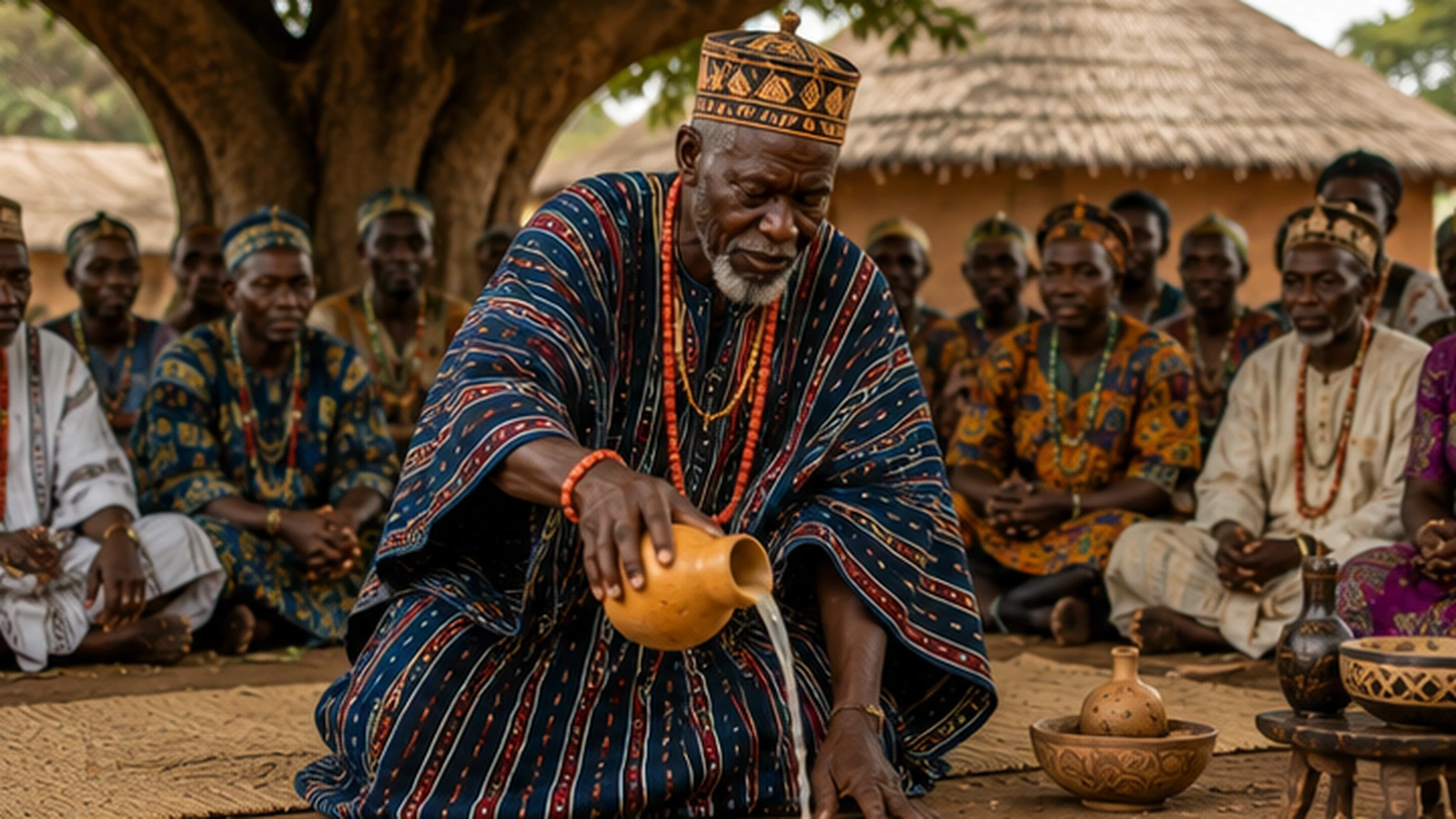
UNESCO documented a male-child cleansing ceremony among the Lango of central northern Uganda as living heritage in need of urgent safeguarding. The nomination describes a specific healing and social ritual transmitted through cultural custodians. [9] It is not a generic Ugandan practice, an “African spiritual bath” or a ceremony for outsiders to reconstruct from an article.
The example is valuable because it shows that cleansing may concern identity, family roles, community recognition and inherited knowledge—not only water, smoke or an individual sense of calm. It also shows why heritage safeguarding must involve the community that owns and transmits the practice.
Indigenous Smoke Traditions and Cultural Boundaries
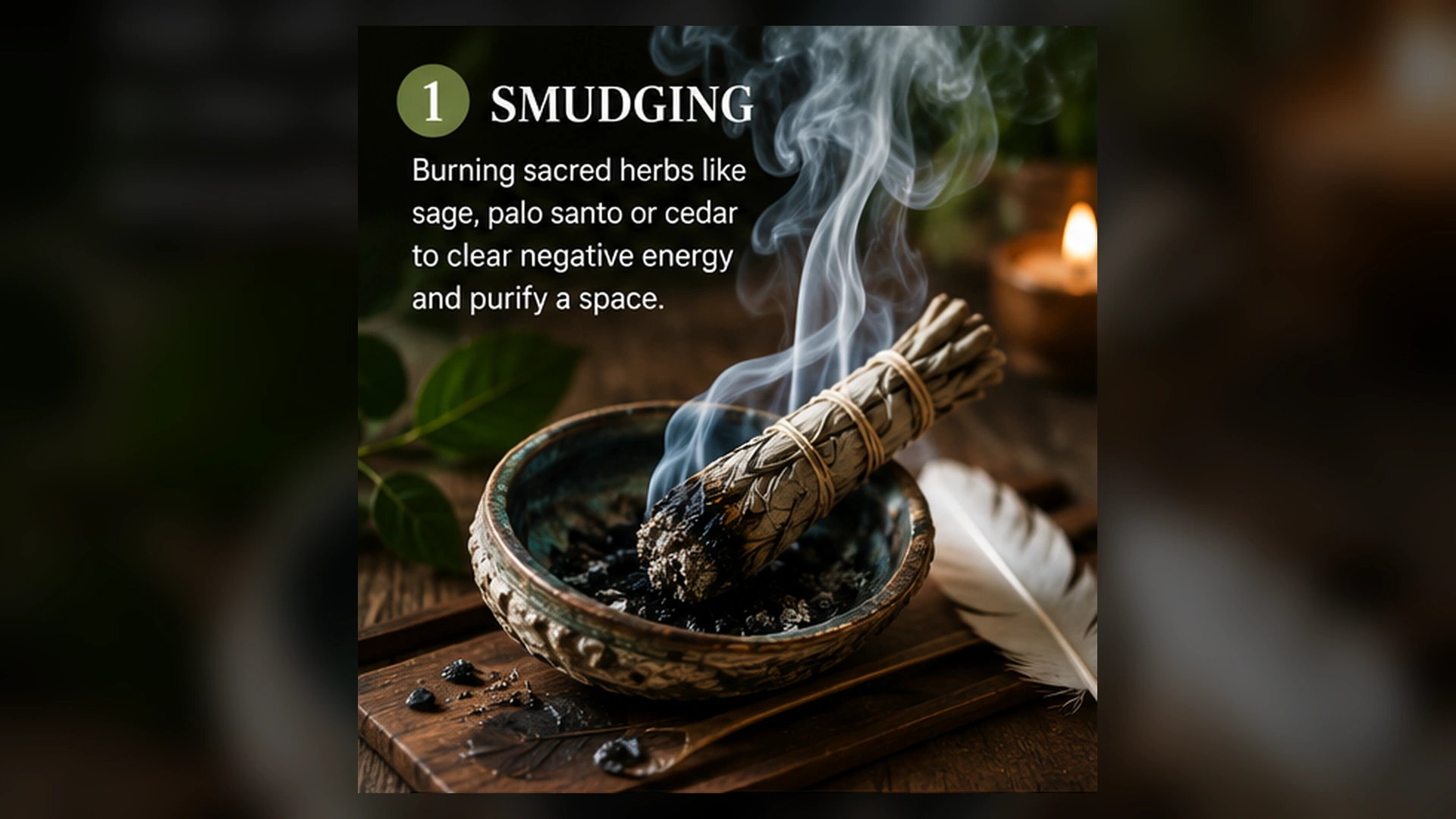
Some Indigenous peoples in North America and elsewhere use smoke from specific plants in prayer, purification or community ceremonies. The English words smudging and smoke cleansing are often used loosely online, but communities differ in plants, language, protocol, authority and whether a ceremony may be shared publicly.
Buying a commercial bundle and copying a social-media demonstration does not create an authentic Indigenous ceremony. Some plants have also been overharvested or marketed without benefit to their communities of origin. A respectful reader can learn about a tradition without claiming its title, wearing regalia, filming ceremonies or presenting themselves as a healer.
Incense and aromatic smoke also occur in Buddhist, Hindu, Christian, Jewish, East Asian, African and other settings. These practices should be named according to their own histories rather than relabeled as Indigenous smudging.
How to Approach a Personal Cleansing Practice Respectfully
A personal practice does not need exotic materials or borrowed ceremony. The following framework is intentionally simple, low-risk and non-denominational. It is a reflective routine, not a claim to reproduce any traditional rite.
1. Name the purpose. Write one clear sentence: preparing for prayer, ending a difficult week, cleaning a room, grieving, making amends or beginning a new commitment.
2. Choose your source of meaning. Begin with your own religion, family practice or a simple secular reflection. If you are learning from another community, use public information and respect its limits.
3. Create physical order. Remove rubbish, wash surfaces, open curtains and address actual hazards. Symbolic cleansing works best when it does not substitute for ordinary care.
4. Use one safe symbol. This might be clean water for washing hands, fresh clothing, flowers, quiet music, an electric candle, a written prayer or a moment of silence.
5. Reflect or pray. Express gratitude, acknowledge what happened, ask forgiveness where appropriate and state the behavior you intend to change.
6. Take a repairing action. Apologize, repay, return an item, book an appointment, set a boundary, donate, clean a shared place or ask for help.
7. Close the practice. Put materials away, drink safe water, ventilate the room if necessary and record the next practical step.
| Why this framework is safer It avoids closed ceremonies, toxic ingestion, uncontrolled fire, extreme fasting, cold-water exposure and claims of guaranteed supernatural results. Its value comes from attention, meaning and responsible action. |
|---|
Spiritual Cleansing for a Home or Room
People often search for a way to cleanse a home after conflict, illness, moving, bereavement or a frightening experience. The safest approach begins with the building itself.
Remove waste, improve ventilation, wash surfaces with suitable products, repair leaks, test smoke alarms and seek qualified help for mold, pests, unsafe wiring, sewage or structural damage. A prayer or blessing cannot neutralize carbon monoxide, pathogens or toxins.
After the practical work, a household may choose a simple practice consistent with its values: invite family members to name hopes for the space, say a prayer from their faith, play meaningful music, place fresh flowers, share food, open the windows when outdoor air is safe, or dedicate the room to respectful conduct. A renter or shared-house resident should also obtain consent before using smoke, strong fragrances, loud sound or religious objects.
Safety: Smoke, Oils, Baths, Fasting and Fire
Sacred or natural does not automatically mean medically safe.
| Method | Safety boundary |
|---|---|
| Smoke and incense | Burning materials produces indoor particles and gases. WHO identifies indoor air pollution as a health risk, and EPA-indexed research describes particulate and chemical emissions from incense. Reduce exposure, ventilate, avoid smoke around children, pregnant people, pets and anyone with asthma or respiratory disease, and choose smoke-free alternatives. [10][11] |
| Candles and flame | Use stable holders, keep flame away from cloth and plants, never leave it unattended and use an electric candle when fire risk is present. |
| Essential oils | Concentrated oils can cause poisoning or skin reactions when misused. Do not swallow them, apply them undiluted or add unknown quantities to bathwater. Follow labels and keep them away from children and pets. [12] |
| Herbs and powders | Identification, dose, allergy and contamination matter. Do not drink, burn or bathe in unknown plants because they are labeled “cleansing.” |
| Water immersion | Avoid polluted water, dangerous currents, extreme temperatures and unsupervised cold-water practices. Ritual significance does not make water microbiologically safe. |
| Fasting | People who are pregnant, underage, elderly, taking medication, living with diabetes or managing an eating disorder should seek medical and religious guidance before fasting. |
| Shared spaces | Obtain consent and respect smoke alarms, leases, workplace rules, disability access, allergies and neighbors. |
What Spiritual Cleansing Cannot Replace
Medical diagnosis, vaccination, medication, wound care or emergency treatment.
Mental-health care for severe anxiety, paranoia, hallucinations, trauma, self-harm thoughts or inability to function.
Police, legal or safeguarding help when abuse, violence, exploitation or a crime is involved.
Building inspection, sanitation, mold remediation, pest control, safe wiring or clean water.
Financial planning, debt advice, employment action or business management.
Consent, apology, restitution and changed behavior after harm.
Evidence that a curse, spirit, “negative energy” or supernatural attack objectively exists.
A ritual may support meaning, prayer, hope or community connection. It should not be used to frighten someone, isolate them from care, demand large payments or guarantee protection, fertility, wealth, healing or relationship control.
Common Misconceptions
“Every cleansing ritual removes evil spirits.” Many practices concern readiness, temporary ritual status, repentance, transition, remembrance or social restoration rather than spirits.
“Smoke is the strongest form of cleansing.” Smoke is one culturally specific method among many and can create health risks. Water, prayer, cleaning, charity or reconciliation may be more appropriate.
“Any sage bundle is smudging.” Indigenous ceremonies have community-specific plants, language and protocols. A retail product does not confer cultural authority.
“Ritual impurity means dirty or immoral.” Ritual status can be temporary and distinct from hygiene or moral blame.
“A cleansing bath works the same in every religion.” Kumbh Mela bathing, mikveh, baptism, misogi and ordinary bathing have different histories and meanings.
“Feeling unlucky proves that cleansing is needed.” Stress, grief, conflict, poor sleep, unsafe conditions and health problems can create distress. Feelings are real, but they are not objective proof of a curse.
“A ceremony fixes a harmful relationship.” Repair requires consent, safety, accountability and sustained behavior. Ritual cannot compel another person.
“Old traditions never change.” UNESCO’s living-heritage framework recognizes that communities continuously recreate practices as environments and histories change. [1]
How to Research or Participate Responsibly
1. Use the tradition’s own term instead of forcing every practice under the label spiritual cleansing.
2. Identify the exact community, denomination, region and historical period.
3. Prioritize community institutions, scholars, museums, recognized clergy and heritage bodies.
4. Ask whether the practice is public, private, initiated, gender-specific, family-specific or restricted.
5. Do not photograph, record, translate or publish prayers and sacred knowledge without permission.
6. Pay fairly for authorized teaching while avoiding people who guarantee supernatural results or claim every culture’s authority.
7. Use legally sourced, sustainable materials and avoid endangered plants, wildlife products or archaeological objects.
8. Separate participation from entitlement: being welcomed once does not make someone a priest, healer, elder or lineage holder.
9. Follow health, fire, environmental and safeguarding rules even when a practice is sacred.
10. Let the community decide how its living heritage is described and transmitted.
Key Takeaways
Spiritual cleansing is an umbrella term, not one universal ritual.
The meaning of water, smoke, prayer, fasting or cleaning depends on the named tradition and occasion.
Ritual impurity is not automatically dirt, disease, sin or inferiority.
Shinto harae and misogi, Hindu sacred bathing, Islamic ablution, Jewish mikveh and Christian baptism are distinct systems.
African practices must be described through specific communities; the Lango example is not a generic Ugandan or African ritual.
Restricted and Indigenous ceremonies should not be copied from social media or commercial kits.
Safe personal practice can focus on cleaning, reflection, prayer, gratitude and concrete repair without borrowing closed traditions.
Spiritual cleansing does not replace healthcare, mental-health support, sanitation, legal protection or accountability.
People Also Ask
What is a spiritual cleansing ritual?
It is a culturally recognized practice intended to symbolize purification, preparation, renewal, protection, reconciliation or restored balance. The meaning depends on the tradition and may involve water, prayer, cleaning, smoke, fasting, offerings or community action.
What methods are used for spiritual cleansing?
Common methods include washing, bathing, immersion, prayer, confession, recitation, incense, aromatic plants, sweeping, fresh clothing, fasting, charity and reconciliation. No method belongs to every culture.
Can you spiritually cleanse a house?
A household can combine ordinary cleaning and repairs with a safe symbolic practice such as prayer, gratitude, flowers, music or a family dedication. Smoke and strong fragrances require consent, ventilation and health precautions.
What is the difference between cleansing and purification?
Cleansing is a broad English label. Ritual purification is usually a more specific process defined by a religion or community, with rules about purpose, timing, authority and readiness.
Is smoke necessary for spiritual cleansing?
No. Many traditions do not use smoke, and smoke can worsen indoor air quality. Water, prayer, cleaning, silence, charity or reconciliation may be more appropriate.
Which religions use ritual washing?
Forms of washing or immersion appear in Shinto, Hinduism, Islam, Judaism, Christianity and many other traditions, but their purposes and rules differ.
Can spiritual cleansing remove negative energy?
“Negative energy” is a modern spiritual expression, not a scientifically established substance. A ritual may help someone reflect or feel renewed, but it cannot verify or guarantee removal of a supernatural force.
How can cleansing rituals be practiced safely?
Use public or authorized practices, choose non-toxic materials, avoid unsafe smoke, fire, ingestion, fasting and extreme water exposure, obtain consent and keep practical healthcare and problem-solving in place.
Frequently Asked Questions
Do I need special herbs or crystals?
No. A meaningful personal reset can use ordinary cleaning, safe water, prayer, reflection or a repairing action. Objects do not create authority or guarantee a result.
Can I combine methods from different cultures?
Combining personal symbols is not automatically harmful, but mixing named sacred rites without understanding or permission can misrepresent them. Begin with your own tradition and keep borrowed cultural elements clearly sourced and public.
How long should a cleansing ritual take?
There is no universal duration. A personal reflection may take minutes, while religious ceremonies or pilgrimages follow their own schedules. Length does not prove effectiveness.
How often should a home be spiritually cleansed?
No universal schedule exists. Ordinary cleaning should follow hygiene needs. Symbolic practices may mark a move, new year, conflict resolution, memorial or other meaningful transition.
What if cleansing makes me more frightened?
Stop the practice and speak with a trusted person. Persistent fear of curses, spirits or contamination may be intensified by anxiety or trauma; a qualified mental-health professional can help without dismissing your cultural or religious beliefs.
Should I pay someone to perform cleansing?
Only work with a transparent, accountable practitioner recognized within the relevant tradition. Avoid anyone who uses fear, demands secrecy, guarantees results, discourages medical care or repeatedly increases fees to remove new threats.
Can children participate?
Only in age-appropriate, safe, voluntary and culturally authorized ways with responsible caregivers. Children should never be exposed to smoke, toxic substances, frightening claims, deprivation or dangerous water and fire.
Is spiritual cleansing scientifically proven?
Science can study ritual behavior, stress, social support and health effects of materials, but it has not established supernatural contamination or guaranteed spiritual removal. Cultural importance and scientific proof are different questions.
Article Information
- Publisher
- Ancestral Temple
- Editor
- Ancestral Temple
- Last updated
- Jul 30, 2026
- Last reviewed
- Jul 30, 2026
- Content version
- c0ddcafbaf
This educational article should be read as cultural and spiritual information, not as medical, legal, financial, or emergency advice.
Helpful Related Guidance
About the Author
 Ancestral Temple
Spiritual guide and practitioner with decades of experience in ancestral wisdom, rituals, and divine guidance.
Related Posts
View All




Comments
We'd love to hear your thoughts.