
Spiritual Bath Rituals: Cleansing, Protection and Renewal Across Cultures
Pillar Article
Quick Summary
Spiritual bath rituals are water-based practices used to mark purification, protection, transition, devotion or renewal. They may involve full immersion, washing, pouring, sprinkli...
Spiritual bath rituals are water-based practices used to mark purification, protection, transition, devotion or renewal. They may involve full immersion, washing, pouring, sprinkling, prayer, herbs, salt, fasting, special clothing or guidance from a recognized religious authority. The meaning never comes from water alone: it comes from the beliefs, relationships, rules and responsibilities surrounding the act.
Across cultures, ritual bathing can prepare a person for worship, restore a state of religious purity, welcome a new stage of life, express repentance, connect a community with sacred geography or support a person through grief and change. These practices should not be reduced to a universal recipe. A Jewish mikveh, Islamic ghusl, Hindu river bath, Shinto misogi, Christian baptism and an Afro-Brazilian herbal bath belong to different systems and are not interchangeable.
This guide explains documented examples while distinguishing public information from private or restricted knowledge. It also separates spiritual belief from scientific evidence: a ritual may carry deep cultural or religious meaning, but it cannot be scientifically guaranteed to remove curses, prevent illness, secure wealth or replace medical care.
Quick Answer
A spiritual bath is a ritual use of water for purification, devotion, protection, transition or renewal. Its meaning depends on a specific tradition and may require religious authority, prescribed preparation or community permission. Modern personal baths can support reflection and emotional reset, but they should not copy closed rites, use unknown substances or be presented as guaranteed spiritual or medical treatment.
What Is a Spiritual Bath Ritual?
A spiritual bath ritual is an intentional act in which water is used within a religious, cultural or personal framework. The physical action may look simple, but the ritual meaning can involve preparation, spoken words, sacred time, specific places, moral obligations and the presence of elders, clergy or trained practitioners.
Anthropologists often use terms such as ritual purification, ablution or lustration when discussing water-based ceremonies. These terms describe a symbolic or religious change in status, not merely the removal of dirt. UNESCO’s definition of intangible cultural heritage emphasizes that rituals are living practices transmitted through communities and continually recreated, rather than frozen performances that can be copied without context.[1]
A bath can be physical and symbolic at the same time
Many ritual baths involve ordinary physical cleaning, yet their religious significance goes beyond hygiene. Washing may prepare a person to pray, enter a sacred place, begin a new stage of life or return to communal participation. The body becomes part of the ritual language: entering water, being covered by it and emerging can symbolize release, discipline, rebirth or restored order.
Not every water ritual is a bath
Sprinkling, washing the hands and feet, pouring water over the head, entering a river, standing beneath a waterfall and full-body immersion are different actions. Christian baptism may use immersion or pouring. Islamic wudu is a partial ablution, while ghusl is a full ritual washing. Yoruba sacred-water traditions may centre on a river and annual festival without being reducible to a private bath recipe. Accurate writing should preserve these distinctions.
Why Water Represents Cleansing, Protection and Renewal
Water sustains life, removes visible dirt, cools the body, changes shape and marks boundaries between land and depth. These observable properties make it a powerful symbol, but cultures interpret them differently. In one tradition, immersion may restore ritual purity; in another, it may represent death and rebirth; elsewhere, a river may be understood as the dwelling or manifestation of a sacred presence.
| Theme | Possible ritual meaning | Important caution |
|---|---|---|
| Cleansing | Removal of ritual impurity, sin, pollution or the effects of a difficult event | Do not assume every tradition defines impurity in the same way |
| Protection | Preparation, blessing, boundary-making or appeal for spiritual care | No ritual can be scientifically guaranteed to prevent harm |
| Renewal | New beginnings, repentance, initiation, recovery or return to community | Renewal may be communal and ethical, not merely emotional |
| Devotion | Obedience, prayer, discipline or readiness to worship | Rules may belong to a specific faith and authority |
| Sacred geography | Connection to a river, spring, sea, waterfall or built ritual bath | Natural sites require environmental and community respect |
Major Spiritual Bath and Water-Purification Traditions
The following examples show why the phrase spiritual bath covers very different practices. They are presented for education, not as instructions for reproducing private ceremonies.
Jewish mikveh: immersion and religious status
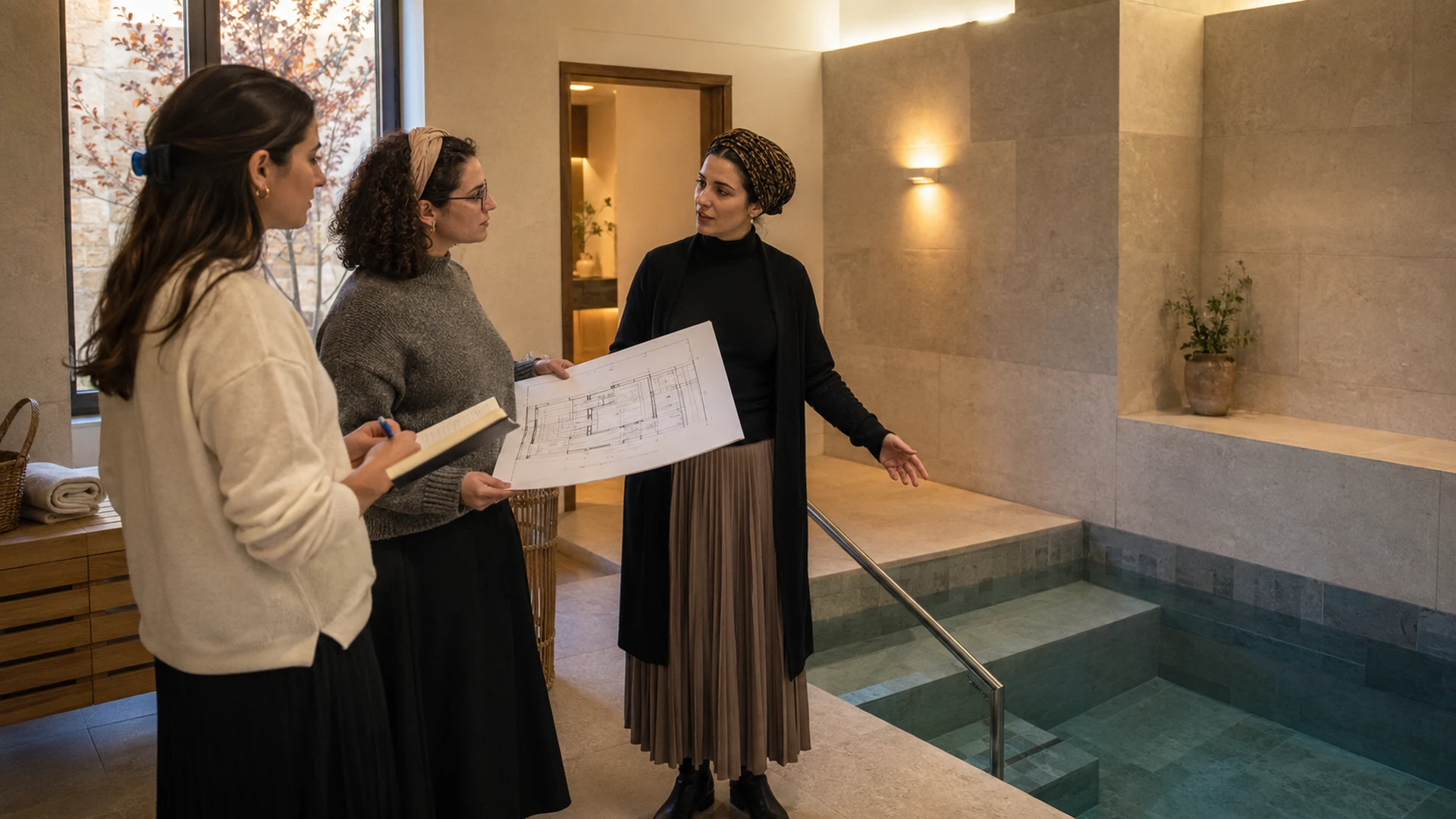
A mikveh is a Jewish ritual bath designed for immersion. It is used in several religious contexts, including conversion and family-purity observance, and communities may also use it around other transitions. Historical Jewish communities built mikva’ot alongside synagogues and schools, demonstrating the institution’s communal importance.[7][8]
A mikveh is not a scented relaxation bath. Its construction, water source, preparation and use are governed by Jewish law and communal practice. Customs differ among Jewish movements and communities, so an outsider should not imitate the rite from a simplified online description. Respectful coverage focuses on meaning, architecture and community guidance rather than the private experience of a person immersing.
Islamic ghusl: full-body ritual purification
Islamic practice distinguishes ordinary cleanliness from ritual purification. Qur'an 5:6 instructs believers about washing before prayer and purification following a state of major ritual impurity, while also recognizing alternatives when water cannot be used.[4] Ghusl is the full-body washing associated with particular conditions and acts of worship; wudu is a separate partial ablution.
The precise requirements and recommended actions are discussed within Islamic jurisprudence and can differ across legal schools. It is therefore misleading to market a generic perfumed bath as Islamic ghusl or to attach unrelated ideas about removing curses. Ghusl is rooted in worship, intention and religious law, not commercial wellness branding.
Hindu sacred bathing and Kumbh Mela
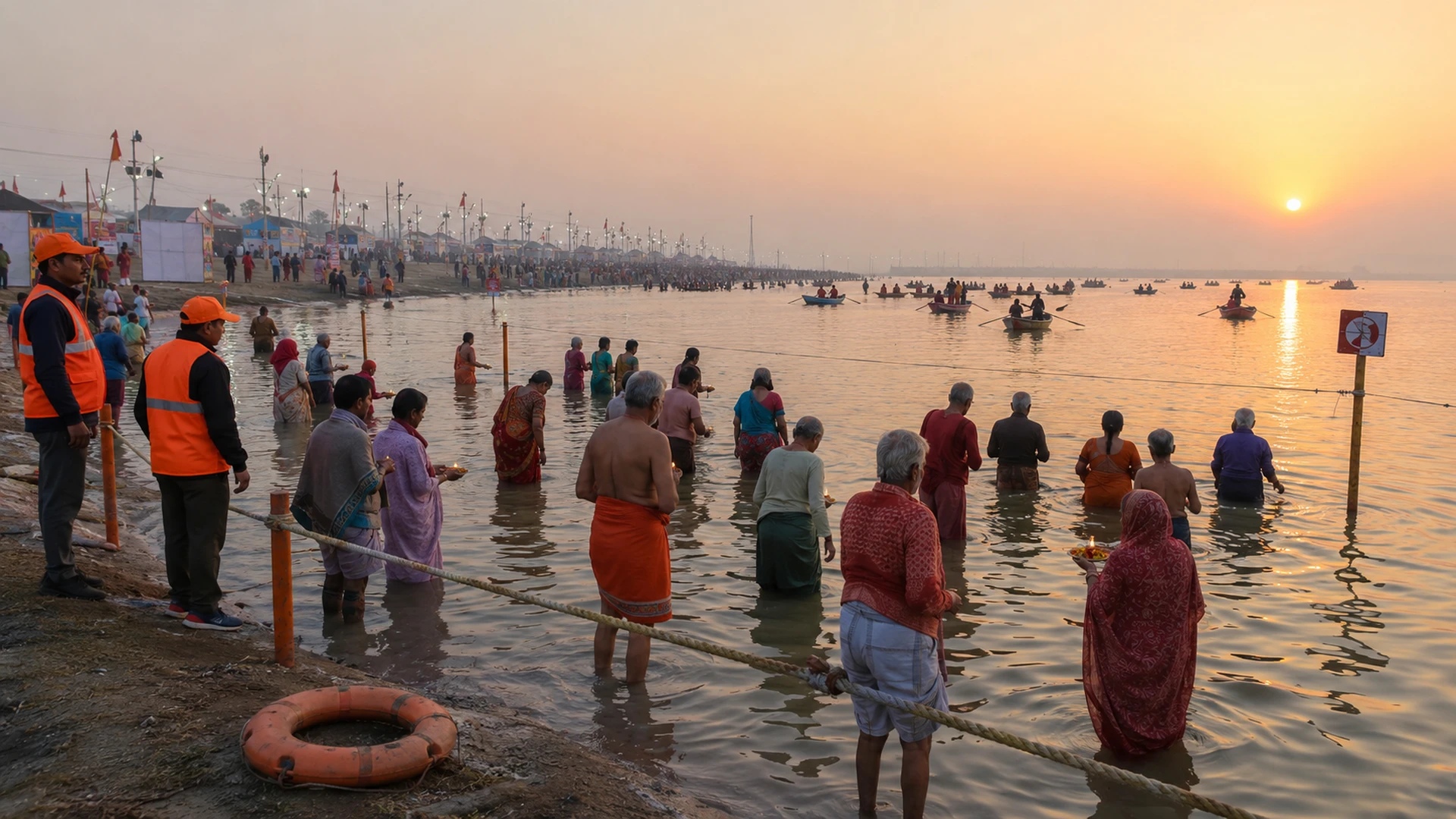
Sacred bathing has many forms across Hindu traditions. At Kumbh Mela, pilgrims gather at rotating locations in India and bathe or take a dip in a sacred river. UNESCO describes the event as a major pilgrimage and a diverse set of rituals connected with worship, cleansing, knowledge transmission and community memory.[2]
The festival is not a single uniform bath performed identically by every participant. Its scale, locations, religious organizations and regional activities matter. Public discussion should also recognize practical responsibilities involving sanitation, crowd safety and river protection. Sacred meaning does not eliminate environmental or health concerns.
Shinto misogi: purification through water
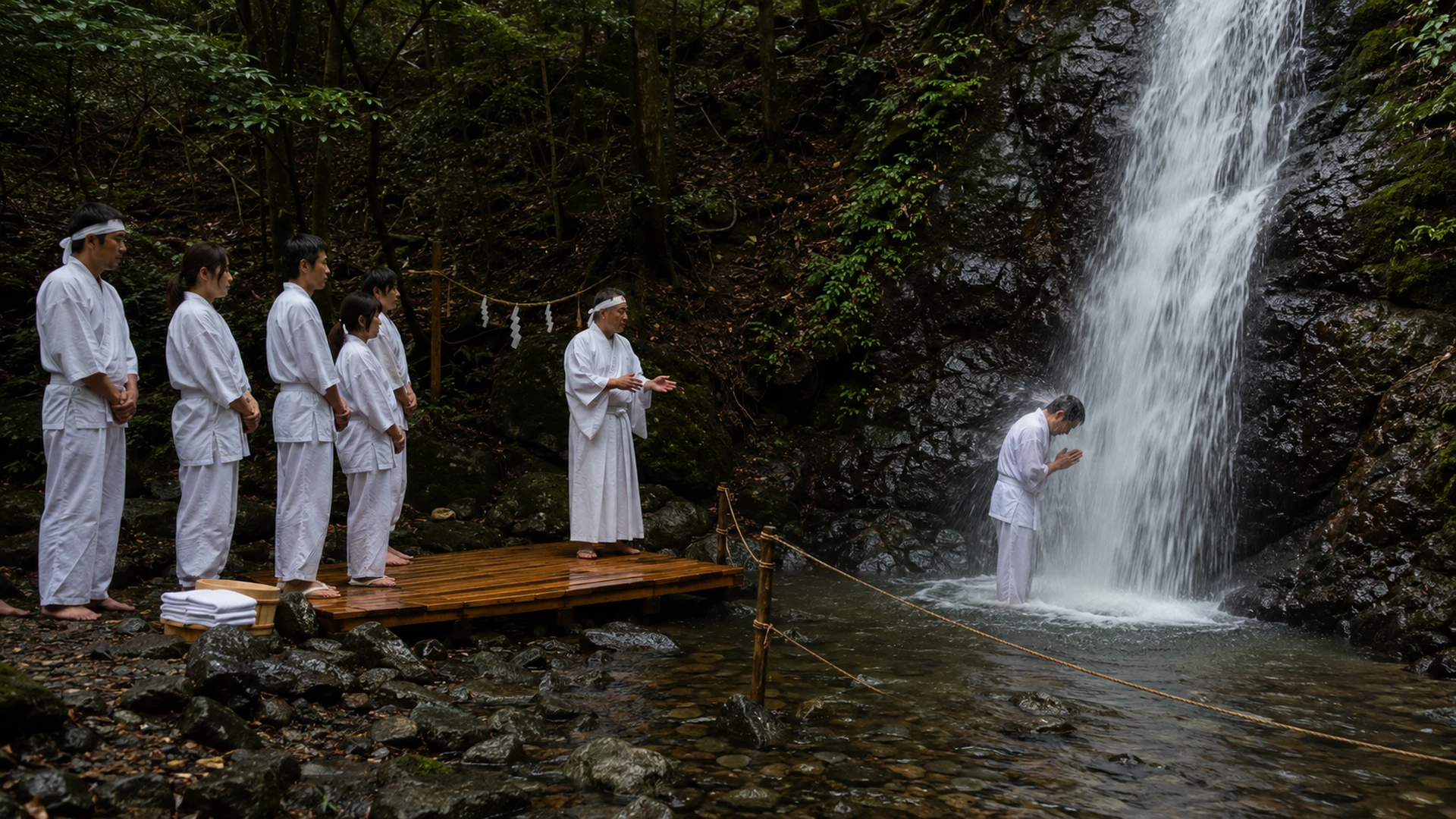
In Shinto contexts, misogi refers to purification using water and is closely associated with harae, or ritual purification. Kokugakuin University’s Encyclopedia of Shinto notes that misogi may include washing in the sea or a river, splashing cold water or related forms of water austerity; it can also intersect historically with Buddhist cold-water practice.[5][6]
Modern images often show participants beneath a waterfall, but this visually dramatic form should not be treated as a universal Japanese ritual or a tourist challenge. Cold-water immersion can be physically dangerous, and authentic participation depends on location, leadership, preparation and community rules.
Christian baptism: cleansing, initiation and new life
Christian baptism uses water to mark initiation into Christian life. Traditions administer it through immersion, pouring or sprinkling, with different theological emphases. The Catholic Catechism explains that immersion symbolizes burial and rising to new life, and describes baptism as a washing of regeneration and renewal.[9]
Baptism should not be casually classified as a private spiritual bath. It is a sacrament or ordinance performed within a church community. The water is inseparable from proclamation, prayer, faith and membership. Comparing baptism with other water rites can reveal shared themes of renewal, but it should not erase distinct beliefs.
Yoruba sacred-water heritage at Osun-Osogbo
The Osun-Osogbo Sacred Grove in southwestern Nigeria is a living Yoruba religious landscape centred on the Osun River, shrines, artworks and an annual festival. UNESCO describes the river as the spiritual abode of Osun and the grove as an active religious site sustained by priests, priestesses, worshippers and community authorities.[3]
This example matters because internet content often turns African sacred waters into vague recipes for 'African cleansing baths.' Osun-Osogbo is not evidence that all Yoruba people, all Nigerians or all African communities follow one bathing practice. The grove has custodians, protected spaces, environmental rules and living religious authority. Responsible study names the place and community while avoiding invented ritual instructions.
Afro-Brazilian herbal baths and individualized authority
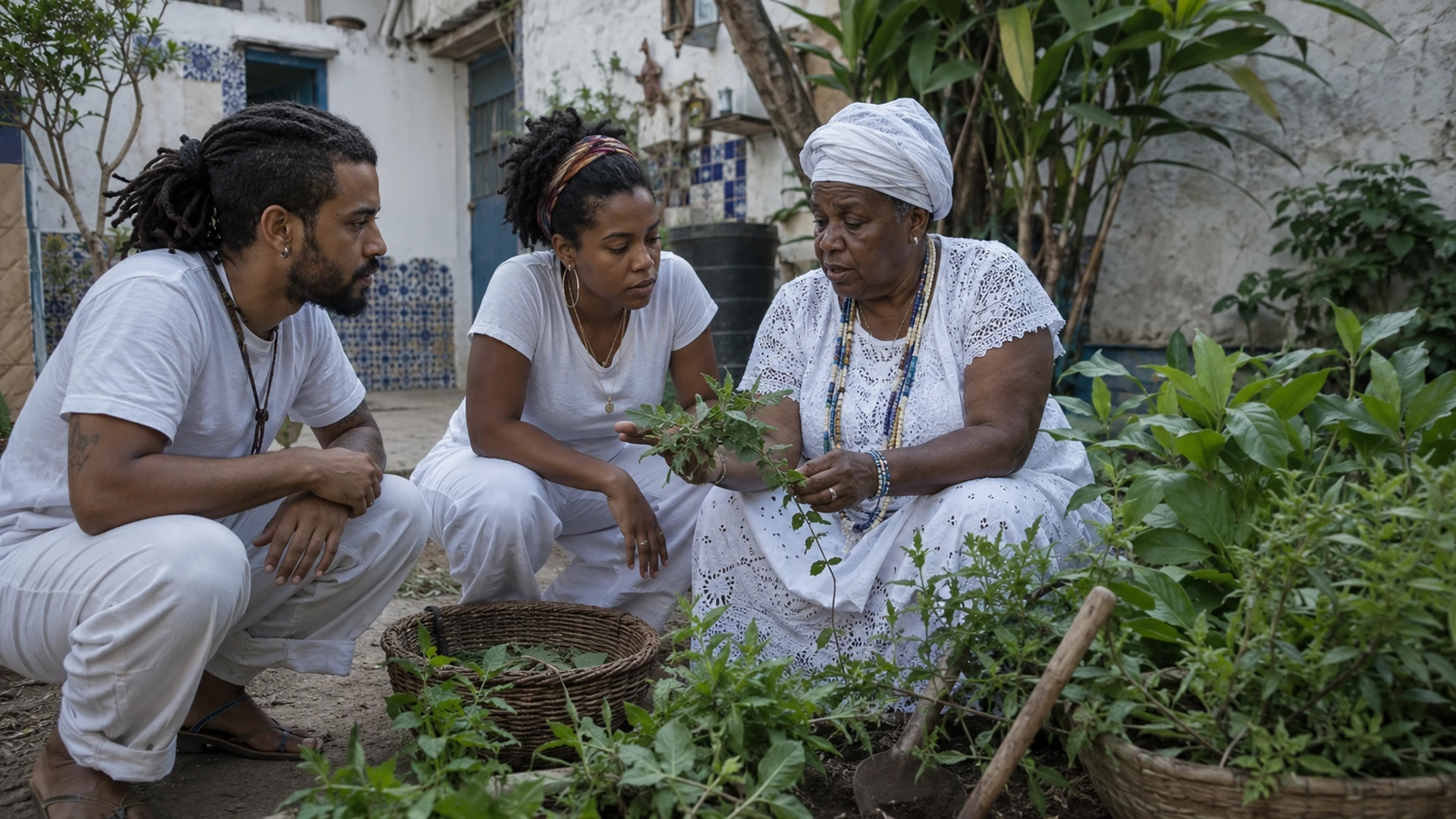
In Candomble and related Afro-Brazilian contexts, herbs, baths, smoke, beads and other materials can form part of religious care. A peer-reviewed ethnographic study of Candomble communities describes mothers and fathers of saint as holding extensive knowledge about baths, herbs and cleansing practices, while emphasizing that prescriptions are individualized and guided through religious consultation.[10]
This directly challenges the online habit of publishing one 'Candomble cleansing bath' for everyone. Independent terreiros have their own lineages, authorities and ritual responsibilities. Some knowledge is transmitted orally and is not meant for public extraction. The safest educational approach is to explain the role of expertise and relationship rather than disclose or invent ingredient combinations.
Common Materials in Modern Spiritual Bath Practices
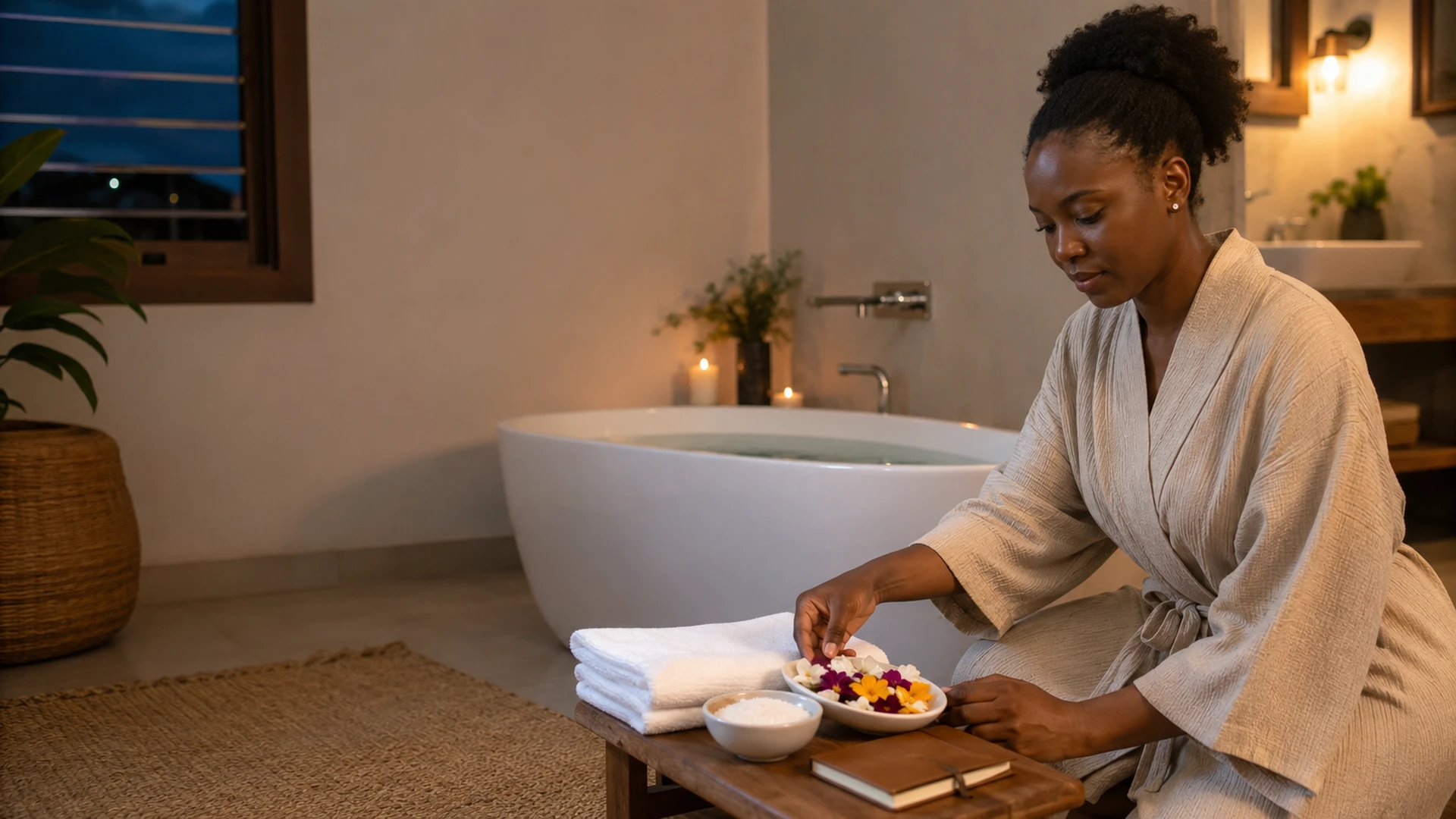
Outside formal religious rites, people often create personal baths using ordinary materials. These materials do not have one universal meaning, and adding them does not automatically make a bath traditional or spiritually effective.
| Material | Common modern association | Safety and cultural caution |
|---|---|---|
| Plain water | Clarity, release, transition or prayer | Use water that is safe for bathing; avoid contaminated natural water |
| Salt | Boundary, preservation or cleansing symbolism | Can sting damaged skin and may worsen dryness |
| Flowers | Beauty, remembrance, love or renewal | Confirm the plant is non-toxic and pesticide-free |
| Herbs | Ancestral knowledge, scent, healing or protection | Do not use unknown plants or copy closed-tradition prescriptions |
| Essential oils | Fragrance, relaxation or symbolic intention | Concentrated oils can irritate skin or cause poisoning if misused |
| Prayer or spoken intention | Devotion, gratitude, repentance or focus | Use language consistent with your own beliefs |
| Candles | Attention, remembrance or sacred atmosphere | Keep flames away from towels, alcohol, oils, children and pets |
Can a Spiritual Bath Be Used for Protection?
Within religious belief, a bath may be understood as preparation, purification or an appeal for divine or ancestral protection. The word protection can also mean psychological boundary-setting, community reassurance or a commitment to leave harmful behaviour behind. These meanings can be personally important.
However, a bath cannot be scientifically guaranteed to stop violence, disease, legal problems, financial loss or another person’s actions. Claims that a paid bath will certainly break a curse, force a lover to return or produce wealth are not supported by scientific evidence and can exploit vulnerable people. Spiritual support should be presented honestly and should never replace practical safety planning, legal advice, financial management or healthcare.
A Safe Non-Denominational Reflective Bath
A person who does not belong to a tradition may still use an ordinary bath as a reflective practice. The key is to describe it honestly as personal reflection rather than an ancient ritual borrowed from someone else.
Clean the bathing space and use water known to be safe.
Choose a simple purpose such as gratitude, grief, rest, releasing a habit or preparing for a new beginning.
Keep ingredients minimal. Plain water is enough; an unscented bath product may be safer than unknown herbs or concentrated oils.
Use prayer, silence, breathing or journaling according to your own beliefs.
End with one practical action, such as making an apology, scheduling a medical appointment, changing a password, setting a budget or asking for help.
Do not claim that the bath reproduces mikveh, ghusl, misogi, Kumbh Mela, Candomble or another community-governed rite.
Health and Safety Considerations
Natural does not automatically mean safe. Fragrances, plant extracts and essential oils can cause irritant or allergic contact dermatitis. The American Academy of Dermatology advises testing new skin-care products on a small area before wider use, while Poison Control warns that essential oils can cause rashes and may be poisonous when swallowed or misused.[11][12][13]
Do not use unidentified herbs, household chemicals, bleach, pesticides, bodily fluids or substances sold without clear ingredients.
Do not swallow bath water or put unsafe water into the nose, eyes or open wounds.
Avoid bathing in rivers, lakes or coastal water when local authorities warn of sewage, harmful algae, parasites, flooding or other contamination. Natural water can carry germs, and open wounds increase infection risk.[14]
Use extra caution during pregnancy, with allergies, eczema, asthma, diabetes, heart conditions, reduced mobility or immune suppression. Ask a qualified clinician when uncertain.
Stop immediately if you experience burning, swelling, hives, breathing difficulty, severe dizziness or faintness. Breathing difficulty is an emergency.
Never leave candles unattended, and do not combine flames with oils or alcohol-based liquids.
Children should not be placed in spiritual baths containing concentrated oils, camphor, unknown herbs or very hot water.
During water emergencies, follow local public-health guidance and do not bathe in water contaminated with sewage or toxic chemicals.[15]
Cultural Respect and Ethical Boundaries
Name the tradition precisely
Avoid phrases such as African cleansing bath, Indigenous water ritual or Asian purification ceremony unless the specific community, place and context are identified. Africa, Asia and Indigenous peoples are not single cultures.
Do not publish restricted instructions
Some practices require initiation, lineage, clergy, elders, gender-specific spaces or confidential consultation. Public curiosity does not create entitlement to private knowledge. A responsible article can describe purpose, history and authority without revealing words, plant combinations or ritual sequences that custodians consider restricted.
Do not sell certainty
Spiritual services should avoid guaranteed claims. It is more honest to say that a ritual may offer prayerful support, reflection, community connection or culturally meaningful transition than to promise a specific supernatural result.
Respect the environment
Do not leave candles, plastic, cloth, coins, oils, food or plant material in rivers, lakes, forests or springs without explicit local authorization. A sacred landscape is not a disposal site. Follow custodians, environmental authorities and public-health guidance.
Common Misunderstandings
| Misunderstanding | More accurate explanation |
|---|---|
| All spiritual baths remove negative energy | The phrase negative energy has different spiritual and psychological meanings and is not a measurable universal substance |
| Every African tradition uses herbs in baths | African communities have distinct histories; many traditions do not use the same plants, meanings or methods |
| A recipe found online is authentic | Authenticity depends on lineage, community, context and authority—not ingredient lists alone |
| Religious purity means a person is dirty or inferior | Ritual purity is a religious category and should not be confused with hygiene, moral worth or social stigma |
| Cold water is spiritually stronger | Cold exposure can be dangerous; dramatic discomfort is not proof of spiritual effectiveness |
| If a bath is traditional, it is medically safe | Traditional use does not eliminate allergy, toxicity, infection or interaction risks |
Scientific Limitations
Science can study water quality, skin reactions, stress, relaxation, sleep, social support and the health effects of particular ingredients. It cannot verify theological claims such as forgiveness of sin, ritual purity, ancestral presence or divine protection because those claims belong to religious interpretation rather than laboratory measurement.
A warm bath may help some people relax, but that does not prove that a specific ritual removes a curse or changes external events. Cultural meaning and scientific evidence should be discussed side by side without using one to misrepresent the other.
Key Takeaways
Spiritual bath rituals use water within specific systems of belief, authority and community practice.
Mikveh, ghusl, sacred river bathing, misogi, baptism and herbal baths are not interchangeable.
Protection and renewal are religious or symbolic meanings, not guaranteed outcomes.
Private or initiated traditions should not be converted into public do-it-yourself recipes.
Plain water, reflection and a practical next step are enough for a non-denominational personal bath.
Unknown herbs, concentrated essential oils and contaminated water can cause real harm.
Cultural respect requires specific names, consent, environmental responsibility and honest limits.
People Also Ask
What is a spiritual bath?
A spiritual bath is an intentional use of water for purification, devotion, protection, transition or renewal. It may be part of a formal religion or a modern personal practice.
What is the purpose of a cleansing bath ritual?
Its purpose may be to prepare for worship, restore ritual purity, mark a new beginning, express repentance, seek protection or support reflection.
Which religions use ritual bathing?
Examples include Judaism, Islam, Hindu traditions, Shinto and Christianity, alongside many African, Indigenous and diasporic traditions. Their meanings and rules differ.
Can a spiritual bath remove a curse?
That is a matter of belief, not a scientifically guaranteed outcome. Be cautious of anyone demanding money while promising certainty.
Are herbal spiritual baths safe?
Not automatically. Unknown plants, essential oils and fragrances can irritate skin, interact with medicines or be toxic.
Can I create my own spiritual bath?
You can create a personal reflective bath using safe water and your own prayer or journaling, but do not claim it reproduces a community’s sacred rite.
Is baptism a spiritual bath?
Baptism is a Christian initiation rite using water. It shares themes of cleansing and new life but is not simply a private wellness bath.
Why is salt used in spiritual baths?
Salt may symbolize preservation, cleansing or boundaries in some practices, but its meaning is not universal and it can irritate damaged skin.
Frequently Asked Questions
How often should a spiritual bath be taken?
There is no universal schedule. Formal traditions follow their own rules; a personal reflective bath can be occasional and should not become a substitute for practical action or healthcare.
Do I need herbs for a cleansing bath?
No. Plain clean water can support reflection. Herbs should only be used when they are correctly identified, safe for the person and culturally appropriate.
Can I mix salt and essential oils in bath water?
Use caution. Essential oils do not dissolve safely in water without appropriate formulation and can contact the skin in concentrated droplets. Follow product directions and avoid unknown mixtures.
Can spiritual baths be performed in rivers?
Only where access is legal, the water is considered safe, and local religious custodians and environmental authorities permit the activity.
Are spiritual baths part of African traditional religion?
Some African communities have water-based purification or sacred-river traditions, but there is no single African spiritual bath. The community and region must be named.
What should I do if a spiritual bath causes a rash?
Stop using the ingredients, rinse them off, and seek medical advice if symptoms persist. Difficulty breathing, facial swelling or fainting requires urgent help.
Can a spiritual advisor prepare a bath for someone else?
Some traditions authorize particular practitioners to prescribe or prepare baths. Ask about training, lineage, ingredients, safety and whether claims are being presented honestly.
How can I study ritual baths respectfully?
Use community-approved sources, distinguish public from restricted knowledge, avoid copying rites and credit the people and institutions responsible for the tradition.
Conclusion
Spiritual bath rituals reveal how communities use the body, water and place to express purification, protection and renewal. Their similarities can support cross-cultural understanding, but their differences are equally important. A mikveh is not ghusl; ghusl is not misogi; misogi is not baptism; Kumbh Mela is not a home herbal bath; and Candomble knowledge cannot be reduced to a generic recipe.
The most responsible approach combines respect for living custodians, honest language about spiritual belief, practical safety and environmental care. For a person seeking a simple new beginning, clean water, prayer or reflection and one concrete act of change may be more meaningful—and safer—than an elaborate mixture copied without context.
Final Summary
A spiritual bath is best understood as a culturally situated ritual or a clearly labelled personal reflective practice. Water can symbolize cleansing, protection and renewal, but meaning depends on belief, authority and community. Avoid guaranteed claims, unsafe ingredients, contaminated water and the unauthorized copying of private traditions.
Article Information
- Publisher
- Ancestral Temple
- Editor
- Ancestral Temple
- Last updated
- Jul 30, 2026
- Last reviewed
- Jul 30, 2026
- Content version
- 8ed1582bb8
This educational article should be read as cultural and spiritual information, not as medical, legal, financial, or emergency advice.
Helpful Related Guidance
About the Author
 Ancestral Temple
Spiritual guide and practitioner with decades of experience in ancestral wisdom, rituals, and divine guidance.
Related Posts
View All





Comments
We'd love to hear your thoughts.