
Uncrossing and Negative-Energy Cleansing Rituals: Meaning and Cultural Practices
Pillar Article
Quick Summary
Uncrossing is a term associated especially with African American Hoodoo and Conjure. In that cultural setting, it refers to spiritual work intended to remove a “crossed condition”—...
Uncrossing is a term associated especially with African American Hoodoo and Conjure. In that cultural setting, it refers to spiritual work intended to remove a “crossed condition”—a state believed to involve persistent obstruction, misfortune, hostility, harmful influence or a loss of spiritual balance. The word is now widely used online, but its historical and cultural setting matters. It should not be treated as a generic label for every cleansing ceremony in Africa, the Americas, Asia or Europe.
Negative-energy cleansing is a broader modern phrase. People may use it for prayer, bathing, smoke, sweeping, incense, fasting, house blessing, herbal washing or other acts meant to restore order. Yet different communities explain these actions through different theologies and cosmologies. One tradition may speak of ritual impurity; another of spiritual attack, bad luck, unsettled ancestors, sin, imbalance, grief, conflict or the need to prepare for sacred activity.
This guide explains what uncrossing means, how cleansing rituals function, and why cultural authority is essential. It describes documented examples without inventing a universal recipe or revealing restricted knowledge. Religious claims are identified as beliefs, not scientific facts, and practical safety remains important whenever rituals involve fire, smoke, concentrated oils, unidentified plants or severe emotional distress.
Quick Answer
An uncrossing ritual is spiritual work intended to remove a “crossed condition,” a term used especially in African American Hoodoo and Conjure for believed obstruction, bad luck or harmful influence. Negative-energy cleansing is a broader modern label covering many unrelated practices. Their meanings, materials and authority depend on the specific community, religion and historical setting.
What Is an Uncrossing Ritual?
In contemporary Hoodoo and Conjure vocabulary, uncrossing describes work meant to undo or remove a condition understood as spiritually obstructive. “Crossing” may be interpreted as deliberate hostile work, a jinx, a condition of persistent bad luck, or a pattern in which several areas of life appear blocked at once. Uncrossing is therefore framed as removal, release and restoration rather than ordinary daily cleansing.
The larger tradition is African American. Scholars such as Yvonne P. Chireau describe Conjure as a complex system of healing and harming that developed among African Americans through African inheritances, Christianity and other influences in the United States. Chireau also emphasizes that Conjure and Christianity often coexisted rather than functioning as simple opposites.[2][3] Katrina Hazzard-Donald likewise treats Hoodoo as an African American religious and herbal tradition shaped through slavery, regional history and later commercialization.[4]
Because Hoodoo has changed across time and place, no single practitioner, product catalogue or internet recipe represents every community. Some families emphasize prayer and scripture; others emphasize roots, baths, floor washes, candles, divination or specialist guidance. The meaning of uncrossing comes from that wider system, not from one ingredient list.
What Does a “Crossed Condition” Mean?
A crossed condition is an emic concept—a term used within a cultural or religious worldview. It may describe a believed curse, jinx, hostile influence, spiritual blockage or accumulation of misfortune. It is not a medical diagnosis, a scientifically measurable substance or proof that another person caused harm.
Historically, Conjure also offered language and practices for responding to danger, illness, unequal power and uncertainty when African Americans faced slavery, segregation, medical exclusion and hostile institutions. Understanding that context prevents the tradition from being reduced to entertainment or fear. It also explains why protection, healing, justice and practical survival are central themes in the scholarly literature.[2][4]
Is Uncrossing the Same as Cleansing?
Not exactly. Cleansing is the broader category. A person may cleanse before prayer, after conflict, during mourning, when entering a sacred space or simply to mark a new beginning. Uncrossing is more specific: it responds to a condition believed to be crossed, fixed, jinxed or obstructed. Protection is another distinct category, intended to maintain boundaries after cleansing or to prevent unwanted influence.
What Does “Negative Energy” Mean in Cultural Practice?
“Negative energy” is common in modern spiritual and wellness language, but it is not a universal technical term. In ordinary speech it may refer to tension, grief, hostility, fear, repeated conflict, an uncomfortable atmosphere or a sense of stagnation. In a religious context it may refer to spiritual impurity, harmful intention, offended spirits, sin, broken relationships, ritual disorder or forces named within a particular cosmology.
These meanings should not be collapsed. A Candomblé community speaking about axé, an African American rootworker speaking about crossed conditions, a Catholic speaking about blessing, and an Indigenous elder speaking about sacred medicines are not necessarily describing the same invisible substance. Similar actions can carry different explanations, authorities and ethical rules.
A responsible article therefore uses “negative energy” only as a search-friendly umbrella phrase and then replaces it with the vocabulary of each documented tradition. This helps readers find the page without allowing a popular phrase to erase cultural differences.
Why Cleansing Rituals Matter
Rituals are patterned actions that carry shared meaning. UNESCO describes social practices and rituals as activities that structure communal life, reaffirm identity and connect people with history, memory and worldview.[1] Cleansing rituals often become meaningful through five overlapping functions:
Boundary making: marking a difference between ordinary and sacred time, inside and outside, before and after, or safe and unsafe.
Transition: helping a person or community move through birth, initiation, illness, mourning, conflict, relocation or a new beginning.
Embodied meaning: using water, touch, movement, scent, sound or clothing to make an invisible idea physically memorable.
Moral and relational repair: pairing cleansing with confession, apology, prayer, reconciliation or changed behavior.
Community authority: placing the action within a lineage, congregation, household, priesthood or network of elders who interpret it.
A ritual can also provide concentration and emotional structure. Preparing a space, speaking a prayer, washing, changing clothing or discarding an object can help participants organize attention and express an intention. That human value does not prove that a supernatural force has been measured or removed. Religious meaning and scientific evidence answer different questions.
Common Forms of Spiritual Cleansing
The following forms appear in many places, but resemblance does not prove a shared origin. Each tradition determines who may perform the action, which materials are appropriate, what words are spoken and how ritual remains are handled.
| Form | Typical action | Possible cultural meanings | Important caution |
|---|---|---|---|
| Water and bathing | Immersion, pouring, washing, sprinkling or wiping | Purification, transition, blessing, cooling, renewal or preparation | Water can be contaminated; plant additives may irritate skin. |
| Smoke and fragrance | Incense, resins, aromatic leaves or sacred medicines | Prayer, offering, purification, blessing or communication | Meanings are culture-specific; smoke affects indoor air. |
| Sweeping and floor washing | Brooms, water, plant washes or directional cleaning | Removing disorder, marking boundaries or renewing a household | Do not mix unknown chemicals or toxic plant extracts. |
| Prayer, scripture and song | Psalms, hymns, invocations, blessings or communal singing | Divine help, moral repair, protection, remembrance or authority | Words should not be copied from restricted rites. |
| Plants, roots and minerals | Leaves, roots, salt, earth, resins or prepared washes | Protection, cleansing, cooling, strengthening or sacred presence | Natural materials can be toxic, allergenic or endangered. |
| Fire and light | Candles, lamps or prescribed ritual fires | Transformation, prayer, vigilance, divine presence or destruction of disorder | Fire safety and ventilation are essential. |
| Clothing and color | White garments, fresh clothing, head coverings or ritual textiles | Purity, mourning, initiation, belonging or readiness | Meanings vary sharply by tradition. |
| Disposal and closure | Removing wash water, ashes, offerings or temporary objects | Ending the rite, transferring a condition or returning materials | Follow community rules and environmental law; never litter. |
Water, Baths and Washing
Water makes cleansing visible because it flows, cools, carries and changes the body’s sensory state. In Hoodoo, Afro-Brazilian religions, Christianity and many other traditions, washing can symbolize removal or preparation. Yet a Christian sprinkling of holy water, an Afro-Brazilian herbal bath and a Hoodoo uncrossing bath are not interchangeable. Their ingredients, prayers and authority come from different systems.
Public educational writing should describe the form and meaning without turning community knowledge into a universal do-it-yourself recipe. This is especially important when a bath contains plants, roots, essential oils or minerals that may be unsafe for skin, pregnancy, children, pets or people taking medication.
Smoke, Incense and Sacred Medicines
Smoke can carry fragrance, mark prayer, create atmosphere or symbolize movement between visible and invisible worlds. Frankincense in Christian and Middle Eastern settings, plant smoke in Afro-Brazilian practice, and sacred medicines in Indigenous ceremonies all have distinct histories. The generic phrase “smoke cleansing” may describe the physical form, but it should not be used to claim that all smoke traditions are the same.
Sweeping, Thresholds and Household Order
Household cleansing often combines practical cleaning with symbolic direction. Doors, windows, gates and crossroads can represent transitions, so cleaning toward or away from an entrance may carry meaning. The broom itself can symbolize labor, discipline, removal or protection. Because these interpretations differ, directional instructions should not be invented or presented as universal facts.
Uncrossing in African American Hoodoo and Conjure
Hoodoo, Conjure and rootwork are related names for African American folk-spiritual traditions shaped in the United States. Their history cannot be separated from slavery, racial violence, Black Christianity, herbal knowledge, community healing and the struggle for agency. Smithsonian records for Chireau’s Black Magic and Hazzard-Donald’s Mojo Workin’ emphasize the tradition’s African American character and its development through African, European and American influences.[2][4]
The tradition is not the same as Haitian Vodou, Louisiana Voodoo, Cuban Lucumí, Brazilian Candomblé or a generic category called “African magic.” Those traditions may have historical connections through the African diaspora, but each has its own institutions, languages, spirits, initiation systems and community authorities.
Prayer and Christianity
Christian prayer and scripture have long appeared in African American Conjure. Chireau’s scholarship shows that practitioners and clients did not always see Christianity and Conjure as mutually exclusive. Biblical language, prayer, church participation and spiritual work could exist together within the same life.[3] This is why Psalms and biblical images of washing, deliverance and protection are prominent in many descriptions of uncrossing.
However, internet lists that assign one Psalm or ingredient to every problem can oversimplify a living tradition. The meaning of prayer depends on faith, interpretation and community practice—not on using a verse as a mechanical formula.
Baths, Washes and Roots
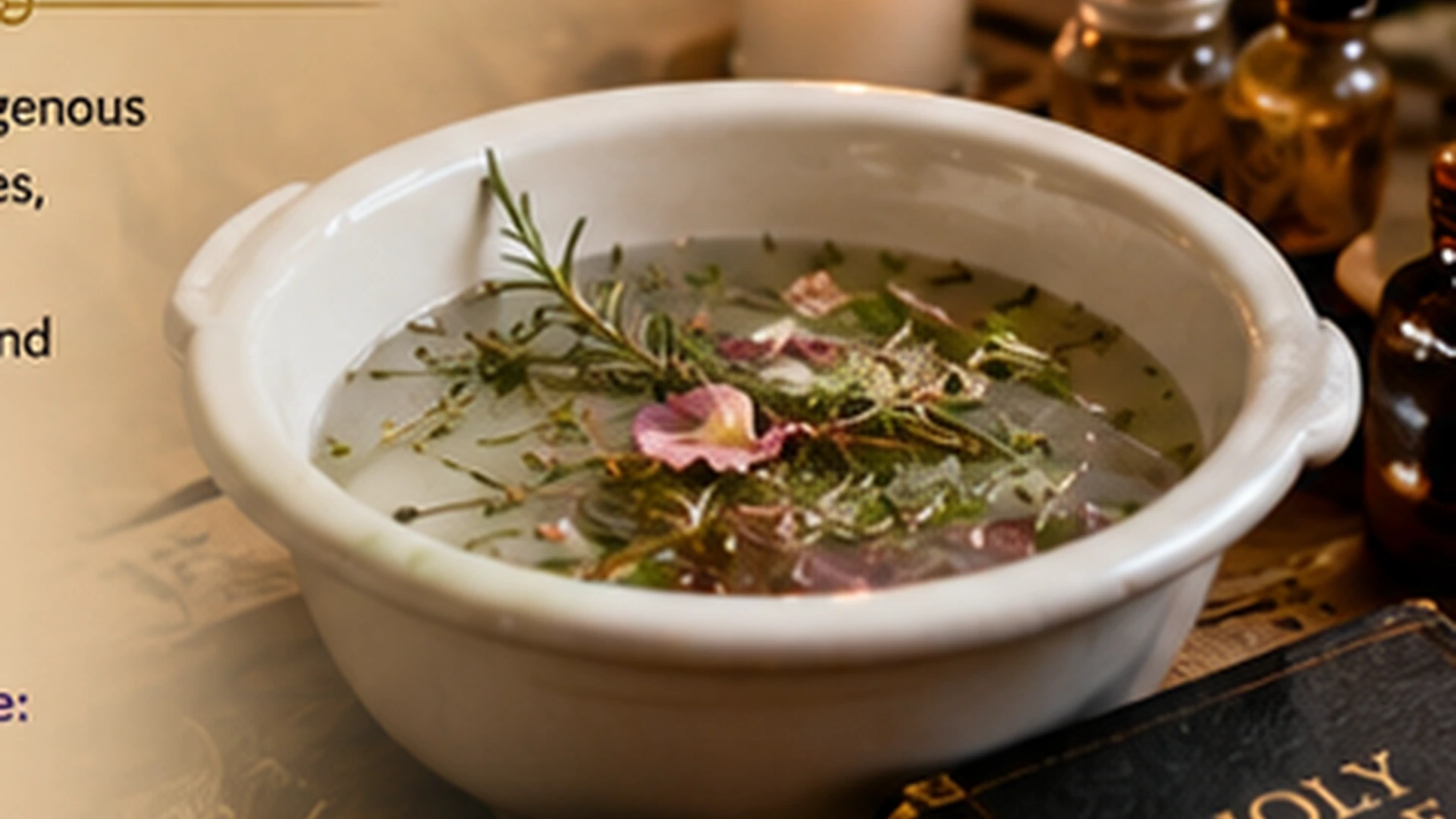
Descriptions of Hoodoo commonly mention spiritual baths, floor washes, roots, herbs, minerals, candles and household objects. Smithsonian material on African American earth-based traditions notes that Hoodoo practitioners develop particular relationships with plants and roots rather than treating them as inert ingredients.[5] The knowledge can be local, familial and highly individualized.
An uncrossing bath is therefore better understood as one form within a larger process of diagnosis, prayer, removal and protection. It is not simply scented water. Nor should a reader assume that a commercial “uncrossing” product accurately preserves historical practice. Mass-market spiritual supplies often standardize regional traditions and can obscure who created the knowledge.
Specialists, Families and Regional Variation
Historically, rootworkers, conjure doctors, midwives, herbalists, elders and religious leaders could occupy overlapping roles. Some knowledge circulated openly; other knowledge was private. Regional Hoodoo traditions in the Lowcountry, Mississippi Valley, Louisiana, Appalachia and urban centers developed differently. A responsible account credits variation rather than searching for one authentic recipe.
Commercialization and Stereotypes
Hoodoo has often been marketed by outsiders, confused with cinematic “voodoo,” or represented through racial stereotypes. Hazzard-Donald specifically distinguishes older Black Belt Hoodoo from commercial forms altered or controlled by outsiders.[4] Scholarship on the invention of “Negro superstition” also shows how white writers used caricatures of Black belief to support racism after emancipation.[14]
For that reason, educational images should avoid dolls, skulls, exaggerated fear and anonymous “tribal” costumes. The article should foreground African American voices, religious history, everyday materials, survival and community knowledge.
Afro-Brazilian Plant Baths and Cleansing
Afro-Brazilian religions provide another documented example of cleansing with plants and water, but their practices should not be renamed “Hoodoo uncrossing.” Candomblé, Umbanda and related traditions developed in Brazil through African diasporic histories, Brazilian social conditions and distinct religious communities called terreiros.
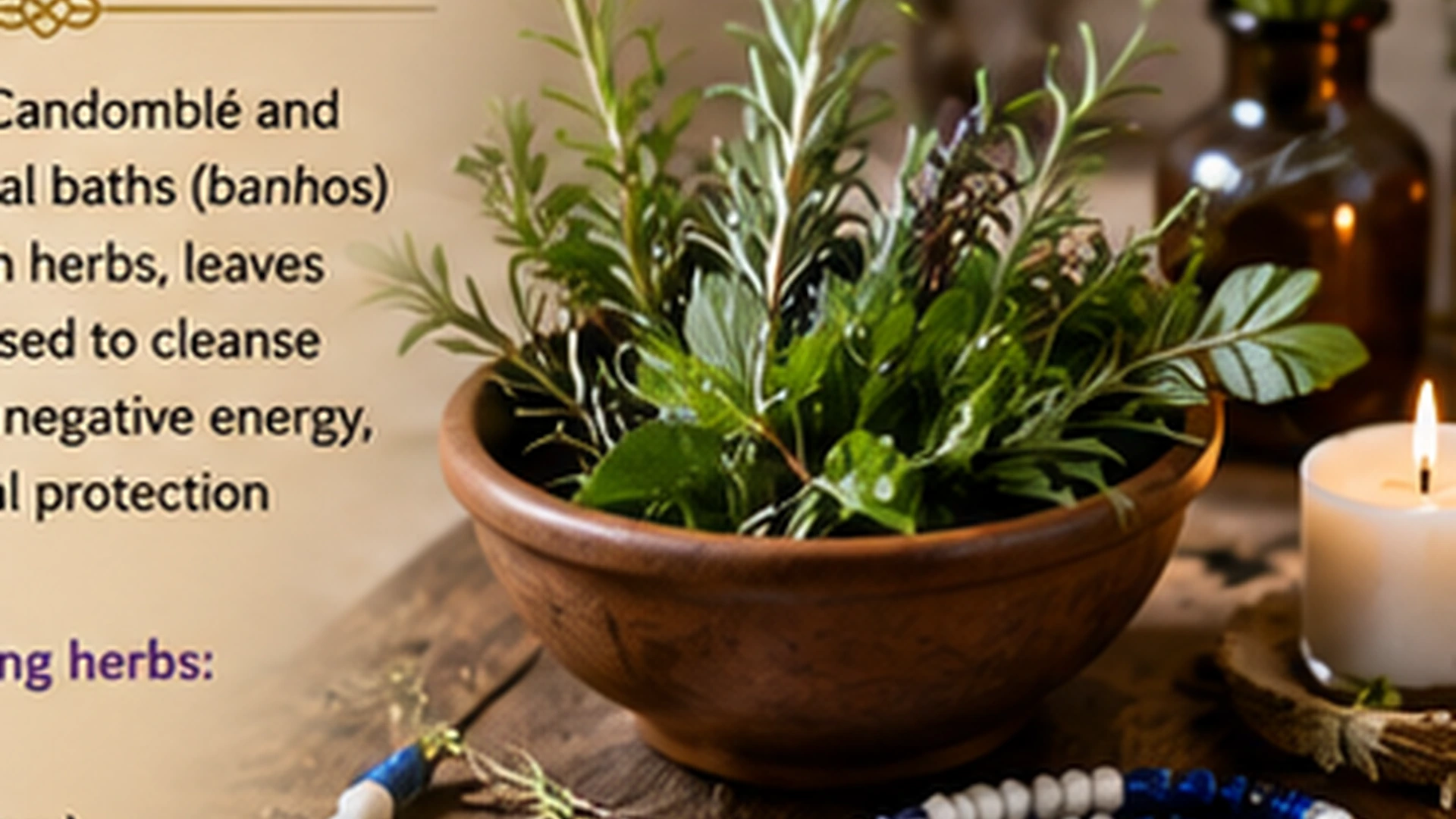
An ethnobotanical study involving leaders from twenty-seven terreiros on Santa Catarina Island documented ninety-three plants and found that liturgical uses frequently involved bathing and smoke cleansing. Participants described plants as carriers of axé, a vital sacred force within their religious worlds.[6] The study recorded different categories of baths, including forms intended to remove dense energies and forms intended to harmonize or bring sweetness. It also described amaci, a specific washing practice connected with initiated community life.[6]
These findings demonstrate both similarity and difference. Like Hoodoo, Afro-Brazilian traditions may use plants, water and smoke. Yet the names, priesthood, deities, initiation rules and plant classifications are not the same. A plant that is “cleansing” in a popular internet list may have a precise liturgical role in one terreiro and a different meaning elsewhere.
The study also shows why copying a bath recipe can be culturally and physically risky. Religious leaders selected plants within a system of knowledge, and some documented species are toxic. Community permission, correct botanical identification and health precautions are therefore essential.[6]
Indigenous Smudging and the Problem of Generic “Sage Cleansing”
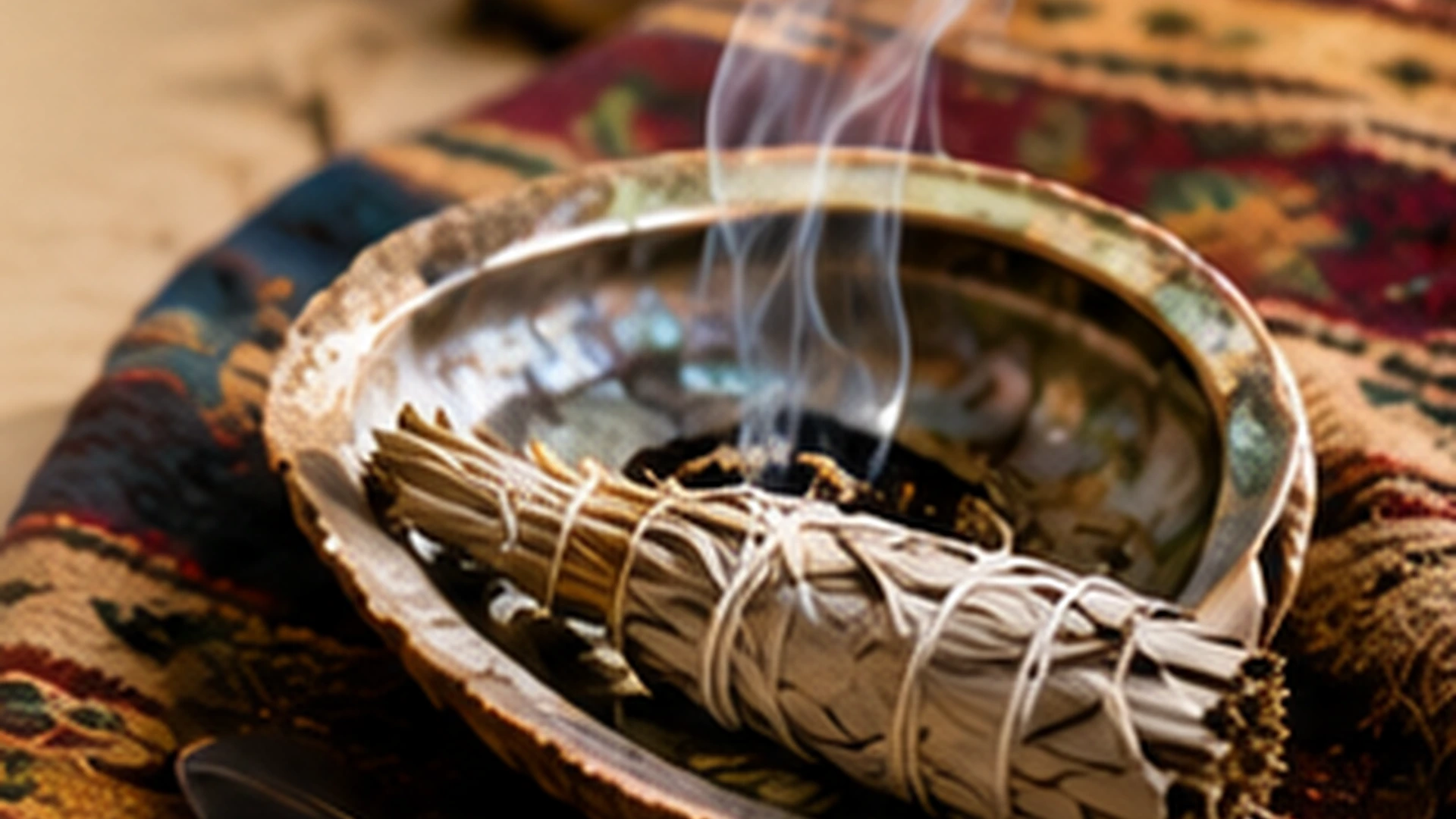
Smudging is often presented online as a universal method for removing negative energy, but the term belongs to specific Indigenous ceremonial contexts. Practices vary among Native nations, and not every community uses the same plants, words or name. University policies developed with Indigenous advisory bodies describe smudging as the ceremonial burning of sacred medicines such as sage, sweetgrass, cedar or tobacco for purification, prayer, grounding and cultural well-being.[7]
The National Museum of the American Indian describes sage smoke as part of preparing a ceremonial pipe in particular tribal contexts, demonstrating that smoke is embedded in larger systems of prayer and relationship.[8] It is therefore inaccurate to extract one plant bundle, sell it as a universal “energy eraser,” and ignore the people whose ceremonial rights were historically suppressed.
Respect includes learning the nation-specific context, listening to Indigenous teachers, avoiding imitation of restricted prayers, and considering plant conservation. Commercial demand for white sage has raised concerns about poaching and appropriation, especially in Southern California Indigenous homelands. A person seeking an ordinary aromatic household practice can choose locally abundant plants or non-smoke alternatives without calling the activity an Indigenous ceremony.
Christian Blessings, Holy Water and Exorcism
Christian traditions also contain rites of purification, protection and blessing, but “negative energy” is not the standard theological language. In Catholicism, sacramentals include prayers and signs such as the sign of the cross, laying on of hands and sprinkling with holy water. The Catechism presents these as sacred signs connected with the prayer of the Church, not as impersonal magical technology.[9]
Household blessings may include scripture, prayer and holy water. The United States Conference of Catholic Bishops explains that blessings use prayer, Scripture and sometimes ritual signs, with different forms led by ordained ministers or baptized laypeople according to Church rules.[10]
Major exorcism is especially important to distinguish from commercial “uncrossing.” Catholic teaching states that solemn exorcism may be performed only by an authorized priest and that psychological illness must be distinguished from claims of possession.[9] This institutional caution is a useful model: religious communities can take spiritual beliefs seriously while also recognizing the role of medicine and mental-health care.
Other Christian churches have their own blessings, deliverance prayers and pastoral procedures. They should be described through official denominational sources rather than blended into Hoodoo or presented as interchangeable with Indigenous or Afro-Brazilian rites.
What Cleansing Rituals Do Not Prove
A person may experience relief, clarity, renewed commitment or a stronger sense of safety after a ritual. Those experiences are real as experiences. They do not by themselves establish that a curse, spirit or measurable negative energy caused the original problem.
Many ordinary problems can feel like a crossed condition: financial pressure, workplace harassment, domestic abuse, grief, chronic illness, poor sleep, anxiety, depression, discrimination, legal trouble, mold, pests, carbon monoxide, unsafe wiring or unresolved conflict. A ritual may accompany practical action, but it should not replace medical care, legal advice, emergency help, financial planning, building inspection or mental-health support.
The best educational approach uses careful language: “practitioners believe,” “the ritual symbolizes,” “participants understand,” or “the tradition teaches.” It avoids statements such as “this herb scientifically removes curses” or “smoke destroys negative vibrations.”
Common Misunderstandings About Uncrossing and Cleansing
| Misunderstanding | More accurate explanation |
|---|---|
| “Uncrossing is an ancient African ritual used everywhere.” | Uncrossing is especially associated with African American Hoodoo and Conjure. African communities have many distinct cleansing traditions, but they should not all be renamed uncrossing. |
| “Negative energy means the same thing in every religion.” | It is a broad modern phrase. Traditions may instead speak of crossed conditions, ritual impurity, sin, dense energies, offended spirits, imbalance or other specific concepts. |
| “Smudging is any act of burning sage.” | Smudging refers to Indigenous ceremonial practices in particular communities. Generic household smoke use should not borrow the name or imitate restricted prayers. |
| “A spiritual bath is harmless because it is natural.” | Plants and essential oils can irritate skin, interact with medicines or be poisonous. Correct identification and safe concentration matter. |
| “If a ritual does not work, the person lacked faith.” | This claim can blame vulnerable people. Ritual outcomes are not scientifically guaranteed, and practical causes must be investigated. |
| “Every practitioner follows the same recipe.” | Living traditions vary by family, region, lineage, congregation and individual authority. |
| “Cleansing means attacking or returning harm to another person.” | Many traditions distinguish cleansing from retaliation. Ethical practice may emphasize removal, prayer, reconciliation and protection instead. |
Cultural Respect and Ethical Boundaries
Cleansing practices are not simply aesthetic content. Some are public, some are private, and some are restricted to initiated people or authorized ministers. Ethical research asks who has the right to teach, photograph, sell or perform the practice.
Name the community, country, region, religion and historical period whenever possible.
Use community and scholarly sources rather than copying commercial spell pages as historical evidence.
Do not describe Hoodoo as “primitive superstition” or reduce it to curses and fear.
Do not combine Hoodoo, Vodou, Candomblé, Lucumí, Palo, Indigenous smudging and generic African spirituality into one ritual.
Do not publish private prayers, initiation details or plant formulas without permission.
Avoid purchasing endangered or illegally harvested plants and resins.
Do not claim a credential, initiation or lineage that you do not possess.
Compensate teachers and cultural consultants fairly when their knowledge supports commercial content.
Make space for uncertainty, regional variation and disagreement among practitioners.
Scientific Limits and Practical Safety
No accepted scientific test can detect or measure a crossed condition, curse or negative spiritual energy. Research may examine ritual, belief, stress, social support, scent, plant chemistry or air quality, but that does not verify supernatural causation. Readers deserve both respect for religion and honesty about evidence.
Smoke and Fire Safety
Burning incense, herbs, paper, charcoal or candles produces particles and combustion gases. The U.S. Environmental Protection Agency notes that combustion activities create indoor particulate matter and advises ventilation when candles or incense are burned.[11] People with asthma, chronic lung disease, smoke sensitivity, infants and older adults may face greater risk. Charcoal should never be burned indoors because of carbon-monoxide danger.
Use the smallest amount of smoke needed within a permitted cultural or religious context.
Ventilate the room and keep smoke away from children, pets and people with respiratory conditions.
Use a stable fireproof vessel and keep water or an extinguisher nearby.
Never leave candles, charcoal, incense or smoldering plants unattended.
Choose water, prayer, sound, fresh air or ordinary cleaning when smoke is unsafe.
Herbs, Baths and Essential Oils
Natural does not mean harmless. Poison Control warns that essential oils can cause rashes, poisoning and serious injury when misused; some are dangerous if swallowed or applied undiluted.[12] Unidentified plants can also cause allergic reactions, burns or poisoning.
Never drink a ritual wash or essential oil unless it is a regulated product specifically intended for that use and a qualified clinician confirms it is safe.
Do not apply unknown herbs, roots, powders or oils to broken skin, eyes, genitals or a child’s body.
Patch-test ordinary cosmetic products as directed and stop immediately if irritation occurs.
Check pregnancy, medication, allergy and pet safety before using any concentrated plant product.
Keep oils, resins and prepared washes locked away from children and animals.
Seek poison-control or emergency advice after ingestion, breathing difficulty, burns, seizures or severe reactions.
Mental Health, Fear and Exploitation
Spiritual fear can become overwhelming. Warning signs include inability to sleep, persistent panic, hearing or seeing things that others do not, thoughts of self-harm, fear that leads to isolation, or repeated payments to someone who threatens catastrophe unless more rituals are purchased. A trusted religious leader can offer spiritual support, but urgent medical or mental-health care may also be necessary.
Ethical practitioners do not guarantee results, diagnose possession without appropriate authority, demand secrecy about abuse, tell clients to stop prescribed medicine, or use fear to extract escalating payments. Immediate danger, violence or coercive control requires practical safety planning and emergency assistance, not only ritual.
How to Study or Attend a Cleansing Ritual Responsibly
Identify the exact tradition. Ask for the community, language, region, institution or lineage rather than accepting a vague label such as “ancient African cleansing.”
Use sources created by practitioners, cultural institutions and qualified scholars. Commercial pages may show current markets but should not be the main evidence for history.
Ask whether the event is public. Public festivals may still contain moments that should not be photographed, recorded or copied.
Follow the host’s instructions about clothing, offerings, touch, silence, photography and restricted areas.
Describe what can be documented and state what remains uncertain or private.
Separate observation from endorsement. A researcher can explain what participants believe without claiming scientific proof.
Connect spiritual care with environmental and physical safety, especially when water, smoke, fire or toxic plants are involved.
Key Takeaways
Uncrossing is a culturally specific term associated especially with African American Hoodoo and Conjure.
A crossed condition is a religious or folk-spiritual concept, not a medical diagnosis or scientifically measurable energy.
Negative-energy cleansing is a broad modern label and should not erase tradition-specific vocabulary.
Water, smoke, sweeping, prayer, plants and thresholds appear widely, but similar materials can have very different meanings.
Afro-Brazilian plant baths, Indigenous smudging and Christian blessings have distinct authorities and should not be renamed or combined.
Private and initiated knowledge should not be turned into generic online recipes.
Smoke, fire, herbs and essential oils require practical safety precautions.
Ritual may support meaning and spiritual life, but it should not replace medical, legal, mental-health or environmental action.
People Also Ask
What is an uncrossing ritual?
An uncrossing ritual is spiritual work intended to remove a condition believed to be crossed, jinxed, fixed or obstructed. The term is especially associated with African American Hoodoo and Conjure. Practices vary and may involve prayer, washing, herbs, roots, candles or specialist guidance.
What does it mean to be spiritually crossed?
Within Hoodoo and related folk vocabulary, being crossed may mean that a person believes harmful spiritual work, persistent bad luck or obstruction is affecting life. This is a cultural interpretation, not a medical diagnosis or scientific proof that another person caused the problem.
Is uncrossing the same as spiritual cleansing?
Uncrossing is a type of cleansing focused on a crossed condition. Spiritual cleansing is broader and may be performed for preparation, renewal, mourning, protection, blessing or household order even when no curse or jinx is believed to exist.
Where did uncrossing rituals originate?
The vocabulary is most strongly associated with African American Hoodoo and Conjure in the United States. Those traditions developed through African diasporic inheritances, Black Christianity, local plant knowledge and other influences under slavery and segregation.
What is a spiritual cleansing bath?
It is a ritual washing in which water, prayer and sometimes plants or prepared materials carry a religious meaning. The ingredients and authority vary by tradition. A Hoodoo bath, a Candomblé plant bath and Christian holy-water practice are not interchangeable.
Why are herbs used in cleansing rituals?
Communities may understand plants as carrying sacred force, protection, fragrance, cooling, memory or relationships with ancestors and deities. Plants also have physical chemistry, so correct identification and safety matter. Symbolic use does not prove a supernatural effect.
Is smoke cleansing the same as smudging?
No. Smoke cleansing is a broad descriptive phrase. Smudging refers to sacred Indigenous practices in particular communities and may involve specific medicines, prayers and cultural protocols. Not every act of burning sage is an Indigenous ceremony.
Can anyone perform an uncrossing ritual?
Practices vary. Some household prayers or cleansing customs are openly shared; others require a rootworker, elder, priest, initiated practitioner or authorized minister. People should not claim lineage or copy restricted rites they have not been taught.
Are negative-energy cleansing rituals scientifically proven?
Science has not verified a measurable substance called negative spiritual energy or a crossed condition. Rituals can carry cultural, emotional and religious meaning, but claims of supernatural removal should be identified as belief rather than scientific fact.
How can a home be cleansed without smoke?
Many traditions and households use prayer, open windows, ordinary cleaning, water, music, bells, fresh linens, reconciliation or a formal blessing. The appropriate method depends on belief, health needs, tenancy rules and cultural context.
Frequently Asked Questions
Does uncrossing guarantee that bad luck will end?
No. No ethical source can guarantee a supernatural or material outcome. A ritual may offer spiritual meaning and a structured new beginning, but practical causes of financial, legal, medical or relationship problems still need attention.
Can someone accidentally cross themselves?
Some practitioners use language of self-crossing for harmful patterns, conflicting spiritual work or behavior believed to create disorder. This interpretation varies and should not be used to blame people for trauma, illness or misfortune.
Is a crossed condition the same as the evil eye?
Not necessarily. The evil eye is a distinct family of beliefs found in many regions, often involving harmful envy or gaze. A crossed condition belongs to Hoodoo and Conjure vocabulary and may be interpreted more broadly.
What is the difference between cleansing and protection?
Cleansing focuses on removal or preparation. Protection focuses on maintaining boundaries or preventing unwanted influence. Many ritual systems place protection after cleansing, but the sequence is not universal.
What is the difference between uncrossing and reversal?
In contemporary practitioner vocabulary, uncrossing usually emphasizes removal and restoration. Reversal may refer to redirecting or returning harmful work. Ethical views and terminology vary, so the two should not be treated as identical.
Are Psalms part of Hoodoo uncrossing?
Psalms and Christian prayer appear prominently in many African American Conjure traditions. Their use reflects the historical relationship between Hoodoo and Black Christianity. No single Psalm or method represents every practitioner.
Can salt remove negative energy?
Salt symbolizes purification and protection in many settings, but its meanings differ. Science does not show that household salt removes supernatural energy. Salt can also damage plants, surfaces, soil and some materials if used carelessly.
Can I make an herbal bath from plants found online?
That is risky. Common names can refer to different species, and some plants irritate skin or are toxic. Do not use unidentified plants or concentrated oils on the body. Seek botanical and medical safety guidance.
Is burning frankincense safer than burning herbs?
All combustion produces particles and gases. The amount varies by material, heat source and ventilation. Use minimal smoke, avoid charcoal indoors and consider smoke-free alternatives for people with respiratory conditions.
Why do some cleansing rituals use white clothing?
White can symbolize purity, coolness, mourning, truth, divine presence, initiation or communal identity depending on the tradition. It has no single universal meaning.
Can tourists attend cleansing ceremonies?
Some public ceremonies welcome visitors; others do not. Ask hosts, follow photography rules, avoid restricted spaces and never assume that public access permits imitation or commercial use.
Is Hoodoo a religion?
Scholars and practitioners describe Hoodoo in different ways: folk religion, spiritual system, Conjure tradition, rootwork or African American folk magic. It often overlaps with Christianity but does not have one central institution or creed.
Is Hoodoo the same as Vodou or Voodoo?
No. Hoodoo is an African American Conjure and rootwork tradition. Haitian Vodou and Louisiana Voodoo have different histories, spirits, institutions and ritual systems, even though all developed within African diaspora contexts.
What should I do if someone demands large payments to remove a curse?
Pause and seek a second opinion from a trusted religious leader, family member or professional adviser. Threats of catastrophe, escalating fees, secrecy and pressure are warning signs of exploitation.
When should spiritual fear be treated as a health concern?
Seek professional help when fear causes severe insomnia, panic, inability to function, hallucinations, self-harm thoughts or dangerous behavior. Spiritual support and clinical care can coexist.
Can cleansing replace cleaning, pest control or building repair?
No. Mold, infestation, sewage, carbon monoxide, unsafe wiring and structural damage require practical inspection and remediation. Ritual may accompany the work but cannot remove the physical hazard.
Conclusion
Uncrossing is best understood within the African American history of Hoodoo and Conjure. It responds to a crossed condition—a culturally defined state of obstruction or harmful influence—and may draw on prayer, washing, roots, household materials and specialist knowledge. The term should not be stretched to cover every cleansing ceremony in the world.
Broader cleansing traditions show how people use embodied actions to mark boundaries, prepare for sacred life, respond to conflict and seek renewal. Afro-Brazilian plant baths, Indigenous smudging and Christian blessings can all involve cleansing, but their meanings arise from different communities, institutions and histories. Respectful comparison reveals both shared human concerns and important differences.
The most responsible approach combines cultural accuracy with practical care. It names beliefs honestly, avoids guaranteed outcomes, protects restricted knowledge, considers environmental stewardship and recognizes when smoke, toxic plants, medical symptoms, abuse or psychological distress require professional action. Cleansing becomes most meaningful when it supports truth, safety, responsibility and renewed relationships rather than fear.
Final Summary
An uncrossing ritual is work intended to remove a crossed condition in African American Hoodoo and Conjure. “Negative-energy cleansing” is a broader modern phrase that can refer to many unrelated cultural practices. Water, smoke, prayer, herbs and sweeping may symbolize purification or renewal, but no universal ritual exists. Cultural permission, scientific honesty, plant and smoke safety, and attention to real-world causes are essential.
Article Information
- Publisher
- Ancestral Temple
- Editor
- Ancestral Temple
- Last updated
- Jul 30, 2026
- Last reviewed
- Jul 30, 2026
- Content version
- cbeb98bdf3
This educational article should be read as cultural and spiritual information, not as medical, legal, financial, or emergency advice.
Helpful Related Guidance
About the Author
 Ancestral Temple
Spiritual guide and practitioner with decades of experience in ancestral wisdom, rituals, and divine guidance.
Related Posts
View All








Comments
We'd love to hear your thoughts.