
Road-Opening Spells and Rituals: Traditions for Removing Obstacles and Delays
Pillar Article
Quick Summary
When progress feels blocked, people often describe the experience as a closed road: applications receive no answer, a journey is delayed, a business plan stalls, a relationship con...
When progress feels blocked, people often describe the experience as a closed road: applications receive no answer, a journey is delayed, a business plan stalls, a relationship conversation never begins or repeated setbacks make the next step difficult to see. “Road opening” is a modern spiritual phrase for practices intended to create movement, permission, clarity or opportunity. It can include prayer, divination, cleansing, offerings, candles, keys, doorway symbolism or a deliberate act that marks a new beginning.
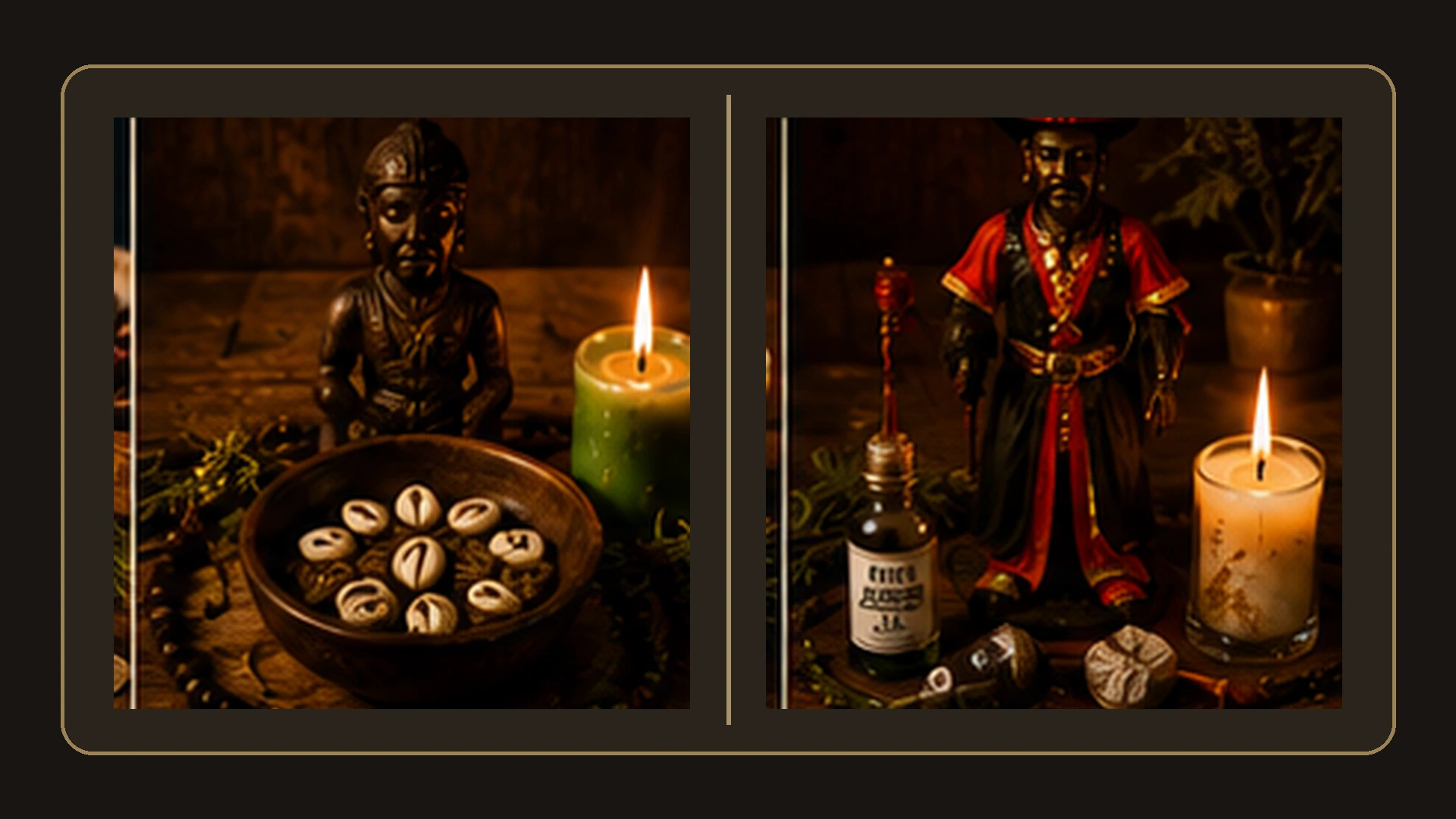
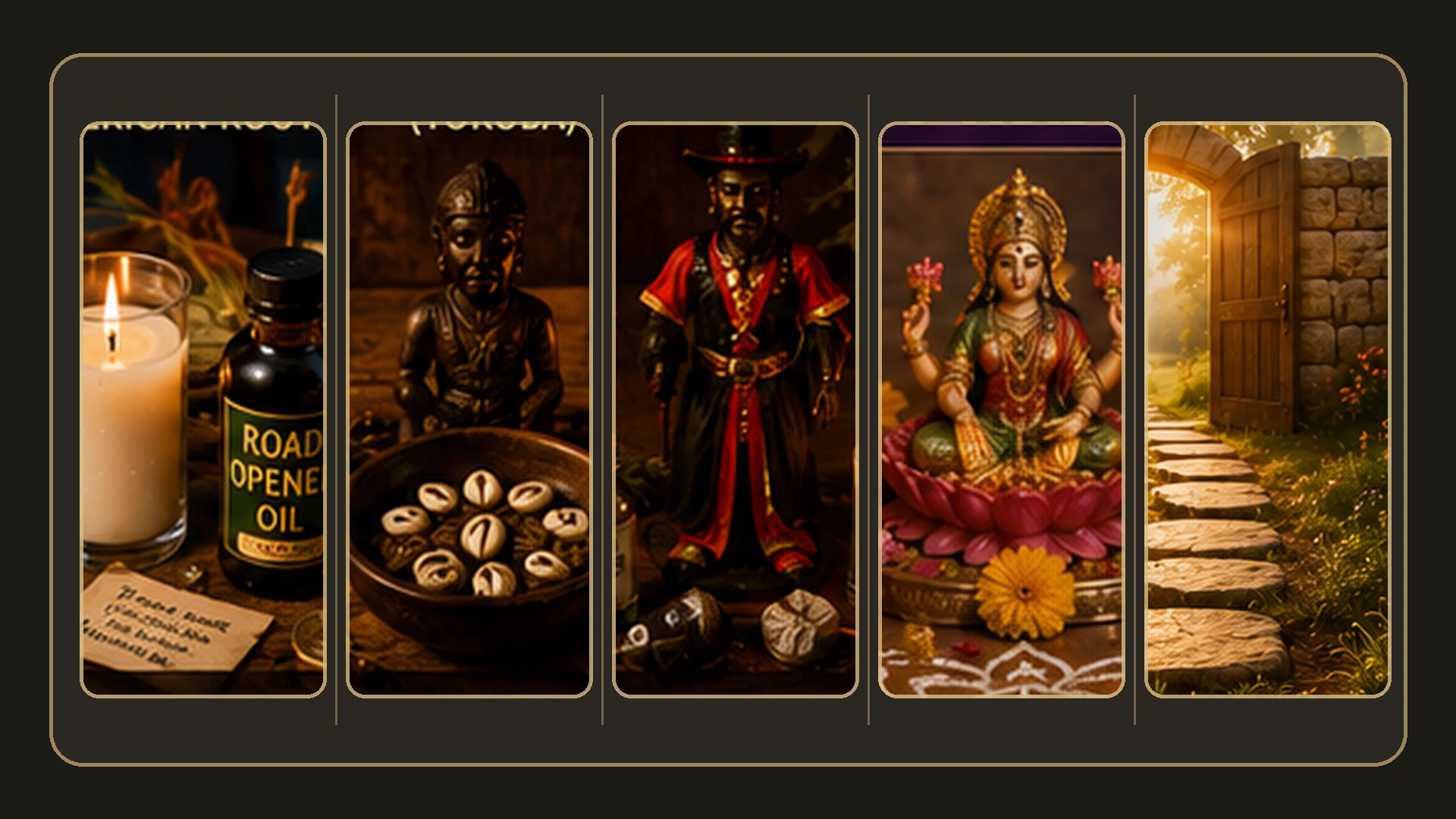
The phrase does not describe one ancient ritual shared by every culture. It appears most naturally in contemporary folk-magic and African diaspora spiritual language, especially around Hoodoo and related commercial products. Other traditions have their own established ways of approaching crossroads, gatekeepers, beginnings and obstacles. Yoruba communities may consult Ifa and honor Eshu as a messenger and agent of change. Haitian Vodou recognizes Papa Legba as a gatekeeper associated with gates and crossroads. Hindu devotees widely honor Ganesha at the beginning of important tasks as the remover of obstacles. These traditions have different histories, authorities and ritual rules; they should not be blended into a single recipe.
A responsible road-opening article therefore does two things at once. It takes spiritual belief seriously, and it refuses to promise control over events that depend on institutions, other people, chance, health, law or economics. A ritual may help someone focus, pray, seek guidance and commit to action. It cannot scientifically guarantee a visa, court decision, job offer, payment, reconciliation or cure.
Quick Answer
A road-opening spell or ritual is a spiritual practice intended to symbolize movement through obstacles, delays or uncertainty. Modern forms may use prayer, candles, written petitions, cleansing, keys or crossroads imagery. Related traditions include Hoodoo road-opening work, Yoruba devotion to Eshu, Haitian Vodou service to Papa Legba and Hindu worship of Ganesha, but these are not interchangeable. The safest approach combines spiritual reflection with practical action and avoids anyone who guarantees results or demands escalating payments.
What Does “Road Opening” Mean?
In everyday speech, a road is both a physical route and a metaphor for possibility. A road can be clear, blocked, dangerous, unfamiliar or divided. Spiritual road-opening work uses that metaphor to address situations in which a person feels unable to move forward. The desired outcome may be an opportunity, but it may also be clarity about which direction not to take.
The word “opening” can refer to several different spiritual aims:
Permission: asking that the proper way become available at the proper time.
Communication: restoring contact, truthful conversation or access to information.
Discernment: seeing alternatives that fear or confusion has hidden.
Removal: clearing habits, conflicts, misinformation or practical mistakes that repeatedly create delay.
Protection in movement: asking for safety during travel, transition or a new undertaking.
Commitment: marking the moment when a person stops waiting passively and begins a responsible next step.
These aims are not identical. A person may need cleansing because a stressful event has made the home feel heavy, but cleansing is not the same as opening a job opportunity. Someone may need divination because the correct direction is unclear, not because an invisible force is blocking every road. A delayed application may require a missing document, a phone call or legal advice. Spiritual language becomes most useful when it helps define the actual problem instead of replacing investigation.
Why Roads, Crossroads, Gates and Doorways Matter
Roads connect places. Gates regulate entry. Doorways divide inside from outside. Crossroads force a choice. These ordinary structures naturally become religious symbols because human life also moves through boundaries: birth, adulthood, marriage, migration, work, illness, death and return. A threshold can be protected, crossed, closed, opened or approached only with permission.
The Smithsonian National Museum of African Art describes Eshu as present where change or conflict is possible, including markets, crossroads and home doorways. A Smithsonian photograph of Haitian Vodun practice explains the crossroads as a spiritual meeting point where human beings and the spirit world communicate. These examples show why “open the road” may mean more than gaining material success. It can mean establishing correct communication, recognizing authority and approaching transition with care. [2][6]
Crossroads symbolism should not be reduced to a theatrical nighttime scene. In living religions, the important issue is not merely the location but the relationships, prayers, offerings, songs, divination systems and community knowledge that give the place meaning. Copying a crossroads image without understanding its tradition can produce a dramatic photograph but not an authentic rite.
Road Opening in Hoodoo and African American Conjure
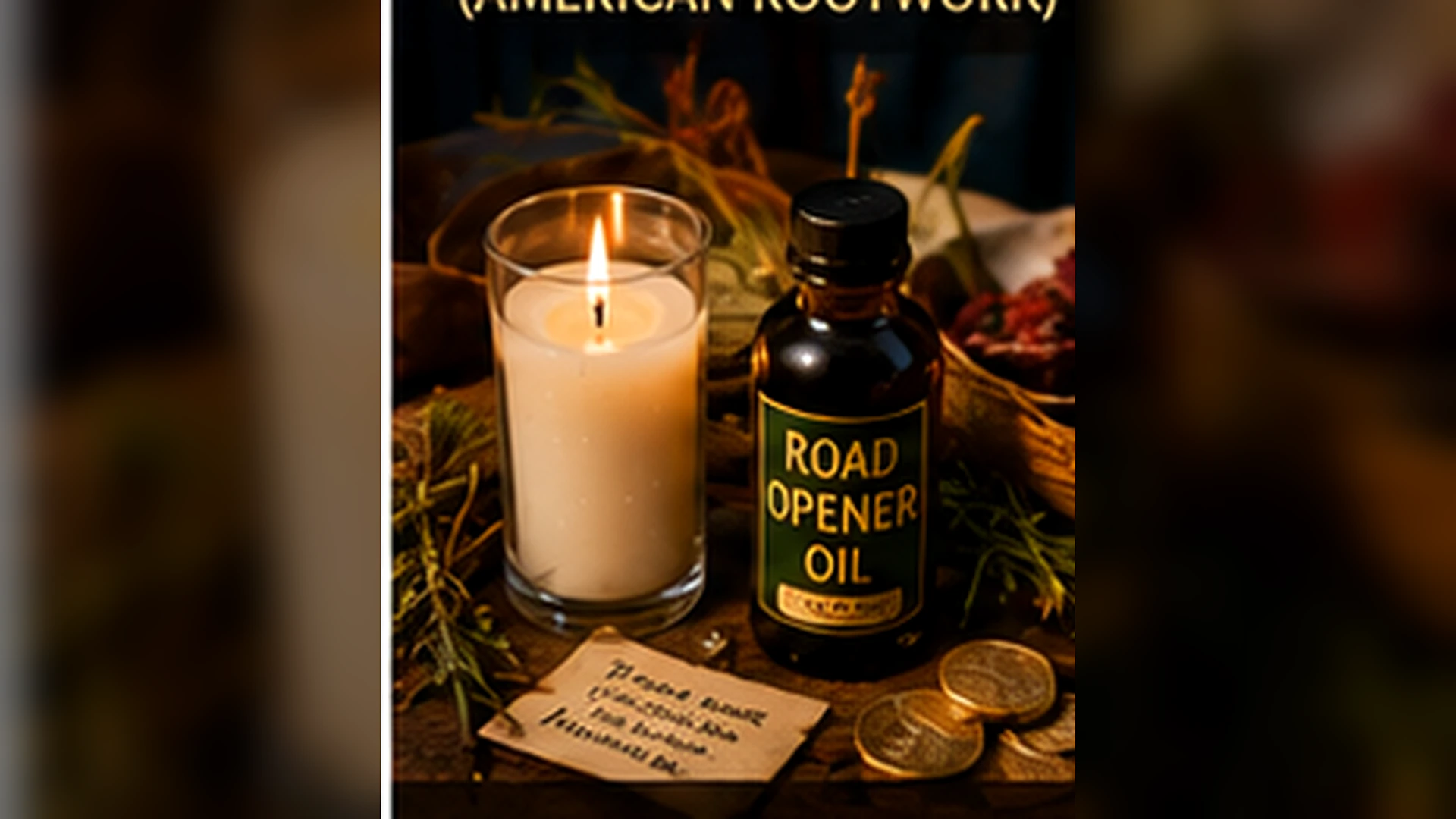
Hoodoo, also called conjure or rootwork, is an African American religious and folk-spiritual tradition formed under slavery from Central and West African practices, Christianity and the conditions of Black life in the United States. The National Park Service documents herbal healing, ancestor veneration, charms, divination, sacred music and protective work within this history. It also notes that Hoodoo developed as a source of spiritual power and survival in communities facing enslavement and racial violence. [1]
Modern practitioners and spiritual-supply markets often use names such as road opener, open roads, block buster or uncrossing. These labels may overlap, but they are not perfectly interchangeable. “Uncrossing” commonly suggests removing harmful conditions; “road opening” emphasizes movement and access; “block busting” suggests forceful removal of resistance. Individual practitioners may define them differently.
Historical Hoodoo was never one printed recipe followed everywhere. Regional practice, family teaching, church life, available plants and the experience of the practitioner shaped the work. Scholarly summaries emphasize the complexity of conjure and its relationship with Christianity, healing and protection. They also warn that commercial forms have sometimes been altered or fabricated by outsiders. [1][9]
A contemporary road-opening work may include a candle, prayer, psalm, root, key, written petition, bath or cleaned doorway. None of these objects has an automatic universal meaning. A key may represent access; a broom may represent clearing; a candle may represent attention and prayer; a root may carry a meaning learned within a rootwork tradition. The authority comes from the practitioner’s lineage, knowledge and ethical practice, not from assembling the largest number of “powerful” ingredients.
Eshu or Elegba in Yoruba Traditions
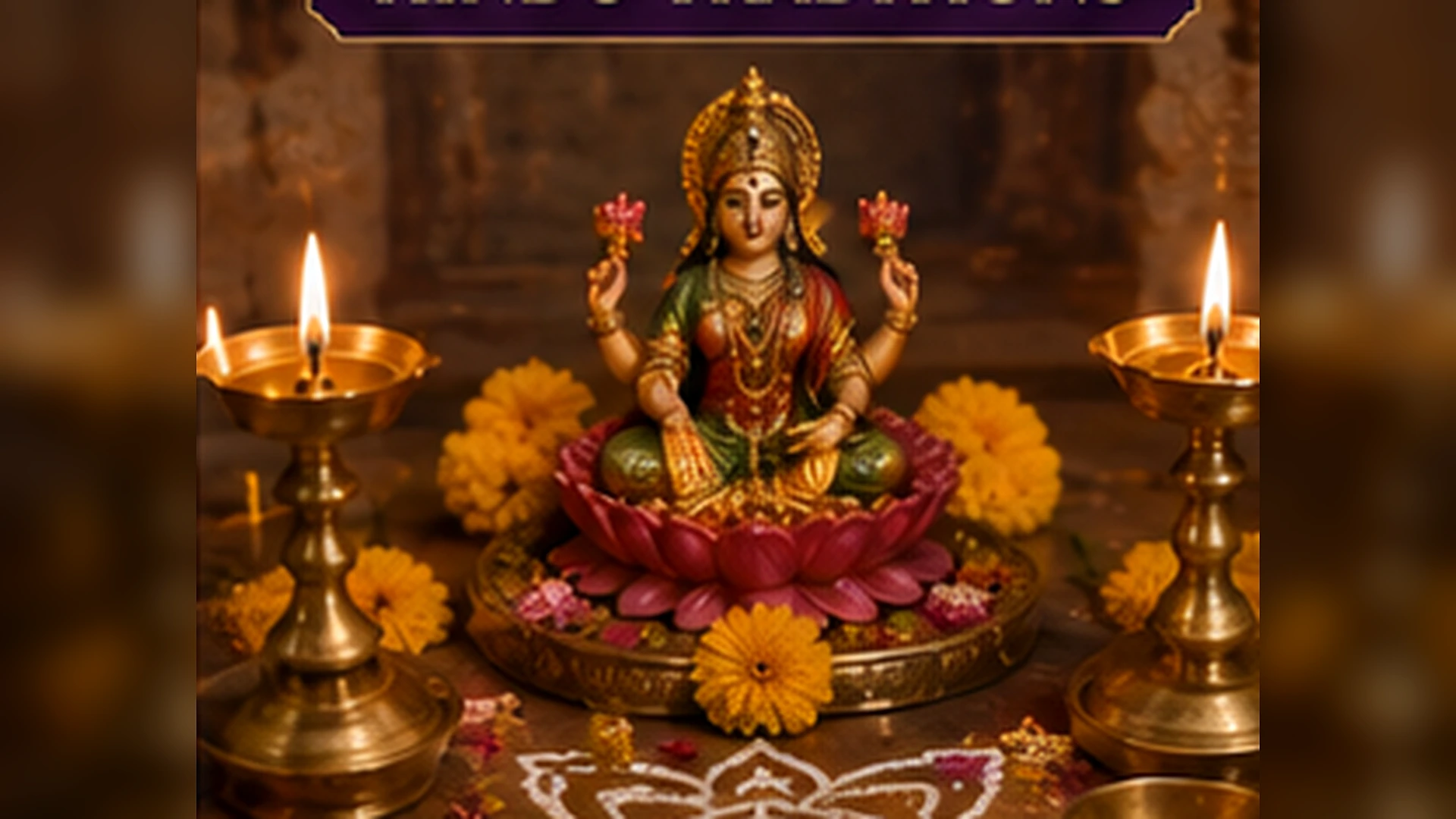
In Yoruba traditions, Eshu - also spelled Esu and known in some contexts as Elegba - is a divine messenger, agent of change and force associated with communication, chance and conflict. The Smithsonian notes his presence at markets, crossroads and home doorways, places where choices and exchanges can change outcomes. He is not simply a “luck god” or a convenient name for any obstacle-removal spell. [2]
Eshu is also central to communication within Ifa divination. A Smithsonian divination-board description explains that people may consult an Ifa diviner about serious problems. The diviner records a pattern, recites the associated verses and identifies prescribed actions or offerings. The face of Eshu appears on the board because communication and the correct transmission of sacrifice matter. [3]
This context changes the meaning of opening a road. It may involve discovering why a situation is blocked, correcting an obligation, making an authorized offering or accepting that a desired path is not appropriate. A social-media instruction that tells every reader to leave the same object at a crossroads is not equivalent to Ifa consultation or Yoruba ritual knowledge.
People outside the tradition should avoid casually commanding Eshu, inventing offerings or presenting decorative statues as activated sacred objects. Educational writing can explain his role in change and communication while directing interested readers toward recognized Yoruba or Ifa communities for deeper guidance.
Papa Legba and Gates in Haitian Vodou
Papa Legba is a gatekeeper in Haitian Vodou. Smithsonian collection records describe Legba as the old man at the gate who grants entrance to the other world, while a Library of Congress catalog record identifies him as a protector of the home and guardian of gates and crossroads. [4][5]
Because communication with other spirits requires passage, Legba is approached within the structure of Vodou service. His identity, songs, offerings and ritual treatment belong to Haitian religious communities. He should not be reduced to a generic “road opener,” and he is not simply another name for Yoruba Eshu. Historical relationships exist across West African and diaspora traditions, but Haitian Vodou developed its own theology, ritual language and community authority.
A respectful comparison can say that both Eshu and Legba are connected with communication, thresholds and change. It should also say that similarity does not erase difference. Practitioners decide how Legba is served; an internet article should not reconstruct a private ceremony from fragments.
Ganesha and the Beginning of Important Work
Ganesha is widely revered in Hindu traditions as the remover of obstacles and deity of new beginnings. The Smithsonian National Museum of Asian Art notes that devotees honor him at the start of many undertakings, while the Metropolitan Museum of Art explains that offerings are made before important tasks. [7][8]
This does not make every Ganesha prayer a “road-opening spell.” Hindu worship has its own theology, stories, festival traditions, household customs and temple authority. A family may offer flowers, fruit or sweets, recite prayers or simply remember Ganesha before study, travel, business or another beginning. Details vary by region, lineage and household.
Ganesha also complicates the idea that every obstacle must be destroyed. In devotional interpretation, an obstacle can reveal poor timing, insufficient preparation or a need for wisdom. The spiritual request may therefore be: remove what should be removed, and help me understand what should remain.
Common Modern Road-Opening Symbols
Modern road-opening work often uses visual metaphors that are easy to understand. Their meanings vary by practitioner and tradition, so the list below is descriptive rather than a universal formula.
| Symbol | Possible meaning |
|---|---|
| Keys | Access, permission, responsibility and the ability to open or close. |
| Doors and gates | A boundary between the present situation and a new phase. |
| Roads and crossroads | Movement, choice, travel, exchange and uncertainty. |
| Candles or lamps | Attention, prayer, hope and a defined period of spiritual work. |
| Brooms, water or baths | Clearing, preparation and transition from one condition to another. |
| Written petitions | Naming the obstacle, desired change and ethical limits of the request. |
| Roots and herbs | Tradition-specific spiritual or medicinal associations learned through practice. |
| Shoes, walking sticks or travel bags | Readiness to move, leave, arrive or continue a journey. |
| Maps and calendars | Practical direction, timing, deadlines and planned next steps. |
Color claims should also be treated cautiously. Orange, yellow, green, white or red may be recommended by different shops or practitioners, but no color has one global road-opening meaning. A culturally authorized prayer with no candle may be more authentic than an elaborate color chart copied from a commercial catalog.
A Safe Original Road-Opening Reflection
The following practice is an original reflective exercise for readers who want a simple, non-traditional way to connect prayer with action. It is not presented as Hoodoo, Ifa, Vodou or Hindu ritual, and it does not require payment, rare materials or a claim of supernatural certainty.
1. Choose one specific blocked situation. Replace “everything is blocked” with a clear statement such as “I have not completed the documents for my application” or “I am avoiding a necessary conversation.”
2. Clean the immediate doorway or workspace. Ordinary cleaning marks a beginning and may reveal practical problems such as missing papers, clutter or damaged equipment.
3. Place a key, notebook and glass of water on the table. The key represents access and responsibility; the notebook records the plan; the water represents calm attention. These meanings are created for this exercise, not borrowed from a restricted tradition.
4. Write two short columns: “What I can influence” and “What I cannot control.” Include deadlines, calls, documents, skills, boundaries and people who can provide legitimate help.
5. Say a prayer or statement consistent with your belief: “May the right path become clear. Help me release fear, correct my mistakes, respect other people’s freedom and take the next honest step.”
6. Open the door or window for a few moments if it is safe. Then complete one practical action immediately: send the email, check the requirement, make the appointment, update the application or ask for advice.
7. Review the situation after a defined period. Do not interpret every delay as spiritual attack. Ask what changed, what evidence appeared and what action is now required.
An electric candle is safer than an open flame in many homes. Never leave candles, incense or burning herbs unattended, and avoid smoke around children, pets or people with respiratory conditions.
Pair Spiritual Work With an Obstacle Plan
A spiritual practice becomes more trustworthy when it supports accurate action. Use the table below to translate a general “closed road” feeling into a testable plan.
| Situation | Possible real-world blockage | Practical next steps |
|---|---|---|
| Job or promotion | Missing qualifications, weak application, limited network, delayed employer process | Review requirements, improve materials, ask for feedback, apply elsewhere and follow up professionally. |
| Business | Licensing, pricing, cash flow, poor demand, unclear offer | Check legal requirements, customer evidence, budget, marketing and operational capacity. |
| Travel or immigration | Incomplete documents, eligibility issue, appointment backlog, changing rule | Use official sources, verify dates, obtain qualified legal help and keep copies of submissions. |
| Relationship | Avoided conversation, incompatible goals, broken trust, another person’s refusal | Communicate clearly, respect consent, set boundaries and seek counseling where appropriate. |
| Health | Untreated condition, delayed appointment, unclear diagnosis | Seek licensed medical care, keep records and use spiritual support alongside treatment rather than instead of it. |
| Debt or housing | Insufficient income, missed notices, unsafe loan, legal deadline | Contact providers early, prioritize essentials, seek reputable assistance and avoid guaranteed debt-cancellation claims. |
Road Opening for Work and Employment
A person seeking employment may describe a closed road when applications disappear into automated systems, interviews do not lead to offers or a promotion repeatedly moves to someone else. Spiritual reflection can help restore confidence, but the practical blockage must still be examined. Check whether the application matches the advertised requirements, whether the resume uses clear evidence, whether references are prepared and whether the role is actually funded. Ask a trusted person to review the materials. Apply to more than one employer so that hope is not attached to a single gatekeeper.
A responsible prayer may ask for courage, truthful presentation and the right opportunity rather than control over a named employer. The first sign of movement may be useful feedback, a new contact, a different vacancy or the realization that another skill is needed. Those developments may be less dramatic than an immediate offer, but they create a real path.
Road Opening for Business and Money
Business delays are often described spiritually because money, reputation and family responsibility are emotionally heavy. Yet a business road can be blocked by licensing, weak demand, unsuitable pricing, unreliable suppliers, poor bookkeeping or a product that does not solve a clear customer problem. A ritual should never be used to avoid those questions. Pair any blessing with a written budget, customer interviews, legal registration, inventory controls and a realistic cash-flow plan.
Be especially careful when a practitioner says that a competitor has spiritually closed the business and demands repeated payments to defeat them. Investigate ordinary explanations first. Review location, service quality, online visibility, opening hours, customer complaints and costs. Spiritual support may strengthen discipline and hope, but it cannot make an unsustainable business model profitable by itself.
Road Opening for Travel, Migration and Legal Processes
Travel and migration naturally use road language, but visas, permits, court dates and border decisions operate through formal rules. A missed document, wrong fee, expired passport, appointment backlog or legal ineligibility can create delay. Use official government sources, keep copies, record submission dates and obtain qualified legal advice when the matter is complex. Never give a spiritual practitioner control of your passport, login credentials or original legal papers.
A travel blessing can focus on safety, patience and truthful guidance. It cannot guarantee approval or bypass law. If an application is refused, obtain the written reason and identify whether review, appeal, correction or a different route is available. The next open road may be a lawful alternative rather than the exact route first requested.
Road Opening for Relationships
In relationships, a blocked road may mean silence, repeated conflict, grief or incompatible intentions. Spiritual practice can support honesty and emotional regulation, but it cannot create consent. No ethical road-opening work should promise to force a former partner to return, compel marriage or make another adult communicate against their will. A healthier request is for truth, healing, appropriate reconciliation and the strength to accept a closed relationship when necessary.
Practical movement may include one respectful message, a counseling appointment, a boundary, an apology or a period of no contact. Repeatedly checking, paying for more rituals or interpreting every social-media post as a sign can deepen obsession rather than open a road.
Road Opening for Study and Personal Direction
Students and people changing careers may feel blocked because the final destination is unclear. Here the crossroads metaphor is especially useful: several roads may be possible, and the task is not to force one but to compare them. List entry requirements, costs, time, likely income, personal strengths and the daily reality of each option. Speak with people already doing the work. A prayer for direction should be followed by research and a small experiment, such as a short course, volunteer project or informational interview.
What Counts as Evidence of an Open Road?
The outcome of spiritual work should not be measured only by dramatic coincidence. Better evidence includes a completed application, a returned call, a corrected document, a safer decision, a new skill, a calmer conversation or the willingness to stop pursuing a harmful option. These changes are observable and can be reviewed without pretending that every event has one supernatural cause.
Set a review date that matches the real process. A hiring cycle may take weeks; a legal matter may take months; a personal habit may require repeated practice. At the review, ask three questions: What changed? What did I do? What information do I now have? This prevents endless waiting and helps separate spiritual hope from claims that results are always “almost here” if another fee is paid.
When a Delay May Be Information
Not every closed door is an enemy. A delay can reveal that an agreement is unsafe, a deadline was misunderstood, a partner is unwilling, a plan is underfunded or the desired outcome conflicts with another person’s rights. Spiritual discernment includes the possibility that the better road is different from the requested road.
This is especially important in love, court, employment and immigration matters. No practitioner can ethically promise to override consent, control a judge, bypass legal requirements or force an employer to choose one applicant. A ritual that encourages obsession, secrecy, illegal action or financial risk is not opening a healthy path.
How to Recognize a Trustworthy Practitioner
A responsible spiritual practitioner explains what tradition they work within, what the service includes, what it does not guarantee and what the total cost will be. They do not diagnose a curse after one message, frighten the client with escalating threats or demand secrecy from family and professionals.
The Federal Trade Commission warns that scammers commonly create urgency, guarantee success, demand unusual payment methods or claim a secret proven system. Those warning signs apply even when the offer is framed as spiritual help. No one can guarantee a job, visa, court result, windfall or reconciliation. [10]
Ask for the full price before the work begins and avoid open-ended escalating fees.
Do not borrow money, sell essential property or stop paying rent, medicine or school fees for a ritual.
Keep control of identity documents, passwords, account numbers and verification codes.
Be cautious when every setback is described as a new curse requiring another payment.
Reject instructions to harm someone, trespass, leave dangerous materials in public or break the law.
Use licensed legal, medical, financial or mental-health professionals for matters within their expertise.
Choose spiritual support that leaves you calmer, informed and able to act - not isolated and dependent.
Conclusion
Road-opening rituals speak to a universal human experience: the need to move when fear, delay or uncertainty has made life feel closed. The traditions discussed here do not provide one interchangeable formula. Hoodoo carries African American history and rootwork knowledge. Eshu belongs to Yoruba religious systems and Ifa communication. Papa Legba belongs to Haitian Vodou. Ganesha belongs to Hindu devotion and new beginnings.
The shared lesson is not that every obstacle can be forced away. It is that movement requires relationship, permission, wisdom, preparation and action. A respectful spiritual practice can help a person pray, clarify values and begin again. The road still has to be walked with accurate information, ethical choices and attention to the people whose freedom and safety are also part of the journey.
Frequently Asked Questions
What is a road-opening spell?
It is a modern spiritual term for work intended to create movement, opportunity, communication or clarity when life feels blocked. The exact methods vary, and the term is not the name of one universal ancient ritual.
Is road opening part of Hoodoo?
Road-opening language is common in contemporary Hoodoo and conjure contexts, but Hoodoo is a diverse African American tradition rather than a single commercial recipe. Family, regional and practitioner teachings vary.
Are Eshu and Papa Legba the same?
No. They share historical and thematic connections involving communication, gates and crossroads, but Eshu belongs to Yoruba traditions and Papa Legba belongs to Haitian Vodou. Each has distinct ritual authority and community practice.
Why is Ganesha associated with removing obstacles?
Hindu traditions widely honor Ganesha as the remover of obstacles and deity of new beginnings. Devotees may pray or make offerings before important tasks, but this worship should not be reduced to a generic spell.
What is the difference between cleansing and road opening?
Cleansing focuses on preparing or purifying a person or space. Road opening focuses on movement, access, direction or a new beginning. A practitioner may combine them, but they are not identical.
Do I need to go to a crossroads?
No. A crossroads has specific meanings in some traditions, but copying a location without community knowledge does not create an authentic rite. A safe reflective practice can be done at home without leaving offerings in public.
What color candle opens roads?
There is no universal color. Shops and practitioners recommend different colors, while many authentic prayers use no candle at all. Follow the recognized guidance of your tradition and basic fire safety.
Can a road-opening ritual guarantee a job?
No. It may support confidence, focus and hope, but hiring depends on qualifications, applications, employers and market conditions. Continue practical preparation and apply through legitimate channels.
Can it guarantee a visa or court result?
No. Immigration and court outcomes depend on law, evidence, procedure and authorized decision-makers. Use official information and qualified legal advice.
Can a ritual make a specific person return?
No ethical practitioner can guarantee control over another person’s consent. Spiritual reflection can support healing, honest communication and boundaries, but not coercion.
How long should road-opening work take?
There is no scientifically validated timetable. Set a practical review date based on the real-world process, such as an application deadline or scheduled follow-up, rather than paying repeatedly because someone promises results “within hours.”
How can I avoid scams?
Avoid guaranteed claims, urgent threats, secrecy, escalating fees and unusual payment demands. Keep your documents and account details private, talk to someone you trust and use licensed professionals for legal, medical and financial problems.
Can I create a simple practice myself?
Yes, as long as you label it honestly as personal reflection rather than a traditional rite. Clean the workspace, identify the obstacle, pray according to your beliefs and complete one practical next step.
Should I consult a spiritual elder or practitioner?
Consultation can be meaningful when the practitioner is transparent, culturally grounded and clear about limits. It should complement - not replace - practical and professional help.
5. Research References
[1] U.S. National Park Service: Hoodoo in St. Louis: An African American Religious Tradition. https://www.nps.gov/articles/000/hoodoo-in-st-louis-an-african-american-religious-tradition.htm
[2] Smithsonian National Museum of African Art: Staff (Eshu label: messenger, agent of change, crossroads and doorways). https://africa.si.edu/collection/object/nmafa_70-5-1
[3] Smithsonian Institution: Divination board (Ifa consultation and Eshu on the board). https://www.si.edu/object/nmafa_84-6-3
[4] Smithsonian National Museum of Natural History: Legba Staff “Baton Legba”. https://www.si.edu/object/legba-staff-baton-legba%3Anmnhanthropology_8417957
[5] Library of Congress: Papa Legba, protector of the home and guardian of gates and crossroads, Haiti. https://www.loc.gov/pictures/item/2014649800/
[6] Smithsonian National Museum of African Art: Vodun priest creates sacred space at the spiritual crossroads, Haiti. https://africa.si.edu/collection/selected-artwork/1689
[7] Smithsonian National Museum of Asian Art: Seated Ganesha: remover of obstacles and deity of new beginnings. https://asia.si.edu/education/educator-resources/encountering-religion-in-asian-art/explore-by-object/object/seated-ganesha/
[8] The Metropolitan Museum of Art: Ganesha, Chola period. https://www.metmuseum.org/art/collection/search/37397
[9] Smithsonian Libraries and Archives: Black Magic: Religion and the African American Conjuring Tradition, Yvonne P. Chireau. https://www.si.edu/object/black-magic-religion-and-african-american-conjuring-tradition-yvonne-p-chireau%3Asiris_sil_1110812
[10] Federal Trade Commission: What are the signs of a scam? and income-scam guidance. https://consumer.ftc.gov/consumer-alerts/2025/03/what-are-signs-scam
Editorial inference: the statement that “road-opening spell” is a modern umbrella phrase is based on comparing the terminology used in contemporary folk-magic markets with museum and heritage sources, which identify distinct traditional names, deities and ritual systems rather than one universal ancient road-opening ceremony.
Article Information
- Publisher
- Ancestral Temple
- Editor
- Ancestral Temple
- Last updated
- Jul 30, 2026
- Last reviewed
- Jul 30, 2026
- Content version
- 59eb910b83
This educational article should be read as cultural and spiritual information, not as medical, legal, financial, or emergency advice.
Helpful Related Guidance
About the Author
 Ancestral Temple
Spiritual guide and practitioner with decades of experience in ancestral wisdom, rituals, and divine guidance.
Related Posts
View All







Comments
We'd love to hear your thoughts.