
What Are Love Spells? History, Beliefs, Ethics and Cultural Traditions
Pillar Article
Quick Summary
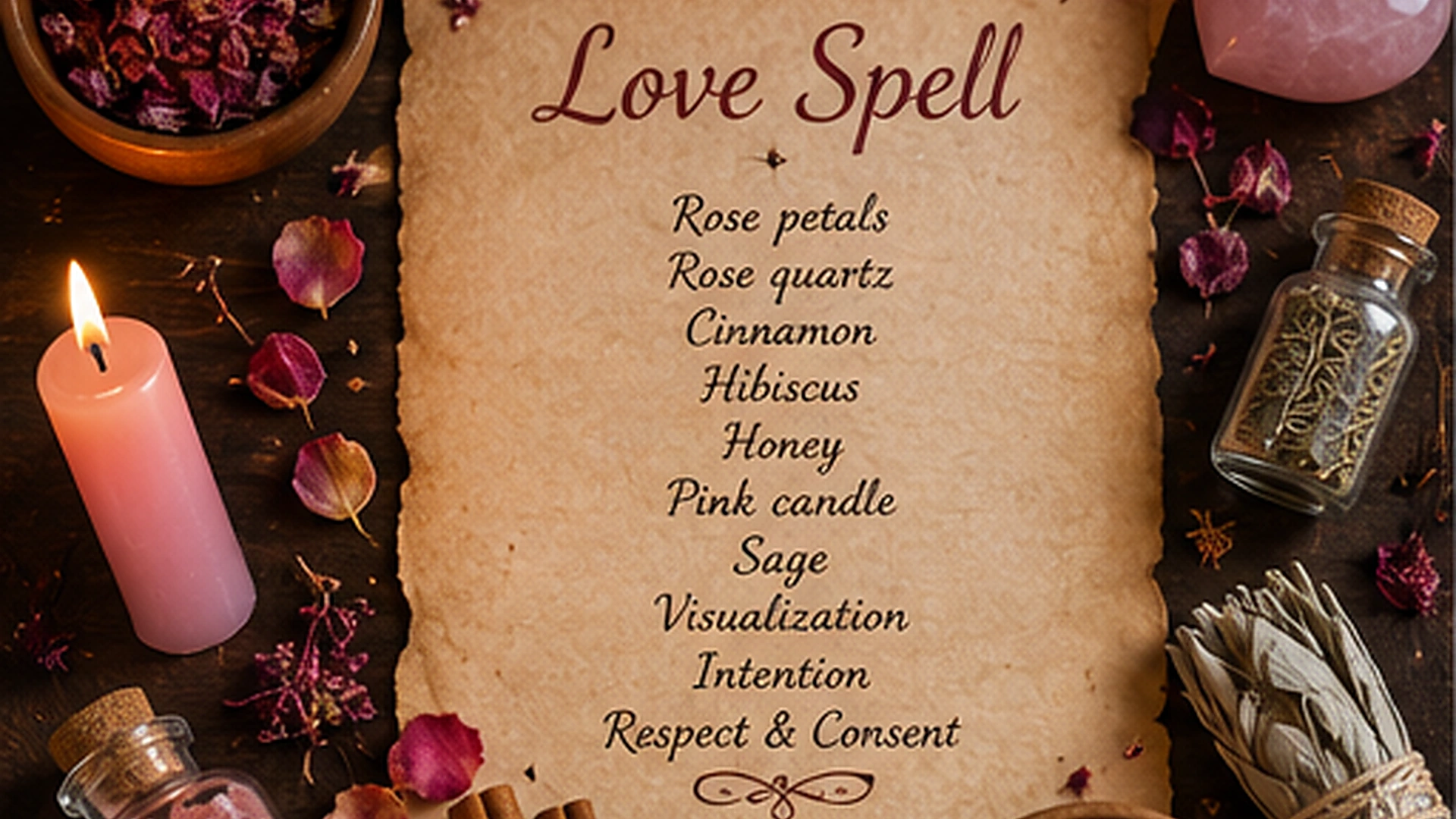
Love spells are rituals, charms, written formulas, objects or symbolic acts believed to influence attraction, affection, desire, reconciliation, fidelity or romantic opportunity. T...
Love spells are rituals, charms, written formulas, objects or symbolic acts believed to influence attraction, affection, desire, reconciliation, fidelity or romantic opportunity. The phrase sounds simple, but the historical record is not. Practices now grouped under “love magic” developed in different languages, religions and social settings, and they did not all seek the same result.
Some surviving spells attempted to draw a particular person toward the practitioner. Others aimed to preserve affection inside an existing household, improve a person’s social appeal, predict a future partner or protect a relationship. Ancient Mediterranean sources even reveal a major contrast between aggressive attraction magic and gentler practices associated with affection or relationship maintenance.[1][3]
That history also raises difficult ethical questions. A ritual centered on confidence, healing after a breakup or mutual commitment is very different from a claim that another person can be compelled, distressed, drugged, watched or deprived of choice. Modern standards of consent require that agreement be freely given, informed and reversible; a romantic relationship does not remove that requirement.[12][13]
This article explains what love spells mean, what historical evidence survives, how traditions differ, why people believe in them, what scholarship can and cannot establish, and how to approach the subject without sensationalism or cultural appropriation.
Quick Answer
A love spell is a ritual, charm, written formula or symbolic act believed to influence romance, attraction, affection or relationship stability. Historical love magic ranged from coercive binding spells to protective amulets and relationship-preserving charms. There is no scientific proof that a spell can override another person’s will, and any modern practice should respect consent, safety and cultural context.
What Is a Love Spell?
A love spell is best understood as a category of intentional ritual. The practitioner performs words, gestures or material actions because they believe those actions can affect romantic circumstances. The intended effect may be external, such as attracting a partner, or internal, such as increasing confidence, clarifying desire or recovering from heartbreak.
The word “spell” can refer to a spoken or written formula, but historical practices also used amulets, knots, lamps, figurines, rings, herbs, perfumes, written names and offerings. Museums and manuscript collections preserve objects and texts that document these beliefs, although an artifact rarely tells us exactly how often a rite was performed or whether users understood it in the same way.[2][7][8]
“Love spell” is therefore a modern umbrella term, not a precise label shared by every culture. Scholars often study narrower categories such as erotic attraction, affection, marriage preservation, fertility, divination, beauty, reconciliation or binding. Keeping those categories separate prevents a modern concept from erasing historical differences.
Spell, Charm, Amulet, Potion and Binding: Key Differences
A spell usually emphasizes words or a prescribed ritual action. A charm can mean a spoken formula, written text or object believed to carry beneficial power. An amulet is commonly worn or kept for protection or another desired effect. A talisman is an object prepared or selected for a particular purpose. A potion is a prepared liquid or substance, while a binding seeks to restrain, attach or limit someone or something.
These terms overlap. The Pitt Rivers Museum notes that charms can be objects or incantations and that museum classifications do not always match the terminology of the people who used them.[8] A ring could be a courtship gift, a devotional object, a legal token, an amulet or several of these at once. A written formula might combine prayer, medicine and magic rather than fitting a modern boundary between religion and superstition.
For ethical discussion, the most important distinction is not the object but the aim. A self-directed practice for confidence is different from secretly giving someone a substance. A mutual commitment ritual is different from attempting to “bind” a person who has refused contact.
Why “Love Magic” Is Not One Historical Tradition
Modern readers often imagine a single ancient tradition passed unchanged into contemporary witchcraft. The evidence instead shows repeated invention, exchange, translation and adaptation.
In the ancient Mediterranean, Egyptian, Greek, Roman and Near Eastern divine names and ritual techniques circulated through multilingual environments. The London-Leiden Magical Papyrus, for example, is a third-century Roman-period Egyptian text containing Demotic writing, Greek recitations and Old Coptic glosses, with spells for divination, healing and love.[2] That mixture reflects Late Antique cultural exchange rather than a pure, isolated tradition.
Early modern manuscripts could likewise combine medicine, prayer, astrology and charms. The sixteenth-century Jewish book Ets ha-Da’at collected approximately 125 formulas for purposes including healing, amulets, curses and love charms.[6] Its existence shows a manuscript culture of collection and transmission, not proof that every Jewish community approved or used such material.
Modern Pagan and witchcraft traditions also have modern histories. Scholars have challenged claims that contemporary practices are unchanged survivals of a single secret European witch religion.[11] A modern ritual can still be meaningful, but its value does not depend on inventing an unbroken ancient lineage.
A Brief History of Love Spells
The surviving record is uneven. Literate societies leave papyri and manuscripts; metal and stone survive better than perishable plants; elites and institutions preserve some voices more readily than others. Oral practices may disappear or be documented by outsiders using biased terms. A responsible history therefore describes surviving evidence without pretending it represents every person or community.
Ancient Egypt and Roman-Period Egyptian Magical Papyri
Egypt provides some of the oldest written evidence sometimes interpreted as love magic. A fragmentary Middle Kingdom papyrus from the Ramesseum, probably dating to the late Middle Kingdom, contains a magical text that may relate to love spells.[5] Because it is damaged and difficult to interpret, it should not be treated as a complete manual or proof of one standard Egyptian practice.
Much fuller evidence comes from Roman-period Egypt. The London-Leiden Magical Papyrus includes multiple love spells alongside divination, healing and other recipes.[2] The British Library’s fourth-century Papyrus 121 preserves attraction formulas, invocations and magical signs within a larger handbook.[1]
These texts belong to a multilingual world. Egyptian, Greek and other divine names and ritual concepts appear together. Rather than describing them as simply “ancient Egyptian love spells,” it is more accurate to identify their period, language and manuscript context.
The papyri also reveal ethically troubling aims. Some attraction formulas were framed as forcing a target to become sleepless or distressed until approaching the practitioner.[1] Their historical importance lies partly in showing how desire, gender and power could be imagined—not in providing a model for modern relationships.
Ancient Greek and Roman Attraction and Affection Magic
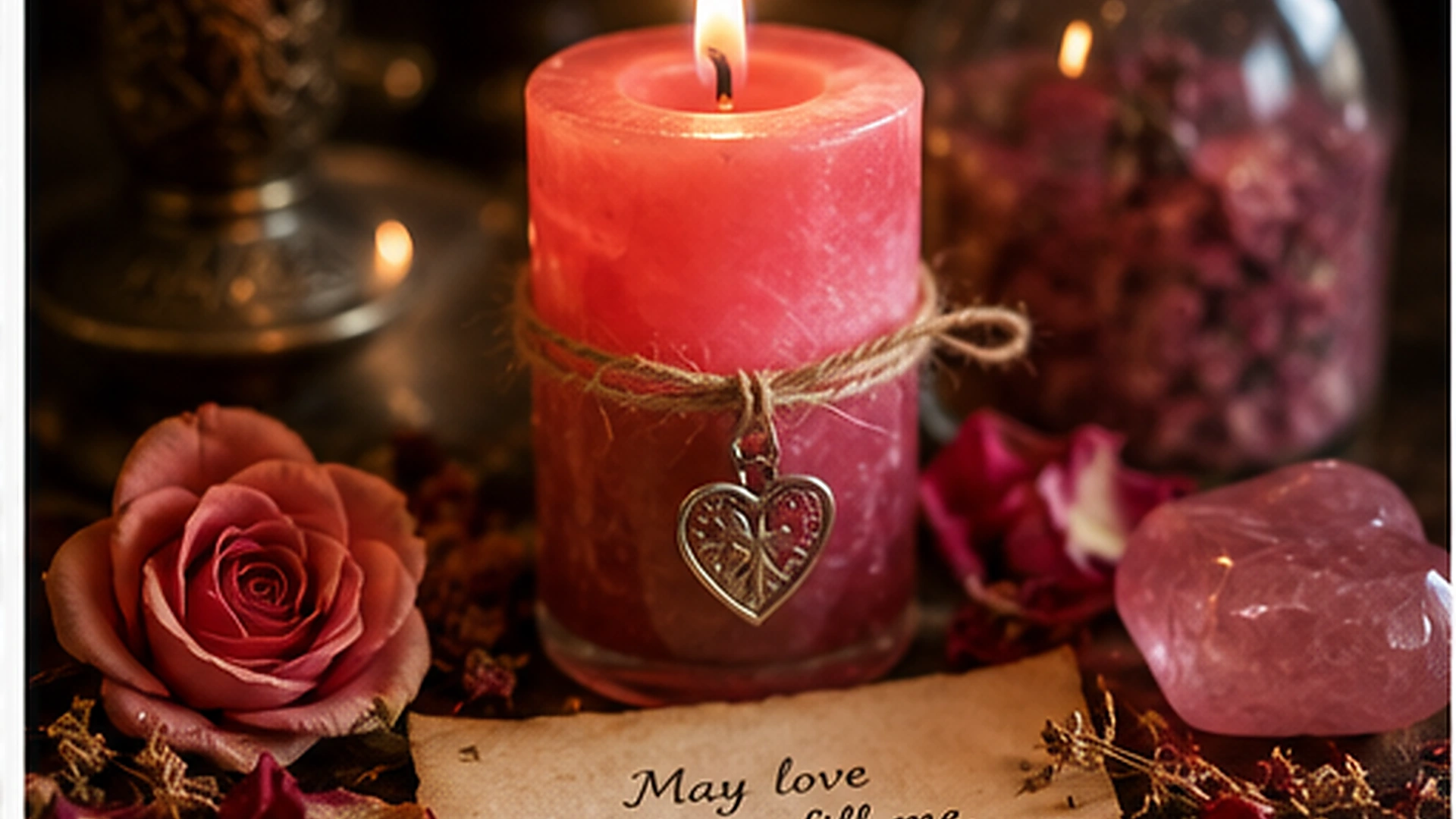
Classical scholars have identified at least two broad patterns in Greek love magic. One sought intense erotic desire, often described with the language and technology of cursing. Another sought philia—affection, favor or the preservation of an existing bond—and could resemble healing or protective magic.[3]
Aggressive attraction spells might be written on lead, paired with figurines, folded, pierced or deposited in places associated with underworld powers. Lead curse tablets, called defixiones in Latin or katadesmoi in Greek, asked divine or spiritual beings to restrain or harm a named target. The Getty’s controlled vocabulary describes such tablets as requests that gods, spirits or the dead negatively affect another person, while museum examples show that the practice extended across the Greek and Roman worlds.[4]
Christopher Faraone’s research argues that many surviving erotic spells were designed by men to impose desire on women, whereas affection-preserving practices were often represented differently.[3] Other scholars continue to debate who practiced love magic and how literary stereotypes compare with documentary evidence.[15]
The key point is that “love” did not make these rites gentle. Some belonged structurally to the world of curses. Their language exposes assumptions about entitlement and domination that modern readers should examine critically.
Jewish Magical-Medical Manuscripts in Early Modern Europe
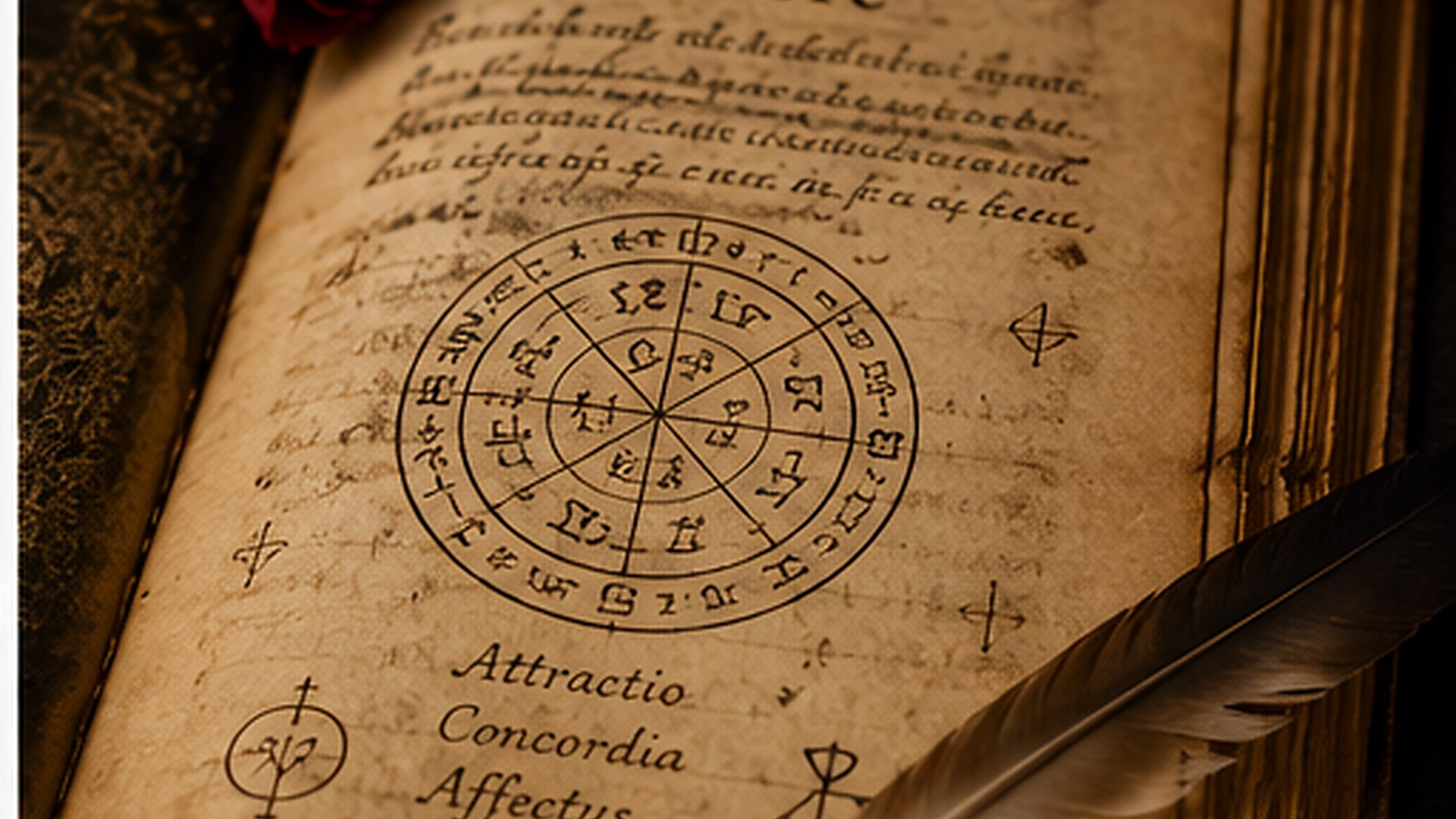
Magic also appears in Jewish manuscript traditions, but the evidence must be described precisely. The British Library’s Tree of Knowledge, compiled in sixteenth-century Italy, contains roughly 125 formulas for varied purposes, including healing potions, amulets, curses and love charms.[6]
Such a manuscript does not establish a universal Jewish belief or authorized religious practice. It documents one collector, one textual tradition and a broader environment in which medicine, prayer, astrology and magic could overlap. Jewish communities were internally diverse, and rabbinic or communal attitudes toward magic varied by time and place.
This example is valuable because it challenges simplistic oppositions. A handwritten book could preserve practical medicine, devotional language and magical formulas together. The categories that modern readers separate may have been less distinct for historical users.
Medieval and Early Modern European Charms, Tokens and Courtship Objects
In medieval and early modern Europe, church authorities frequently condemned prohibited magic, yet ordinary people continued to use charms, amulets and ritualized objects for protection, healing and emotional concerns. Oxford’s Ashmolean Museum has emphasized that love—especially frustrated or unrequited love—was one of the areas in which people sought magical intervention.[7]
Surviving rings, seals, brooches, lockets and inscribed tokens could carry courtship messages, devotional language or appeals to supernatural power. Their meaning depended on exchange and context. A ring might signify affection, social promise, memory or legal intention without being a “spell” in the narrow sense.
The boundary between religion, medicine and magic was contested. Clergy might condemn certain rites while prayers, relics and blessed objects remained accepted in other contexts. Historians therefore study who labeled a practice magical, who benefited from that label and whether the practitioner would have used the same term.
African American Conjure and Hoodoo: History, Not a Generic Spell Aesthetic
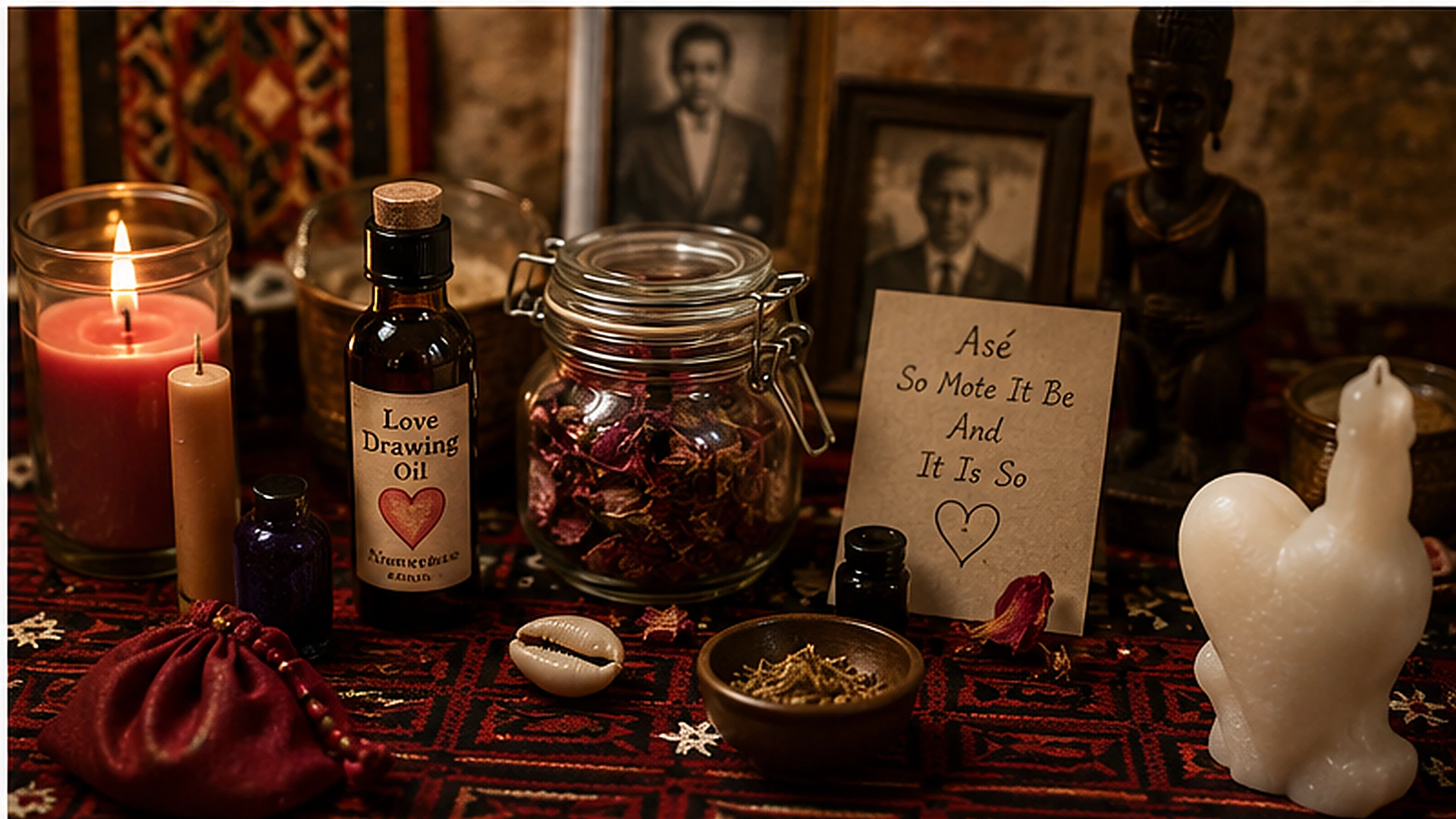
African American conjure, often called Hoodoo or rootwork in particular contexts, developed under slavery and segregation through African, European, Indigenous American and Christian influences. Historian Yvonne Chireau describes conjure as a complex tradition of healing and harming practices intertwined with African American religious life, not simply a collection of occult recipes.[9]
Katrina Hazzard-Donald likewise distinguishes older Black Belt Hoodoo traditions from commercial forms altered or fabricated by outsiders.[10] This distinction matters because modern online content frequently removes roots, oils, candles and “love work” from African American history and sells them as generic witchcraft aesthetics.
Practitioners and sources document work related to relationships, attraction and household stability, but Hoodoo should not be reduced to romance magic. It also addressed healing, protection, justice, survival and spiritual empowerment in conditions of racial oppression.
Writers should avoid claiming that every practice comes directly from a single African culture, publishing private community knowledge without permission or using African diaspora traditions merely to make a product seem exotic. Cultural respect requires naming the tradition, its people and its history.
Modern Witchcraft, Popular Spirituality and the Internet
Today, the phrase “love spell” appears in modern witchcraft, Paganism, New Age spirituality, social media, entertainment and commercial services. Contemporary practices may draw on historical symbolism, modern psychology, ceremonial magic, folk traditions or personal invention.
Modernity does not make a practice false or meaningless. Traditions change, and new rituals can help people mark transitions or articulate values. The problem arises when sellers falsely claim an unchanged lineage, guarantee control over a specific person, appropriate restricted cultural practices or charge escalating fees to remove an invented curse.
Online platforms also collapse context. A thirty-second video may combine a Greek deity, a Christian saint, a South Asian ingredient, an African diaspora term and a modern astrology date without explaining the origins or permissions involved. Cultural mixture has occurred throughout history, but ethical exchange requires more than aesthetic borrowing.
What Do People Believe Love Spells Can Do?
Believers have attributed many possible effects to love magic. These include attracting opportunities for romance, increasing personal appeal, reconciling estranged partners, strengthening affection, promoting fidelity, revealing a future spouse or ending an unhealthy attachment.
Not every believer expects supernatural compulsion. Some understand ritual as prayer, symbolic communication, emotional focus or a way to create confidence before taking ordinary action. Others believe spiritual beings, ancestors, deities or unseen forces can alter events.
A historian can document those beliefs without deciding that they are scientifically proven. The safest wording is “believed to,” “used with the intention of” or “interpreted as,” rather than stating that a ritual objectively changes another person’s emotions.
Are Love Spells Real?
The answer depends on what “real” means.
Love spells are real as historical practices, manuscripts, objects, stories, businesses and lived beliefs. Museums preserve papyri and lead tablets. Archives hold magical-medical books. Folklorists and historians document communities in which charms and ritual work have social meaning.[1][2][6][9]
There is no reliable scientific evidence that a ritual can remotely override a specific person’s free will or create romantic consent. A change after a ritual may have many explanations: coincidence, changed behavior, expectation, selective attention, ordinary communication or a relationship that was already developing.
Ritual can still have subjective effects. Journaling, prayer, dressing carefully, clarifying one’s values or marking the end of a relationship may change how a person feels and acts. Those effects belong to the participant’s behavior and meaning-making, not proof of supernatural control over someone else.
Claims of guaranteed results deserve skepticism, especially when a practitioner repeatedly demands money, predicts catastrophe, threatens secrecy or says only they can remove a curse.
The Ethics of Love Spells
Ethics becomes clearest when the question changes from “Does it work?” to “What kind of relationship does the practice imagine?”
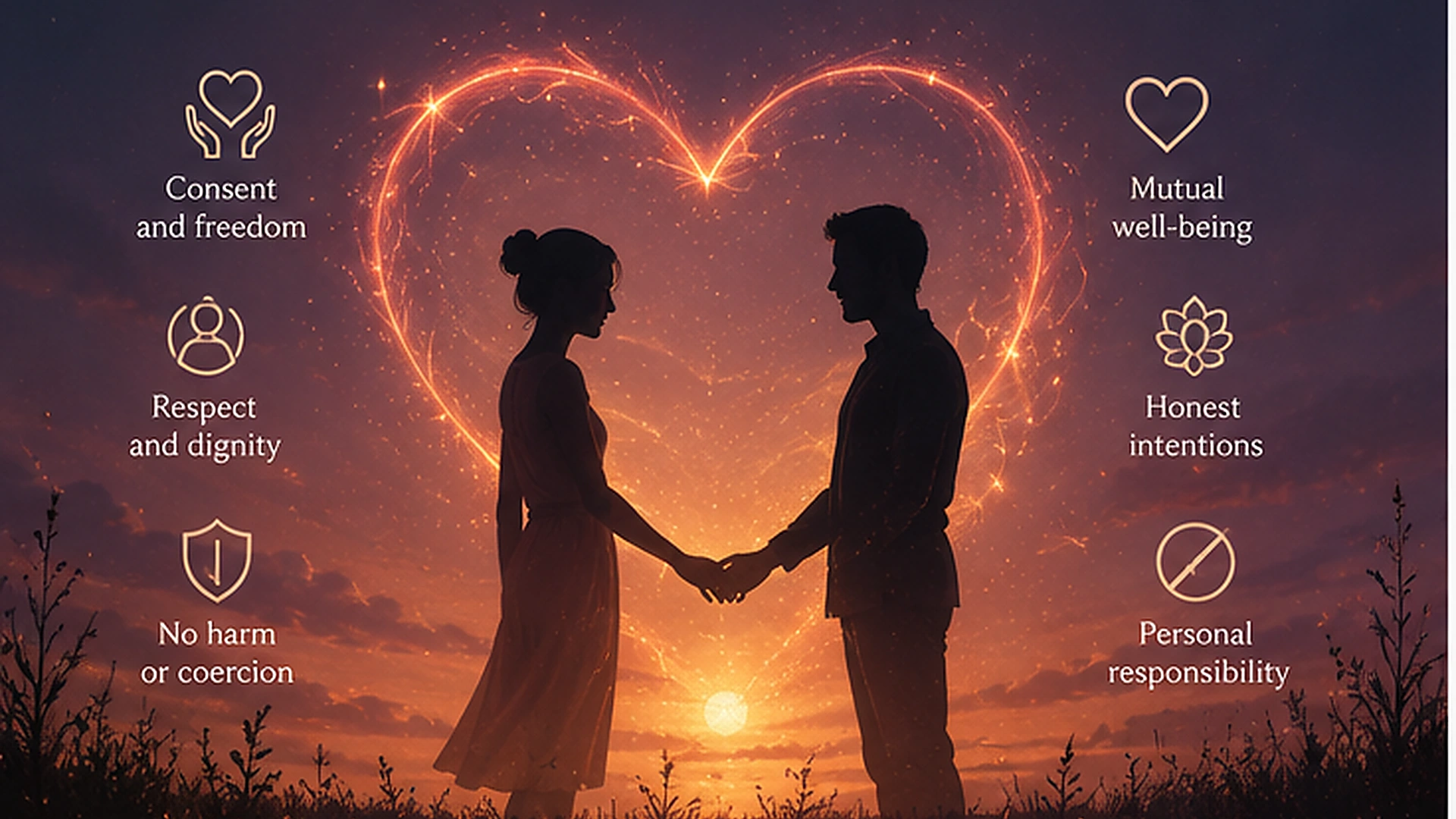
A healthy relationship requires two people with agency. RAINN describes consent as communication in which people feel safe and free to say yes, no or ask for discussion; consent must be freely and clearly given.[12] The National Domestic Violence Hotline defines relationship abuse as a pattern used to gain or maintain power and control over a partner.[13]
A spell that symbolically supports the practitioner’s courage does not remove another person’s choice. A mutual ritual performed by consenting partners can express shared commitment. By contrast, a practice that aims to make a named person unable to sleep, leave another partner, become sexually available or return after refusing contact mirrors coercive control, even if the practitioner believes the mechanism is supernatural.
Ethics also includes material safety. Secretly putting herbs, oils, powders or bodily substances in another person’s food, drink, clothing or home can cause allergic reactions, poisoning, legal harm and violation of trust. Historical evidence that people once used dangerous ingredients is not a reason to repeat them.
Consent applies to privacy as well. Obtaining hair, photographs, personal data or intimate objects without permission may cross boundaries or become stalking behavior. Spiritual language does not excuse surveillance, harassment or repeated contact after rejection.
Five Ethical Questions to Ask
Does the practice target a specific person who has not agreed? A named-person ritual designed to override refusal is ethically different from asking generally for a compatible relationship.
Would the goal still be acceptable without supernatural language? “I want confidence to meet people” is compatible with autonomy. “I want this person unable to resist me” is not.
Are any substances being used without informed permission? Secret administration is unsafe and unethical.
Does the practice encourage communication and reality-based action? A ritual should not replace medical care, legal help, relationship safety planning or acceptance of a breakup.
Is the tradition being represented accurately? Avoid claiming authority over a living culture, restricted initiation or community knowledge that has not been shared for public use.
Consent-Centered Alternatives to Coercive Love Magic
People can retain symbolism and ritual while removing control over another person.
A self-directed attraction ritual can focus on the qualities the practitioner wants to embody—honesty, emotional availability, confidence and discernment—rather than naming a target. A release ritual can mark the end of contact and support the decision not to monitor an ex-partner. A mutual commitment ceremony can be designed openly by both partners, with each person free to revise or stop.
Practical actions should accompany symbolism: meet people in safe social settings, communicate interest directly, respect a refusal, seek counseling when appropriate and leave relationships that depend on fear or control.
For cultural practices, learn from reputable historians, museums, community educators and initiated practitioners who choose to teach publicly. Cite the source. Do not rename another community’s tradition as a personal invention.
How to Study Love Spells Without Sensationalism
Start with the object or text, not a dramatic assumption. Ask when it was made, where it was found, which language it uses, who catalogued it and what uncertainties remain.
Separate a prescriptive text from common practice. A spell written in a handbook proves that someone copied or preserved the formula; it does not prove that everyone used it or that it worked.
Notice the archive’s bias. Written handbooks often preserve professional or literate practices, while household knowledge may survive through oral history. Colonial collectors sometimes labeled unfamiliar religious practices “superstition” or “witchcraft.”
Avoid presenting cultures as timeless. Roman-period Egypt was not pharaonic Egypt; sixteenth-century Italian Jewish manuscript culture was not all Judaism; African American Hoodoo is not interchangeable with Haitian Vodou, Louisiana Voodoo, Yoruba religion or generic “African magic.”
Finally, examine power. Ask who desired whom, who could refuse, who had legal protection and whose voice survives. The history of love magic is also a history of gender, class, marriage, household authority and social vulnerability.
Common Misunderstandings
All love spells are about romance. Historical categories also included household affection, sexual desire, marriage stability, fertility, beauty and social favor.
All old spells were practiced by women. Literary stereotypes often depicted female magic workers, but documentary evidence includes male practitioners and male clients, especially in aggressive attraction magic.[3][15]
Ancient means ethical. Some ancient formulas explicitly imagined distress, restraint or forced movement. Age does not remove the problem of coercion.
Hoodoo, Vodou and witchcraft are synonyms. They are not. These labels refer to different histories, communities and religious or folk traditions.
A museum object explains itself. Context, excavation history, language and scholarly interpretation matter.
A modern practice must be ancient to be meaningful. Contemporary rituals can be honest about being modern, personal or reconstructed.
Key Takeaways
Love spells are rituals, charms, texts or objects believed to influence attraction, affection or relationships.
The category includes historically different aims, from coercive erotic binding to relationship-preserving affection magic.
Ancient Egyptian and Greek-language papyri, lead tablets, early modern manuscripts, European love tokens and African American conjure histories provide evidence of diverse practices.
Historical existence does not prove supernatural effectiveness.
Consent, safety, privacy and personal autonomy are the clearest modern ethical standards.
Culturally responsible writing names specific traditions and avoids turning living communities into generic occult imagery.
Self-directed or mutually agreed rituals can preserve symbolism without claiming ownership of another person’s will.
People Also Ask
What is the meaning of a love spell?
A love spell is a ritual, charm, object or written formula believed to influence romantic attraction, affection, reconciliation or relationship stability. The meaning depends on the culture and historical setting.
How old are love spells?
Possible love-magic texts survive from ancient Egypt, while extensive Greek, Demotic and Coptic magical papyri from Roman-period Egypt preserve attraction and affection formulas. The practice is therefore at least several thousand years old, although no single tradition continued unchanged.
Are love spells scientifically proven?
No reliable scientific evidence shows that a ritual can remotely override a specific person’s free will. Rituals may affect the practitioner’s mood, confidence or behavior, but that is different from controlling another person.
Are love spells unethical?
Not every symbolic love practice is unethical. A self-focused confidence ritual or mutual commitment ceremony can respect autonomy. A practice aimed at forcing, distressing, secretly drugging or stalking another person is unethical.
What is a binding love spell?
Historically, binding referred to rituals intended to restrain, attach or compel a target. Some ancient attraction spells used the same materials and language as curses, which is why binding raises serious consent concerns.
Is Hoodoo the same as witchcraft?
No. Hoodoo or conjure is an African American folk-spiritual tradition shaped by specific histories of slavery, Christianity, African inheritance and life in the United States. It should not be used as a generic synonym for witchcraft.
Frequently Asked Questions
Can a love spell make someone return?
There is no dependable evidence that a spell can force a person to return. Reconciliation requires communication, accountability and agreement from both people. Repeated contact after someone refuses can become harassment.
Are attraction spells different from love spells?
Attraction practices may focus broadly on confidence or meeting compatible people, while a love spell may target affection or a particular relationship. The ethical difference depends on whether another person’s autonomy is respected.
Did religions approve love magic?
Attitudes varied. Religious authorities in many periods condemned some forms of magic, while ordinary practitioners combined prayer, medicine, amulets and folk belief. One manuscript or object cannot represent an entire religion.
Why do people seek love spells?
Common reasons include longing, uncertainty, heartbreak, limited social power, fear of rejection and the desire for a sense of control. Ritual can provide structure, but it should not replace acceptance, communication or professional support.
Can I use a ritual without targeting anyone?
Yes. A consent-centered practice can focus on the qualities you want to develop, the boundaries you want to maintain or the kind of mutually respectful relationship you hope to build.
Conclusion
Love spells sit at the intersection of desire, religion, medicine, folk belief, material culture and power. They are real as historical practices and living beliefs, but they were never one universal system. Ancient papyri preserve both affection-seeking charms and coercive attraction formulas. Early modern books collected love charms beside medicine and prayer. European objects carried hopes about courtship and commitment. African American conjure developed through a distinct history of survival, faith and community knowledge.
That diversity makes historical precision essential. Name the culture, date the source, distinguish prescription from everyday practice and acknowledge uncertainty. A dramatic claim about “ancient love magic” should never replace the evidence.
For modern readers, consent provides the clearest ethical line. A ritual that supports confidence, healing or a mutual promise respects choice. A practice that imagines another person as an object to be compelled does not. The most responsible approach to love magic preserves cultural understanding and symbolic meaning while affirming that affection, intimacy and commitment require freely participating people.
Article Information
- Publisher
- Ancestral Temple
- Editor
- Ancestral Temple
- Last updated
- Jul 30, 2026
- Last reviewed
- Jul 30, 2026
- Content version
- fdb3da2b85
This educational article should be read as cultural and spiritual information, not as medical, legal, financial, or emergency advice.
Helpful Related Guidance
About the Author
 Ancestral Temple
Spiritual guide and practitioner with decades of experience in ancestral wisdom, rituals, and divine guidance.
Related Posts
View All











Comments
We'd love to hear your thoughts.