
Love Reconciliation Rituals: Meaning, Traditions and Ethical Boundaries
Pillar Article
Quick Summary
Love reconciliation rituals are structured spiritual, religious, cultural or personal acts intended to support repair after conflict, separation, betrayal or emotional distance. Th...
Love reconciliation rituals are structured spiritual, religious, cultural or personal acts intended to support repair after conflict, separation, betrayal or emotional distance. They may involve prayer, mediation, confession, apology, shared food, symbolic cleansing, written commitments or community witnesses. Their ethical purpose is to create a serious space for truth and voluntary repair - not to control another person’s mind, erase consent or guarantee that a former partner will return.
The phrase covers very different practices. A Native Hawaiian family process of hoʻoponopono is not the same as an ancient love spell, a Christian act of repentance, an Islamic sulh settlement, a modern vow-renewal ceremony or a private journaling exercise. Some traditions focus on restoring right relationship. Others historically attempted attraction, binding or compulsion. These differences matter because reconciliation is only meaningful when both people are free to say yes, no or not yet.
| Quick Answer A love reconciliation ritual is a symbolic or religious practice used to mark apology, forgiveness, renewed commitment or peaceful closure after relationship conflict. An ethical ritual supports honest communication, accountability, restitution, consent and safety. It cannot scientifically guarantee reunion or ethically force an ex-partner to return. Forgiveness may be possible without restoring the relationship, and reconciliation should never be used to pressure someone back into abuse, stalking, coercive control or danger. |
|---|
Love Reconciliation Rituals at a Glance
| Question | Responsible answer |
|---|---|
| What is the purpose? | To create a meaningful structure for truth, apology, repair, renewed commitment or peaceful closure. |
| Does ritual guarantee reunion? | No. Ritual may support reflection and communication, but it cannot guarantee another person’s decision. |
| What makes it ethical? | Free participation, informed consent, safety, accountability, realistic claims and respect for boundaries. |
| What makes it coercive? | Trying to bind, obsess, frighten, deceive, surveil or spiritually compel a person who has not consented. |
| Is forgiveness the same as reconciliation? | No. Forgiveness can occur without renewed contact; reconciliation requires mutual participation and changed behaviour. |
| When is it unsafe? | When there is violence, stalking, sexual coercion, threats, controlling behaviour, serious fear or pressure to ignore legal protection. |
| What supports real repair? | Specific apology, restitution where possible, consistent behaviour, boundaries, time and appropriate professional support. |
What Are Love Reconciliation Rituals?
A ritual is a structured action whose sequence, symbols and witnesses give an event special meaning. In a relationship context, a reconciliation ritual may mark the decision to face harm rather than avoid it. The act can be religious, cultural, therapeutic or personal. What matters is not whether candles, prayers or special words are used; what matters is whether the process supports honest and voluntary repair.
Some couples pray together, meet with elders, speak before family, share a meal after settling a dispute, exchange written commitments or renew vows. Others use a private symbolic practice before deciding whether to contact a former partner: journaling, returning belongings, naming what they regret, or releasing expectations they cannot ethically impose. These actions can help people slow down and take responsibility, but they do not replace the other person’s free choice.
The word “love” can make the topic emotionally charged. A person experiencing heartbreak may want certainty, immediate reunion or proof that the relationship is destined. Ethical guidance does not exploit that vulnerability. It helps the person distinguish longing from consent, forgiveness from reunion, hope from evidence and spiritual meaning from guaranteed control.
Reconciliation Is Not the Same as Return
Reconciliation means restoring some form of right relationship after harm. That restored relationship does not always look like romance. It may mean a renewed partnership, respectful co-parenting, a limited civil relationship, an apology followed by distance, or peaceful closure with no further contact.
A former partner is allowed to refuse a meeting, delay a decision, require boundaries or end the relationship permanently. A ritual cannot ethically cancel that choice. The most important question is not “How do I get this person back?” but “What repair is possible without violating either person’s dignity, safety or freedom?”
This distinction also protects people from the idea that forgiveness requires access. Someone may release resentment, pray for another person, accept an apology or stop seeking revenge while still maintaining distance. Reconciliation is mutual. Forgiveness, grief and closure can be individual.
Ritual and Practical Repair Must Work Together
A symbolic act can create focus, memory and seriousness. It can help people say, “This conversation is different from our usual argument,” or “We are marking a new commitment.” Yet symbolism without practical change can become performance.
If conflict involved unpaid debt, the repair may require repayment. If it involved public humiliation, repair may require a public correction. If it involved repeated broken promises, repair requires consistent behaviour over time. If it involved unsafe anger, alcohol misuse or violence, professional assessment and a safety plan matter more than a romantic ceremony.
Research on apology and forgiveness supports the importance of accountable responses. Experimental studies have found that apology can promote forgiveness partly by communicating that the relationship is valued, while apology and restitution can each support empathy and reduce unforgiveness. These findings do not mean forgiveness is owed. They show why words are stronger when paired with responsibility and repair. [8][9]
Historical Love Magic and the Problem of Coercion
Historical evidence shows that people have long used ritual and magic in matters of attraction, desire, marriage and separation. The British Museum’s London Magical Papyrus, produced in the syncretistic culture of Late Antiquity, contains divination, healing, poisons and multiple love spells. [3] Such texts are valuable evidence for religious history, language and human longing. They are not proof that the spells worked, and they should not be treated as harmless templates for modern relationships.
Some historical love magic sought favour or attraction. Other texts aimed to cause restlessness, obsession, madness or compulsion until the desired person came to the practitioner. From a modern consent-based perspective, that goal is ethically different from reconciliation. Reconciliation asks whether two people can repair a relationship freely. Compulsive love magic imagines one person’s desire as authority over another person’s body, attention or choice.
The existence of coercive ritual in history does not mean every spiritual love practice is coercive. It does mean that educators should name the difference. A candle lit for one’s own clarity is not the same as a binding act directed at a non-consenting person. A prayer for mutual understanding is not the same as a demand that someone lose the ability to refuse.

Hoʻoponopono: Making Things Right in Native Hawaiian Practice
Hoʻoponopono is often reduced online to a four-phrase self-help mantra. Native Hawaiian sources describe something more relational and demanding. University of Hawaiʻi materials explain hoʻoponopono as a process for correcting what is wrong, addressing contention and disputes, acknowledging behaviour, speaking truth, repentance, forgiveness and moving forward with integrity. [1][2]
In family and social-work settings, the people involved gather and each person has an opportunity to speak until the harm has been acknowledged. The process may be led by a knowledgeable practitioner and is rooted in Hawaiian values, language and family relationships. It is not a generic spell for making an ex return, and outsiders should not claim mastery after reading a simplified internet version.
The ethical lesson for a broad audience is not to copy a culturally governed process. It is to notice what genuine reconciliation requires: truth-telling, responsibility, patient listening, a process for addressing emotion and a shared decision about how to move forward. The practice also reminds readers that reconciliation can be communal and relational rather than a secret act performed on another person.
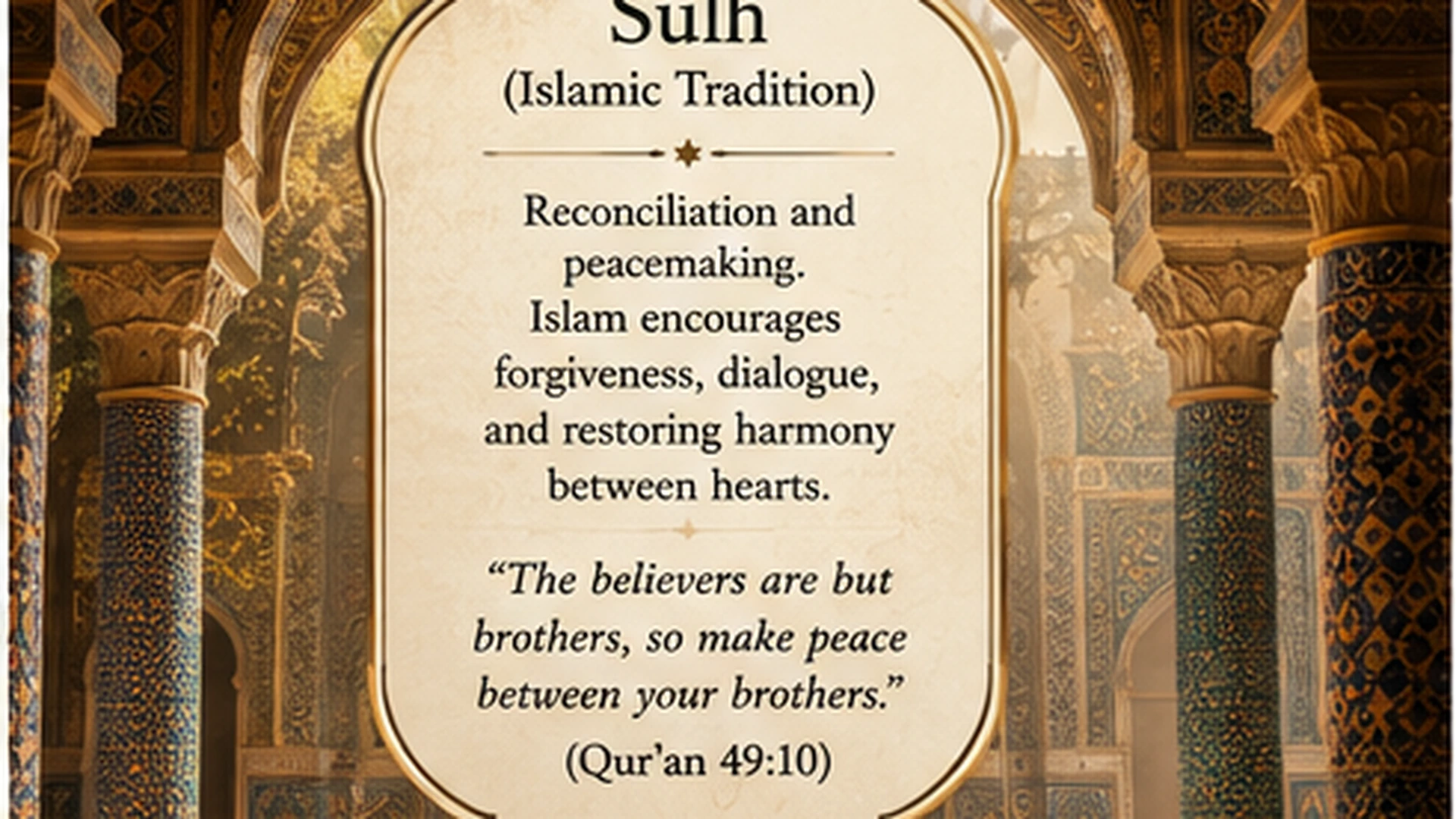
Sulh: Reconciliation Through Settlement and Mediation
Sulh is an Arabic term associated with reconciliation, settlement and the restoration of social peace. Its forms vary across Islamic legal traditions, local customs and modern institutions. Anthropological research in Algeria and Sudan shows how sulh can interact with customary authority and formal courts. [4]
Sulh is not one universal marriage ritual, and serious legal matters should not be removed from lawful protection simply because mediation is culturally respected. Its relevance here is structural: reconciliation may involve mediators, witnesses, acknowledgement of harm, negotiated obligations and a settlement that all parties understand.
In intimate relationships, mediation is ethical only when participation is voluntary and power differences are addressed. A respected elder, imam, counselor or family member should not pressure a person to return because of family reputation, financial dependence or religious fear. When violence or coercive control is present, private mediation may be unsafe or inappropriate.
Christian Traditions of Repentance, Forgiveness and Marital Repair
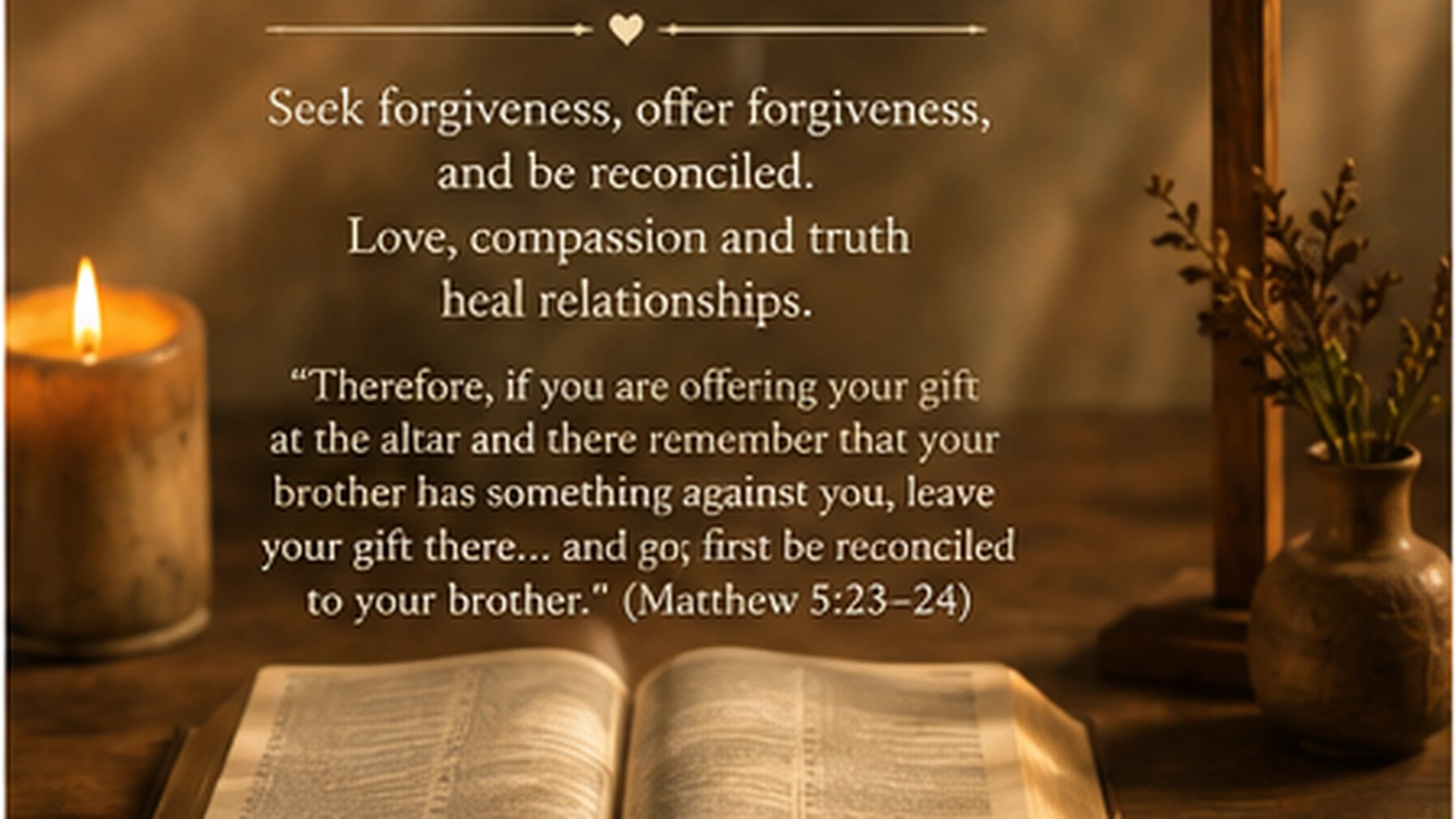
Christian communities use different forms of confession, prayer, pastoral counseling, forgiveness and covenant renewal. Catholic teaching, for example, describes reconciliation as a recurring need in family life and recognizes that troubled couples may need relatives, friends, pastoral care and professional assistance. [5]
Religious language can support humility and accountability, but it can also be misused. Forgiveness should not be presented as permission for repeated harm. Vatican canon law recognizes grave mental or physical danger as a legitimate cause for separation, while Catholic pastoral materials warn that religious beliefs can become a reason victims remain in abusive relationships. [10]
A church ceremony, prayer or vow renewal is meaningful only when the underlying relationship is safe and both spouses are choosing the commitment freely. Spiritual leaders should know when to refer couples to licensed professionals, domestic-violence services, medical care or legal help.
Modern Reconciliation: Counseling, Mediation and Restorative Practice
Modern couples may use therapy, structured dialogue, mediation or restorative practices rather than a religious ceremony. These approaches vary, but they generally focus on communication, patterns of harm, accountability, emotional regulation, boundaries and future agreements.
Couples counseling is not automatically appropriate when intimate partner violence is present. The American Psychological Association notes that conjoint treatment is not suitable for every couple experiencing violence and that assessment should occur separately and privately before deciding whether a couple-based approach is safe. [7]
A good mediator does not decide that the couple must stay together. The process may reveal that rebuilding is possible, that more individual work is needed, or that separation is the safest outcome. The ethical measure is not whether the relationship survives. It is whether the process increases truth, safety, responsibility and informed choice.
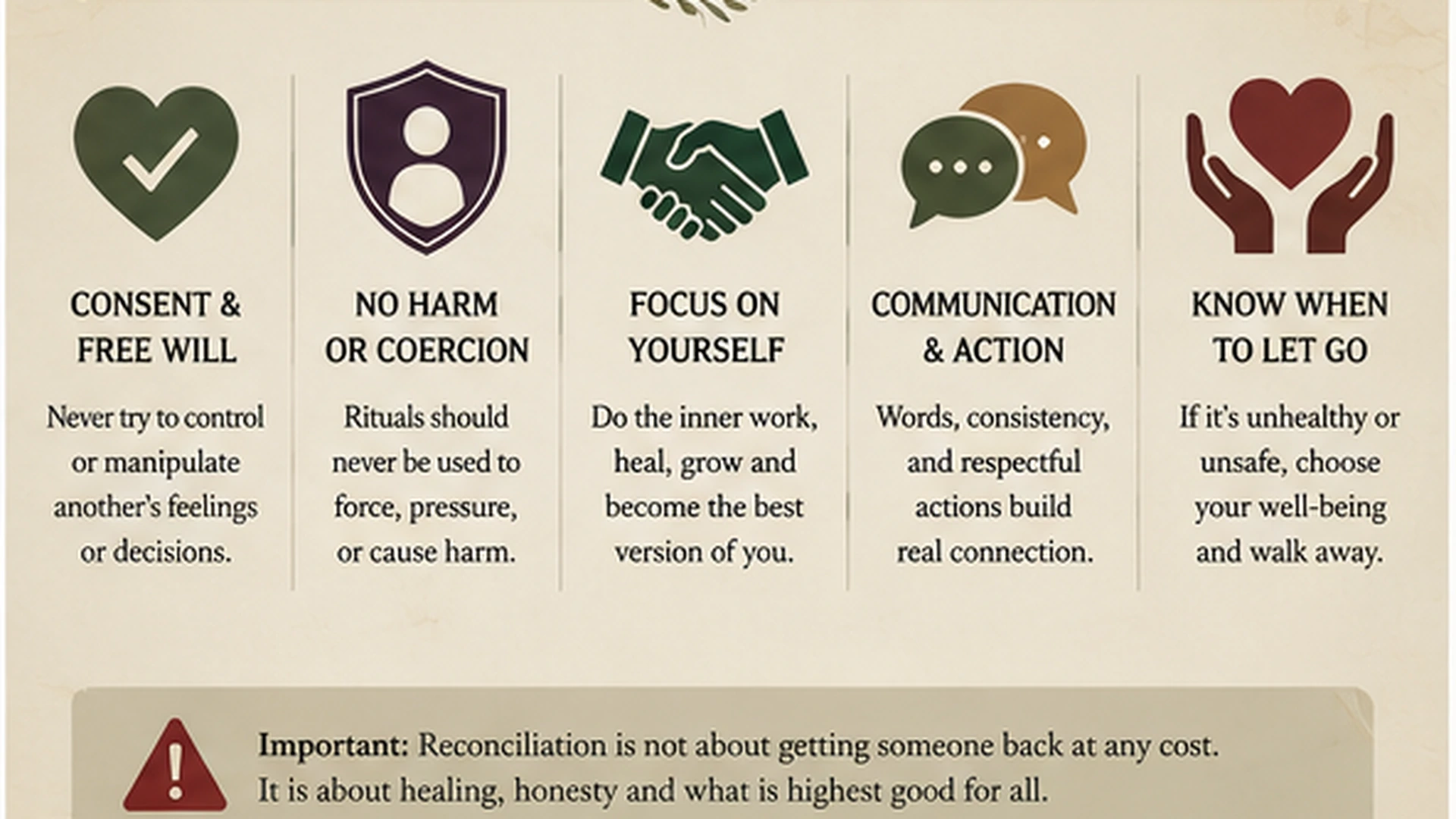
What Most Ethical Reconciliation Processes Have in Common
Across very different traditions, several public-facing principles appear repeatedly. These similarities do not prove that all cultures share one hidden ritual. They show that human relationships often require recognizable forms of repair.
A pause in ordinary conflict so that the conversation is treated seriously.
Truth-telling about what happened, including impact rather than intention alone.
Acknowledgement of responsibility without excuses or spiritual blame-shifting.
An apology that names the harm specifically.
Restitution, correction or practical repair where possible.
A mediator, elder, counselor, clergy member or trusted witness when appropriate.
The freedom of each participant to ask questions, set conditions or decline reunion.
A future agreement with observable behaviours rather than vague promises.
Time to see whether actions remain consistent.
A closing act - prayer, meal, handshake, written commitment or respectful separation - that marks the decision reached.
What Makes an Apology Sincere?
An apology is not simply the phrase “I am sorry.” A stronger apology identifies the act, recognizes its impact, accepts responsibility, expresses remorse, offers repair and states what will change. It does not demand immediate forgiveness or use tears, gifts, prayer or public pressure to bypass the injured person’s response.
Compare these statements:
“I am sorry you were hurt” shifts attention to the injured person’s reaction.
“I lied about the money, and that damaged your trust and financial security. I will provide the records, repay the amount by an agreed schedule and accept that you may need distance” names the act, impact and repair.
The second statement still does not guarantee reconciliation. It creates evidence that the person understands the harm and is prepared to act differently.
A Consent-Based Reconciliation Reflection
| Important boundary Use this only when both people freely agree to participate and there is no violence, stalking, coercive control, sexual coercion, fear or legal restriction on contact. It is a reflective structure, not a spell and not a substitute for professional help. |
|---|
Invitation: one person asks once, without pressure, whether the other is willing to have a structured conversation. No response or a refusal is respected.
Separate preparation: each person writes what happened, what impact they experienced, what responsibility they accept and what outcome they are open to. No one is required to disclose private material publicly.
Safe setting: choose a neutral place, agreed time limit and, when helpful, a trained mediator. Each person keeps independent transport and the ability to leave.
Opening statement: agree that the purpose is truth and informed choice, not forcing forgiveness or reunion.
Listening round: one person speaks without interruption; the listener summarizes what they heard before responding.
Accountability round: each person names their own actions. Avoid blaming ancestors, curses, alcohol, stress or the other partner as excuses.
Repair proposal: identify specific restitution, boundaries, counseling, health testing, financial transparency, communication routines or time apart that may be needed.
Decision: choose one of several honest outcomes - continue slowly, pause, seek professional support, establish limited contact, or end the relationship respectfully.
Closing symbol: if both agree, share water or a meal, exchange written commitments, pray within their own tradition, or simply thank each other for speaking honestly. The symbol marks the decision; it does not create consent.
Review date: if rebuilding, set a future date to evaluate behaviour rather than assuming the relationship is repaired after one emotional meeting.
Can a Ritual Bring an Ex Back?
No ritual can be responsibly promised to control another person’s decision. A symbolic practice may help you become calmer, recognize your mistakes, prepare an apology, clarify boundaries or decide that you need closure. Those changes can affect how you behave. They do not remove the other person’s agency.
An ex-partner may still say no because trust is gone, the relationship is incompatible, a new relationship has begun, contact is painful, or they simply choose a different future. Respecting that answer is part of ethical spiritual practice.
Promises of guaranteed reunion are especially concerning when a practitioner claims the target will become obsessed, unable to sleep, sexually compelled, separated from another partner or spiritually punished until they return. Those claims frame love as domination. They may also keep a distressed client paying for repeated “cleansings,” “blockage removals” or emergency upgrades when the promised result does not appear.
Ethical Boundaries for Love Reconciliation Rituals
| Ethical practice | Unethical or dangerous practice |
|---|---|
| Pray or reflect on your own behaviour and readiness to repair. | Attempt to bind, obsess, frighten or control a named person without consent. |
| Invite one respectful conversation and accept the response. | Repeated calls, fake accounts, unannounced visits or contact after a clear refusal. |
| Use mediators who protect both people’s freedom and safety. | Use family, clergy or elders to shame someone into returning. |
| Offer a specific apology and restitution. | Use gifts, money, threats, pregnancy, children or spiritual fear as leverage. |
| Be transparent about fees, limits and uncertainty. | Guarantee results, invent curses, demand escalating payments or threaten spiritual harm. |
| Refer to licensed, legal or emergency support when needed. | Tell someone to ignore court orders, medical care, therapy or domestic-violence services. |
| Respect privacy and collect minimal personal information. | Demand intimate photographs, passwords, bodily fluids, financial access or illegal surveillance. |
When Reconciliation May Be Unsafe
Intimate partner violence includes physical, sexual and emotional abuse as well as controlling behaviours. The World Health Organization treats it as a major public-health and human-rights problem. [6] A reconciliation ritual should never be used to move a person back into danger.
Warning signs include physical assault, strangulation, sexual coercion, threats, stalking, monitoring devices, forced access to accounts, isolation from family, financial control, weapon threats, harm to children or pets, destruction of property, kidnapping threats, and escalating fear after separation.
In these situations, a private joint ritual or mediation can expose the victim to retaliation or pressure. Safety planning, confidential individual support, medical care, legal advice and specialist domestic-violence services may be more appropriate. A court order or clear no-contact boundary must be respected.
The same caution applies when one person is severely intoxicated, experiencing an untreated mental-health crisis, threatening self-harm to prevent separation or unable to participate freely. Spiritual compassion does not require another person to become the sole emergency responder.
Forgiveness Does Not Require Reunion
Forgiveness can mean different things: releasing a desire for revenge, reducing resentment, placing the matter in religious hands, accepting that the past cannot be changed or choosing not to let the injury define the future. None of these meanings automatically requires renewed intimacy.
A person can forgive and maintain no contact. A person can reconcile enough to co-parent but not resume romance. A person can accept an apology and still decide that trust cannot be rebuilt. A person can also choose not to forgive yet. Pressure to forgive quickly can silence grief and accountability.
A responsible ritual allows several outcomes. The closing act may mark reunion, a trial period, respectful distance or final release. The dignity of the process comes from honesty, not from producing one predetermined romantic ending.
How to Choose an Ethical Spiritual Practitioner or Mediator
An ethical practitioner begins by asking what happened, whether both parties are safe and whether contact is welcome. They explain that no ritual can guarantee another person’s return. They focus on the client’s choices, communication, accountability, grief and boundaries.
Ask these questions before paying:
What exactly will the service involve?
Does the practitioner promise a guaranteed result or a specific deadline?
Will they respect a no-contact request, protection order or the other person’s refusal?
What information or materials do they require, and why?
Is the full cost explained in advance?
Will they refer to a counselor, doctor, lawyer or domestic-violence service when appropriate?
Can you stop the process without threats, shame or claims that abandoning it will cause danger?
Be cautious when anyone says a curse has been discovered only after payment, demands urgent additional fees, asks for gift cards or cryptocurrency, or claims your former partner will suffer unless you continue. Consumer authorities warn that romance-related scams commonly use emotional urgency and requests for money that is difficult to recover. [10]
Related Reading and Services on AncestralTemple.com
Cleansing Before New Beginnings - broader cultural context for purification, accountability and transition.
Community Renewal Traditions - reconciliation and dialogue within collective renewal.
What Is Spiritual Cleansing? A Cultural Overview - distinction between symbolic cleansing and medical or scientific claims.
Breakup Healing Rituals - support for grief and moving forward without forcing reunion.
Forgiveness & Emotional Healing Rituals - reflective support where forgiveness is appropriate.
Lost Love Reconciliation Rituals - service-intent page; ensure copy preserves consent and uncertainty.
Marriage Reconciliation Rituals - service-intent page focused on communication, trust and mutual commitment.
Relationship Reconciliation Rituals - general service page for ethical, non-coercive support.
People Also Ask
What is a love reconciliation ritual?
It is a structured spiritual, religious, cultural or personal act used to support apology, forgiveness, renewed commitment or peaceful closure after relationship conflict.
Do reconciliation rituals work?
They may help people focus, communicate and mark commitments, but there is no scientific basis for guaranteeing that a ritual will make another person return or change.
Is it ethical to perform a love ritual on someone?
A ritual directed at your own clarity or a mutually agreed process can be ethical. A practice intended to bind, obsess or control a non-consenting person is not.
Can I forgive my ex without getting back together?
Yes. Forgiveness, reduced resentment or spiritual release can occur without renewed contact or romance.
What makes a reconciliation apology sincere?
A sincere apology names the harm, recognizes impact, accepts responsibility, offers repair and demonstrates changed behaviour without demanding immediate forgiveness.
When should couples not reconcile?
Reconciliation may be unsafe when there is violence, stalking, sexual coercion, serious threats, controlling behaviour, fear, legal restrictions or no genuine accountability.
Frequently Asked Questions
1. Is a reconciliation ritual the same as a love spell?
Not necessarily. Reconciliation focuses on repairing a previous relationship. “Love spell” may refer to attraction, affection, binding or other goals. Ethical reconciliation requires consent and does not seek to control free will.
2. Can a candle or prayer change my former partner’s mind?
A candle or prayer may help you focus your own intention, grief or accountability. It cannot be responsibly promised to override another person’s decision.
3. Should both partners attend the ritual?
For a ritual that claims to repair the relationship, mutual participation is preferable. A private practice may help one person prepare or find closure, but it should not be described as a completed reconciliation.
4. What if my partner refuses to talk?
Respect the refusal. One clear invitation is enough. Repeated contact, surprise visits or messages through friends can become pressure or harassment.
5. Can elders or clergy help?
Yes, when they are trusted, neutral, culturally competent and committed to consent and safety. They should not pressure someone to return or replace specialist support in abuse cases.
6. How long does reconciliation take?
There is no universal timeline. Trust usually depends on consistent behaviour over time, not one ceremony or emotional conversation.
7. Is forgiveness required before reconciliation?
No fixed sequence applies to everyone. Some people begin repair before they feel forgiveness; others forgive but do not reconcile. The injured person controls their own pace.
8. Can reconciliation happen after infidelity?
Sometimes, when both partners freely choose the process and there is honesty, health testing when relevant, boundaries, accountability and sustained change. Reunion is not obligatory.
9. What is the difference between reconciliation and closure?
Reconciliation restores some relationship. Closure marks understanding, release or an ending. Both can involve apology and reflection, but closure does not require ongoing contact.
10. What if a practitioner says my ex is under a curse?
Ask for evidence, avoid urgent payments and do not accept threats. Fear-based claims that require repeated fees are a major warning sign.
Key Takeaways
Love reconciliation rituals are structured acts of repair, reflection or closure; they are not one universal tradition.
Historical love magic sometimes sought compulsion, which is ethically different from mutual reconciliation.
Hoʻoponopono is a Native Hawaiian family problem-solving process, not merely a four-phrase internet mantra.
Sulh and other mediated traditions show that reconciliation may involve witnesses, negotiated obligations and social peace.
Apology is stronger when paired with restitution and observable changed behaviour.
No ritual can ethically guarantee that a former partner will return or surrender their right to refuse.
Forgiveness can occur without reunion, and closure can be a valid outcome.
Violence, stalking, coercive control and fear require safety-focused support rather than pressure to reconcile.
Ethical practitioners disclose limits, respect consent, avoid fear and refer to professional help when needed.
Conclusion
Love reconciliation rituals can give emotional and spiritual weight to apology, accountability and renewed commitment. Their value lies in helping people treat repair as serious work. A prayer, shared meal, mediated dialogue or written promise can create a memorable threshold between old patterns and a different future.
The ritual is not the repair itself. Repair appears in truthful speech, restitution, changed behaviour, respect for boundaries and the willingness to accept an outcome that cannot be controlled. Sometimes the outcome is reunion. Sometimes it is limited contact, co-parenting, distance or final closure.
The most ethical definition of reconciliation is therefore not “bringing someone back.” It is restoring as much truth, dignity, safety and peace as both people freely choose.
Article Information
- Publisher
- Ancestral Temple
- Editor
- Ancestral Temple
- Last updated
- Jul 30, 2026
- Last reviewed
- Jul 30, 2026
- Content version
- 5be8b4bc03
This educational article should be read as cultural and spiritual information, not as medical, legal, financial, or emergency advice.
Helpful Related Guidance
About the Author
 Ancestral Temple
Spiritual guide and practitioner with decades of experience in ancestral wisdom, rituals, and divine guidance.
Related Posts
View All










Comments
We'd love to hear your thoughts.