
Family Conflict Resolution Rituals: Prayers for Peace, Forgiveness and Unity
Pillar Article
Quick Summary
Article information and safety note This article is educational. Prayer, ritual and family mediation can support reflection and communication, but they do not guarantee reconciliat...
| Article information and safety note This article is educational. Prayer, ritual and family mediation can support reflection and communication, but they do not guarantee reconciliation or make an unsafe relationship safe. Do not hold a joint ritual or mediation session where there is violence, sexual abuse, stalking, credible threats, coercive control, intimidation, forced dependence or danger to a child. Seek qualified local support instead. [6][7][8] |
|---|
Quick Answer
Family conflict resolution rituals are structured ways of moving from tension toward truth, responsibility and repair. They may include prayer, a family meeting, the presence of an elder or mediator, apology, restitution, shared food, a written agreement or a culturally specific reconciliation practice. Their value is not that they magically erase conflict. Their value is that they create a protected time to listen, identify harm, accept responsibility and decide what must change. Forgiveness may be part of the process, but it cannot be demanded. Reconciliation requires safety, consent and reliable behavior over time.
What Are Family Conflict Resolution Rituals?
A family conflict resolution ritual is a repeated or formalized process used to address tension among relatives. It can be religious, cultural, ancestral, therapeutic or entirely secular. Families may gather for prayer, ask an elder to facilitate, read a short text about peace, use a speaking order, share a meal after an agreement or return to the same process whenever conflict becomes difficult to manage.
The word ritual matters because a ritual creates a beginning, a protected middle and a clear ending. Ordinary arguments often have no structure: people interrupt, reopen old grievances, recruit allies and leave without knowing what happens next. A well-designed ritual slows the exchange and defines rules. It can help relatives move from accusation toward evidence, from intention toward impact and from vague regret toward a concrete repair plan.
Ritual is not automatically spiritual power. A family meeting can have real social value even when no supernatural claim is made. Prayer may help believers approach the conversation with humility. A cultural practice may reinforce identity and obligations. A written agreement may reduce confusion. None of these makes another person forgive, return or trust again on demand.
Why Family Conflict Is So Difficult
Family conflict is rarely about one isolated sentence. Relatives share memory, money, caregiving duties, housing, inheritance, identity and expectations accumulated over years. A small disagreement can activate older experiences of favoritism, abandonment, disrespect or unequal responsibility. Because family roles are emotionally powerful, people may hear a present request as a judgment on their whole history: an adult child hears control, a parent hears rejection, a sibling hears that the old hierarchy has returned.
Families also contain unequal power. An elder may control land or school fees. One sibling may be the main caregiver. A spouse may control income or immigration documents. A respected relative may be treated as incapable of wrongdoing. A conflict ritual that ignores these differences can reproduce the problem by asking the less powerful person to speak openly in front of the person who can punish them later. Safety screening and private preparation are therefore part of ethical reconciliation, not signs of disloyalty.
Another difficulty is that families often confuse intention with impact. A relative may say, “I meant to help,” while the other person experienced intrusion or humiliation. Both facts can be true: the intention was not malicious, and the impact was harmful. Resolution becomes possible when the conversation makes room for intention without using it to cancel the effect.
Finally, some conflicts are not misunderstandings. They involve repeated deception, exploitation, abuse, discrimination or refusal to accept boundaries. No communication technique can transform a person who is committed to control and faces no consequences. In those cases, the appropriate outcome may be distance, legal protection or carefully limited contact rather than unity.
Common Family Conflicts and the Repair They Require
| Conflict area | What may be underneath it | Useful repair |
|---|---|---|
| Money and debt | Hidden borrowing, unequal support, unpaid loans or control of shared funds | Full accounting, repayment terms, separate access and written rules |
| Caregiving | One relative carries most of the work for children, elders or sick family members | Task redistribution, respite, expenses and realistic schedules |
| Inheritance and land | Unclear promises, missing records, gender bias or pressure from powerful relatives | Documentation, independent legal advice and neutral mediation |
| Privacy and boundaries | Unannounced visits, sharing secrets, monitoring phones or interfering in parenting | Clear contact rules, confidentiality and consequences for breaches |
| Sibling resentment | Old favoritism, comparisons or unequal family roles | Name the history, stop comparisons and negotiate present responsibilities |
| Intergenerational values | Disagreement about religion, marriage, dress, career or independence | Respect adult agency while identifying genuine shared obligations |
| Apology after harmful speech | Insults, gossip, public embarrassment or false accusations | Specific correction to the same audience and a commitment to changed speech |
Resolution, Forgiveness and Reconciliation Are Different
| Term | Meaning | Example |
|---|---|---|
| Resolution | A practical issue is settled or managed | A repayment schedule or caregiving plan is agreed |
| Forgiveness | A person changes how they carry resentment or moral debt | It may occur privately and does not require renewed access |
| Reconciliation | A relationship is rebuilt through mutual safety and trustworthy behavior | It requires participation from more than one person |
| Restitution | Material or practical harm is repaired where possible | Money is returned, a false statement is corrected or damaged property is replaced |
| Boundary | A limit defines what contact or conduct is acceptable | Only written messages, no borrowing money, or no unsupervised contact |
These distinctions prevent a common misuse of religious language. A person may forgive without resuming a close relationship. A family may settle an inheritance dispute while emotional trust remains limited. A parent may apologize and still need professional help before contact with a child is safe. Reconciliation is not proved by tears, prayer, gifts or a ceremony; it is proved by sustained conduct.
A Safe, Non-Denominational Family Peace and Repair Ritual
The following process is a practical editorial synthesis, not a sacred ceremony from one culture. Adapt it only when all participants can speak freely and no one is at risk.
Screen for safety first. Ask privately whether anyone fears retaliation, violence, sexual harm, stalking, financial punishment or loss of housing. If the answer is yes, do not begin a joint session.
Choose a neutral facilitator. This may be a trained mediator, counsellor, faith leader or elder who is respected by all sides and is able to stop intimidation.
Name the purpose in one sentence. For example: “We are here to understand what happened, decide what must stop and agree on the next safe step.”
Open with a short prayer, silence or statement of values. Keep it brief and optional. No participant should be required to repeat words they do not believe.
Use uninterrupted speaking turns. Each person answers three questions: What happened? How did it affect you? What do you need now?
Separate explanation from responsibility. Context can matter, but it does not erase the impact of lying, intimidation, neglect, violence or misuse of money.
Ask for a specific apology. The person names the action, acknowledges harm, accepts responsibility and avoids demanding forgiveness.
Agree on repair. Record actions, deadlines, contact rules, financial arrangements, caregiving duties or referrals for professional support.
Close without pretending everything is healed. A short blessing, handshake or meal may be appropriate only when freely chosen. Schedule a review date.
What a Real Apology Sounds Like
| A useful apology formula “I did ____. It affected you by ____. I was responsible for ____. I will repair it by ____. I understand that you may need time or distance, and I will respect that.” |
|---|
A weak apology focuses on the speaker’s discomfort: “I am sorry you felt hurt,” “I was only joking,” or “We both made mistakes.” A strong apology identifies the conduct and leaves the harmed person free to respond. Restitution may be required. If money was taken, the apology includes repayment. If a lie damaged someone’s reputation, the correction should reach the people who heard the lie. If a boundary was ignored, the repair includes a new contact rule and proof that it is respected.
Christian Prayers for Family Peace and Forgiveness
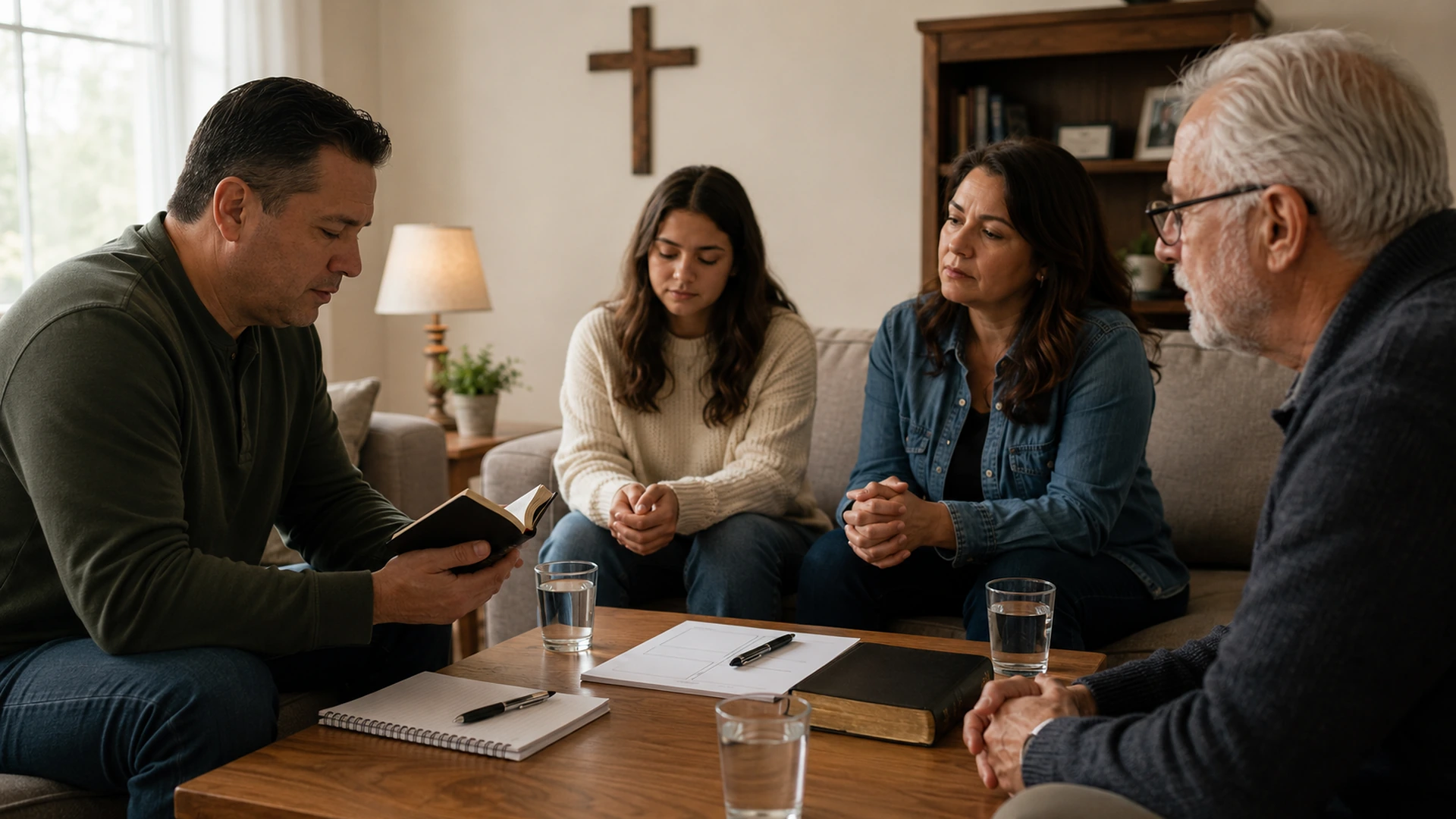
Christian family reconciliation is commonly framed through repentance, forgiveness, mercy, justice and restored fellowship. The United States Conference of Catholic Bishops publishes prayers for families and a Prayer for Unity that asks for forgiveness and movement away from division toward reconciliation. [1][2] These prayers place reconciliation within relationship with God; they are not techniques for controlling another person.
A family may pray before or after a difficult conversation. A simple Christian pattern can include confession of one’s own wrongdoing, intercession for those who have been harmed, a request for wisdom, and a commitment to make amends. The ethical test is whether prayer produces more honesty and care. A person cannot ask for unity while continuing threats, humiliation, financial control or violence.
Christian teaching on forgiveness must not be used to keep a victim in danger. USCCB guidance on domestic violence warns that abused people may wrongly believe faith requires them to remain with an abusive partner. It emphasizes that spiritual care must address safety, the effects on children and misplaced responsibility for an abuser’s actions. [6] Forgiveness is never permission for continued abuse.
Islamic Reconciliation, Sulh and Justice
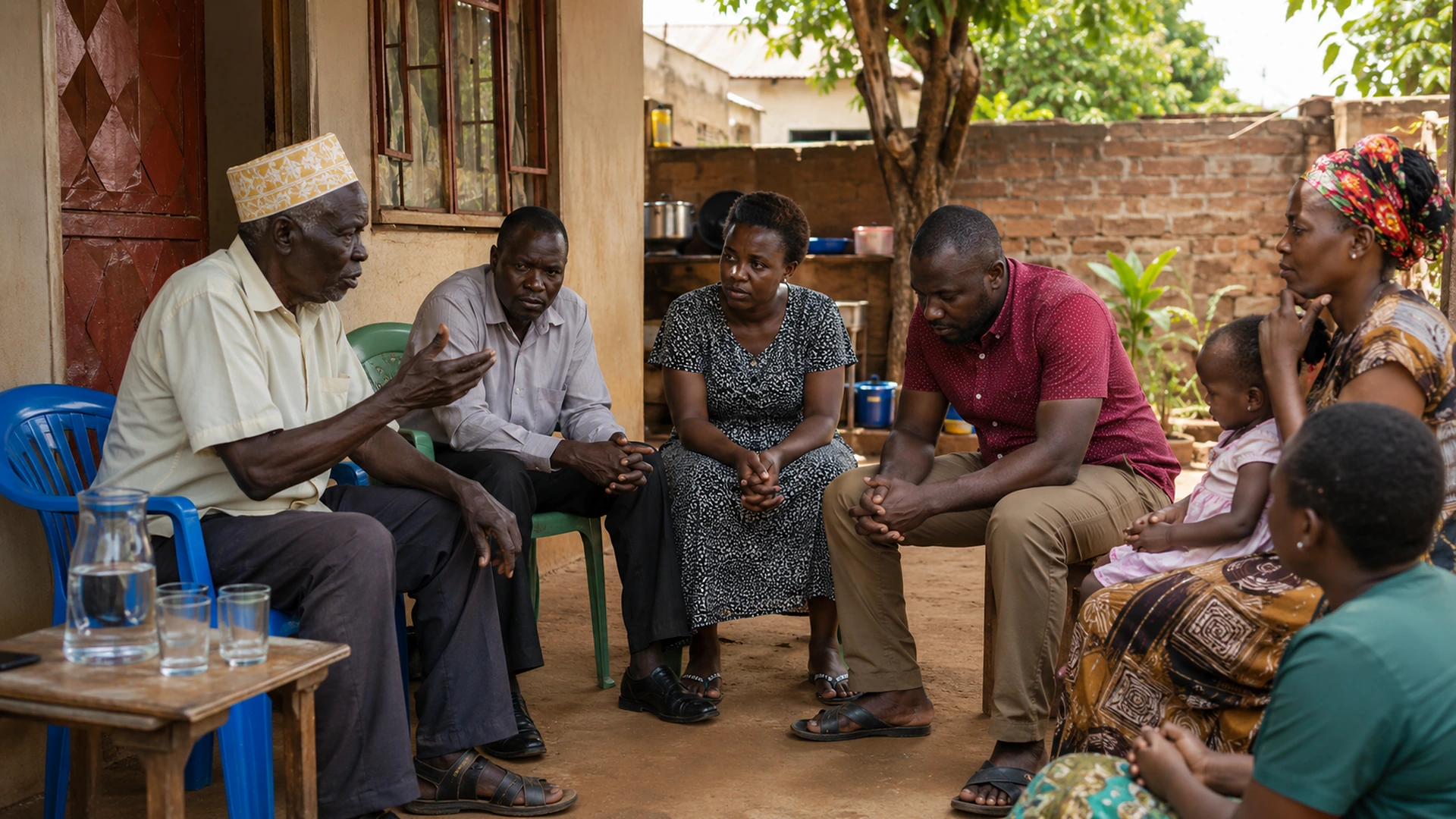
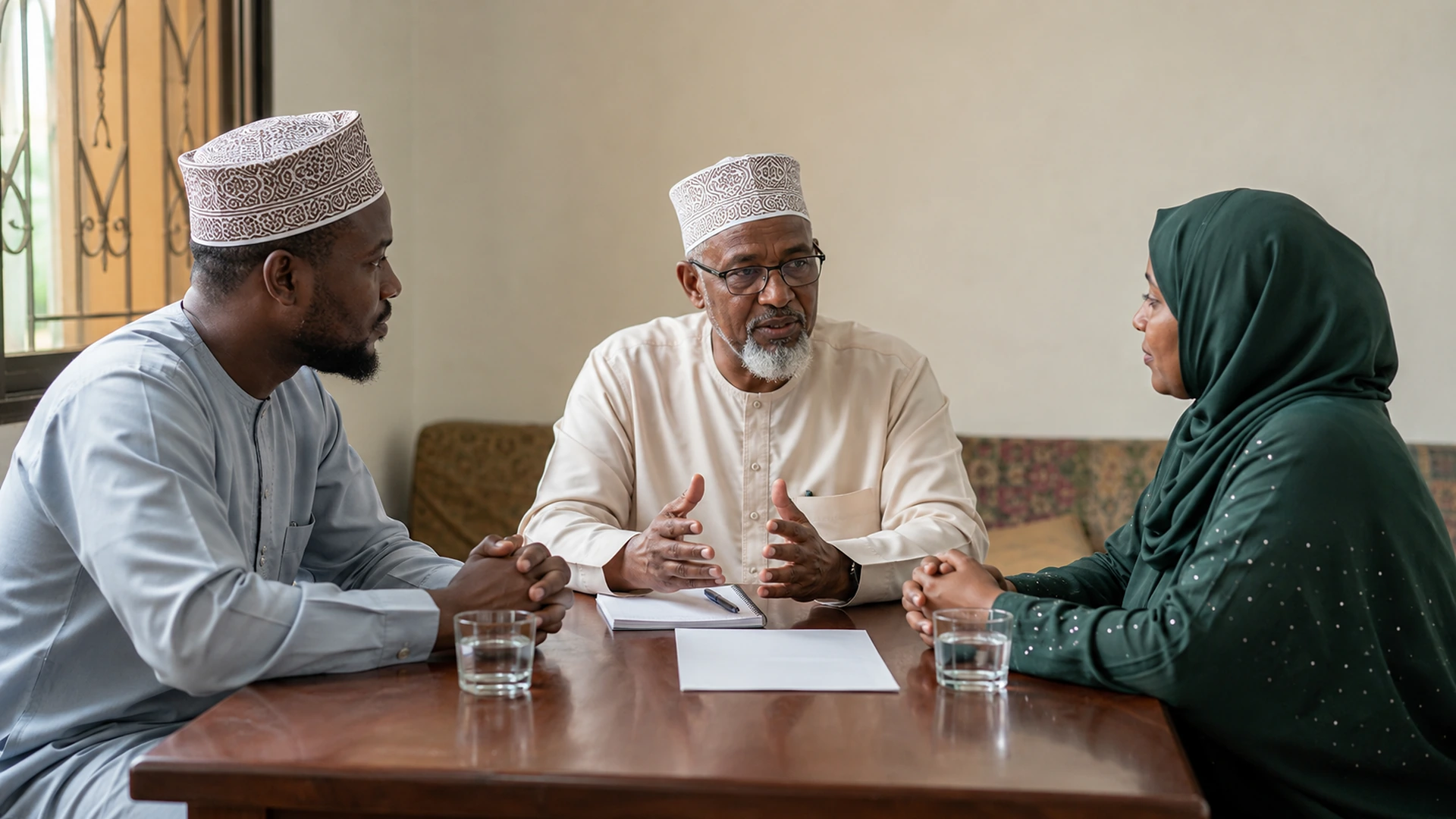
The Qur’an repeatedly joins peace-making with justice. Qur’an 49:10 calls believers to make peace between those in conflict, while the surrounding passage condemns mockery, insults and harmful suspicion. [3] Islamic reconciliation is often discussed through sulh, a broad concept of settlement and restoration of peaceful relations. In family matters, respected relatives, community leaders or qualified mediators may help parties clarify rights, obligations and a fair agreement.
A prayer for peace can be part of the process, but it does not replace accountability. An Islamic family mediation should not conceal violence, deny a person lawful rights, force a marriage to continue or pressure someone to surrender property for the sake of appearances. Peace-making must be fair, voluntary and consistent with safety.
A practical Muslim family process may begin with private screening, then a meeting in which each person speaks without insult. The mediator can remind participants of trust, justice, mercy and responsibility. The outcome should be specific: an apology, repayment, communication limits, a caregiving plan or referral to religious, legal or therapeutic support. The spiritual language should strengthen justice rather than substitute for it.
Hoʻoponopono: A Native Hawaiian Family Reconciliation Practice
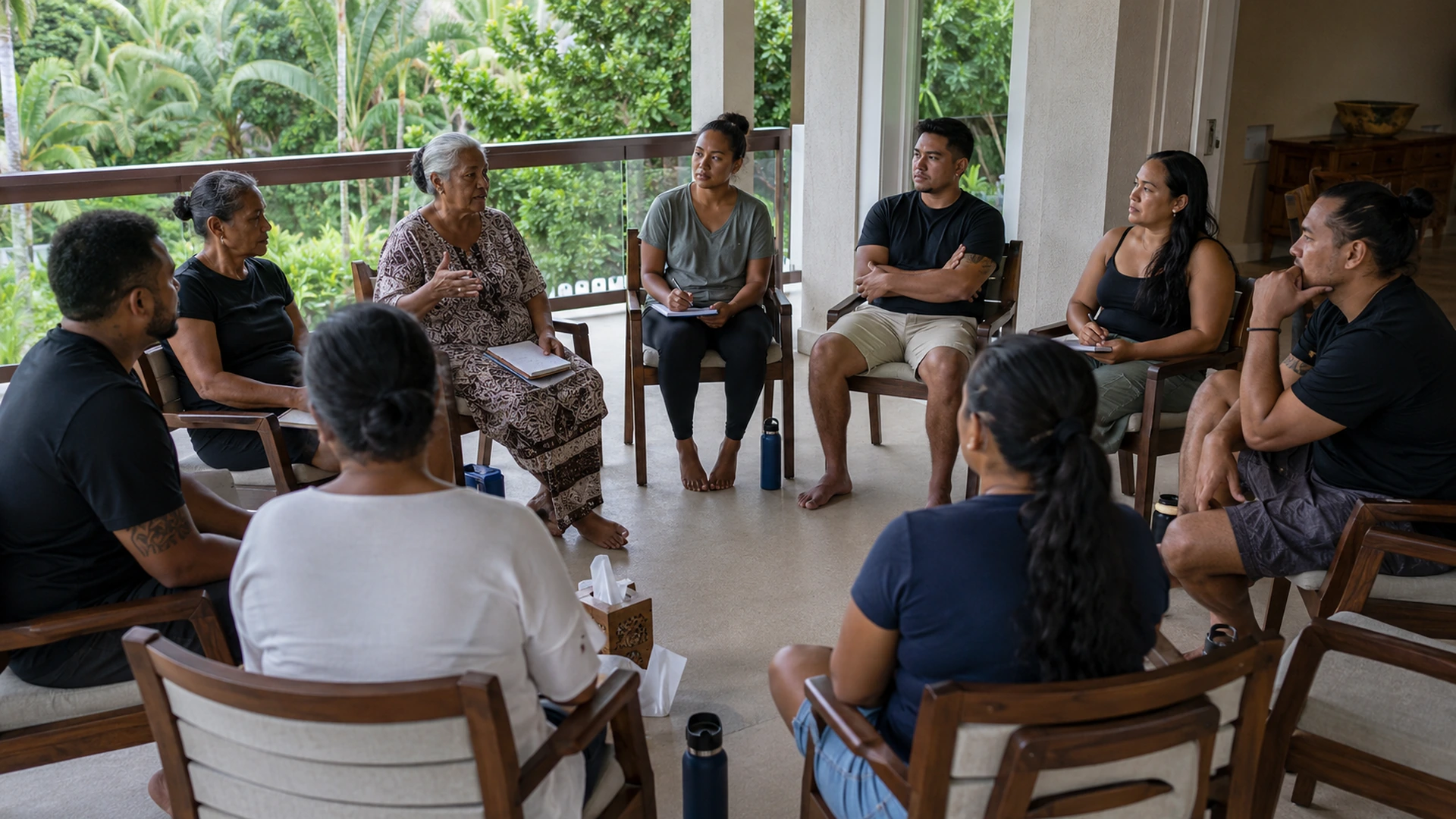
The University of Hawaiʻi describes hoʻoponopono as a practice of correcting what is out of order through confession, repentance, responsibility and reconciliation. Contemporary Hawaiian leaders also describe it as restoring goodness and peace within families and close groups through truthful, ritual communication. [4][5] It is therefore more than a four-phrase internet affirmation.
Traditional and contemporary forms are culturally guided. A knowledgeable facilitator may help relatives identify the problem, speak truth, acknowledge responsibility and move toward release or restored relationship. Outsiders should not claim authority to conduct a restricted Hawaiian process simply because they have read a simplified version online. The responsible lesson is the importance of truthful acknowledgement, accountability and guided repair—not a promise that repeating phrases remotely changes another person.
Hoʻoponopono also illustrates why reconciliation cannot be detached from community and culture. Words gain meaning through relationships, authority, history and shared expectations. A family may learn from the values of responsibility and setting things right while respecting the practice’s Native Hawaiian ownership.
Uganda’s Empaako Tradition and the Language of Peace
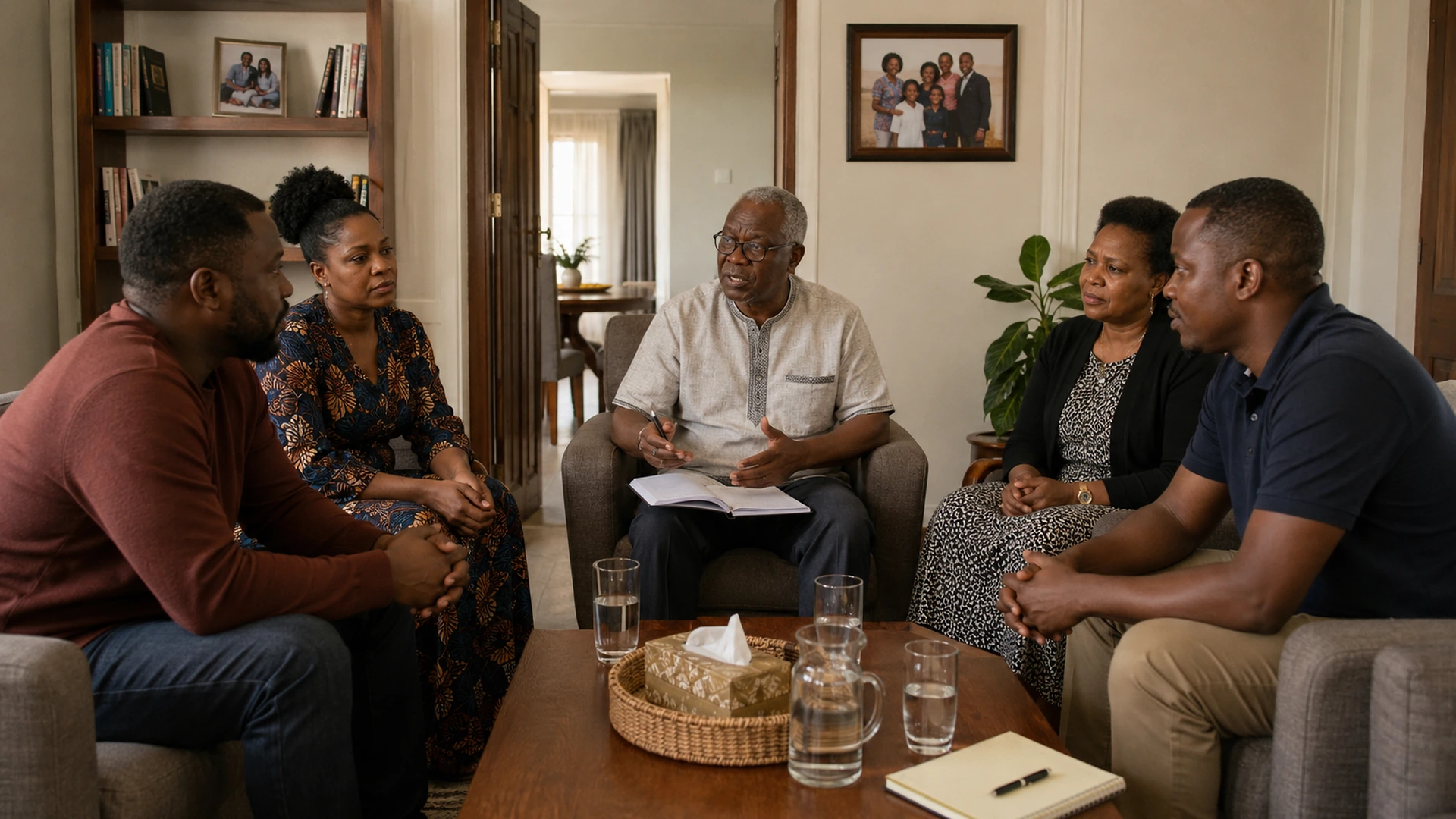
UNESCO documents Empaako as a naming tradition among Batooro, Banyoro, Batuku, Batagwenda and Banyabindi communities of western Uganda. An Empaako name expresses affection, social identity and respect. UNESCO notes that using it can defuse tension or anger and communicate unity, peace and reconciliation. [9]
This does not make Empaako a universal conflict-resolution formula for all Ugandans. It belongs to particular communities and is transmitted through family and cultural practice. Its relevance to conflict resolution lies in the social power of respectful address: the way a person is named can remind both sides of relationship, dignity and belonging.
A culturally appropriate family conversation may use the person’s Empaako naturally, especially when an elder is trying to lower anger and restore respectful speech. Outsiders should not invent praise names or stage a ceremony. The broader lesson is that language can either inflame conflict or reopen the possibility of listening.
Sibling Conflict, Adult Children and In-Law Tension
Sibling conflict often survives because the family continues to assign childhood roles: the responsible one, the difficult one, the favored one or the one expected to sacrifice. A useful reconciliation process asks each adult to describe current facts rather than repeat family labels. Parents and elders should avoid settling the matter by declaring who has always been “good.” The goal is to create fair present-day agreements about money, caregiving, property and communication.
Conflict between parents and adult children requires a similar shift. Respect for parents does not erase an adult child’s right to privacy, safety, chosen relationships and independent decisions. At the same time, adult children may have real commitments to communicate clearly, honor lawful agreements and avoid using silence as punishment. A ritual for this conflict should define what respect looks like in behavior rather than demand obedience or emotional closeness.
In-law conflict becomes more manageable when the couple or central household agrees on boundaries before asking the wider family to change. Questions about visits, money, childcare, religious practice and confidential information should be answered by the people directly responsible. Elders can bless or support an agreement, but they should not override a spouse’s safety, a parent’s lawful caregiving role or a couple’s private decisions.
Inheritance, Land and Family Business Disputes
Inheritance and family-business disputes are especially vulnerable to pressure disguised as unity. Relatives may ask a widow, younger sibling, daughter or dependent adult to surrender rights so that the family can “remain peaceful.” A prayer or customary gathering should never be used to replace records, lawful procedure or independent advice. Where property is involved, participants need accurate documents, a list of assets and debts, and clarity about who has legal authority.
Ritual can still have a role. A family may open a meeting with remembrance of the deceased, gratitude for shared work or a commitment not to insult one another. The symbolic opening should be followed by transparent accounting. If an elder has a financial interest, another mediator should lead. Agreements should be written, reviewed and signed only after everyone has had time to understand them.
A family business also needs boundaries between kinship and employment. Roles, pay, ownership and performance expectations should not depend on affection alone. Reconciliation after a business conflict may require an audit, corrected records, separation of duties or an exit plan. A meal or apology cannot substitute for financial repair.
Family Elders, Mediators and the Problem of Bias
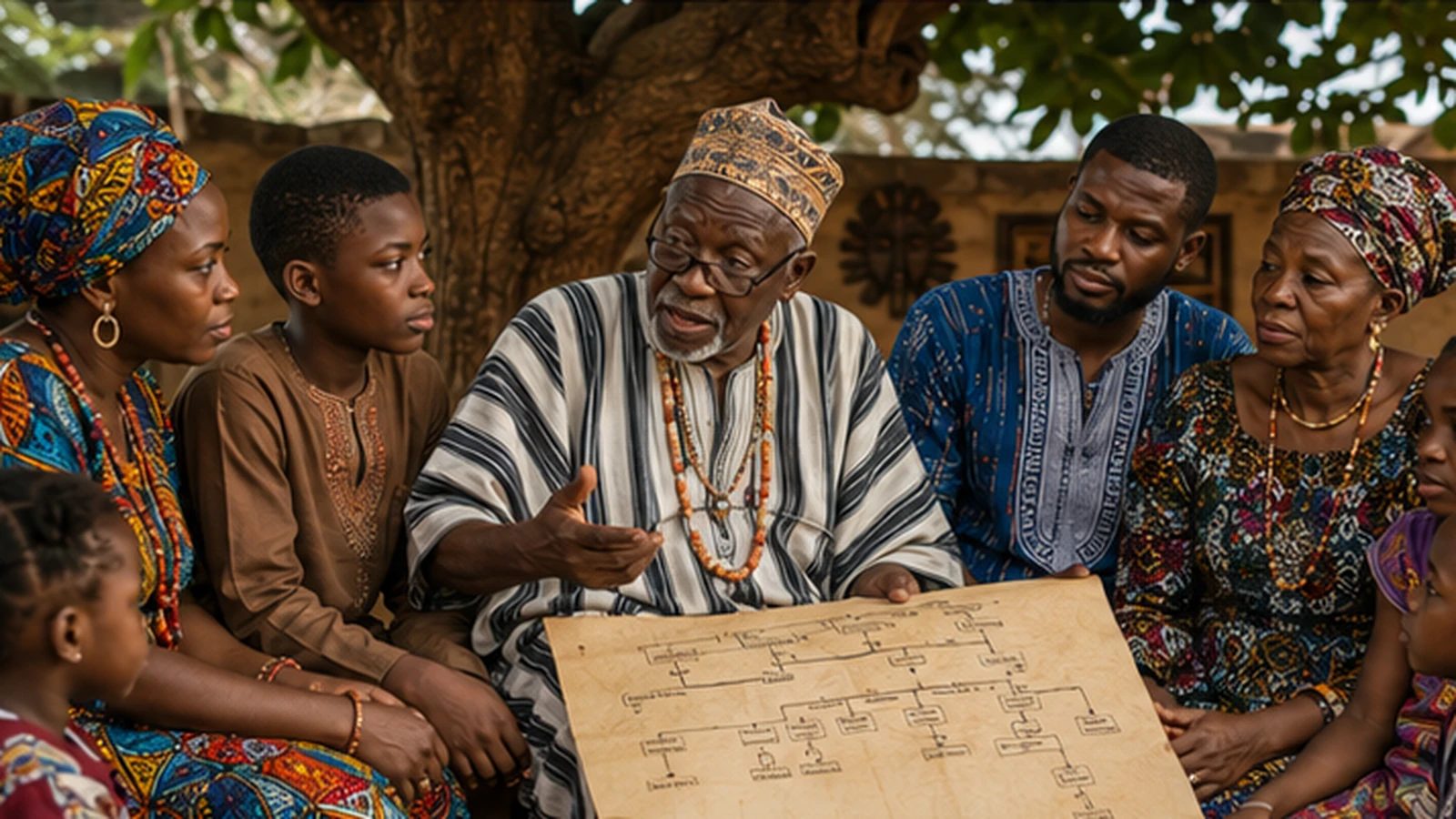
Elders can bring memory, authority and patience to a family dispute. They may know the history of land, marriage, inheritance or caregiving obligations. Their involvement is helpful only when they can remain fair and protect vulnerable participants. Age or status does not automatically make a person neutral.
A mediator should not depend financially on one side or fear a powerful relative.
The harmed person must be allowed a private safety conversation before any joint meeting.
Children should not be used as messengers, witnesses for adult arguments or pressure points.
A religious leader should refer legal, medical or safeguarding issues to qualified professionals.
The mediator must be willing to end the process if threats, intimidation or retaliation appear.
Family mediation can be useful for suitable disputes, but official family-justice guidance commonly excludes cases involving domestic violence from ordinary mediation pathways. [10] The principle is simple: a negotiated agreement is not voluntary when one person is afraid of the other.
Children and Family Conflict
Children notice conflict even when adults think they are hiding it. They read tone, silence, doors closing, changes in routine and pressure to choose sides. CDC guidance emphasizes safe, stable and nurturing relationships as protective for children, while UNICEF recommends active listening, age-appropriate language and respectful communication. [7][11][12]
Do not ask a child to decide which adult is right.
Do not make a child apologize publicly for expressing fear or anger.
Explain changes in simple, truthful language without adult accusations.
Keep routines, food, school attendance, sleep and trusted relationships as stable as possible.
Allow a child to speak privately with a safe adult or professional.
Report suspected abuse and seek qualified help rather than handling it as a private family ritual.
Forgiveness Is Not Forgetting, Excusing or Reopening Access
Forgiveness is interpreted differently across religions, cultures and psychological traditions. For some people it means releasing a desire for revenge. For others it means entrusting justice to God, accepting that the past cannot be changed or choosing not to organize life around the offender. None of these definitions requires denial of facts.
A person can forgive and still report a crime, maintain no contact, insist on repayment or refuse unsupervised access to a child. A person can also decide that they are not ready to use the word forgiveness. Ethical family rituals should not measure spirituality by how quickly the harmed person becomes calm or affectionate.
When a Family Conflict Ritual Should Stop
| Stop the process and seek qualified help when there is: physical or sexual violence; threats to kill or harm; stalking or surveillance; coercive control; forced marriage; child abuse or neglect; weapon access; severe intoxication; financial captivity; threats of eviction or immigration consequences; retaliation after disclosure; or any situation in which a participant cannot say no safely. |
|---|
WHO describes intimate partner and sexual violence as a serious public-health and human-rights problem and recommends survivor-centred services. [8] A unity prayer must never be used to preserve a family’s public image at the expense of someone’s safety. When danger is present, the first ritual is not reconciliation. It is protection: distance, trusted support, documentation, healthcare, legal advice and an individual safety plan appropriate to the local context.
Do Family Conflict Resolution Rituals Work?
They can work in ordinary, observable ways. A ritual can slow a conversation, create predictable speaking turns, remind relatives of shared values, make an apology public and record commitments. Prayer can help believers approach the meeting with humility and hope. A culturally recognized practice can make responsibility meaningful within a community.
Science has not established that prayer, a blessing, a meal or a symbolic act automatically changes another person’s behavior. The outcome depends on safety, willingness, communication skills, power differences, accountability and follow-through. The most reliable sign that a ritual helped is not emotional intensity on the day. It is what happens afterward: less intimidation, clearer boundaries, repaired losses, safer children and consistent respectful conduct.
A 30-Day Family Repair Plan
| Timing | Focus | Observable outcome |
|---|---|---|
| Day 1 | Stop harmful conduct and agree on temporary boundaries | No threats, no social-media attacks, no unannounced visits |
| Days 2–3 | Private safety screening and mediator selection | Each participant can decline joint mediation |
| Days 4–7 | First structured meeting | Facts, impact, needs and immediate repair actions |
| Week 2 | Restitution and communication practice | Repayment begins; correction is issued; contact rules are tested |
| Week 3 | Review children’s needs and family routines | School, caregiving, health and emotional support remain stable |
| Week 4 | Evaluate trust using behavior | Continue, revise boundaries or end contact based on evidence |
Common Mistakes to Avoid
Holding a public family meeting that humiliates one person.
Calling silence “peace” when one relative is afraid to speak.
Demanding forgiveness before the harm has been named or repaired.
Using prayer to avoid repayment, treatment, legal responsibility or changed behavior.
Choosing a mediator who is loyal to the most powerful family member.
Treating cultural traditions as interchangeable scripts available to outsiders.
Assuming a meal, handshake or photograph proves reconciliation.
Returning children or vulnerable adults to unsafe contact for the sake of family unity.
Resolving Conflict Across Distance
Families separated by migration, work or study may need a remote version of the process. Video calls should be scheduled rather than initiated during anger, and each person should have privacy. The facilitator can circulate a short agenda and confirm that nobody is recording without consent. Written summaries are especially important when participants live in different time zones or legal jurisdictions.
Distance can also make avoidance easier. A relative may disappear from the conversation, communicate only through group chats or recruit distant family members who do not know the facts. A good remote ritual limits the number of participants, uses one communication channel and separates urgent practical decisions from deeper emotional repair. If the dispute concerns property, immigration, child contact or legal rights in more than one country, obtain qualified advice rather than relying on a family agreement alone.
A Short Prayer or Reflection for Family Peace
Families may adapt the following non-denominational reflection or replace it with an authorized prayer from their own tradition:
| Reflection for peace and repair May we speak truth without cruelty, listen without preparing an attack, accept responsibility without excuses and protect the dignity of every person here. Give us courage to repair what can be repaired, wisdom to set necessary boundaries and patience to rebuild trust only through honest action. |
|---|
The words are not a spell and should not be presented as belonging to a particular religion. Their purpose is to focus the meeting on conduct. A family that uses an official Christian, Muslim or other religious prayer should preserve the language and authority of that tradition rather than combining sacred texts into a generic script.
How to Close the Meeting Without Creating False Peace
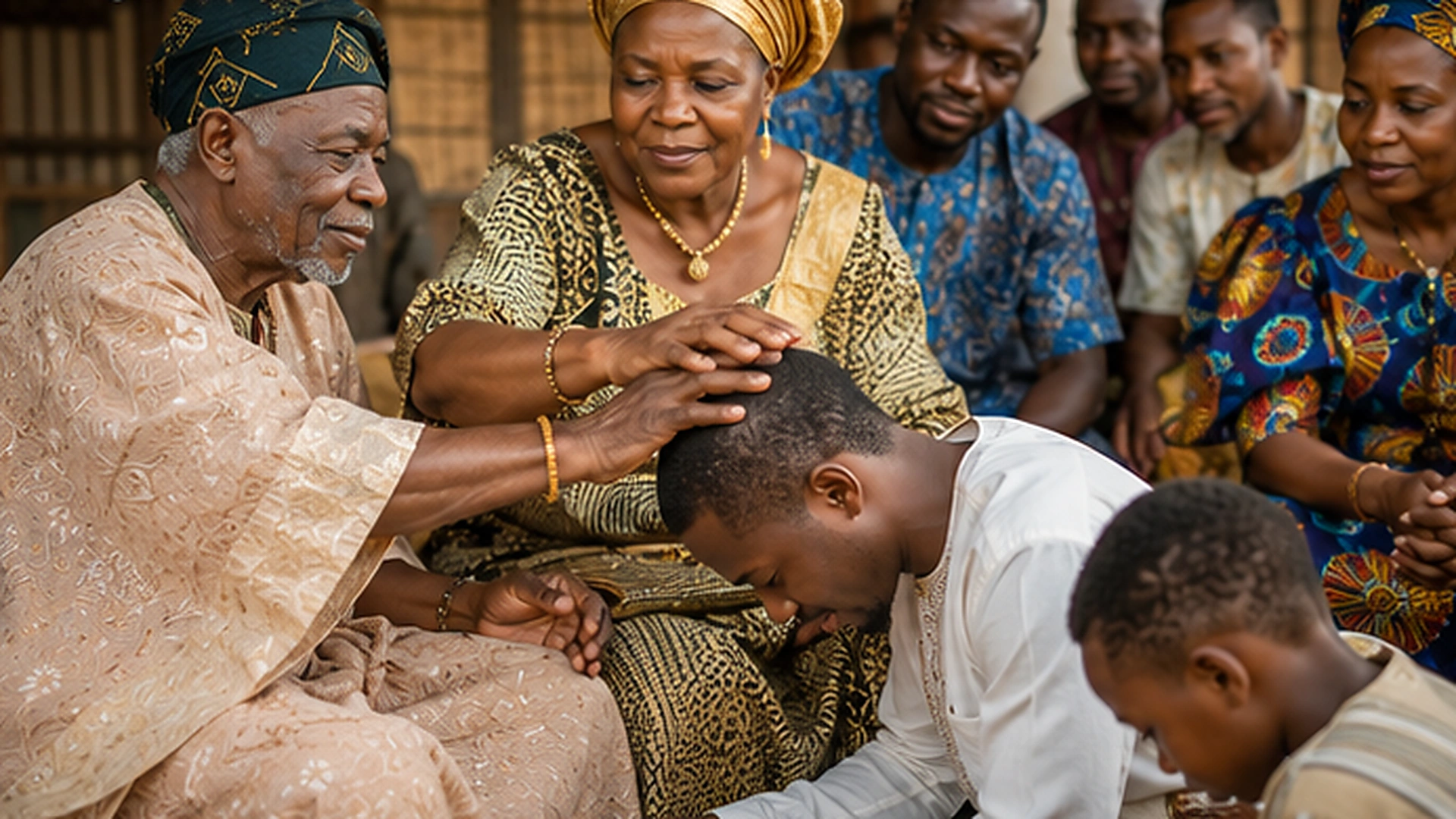
Many reconciliation gatherings end with a prayer, meal, handshake, embrace, blessing or group photograph. These actions can be meaningful, but the closing must remain voluntary. A harmed person may not be ready to touch the person who caused the harm. Someone may prefer to leave quietly rather than share food. Refusing a symbolic gesture should not be treated as failure.
A safer closing has three parts: summarize the agreements, confirm who will do what and state when the family will review progress. The facilitator can then offer an optional prayer or moment of silence. Every participant should leave with the written boundaries and contact information for further support. The emotional tone may still be sad or uncertain; a successful meeting does not need to look joyful.
How to Measure Whether Reconciliation Is Real
| Area | Evidence of progress |
|---|---|
| Speech | Insults, gossip and threats stop; corrections are made where harm was public |
| Boundaries | Contact limits, privacy rules and financial limits are respected without retaliation |
| Repair | Money, property, caregiving or practical losses are addressed as agreed |
| Accountability | The person who caused harm accepts feedback without shifting blame |
| Children | Children are not recruited as messengers and their routines and safety improve |
| Trust | Information becomes more reliable and promises match behavior over time |
| Support | Participants use counselling, legal, religious or community support when needed |
If these indicators do not improve, repeating the ritual more intensely is unlikely to solve the problem. The family may need a different mediator, stronger boundaries, professional treatment, formal legal processes or separation. Ritual should help people see reality more clearly, not persuade them to ignore it.
People Also Ask
What is a family reconciliation ritual?
It is a structured process that may combine prayer, listening, apology, repair, boundaries and a culturally meaningful closing. It should organize honest action rather than promise magical control.
Can prayer heal family conflict?
Prayer can support humility, hope and reflection for believers. It does not replace accountability, communication, restitution, professional help or safety measures.
Do I have to forgive a family member?
Forgiveness cannot be ethically forced. You may need time, distance or professional support. Forgiveness does not require renewed access or the cancellation of consequences.
When should a family use a mediator?
A neutral mediator can help when participants can speak freely and the dispute is suitable for negotiation. Do not use ordinary mediation where fear, violence, stalking or coercive control prevents genuine consent.
How can a family rebuild unity after conflict?
Name the harm, stop it, make a specific apology, repair practical losses, agree on boundaries and measure progress through behavior over time.
Frequently Asked Questions
Is family unity always the goal?
No. Safety, dignity and truth come first. Some families need limited contact, supervised contact or permanent separation from an abusive relative.
Can an elder perform the ritual?
Yes, when all participants trust the elder and the elder can remain fair. A trained mediator or counsellor may be more appropriate for complex disputes.
Should children attend?
Only when age-appropriate, safe and genuinely useful. Children should never be made responsible for resolving adult conflict.
Can we use candles, herbs or incense?
Only when they belong to your tradition, are physically safe and do not expose children, pregnant people, people with respiratory conditions or others to harm. Symbols are optional.
What if one person refuses to apologize?
You can still set boundaries, protect children, document agreements and seek support. Reconciliation cannot be completed by one person alone.
How do we know trust is returning?
Promises match behavior, boundaries are respected, repair is completed, information becomes more reliable and family members no longer fear retaliation.
Article Information
- Publisher
- Ancestral Temple
- Editor
- Ancestral Temple
- Last updated
- Jul 30, 2026
- Last reviewed
- Jul 30, 2026
- Content version
- 8869b25dfa
This educational article should be read as cultural and spiritual information, not as medical, legal, financial, or emergency advice.
Helpful Related Guidance
About the Author
 Ancestral Temple
Spiritual guide and practitioner with decades of experience in ancestral wisdom, rituals, and divine guidance.
Related Posts
View All








Comments
We'd love to hear your thoughts.