
Separation and Letting-Go Rituals: Meaning, Closure and Emotional Renewal
Pillar Article
Quick Summary
Separation and letting-go rituals are structured actions used to mark an ending, acknowledge a changed relationship, release a role, or move from one phase of life into another. Th...
Separation and letting-go rituals are structured actions used to mark an ending, acknowledge a changed relationship, release a role, or move from one phase of life into another. They may follow death, divorce, breakup, migration, estrangement, retirement, recovery, or a major change in identity. Some are religious obligations; others are family customs, community ceremonies, therapeutic practices, or personal routines.
The phrase letting go can be misleading. Emotional renewal does not always require forgetting, destroying every reminder, or ending all inner connection. A ritual may instead help a person recognize reality, set a boundary, transform a relationship to memory, and decide what must be carried forward.
Quick Answer
A letting-go ritual is a meaningful action that marks separation or transition. It may involve prayer, tearing cloth, dissolving an artwork, immersing ashes, floating memorial lanterns, cleansing after mourning, sorting belongings, or speaking a boundary. Rituals can create structure and social support, but they do not guarantee instant closure or erase grief.
What Separation and Letting-Go Rituals Are
A ritual differs from an impulsive act because it has a frame: a beginning, an intentional sequence, witnesses or rules, and a recognized ending. The action may be simple, such as placing a ring in a box, or complex, such as a multi-day mourning period led by religious authorities.
Across cultures, separation rituals can perform several functions. They make an invisible change visible. They give permission for grief. They establish who may offer support. They protect time away from ordinary duties. They move a person or object from one social status to another. They may also connect loss with a larger account of ancestry, impermanence, divine judgment, rebirth, or community continuity.
The same action does not mean the same thing everywhere. Water may carry ashes, lanterns, offerings, or memories. Tearing may express rupture, repentance, mourning, or protest. Fire may transform, illuminate, or destroy. Cultural meaning comes from the tradition, not from the material alone.
Closure Is Not the Same as Forgetting
Popular advice often describes closure as a final emotional door that must be shut. Grief research presents a more complex picture. The continuing-bonds approach recognizes that a relationship with someone who has died may be reconstructed through memory, values, stories, objects, or identity rather than completely severed.[11][12]
Continuing bonds can comfort some people and distress others. Research does not support a universal rule that everyone must maintain a bond or relinquish it. What matters includes the quality of the relationship, the type of bond, the person’s beliefs, and whether the connection supports daily life or intensifies impairment.[12][13]
The same principle applies to breakups and estrangement. Letting go may mean ending contact, returning property, changing routines, and accepting that reconciliation is not available. It does not require denying that the relationship mattered. Emotional renewal is usually integration: the past becomes part of one’s story without continuing to control every decision.
Why Rituals May Help After Loss
Rituals can create a sense of order when events feel uncontrollable. In experimental research, people who reflected on or completed rituals after losses reported less grief, with increased feelings of control helping explain the effect.[1] This does not prove that every ritual helps every person.
Other studies find that mourners often consider funerals and rituals helpful even when measured long-term grief outcomes are not clearly different.[2] Rituals may support transformation, connection, identity, social recognition, and the organization of time without functioning as a cure.
Cultural fit matters. A practice may be healing because relatives understand it, specialists guide it, and the community recognizes the mourner’s changed status. Copying an unfamiliar ritual from social media can remove the very relationships that give it meaning.
Tibetan Sand Mandalas and Impermanence
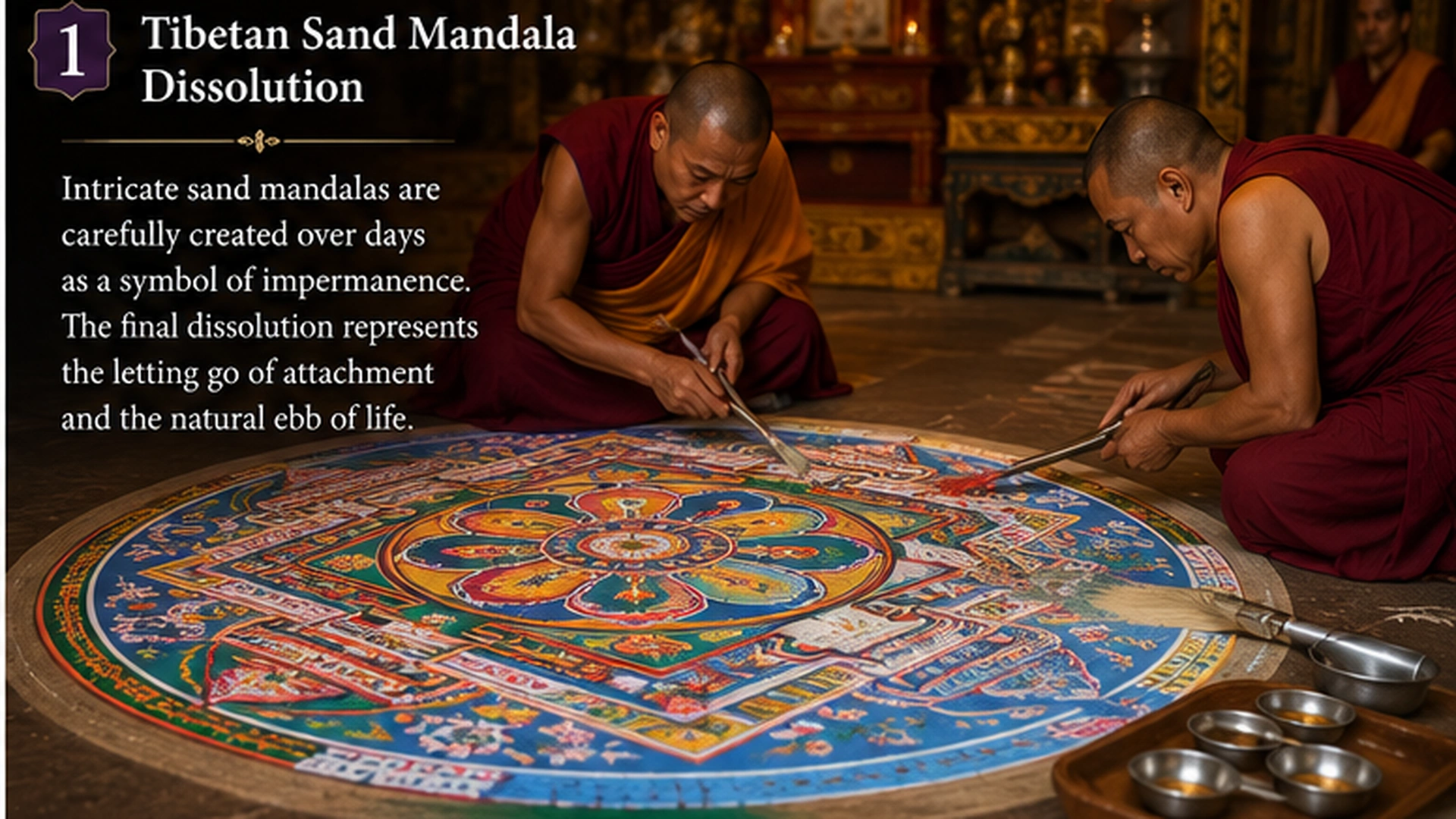
Tibetan Buddhist sand mandalas are carefully constructed sacred diagrams used within specific religious practices. Monks may spend days placing colored sand in precise patterns. At the conclusion, the mandala is swept away and the sand may be dispersed, demonstrating the impermanence of conditioned existence.[3][4]
The destruction is not a casual act of anger toward beauty. Its meaning depends on the discipline, teachings, consecration, and authorized ritual sequence that came before it. The Smithsonian describes the sweeping up of sand as a sign that nothing constructed lasts forever.[3]
Modern wellness culture sometimes copies this idea by making and destroying artwork. A person can create a temporary drawing as a personal exercise, but should not call it a Tibetan mandala or imitate monastic ritual unless properly taught. The responsible lesson is impermanence, not appropriation.
Jewish Kriah and Shiva: Making Rupture Visible
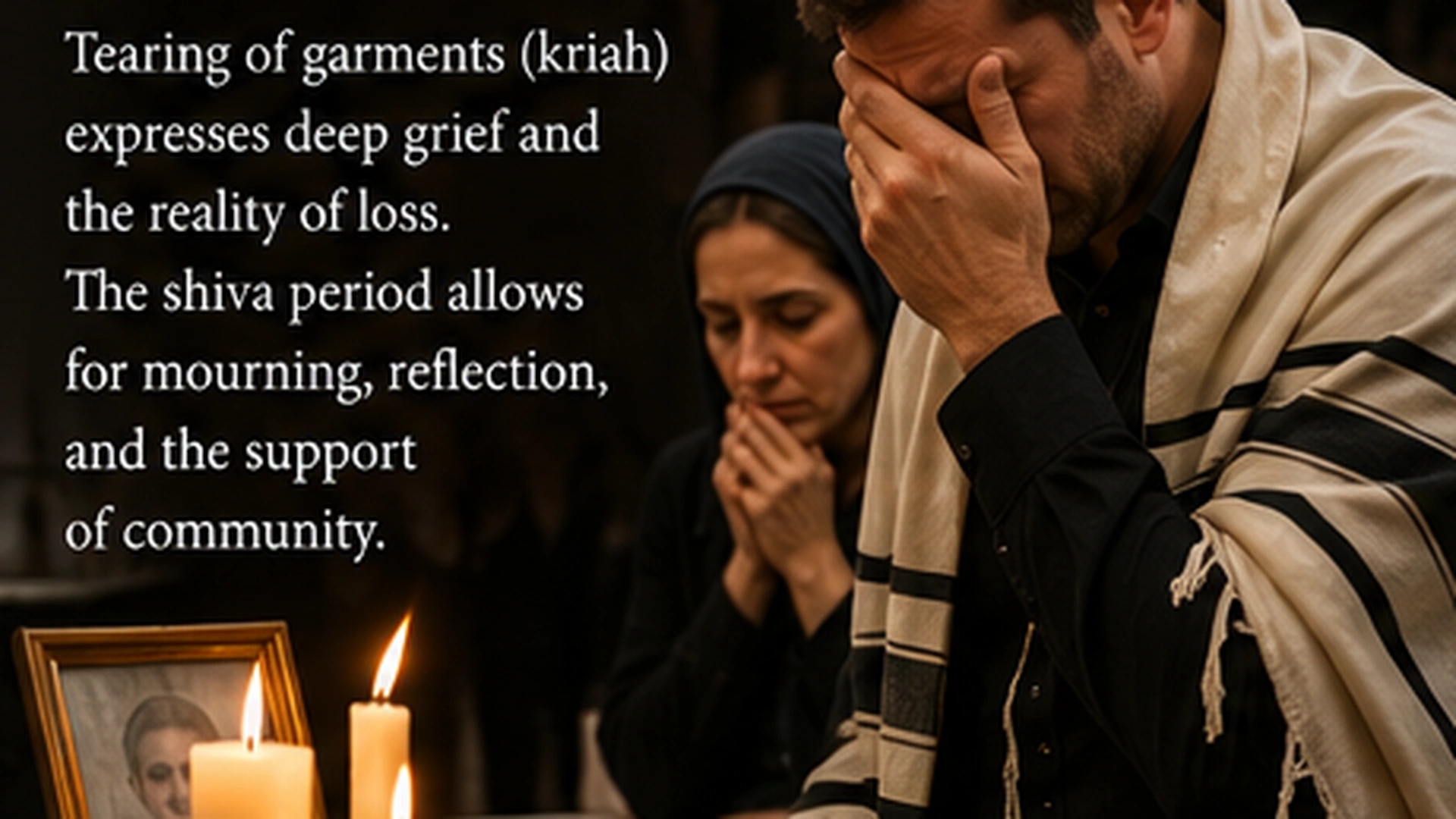
In Jewish mourning, kriah means tearing a garment or a black ribbon after the death of a close relative. The visible tear expresses the rupture caused by death. It is not a generic emotional-release technique; it belongs to a larger body of Jewish mourning law and custom.[5]
Shiva is an intensive mourning period, generally seven days, during which mourners receive visitors, step back from ordinary work, and observe customs that vary among communities and families. Low seating, covered mirrors, prayer, food brought by others, and the presence of visitors help create protected time for grief.[6]
Kriah does not demand that the mourner “move on” quickly. The torn garment makes loss public, while shiva allows community members to enter the mourner’s altered world. The ritual sequence recognizes that grief changes over time and that ordinary responsibilities return gradually.
Hindu Ash Collection and Immersion
Hindu death rites vary by region, family, caste, sect, and local law. In many traditions, cremated remains are gathered in a rite known as asthi-sanchayana and later immersed in a river, sea, or other designated body of water. Historical gazetteer records describe the collection of bones and ashes and their immersion in sacred waters.[7]
The ritual cannot be reduced to “throwing away the past.” It takes place within Hindu understandings of death, the body, ancestors, duty, and transition. The action may help relatives complete a responsibility while locating the deceased within a larger sacred order.
Environmental and legal requirements matter. Families may use designated immersion facilities or follow local rules intended to protect rivers. Outsiders should not imitate ash immersion with objects, chemicals, photographs, or non-biodegradable materials. A symbolic water ritual should never pollute a public waterway.
Japanese Obon and Toro Nagashi
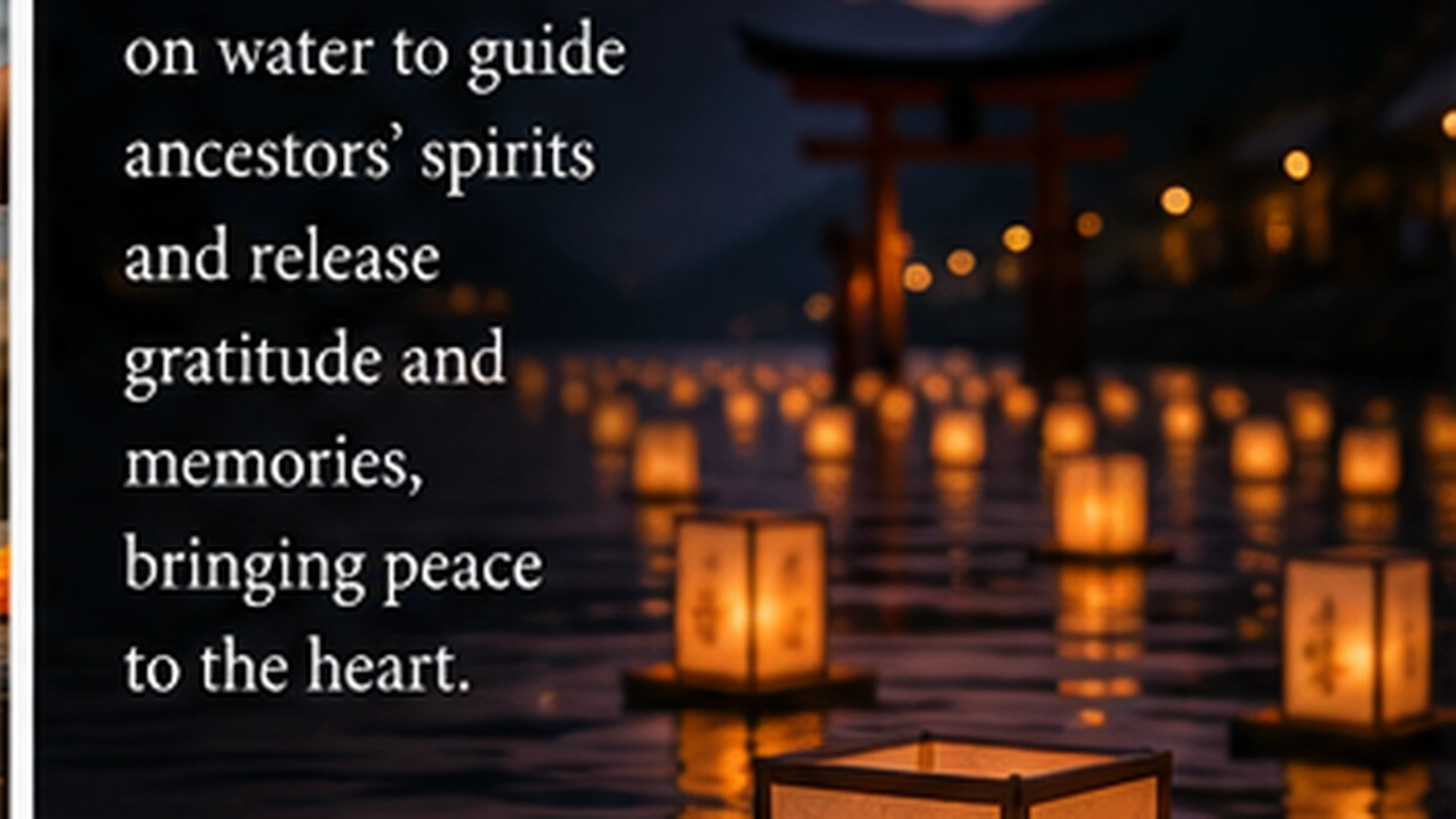
Obon is a Japanese period of remembrance in which ancestral spirits are welcomed and later sent onward. Practices differ by region. In some communities, toro nagashi involves floating paper lanterns on rivers or the sea near the end of the observance.[8][9]
The floating light may express farewell, guidance, memory, and peace. Government of Japan descriptions connect lantern floating with sending ancestral spirits back to the other world, while Hiroshima’s ceremony also carries messages of peace and remembrance for those killed by the atomic bombing.[9][10]
The ritual demonstrates that farewell and continuing memory can coexist. The lantern moves away, but the community gathers precisely because the dead remain meaningful. This is different from a commercial “release lantern” event. Open-flame lanterns can cause fires and pollution, so only authorized ceremonies with environmental safeguards should be used.
Northern Sotho Bereavement Cleansing and Renewal
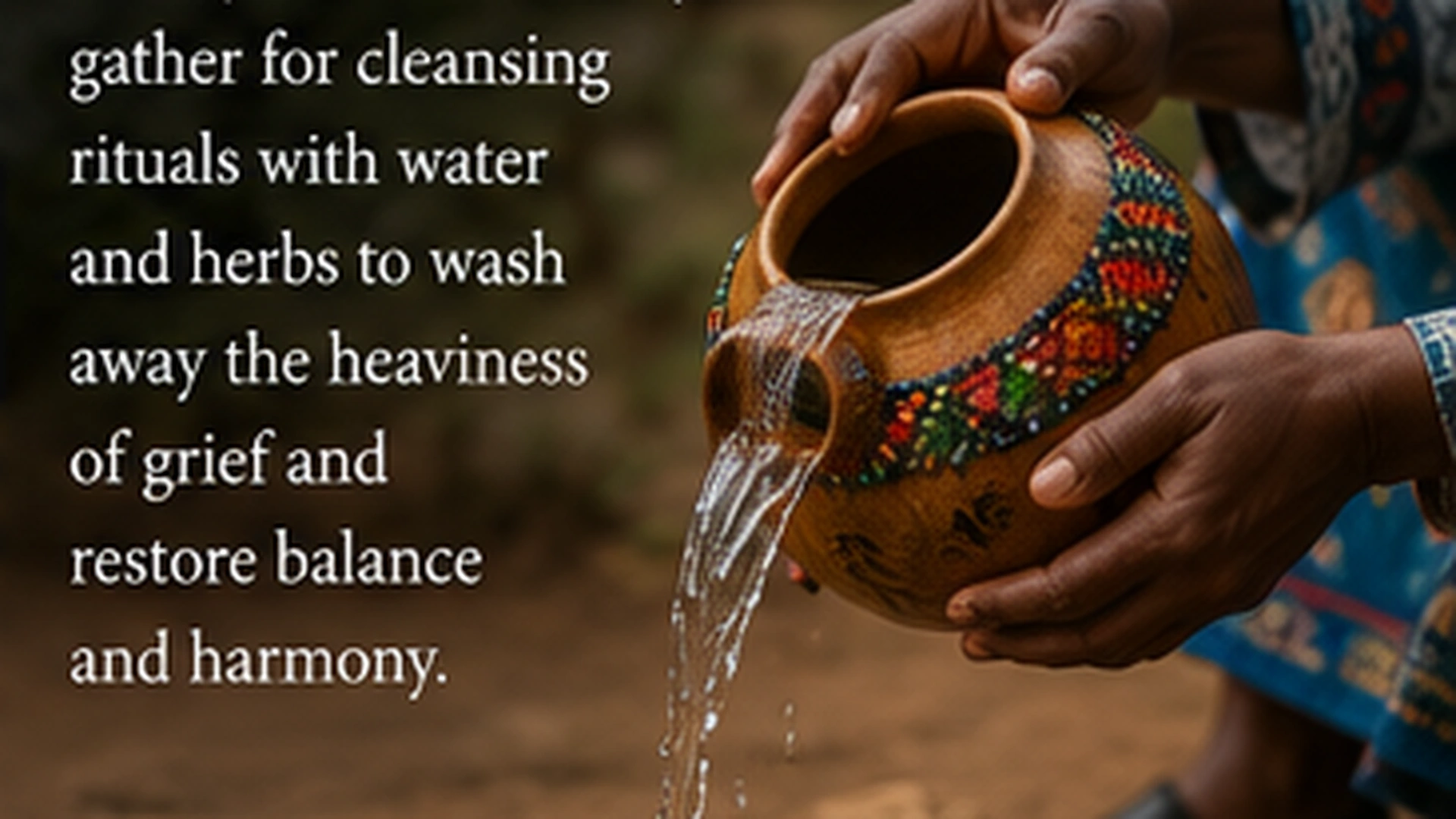
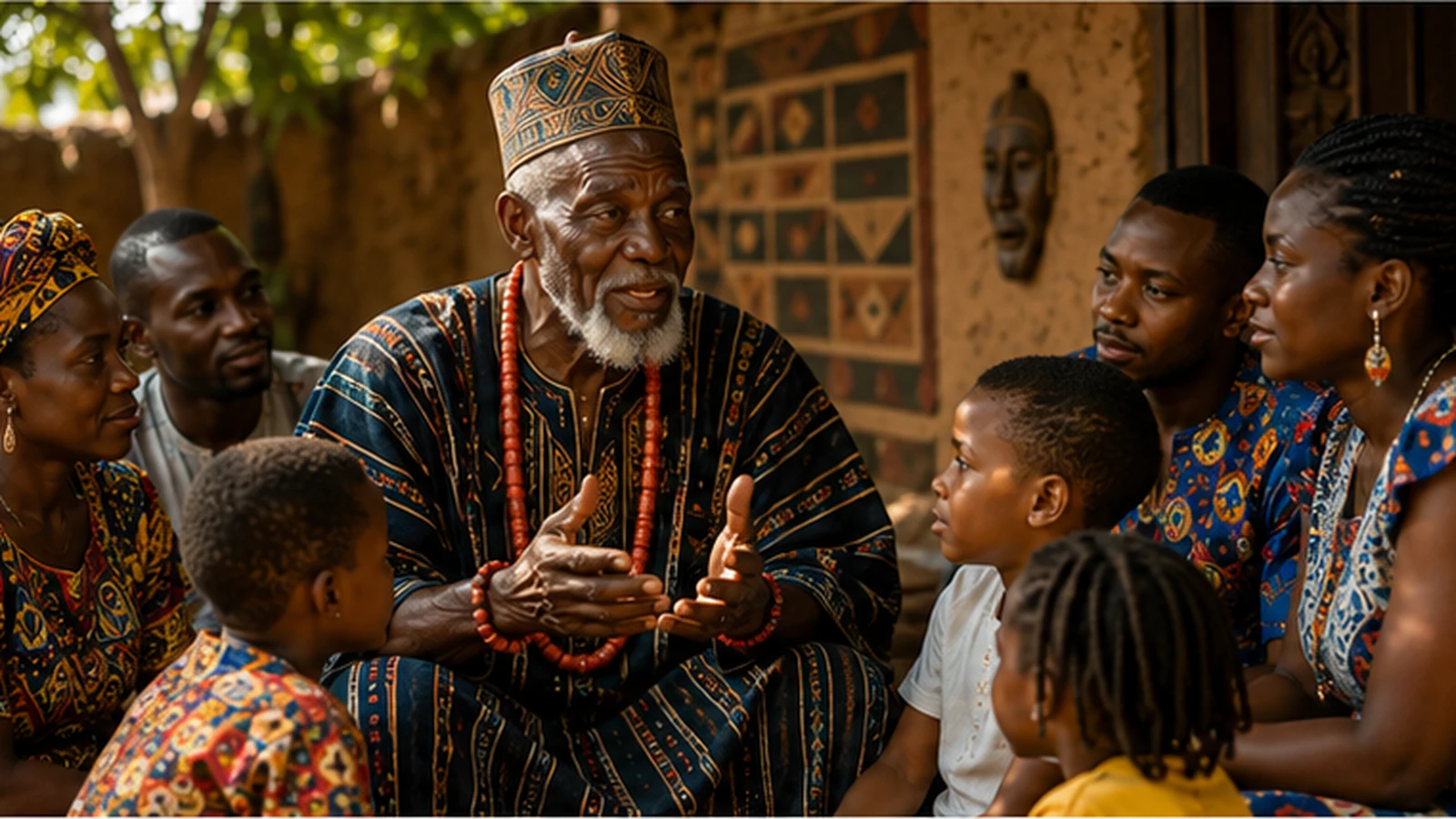
Research with Northern Sotho participants in South Africa documents bereavement rituals including a cleansing ceremony known as go-ntšha setšhila, ancestor-reverence practices, and rituals concerned with the deceased and the family.[14]
Participants associated ritual performance with psychosocial benefits and with preventing culturally understood bereavement illness. These findings should be reported as the experiences of specific Northern Sotho participants, not as a single African practice or scientific proof of supernatural causation.[14]
Cleansing after mourning may mark renewed participation in ordinary social life. Its force comes from kinship, language, community authority, and shared ideas about death. It should not be recreated as a generic “African cleansing bath,” especially where knowledge is private or guided by elders.
Relationship Endings, Divorce, and Estrangement
Breakups and divorce can produce grief even when separation is necessary. A ritual may mark the end of shared routines, legal status, housing, sexual intimacy, friendship networks, or imagined futures. It can also help distinguish emotional closure from practical closure.
Practical closure may include returning keys, changing passwords, updating beneficiaries, separating finances, collecting documents, creating a parenting plan, or arranging safe communication. A spiritual ritual cannot replace legal advice, domestic-violence planning, custody procedures, or medical care.
Consent and safety are essential. Do not invite an abusive former partner to a joint closure ceremony. Do not burn possessions in a shared building, trespass to return objects, publish private messages, or use a ritual to pressure someone into reconciliation. No person owes another a final conversation if contact is unsafe.
Research on expressive writing after marital separation shows that writing is not universally helpful. In one study, people who were highly engaged in searching for meaning experienced worse outcomes in expressive-writing conditions than in a control condition.[15] A ritual that increases rumination should be changed or stopped.
A Safe Secular Letting-Go Ritual
A person who does not belong to a particular tradition can create a modern ritual without claiming ancient authority. The goal is not to force a feeling. It is to acknowledge the ending and complete one responsible action.
1. Name what has changed. Write one factual sentence: “This relationship has ended,” “I am leaving this role,” or “This home is no longer mine.”
2. Choose what will be kept. Select a small number of objects, memories, or lessons that remain meaningful.
3. Choose what will change status. Return, archive, donate, recycle, or discard belongings using safe and legal methods.
4. State a boundary. Decide what contact, access, or behavior is no longer acceptable.
5. Acknowledge grief. Say what is lost without arguing with the feeling.
6. Name the next support. Schedule a call, counseling appointment, legal consultation, meal, walk, or community visit.
7. Complete one practical step. Change a password, move a box, send a necessary administrative message, or update a calendar.
8. Close gently. Wash the table, open a window, drink water, or step outside. Avoid dramatic acts that create danger or regret.
Common Misunderstandings
“Closure Should Happen Once”
A ritual can mark a moment, but grief and attachment often change in waves. Anniversaries, new relationships, places, and family events may reopen feelings without meaning that the ritual failed.
“Letting Go Requires Destroying Everything”
Destruction is only one symbolic language and is often unnecessary. Archiving, donating, returning, transforming, or keeping selected objects may be safer and more honest.
“A Traditional Ritual Works for Everyone”
Cultural rituals can be supportive, but people within the same community vary. Some observe every practice, some adapt it, and some do not participate.
“Memories Prevent Healing”
Memories and continuing bonds may be integrated into life. The relevant question is whether the bond offers meaning and connection or keeps the person trapped in distress.
“A Ritual Can Replace Professional Help”
Ritual may support coping, but it does not replace treatment for prolonged grief, depression, trauma, addiction, domestic violence, or suicidal thoughts.
When to Seek Additional Support
Seek support when grief or separation distress remains overwhelming, daily functioning is seriously impaired, sleep or eating is persistently disrupted, or fear leads to compulsive rituals. Help may come from a licensed mental-health professional, physician, grief counselor, religious leader, elder, support group, legal adviser, or domestic-violence service.
Urgent help is needed when there is danger of self-harm, harm from another person, stalking, threats, or inability to remain safe. A ritual should never delay emergency assistance.
Different Kinds of Separation Need Different Rituals
A ritual for bereavement should not be treated as identical to a ritual for divorce, migration, retirement, or recovery from addiction. All involve change, but the relationship to the past is different. Death makes physical reunion impossible. A breakup may require firm boundaries because contact remains possible. Migration can combine chosen opportunity with homesickness and family separation. Retirement may involve relief, loss of status, and uncertainty about daily purpose.
The first step is therefore to identify the kind of ending. Is the loss final, temporary, ambiguous, legal, physical, social, or symbolic? Ambiguous separation can be especially difficult because the person, place, or role is absent in one sense and present in another. Examples include estrangement, missing persons, dementia, uncertain immigration status, or a relationship that repeatedly ends and restarts.
A clear ritual does not solve ambiguity, but it can define what is true today. A family may say, “We do not know what will happen, but we will gather each month.” A separated parent may create a consistent departure and return routine for a child. A migrant may keep a weekly call while also establishing a new household practice. The ritual holds two realities without pretending certainty.
Bereavement
Bereavement rituals often involve the body, burial or cremation, prayer, food, visitors, clothing, memorial time, and the social status of mourners. These practices should be followed according to the family’s religion, law, and community guidance. A private personal ritual can supplement them but should not replace required funeral or public-health procedures.
Breakup or Divorce
Relationship-ending rituals are most useful when they protect consent and practical independence. Separate property first, confirm housing and financial arrangements, and create communication boundaries. The symbolic act can follow: storing photographs, returning a key, changing a shared playlist, or eating a first meal in the reorganized space.
Leaving a Place
Leaving a home, country, school, or workplace can be marked by walking through the space one final time, photographing what is permitted, thanking people, recording practical knowledge, or carrying one authorized object. Do not remove heritage items, workplace property, plants, soil, or natural materials where law or ecological protection forbids it.
Identity and Role Change
Recovery, retirement, graduation, parenthood, religious conversion, and the end of caregiving can require release from an old identity. The ritual should honor skills and relationships developed in the role while making room for a new routine. Giving away a uniform, documenting lessons, or receiving words from colleagues can make transition visible.
Thresholds, Containers, Water, and Other Symbols
Letting-go rituals often use ordinary materials because materials can hold a decision. A doorway can mark departure. A closed box can change an object from daily presence to archive. Water can carry, cleanse, reflect, or separate. A knot can represent attachment, while untying may represent a changed obligation. These meanings are possibilities, not universal definitions.
| Material or action | Possible function | Responsible use |
|---|---|---|
| Doorway or path | Marking departure and entry into a new phase | Use a real transition point without claiming an ancient source |
| Box, cloth, or envelope | Changing an object from active use to memory or storage | Protect privacy and legal ownership |
| Water | Farewell, cleansing, continuity, return, or reflection | Use a bowl at home; never pollute rivers or seas |
| Tearing or cutting paper | Making rupture physically visible | Do not imitate kriah or another sacred practice without context |
| Light | Memory, guidance, presence, or hope | Prefer electric light where flame is unsafe |
| Food | Community support, continuity, hospitality, return to daily life | Respect dietary and religious rules |
| Silence, music, or spoken words | Witnessing grief and setting intention | Avoid recording private ceremonies without consent |
A symbol should serve the situation rather than dominate it. If tearing a photograph creates panic or regret, do not do it. If a box becomes a way to avoid every decision indefinitely, choose a review date. If water is associated with trauma, select another material. A personal ritual is successful when it is emotionally tolerable, safe, and connected to reality.
Community Witness and the Right to Grieve
Loss is not only private. Communities decide which separations are publicly recognized and which are ignored. Death usually brings established condolences, but infertility, miscarriage, pet loss, job loss, migration, estrangement, or the end of a relationship may receive little social support. This is sometimes described as disenfranchised grief: grief that is not fully acknowledged or socially supported.
A small ritual can create witness where formal recognition is absent. Trusted people may gather for a meal, listen without giving advice, help pack belongings, accompany someone to an appointment, or remember a date. The witness does not need to approve every past decision. Their role is to recognize that a transition has occurred.
Privacy remains important. A person should not be pressured to perform emotion in front of family, share the details of a breakup, display remains, or permit photographs. Community support becomes harmful when it turns into gossip, blame, forced reconciliation, financial demands, or exposure of confidential information.
For children, rituals should use clear language and developmentally appropriate choices. Adults should not tell a child that a dangerous caregiver will return if the child prays correctly, or make the child responsible for adult reconciliation. A child may choose a drawing, memory object, goodbye routine, or predictable contact schedule with safe adults.
Emotional Renewal Is Usually a Process
The word renewal can sound like a sudden return to happiness. In practice, renewal may first appear as sleep, appetite, concentration, safety, or the ability to plan one week ahead. It may include anger, relief, affection, regret, and hope at the same time.
Ritual can establish a date, but emotion may not obey the calendar. A person can feel calm during the ceremony and distressed afterward. Another may feel little at the time and grieve months later. Neither response proves failure. The ritual is one event within a longer adjustment process.
Repeating a ritual can be appropriate when repetition is part of the tradition or provides meaningful remembrance. It becomes concerning when a person believes disaster will occur unless it is repeated perfectly, spends unaffordable amounts on repeated cleansing, or cannot complete ordinary tasks because of ritual demands.
Renewal also requires material conditions. Rest, housing, income, childcare, legal safety, medical treatment, and community belonging shape recovery. Spiritual language should not hide these needs. Telling someone to release resentment is not a substitute for stopping abuse, paying wages, returning property, or enforcing a court order.
How to Evaluate a Letting-Go Ritual
1. Cultural accuracy: Is the practice yours, publicly taught, or guided by an authorized person?
2. Purpose: Does it mark reality, memory, boundary, transition, or support—or does it promise impossible control?
3. Consent: Are all participants freely involved, and is anyone being pressured to forgive, reconcile, disclose, or perform?
4. Safety: Are fire, smoke, water, objects, travel, and physical actions safe and lawful?
5. Privacy: Does the ritual protect messages, photographs, names, health information, and family history?
6. Environmental responsibility: Will any material be released, buried, burned, or left behind?
7. Practical connection: What real action follows the symbolic one?
8. Emotional effect: Does the ritual create tolerable structure, or does it intensify panic, rumination, shame, or compulsion?
A ritual does not have to be beautiful, public, or dramatic. A quiet administrative act completed with attention can be more meaningful than an elaborate ceremony. Signing a final document, removing an emergency contact, handing over a key, or attending the first support-group meeting can become the true threshold.
Key Takeaways
Letting-go rituals mark a transition; they do not guarantee instant emotional closure.
Closure can include memory, continuing bonds, and transformed identity rather than complete forgetting.
Tibetan sand-mandala dissolution, Jewish kriah, Hindu ash immersion, Japanese lantern floating, and Northern Sotho bereavement practices belong to different cultural systems.
Rituals may provide structure, social recognition, meaning, and a sense of control, but research findings are mixed.
Modern personal rituals should be safe, honest about their origins, environmentally responsible, and connected to practical action.
Professional, legal, or emergency support is necessary when loss involves severe impairment, abuse, danger, or prolonged distress.
People Also Ask
What is a letting-go ritual?
It is a structured action used to acknowledge an ending, transform a relationship to memory, establish a boundary, or mark movement into a new phase.
Do closure rituals really work?
They may help some people create order, meaning, and a sense of control. Evidence does not show that every ritual helps everyone or produces instant closure.
Does letting go mean forgetting?
No. Many grief models recognize continuing bonds and transformed relationships with memory. Letting go may mean accepting reality and reducing harmful control by the past.
What does destroying a sand mandala symbolize?
Within Tibetan Buddhist practice, sweeping away a completed sand mandala demonstrates impermanence. It is a specific religious act, not a generic destruction exercise.
What is kriah?
Kriah is the Jewish mourning practice of tearing a garment or ribbon after the death of a close relative, making rupture and grief visible.
Why are ashes immersed in Hindu traditions?
In many Hindu traditions, collected cremated remains are immersed as part of post-funeral duty and the deceased’s transition. Practices vary by region and family.
What is toro nagashi?
Toro nagashi is lantern floating practiced in some Japanese memorial contexts, often connected with Obon and sending ancestral spirits onward.
Can I create my own letting-go ritual?
Yes. Use culturally neutral actions such as sorting objects, stating a boundary, archiving memories, seeking support, and completing one practical step.
Frequently Asked Questions
Should I burn a letter to an ex?
Burning is not necessary and can be unsafe. Shredding, sealing, deleting, archiving, or recycling can mark the same decision without fire risk.
Is it healthy to keep photographs?
It can be. Keep, archive, or remove photographs according to how they affect you. There is no universal rule.
Can a ritual repair a relationship?
A ritual cannot override another person’s consent or repair abuse. Reconciliation requires mutual willingness, accountability, and safety.
What if the ritual makes me feel worse?
Stop or simplify it. Choose grounding and support instead. Some writing and reflection exercises can increase rumination for certain people.
Can I copy a ritual from another religion?
Learn respectfully from authorized sources, but do not claim to perform a sacred rite without belonging, training, or guidance. A neutral personal practice is safer.
How long should closure take?
There is no fixed timetable. Legal, practical, social, and emotional forms of closure may occur at different times.
Conclusion
Separation rituals give shape to experiences that otherwise feel without edges. A torn ribbon, swept mandala, gathered ashes, floating lantern, cleansing ceremony, archived photograph, or spoken boundary can declare that something has changed.
Their deepest value is not the promise of forgetting. It is the possibility of meeting loss honestly, receiving support, protecting what remains meaningful, and making room for the next responsible step. Emotional renewal grows when ritual, culture, memory, safety, and practical life are allowed to work together.
Article Information
- Publisher
- Ancestral Temple
- Editor
- Ancestral Temple
- Last updated
- Jul 30, 2026
- Last reviewed
- Jul 30, 2026
- Content version
- d3753ec859
This educational article should be read as cultural and spiritual information, not as medical, legal, financial, or emergency advice.
Helpful Related Guidance
About the Author
 Ancestral Temple
Spiritual guide and practitioner with decades of experience in ancestral wisdom, rituals, and divine guidance.
Related Posts
View All








Comments
We'd love to hear your thoughts.