
Customer Attraction and Return Rituals: Traditional Beliefs for Business Growth
Pillar Article
Quick Summary
Customer-attraction and return rituals are practices used to open shops, seek prosperity, protect markets, bless trade, welcome buyers, or express gratitude for successful exchange...
Customer-attraction and return rituals are practices used to open shops, seek prosperity, protect markets, bless trade, welcome buyers, or express gratitude for successful exchange. They may involve prayer, amulets, performance, lamps, offerings, symbolic animals, first-sale customs, or a formal commitment to honest business.
The phrase customer attraction ritual is a modern umbrella term. Yoruba market amulets, Hindu Lakshmi Puja, Chinese lion-dance openings, Japanese maneki-neko, Inari devotion, and Islamic teachings about blessed trade are not versions of one spell. They belong to different religions, histories, objects, and communities.
No ritual can ethically or reliably compel another person to enter a shop, spend money, return, leave a positive review, or remain loyal. A responsible ritual may focus the owner, mark a beginning, strengthen hospitality, or express hope. Customer return is earned through value, truth, safety, service, and respect.
Quick Answer
Customer-attraction rituals are symbolic or religious practices associated with shop openings, prosperity, market protection, and welcoming trade. Examples include Yoruba market amulets, Lakshmi Puja in Indian businesses, lion dances at Chinese business openings, Japanese maneki-neko and Inari worship, and Islamic prayers for blessing in honest transactions. They do not guarantee sales or control customers.
What Customer-Attraction and Return Rituals Are
Business rituals often appear at thresholds: the first day of trading, the first customer, the reopening after a holiday, the start of a financial year, or recovery after loss. A threshold is both physical and social. The door opens, inventory becomes available, money changes hands, and the owner becomes accountable to customers, workers, suppliers, neighbors, and law.
Some rituals ask divine powers for prosperity. Others protect traders from envy, conflict, misfortune, or dishonesty. Some create public celebration and attract attention through music and performance. Others are quiet: a merchant prays before opening, cleans the counter, arranges a symbol, or reviews the accounts.
The idea of return needs special care. In a healthy business, customers return because the experience was useful, safe, fair, and respectful. A spiritual practice may remind the owner to welcome people consistently. It should never be framed as binding a customer, overriding consent, or preventing someone from choosing a competitor.
Why Markets and Shops Attract Ritual
Trade is uncertain. Weather, transport, illness, pricing, competition, reputation, law, security, and economic change can affect sales. In many communities, the market is also more than an economic machine. It is a social meeting place where news, relationships, food, status, and conflict circulate.
Because results cannot be controlled completely, ritual gives owners a structured way to begin. It can transform anxiety into preparation: clean the shop, arrange goods, pray, greet the first customer, record the first sale, thank workers, and open the door. The spiritual action and practical action may reinforce each other.
Ritual can also make ethics visible. A shop blessing may include requests for honest earnings, protection of workers, fairness to buyers, and enough profit to support a household. Prosperity is not always imagined as unlimited accumulation; it may mean continuity, food, school fees, reputation, and the ability to help others.
A Cultural Warning: Do Not Build a Universal Sales Spell
Online business-spirituality content often combines cowries, Lakshmi, a Chinese money frog, Qur’anic text, candles, Japanese lucky cats, and generic “African herbs” into one customer-attraction altar. This is not respectful comparison. It turns living religions and historical objects into interchangeable sales props.
A Yoruba amulet made for a market woman is not the same as a maneki-neko placed at a Japanese shop entrance. A lion dance is a professional performance tradition, not a decoration that can be improvised without training. Islamic ideas of baraka in trade emphasize truth and disclosure rather than controlling buyers.
The safest rule is simple: use practices from your own tradition or learn through an authorized community source. If that connection is absent, create a culturally neutral opening routine focused on welcome, cleanliness, fair dealing, and gratitude.
Yoruba Markets, Eshu, and Amulets for Sales
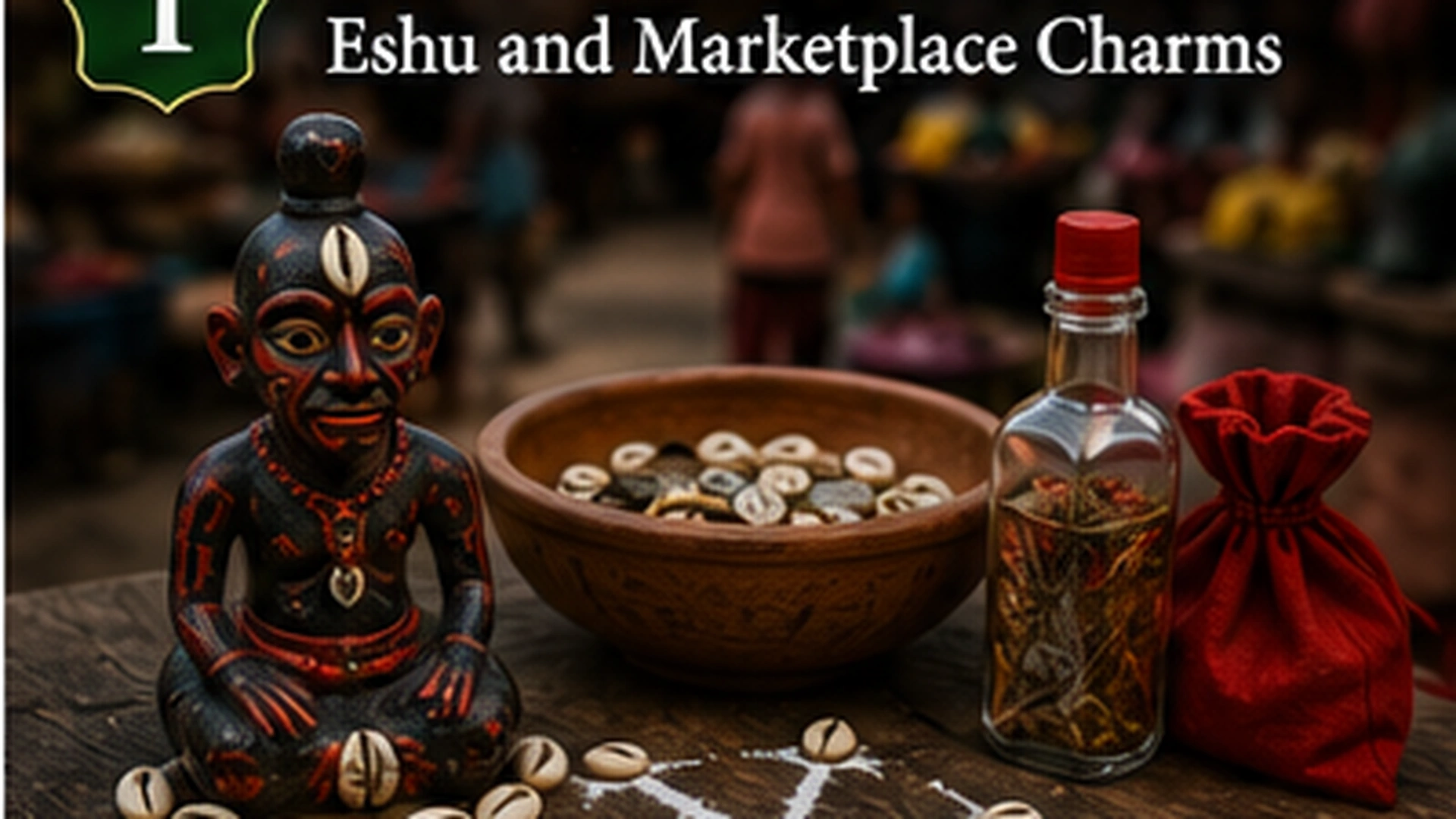
Yoruba marketplaces have long been important spaces of exchange, negotiation, women’s economic activity, communication, and spiritual meaning. Smithsonian records connect Eshu Elegba with the market as a place of change and conflict. One museum figure includes cowrie shells and coins that refer symbolically to Eshu’s marketplace associations.[1]
The Eliot Elisofon Photographic Archives also document a Yoruba leather amulet maker in Ikenne market in 1973. The accompanying field note describes an amulet with cowries intended to give a market woman “many sales.” This is valuable historical evidence that a specific market-sales belief was materialized in an object made by a specialist.[2]
The archive does not give outsiders a ritual recipe, nor does it prove that every Yoruba trader used such an amulet. Yoruba religion and market practice vary by town, lineage, practitioner, period, and personal belief. Cowries may carry economic, aesthetic, divinatory, and sacred meanings that cannot be reduced to “money energy.”
Eshu is especially vulnerable to misrepresentation. He is not simply a devil or a mascot for fast sales. Smithsonian documentation describes Eshu as messenger, revealer of hidden truths, agent of change, and figure connected with the uncertainty of markets.[1] A business owner outside Yoruba tradition should not copy sacred implements or claim Eshu devotion after seeing an image online.
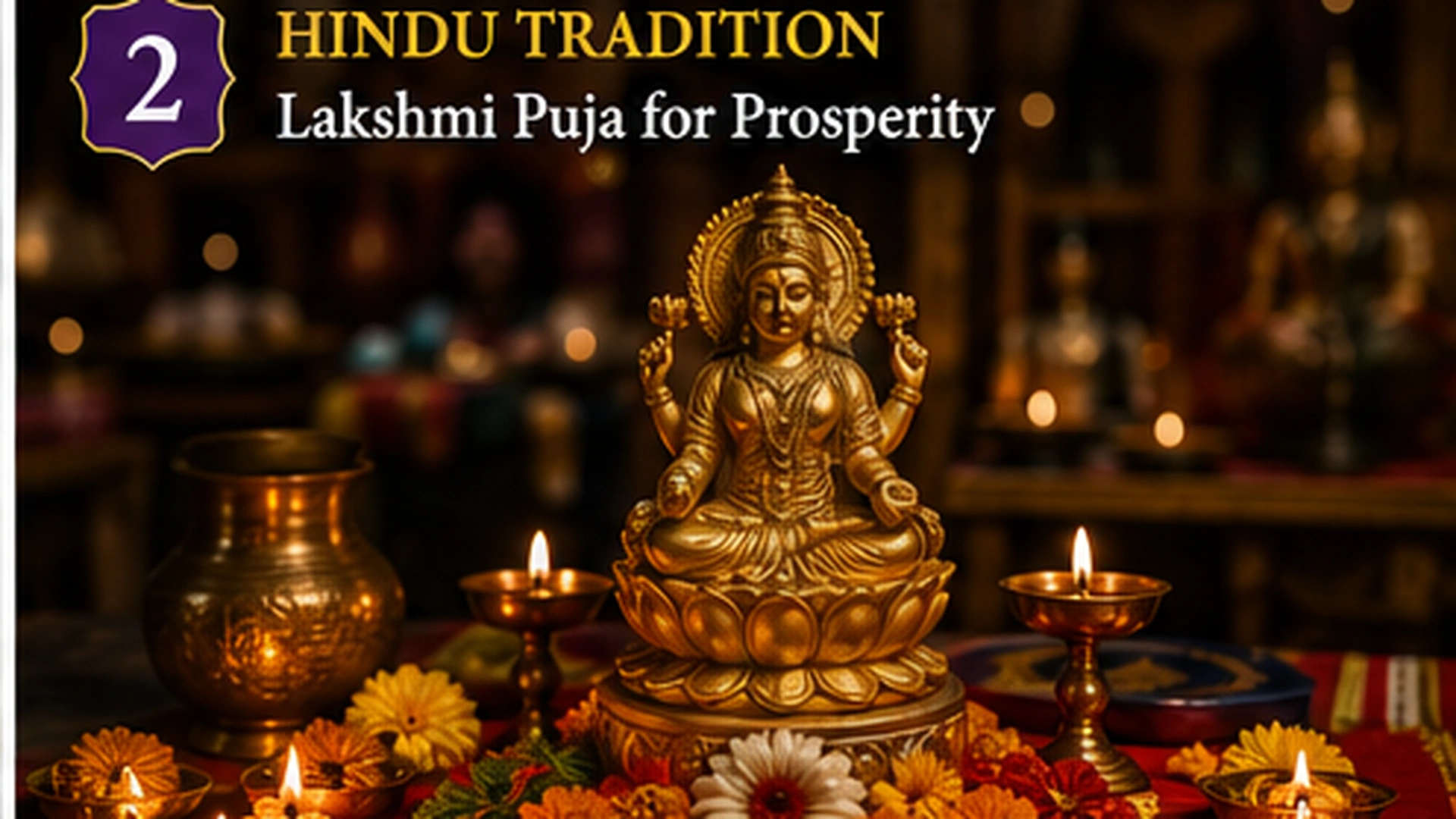
Lakshmi, Ganesha, and Business Prosperity in Hindu Traditions
Lakshmi is widely associated with prosperity, abundance, well-being, and auspiciousness. The Metropolitan Museum of Art describes her as personifying abundance in its many forms, not merely cash.[3] In business settings, Lakshmi Puja may connect financial hopes with household stability, cleanliness, accounting, generosity, and a renewed year.
Maharashtra Tourism explains that Lakshmi Pujan during Diwali is dedicated to the goddess and marks the beginning of a new financial year in some communities.[4] Business families may clean premises, decorate thresholds, light lamps, worship Lakshmi and Ganesha, honor account books, share sweets, and begin new ledgers. Regional and family practice differs.
Ganesha is commonly invoked before new undertakings and is associated with clearing obstacles. In some shops, Lakshmi and Ganesha appear together because prosperity and a well-begun undertaking are understood as connected. This should not be interpreted as a formula in which a lamp and image automatically produce customers.
The ritual meaning can include discipline. A cleaned shop, checked accounts, paid obligations, organized stock, and respectful treatment of staff are practical expressions of readiness. A business that performs Lakshmi Puja while deceiving customers or withholding wages contradicts the ethical meaning many devotees seek.
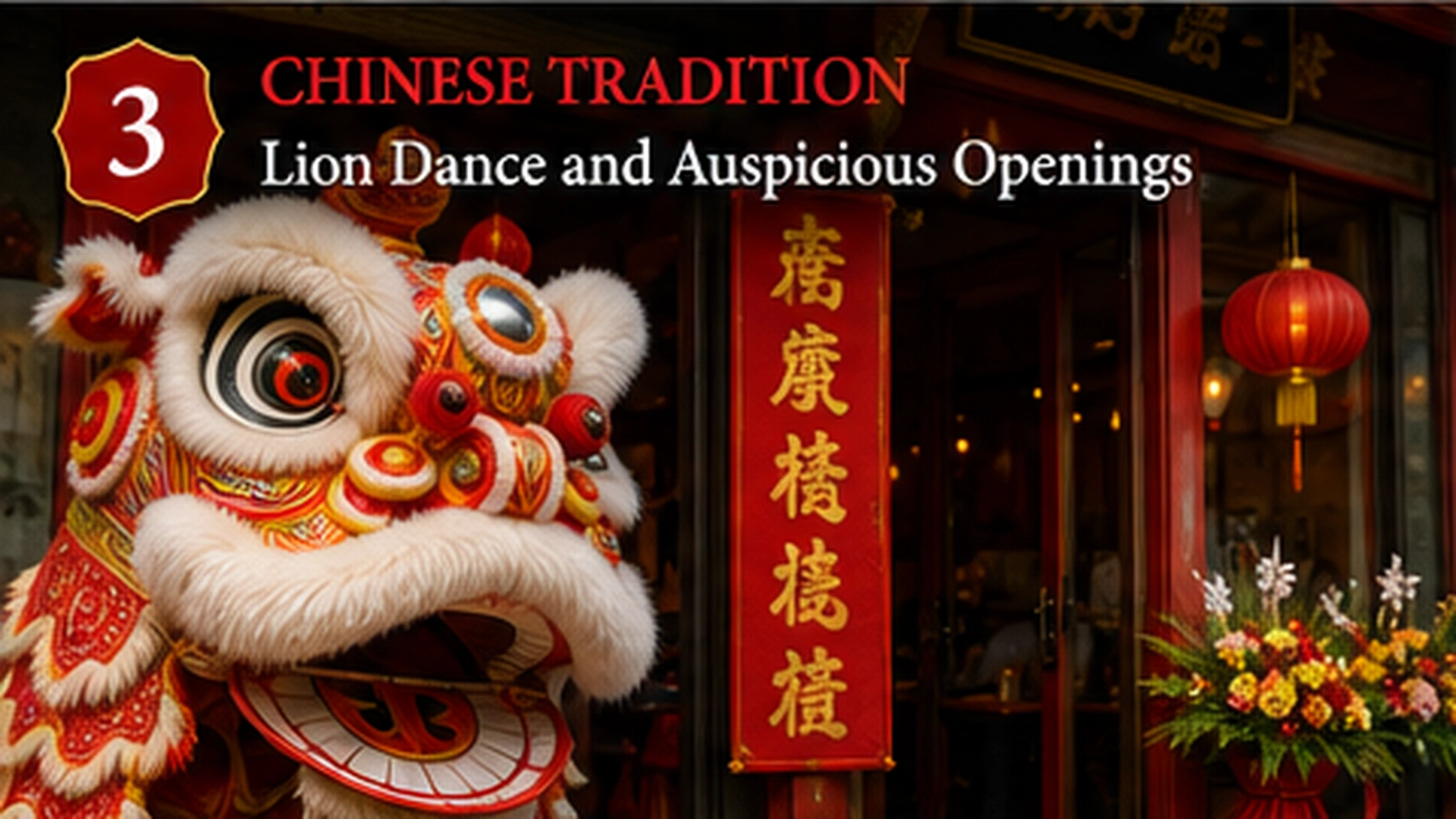
Chinese Lion Dance and Auspicious Business Openings
Lion dance is a Chinese performance tradition combining martial movement, music, costume, discipline, and community celebration. Guangdong sources describe the cai qing, or plucking-the-greens sequence, in which the lion reaches for lettuce and a red envelope, then scatters the greens as a sign of fortune and wealth.[5]
The dance is frequently performed at grand openings and other celebrations. China Daily reporting documents professional troupes performing for business openings, and contemporary Chinese markets may reopen after the Spring Festival with lion dances and drums to mark a prosperous start.[6][7]
The performance attracts attention in a literal sense: drums, color, movement, and gathering create a public event. Its cultural meaning goes beyond marketing. It may ward off harmful influences, awaken vitality, spread auspiciousness, and connect a business with community celebration.
A shop owner should hire trained performers and provide safe space. Pole routines, drums, crowd movement, suspended greens, and firecrackers can create risk. A lion costume should not be treated as a quick DIY customer-attraction prop, and Chinese symbols should not be copied inaccurately onto signage.
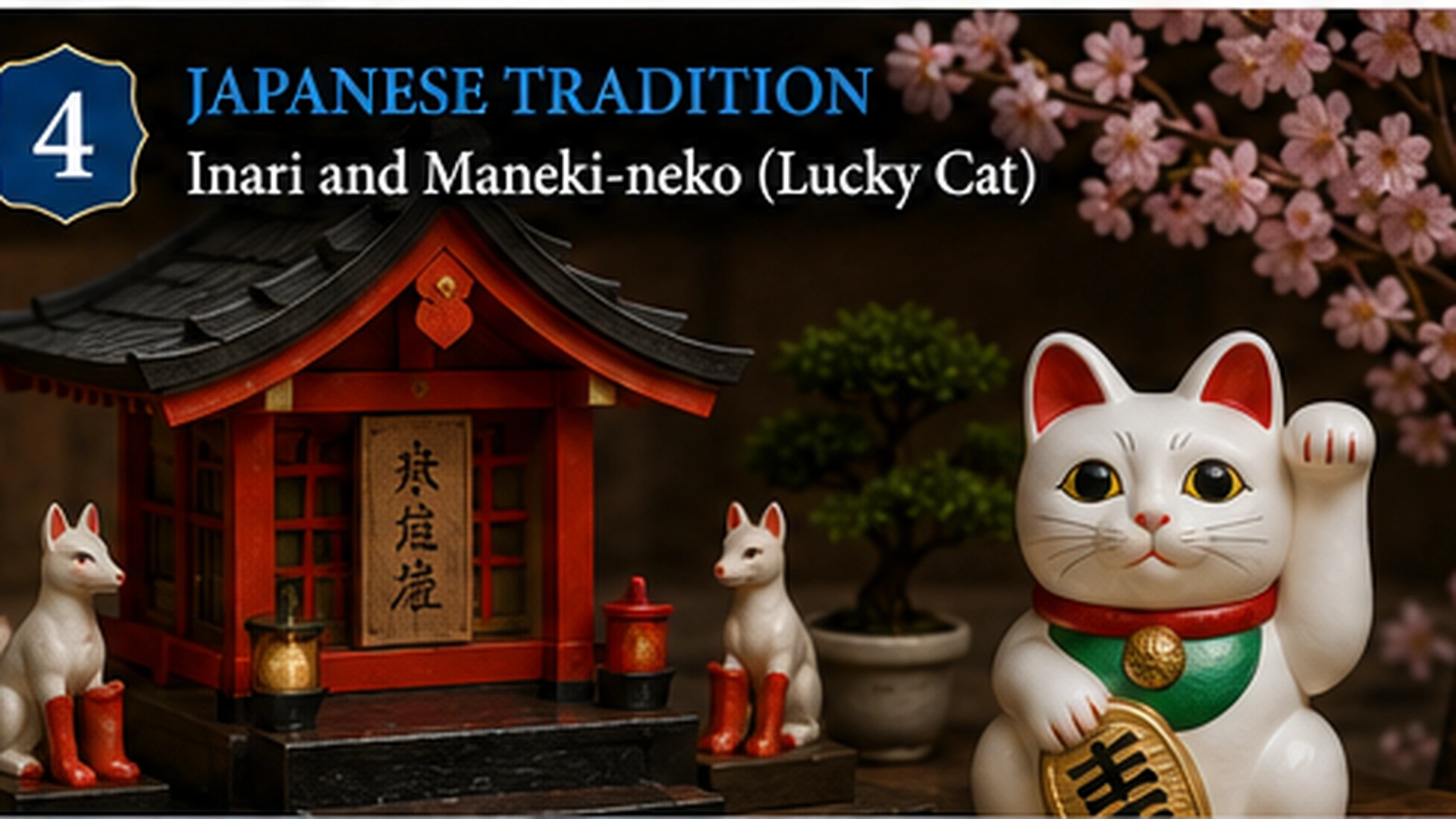
Japanese Inari, Ebisu, and Maneki-neko
Inari and Business Prosperity
Fushimi Inari Taisha enshrines Inari Okami, whose blessings came to be associated with food, household well-being, and business prosperity. Japanese government cultural guidance explains that individuals and companies have donated vermilion torii in gratitude after prayers or fulfilled hopes, helping create the shrine’s famous torii tunnels.[8]
The pattern is not only asking. Gratitude after success is central. A company’s donated torii records an ongoing relationship among prayer, prosperity, memory, and public offering. Visitors should follow shrine etiquette and avoid treating the shrine as a commercial photo set.
Ebisu
Ebisu is associated with fishing, good fortune, and business prosperity. In Iwami kagura, the deity appears as a fisherman and distributes candy to the audience, combining sacred performance, humor, generosity, and hopes for abundance.[9] Different shrines and regions emphasize different stories and forms.
Maneki-neko
The British Museum documents maneki-neko figures displayed in store windows or entrance areas in Japan. A raised left paw is commonly said to attract customers, while a raised right paw is associated with good luck, wealth, or friends, though meanings are not completely standardized.[10][11]
The figure works symbolically and visually. It marks the entrance as welcoming, recognizable, and connected with luck. It does not guarantee spending. The most respectful use is as part of Japanese commercial culture or a clearly acknowledged adaptation, not as a falsely ancient universal money charm.
Islamic Blessing in Trade: Truth, Disclosure, and Fair Dealing
Islamic business teachings place strong emphasis on lawful earnings, truthfulness, generosity, and disclosure. A well-known hadith states that when buyer and seller tell the truth and make matters clear, their transaction is blessed; concealment and lying remove that blessing.[12]
Another hadith warns merchants while making an exception for those who fear God, act rightly, and speak truthfully.[13] This ethical framework challenges the idea that customer attraction is primarily about charms. Blessing is connected with conduct: accurate weights, clear defects, fair terms, no fraud, and no coercion.
A Muslim owner may begin work with prayer, charity, Qur’anic recitation, or a request for baraka according to personal and scholarly guidance. Sacred text should not be printed merely as sales decoration or used to claim guaranteed profit. Practices vary, and detailed religious advice should come from a trusted scholar.
Customer return is especially compatible with this ethical approach. A buyer who was told the truth, charged fairly, and treated gently has a reason to return. The repeat visit is not compelled; it grows from trust.
Opening-Day and First-Customer Beliefs
Many owners remember the first customer, first payment, or first full day of trade as a sign of how the business has begun. Customs may include preserving the first receipt, placing the first payment separately, giving the first customer a small gift, sharing food, or recording a prayer in the ledger. These practices are highly local and often family-specific.
The first-customer idea can be healthy when it creates generosity and attention. It becomes harmful when the owner pressures the person to buy, refuses change, treats a refusal as a bad omen, or blames an innocent customer for later losses.
A safe first-customer ritual is to offer the same welcome and truthful information that every customer should receive. Record the sale accurately, thank the customer, and review whether the shop was ready. The symbolic first sale then establishes a service standard rather than superstition about a stranger.
What Does “Customer Return” Mean Spiritually?
Return can symbolize continuity, relationship, gratitude, and reputation. A returning customer confirms that the first exchange was not merely accidental. In a small market, repeat trade can also strengthen social bonds and mutual knowledge.
Traditional prosperity beliefs often place the business inside a moral community. The shop survives because customers trust it, suppliers extend cooperation, workers sustain it, and neighbors accept its presence. A return ritual can therefore focus on keeping the relationship worthy of return.
Examples include beginning the day with a promise to disclose defects, keeping a clean entrance, setting aside a portion for charity, greeting customers by name when appropriate, reviewing complaints, or thanking the household and workers after closing. These actions can be ritualized without claiming supernatural control.
Do Customer-Attraction Rituals Work?
Historical sources can show that people used amulets, prayers, performances, and symbols in business. They do not prove that a ritual directly caused customers to enter or return. A lion dance may create publicity; a clean and decorated shop may appear inviting; a prayer may steady the owner; a familiar symbol may communicate cultural belonging. Those are plausible social and psychological pathways.
A ritual becomes useful when it improves readiness, hospitality, confidence, ethical reflection, or community connection. It becomes risky when it replaces product quality, licensing, hygiene, pricing, accounting, worker safety, or customer service.
The U.S. Small Business Administration describes service standards, positive interactions, and handling challenges as practical strategies that encourage repeat business and referrals.[14] This is consistent with the ethical lesson found across many traditions: prosperity is sustained through relationships, not merely requested through symbols.
Manipulation Is Not Customer Attraction
Modern businesses can manipulate customers through false scarcity, hidden fees, fake reviews, difficult cancellation, or confusing interfaces. The Federal Trade Commission describes these practices as dark patterns that trick or trap consumers.[15]
A ritual or spiritual claim can become another manipulative tool. Examples include telling customers that refusing a purchase will bring bad luck, pretending a product has guaranteed spiritual power, inventing testimonials, or claiming an item was blessed by a community that never authorized it.
Truth-in-advertising standards require claims to be truthful, not deceptive or unfair, and supported by evidence.[16] Cultural objects and spiritual services deserve the same honesty. A seller should explain what an item is, where it came from, whether it is a replica, who made it, and what claims are belief rather than scientifically demonstrated effect.
Fake reviews are also incompatible with ethical customer return. A returning customer should come back because the experience was good, not because a false crowd of praise hid real problems.
A Safe Nonreligious Shop-Opening Ritual
An owner who does not belong to one of the traditions above can create a modern opening practice without borrowing sacred objects.
1. Clean and inspect the threshold. Confirm lighting, accessibility, safety, signage, and opening hours.
2. Name the business purpose. Write one sentence describing whom the business serves and what value it provides.
3. Review the promise to customers. Confirm prices, returns, guarantees, privacy terms, and contact methods.
4. Thank the people who made opening possible. Include workers, family, suppliers, builders, mentors, and neighbors.
5. Welcome the first visitor without pressure. Offer clear information and allow the person to choose freely.
6. Record the first transaction accurately. Do not treat cash as sacred in a way that prevents correct accounting.
7. Close with a review. Note what worked, what confused customers, and what must be fixed before the next day.
This is a contemporary business ritual, not an ancient tradition. Its meaning lies in attention, responsibility, gratitude, and repeatable service.
A Customer-Return Ritual Based on Service
1. Review one completed sale. Was the product or service delivered as promised?
2. Check the customer’s exit. Was payment clear, packaging safe, and the receipt correct?
3. Resolve one problem. Contact an affected customer where consent and policy allow, or correct the process that caused the issue.
4. Invite honest feedback. Do not reward only positive reviews or pressure customers to remove criticism.
5. Prepare for the next visit. Restock, clean, update records, and make returns or cancellations straightforward.
6. Express gratitude without surveillance. Thank customers without overusing personal data or unwanted messages.
7. Measure reality. Track repeat visits, complaints, refunds, and referrals rather than relying only on signs or omens.
The ritual should make the business more trustworthy, not more controlling. A customer has the right not to return.
Symbols Commonly Used Around Business Prosperity
| Symbol or action | Possible meaning | Cultural caution |
|---|---|---|
| Cowries and coins | Exchange, wealth, market identity, sacred power | Yoruba meanings are specific; do not use sacred objects generically |
| Lamp or light | Auspicious beginning, clarity, welcome | Fire safety and tradition-specific use matter |
| Ledger or account book | Order, accountability, financial renewal | Do not confuse ritual respect with inaccurate accounting |
| Lion dance | Auspicious opening, protection, vitality, public celebration | Hire trained performers and protect crowd safety |
| Torii or shrine prayer | Gratitude, prosperity, guidance, relationship with deity | Shrines are living religious spaces, not marketing scenery |
| Maneki-neko | Welcoming customers, good luck, wealth or friends | Paw meanings vary and the figure belongs to Japanese commercial culture |
| First sale | Beginning, hope, continuity | Never pressure or blame the first customer |
| Charity or shared food | Gratitude, redistribution, community welfare | Follow religious rules, hygiene, and consent |
A symbol is not a substitute for a business model. The most durable prosperity symbols are supported by practices that customers can actually experience: accurate information, clean premises, reliable delivery, fair resolution, and respect.
Scams, Unsafe Rituals, and Cultural Appropriation
Guaranteed-customer claims are a warning sign. No one can promise a specific number of buyers through ritual.
Avoid escalating payments for cleansing. Fear-based claims that rivals have spiritually blocked the shop can become financial exploitation.
Do not harm competitors or customers. No ritual justifies stalking, poisoning, threats, property damage, or coercion.
Do not burn unknown substances in shops. Smoke, herbs, oils, charcoal, and candles can create fire, respiratory, and food-safety risks.
Protect sacred texts and objects. Do not print invented prayers, copy restricted implements, or sell replicas as authentic.
Respect workers. A prosperity ritual cannot excuse unpaid labor, unsafe conditions, harassment, or discrimination.
Follow consumer law. Pricing, returns, privacy, reviews, subscriptions, and claims must remain transparent.
Markets, Women Traders, and Community Reputation
In many African and global market systems, trade is inseparable from social reputation. The seller may be known through family, neighborhood, language, product knowledge, credit relationships, and participation in community events. A customer returns not only to an object on a shelf but to a person whose conduct has become predictable.
Smithsonian photographs of Yoruba women carrying goods to local markets show the market as a mobile and gendered economic world rather than a single building.[17] Women traders transported ingredients, negotiated prices, maintained customer relationships, and transmitted practical knowledge. Spiritual objects connected with trade therefore existed alongside physical labor, transport, bargaining, and social skill.
This context changes how a “sales amulet” should be understood. The object may express hope and protection, but the trader still wakes early, secures goods, carries stock, manages credit, and speaks persuasively. Treating the amulet as the only cause of success erases women’s work.
Community reputation can also limit exploitation. A trader who cheats repeatedly may lose trust even if the shop displays every prosperity symbol. A trader who helps customers compare quality, extends reasonable flexibility, and resolves problems may build a returning clientele through remembered fairness.
Threshold, Cleanliness, Scent, and Welcome
The entrance of a business is a powerful symbolic and practical location. It is where private preparation becomes public service. Many shop-opening customs emphasize sweeping, washing, decoration, light, plants, banners, or a welcoming object near the door.
Cleanliness can carry spiritual meaning, but it also affects health and confidence. Floors, food surfaces, toilets, ventilation, lighting, and waste control tell customers whether the owner pays attention. A ritual sweeping that leaves hazards or contamination behind has failed its practical purpose.
Scent is sometimes used to create atmosphere, yet incense, perfume, essential oils, or herbs can trigger asthma, allergies, migraines, or discomfort. Businesses serving food, children, older adults, or patients should be especially cautious. A customer should not have to tolerate smoke in order to respect a tradition.
Welcome also includes access. An inviting threshold should consider ramps, clear aisles, seating, readable information, language needs, and respectful treatment of people who enter without buying. The strongest return ritual is a doorway that remains physically and socially open.
Business Growth, Household Welfare, and Redistribution
Prosperity is often described as personal wealth, but traditional business beliefs frequently connect growth with household survival and social obligation. Profit pays workers, supports children, maintains tools, funds ceremonies, assists relatives, and enables charity. A business may be considered blessed because it sustains relationships over time.
This does not make every family demand legitimate. Owners still need savings, taxes, wages, inventory, and boundaries. A ritual for abundance should not pressure the owner to give away operating capital or hide financial problems. Generosity is most sustainable when accounts are accurate and obligations are clear.
Redistribution can be included in a modern prosperity practice: set aside an affordable charitable amount, provide fair staff meals, support an apprentice, reduce waste, or contribute to a neighborhood need. The act should not become advertising that humiliates recipients or exaggerates the business’s virtue.
Growth should also be evaluated for harm. More customers can produce overcrowding, waste, noise, worker exhaustion, poor quality, and debt. A responsible blessing asks whether the business can grow without sacrificing safety, dignity, or the trust that attracted customers in the first place.
Digital Customer Attraction and Modern Ritualized Marketing
Online businesses have their own repeated opening actions: checking the storefront, publishing a post, sending a newsletter, reviewing orders, responding to messages, or launching a campaign. These routines can feel ritualized because they happen in a fixed sequence and create the sense that the shop is now open.
Digital rituals should preserve consent. A customer’s visit does not justify adding them to unwanted messages, tracking them beyond what was disclosed, or making cancellation difficult. The FTC has warned that disguised advertisements, hidden fees, forced continuity, and obstructed cancellation can manipulate customers rather than serve them.[15]
A respectful digital opening routine checks prices, stock, delivery times, accessibility, privacy notices, refund processes, and contact details before promotion begins. It also verifies that photographs and testimonials are genuine and that sponsored endorsements are disclosed.
The difference between attraction and manipulation is whether the customer can understand the offer and choose freely. Cultural symbols may make a brand memorable, but they should never be used to disguise terms, fabricate urgency, or suggest supernatural consequences for declining a purchase.
Key Takeaways
Customer-attraction rituals mark openings, prosperity, market protection, hospitality, and gratitude; they cannot compel customers.
Yoruba market amulets, Lakshmi Puja, Chinese lion dance, Inari devotion, maneki-neko, and Islamic trade ethics belong to different cultural systems.
Repeat business is most responsibly connected with truth, value, cleanliness, service, fair resolution, and trust.
Public rituals such as lion dance can attract attention, while personal prayer may focus the owner; neither guarantees sales.
Deceptive spiritual claims, fake reviews, hidden fees, coercion, and dark patterns are not legitimate customer attraction.
A safe modern ritual should lead to measurable preparation, ethical conduct, and respect for customer choice.
People Also Ask
What is a customer-attraction ritual?
It is a symbolic, religious, or personal practice associated with welcoming buyers, blessing a shop, protecting trade, or seeking prosperity.
Do business rituals guarantee customers?
No. They may support confidence, community visibility, or ethical intention, but they cannot guarantee sales or control another person’s choice.
What does maneki-neko mean?
A maneki-neko is a Japanese beckoning-cat figure often displayed near shop entrances. A raised left paw is commonly associated with attracting customers.
Why is Lakshmi worshipped by businesses?
Lakshmi is associated with prosperity and abundance. During Diwali, some business families perform Lakshmi Puja and begin a renewed financial year.
Why are lion dances used at business openings?
Lion dance is an auspicious Chinese performance associated with good fortune, vitality, protection, and public celebration.
How is Eshu connected with markets?
Yoruba museum records connect Eshu with change, negotiation, conflict, communication, and the marketplace.
What does Islam teach about business blessing?
Islamic teachings connect blessing in transactions with truthfulness, disclosure, fairness, and righteous conduct.
What actually makes customers return?
Reliable value, truthful information, respectful service, easy problem resolution, fair pricing, safety, and trust are practical reasons for repeat business.
Frequently Asked Questions
Can I create a prosperity altar in my shop?
You can create a personal display, but avoid combining sacred objects from traditions you do not understand. Keep fire, smoke, food safety, and customer comfort in mind.
Can I perform a ritual to make a specific customer return?
No ethical practice should override a person’s consent. Focus on repairing the experience, communicating appropriately, and allowing the customer to decide.
Is the first customer a sign of the business future?
Some families treat the first customer as auspicious, but one transaction does not predict the future. Do not pressure or blame the person.
Can I use Qur’anic verses or Hindu images for marketing?
Sacred text and images should be used according to their traditions, not merely as sales decoration. Consult knowledgeable practitioners and avoid false claims.
Should I offer gifts for positive reviews?
Do not manipulate reviews or hide incentives. Ask for honest feedback and follow applicable platform rules and consumer law.
What if rituals increase my anxiety about sales?
Simplify or stop them. Use budgets, sales records, customer feedback, professional advice, and mental-health support when anxiety becomes persistent or compulsive.
Conclusion
Customer-attraction rituals reveal how business is woven into belief, performance, ethics, family, and community. A Yoruba market amulet may express hopes for many sales. Lakshmi Puja may renew a business year. A lion dance may awaken an opening with sound and movement. A maneki-neko may greet customers at a Japanese doorway. Islamic teachings locate blessing in truthful exchange.
The strongest shared lesson is not control. It is readiness and relationship. A business opens its door, makes a promise, and becomes accountable for what happens next. Prosperity rituals are most responsible when they deepen welcome, gratitude, honesty, and service—qualities that give customers a genuine reason to return.
Article Information
- Publisher
- Ancestral Temple
- Editor
- Ancestral Temple
- Last updated
- Jul 30, 2026
- Last reviewed
- Jul 30, 2026
- Content version
- a1cf7f2e02
This educational article should be read as cultural and spiritual information, not as medical, legal, financial, or emergency advice.
Helpful Related Guidance
About the Author
 Ancestral Temple
Spiritual guide and practitioner with decades of experience in ancestral wisdom, rituals, and divine guidance.
Related Posts
View All






Comments
We'd love to hear your thoughts.