
Money Attraction Rituals: Cultural Beliefs, Symbols and Traditional Practices
Pillar Article
Quick Summary
“Money attraction ritual” is a modern umbrella phrase for prayers, offerings, household customs, seasonal ceremonies and symbolic acts connected with wealth, prosperity, trade or g...
“Money attraction ritual” is a modern umbrella phrase for prayers, offerings, household customs, seasonal ceremonies and symbolic acts connected with wealth, prosperity, trade or good fortune. The phrase can be useful for search, but it should not be mistaken for the name of one ancient or universal tradition.
In many cultures, prosperity is broader than cash. It can mean fertile land, food security, healthy children, successful trade, protection of a household, wisdom in decision-making, reliable customers, social respect or the ability to share resources. A ceremony associated with prosperity may therefore be concerned with moral conduct, community well-being and continuity as much as personal wealth.
Money-related rituals also vary in authority. Some belong to organized religions and are led by priests or recognized custodians. Others are family customs passed through generations. Some are public festival practices, while others are private or restricted. Many modern “money manifestation” routines found online are recent mixtures whose cultural origins are unclear.
Quick Answer
A money attraction ritual is a culturally specific prayer, offering, seasonal custom or symbolic act associated with prosperity, trade, abundance or good fortune. Examples include Yoruba cowrie symbolism, Akan goldweights, Hindu Lakshmi worship, Gujarati account-book ceremonies and Chinese wealth imagery. These practices express belief and hope; they cannot guarantee income, customers, debt relief or investment returns.
What Are Money Attraction Rituals?
A ritual is a repeated or formally structured action that carries recognized meaning. A prosperity ritual may include prayer, cleansing, presentation of offerings, opening new account books, decorating a threshold, sharing food, carrying an amulet, invoking a deity or making a charitable gift.
The purpose is not always “to get money.” Participants may be asking for wisdom, protection from loss, a good harvest, ethical trade, harmony among business partners or freedom from misfortune. In some traditions, prosperity is expected to circulate: a person who receives abundance also has responsibilities to relatives, employees, guests, religious institutions or people in need.
The modern phrase “money attraction” can distort these meanings by making every act sound like a transaction. A devotee may not believe that placing an object on a shrine mechanically produces cash. Instead, the act may cultivate gratitude, discipline, relationship with a deity or ancestor, remembrance of obligations and hope during uncertainty.
Ritual, Symbol, Charm and Financial Practice: What Is the Difference?
| Category | Basic meaning | Example | Important caution |
|---|---|---|---|
| Ritual | A structured act with religious, family or community meaning | Diwali worship, a seasonal account-book ceremony or a family coin custom | Do not remove it from its cultural authority |
| Symbol | An image or object that communicates an idea | Cowrie shell, lotus, goldweight, red envelope or cornucopia | Meanings are not universal |
| Amulet or charm | An object carried, worn or placed for protection or good fortune within a tradition | Japanese good-fortune temple amulet | Authenticity and permitted use depend on the tradition |
| Offering | Food, drink, flowers, money or another gift presented in worship | Rice or flowers in a Lakshmi ritual | It is not a commercial payment guaranteeing a result |
| Financial practice | A practical behaviour affecting money | Saving, budgeting, recording accounts and fair measurement | Unlike ritual, it has direct economic consequences |
| Scam claim | A promise of guaranteed financial results | “ Pay for this secret system and become rich ” | Guaranteed returns and secret money systems are warning signs |
Why Money Becomes Symbolic
Money is never only a neutral tool. It represents labour, exchange, debt, authority, independence and social obligation. Historical currencies such as cowrie shells or gold dust could acquire symbolic value because people encountered them in markets, court ceremonies, family inheritance and religious life.
Cowrie Shells: Currency, Power and Sacred Meaning
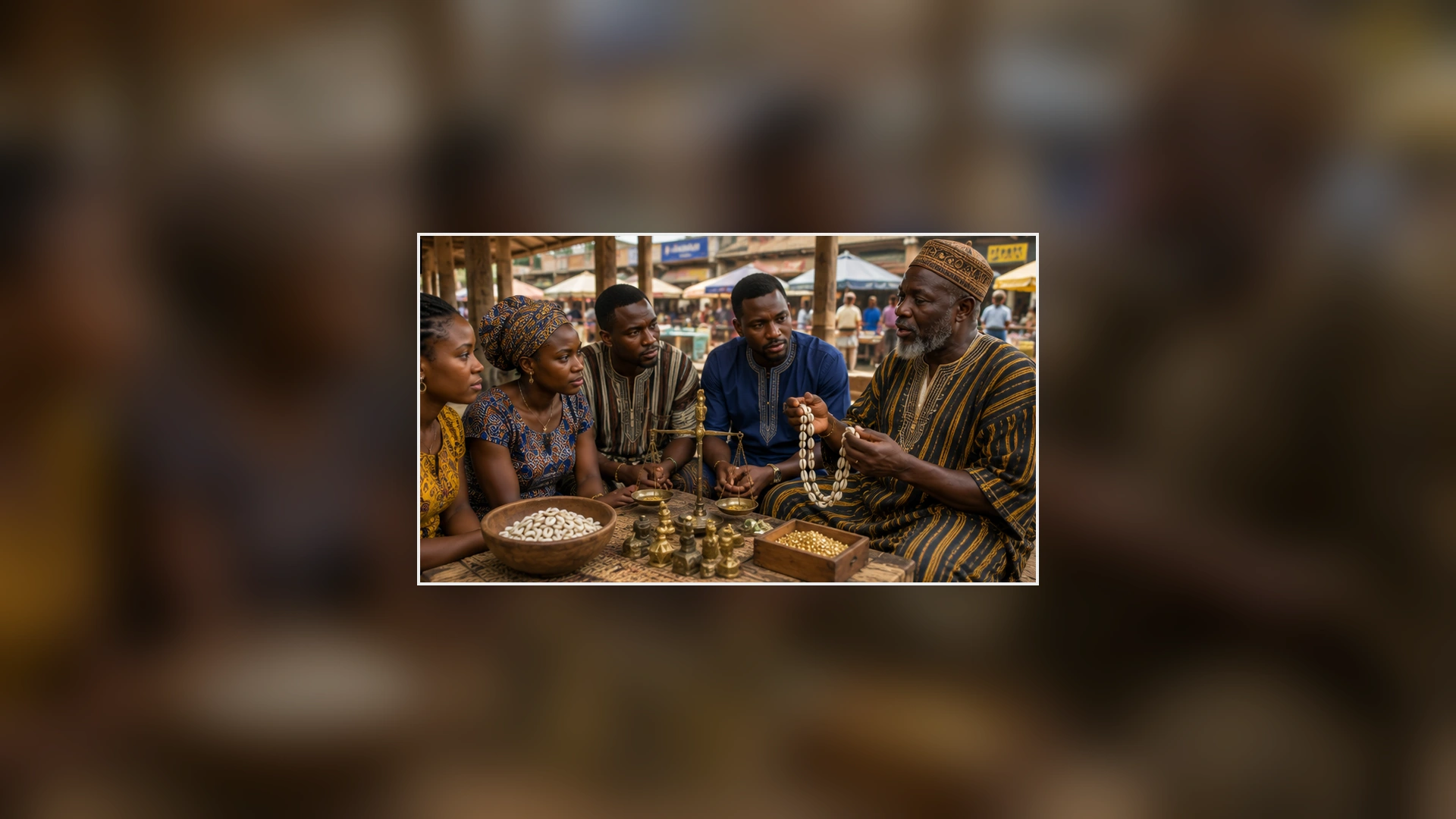
Cowrie shells circulated as money in parts of Africa, Asia, Oceania and elsewhere because they were portable, durable and difficult to counterfeit. In West Africa, they were used for purchases ranging from small transactions to very large payments. They also became entangled with the transatlantic slave trade and European commercial expansion. [1]
Cowries were more than currency. Smithsonian research on Nigerian culture records their association with Yoruba religious symbolism and with orisha including Aje, Orisa Oko, Obatala and Eshu. In this context, cowries could evoke fertility, productivity, creativity, dynamism and wealth. [2]
That history explains why cowries appear in many modern images labelled “money attraction.” However, it would be inaccurate to claim that any bowl of cowries automatically becomes a Yoruba wealth ritual. Meaning depends on who assembled the objects, what tradition is involved and whether the person has authority to use them.
The history of cowries also challenges a simple opposition between “spiritual symbol” and “real money.” They were once actual currency. Their religious associations developed alongside practical experiences of trade, measurement, status and exchange.
Yoruba Wealth, Aje and the Market
In Yoruba thought, wealth is connected with several religious and social ideas rather than one isolated deity or technique. Aje can refer to wealth, riches or a spiritual power associated with prosperity, while markets are also religiously meaningful spaces where fortune may change.
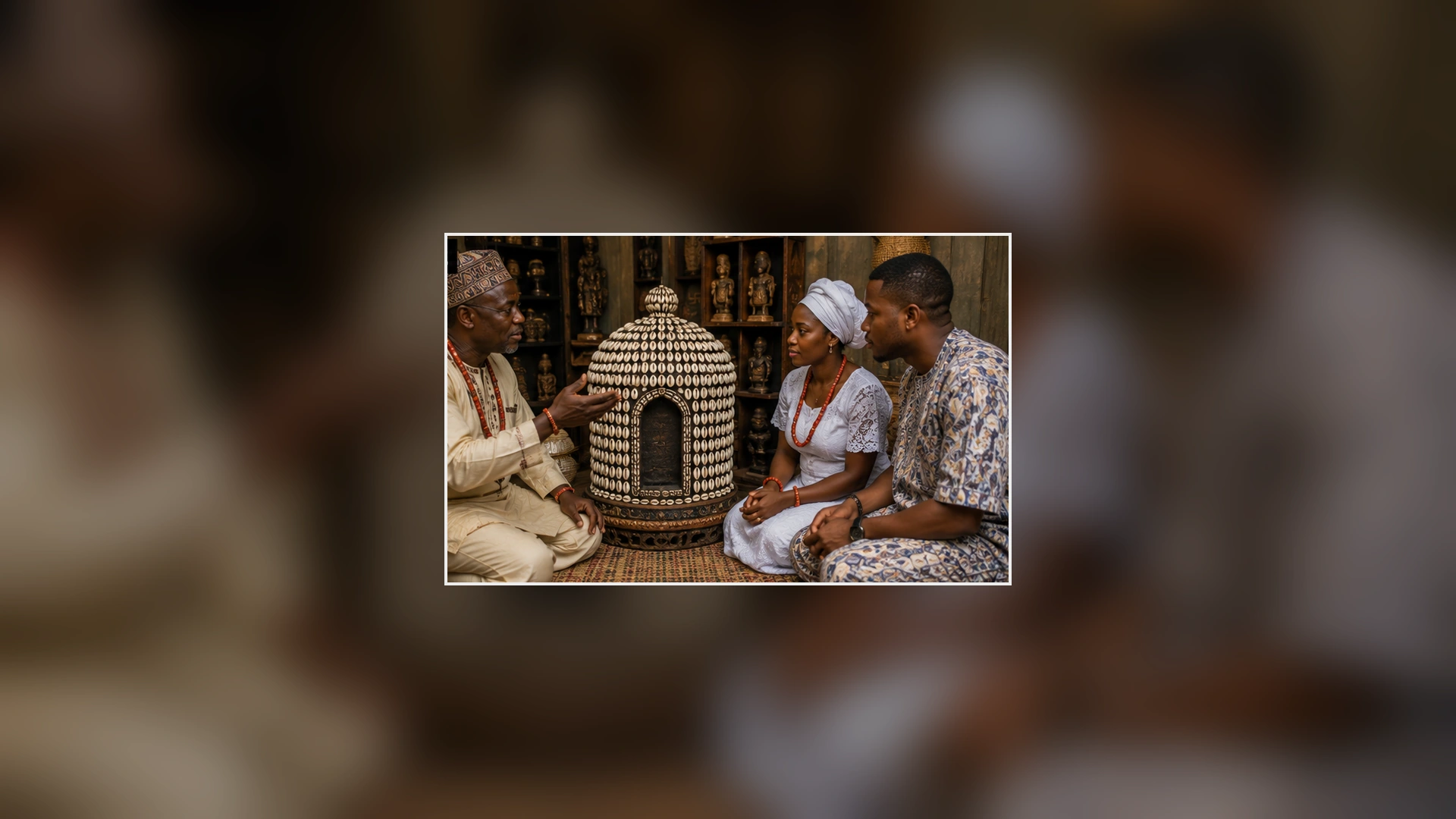
Cowries were associated with Aje and other orisha because they represented both currency and generative power. An Ilé-orí, or “house for the head,” could be densely decorated with cowries to honour a person’s inner head or destiny. The Metropolitan Museum of Art notes that this lavish use of cowries communicated material wealth, while the shrine itself concerned the owner’s relationship with the inner self under the guidance of an Ifa priest. [3]
Eshu is associated with crossroads, markets and communication. A Yoruba figure in the University of Michigan Museum of Art is decorated with cowries representing wealth, while its market context emphasizes that fortune can be given or withdrawn. [4]
These examples show why Yoruba prosperity beliefs should not be reduced to a simple “money spell.” Wealth may be related to destiny, character, negotiation, risk, divine relationship and the unstable nature of exchange.
Akan Goldweights: Prosperity, Measurement and Moral Speech
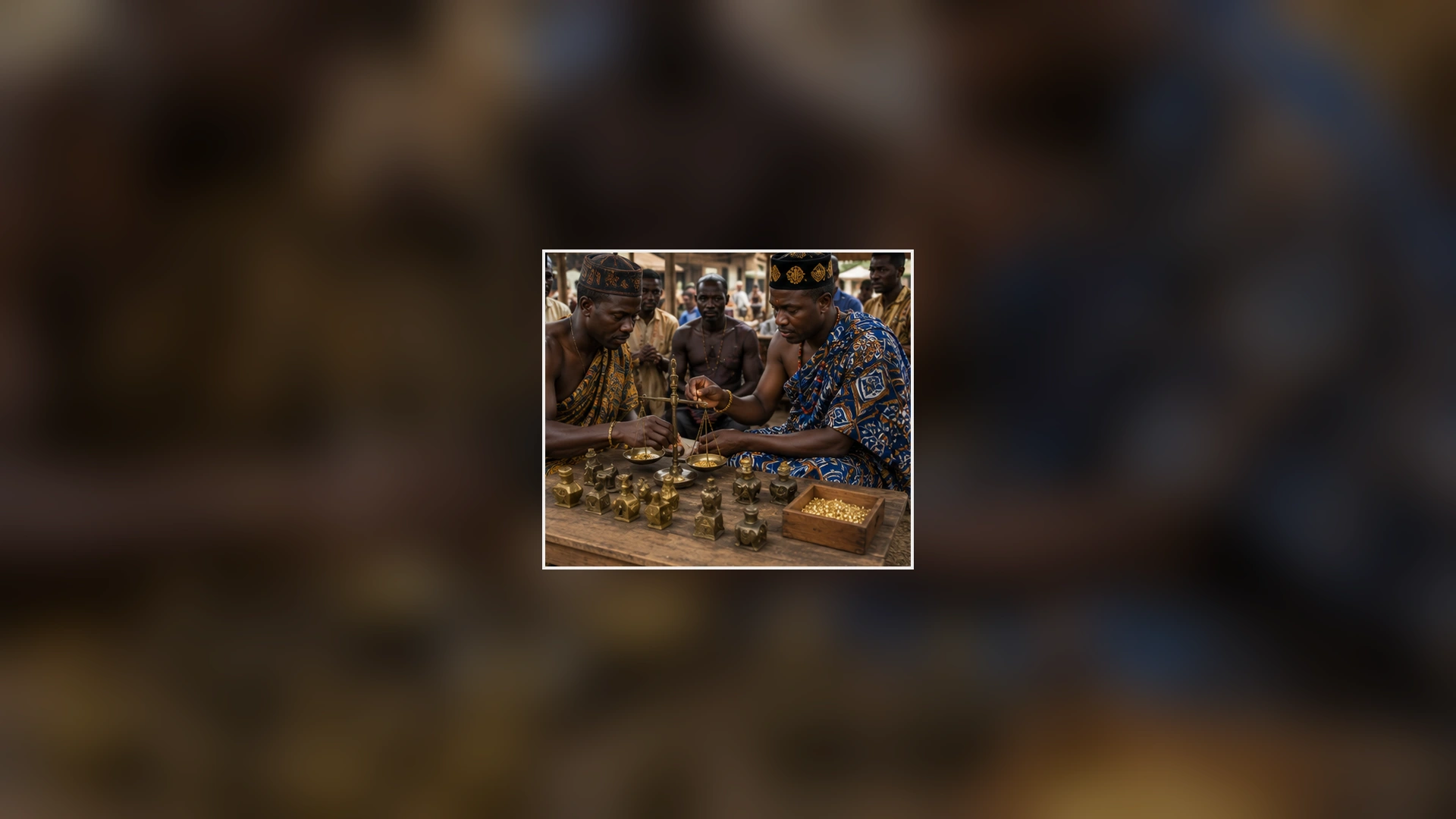
Akan merchants and rulers developed brass goldweights, called abrammuo, to standardize the measurement of gold dust. The objects belonged to sophisticated commercial systems linking West Africa with Saharan, Islamic and European trade networks. [5]
Gold carried practical and symbolic significance. Museum records explain that it brought prosperity through trade and was associated with royal authority, the sun and kra, or life force. Later figurative weights drew imagery from Akan proverbs, making a commercial object part of moral and rhetorical communication. [5]
Some weights represented animals, tools, chairs, royal regalia or everyday activities. Their imagery could comment on patience, authority, cooperation, conflict or wisdom. A trader who used such weights was not simply displaying a lucky charm; the objects participated in measurement, negotiation and culturally valued verbal skill.
Recent museum scholarship also cautions that not every figurative brass object called a “goldweight” was necessarily used to weigh gold. Some may have circulated as proverbial or conversational objects. [6]
The Akan example offers an important lesson: prosperity symbolism can reinforce accountability. Accurate measurement, knowledge of value and skilled negotiation were central to successful trade. A symbolic object did not remove the need for commercial competence.

Lakshmi: Prosperity Beyond Cash
Lakshmi is widely associated with fortune, prosperity and well-being in Hindu traditions, but her meaning is broader than money. The National Museum of Asian Art describes her symbolism as connected with abundance, divine wisdom, fertile landscapes and harvests. The lotus, elephants, water and grain associated with her can express life-giving abundance rather than cash alone. [7]
Historical images also show regional variation. A nineteenth-century Kolkata print presents Lakshmi with rice, a gold vessel and seashells, connecting prosperity with agriculture, household blessing and currency traditions. [8]
During Diwali, many Hindu families clean and illuminate homes, temples and public spaces, make offerings and welcome Lakshmi. Smithsonian material explains that light is linked with knowledge, hope and the invitation of abundance into a prepared space. [9]
It is misleading to extract one Lakshmi image, mantra or lamp from these religious settings and sell it as a guaranteed money-attraction device. For devotees, worship belongs to a larger relationship involving discipline, family, generosity, cleanliness, gratitude and religious duty.
Chopda Pujan: Prosperity and Account Books
Among some Gujarati and other business communities, Diwali includes Chopda or Sharda Pujan, in which old accounts are closed and new account books are opened and blessed. Contemporary temple descriptions note that paper ledgers and electronic forms may be included. [10]
This practice is especially relevant to a responsible discussion of money rituals because it joins prayer with accounting. The books do not merely symbolize wealth; they contain records of real obligations, transactions, profits and losses.
Chopda Pujan can therefore be understood as a ceremonial financial beginning. Its meaning may include gratitude for the previous year, hope for the coming year, devotion to Lakshmi, Ganesha or Saraswati and reflection on the moral use of knowledge and resources.
Chinese Wealth Deities and Auspicious Imagery
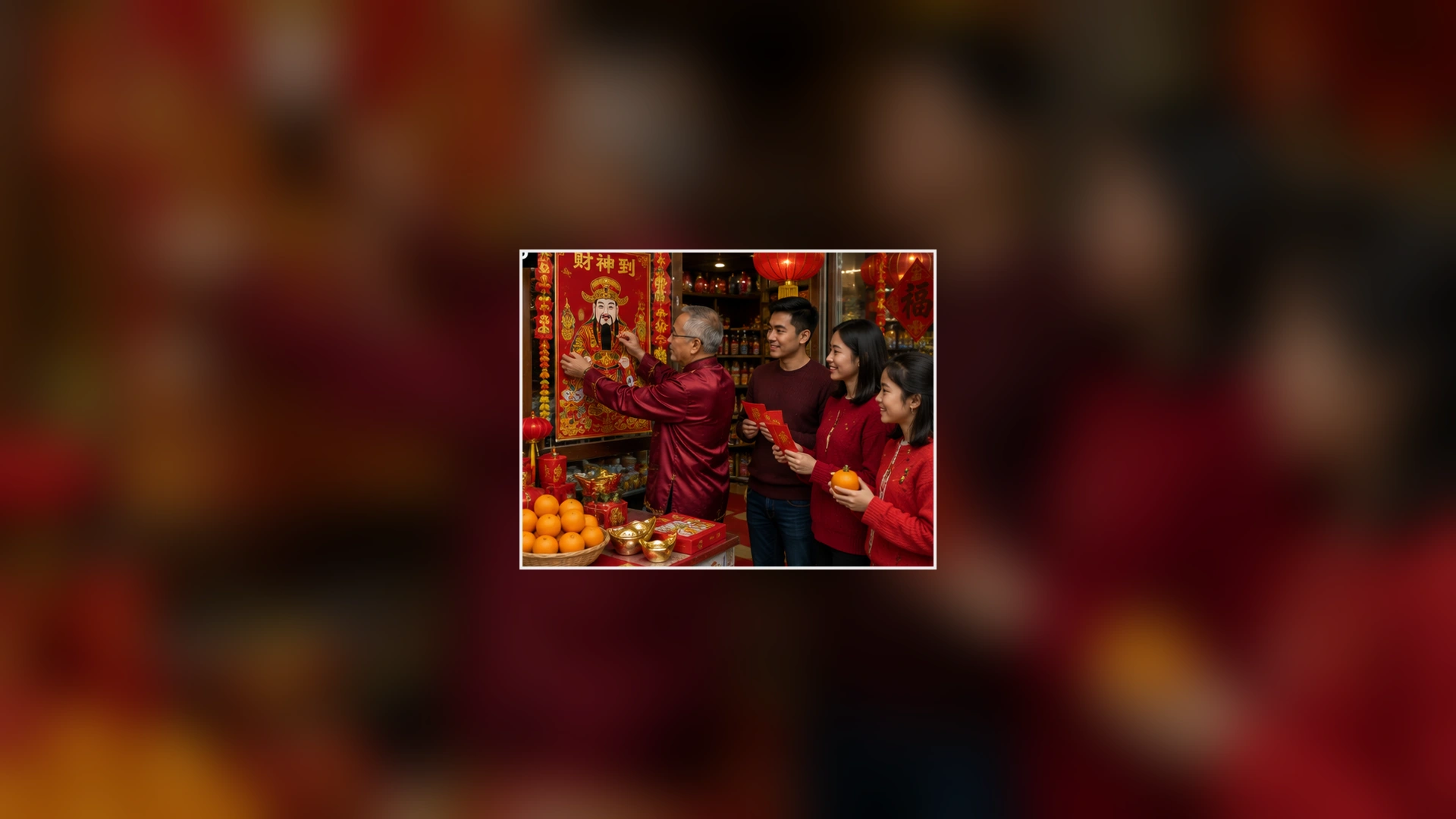
Cai Shen is a general name for Chinese gods of wealth rather than one uniform deity with one universal story. British Museum records include several forms and images associated with the title. [11]
Chinese traditions also connect prosperity with colour, language, seasonal customs and visual puns. The National Museum of Asian Art notes that red is auspicious in China and is associated with celebration and prosperity. Red paper decorations, envelopes and festival clothing therefore participate in a wider symbolic system. [12]
New Year prints of wealth deities, red envelopes containing money and images of ingots or coins may express wishes for fortune. However, their meaning is not simply “red attracts money.” Red also communicates life, festivity, protection and happiness, depending on context.
Ancient Chinese “money trees” provide another example of how coin imagery can be religious without being a modern get-rich device. Han-period bronze trees bearing coin-like forms were associated with tombs and visions of a heavenly realm. [13]
A careful article should distinguish among household New Year customs, Daoist or popular religious devotion, funerary art and modern commercial décor. These are not interchangeable practices.
Lucky Coins, Bread and Household Customs
Coin-based luck customs also appear in European traditions. Smithsonian Folklife documentation of Serbian Orthodox Christmas describes česnica, a ceremonial bread containing a coin. The person who finds the coin is traditionally expected to have good luck with money in the coming year. [14]
The practice is a family and holiday custom, not a universal Christian money ritual. It belongs to a particular foodway, calendar and community tradition. Similar coin-in-food customs may occur elsewhere, but their dates, prayers and meanings differ.
Japanese temple amulets can also include coin forms, a mallet or other auspicious symbols. A British Museum example was sold at a temple associated with the Seven Gods of Good Fortune pilgrimage and was explicitly identified as an amulet for good fortune. [15]
These examples show how portable objects can connect hope with pilgrimage, food, family or festival. Their meaning cannot be reproduced simply by placing a random coin in a jar.
The Cornucopia and Visual Abundance
The cornucopia, or horn of plenty, became a widespread classical and European symbol of abundance. Artworks personifying abundance often show a figure holding fruit and grain spilling from the horn. Museum interpretation also notes that abundance imagery could include warnings about vigilance and temperance. [16]
This double meaning is useful. Prosperity symbols do not always celebrate limitless consumption. They may also remind viewers that resources can be wasted, spilled or lost. A full container can symbolize responsibility as well as possession.
Common Symbols of Wealth and Their Meanings
| Symbol | Documented cultural context | Possible meanings | What it does not mean universally |
|---|---|---|---|
| Cowrie shell | African and Asian currency histories; Yoruba religious symbolism | Exchange, wealth, fertility, productivity, spiritual relationship | Any shell automatically attracts money |
| Akan goldweight | Akan gold-dust trade and proverb culture | Measurement, authority, speech, value, life force | A brass figurine is a universal money charm |
| Gold | Many royal and religious traditions | Brilliance, authority, sacred power, durable value | All gold objects have the same spiritual meaning |
| Lotus | Hindu and Buddhist art, including Lakshmi imagery | Purity, divine power, abundance, fertility | A lotus image alone guarantees wealth |
| Grain or rice | Agricultural and household traditions | Harvest, food security, continuity, abundance | Throwing grain is appropriate in every culture |
| Account book | Gujarati Chopda Pujan and business practice | New financial beginning, responsibility, knowledge | Blessing a ledger excuses dishonest accounting |
| Red envelope | Chinese seasonal gift custom | Good wishes, relationship, celebration, transmitted money gift | Red is a universal money-attraction colour |
| Wealth-deity print | Chinese popular religious and New Year imagery | Prosperity, blessing, auspicious wishes | Every image represents the same deity or ritual |
| Lucky coin | Serbian and other family folk customs | Good fortune, seasonal hope, household memory | Any coin hidden in food is safe or culturally authentic |
| Cornucopia | Classical and European abundance imagery | Plenty, harvest, prosperity, generosity | It belongs to every religion or functions as a ritual tool |
Giving, Charity and the Circulation of Prosperity
Many prosperity traditions include giving as well as receiving. Offerings, gifts, hospitality, almsgiving and support for religious or community institutions can express the belief that abundance should circulate.
This principle can easily be commercialized. A person may be told to “give money to activate wealth” or pay repeated ritual fees. Genuine religious giving and manipulative pressure are not the same. Responsible spiritual leaders should be clear about costs, avoid guaranteed claims and never exploit fear.
The ethical question is not only “How can I attract money?” but also “What responsibilities come with resources?” A cultural practice may encourage gratitude, honest work, care for relatives, generosity or support for the vulnerable.
Modern Money Bowls, Candles and Manifestation Trends
Online content often recommends “money bowls,” coloured candles, cinnamon, bay leaves, written amounts, crystals or repeated affirmations. Some of these practices draw loosely from folk magic, modern witchcraft, New Thought, hoodoo, Afro-diasporic religions, Asian symbolism or commercial self-help. Others appear to be recent internet inventions.
It is not responsible to label all of them ancient, African, Indigenous or traditional. Cultural provenance should be stated when known, and uncertainty should be admitted when it is not.
A personal reflective practice can still be meaningful if it is described honestly. For example, someone may use a bowl as a reminder to save loose change, write down financial goals or express gratitude. Those are psychological or organizational functions. They should not be sold as guaranteed supernatural mechanisms.
Do Money Attraction Rituals Work?
There is no reliable evidence that a ritual, symbol or charm can guarantee income, customers, debt cancellation or investment returns. Financial outcomes depend on many factors including earnings, expenses, market conditions, skill, opportunity, law, health, social networks and chance.
Rituals can still have real human effects. They may reduce anxiety, create motivation, strengthen identity, mark a new beginning, encourage disciplined record-keeping or bring family and community support. These effects are social and psychological rather than proof that an object mechanically attracts money.
The distinction protects both culture and consumers. A religious ceremony can be honoured without making a false financial promise.
Warning Signs of a Money-Ritual Scam
The United States Federal Trade Commission warns that guaranteed income, guaranteed profits and secret systems for making money are classic scam signs. No legitimate seller can promise certain financial success with little effort or risk. [17]
Be cautious when someone:
A cultural service may charge for time, travel, materials or professional labour. The ethical boundary is transparency and the absence of guaranteed claims, threats and coercion.
Cultural and Ethical Boundaries
Do not invent a pan-African wealth ritual
Akan goldweights, Yoruba cowries, Ijo shrines and contemporary African Christian or Muslim practices belong to different communities. Combining them into one “African money altar” creates misinformation.
Do not reduce deities to financial tools
Lakshmi, Aje, Cai Shen and other religious figures belong to complex traditions. They should not be treated as vending machines for cash.
Do not expose restricted ritual knowledge
Public museum records can explain visible objects and general meanings. They do not authorize the publication of private prayers, initiatory instructions or sacred materials.
Do not erase histories of slavery and extraction
Cowries, gold and other currencies can represent beauty and prosperity while also carrying histories of forced trade, enslavement and colonial violence.
Do not use cultural symbols without context
A red envelope, cowrie shell or goldweight should be identified through its actual tradition rather than labelled with a universal internet meaning.
Do not blame poverty on insufficient belief
Financial hardship is not proof that someone prayed incorrectly, lacked faith or failed to “manifest.” Structural inequality, illness, unemployment, conflict and many other conditions affect economic life.
How to Study Prosperity Traditions Respectfully
Practical Financial Actions That Can Accompany Symbolic Practice
A person may combine a meaningful prayer or family custom with practical action. Useful steps include:
These steps do not make a ritual more “powerful.” They address the practical side of financial well-being.
Common Misunderstandings
“All money rituals are ancient”
False. Some are old religious or family practices; many online versions are modern combinations.
“Cowries are only spiritual charms”
False. Cowries functioned as real currency and trade instruments in many regions.
“Lakshmi worship is only about getting rich”
False. Lakshmi’s symbolism includes abundance, fertility, wisdom, harvest and household well-being.
“Red attracts money everywhere”
False. Red carries culturally specific meanings and is not universally associated with prosperity.
“A ritual can replace work or planning”
False. Traditional practices often coexist with skilled trade, accounting, agriculture and social responsibility.
“If the ritual fails, the person lacked faith”
This claim is harmful. Economic outcomes are complex, and no spiritual service should guarantee results.
Key Takeaways
People Also Ask
What is a money attraction ritual?
A money attraction ritual is a culturally specific prayer, offering, seasonal custom or symbolic act connected with prosperity, trade, abundance or good fortune. It is not one universal tradition and cannot guarantee financial results.
What symbols represent wealth and prosperity?
Examples include cowrie shells, Akan goldweights, grain, lotuses, red envelopes, account books, coins and the cornucopia. Each symbol has a particular cultural history and should not be given one universal meaning.
Why are cowrie shells associated with money?
Cowries were widely used as currency because they were portable, durable and difficult to counterfeit. Their economic role contributed to later associations with wealth, fertility, spiritual power and exchange.
Who is Aje in Yoruba tradition?
Aje is associated with wealth, prosperity and generative power in Yoruba thought. Meanings and ritual authority vary, and Aje should not be reduced to a generic internet money spell.
What is the meaning of Akan goldweights?
Akan goldweights were used within gold-dust trade systems and also carried images linked to proverbs, authority and moral communication.
Why is Lakshmi associated with prosperity?
Lakshmi is associated with abundance, fortune, fertility, harvest, wisdom and household well-being. Her symbolism is broader than money alone.
What is Chopda Pujan?
Chopda Pujan is a Diwali account-book ceremony observed in some Gujarati and other business communities. Old accounts are closed and new ledgers or digital accounting tools are blessed for the new financial period.
Who is Cai Shen?
Cai Shen is a general Chinese name for gods of wealth. Different figures and traditions may be identified under the title.
Do money attraction rituals guarantee wealth?
No. Rituals may provide meaning, motivation or community support, but they cannot guarantee income, customers, debt relief or investment returns.
Frequently Asked Questions
Is it safe to copy a money ritual from social media?
Not always. The ritual may be invented, culturally restricted, physically unsafe or used to sell a scam. Research its origin and avoid guaranteed claims.
Can I use cowrie shells in a personal prosperity display?
You can use legally and ethically obtained shells as personal décor or reflection, but do not claim that your arrangement is an authentic Yoruba or African ritual without cultural authority.
Is a money bowl a traditional African practice?
There is no single traditional African “money bowl.” Modern versions may blend several traditions or be internet-era inventions.
Can a spiritual adviser charge for a prosperity ceremony?
A practitioner may charge transparently for time, travel or materials. They should not guarantee money, threaten clients or demand escalating payments.
Are lucky coins part of Christianity?
Some Christian communities have folk customs involving coins, such as Serbian Orthodox Christmas bread. These are local traditions, not universal Christian doctrine.
Does blessing an account book improve business?
A ceremony can create reflection and commitment, but accurate accounting, lawful practice and good management are what directly affect a business.
Are wealth deities the same across cultures?
No. Lakshmi, Aje, Cai Shen and other figures belong to different religious systems and should not be treated as equivalents.
What should I do if someone promises guaranteed money from a ritual?
Do not send money or financial information. Ask for written terms, speak with trusted people and consider reporting the offer to a consumer-protection authority.
Conclusion
Money attraction rituals reveal how communities connect material life with morality, hope, religion and social responsibility. Cowrie shells, goldweights, account books, red envelopes, grain, lamps and coins can become powerful symbols because they participate in real histories of exchange, labour, harvest and family life.
Their meaning is lost when they are reduced to instant-money tricks. A respectful approach identifies the community, distinguishes ritual from finance, protects restricted knowledge and refuses guaranteed claims.
Final Summary
Traditional prosperity practices are diverse. Yoruba cowries, Akan goldweights, Hindu Lakshmi worship, Gujarati Chopda Pujan, Chinese wealth imagery and Serbian lucky-coin bread do not form one system. They express culturally specific hopes for abundance, good fortune, ethical trade and continuity.
Ritual may support meaning and motivation, but practical financial behaviour determines much of everyday economic well-being. No ceremony, symbol or charm can guarantee money.
Article Information
- Publisher
- Ancestral Temple
- Editor
- Ancestral Temple
- Last updated
- Jul 30, 2026
- Last reviewed
- Jul 30, 2026
- Content version
- 9ffff5a013
This educational article should be read as cultural and spiritual information, not as medical, legal, financial, or emergency advice.
Helpful Related Guidance
About the Author
 Ancestral Temple
Spiritual guide and practitioner with decades of experience in ancestral wisdom, rituals, and divine guidance.
Related Posts
View All










Comments
We'd love to hear your thoughts.