
Prosperity Rituals: Meaning, Symbols and Traditional Practices Across Cultures
Pillar Article
Quick Summary
Prosperity rituals are structured practices through which people express hopes for abundance, security, successful work, fertile land, healthy families or a favorable new beginning...
Prosperity rituals are structured practices through which people express hopes for abundance, security, successful work, fertile land, healthy families or a favorable new beginning. They may involve prayer, lamps, food, gifts, offerings, household cleaning, shrine visits, first-fruit ceremonies, elder blessings or public festivals. The form depends on the community, religion, historical period and occasion.
Prosperity does not mean exactly the same thing everywhere. In one tradition it may emphasize a good harvest; in another, household peace, fertility, commercial success, health, long life, generosity or the continuity of a family. UNESCO's work on living heritage encourages a broader understanding of prosperity that includes social wellbeing and sustainable relationships, not only economic growth and consumption. [1]
There is also no universal recipe called an “African prosperity ritual,” an “Asian money ritual” or an “ancient abundance ceremony.” Africa and Asia contain thousands of communities and traditions. Even within one religion, practices differ by region, temple, family, language and historical period. A culturally responsible guide therefore names specific examples and does not mix unrelated symbols into a fictional ceremony.
This article explains what prosperity rituals mean, why certain materials recur, how documented practices differ across cultures, what modern adaptations can preserve or distort, and why spiritual or symbolic action should never be presented as a scientific guarantee of wealth.
Quick Answer
Prosperity rituals are culturally specific practices used to express hopes for abundance, wellbeing, harvest, stable households or successful work. They may include prayer, offerings, lamps, grain, gifts, shrine visits or communal meals. Their meaning comes from the tradition and community that use them; no ritual can scientifically guarantee money, profit or protection from loss.
What Is a Prosperity Ritual?
A prosperity ritual is a repeated or specially organized action through which participants seek, celebrate or give thanks for conditions they understand as flourishing. The practice may be religious, cultural, familial, civic or historical. It may ask a deity for blessing, thank ancestors, mark a new year, prepare a home, inaugurate a business, welcome a marriage, honor the harvest or redistribute resources through gifts and food.
The word ritual is important because the action follows an expected form. Participants may clean before beginning, approach a shrine in a particular way, use recognized words, place offerings in an established order, invite elders or priests, light lamps, exchange gifts, share a meal or close with thanksgiving. The sequence gives the event identity and connects present participants with a larger community or history.
Prosperity is equally important because it is broader than sudden financial gain. Traditional ideas of flourishing commonly include several of the following:
Adequate food, rain, fertile land or a successful harvest.
Health, fertility, long life and the continuation of a household.
Safe work, useful skills, honest trade and stable income.
Peace within the family and protection of the home.
Good relationships with neighbors, ancestors, deities or the natural world.
The capacity to give, host, support relatives or contribute to the community.
A modern page that reduces every example to “attracting money” therefore misses much of the cultural meaning. In many traditions, abundance becomes legitimate only when it supports life, relationships, responsibility or generosity.
Why People Perform Prosperity Rituals
To mark uncertainty and transition
New years, marriages, childbirth, planting seasons, harvests, business openings and relocations all involve uncertainty. Ritual gives the transition a clear beginning and allows hopes, fears and obligations to be spoken publicly. The act may not control the future, but it can organize attention and bring a family or community into one shared moment.
To express gratitude before asking for more
Many prosperity traditions begin with cleaning, thanksgiving, offerings or remembrance. These actions acknowledge that present resources came through land, labor, family, community, trade, divine grace or ancestral inheritance. Prosperity is framed as a relationship rather than a private possession.
To connect abundance with moral responsibility
Rituals often include obligations: feed guests, share sweets, give money, make an offering, honor elders, repay debts, treat workers fairly or remember the poor. The request for prosperity may therefore be paired with rules about how prosperity should be used.
To build confidence and social support
Some research suggests that familiar ritual can reduce perceived anxiety in uncertain situations, although results are context-dependent and do not show that ritual causes external success. A field study among Marathi Hindu women in Mauritius found lower perceived and physiological anxiety after habitual temple ritual, while a later preregistered experiment found only small and imprecise differences between ritualized and comparison activities overall. [11][12] These findings concern anxiety and patterned behavior, not money, harvest or business profit.
Common Prosperity Symbols and What They Can Mean
The same material can carry very different meanings in different communities. The table below describes recurring themes, not universal definitions.
| Symbol or material | Possible meanings in context |
|---|---|
| Light and lamps | Presence, welcome, knowledge, divine attention, hope or the opening of an auspicious period. During Diwali, lamps are connected with Lakshmi, abundance and the victory of light over darkness. [2] |
| Grain, rice and first fruits | Food security, fertility, harvest, labor and the continuity of life. Rice is central to Inari traditions, while grain offerings appear in many agrarian religions. |
| Water | Cleansing, rain, fertility, renewed life or the movement of blessing. Its meaning depends on the ritual and environment. |
| Red and gold | In many Chinese New Year contexts, red and gold communicate blessing, celebration and good fortune; they are not universal prosperity colors for every culture. [4] |
| Coins and money gifts | A concrete transfer of resources, a wish for good fortune, or a lesson in generosity. A red envelope is not simply a charm; it is also a social gift relationship. |
| Flowers and plants | Growth, beauty, seasonality, purity, fertility or divine presence. Lakshmi is frequently shown with a lotus, whose symbolism exceeds money alone. [3] |
| Animals and animal images | A culturally specific association such as fertility, guardianship, status, seasonal identity or wordplay. Avoid assuming that elephants, fish, pigs or foxes mean the same thing everywhere. |
| Doors, gates and thresholds | The boundary between ordinary and sacred space, or the invitation of a new beginning. Rangoli at a threshold and torii at a Shinto shrine belong to different systems and should not be blended. |
| Shared meals and sweets | Hospitality, successful harvest, family continuity, thanksgiving and the circulation of abundance among participants. |
Prosperity Rituals, Blessings and Wealth Magic: What Is the Difference?
| Term | Useful distinction |
|---|---|
| Prosperity ritual | A broad category of culturally structured practices concerned with abundance, wellbeing, harvest, household stability or successful work. |
| Blessing | Words or actions that dedicate people, work, places or resources and ask for guidance, protection or wellbeing within a specific tradition. |
| Festival custom | A repeated public or household practice linked with a calendar event, such as Diwali lamps or Chinese New Year gift exchange. |
| Offering | Food, drink, light, incense, flowers, money or another appropriate gift presented within a recognized religious relationship. |
| Modern wealth magic | Contemporary occult or personal practice focused more directly on money, opportunity or manifestation. It should not be falsely presented as an ancient universal tradition. |
Traditional Prosperity Practices Across Cultures
The examples below are not interchangeable instructions. They are snapshots of particular traditions documented by museums, heritage institutions and religious organizations.
Diwali, Lakshmi and household abundance in Hindu traditions
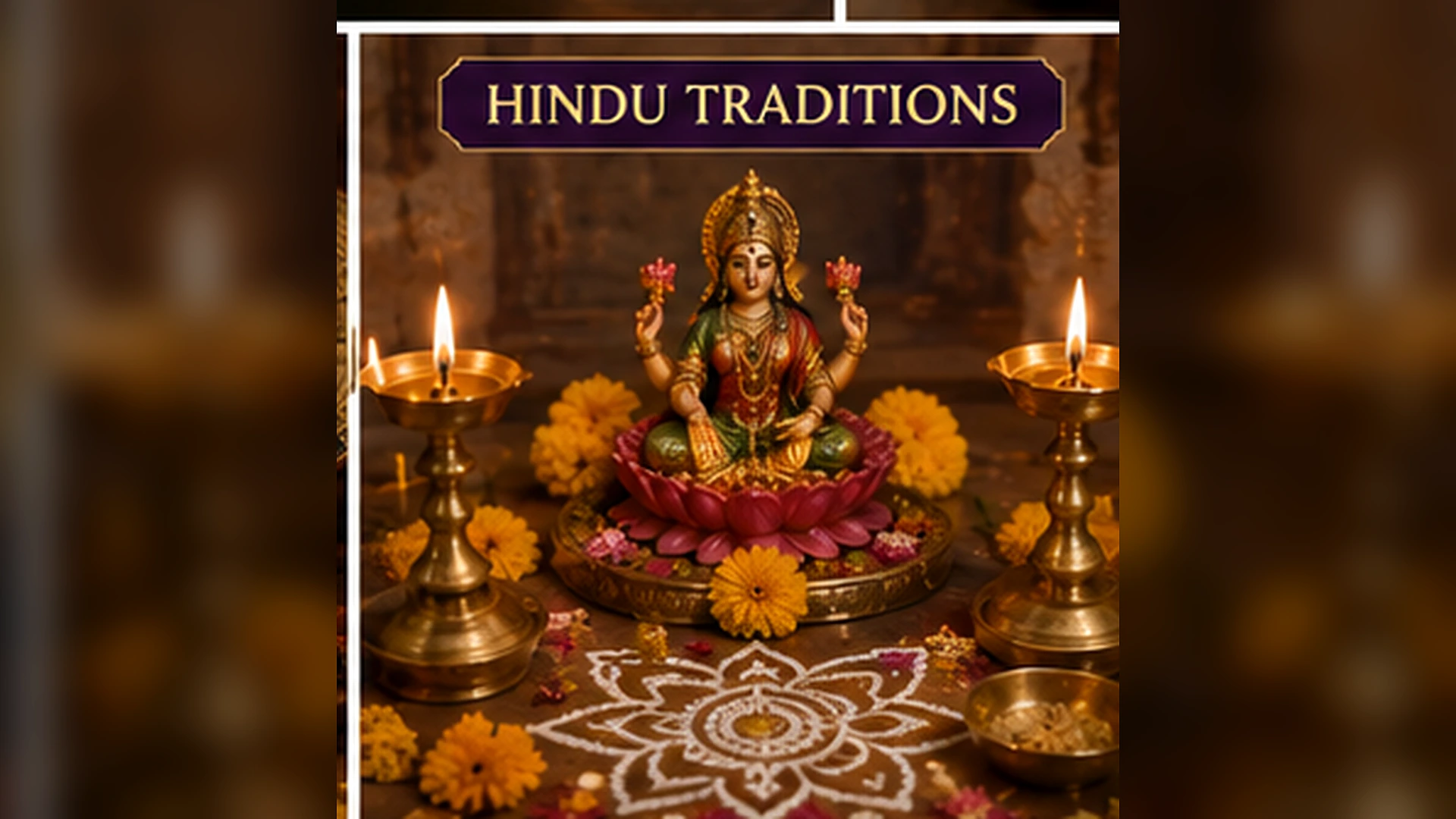
Diwali is celebrated in several religions and regions, and its stories and customs are not identical everywhere. In many Hindu communities, the festival is associated with Lakshmi, a goddess of abundance and auspiciousness. Smithsonian educational material describes homes being cleaned, thresholds decorated with rangoli or kolam, lamps lit and offerings made as families prepare to welcome Lakshmi. The festival follows the last harvest in many calendars and joins household renewal with family visits, sweets and public celebration. [2]
Lakshmi symbolism also shows why prosperity should not be reduced to cash. Museum interpretation connects her with lotus flowers, elephants, water, agriculture and verdant lands that produce abundant harvests. Her blessings can therefore include fertility, food, beauty, royal fortune, household wellbeing and generosity. [3]
A responsible description avoids claiming that every Hindu family performs the same puja. The deity invoked, number of lamps, food offerings, sacred texts, calendar and officiant may differ by region, lineage and household.
Chinese New Year gifts, wordplay and auspicious imagery
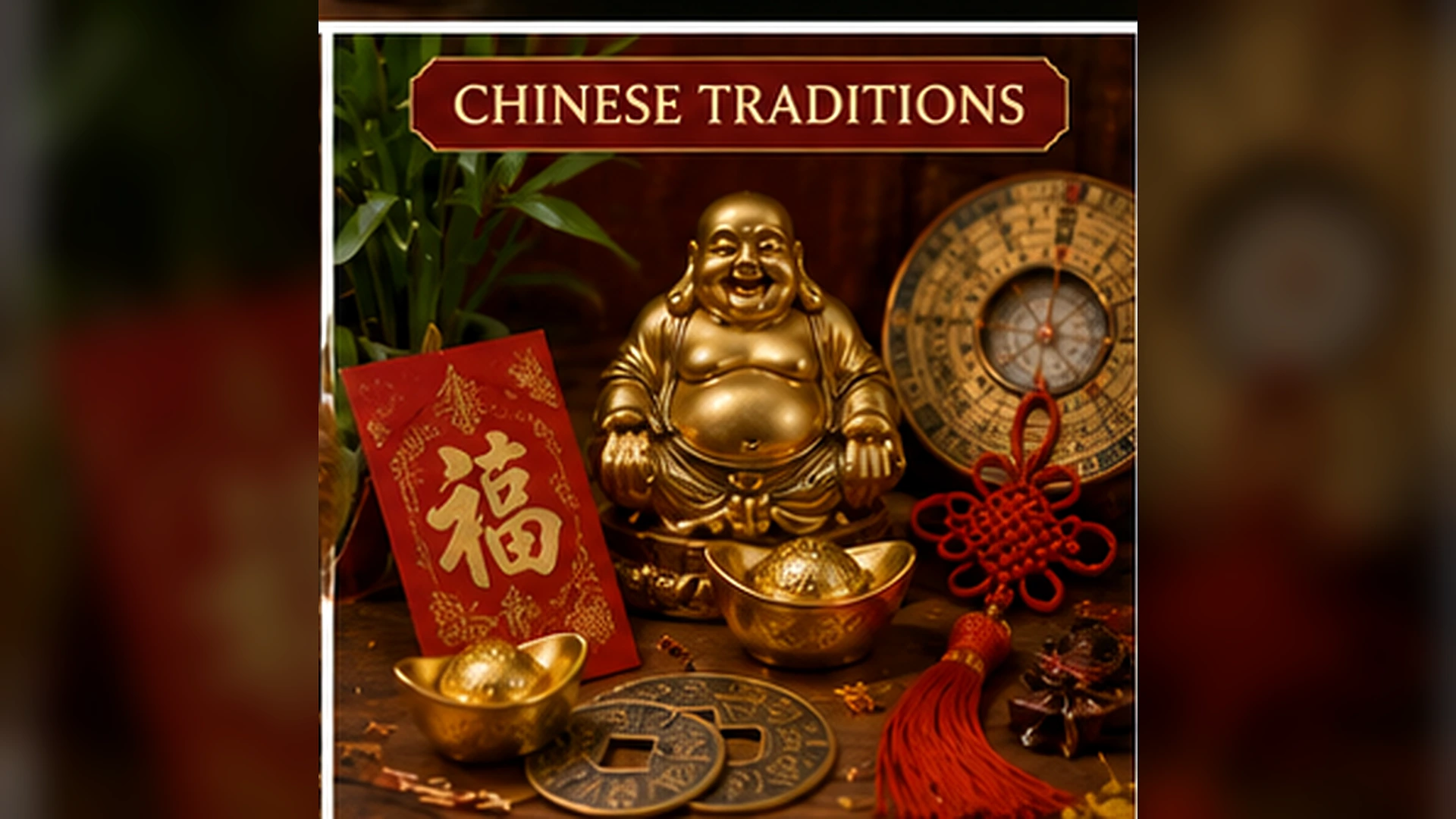
Chinese New Year traditions vary across mainland China, Hong Kong, Taiwan, Southeast Asia and global diasporas. One widely recognized practice is giving money in red envelopes, called hongbao in Mandarin and lai see in Cantonese. British Museum examples show that the envelopes combine an actual gift with wishes for blessing, good fortune, prosperity and long life. [4]
The images are often built from visual and spoken wordplay. The character fu expresses blessing or good fortune. Bats can refer to blessings because the words sound alike in Chinese. Fish can symbolize abundance through another homophone, and oranges, peonies, coins, ingots and firecrackers may appear in festive designs. These associations depend on language and convention; copying the objects without understanding the puns removes much of their meaning. [4][5]
The social action matters as much as the color. An envelope transfers resources between relatives, elders, children, employees or community members. Prosperity is enacted through giving, respect and relationship, not merely displayed as decoration.
Inari worship, harvest and business prosperity in Japan
Fushimi Inari Taisha in Kyoto identifies Inari Okami with bountiful harvests, household safety, industry and business prosperity. The shrine traces its establishment to 711 and describes seasonal ceremonies that express thanks to Inari and pray for business success and economic prosperity. [6][7]
The connection developed from agriculture and rice rather than beginning as a modern corporate success formula. As commerce expanded, merchants and industries also sought Inari's protection. Visitors today may pray at the shrine or receive authorized ofuda and omamori. The familiar fox figures are messengers of Inari, not the deity itself, and should not be treated as generic “money animals.”
A respectful account also recognizes the shrine as a place of worship, not a themed background. Official visitor guidance asks people to preserve the sacred environment and behave appropriately on the mountain and grounds.
Al-Jertiq and abundance in Nubian communities of Sudan
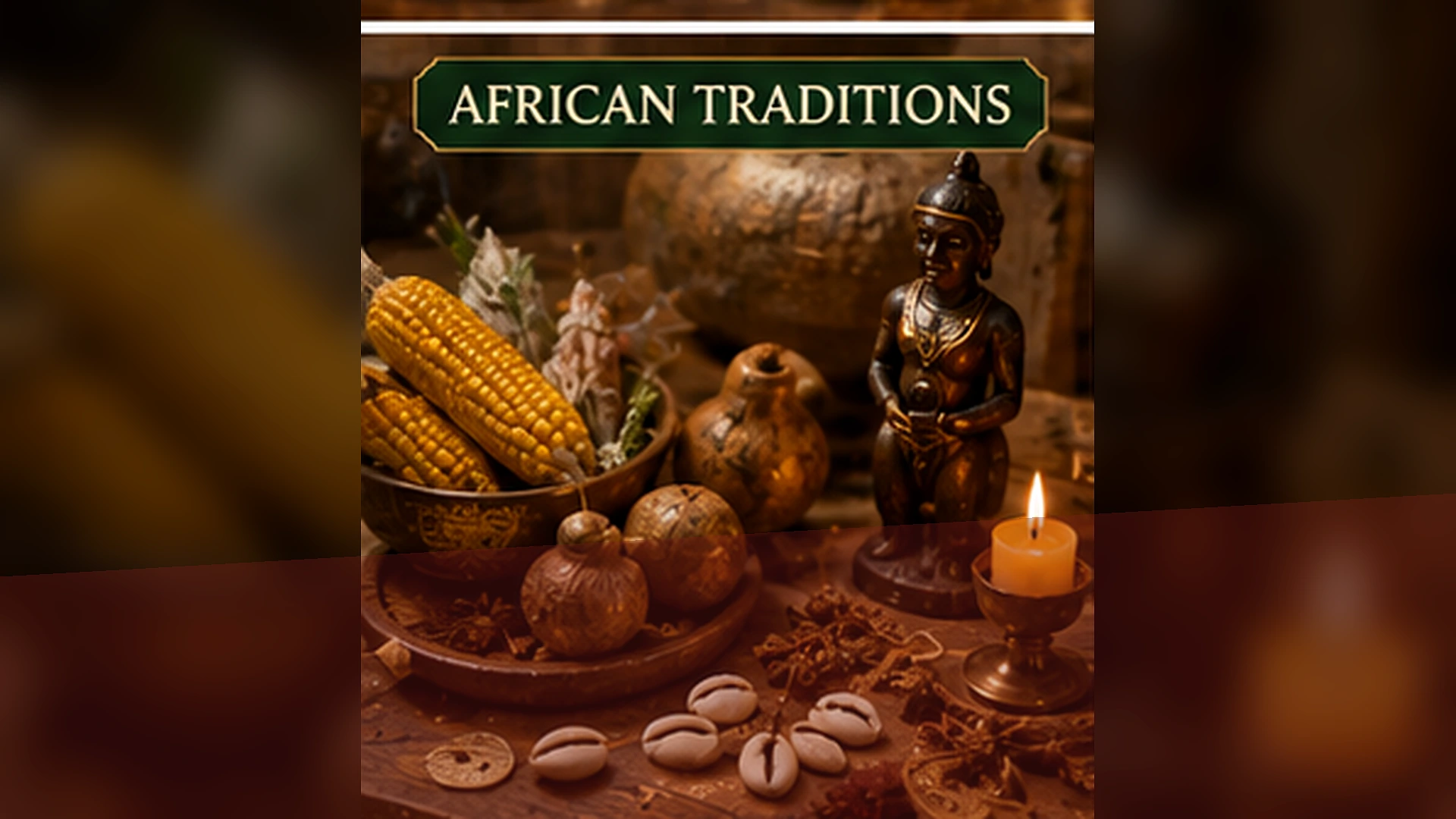
UNESCO inscribed Al-Jertiq on the Representative List of the Intangible Cultural Heritage of Humanity in 2025. It describes a living ritual among Nubian populations of northern Sudan, practiced during major life events and connected with preservation, protection, abundance and fertility. Older women lead ceremonies using ornate objects whose meanings and arrangement change with the occasion. [8]
This example is important because it resists two common mistakes. First, it shows that abundance may concern marriage, childbirth, identity and community continuity rather than private wealth. Second, it is a specific Nubian Sudanese tradition, not a template called “African prosperity magic.” Its knowledge is transmitted through families, observation, preparation and community participation.
Educational coverage should use only public information, respect the authority of practitioners and avoid reconstructing a full ceremony from decorative photographs.
Ancient Roman household prosperity and the Lares
Historical examples can deepen the comparison when they are clearly identified as historical. In Roman homes, a lararium was a household shrine. The Metropolitan Museum of Art explains that the lar familiaris protected the family and was associated with health and prosperity. From the Augustan period, household shrines commonly included two Lares holding a drinking vessel and an offering dish. [9]
Food, wine or incense offered at the household shrine placed prosperity within family continuity and reciprocal obligation. This was not the same as a modern lucky statue placed near a cash register. It belonged to Roman domestic religion, social hierarchy and ideas about the household.
Ancient Egyptian temple offerings and community flourishing
At the Temple of Dendur, reliefs show deities receiving offerings from the Roman emperor represented as an Egyptian pharaoh. The Metropolitan Museum explains that an Egyptian temple functioned as a divine dwelling where food, drink and clothing offerings sustained the deity, who in turn was understood to support the prosperity of the community. [10]
This ritual economy involved temples, kingship, priesthood and cosmic order. It should not be simplified into placing an Egyptian symbol beside money for personal attraction. Historical context changes the meaning of the action.
What Prosperity Practices Have in Common - and What They Do Not
Across these examples, several broad patterns appear: preparation, recognized authority, symbolic objects, gifts or offerings, spoken hopes, family or community participation, and a link between abundance and responsibility. These similarities help us compare human concerns without declaring the traditions identical.
The differences remain more important than any universal checklist. Diwali lamps, Chinese red envelopes, an Inari shrine prayer, Al-Jertiq objects, Roman household offerings and Egyptian temple service come from different theologies, histories and social structures. A person cannot make a tradition more authentic by combining all of them on one altar.
Prosperity as Reciprocity, Giving and Circulation
Many prosperity rituals move resources rather than merely displaying them. Families give envelopes, share sweets, present food, support a shrine, feed guests, compensate specialists or distribute harvest produce. This circulation makes prosperity visible as a relationship. A household demonstrates abundance by being able to welcome, give or fulfill obligations.
This does not mean every offering is charity or every gift is economically equal. Ritual exchange can reflect hierarchy, gender roles and social expectations. Still, it challenges the modern assumption that prosperity is only the private accumulation of money.
How Traditions Change in Diaspora and Modern Life
Living traditions are not frozen. Migrants adapt festivals to apartments, work schedules, fire regulations and locally available materials. Families may use electric lamps, digital invitations, bank transfers or commercially printed decorations while maintaining the event's relationships and prayers. Temples and heritage organizations also use websites and social media to teach younger generations.
Adaptation becomes distortion when a practice is detached from its community, renamed as a universal ancient secret, or sold with guaranteed results. Commercial products may borrow a deity, symbol or color while ignoring the ritual authority and obligations that gave it meaning.
Can Prosperity Rituals Guarantee Money or Success?
No. There is no scientific evidence that a lamp, offering, shrine visit, symbol, prayer or repeated action can guarantee profit, employment, investment returns, debt cancellation, customer traffic or protection from financial loss.
Ritual may have meaningful human effects. It can organize attention, express commitment, reduce uncertainty for some participants, strengthen identity, bring relatives together or create a moment for gratitude and planning. Those effects do not prove supernatural control over markets, weather, employers or customers.
A provider should be treated with caution when they guarantee wealth, demand escalating payments, threaten harm if a ritual is stopped, pressure someone to borrow money, request illegal materials, or reinterpret every ordinary setback as proof that another expensive ceremony is required.
A Responsible Personal Prosperity Practice
Someone who does not belong to a specific religious tradition can create a simple personal reflection practice without copying restricted ceremonies or presenting it as ancient. The purpose is to connect values with practical action, not to promise manifestation.
Clean a small work area and remove financial clutter such as unopened bills or disorganized receipts.
List existing resources: skills, relationships, income, tools, knowledge, time and support.
Write one clear prosperity intention, such as building a three-month emergency fund, finding lawful work or improving business recordkeeping.
Name the responsibility attached to the goal: honest service, debt repayment, fair employment, family support or community contribution.
Choose one ordinary symbol that belongs to your own life, such as a bowl of grain from your region, a family photograph or a tool of your work. Do not label it as an artifact from another culture.
Take one measurable action immediately: prepare a budget, send an application, contact a client, register the business, reduce an expense or schedule professional advice.
Close with gratitude and, when possible, a modest act of giving that does not endanger your own basic needs.
This is a reflective routine, not a reproduction of Diwali, Shinto worship, Al-Jertiq or any other community tradition.
How to Study Prosperity Traditions Respectfully
Name the community, country, religion and time period whenever possible.
Use museums, universities, heritage bodies and official religious institutions before lifestyle listicles.
Distinguish a living belief from archaeological evidence, folklore, family custom and modern spiritual interpretation.
Do not assume that an object has one universal meaning because it appears in several cultures.
Ask whether a practice is public, private, initiated, gender-specific or restricted before describing steps.
Avoid photographs that turn worshippers into anonymous decoration.
Do not advertise a spiritual outcome as scientifically guaranteed.
Let practitioners and cultural custodians explain their own tradition when sources are available.
Common Misunderstandings
“Prosperity means becoming rich.” In many traditions it includes food, fertility, health, peace, long life, social continuity or the ability to give.
“All abundance rituals use the same colors and objects.” Red, gold, rice, lamps, coins and flowers have different histories and meanings.
“Any cultural symbol can be added to a personal money altar.” A symbol may belong to a specific deity, language, shrine, family or restricted practice.
“Old means scientifically effective.” Historical continuity demonstrates cultural importance, not guaranteed financial causation.
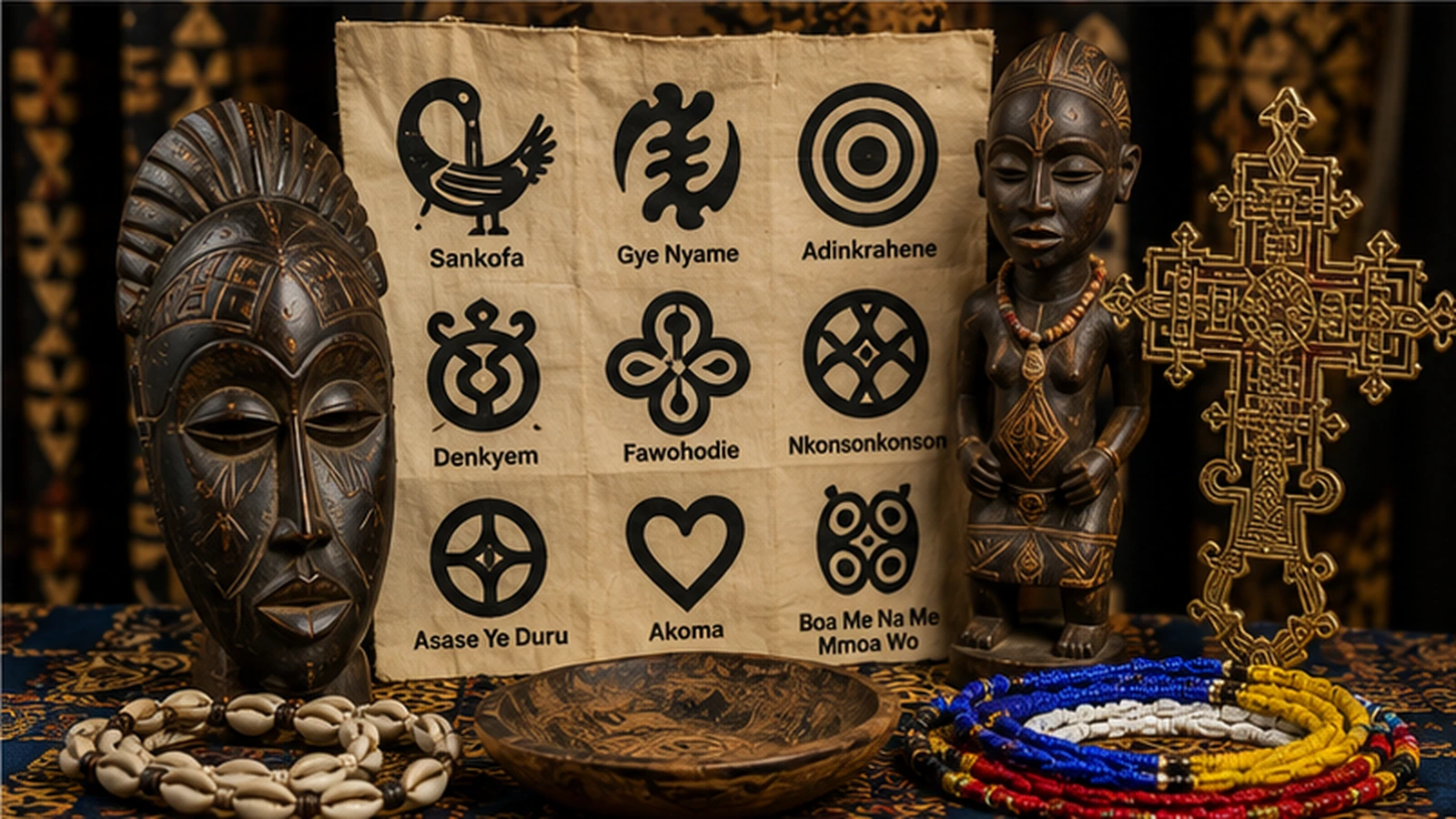
“Africa has one prosperity tradition.” Al-Jertiq is Nubian and Sudanese; Adae is Akan; Buganda practices are different again. Each requires its own context.
“A commercial product is an authentic ritual object.” Mass-produced décor may imitate a symbol without ritual authorization, provenance or correct use.
Key Takeaways
Prosperity rituals are culturally structured practices concerned with flourishing, not a universal money-attraction formula.
Prosperity can include harvest, health, fertility, household peace, ethical work, business stability and community wellbeing.
Symbols such as lamps, grain, red envelopes, flowers and offering dishes receive meaning from a particular tradition.
Diwali, Chinese New Year, Inari worship, Al-Jertiq, Roman household religion and Egyptian temple offerings should not be blended into one invented rite.
Giving, food sharing, offerings and gratitude often connect abundance with reciprocity and responsibility.
Ritual may support meaning, identity or confidence, but it cannot scientifically guarantee money or success.
Responsible study names the community, respects custodians and distinguishes living belief from historical evidence and modern interpretation.
People Also Ask
What is a prosperity ritual?
It is a culturally structured practice used to seek, celebrate or give thanks for abundance, wellbeing, harvest, household stability or successful work.
What symbols represent prosperity?
Common symbols include lamps, grain, water, flowers, money gifts, red or gold decoration, gates and shared food, but their meanings differ by culture.
Why is rice associated with prosperity?
Rice represents food security and harvest in many agrarian societies. In Japan, Inari worship developed from rice and harvest traditions before expanding to business prosperity.
What does Lakshmi represent?
Lakshmi is associated with abundance, auspiciousness, beauty, agriculture and prosperity. Her symbolism extends beyond money to fertile lands and household wellbeing.
Why are red envelopes given?
They combine good wishes with an actual gift of money and express family or social relationships during Chinese New Year and other occasions.
Are there African prosperity rituals?
There are many distinct African traditions. Al-Jertiq is a documented Nubian Sudanese practice linked with protection, fertility and abundance; it is not a universal African ritual.
Can a prosperity ritual make someone rich?
No ritual can scientifically guarantee wealth, customers, employment or investment returns.
Is a prosperity ritual the same as wealth magic?
Not always. Prosperity ritual is a broad category that may concern harvest, health or community wellbeing. Modern wealth magic focuses more directly on personal money or opportunity.
Can someone create a personal prosperity practice?
Yes, as a reflective routine based on gratitude, ethical intention and practical action, provided it is not falsely presented as another culture's ceremony.
What offerings are used?
Offerings vary and may include lamps, water, grain, fruit, sweets, flowers, incense, money or food. Use only what belongs to the tradition and follow safety and local rules.
Frequently Asked Questions
Are prosperity rituals always religious?
No. Some are explicitly religious, while others are family customs, civic festivals, seasonal practices or modern personal routines.
Is prosperity the same as good luck?
They overlap, but prosperity usually describes a continuing condition of flourishing, while luck may refer to a favorable event or chance.
Why do many rituals begin with cleaning?
Cleaning can mark a transition, prepare sacred or social space, show respect and make the household ready for guests, offerings or a new season.
Can I use a Lakshmi image without being Hindu?
People can study and appreciate Hindu art, but devotional use should be approached respectfully and informed by Hindu sources. Do not advertise the image as a guaranteed money tool.
Are foxes symbols of money in Japan?
Fox statues at Inari shrines represent messengers of Inari. Calling them universal money symbols removes their Shinto context.
Do Chinese prosperity symbols mean the same in every dialect?
No. Some symbolism depends on homophones, local language, regional custom and historical convention.
Can rituals replace a business plan?
No. Registration, licensing, pricing, customer research, bookkeeping, insurance, quality and management remain essential.
Should offerings be left in nature?
Only when the tradition, site rules and environmental conditions allow it. Food, coins, candles and non-biodegradable materials can harm wildlife or sacred sites.
Can I mix objects from several cultures?
For private décor, people make personal choices, but the result should not be described as an authentic traditional ritual. Sacred objects deserve accurate identification.
Are prosperity rituals safe?
Many are ordinary household or shrine practices, but fire, smoke, food allergies, crowds, travel and financial exploitation create practical risks. Follow local rules and authorized guidance.
What is the role of elders?
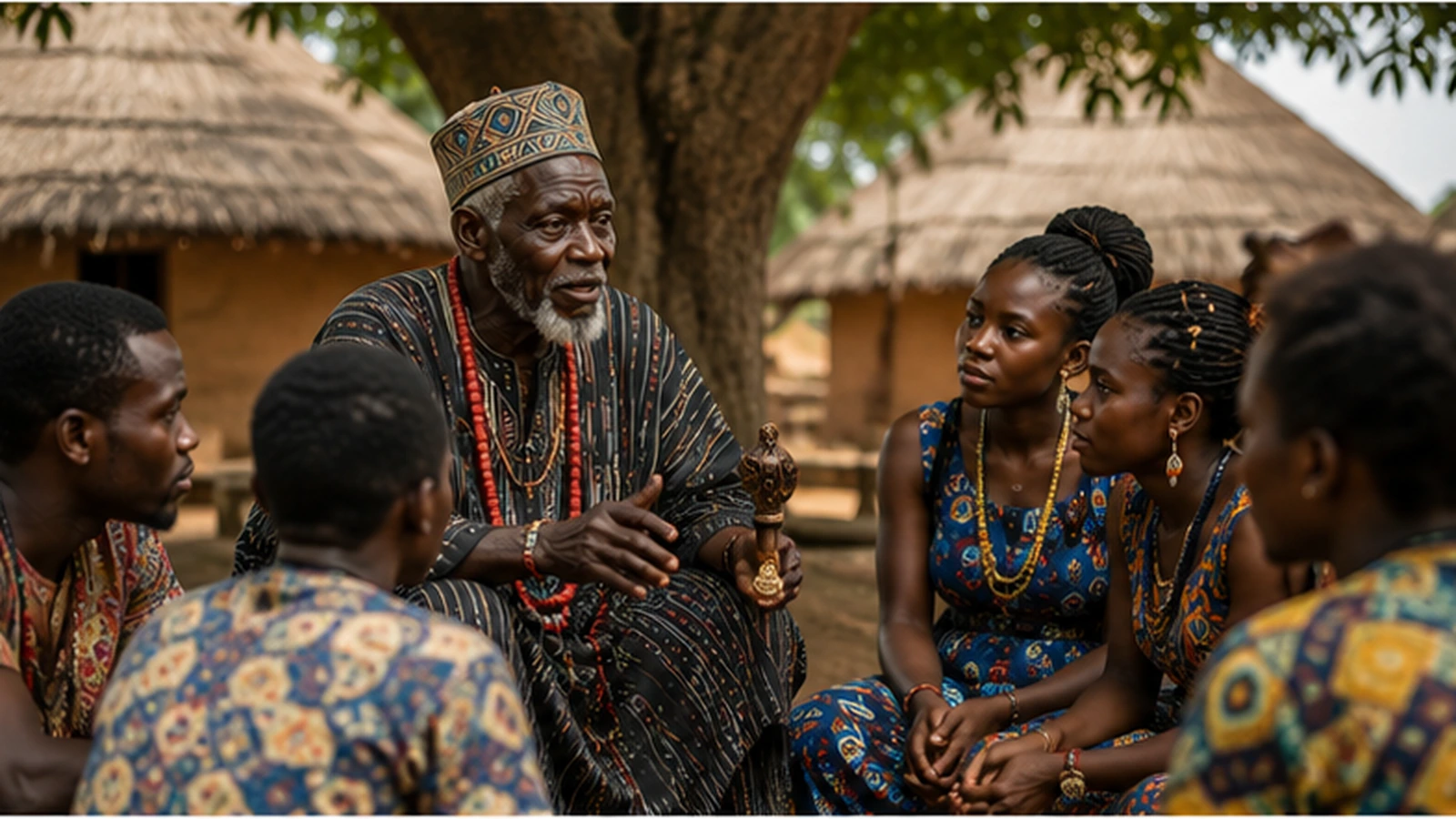
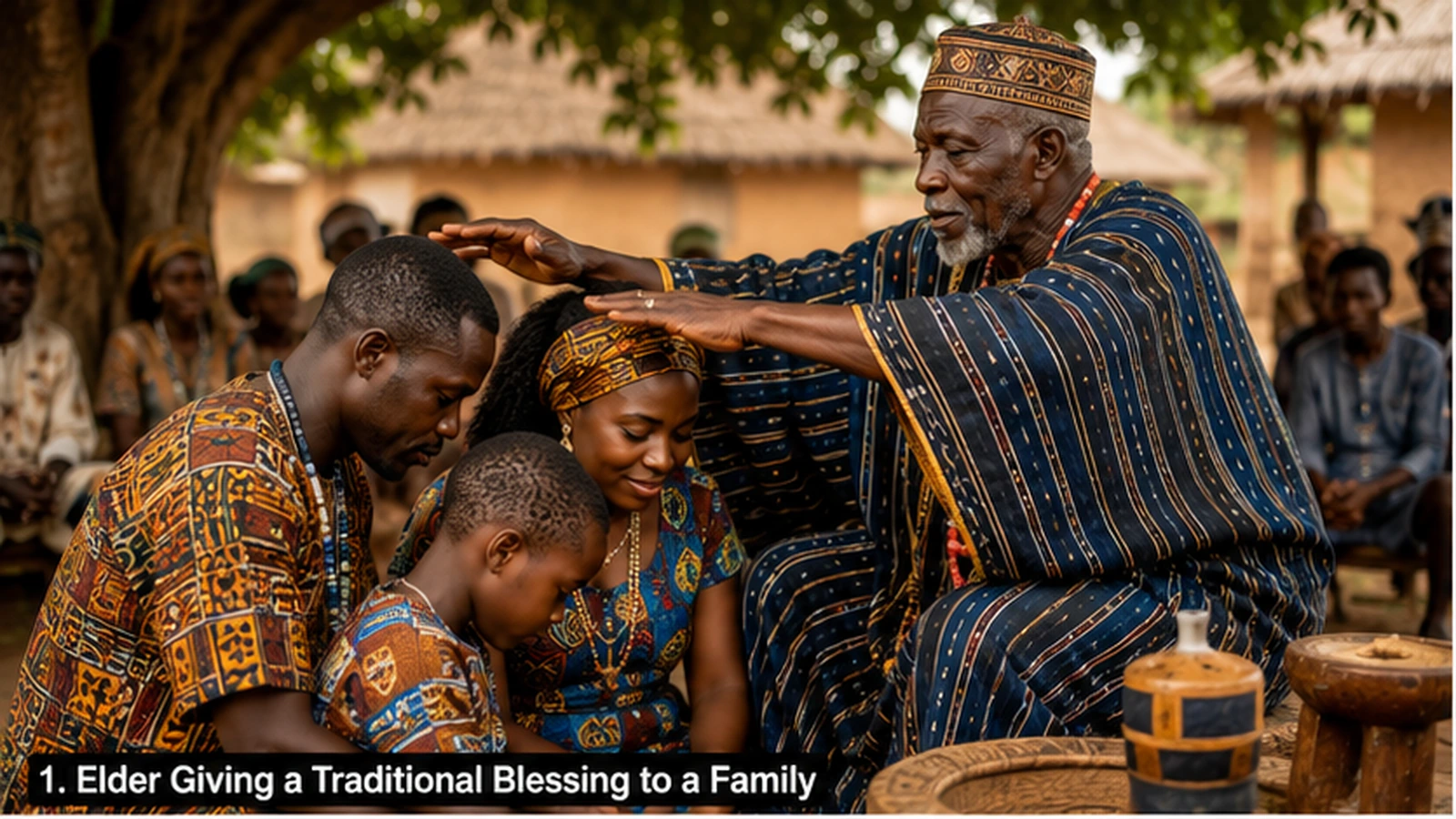
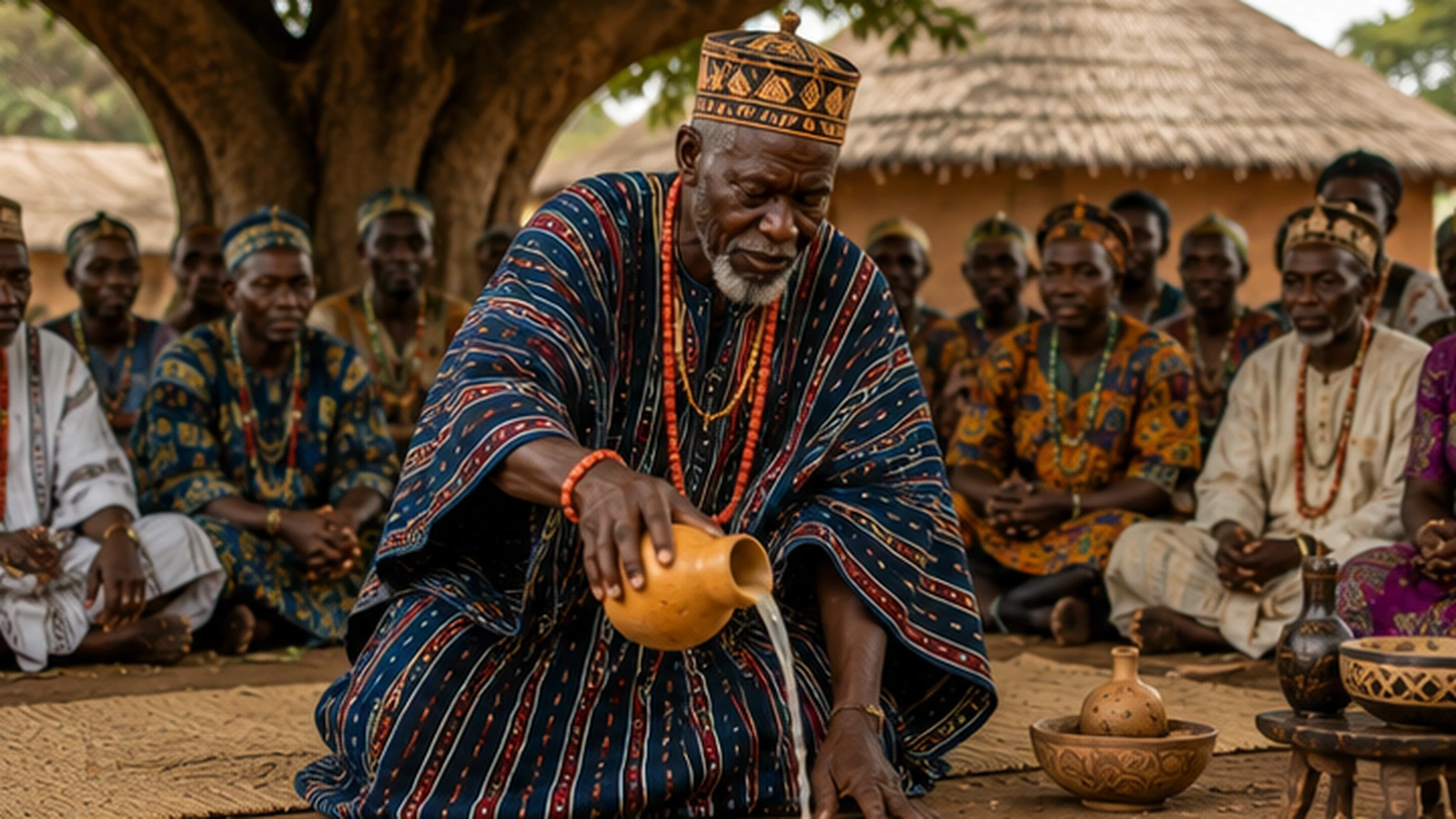
In some traditions, elders preserve knowledge, lead blessings, authorize objects or connect a life event with family history. Their role is not universal but should be respected where it exists.
How much should a ritual cost?
There is no universal fee. Ask for transparent costs, materials and customary offerings. Avoid pressure, threats or open-ended charges tied to promised wealth.
Conclusion
Prosperity rituals reveal how communities imagine a good life. Some emphasize lamps and household welcome; others gifts, rice, shrine prayer, fertility, ancestral continuity or offerings that sustain divine order. Their objects may be beautiful, but the deepest meaning lies in relationships: between people and land, families and elders, worshippers and deities, work and ethics, receiving and giving.
The most useful comparison is therefore not a list of “powerful” ingredients. It is an understanding of how each tradition defines flourishing and what responsibilities accompany it. Respect the source, name the community, distinguish belief from evidence, and never replace practical financial decisions with a promise of ritual certainty.
Final Summary
Prosperity rituals are diverse cultural practices for expressing abundance, wellbeing and hope. Study them as living traditions rather than universal wealth formulas. Their symbols gain meaning from context, their benefits cannot be guaranteed, and responsible modern use should join gratitude with ethical and practical action.
Article Information
- Publisher
- Ancestral Temple
- Editor
- Ancestral Temple
- Last updated
- Jul 30, 2026
- Last reviewed
- Jul 30, 2026
- Content version
- 7028c974a8
This educational article should be read as cultural and spiritual information, not as medical, legal, financial, or emergency advice.
Helpful Related Guidance
About the Author
 Ancestral Temple
Spiritual guide and practitioner with decades of experience in ancestral wisdom, rituals, and divine guidance.
Related Posts
View All






Comments
We'd love to hear your thoughts.