
How to Remove Bad Luck: Cleansing Rituals, Cultural Beliefs and Practical Renewal
Pillar Article

Quick Summary
When several painful events happen close together, it can feel as though bad luck has settled over a person, home, relationship or business. Some people understand that feeling thr...
When several painful events happen close together, it can feel as though bad luck has settled over a person, home, relationship or business. Some people understand that feeling through religion or ancestral tradition. Others see coincidence, stress, unsafe conditions, poor timing or a pattern that has not yet been corrected. Both the feeling and the consequences can be real even when the explanation remains uncertain.
A responsible response does not begin by declaring that you are cursed. It begins by separating what can be observed from what is believed, choosing culturally appropriate forms of reflection, and taking practical steps wherever action is possible. Cleansing can mark a transition, but it should support judgment rather than replace it.
| Quick Answer To “remove bad luck,” first identify the exact setbacks rather than treating every problem as one invisible force. Address urgent health, safety, legal or financial issues; clean and reorganize one physical space; review repeated patterns; seek trusted support; and use prayer or a simple personal ritual only as a marker of intention. No ritual can guarantee control over chance, but meaningful structure may reduce uncertainty and help you act more clearly. |
|---|
What Does “Bad Luck” Mean?
Bad luck is an everyday phrase, not a single diagnosis. It can describe an unwanted event caused by chance, a cluster of setbacks that share a practical cause, a cultural interpretation of misfortune, or a feeling that life has become unpredictable and hostile. These possibilities can overlap, but they should not be treated as identical.
A broken appliance, a delayed payment and an argument may occur in the same week without being connected. On the other hand, repeated missed deadlines may share one correctable cause, such as exhaustion, unclear responsibilities or unreliable transport. The useful question is not only “Why is this happening to me?” but also “Which parts are random, which parts are structural, and which parts can I change?”
Psychological research helps explain why ritual becomes attractive during uncertainty. Experiments have found that reminders of randomness can increase people’s evaluation of ritual efficacy, and anxiety can produce more repetitive and rigid behavior. Reviews of ritual research describe possible roles in emotion regulation, performance preparation and social connection. These findings help explain why rituals can feel stabilizing; they do not show that a ritual directly changes unrelated external events. [9][10][11][12]
Can Bad Luck Actually Be Removed?
There is no reliable scientific test that detects a supernatural substance called bad luck, and no controlled method has established that a cleansing ceremony changes random outcomes. That does not make every ritual meaningless. A ritual may create a clear beginning and ending, focus attention, organize a family or community, support prayer, reinforce values, or help someone move from helplessness toward deliberate action.
The safest interpretation is layered. A religious practitioner may understand purification spiritually. A psychologist may describe ritual as structured coping. A historian may document objects and ceremonies without judging their supernatural claims. A practical adviser may focus on changing habits, environments and decisions. An article can respect all four perspectives without pretending they prove the same thing.
| Important distinction A ritual may change your attention, emotional state, relationships or behavior. It should not be presented as guaranteed control over weather, disease, another person’s will, legal decisions, markets, random chance or the future. |
|---|
Why Cleansing and Protection Rituals Appear Across Cultures
UNESCO describes social practices and rituals as community activities linked to identity, memory, worldview and major life events. Their importance comes from the meaning communities give them and from the participation of practitioners, not from a universal formula that can be detached and copied anywhere. [1]
Water, washing, sweeping, new clothing, smoke, prayer, offerings, protective objects and shared meals often appear because they make transition visible. Dirt can be physically removed. A doorway can mark movement from outside to inside. A discarded object can symbolize release. Repetition gives people a predictable sequence when life feels uncertain. Similar materials do not mean the traditions are the same.
Cleansing and Misfortune in Specific Cultural Traditions
Shinto Harae, Misogi and Temizu
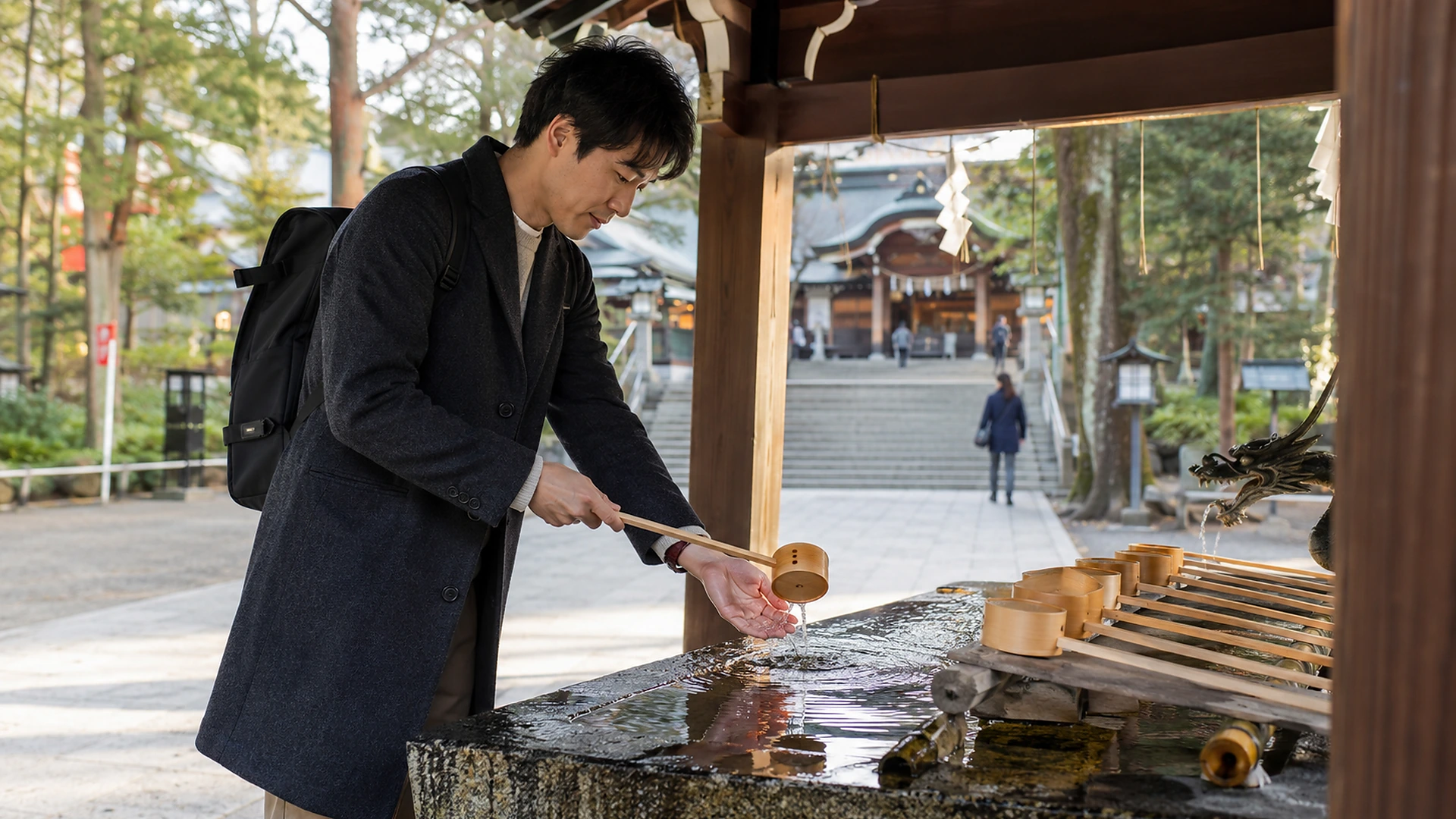
In Shinto vocabulary, harae refers to purification ceremonies associated with removing pollution, sin or misfortune and restoring a condition appropriate for approaching the kami. Misogi refers specifically to bodily ablution and has mythic associations with Izanagi washing after returning from the underworld. Kokugakuin University’s Encyclopedia of Shinto notes that the terms are linked but historically distinct. Visitors to shrines may also perform temizu, washing the hands and mouth before worship. [2][3]
These practices should not be reduced to “a Japanese spell for bad luck.” They belong to Shinto institutions, narratives and ritual etiquette. A visitor can follow a shrine’s public instructions respectfully, but copying priestly rites at home or combining them with unrelated traditions misrepresents their context.

Lunar New Year Cleaning and Auspicious Renewal
The Smithsonian’s National Museum of Asian Art describes Lunar New Year as a family-centered celebration of spring and the new lunisolar year, with house cleaning among its beloved traditions. A Smithsonian account of a Taiwanese celebration describes sweeping before the new year as symbolically casting out lingering negativity. Timing and details vary by region and family, and some customs discourage sweeping after the new year begins for fear of sweeping away good fortune. [4][16]
This is not evidence that every person should adopt Chinese New Year rules to remove misfortune. It is an example of how physical cleaning, family memory, food, color and auspicious language can create a socially shared threshold between old and new.
Ancient Egyptian Amulets
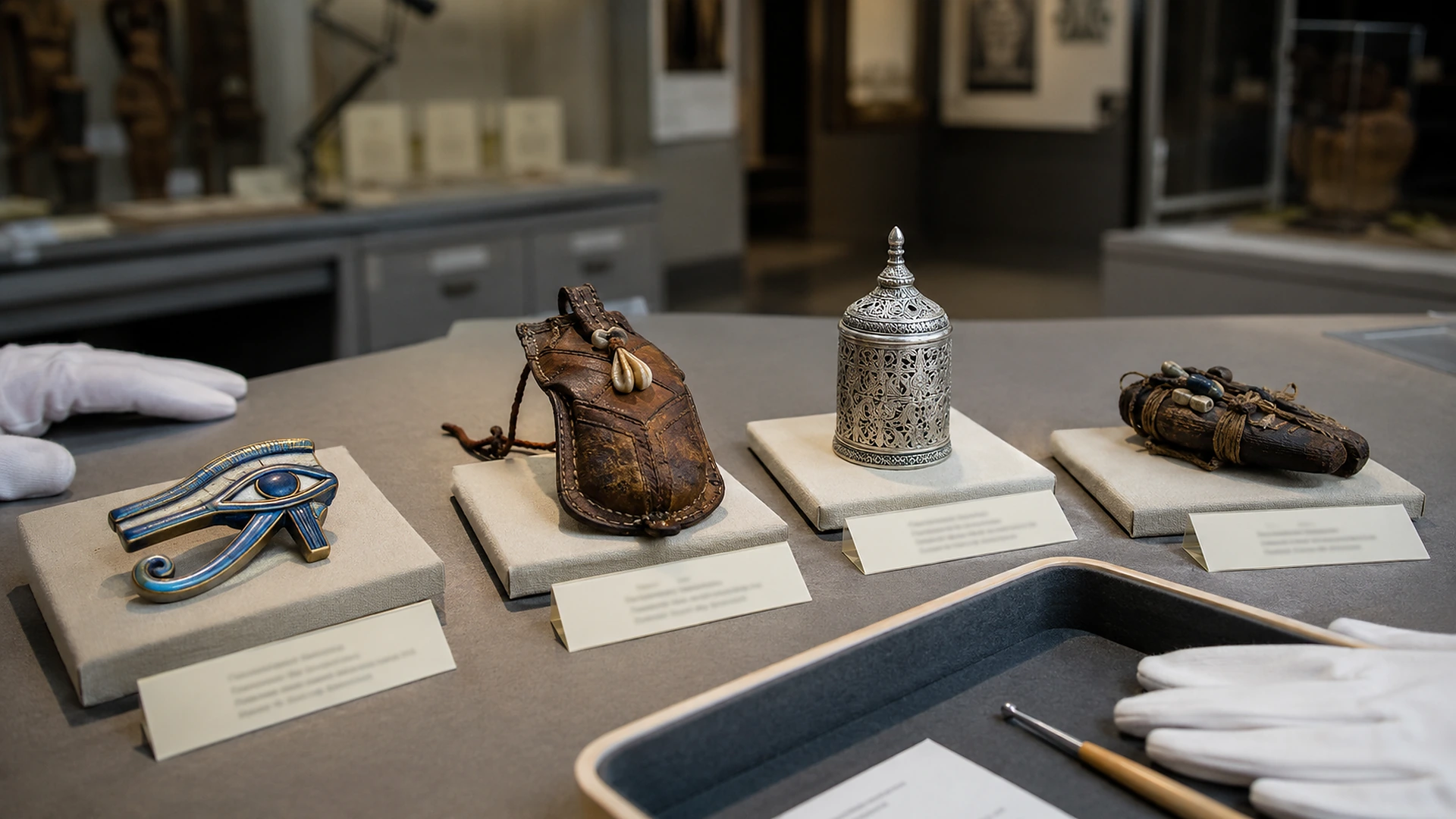
Ancient Egyptian amulets were believed to transfer beneficial qualities such as protection, healing, regeneration or successful passage into the afterlife. The Metropolitan Museum of Art explains that an amulet’s form, material, color, inscription and ritual context could all contribute to its meaning. The objects were worn, placed on the body or used in funerary settings. [5]
A museum object can teach us about historical belief, craftsmanship and religious life. It is not a blank symbol that guarantees modern results. Reproduction scarabs, wedjat eyes or other forms should not be sold with fabricated promises, and ancient funerary objects should not be treated as generic home decor without context.

African Protective Objects and Written Amulets
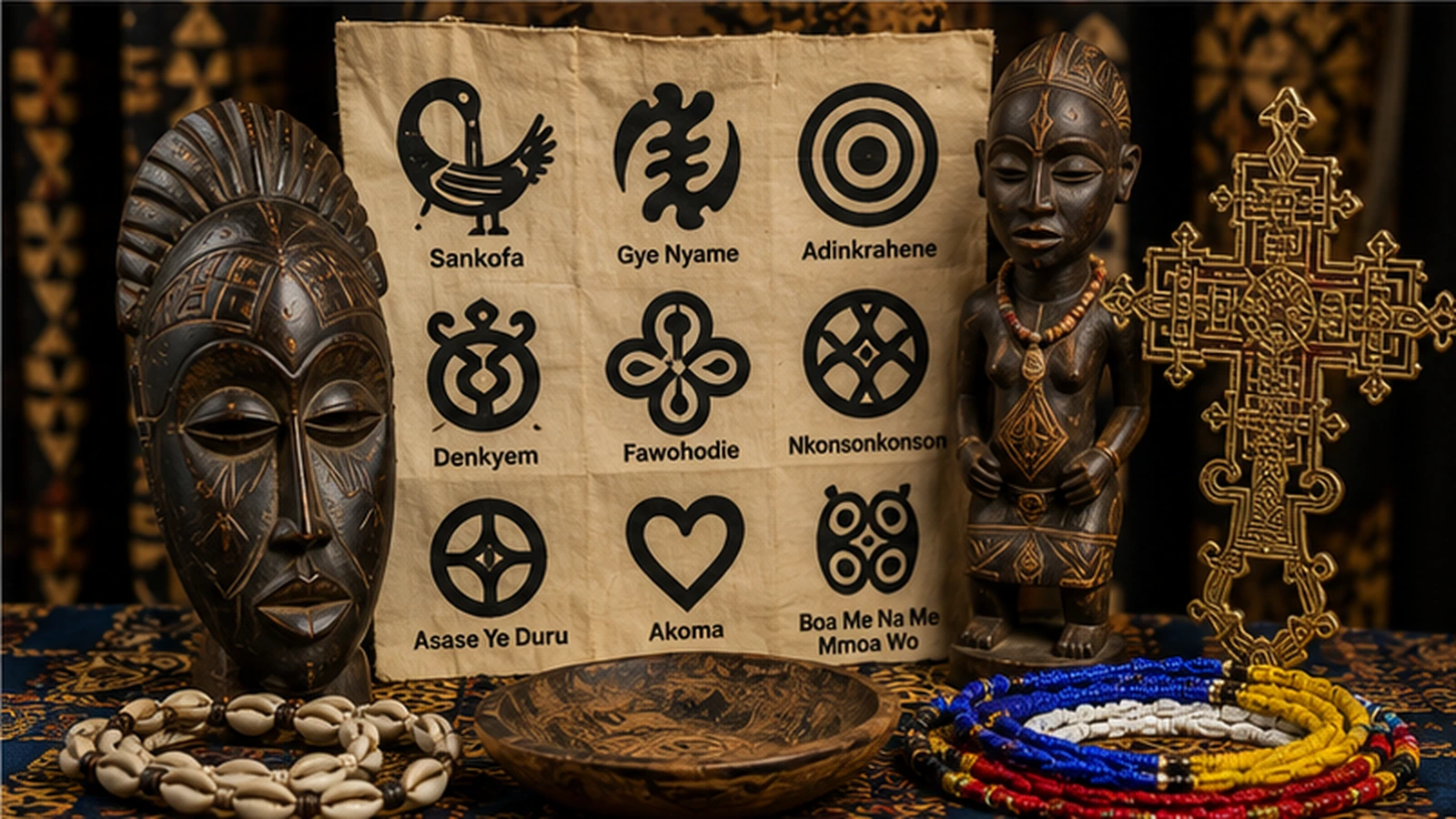
Africa contains thousands of communities and religious histories; there is no single “African bad-luck ritual.” Museum records document diverse protective objects. Smithsonian sources describe Malagasy ody made from varied materials and used for different functions; West African paper and cloth amulets known in some regions as hatumere, containing Qur’anic writing or other designs; and Somali silver hersi containers whose name is translated as “protection.” [6][7][8]
These objects may involve religious specialists, sacred writing, inherited knowledge and local rules. A respectful reader should not copy an inscription, open a sealed container, invent a recipe or commission an object from an unverified seller merely because a museum label mentions protection. Contemporary practitioners may disagree about what is religiously acceptable, and museum language itself can reflect older scholarship that requires careful reading.
Common Cleansing Methods and What They Can Safely Mean
| Method | Responsible interpretation |
|---|---|
| Water | Bathing, hand-washing or cleaning may symbolize renewal and also produce literal hygiene. Use clean water, avoid unsafe natural sites and do not ingest ritual mixtures. |
| House cleaning | Removing rubbish, washing fabrics, opening safe ventilation and repairing broken items can change the atmosphere of a space in observable ways. |
| Prayer or recitation | Prayer may express dependence, gratitude, repentance, hope or protection within a person’s own faith. It cannot ethically be used to control another person. |
| Smoke or incense | Smoke may have religious meaning, but it can irritate lungs, trigger alarms and create fire risk. Use only where legal, ventilated and safe; smoke-free alternatives are valid. |
| Protective object | An amulet may carry personal or inherited meaning. Its cultural legitimacy depends on context, not on how exotic it appears. |
| Giving, restitution or service | Some people mark renewal through charity, repayment, apology or practical help. These actions can change relationships and material conditions directly. |
| Discarding or donating | Letting go of one object can symbolize closure, but do not destroy cultural property, legal evidence, medication, financial records or another person’s belongings. |
| Shared meal | A meal can restore ordinary social connection when relationships are safe. It should not be used to pressure someone into forgiveness or silence. |
An Eight-Step Practical Renewal Process
The following process is a modern, non-denominational editorial framework. It is not presented as an inherited ceremony from any African, Asian, Indigenous or religious tradition. Use spiritual language only if it fits your own beliefs.
Name the events precisely. Write the last three to five setbacks in neutral language: what happened, when, who was involved and what the immediate consequence was. Avoid beginning with “Everything is cursed.” Specific language makes action possible.
Check urgent reality first. If there is injury, illness, violence, fraud, eviction risk, legal notice, debt crisis or danger, contact qualified help. A spiritual act should not delay emergency or professional action.
Separate chance from pattern. Mark each event as mostly random, mostly external, partly influenced by your choices or still unknown. Look for one repeated factor such as sleep loss, poor boundaries, missing maintenance, unclear communication or unsafe work conditions.
Reset one physical space. Choose a small area: desk, doorway, bed, shop counter or kitchen shelf. Clean it, repair one defect and remove one unnecessary object. Completion matters more than dramatic scale.
Choose one symbolic action. Light an electric candle, wash your hands, open a window, say a prayer, read a meaningful text or place a stone in a bowl. Keep the action safe, simple and honest about its modern origin.
Take one material action immediately. Send the email, book the appointment, create the budget, replace the lock, apologize, apply for the job, back up the files or ask for help. This is the bridge between intention and change.
Reconnect with trustworthy people. Isolation magnifies fear. Share the facts with someone who will not exploit you, shame you or intensify supernatural claims. Ask for practical observation, not only reassurance.
Review after seven and thirty days. Note what improved, what remained random and what needs a different strategy. Do not repeat a paid ritual endlessly because a seller says one more payment is required.
How to Reset a Home After a Difficult Period
A home can hold reminders of illness, conflict, bereavement, financial stress or exhaustion. The atmosphere may feel “heavy” because of memory, clutter, poor light, noise, unfinished repairs or strained relationships. Addressing those conditions is not a denial of spiritual belief; it is a way of caring for the place where daily life occurs.
Remove rubbish and spoiled food; wash bedding and frequently touched surfaces.
Open windows only where air quality, weather and security make it safe.
Repair one broken item that creates daily frustration or risk.
Return borrowed property and organize unpaid bills, documents or medication.
Remove objects linked to harm only if they belong to you and are not evidence or culturally significant property.
Choose a calm sound, prayer or period of silence rather than filling the room with unsafe smoke.
Invite a trusted person for tea or a simple meal when social connection would help.
Are There Reliable Signs That You Are Cursed or Carrying Bad Luck?
There is no reliable supernatural checklist. Ordinary setbacks, nightmares, fatigue, conflict, illness, financial pressure and household problems have many possible causes. A fear-based checklist can turn common experiences into “proof,” especially when a seller benefits from diagnosing the problem.
The APA defines superstitious control as the illusion that particular practices influence outcomes without an established causal link. Research also shows that reduced feelings of control can increase illusory pattern perception. These findings do not settle religious questions, but they are a reason to slow down before treating coincidence as certainty. [13][17]
| Use evidence for urgent decisions Seek medical assessment for health symptoms, legal advice for legal problems, qualified financial guidance for money problems, and safeguarding support for threats or abuse. Spiritual care can accompany appropriate help; it should not replace it. |
|---|
How Bad-Luck and Curse-Removal Scams Work
Fear makes people vulnerable to escalating claims. A scammer may say they alone can detect a curse, that the danger will spread to relatives, or that a first payment revealed a deeper problem requiring more money. The seller may demand secrecy, cash, gift cards, cryptocurrency, jewelry or access to personal information.
The Federal Trade Commission warns generally against schemes that promise miraculous outcomes, pressure people to act immediately, rely on unverifiable testimonials or demand risky forms of payment. The FTC has also identified “Blessing Circle” and similar names as pyramid-style chain-letter scams. [14][15]
A guaranteed result or exact deadline for supernatural change.
Threats that refusing payment will harm you or your family.
Repeated claims that a larger hidden curse has been discovered.
Requests for bank details, passwords, identity documents, jewelry or intimate photographs.
Instructions to stop medication, avoid doctors, ignore legal notices or cut off trusted people.
Pressure to borrow money, recruit others or pay through gift cards, wire transfer or cryptocurrency.
Refusal to explain price, scope, cancellation terms or cultural credentials in writing.
When Ritual Becomes Compulsive or Increases Fear
A chosen ritual should not trap you. If you feel forced to repeat an action until it is “perfect,” believe disaster will occur if you stop, spend beyond your means, injure yourself, avoid essential activities or become more frightened after each session, seek support from a licensed mental-health professional. Repetitive ritualized behavior can appear in anxiety-related conditions, and treatment should be guided by qualified clinicians rather than spiritual threats. [10][11]
A Safe, Non-Denominational Renewal Ritual
This short practice is original and modern. It does not reproduce a named cultural ceremony.
1. Place a bowl of clean water, a dry cloth and a notebook on a clear table. Use an electric candle if open flame is unsafe.
2. Name one difficult period that is ending and one lesson you intend to carry forward.
3. Wash your hands slowly or wipe the table, acknowledging that physical cleaning is real while the symbolic meaning is personal.
4. Write one action you will take within twenty-four hours and one person you can contact for support.
5. Say: “I release what I cannot control. I accept responsibility for what I can change. May my next steps be clear, safe and honest.”
6. Pour the water into a sink or onto a suitable plant, complete the written action, and review it after one week.
The value of this practice is not that the water absorbs a measurable curse. Its value is that it creates a boundary between rumination and action while keeping the symbolic claim modest.
Applying Renewal to Different Areas of Life
| Area | Grounded renewal focus |
|---|---|
| Work or business | Review deadlines, contracts, cash flow, inventory, maintenance, staffing and communication. A blessing may mark intention; it cannot replace accounting, insurance or lawful operations. |
| Money | List debts, due dates, income and essential expenses. Avoid “money-doubling,” blessing-circle and guaranteed prosperity schemes. |
| Relationships | Look for patterns in boundaries, communication and safety. Cleansing cannot make another person love, forgive or return. |
| Health | Use spiritual support alongside qualified healthcare. Do not interpret symptoms as proof of a curse or stop treatment because of a ritual claim. |
| Home | Address security, ventilation, pests, leaks, wiring, clutter and conflict. Practical repairs often change the feeling of a space. |
| Grief and transition | A ritual may honor memory and mark change. Grief is not bad luck or impurity, and it does not need to be “cleansed away.” |
Common Misunderstandings
“If several setbacks happen together, they must share one supernatural cause.” Clusters occur by chance, and separate problems may also share ordinary causes. Investigate before concluding.
“A powerful ritual must be expensive or secret.” Price and secrecy do not establish legitimacy. Fear-based escalating fees are a warning sign.
“All cleansing traditions use the same elements.” Water, smoke, salt and objects have different meanings and permissions in different communities.
“If a ritual does not work, the client lacked faith.” This claim protects the seller from accountability and can intensify shame.
“Bad luck proves moral impurity.” Misfortune affects people regardless of moral worth. Do not blame victims of illness, violence, poverty or disaster.
“Practical action is less spiritual.” Repair, honesty, planning, medical care, restitution and help-seeking can be consistent with spiritual values.
Key Takeaways
Bad luck is a description of unwanted events or interpretations, not a single proven force or diagnosis.
Ritual may support transition, emotional regulation, social connection and purposeful action, but it does not guarantee control over random events.
Shinto purification, Lunar New Year cleaning, ancient Egyptian amulets and African protective objects belong to distinct histories and communities.
A responsible reset pairs one safe symbolic act with immediate material action.
There is no reliable checklist proving that a person is cursed.
Avoid anyone who diagnoses danger, demands secrecy or escalating payment, guarantees results or tells you to abandon professional care.
The healthiest outcome may be greater clarity, safer conditions, stronger support and better decisions—not proof that every future event will be favorable.
People Also Ask
What can I do to remove bad luck?
Name the exact setbacks, address urgent practical risks, clean and reset one space, review repeated patterns, seek trusted advice and use a safe personal ritual only as a marker of intention.
Do cleansing rituals really work?
They may help people regulate emotion, mark transitions and organize action. There is no reliable evidence that they control random external events or remove a measurable supernatural substance.
How do different cultures understand bad luck?
Meanings vary. Misfortune may be understood through religion, ancestors, social relationships, moral order, impurity, auspicious timing, chance or a combination of factors.
What is Shinto purification?
Harae and misogi are related Shinto concepts of purification. Temizu is the public washing of hands and mouth commonly performed before shrine worship.
Why do people clean before Lunar New Year?
Cleaning helps prepare the home and mark the transition into a new year. In some Chinese and diaspora traditions it is associated with clearing lingering negativity and welcoming auspicious renewal.
Can an amulet protect me from bad luck?
Many traditions attribute protective meaning to amulets, but their significance depends on cultural context. No object guarantees immunity from harm or replaces practical safeguards.
How can I cleanse my home safely?
Clean physically, repair hazards, use ventilation where safe, avoid toxic substances and excessive smoke, and choose low-risk symbolic actions such as prayer, music, light or an electric candle.
Can anxiety make me feel cursed?
Anxiety and reduced control can increase attention to patterns and ritualized behavior. A clinician can help when fear or compulsive rituals interfere with daily life.
How do I spot a bad-luck removal scam?
Watch for guaranteed results, threats, secrecy, escalating fees, requests for valuables or risky payment methods, and instructions to avoid trusted or professional help.
When should I seek professional help?
Seek qualified help for medical symptoms, legal problems, financial distress, threats, abuse, fraud, severe anxiety or compulsive rituals.
Frequently Asked Questions
Is it safe to burn herbs or incense to remove bad luck?
Smoke can worsen asthma, irritate lungs, trigger alarms and cause fire. Use legal, ventilated and low-smoke methods, or choose a smoke-free symbolic alternative.
Can I use salt at my doorway?
Salt has symbolic meaning in several traditions, but it can damage floors, harm plants and endanger pets if misused. Do not claim a culturally specific practice without context.
Should I throw away gifts from a difficult relationship?
Only if they belong to you and doing so supports your well-being. Preserve legal evidence, valuable property and culturally important objects, and do not destroy another person’s belongings.
Can prayer change my luck?
Prayer may support hope, humility, gratitude and action within a faith tradition. It should not be marketed as guaranteed control over chance or another person.
How often should I repeat a cleansing ritual?
A personal practice may be repeated when meaningful, but repetition should not become financially exploitative, physically harmful or compulsive.
Can I combine rituals from several cultures?
Avoid blending living sacred practices into an invented ritual. Use your own tradition, seek legitimate guidance, or choose a clearly modern non-denominational practice.
What if I feel worse after a cleansing?
Stop the practice, speak with someone trustworthy and seek medical or mental-health support if you have severe fear, physical symptoms or compulsive urges.
Does a streak of bad luck mean I should make a major life decision immediately?
No. Delay irreversible decisions when frightened. Verify facts, seek independent advice and distinguish urgent action from panic.
Conclusion
The desire to remove bad luck is often a desire for safety, explanation and a new beginning. Cultural traditions offer powerful languages for purification, protection and renewal, but those languages are not interchangeable and should not be used to frighten or exploit people.
A grounded renewal begins with truth: some events are random, some are caused by systems beyond individual control, some reveal patterns, and some remain unexplained. A safe ritual can mark the moment you choose to respond. The change that follows depends on care, support, repair, preparation and the actions available to you.
Article Information
- Publisher
- Ancestral Temple
- Editor
- Ancestral Temple
- Last updated
- Jul 30, 2026
- Last reviewed
- Jul 30, 2026
- Content version
- 17e1e67eae
This educational article should be read as cultural and spiritual information, not as medical, legal, financial, or emergency advice.
Helpful Related Guidance
About the Author
 Ancestral Temple
Spiritual guide and practitioner with decades of experience in ancestral wisdom, rituals, and divine guidance.
Related Posts
View All










Comments
We'd love to hear your thoughts.