
Lunar Year Chronology: How Lunar Calendars Work Across Cultures
Pillar Article
Quick Summary
A lunar year chronology is a way of ordering months, years and historical dates through calendar systems that use the Moon’s repeating phases. The phrase does not name one universa...
A lunar year chronology is a way of ordering months, years and historical dates through calendar systems that use the Moon’s repeating phases. The phrase does not name one universal calendar. It is a useful description for understanding how different societies have counted lunar months, begun new years, dated events and coordinated religious or civic observances.
The basic astronomical problem is shared across cultures: a cycle from one new moon to the next lasts about 29.5 days, while the seasonal solar year lasts about 365.24 days. Twelve lunar cycles therefore make a year of roughly 354 days, leaving a difference of almost eleven days. Calendar traditions respond to that difference in different ways. Some allow the months to move through the seasons. Others add a leap month so that important months remain near the same season. [1][2][3]
Quick Answer
A lunar calendar organizes months around the Moon’s roughly 29.5-day phase cycle. Twelve lunar months total about 354 days, nearly eleven days shorter than the solar year. Pure lunar calendars let months move through the seasons, while lunisolar calendars add leap months or use solar markers to keep lunar months seasonally aligned.
What Does “Lunar Year Chronology” Mean?
Chronology is the arrangement of events in time. In historical study, it includes the calendar era, year number, month, day and method used to convert a date into another calendar. Lunar year chronology therefore asks more than, “What phase was the Moon?” It asks:
These questions matter because the same event can be recorded differently in separate calendar systems. Even within one tradition, historical or regional rules can produce a one-day difference.
The term lunar calendar is also frequently used too broadly. A calendar may use lunar months without being a pure lunar calendar. The traditional Chinese and Hebrew calendars, for example, are lunisolar: their months follow the Moon, but their years are adjusted to remain connected to the solar seasons. [3][4][7]
The Astronomical Cycle Behind a Lunar Month
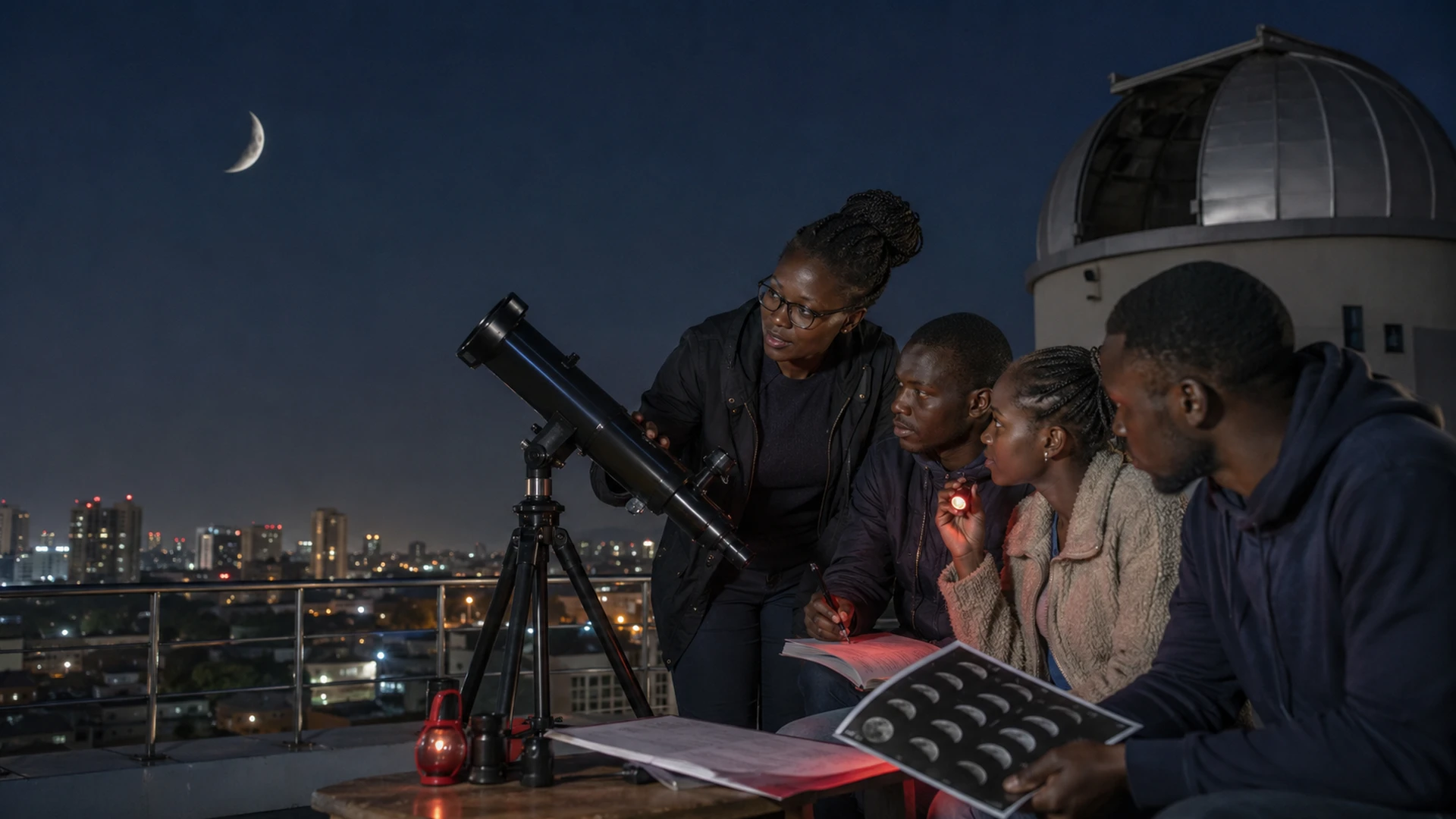
The Moon does not produce its own visible light. Sunlight illuminates half of it, and the portion visible from Earth changes as the Moon travels around Earth. The familiar sequence runs from new moon through waxing crescent, first quarter, waxing gibbous, full moon, waning gibbous, last quarter and waning crescent before returning to new moon. NASA gives the repeating phase cycle as about 29.5 days. [1]
This phase-to-phase cycle is called a synodic month or lunation. It is longer than the Moon’s approximately 27.3-day orbital period around Earth because Earth and the Moon are also moving around the Sun. The Moon must travel slightly farther than one orbit to return to the same Sun-Earth-Moon alignment. [1]
The average synodic month is approximately 29.5306 days. A calendar cannot assign a fraction of a civil day to every ordinary month, so many lunar calendars use months of 29 or 30 days. Over time, formal rules, observations or astronomical calculations keep the calendar close to the actual lunar cycle. [2][3]
Why Twelve Lunar Months Do Not Equal a Solar Year
Twelve average synodic months total about 354.37 days. A tropical year, measured from one seasonal equinox cycle to the next, is about 365.24 days. The gap is approximately 10.88 days. [3]
That mismatch creates two basic calendar strategies.
Strategy 1: Allow seasonal drift
A pure lunar calendar follows lunar months without inserting an extra month to match the solar year. Its months move earlier through the solar seasons by around ten or eleven days each Gregorian year. Over a long cycle, a month can occur in summer, winter, spring and autumn.
The Islamic Hijri calendar is the best-known living example. Its seasonal movement is not a defect to be corrected; it is part of the calendar’s structure and religious history.
Strategy 2: Add a leap month
A lunisolar calendar preserves lunar months while periodically adding an intercalary, or leap, month. The additional month prevents the calendar from drifting too far from the agricultural or seasonal year.
Different calendars use different rules for deciding when and where to add that month. The Chinese and Hebrew systems use structured cycles and astronomical or calendrical rules. Indian lunisolar systems calculate relationships between the Sun and Moon, but regional conventions differ.
Lunar, Lunisolar and Solar Calendars Compared
| Calendar type | Month basis | Relationship to seasons | Common adjustment |
|---|---|---|---|
| Pure lunar | Moon phase cycle | Months move through all seasons | No leap month for seasonal alignment |
| Lunisolar | Moon phase cycle plus solar year | Months remain near intended seasons | Leap month or equivalent intercalation |
| Solar | Earth’s seasonal cycle around the Sun | Year remains aligned with seasons | Leap day or related correction |
A solar calendar can still preserve cultural attention to Moon phases, and a lunisolar calendar can include strong solar elements. Calendar labels describe the main structure, not the full cultural meaning of time.
How a Lunar Month Begins
A calendar month does not always begin at the exact instant of astronomical new moon.
Astronomical conjunction
Astronomers use new moon to describe the conjunction when the Moon and Sun have approximately the same ecliptic longitude as viewed from Earth. At this point, the illuminated half of the Moon faces mostly away from Earth, so the Moon is ordinarily invisible.
Some calculated calendars can use the time of conjunction as part of their formal rules. Modern ephemerides allow conjunctions and lunar positions to be computed with high precision.
First visible crescent
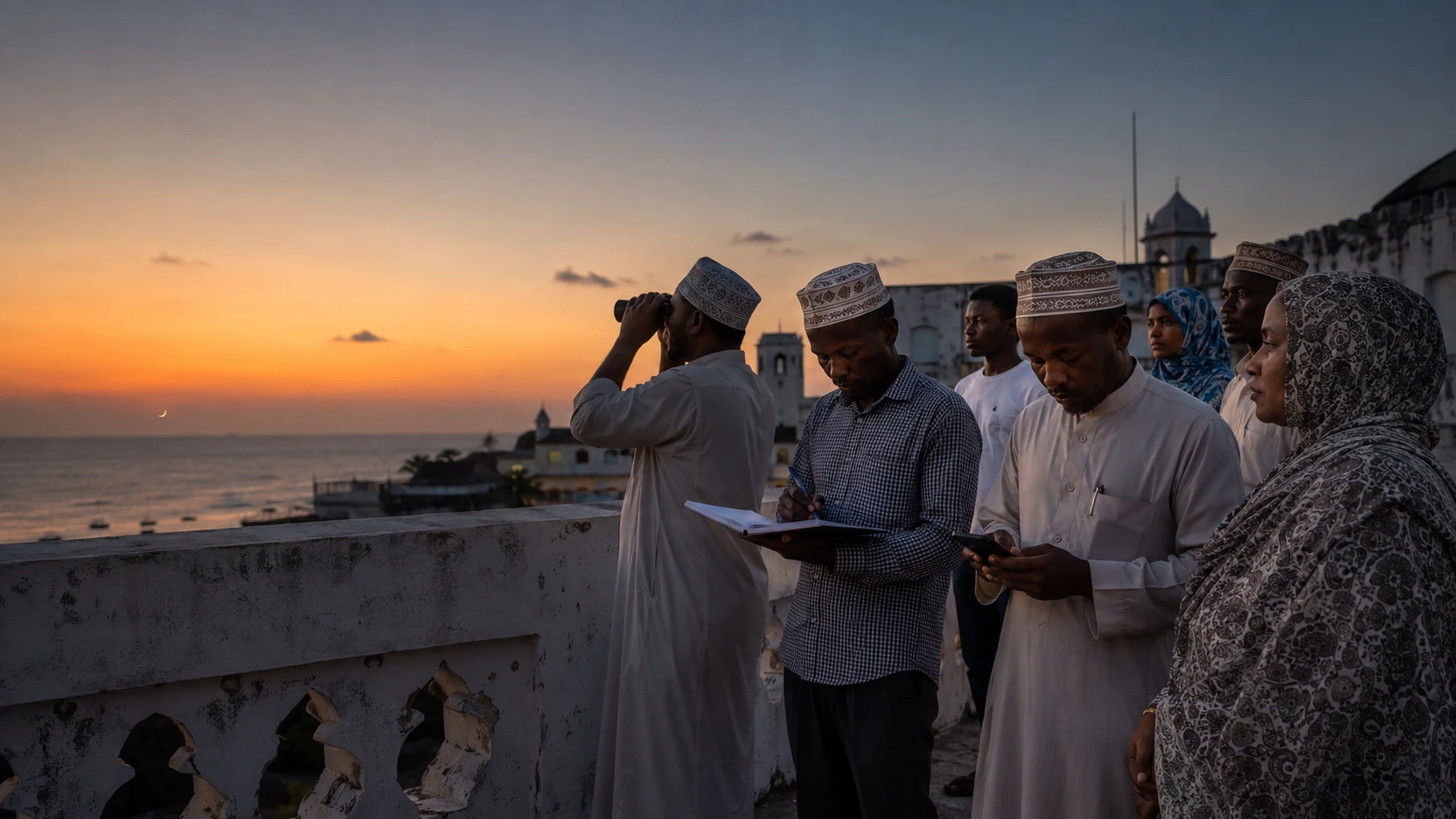
An observational calendar may begin a month after the first young crescent is actually seen following conjunction. Visibility depends on several factors:
Historical Islamic dates can therefore be difficult to convert with complete certainty. Scholarly work on Arabic astronomical records notes that first-crescent visibility was location-dependent and affected by weather, which can create uncertainty when translating an old date into a Julian or Gregorian one. [5]
Civil calculation and published tables
Many modern communities use astronomical calculations, official calendars, direct observation or combinations of these methods. The governing rule is cultural and institutional, not merely technical. Two communities can use the same astronomical data yet adopt different standards for declaring the first day of a month.
The Islamic Hijri Calendar: A Pure Lunar Year
The Islamic calendar consists of twelve lunar months and does not add a thirteenth month to preserve seasonal alignment. Its era is associated with the Hijra, the migration from Mecca to Medina in 622 CE. [13]
In observational practice, the first visibility of the young crescent is a central marker for beginning a new month. Academic studies of Islamic astronomy emphasize the close relationship between lunar observation and religious timekeeping. [5][6]
Because the Hijri year is shorter than the solar year, Ramadan, Dhu al-Hijjah and the other months move through the Gregorian seasons. This means fasting, pilgrimage and anniversaries are experienced under different seasonal conditions across decades and regions.
It is misleading to say that every Muslim community starts every month on exactly the same Gregorian date. Differences can arise from local versus global sighting policies, weather, legal authority, calculation criteria and geographical position. These differences should be described neutrally rather than treated as scientific ignorance. The astronomical facts and the religious rule are related but not identical questions.
The Chinese Calendar: Lunar Months Within a Solar Framework
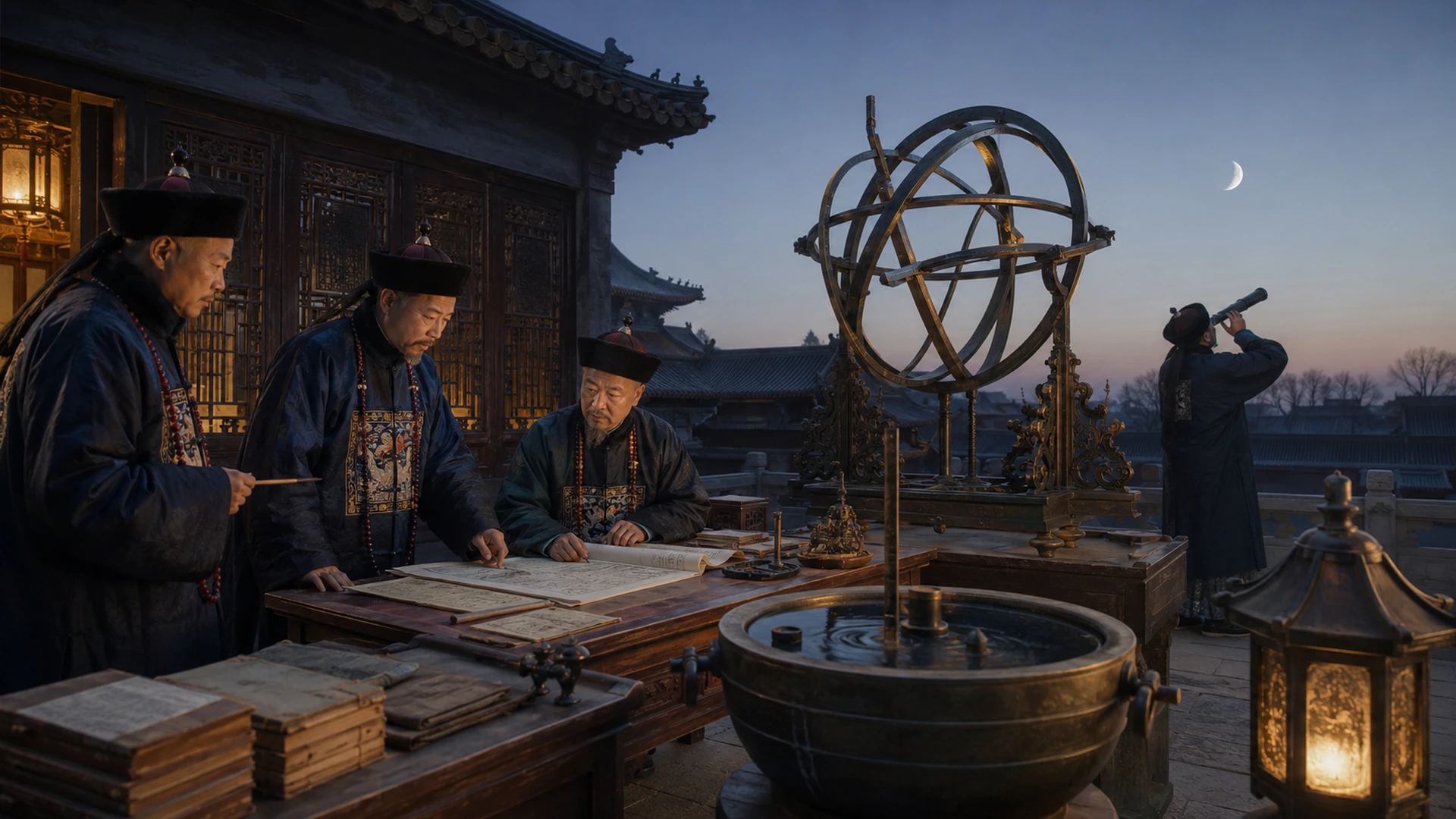
The traditional Chinese Agricultural Calendar, often called the Chinese lunar calendar in everyday speech, is more accurately described as lunisolar. The Hong Kong Observatory explains that it integrates lunar months with the solar year and the 24 solar terms. [3]
A Chinese calendar month begins with a new moon and has 29 or 30 days. A common year has twelve months, while a leap year has thirteen. The leap month is not simply added at the end; its position depends on formal calendar rules involving new moons and solar terms.
The 24 solar terms divide the Sun’s annual path and help describe seasonal change. They historically supported agriculture and remain culturally important. Because the system combines lunar and solar components, “Lunar New Year” is a familiar name, but it should not imply that the calendar ignores the Sun.
The Hong Kong Observatory also notes the use of a 19-year pattern containing seven leap months to harmonize lunar months and the tropical year. [4] Modern official calendar compilation relies on precise astronomical calculations, and published conversion tables may specify how Gregorian dates correspond to Chinese calendar dates. [7]
The Hebrew Calendar: Lunar Months and Seasonal Festivals
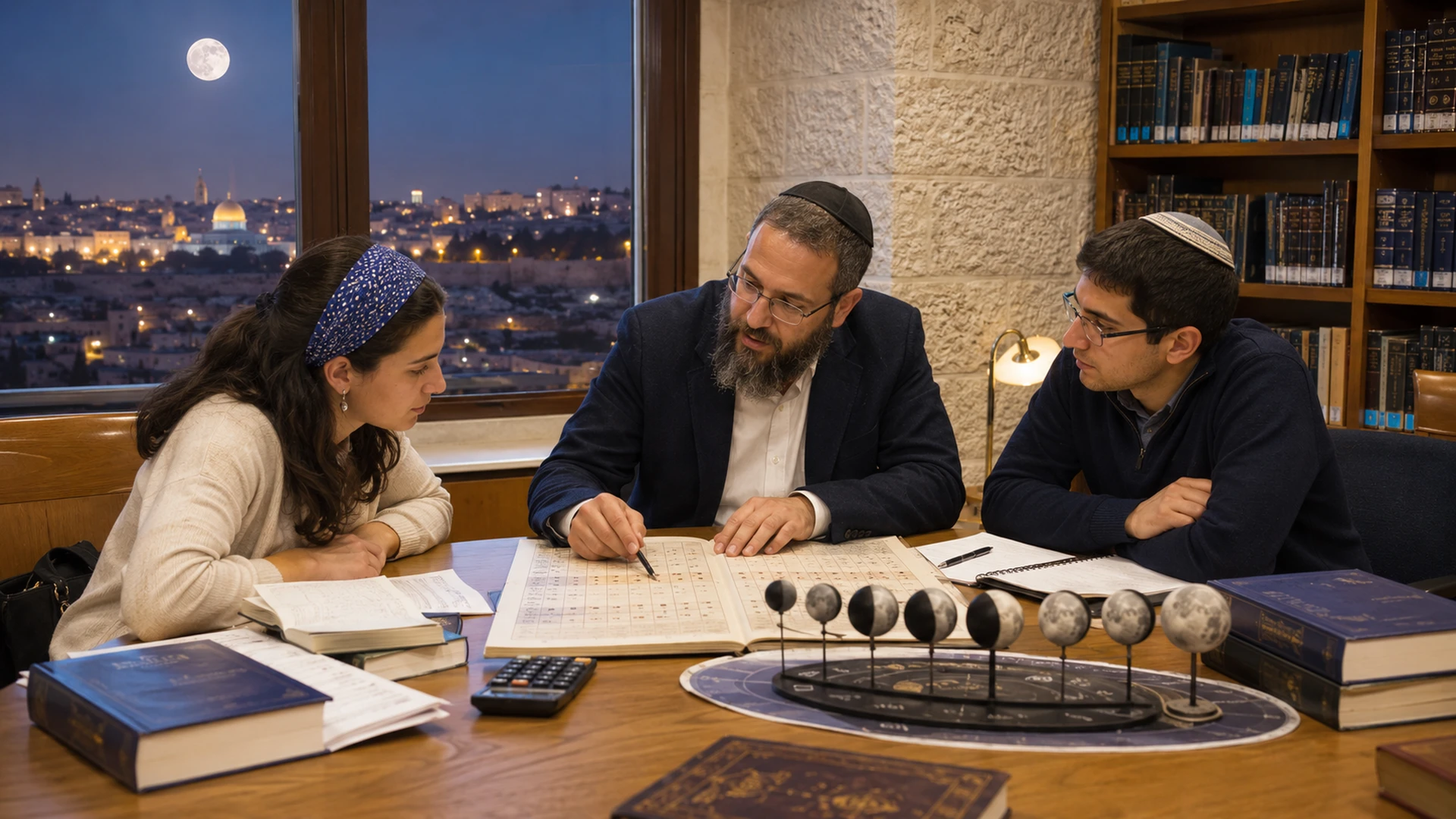
The Hebrew calendar is lunisolar. Its months are lunar, but its year is adjusted so that major festivals retain their relationship to the seasons. Bar-Ilan University describes a structured 19-year cycle in which leap years add an extra month. [7]
The added month is commonly called Adar I, followed by Adar II in a leap year. This arrangement helps keep Passover in the spring season. The calendar also includes formal rules governing whether certain months have 29 or 30 days and when the year begins.
Historical Hebrew dates therefore require more information than a year number alone. A researcher needs to know whether the year was a leap year, which Adar is named, the calendar era and whether the source uses civil or religious month numbering conventions.
The Hebrew calendar is a living system used for worship, festivals, anniversaries, legal documents and community life. It should not be presented only as a fossil inherited from antiquity.
Hindu Calendars and the Panchang Tradition
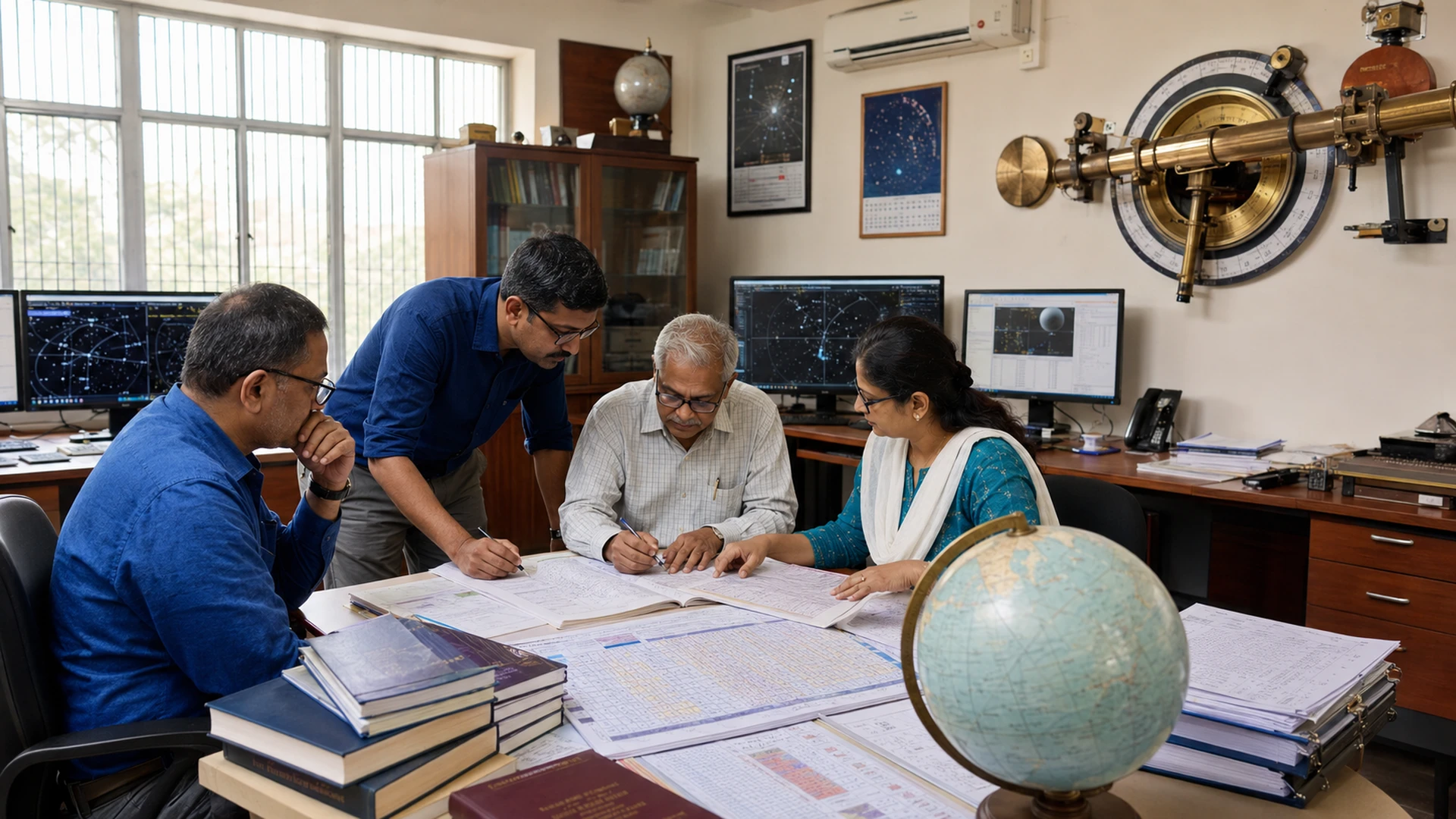
The phrase Hindu calendar refers to a family of regional systems rather than one identical calendar used everywhere. Many religious calendars in India are lunisolar, while civil and regional solar calendars also operate. Month naming, the beginning of the month and the beginning of the year can vary by region.
A panchang traditionally presents five calendrical elements and may include tithi, weekday, nakshatra, yoga and karana, together with festival and astronomical information. A tithi is based on the changing angular relationship between the Moon and Sun, so it does not correspond exactly to a fixed 24-hour civil day.
Indian calendars may count lunar months from new moon to new moon in an amanta system or from full moon to full moon in a purnimanta system. Regional traditions can use the same month name while assigning parts of the lunar cycle differently.
To keep lunar months aligned with the solar year, many Hindu lunisolar systems insert an adhika masa, or additional month, according to astronomical relationships rather than a simple repeating Gregorian schedule.
India’s Positional Astronomy Centre publishes astronomical ephemerides and the Rashtriya Panchang. Its official history notes that calendar reform sought to address divergent regional practices and promote modern astronomical calculation while recognizing lunisolar religious calendars. [8][9]
This does not erase regional calendars. Standardization provides common astronomical data, while local tradition continues to influence festival observance and month naming.
Ancient Mesopotamian Intercalation and Calendar History
The challenge of coordinating lunar months with seasonal years is ancient. Calendars in Mesopotamia used lunar observation for months and periodically inserted an extra month to restore seasonal alignment. Later mathematical cycles formalized the relationship between lunar months and solar years.
The best-known approximation is the 19-year cycle, in which 235 synodic months are close to 19 tropical years. It is often called the Metonic cycle after the Greek astronomer Meton, although related intercalation knowledge developed within earlier Near Eastern astronomy. [2][10][12]
This history should not be simplified into a claim that one civilization invented every later calendar. Calendar systems were revised, transmitted and adapted across political, linguistic and religious boundaries. Similar solutions can also arise because societies face the same astronomical mismatch.
Maya Timekeeping: An Important Caution
The Maya developed sophisticated systems for recording ritual cycles, civil years and long chronological counts. It is inaccurate to reduce the entire Maya calendar to a lunar calendar.
Classic Maya inscriptions also contain a lunar series recording information about lunar months and the age of the Moon. Research shows regional variation in how lunar month counts were organized. [11] This is a strong example of why a culture can track the Moon precisely without making its entire calendar system a simple lunar year.
The same caution applies to other Indigenous time systems. Scholars should not label a calendar “lunar” merely because the Moon has cultural importance. Evidence may show a combination of seasonal, ecological, stellar, ritual and lunar markers.
How Lunar Calendars Shape Festivals and Community Life
Calendars do more than number days. They coordinate fasting, pilgrimage, harvest observances, memorial days, family anniversaries, legal deadlines and communal gatherings.
A calendar can also express authority. Someone must decide which observation is valid, publish conversion tables, regulate leap months or preserve inherited rules. Historically, this work has been performed by court astronomers, religious scholars, state observatories, local elders, mathematical specialists and community institutions.
The same calendar may operate alongside the Gregorian calendar. A family can use Gregorian dates for school and business, a religious calendar for worship, and a local seasonal system for agriculture. These calendars are not necessarily competitors. They answer different social needs.
Why Lunar Dates Can Differ by One Day
A one-day difference does not always mean that one calendar is wrong. It can result from:
The Hong Kong Observatory warns that when a calculated new moon or solar term falls close to midnight, future conversion tables can differ by a day because a few minutes of astronomical uncertainty affect the civil date. [7] Historical observational calendars can contain greater uncertainty because clouds and local visibility were not always recorded.
How to Convert a Lunar Date Responsibly
Before converting a lunar date into a Gregorian date, record the following information.
1. Name the exact calendar
Do not write only “lunar calendar.” Specify Hijri, Chinese, Hebrew, a named Hindu regional calendar or another system.
2. Record the era and year style
The same year number can belong to different eras. Determine whether the source uses AH, Anno Mundi, a regnal year, a cyclical year name or another era.
3. Identify the month rule
Was the month observational, calculated, new-moon based, first-crescent based, amanta or purnimanta?
4. Identify location
Observation and civil-day boundaries depend on place. A date declared in East Africa may not begin at the same moment as one declared in Southeast Asia.
5. Check for leap months
A date in “Adar,” a Chinese repeated month or an Indian adhika month is incomplete unless the leap status is known.
6. Use an authoritative conversion source
Prefer national observatories, established calendar authorities, scholarly software based on published algorithms or peer-reviewed research. Treat anonymous online converters cautiously.
7. State uncertainty
For historical research, write “approximately,” “equivalent under the calculated calendar,” or “may differ by one day under local observation” when appropriate.
Common Misunderstandings About Lunar Calendars
“A lunar month is exactly 28 days”
The visible phase cycle averages about 29.5 days, not 28. The 28-day idea often comes from simplified diagrams or confusion with four seven-day weeks.
“Every lunar calendar has the same New Year”
Calendar years begin according to different religious, seasonal, historical and mathematical rules. There is no universal lunar New Year.
“Chinese New Year follows only the Moon”
The Chinese calendar is lunisolar and integrates solar terms with lunar months. [3][4]
“All Muslims use one worldwide moon sighting”
Communities differ in legal authority, observation policy and calculation criteria. The astronomical crescent is global, but declarations are institutional and regional.
“A leap month is the same as a leap day”
A leap day adds one day to a solar calendar. A leap month adds an entire lunar month to a lunisolar year.
“Traditional calendars are unscientific”
Many traditional calendars depend on systematic observation, numerical rules and precise astronomy. Their cultural purposes differ from those of modern civil calendars, but that does not make them irrational.
“Every Indigenous calendar is lunar”
Indigenous timekeeping systems may use ecological seasons, stars, rainfall, animal behavior, ritual cycles, the Sun and the Moon in different combinations. The correct description depends on evidence from the specific community.
Cultural and Ethical Cautions
Calendar knowledge can be public, technical, religious or restricted. Responsible writing should:
Astronomy can explain the physical Moon and calculate its position. It cannot determine the religious authority of a sighting, the cultural meaning of a festival or the correct interpretation of a sacred tradition. Those questions belong to the communities and institutions that maintain the calendar.
Key Takeaways
People Also Ask
What is a lunar year in simple words?
A lunar year is a period of twelve lunar months. Because each lunar month averages about 29.5 days, a twelve-month lunar year is about 354 days long.
Why is a lunar year shorter than a solar year?
Twelve Moon-phase cycles total about 354 days, while Earth’s seasonal year is about 365.24 days. The difference is almost eleven days.
What is a lunisolar calendar?
A lunisolar calendar uses lunar months but adjusts the year to remain connected to the solar seasons, often by inserting a leap month.
Why does Ramadan change seasons?
The Hijri calendar does not add leap months to match the solar year. Its months therefore begin around ten or eleven days earlier in each Gregorian year.
Is the Chinese calendar a lunar calendar?
It uses lunar months, but it is more precisely a lunisolar calendar because it also uses the solar year and 24 solar terms.
Can a lunar month have 31 days?
Traditional lunar months usually have 29 or 30 days because the synodic month averages about 29.5 days. Calendar systems may handle boundaries differently, but a regular 31-day lunar month is not typical.
Why do lunar date converters disagree?
They may use different calendar algorithms, locations, time zones, crescent criteria or historical assumptions. Observational calendars can also differ from tabular or calculated versions.
Frequently Asked Questions
Is a full moon always the middle of a lunar month?
In many new-moon-based calendars, the full moon occurs near the middle of the month, but the exact civil day can vary because lunar phases do not align perfectly with whole days.
How often is a leap month added?
There is no universal rule. Some lunisolar calendars use a 19-year pattern with seven leap months, while others apply astronomical rules that determine the extra month’s position.
Does a lunar day begin at midnight?
Not always. Some calendars begin the civil or religious day at sunset, while others use midnight or another boundary.
Is the Gregorian calendar completely unrelated to the Moon?
The Gregorian calendar is solar, so its months are not synchronized with Moon phases. However, some religious observances used alongside it still depend on lunar or lunisolar calculations.
Are lunar calendars less accurate?
Accuracy depends on purpose. A pure lunar calendar can track lunar months accurately without tracking seasons. A lunisolar calendar aims to track both and therefore requires intercalation.
What is intercalation?
Intercalation is the insertion of an extra day or month to keep a calendar aligned with an astronomical cycle or desired season.
Can the Moon determine a historical date exactly?
Sometimes astronomical data can narrow a date, especially when eclipses or detailed observations are recorded. But weather, location, copying errors and calendar rules can limit certainty.
Is astrology necessary for a lunar calendar?
No. Calendar astronomy can calculate Moon phases without astrological interpretation. Some cultures connect calendars with astrology, but the astronomical calendar does not depend on claims that planets control human events.
Conclusion
Lunar year chronology begins with a simple visible pattern: the Moon waxes, becomes full, wanes and disappears before returning as a crescent. Turning that pattern into a year is not simple. Twelve lunar months are too short to match the seasonal year, so cultures must decide whether months should move through the seasons or be periodically realigned.
The Islamic calendar preserves a pure lunar year. Chinese and Hebrew calendars combine lunar months with seasonal correction. Indian calendrical traditions use varied lunisolar and solar calculations, while ancient and Indigenous systems demonstrate that Moon observation can belong to much broader ways of measuring time.
Understanding these calendars requires both astronomy and cultural respect. The Moon’s motion can be calculated, but a calendar is also a social institution: it is maintained by communities, scholars, observatories, religious authorities and inherited practices. A responsible chronology therefore names the exact calendar, identifies its rules and states uncertainty rather than forcing every tradition into one universal model.
Final Summary
A lunar calendar follows the Moon’s phase cycle, but lunar calendars do not all create years in the same way. Pure lunar calendars accept seasonal drift. Lunisolar calendars add leap months or use solar markers. Accurate interpretation depends on the calendar system, era, location, month rule and cultural authority involved.
Article Information
- Publisher
- Ancestral Temple
- Editor
- Ancestral Temple
- Last updated
- Jul 30, 2026
- Last reviewed
- Jul 30, 2026
- Content version
- 58675db1bd
This educational article should be read as cultural and spiritual information, not as medical, legal, financial, or emergency advice.
Helpful Related Guidance
About the Author
 Ancestral Temple
Spiritual guide and practitioner with decades of experience in ancestral wisdom, rituals, and divine guidance.
Related Posts
View All









Comments
We'd love to hear your thoughts.