
Full Moon Rituals: History, Symbolism and Cultural Traditions
Pillar Article
Quick Summary
The full moon has been observed, measured, celebrated and interpreted for thousands of years. Its bright appearance makes it one of the most visible recurring events in the night s...
The full moon has been observed, measured, celebrated and interpreted for thousands of years. Its bright appearance makes it one of the most visible recurring events in the night sky, so communities have used it to organize calendars, mark religious observances, gather families, recognize harvest seasons and express ideas about completeness, clarity, renewal or sacred presence.
A full moon ritual is not one universal ceremony. The phrase may refer to a Buddhist observance on a lunar holy day, a Hindu festival held on a purnima, a Chinese family celebration during the Mid-Autumn Festival, Japanese moon viewing, a historical offering to a lunar deity, a contemporary Pagan esbat or a modern personal reflection circle. These practices come from different religions, languages, institutions and histories. They should not be combined into an invented global ritual.
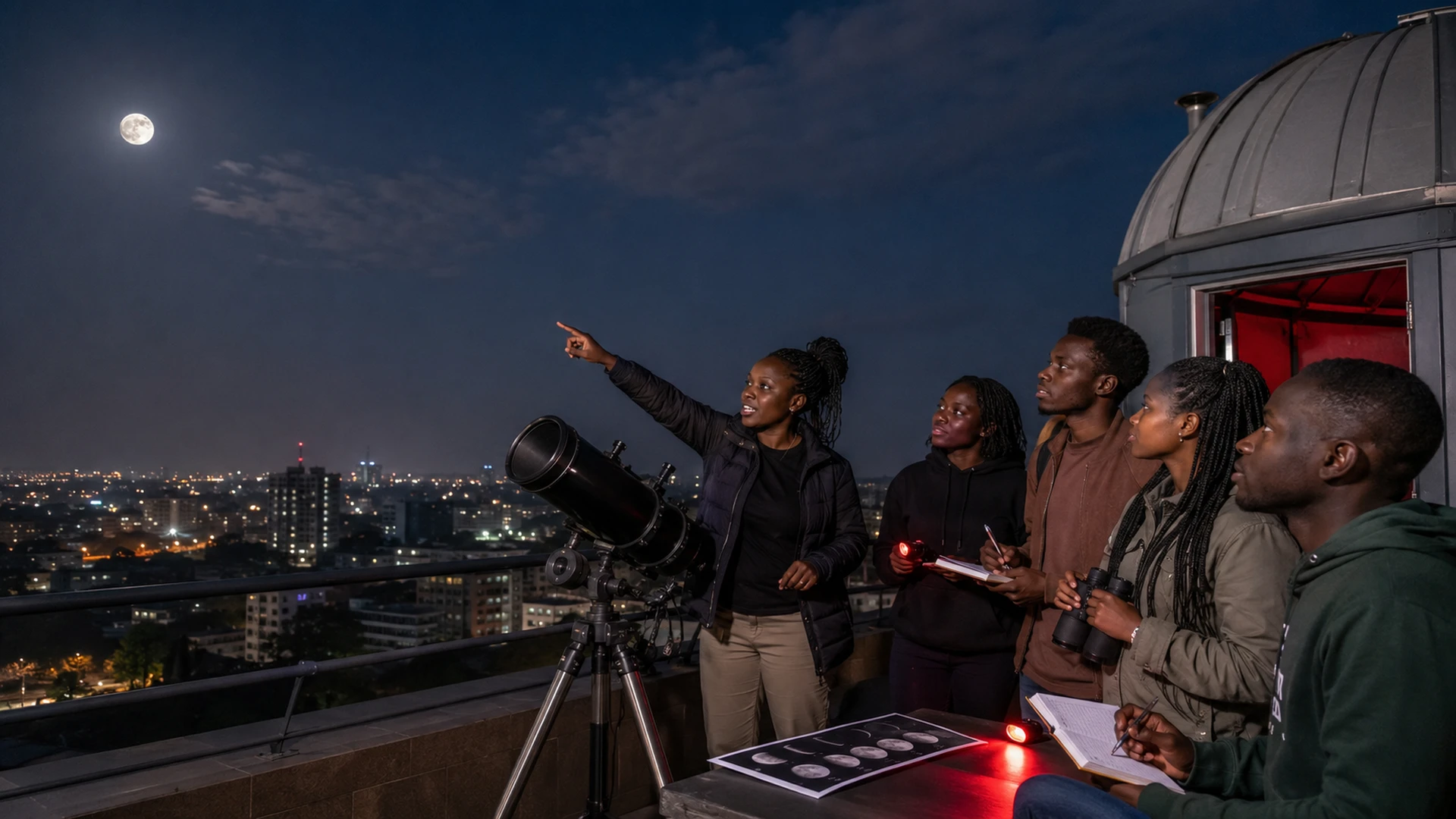
The Moon does not produce its own light. What people call moonlight is reflected sunlight. During a full moon, the side facing Earth appears almost completely illuminated because the Moon is positioned opposite the Sun in our sky. The lunar phase cycle repeats in about 29.5 days.[1]
Cultural meaning begins with this astronomical pattern, but it is created by people. A full moon can symbolize reunion in one festival, monastic discipline in another, a teacher-disciple relationship elsewhere, or simply a beautiful autumn night. Respectful study begins by naming the exact tradition and distinguishing documented practice from modern interpretation.
Quick Answer
Full moon rituals are culturally specific observances held when the Moon appears fully illuminated. Examples include Buddhist Vesak and uposatha observances, Hindu purnima festivals, the Chinese Mid-Autumn Festival, Japanese tsukimi and modern Pagan esbats. Their meanings may involve devotion, discipline, harvest, reunion or reflection. They are not scientifically proven methods for guaranteeing healing, fertility, wealth or manifestation.
What Is a Full Moon?
A full moon occurs when Earth is positioned approximately between the Sun and Moon, allowing the Moon’s Earth-facing hemisphere to appear fully illuminated. The alignment is not usually exact because the Moon’s orbit is tilted relative to Earth’s orbit around the Sun. When the alignment is exact enough for the Moon to pass through Earth’s shadow, a lunar eclipse occurs.
NASA describes eight commonly named phases: new moon, waxing crescent, first quarter, waxing gibbous, full moon, waning gibbous, third quarter and waning crescent. The complete phase cycle, called a synodic month, lasts about 29.5 days.[1]
A full moon generally rises around sunset, reaches its highest point near midnight and sets around sunrise. Exact times vary by date and location.
Full moon and tides
The Moon’s gravity contributes strongly to ocean tides. During both full and new moon, the Sun, Earth and Moon are approximately aligned, so the solar and lunar tide-generating effects reinforce each other. This produces spring tides, which have a larger-than-average difference between high and low water.[2]
The term “spring” means that the water springs or rises more strongly; it does not refer to the season.
Why every full moon is not identical
The Moon follows an elliptical orbit, so its distance from Earth changes. Atmospheric conditions, horizon position, local weather and visual illusions also affect how large or coloured it appears. A so-called supermoon is a popular, not formally standardized, term for a full moon occurring near the Moon’s closest orbital approach to Earth.
These variations can influence observation and photography, but they do not create a different scientific category of spiritual power.
Why the Full Moon Became Culturally Important
The full moon offered several practical and symbolic advantages before electric lighting and standardized calendars.
It was easy to recognize
A bright, round Moon is visually distinctive. Communities could use repeated lunar phases as a shared time marker even without mechanical clocks.
It increased night-time visibility
Moonlight could extend evening activity, travel, fishing, storytelling or public gathering. It never made night as bright as day, but it provided more usable light than a moonless night.
It marked the middle of a lunar month
In many lunar and lunisolar calendars, the full moon falls near the fifteenth day. Religious festivals fixed to that date therefore occur close to full illumination, though local calendar calculations and observation rules may create small differences.
It offered a powerful metaphor
The changing Moon naturally suggested cycles: growth and decline, absence and return, concealment and revelation. The full phase could represent completeness, abundance, clarity, culmination or exposure. These are symbolic interpretations, not physical properties of moonlight.
It linked sky, season and community
Lunar dates can coordinate agricultural, religious and family life. UNESCO’s definition of intangible cultural heritage includes social practices, rituals, festive events and knowledge concerning nature and the universe, emphasizing that their value lies in community transmission rather than in a supposedly universal meaning.[3]
Ancient Lunar Worship and Historical Foundations
Full moon traditions did not begin in one civilization. Archaeological and textual evidence shows many societies observing lunar cycles, but the surviving records differ greatly.
Mesopotamia: Nanna and Sin
In ancient Mesopotamia, the Moon god was known as Nanna in Sumerian and Sin in Akkadian. The Metropolitan Museum of Art notes that Sin occupied an important place in the Mesopotamian divine hierarchy and was represented by the crescent moon.[4]
The lunar month shaped Mesopotamian calendars and ritual schedules. The Moon’s regular renewal could be associated with order, kingship, time and divination. However, surviving temple and scholarly evidence should not be simplified into a modern “Babylonian full moon manifestation ritual.” Priests, rulers and households participated in different kinds of religious practice, and many details remain debated.
Ancient Egypt: Khons and lunar imagery
Ancient Egyptian religion included several lunar associations. Khons, whose name is connected with travelling or crossing, was a prominent Theban Moon god. British Museum objects show him wearing a lunar disk and crescent.[5]
Egyptian religious imagery combined celestial bodies with kingship, timekeeping, healing and temple theology. A surviving water clock, for example, depicts a ruler making an offering to Khons. This is evidence of temple ritual and lunar theology, not a complete instruction manual for an annual full moon rite.
Greek and Roman traditions
Greek and Roman cultures personified the Moon through several figures, including Selene and Luna, while Artemis and Diana also developed lunar associations. Ritual life was organized through civic and religious calendars that interacted with lunar months.
Later European stories about witches “drawing down the Moon” belong to a complicated history of folklore, polemic, magic and modern reconstruction. They should not be presented as proof of one continuous prehistoric full moon religion.
Historical evidence has limits
Ancient texts usually survive unevenly. Temple inscriptions may describe elite practice but tell us little about ordinary households. Museum objects preserve material culture without always explaining how every user understood it. Responsible history separates:
direct evidence;
scholarly interpretation;
later legend;
modern spiritual adaptation.
Buddhist Full Moon Observances
Full moon days are especially visible within several Buddhist calendars, but practices vary across Theravada, Mahayana and Vajrayana communities.
Uposatha
Uposatha refers to recurring observance days connected with the lunar calendar. In Theravada contexts, new moon, full moon and quarter-moon days may be occasions for monastic discipline, listening to teachings, meditation, generosity and lay observance of additional ethical precepts.
For monastics, uposatha can include communal recitation of disciplinary rules and confession within the sangha. Laypeople may visit temples, offer food, meditate or undertake the Eight Precepts. Local customs differ by country, monastery and lineage.
The full moon is therefore not treated merely as a source of energy. It is a calendrical marker organizing ethical and communal practice.
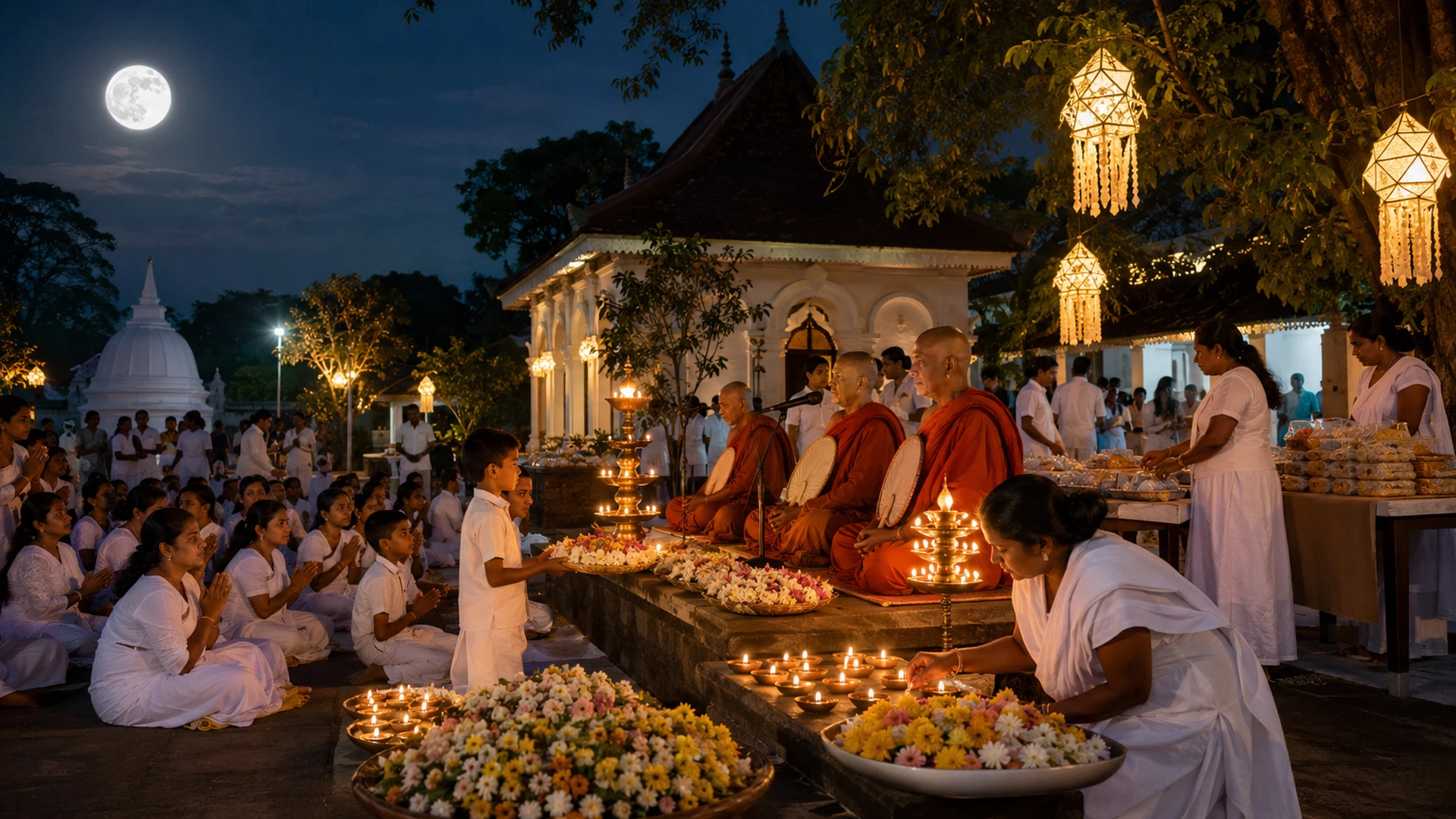
Vesak
The United Nations describes Vesak as the Day of the Full Moon in May and recognizes it as the most sacred day for millions of Buddhists. It commemorates the Buddha’s birth, enlightenment and passing away in widely observed traditions.[6]
Celebrations may include:
temple visits;
offerings of flowers and lamps;
chanting and sermons;
meditation;
generosity to people in need;
acts of compassion;
public lantern displays in some regions.
Specific customs in Sri Lanka, Thailand, Nepal, India, Myanmar, Cambodia and other Buddhist societies are not identical.
Hindu Purnima Traditions
Purnima means the full moon day in Sanskrit-derived usage. Hindu lunisolar calendars contain a purnima in each lunar month, and different full moon dates support different festivals, vows, pilgrimages and household observances.
There is no single Hindu full moon ritual. Practices vary by region, temple, deity, family, sect and calendar system.
Guru Purnima
Guru Purnima is observed during the month of Ashadha, usually in June or July. It honours teachers and spiritual guides in Hindu, Buddhist and Jain communities, though meanings and rituals differ.[7]
Participants may:
visit a teacher or monastery;
offer respect and gifts;
study sacred or philosophical texts;
perform puja;
reflect on knowledge, discipline and gratitude.
The full moon may symbolize the light of wisdom, but this metaphor should not be treated as a scientific claim that moonlight transfers knowledge.
Sharad or Kojagiri Purnima
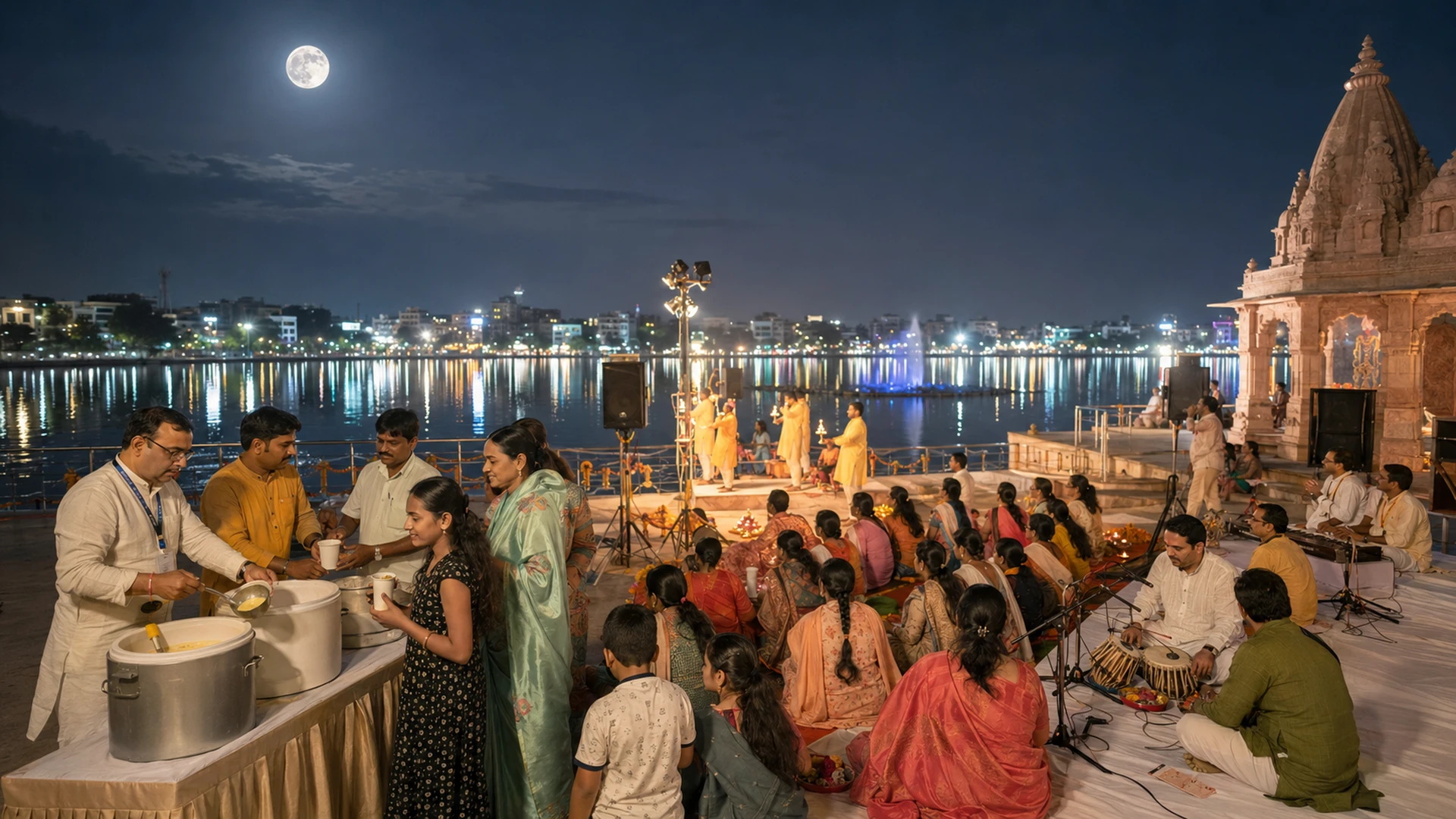
Sharad Purnima falls in the month of Ashwin. Regional traditions may include devotional singing, Lakshmi worship, night vigils, community gatherings and foods such as milk or kheer placed outdoors before being shared.[8]
Some communities describe the moonlight as especially beneficial. Such statements belong to religious or folk belief. They should not be rewritten as medical fact, and food left outside must still be handled safely.
Other purnima festivals
Examples include:
Buddha Purnima or Vesak;
Kartik Purnima;
Vat Purnima;
Narali Purnima among some western coastal fishing communities;
Raksha Bandhan on Shravana Purnima in many regions.
These observances demonstrate that “full moon ritual” is too broad a label for the diversity of South Asian religious calendars.
Chinese Mid-Autumn Festival
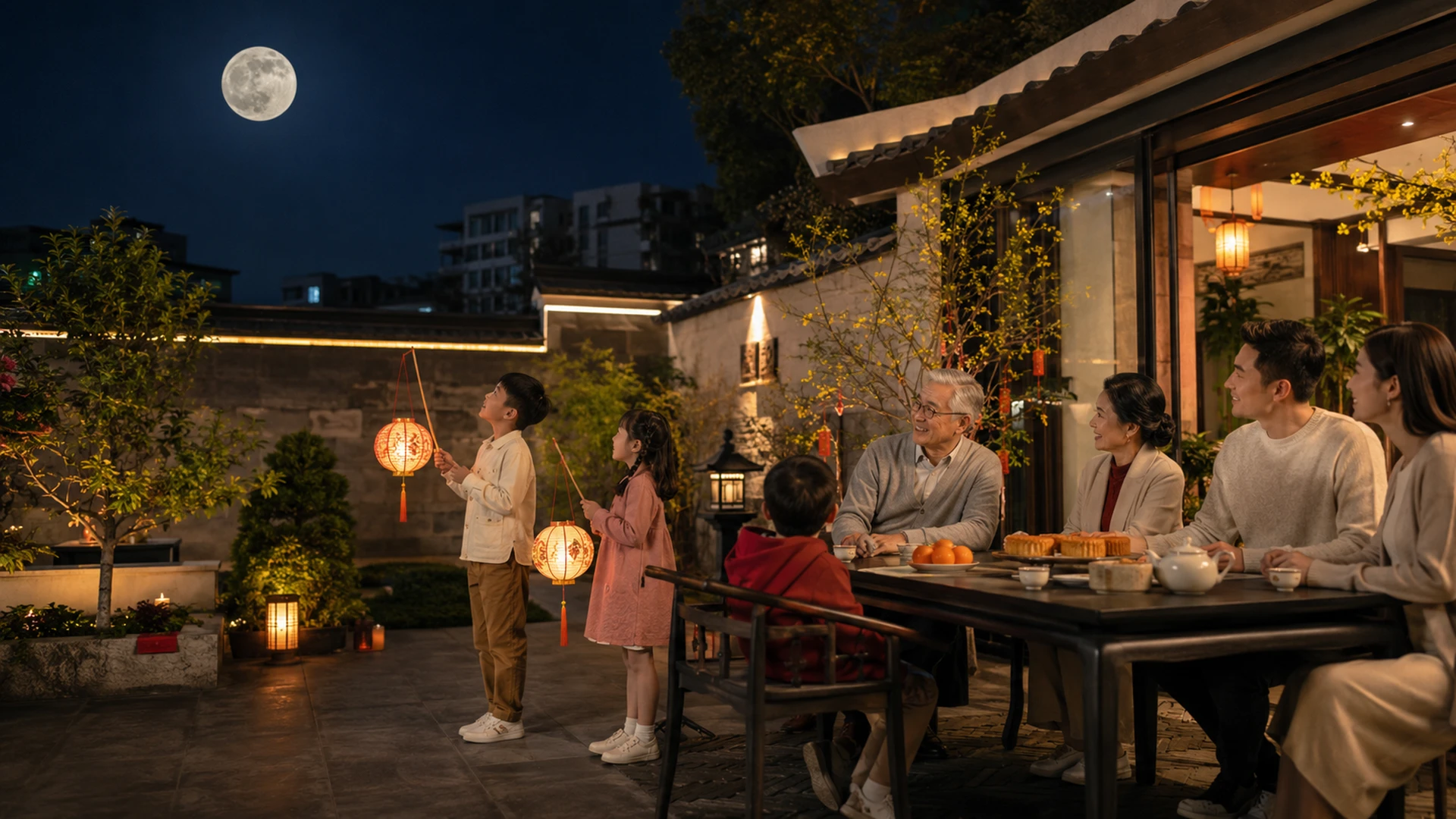
The Chinese Mid-Autumn Festival is celebrated on the fifteenth day of the eighth lunar month. Government cultural resources describe it as a time associated with moon appreciation, harvest, longing for loved ones and family reunion.[9]
The round full moon became a powerful symbol of completeness and togetherness. Families may share mooncakes, display lanterns, eat seasonal food, tell stories or admire the Moon.
Historical development
Official historical summaries trace moon-watching and moon-offering customs across multiple dynasties. Imperial rituals at the Temple of the Moon belonged to state religion and court ceremony, while household and public customs developed differently.[10]
Over time, moon worship, harvest gratitude, poetry, family reunion and commercial celebration became intertwined. Modern families may celebrate without performing a religious ritual.
Chang’e and the Moon Rabbit
The story of Chang’e and other lunar legends exists in many versions. Legends are culturally meaningful narratives, but they should not be reported as historical events. They help explain how literature, family storytelling and visual art shape festival symbolism.
Mooncakes and lanterns
Mooncakes often symbolize reunion because of their round shape and sharing. Lantern activities can involve traditional craftsmanship, children’s processions or large public displays. Regional customs differ across mainland China, Hong Kong, Taiwan and Chinese diaspora communities.
Japanese Tsukimi
Tsukimi means moon viewing. Japan’s government cultural publication explains that the custom of appreciating the mid-autumn Moon developed among Heian-period nobles and later spread more widely, becoming connected with gratitude for the autumn harvest.[11]
Typical offerings may include:
tsukimi dango, round rice dumplings;
seasonal foods such as taro, sweet potatoes, grapes or pears;
Japanese pampas grass;
sake in some households;
decorative arrangements near a window or veranda.
Regional and household differences are normal. Tsukimi is often contemplative and aesthetic rather than an elaborate public ritual.
The date is connected to the fifteenth night of the eighth month in the old lunisolar calendar. Weather may hide the Moon, yet the cultural occasion can still be observed.
African Lunar Symbolism and Ritual Calendars
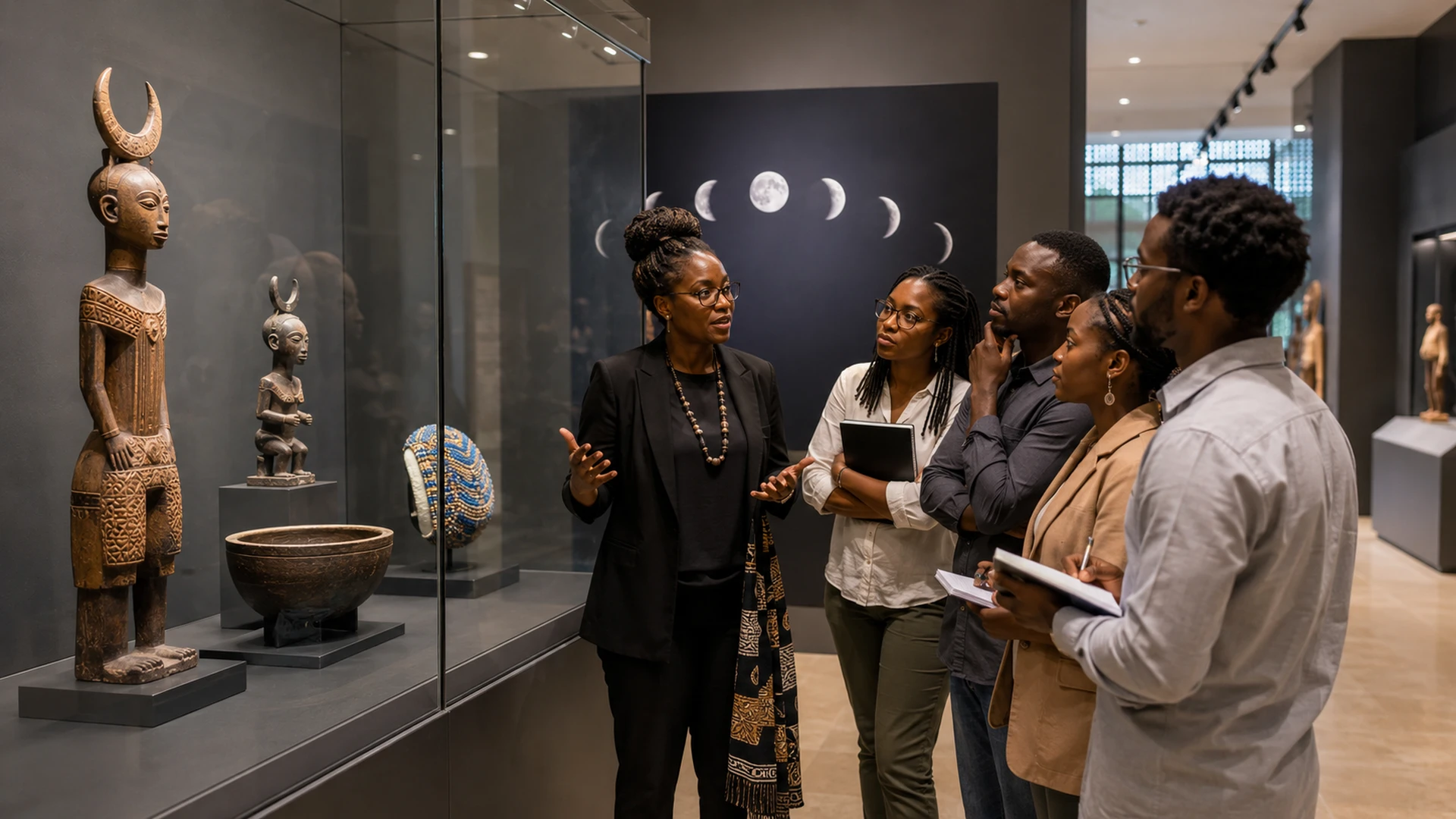
Africa contains thousands of distinct communities and cannot be summarized through one “African full moon ritual.” Publicly documented evidence is better approached through astronomy, art, agriculture, oral tradition and specific ritual calendars.
The Smithsonian National Museum of African Art’s African Cosmos project shows how African societies have used celestial observation to navigate, organize agricultural and ritual calendars, and develop artistic metaphors.[12]
Moon, fertility and agricultural time
The Moon’s changing visibility has been linked in various African verbal and visual traditions with life, fertility, timing and transformation. These associations are not uniform. In some settings the Moon is described through feminine symbolism; in others it is associated with ancestors, kingship, divination, moral sayings or changing political conditions.
Luba and Tabwa lunar imagery
Smithsonian collections describe Luba and Tabwa art from the Democratic Republic of the Congo in which moonlight, lunar phases and the rising Moon can relate to insight, divination and heightened awareness.[13] These museum interpretations concern specific objects and knowledge systems. They do not support a generic instruction to “charge crystals under the African full moon.”
Akan celestial symbols
Akan art from Ghana includes crescent and star motifs connected with proverbs, leadership, reliability, marriage and change.[14] The meaning depends on the object and social context. A moon symbol on regalia is not automatically a record of a full moon ceremony.
Ancient Egyptian and Nubian contexts
Egyptian and Nubian celestial religions form part of African history, but they belong to particular ancient states and temple systems. They should not be merged with living sub-Saharan traditions or marketed as one timeless African moon religion.
Contemporary Pagan and Wiccan Full Moon Rituals
Modern Paganism and Wicca developed largely in the twentieth century, drawing on ceremonial magic, folklore, Romantic ideas about nature, archaeology, classical religion and modern religious creativity.
In many Wiccan and Pagan communities, a lunar gathering is called an esbat. Full moon esbats may include prayer, meditation, ritual movement, poetry, devotional work, healing intentions or group discussion. Practices differ between initiated covens, public Pagan groups and solitary practitioners.
Harvard’s Center for the Study of World Religions notes that influential late-twentieth-century books helped expand solitary and eclectic Pagan practice, including moon-cycle observances.[15]
Modern does not mean false
A religion or ritual does not need to be ancient to be meaningful. The problem begins when recent practices are falsely described as unchanged prehistoric ceremonies.
Contemporary full moon circles may support reflection, friendship, feminist spirituality or personal agency. University research on moon circles describes them as modern practices crossing Pagan, wellness, professional and alternative-community networks.[16]
Cultural borrowing and commercial “moon rituals”
Modern online content often mixes:
Wiccan esbats;
Hindu mantras;
Indigenous smudging;
African ancestor practices;
Buddhist meditation;
crystals;
astrology;
commercial manifestation coaching.
This mixture may be personally meaningful to participants, but it should not be labelled as one ancient tradition. Sacred practices should not be copied from marginalized or closed communities without consent.
What Does the Full Moon Symbolize?
The symbolism of a full moon depends on context, but several themes recur.
Completeness
A round, fully illuminated disk can represent fulfilment, maturity or wholeness. In the Mid-Autumn Festival, roundness is strongly linked with reunion.
Illumination and wisdom
Light in darkness can symbolize knowledge, awakening or moral clarity. Buddhist and Hindu festivals may use lamp imagery and teachings of wisdom, but their theology should not be reduced to a generic light metaphor.
Abundance and harvest
Autumn moon festivals often coincide with agricultural cycles. Seasonal food, offerings and thanksgiving may be more important than the astronomical phase alone.
Cyclical change
The Moon appears to wax, become full, wane and disappear. Communities use this pattern to discuss impermanence, renewal, death and return.
Community synchronization
A visible full moon and shared calendar date allow large communities to gather at the same time. The ritual power may therefore come partly from collective participation, memory and social organization.
Feminine symbolism
Some traditions associate the Moon with femininity, menstruation, fertility or goddesses. This is not universal, and biological sex should not be reduced to lunar symbolism. The Moon can be male, female, both or neither in different languages and cosmologies.
What Science Supports—and What It Does Not
Moonlight is real reflected sunlight
The physical brightness of a full moon can influence visibility and night-time activity. Before electric lighting, bright evenings may have allowed people to work, travel or socialize later.
Tidal effects are real
The Moon and Sun influence tides. Full and new moon alignments produce spring tides with larger tidal ranges.[2] This is a gravitational effect on large bodies of water and the solid Earth. It does not prove that a bowl of water, a crystal or a human body gains supernatural power.
Sleep research is mixed
Some controlled and field studies have reported small changes in sleep timing or duration near parts of the lunar cycle. Other large population studies found no significant full-moon effect.[17] Researchers continue to debate the roles of moonlight, expectation, social behaviour and statistical methods.
The responsible conclusion is not “the Moon definitely controls sleep” or “the Moon has no possible biological influence.” Evidence for meaningful, consistent effects on human sleep is mixed and generally modest.
Claims about crime, childbirth and mental illness
Popular culture often links the full moon with psychiatric emergencies, violence, seizures, fertility or labour. Research has not established a reliable universal full-moon effect for these outcomes. The word “lunatic,” derived historically from Latin *luna*, reflects an old cultural association, not medical proof.
People should seek professional medical care for insomnia, mood changes, pregnancy concerns or mental-health symptoms rather than relying on lunar explanations.
Manifestation and guaranteed outcomes
There is no scientific evidence that writing a wish under a full moon guarantees money, pregnancy, romance, legal success or protection. Reflection may help a person clarify goals, but action, planning and circumstances determine outcomes.
A Safe Personal Full Moon Reflection Practice
A person can create a private reflection routine without claiming to reproduce another culture’s sacred ceremony.
A simple practice may include:
1. Check the actual moonrise time and weather.
2. Choose a safe place with permission to be there.
3. Observe the Moon without staring through unsafe optical equipment.
4. Write what has changed during the past month.
5. Identify one completed responsibility and one unresolved task.
6. Express gratitude according to your own beliefs.
7. Set a realistic next action.
8. Leave the environment clean and avoid fire hazards.
9. End with rest rather than pressure to feel a dramatic transformation.
Call this a personal full moon reflection, not a “traditional African moon ritual,” “ancient Buddhist manifestation rite” or “Native full moon ceremony” unless it genuinely belongs to your own transmitted tradition.
Health and Safety Cautions
Fire and candles
Use stable holders, maintain ventilation and never leave flames unattended. Outdoor fires may be illegal during dry conditions.
Night-time travel
Moonlight does not make isolated places safe. Tell someone where you are going, use reliable transport, carry a charged phone and avoid dangerous terrain.
Water rituals
Do not enter rivers, lakes or oceans at night without local knowledge, supervision and safety equipment. Spring tides can produce stronger tidal conditions around full and new moon.
Herbs, oils and incense
Natural substances can trigger allergies, asthma, burns or poisoning. Do not ingest unknown plants or apply undiluted essential oils.
Mental health
Ritual can support reflection but is not a replacement for professional care. A person experiencing mania, psychosis, severe insomnia, suicidal thoughts or dangerous behaviour needs qualified medical assistance.
How to Study Full Moon Traditions Respectfully
Identify the community
Use specific names such as “Sri Lankan Buddhist Vesak observance,” “Kojagiri Purnima in Madhya Pradesh” or “Cantonese Mid-Autumn family celebration.”
Distinguish public and private practice
A public festival is not permission to photograph every prayer, person or object. Monastic disciplinary rites, initiated Pagan work and specialist African knowledge may have privacy boundaries.
Separate religion from tourism marketing
Tourism pages can document public events, but they may simplify theology or promote romantic claims. Cross-check with religious, museum and academic sources.
Do not invent continuity
A modern moon circle can be meaningful without being called a 10,000-year-old ceremony. Honest history strengthens rather than weakens contemporary practice.
Credit communities and scholars
Name the institution, cultural custodian, religious tradition or source of knowledge. Avoid anonymous phrases such as “ancient people believed.”
Common Misunderstandings
“Every culture worshipped the full moon”
Many cultures observed lunar phases, but observation is not the same as worship. Some traditions emphasize calendars, agriculture, poetry or family reunion rather than a Moon deity.
“All full moon rituals are about release”
“Release what no longer serves you” is common in modern wellness language. It is not a universal ancient interpretation of the full moon.
“The full moon is always on the fifteenth”
In many lunar calendars it occurs near the fifteenth day, but astronomical timing, time zones and calendar rules can produce variation.
“A blue moon is spiritually stronger”
“Blue moon” is a modern calendrical label with more than one definition. Science does not recognize it as a phase with special energy.
“Moon water has proven healing power”
Water left under moonlight remains ordinary water unless its physical conditions change through temperature, contamination or other environmental factors. Spiritual meaning does not establish medical benefit.
“Menstrual cycles always synchronize with the Moon”
The average menstrual cycle and lunar month are similar in length, but individual cycles vary widely. Research does not support a universal synchronized pattern.
People Also Ask
What is the meaning of a full moon ritual?
It is a culturally specific observance connected with the full phase of the Moon. Depending on the tradition, it may involve worship, ethical discipline, harvest gratitude, family reunion, moon viewing or personal reflection.
What cultures celebrate the full moon?
Buddhist, Hindu, Chinese, Japanese and modern Pagan communities include many full-moon observances. African, Middle Eastern, European and Indigenous societies also have diverse lunar calendars and symbolism, but practices must be named specifically.
What happens during Vesak?
Buddhists may visit temples, make offerings, meditate, listen to teachings, perform charitable acts and commemorate the Buddha’s birth, enlightenment and passing. Customs vary by country and lineage.
What is Purnima?
Purnima is the full moon day in Hindu and related South Asian calendrical traditions. Different purnimas host different festivals, vows and regional observances.
Why is the Mid-Autumn Festival linked to the full moon?
It occurs on the fifteenth day of the eighth lunar month. The round Moon is associated with harvest, reunion, shared food and longing for relatives who are far away.
Is a full moon scientifically more powerful?
It changes night-time illumination and contributes, with the Sun, to spring tides. Science does not show that it guarantees spiritual, medical or financial outcomes.
Frequently Asked Questions
How often is there a full moon?
The phase cycle repeats about every 29.5 days, so most calendar months contain one full moon. Occasionally a month may contain two, depending on time zone and the definition used.
Is the Moon completely full for an entire night?
Astronomical full moon is a precise moment, but the Moon appears nearly full for roughly a day before and after.
Why does a full moon rise at sunset?
At full phase, the Moon is opposite the Sun in the sky, so it generally rises as the Sun sets and sets as the Sun rises.
Is Vesak always in May?
The UN calls it the Day of the Full Moon in May, but actual national and religious calendar dates may vary because of local lunisolar calculations and traditions.
Are all Purnima rituals the same?
No. Guru Purnima, Sharad Purnima, Kartik Purnima, Vat Purnima and other observances have different histories, deities, social meanings and regional practices.
Is Tsukimi a religious ritual?
Tsukimi may include offerings and harvest gratitude, but many people experience it primarily as a seasonal, aesthetic or family custom. Practice varies.
Do African traditions have moon rituals?
Many African societies have lunar calendars, stories, artistic symbols and rituals, but there is no single African moon tradition. Specific evidence should identify the community, object and historical setting.
What is a Wiccan esbat?
An esbat is a lunar observance in modern Wiccan and Pagan practice, often held near the full moon. Ritual structure varies between covens and solitary practitioners.
Can the full moon affect sleep?
Research is mixed. Some studies report small associations, while large studies have found no significant effect. Light exposure, expectations and individual differences may matter.
Can I make moon water?
You can place water outdoors as a personal symbolic act, but it has no proven healing power. Use a clean sealed container, prevent contamination and never substitute it for medical treatment.
Key Takeaways
A full moon is an astronomical phase occurring about every 29.5 days.
Full moon rituals are culturally specific, not one worldwide ceremony.
Buddhist observances may emphasize ethics, meditation and compassion.
Hindu purnima festivals vary by month, deity, region and community.
The Mid-Autumn Festival connects the full moon with reunion and harvest.
Japanese tsukimi combines moon viewing, seasonal food and gratitude.
African lunar symbolism must be studied through specific communities and documented objects.
Modern Pagan esbats and moon circles are living contemporary practices, not unchanged prehistoric survivals.
The Moon affects light and tides, but it does not scientifically guarantee healing, wealth, fertility or manifestation.
Respectful participation requires accurate naming, safety and cultural permission.
Conclusion
The full moon is both ordinary and extraordinary. Astronomically, it is a predictable phase produced by sunlight, orbital motion and perspective from Earth. Culturally, it has become a recurring point at which people organize time, gather communities and express complex values.
No single interpretation explains every tradition. Vesak links the full moon with the Buddha’s life and teachings. Purnima dates support many different South Asian festivals. Chinese Mid-Autumn celebrations emphasize reunion, harvest and memory. Japanese tsukimi invites appreciation of the seasonal Moon. African arts and oral traditions reveal many distinct relationships among lunar phases, agriculture, leadership, divination and life cycles. Modern Pagans and wellness communities continue to create new forms of lunar practice.
The most responsible approach respects both science and culture. The Moon’s light and gravitational relationship with Earth are real. The meanings of devotion, abundance, clarity or renewal belong to human communities. Those meanings deserve to be described accurately, without turning belief into a medical promise or blending unrelated traditions into a marketable ritual.
Final Summary
Full moon rituals are religious, seasonal, social or personal practices held near the Moon’s fully illuminated phase. Their meanings range from Buddhist ethical observance and Hindu purnima worship to Mid-Autumn reunion, Japanese moon viewing, African lunar symbolism and modern Pagan esbats. They should be studied as distinct traditions. The full moon affects night-time light and tides, but claims of guaranteed healing, fertility, wealth or manifestation are not scientifically established.
Article Information
- Publisher
- Ancestral Temple
- Editor
- Ancestral Temple
- Last updated
- Jul 30, 2026
- Last reviewed
- Jul 30, 2026
- Content version
- 0ca2c048dd
This educational article should be read as cultural and spiritual information, not as medical, legal, financial, or emergency advice.
Helpful Related Guidance
About the Author
 Ancestral Temple
Spiritual guide and practitioner with decades of experience in ancestral wisdom, rituals, and divine guidance.
Related Posts
View All




Comments
We'd love to hear your thoughts.