
Water Ceremonies Around the World: Meaning, History, and Living Trad
Cornerstone Content
Quick Summary
Water can cleanse, bless, renew, remember, and connect communities with the sacred. This guide explores distinct water ceremonies across Africa, Asia, the Middle East, Europe, and Oceania without treating them as one universal ritual.
What This Topic Means
Water enters religious life in many forms: a river crossed in pilgrimage, a spring protected by a community, rain requested during drought, a bath taken before prayer, a child sprinkled during dedication, or a sacred object carried to the sea for purification.
These practices may look similar from a distance, yet their meanings come from different languages, histories, theologies, lands, and communities.
The phrase water ceremonies around the world is therefore best used as a comparative doorway rather than a claim that all traditions share one hidden ritual.
This article explores selected examples while keeping their cultural boundaries visible. It does not provide instructions for restricted rites or suggest that a reader can reproduce a community ceremony simply by copying its outward actions.
What Is a Water Ceremony?
A water ceremony is a religious, ancestral, communal, or life-cycle practice in which water is given a meaning beyond ordinary drinking, washing, farming, or transportation.
The water may be:
- Flowing or still
- Fresh or salty
- Collected from rain
- Drawn from a spring
- Blessed in a vessel
- Poured as an offering
- Sprinkled
- Touched
- Crossed
- Entered through immersion
What makes the act ceremonial is not water alone. Sacred meaning may depend on who gathers it, where it comes from, who is permitted to use it, what prayers accompany it, which relationships it represents, and what responsibilities follow the ceremony.
Why Water Became a Sacred Symbol
Water sustains bodies, crops, animals, and entire settlements. It can also flood, erode, drown, and disappear during drought.
This combination of necessity and power made water a natural symbol for life, danger, dependence, renewal, and divine generosity.
Water also surrounds and touches the body. Immersion creates a temporary boundary between ordinary space and another state of experience. Emerging from water can therefore symbolize birth, restored order, spiritual readiness, or entry into a new identity.
Because water moves through rain, rivers, springs, seas, clouds, plants, and living bodies, communities have often understood it as a connecting force between land, sky, ancestors, deities, households, and future generations.
Common Meanings of Water Ceremonies
Purification and Preparation
Ritual purification does not necessarily mean that a person is physically dirty or morally bad.
In many traditions, it means becoming properly prepared for prayer, sacred space, a new stage of life, or renewed social responsibility.
Rebirth and New Identity
Entering and leaving water can represent death to an earlier condition and birth into a new one.
This symbolism is especially visible in initiation, conversion, and baptismal traditions.
Blessing and Good Fortune
Water may be poured, sprinkled, or shared as a sign of blessing, reverence, health, peace, fertility, or prosperity.
The gesture gains meaning through prayer, relationship, and community recognition.
Rain, Fertility, and Ecological Balance
In farming and pastoral societies, rain is not an abstract symbol. It determines food security, movement, health, and survival.
Rainmaking traditions may therefore combine spiritual responsibility with close knowledge of seasons, land, plants, animals, and community conduct.
Memory, Ancestors, and Continuity
Rivers, wells, springs, and shorelines can hold collective memory.
Water offerings may remember ancestors, mark historical events, or reaffirm a people’s relationship with a place. The water is meaningful because it belongs to a remembered landscape and a living network of obligations.
Why Cultural Specificity Matters
Two communities may both use immersion while understanding it in entirely different ways.
One may connect water with covenant, another with purification from ritual impurity, another with a deity associated with a river, and another with renewal at the start of a new year.
Respectful comparison names the community, location, language, and religious framework.
It does not combine Yoruba river devotion, Ethiopian Christian blessing, Japanese Shinto ablution, and Māori tapu-removal into one invented “ancient water ritual.”
Suggested internal link: Understanding African Spiritual Traditions: A Historical Introduction
Suggested path: /blog/understanding-african-spiritual-traditions
Water Ceremonies in Africa
Africa contains many distinct spiritual, religious, cultural, and historical traditions.
There is no single African water ceremony. The meaning of a river, rain ritual, libation, spring, or blessed vessel depends on the community that recognizes and safeguards it.
Osun-Osogbo and the Sacred River in Nigeria
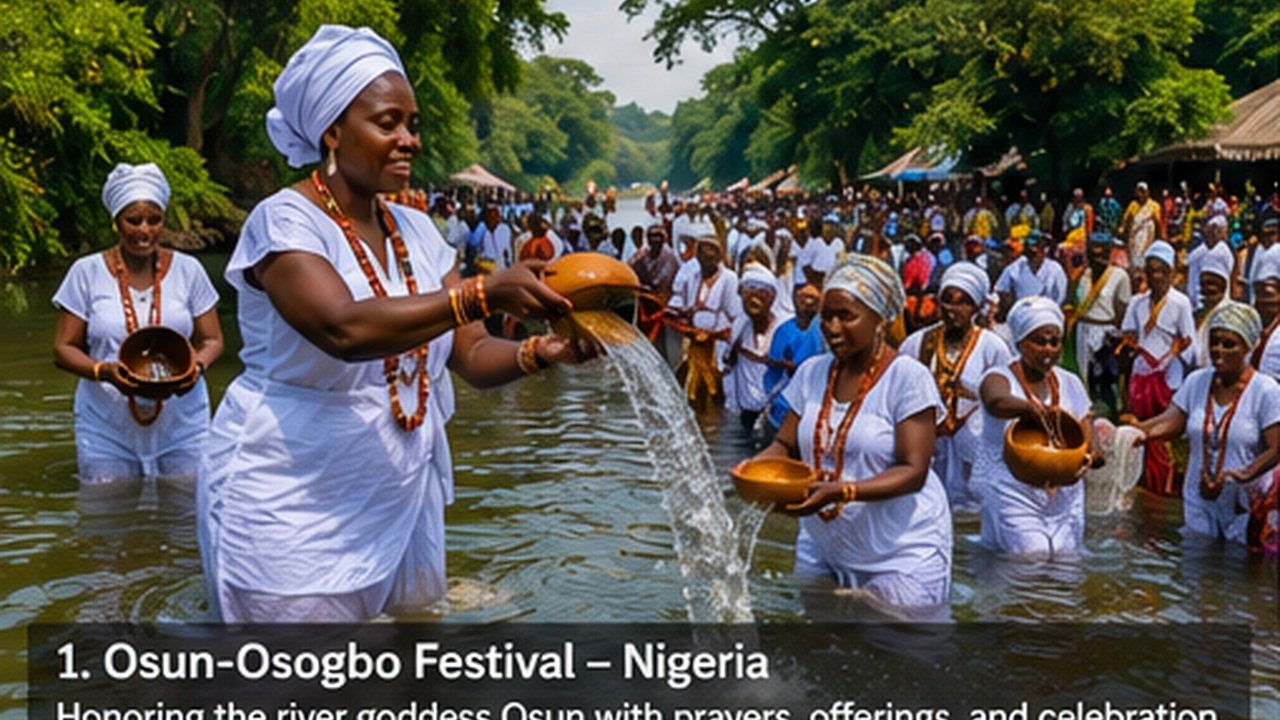
The Osun-Osogbo Sacred Grove in southwestern Nigeria is a living Yoruba sacred landscape associated with Osun, a deity connected with water, fertility, protection, and well-being.
The grove’s river, shrines, sculptures, priestly traditions, and annual festival express the relationship among the people of Osogbo, their ruler, the sacred landscape, and Osun.
UNESCO describes the annual festival as a living and evolving response to Yoruba beliefs in the relationship among the community, its ruler, and the Osun deity.
That wording is important: the festival is not a theatrical survival from a dead past. It is maintained, interpreted, and renewed by present-day communities.
The river should not be reduced to a generic source of “spiritual water.” Its meaning belongs to a particular Yoruba religious and civic world.
Visitors and writers should respect community authority, environmental protections, and restrictions around sacred sites.
Suggested internal link: Sacred Rivers and Natural Places in African Spirituality
Suggested path: /blog/sacred-rivers-natural-places-african-spirituality
Timkat: Water, Epiphany, and Renewal in Ethiopia
Timkat, the Ethiopian Epiphany, commemorates the baptism of Jesus Christ in the River Jordan.
The celebration begins with Ketera, when water is prepared for blessing, followed by processions, prayer, and large public gatherings.
UNESCO describes Timkat as a celebration observed throughout Ethiopia to commemorate Christ’s baptism. Water blessing is central to the festival’s religious meaning and public participation.
The practice belongs especially to the Ethiopian Orthodox Tewahedo tradition and should not be described as a generic African cleansing festival.
Wosana: Rainmaking Among Bakalanga Communities
Wosana is a rainmaking ritual observed by Bakalanga communities in northeastern and central Botswana and in parts of Zimbabwe.
UNESCO lists Wosana and its associated practices as living heritage in need of urgent safeguarding.
Rainmaking practices are sometimes sensationalized as attempts to control weather through spectacle.
A more responsible understanding considers the wider system of:
- Community gathering
- Inherited authority
- Ecological knowledge
- Moral responsibility
- Song and dance
- Relationships with land
- Relationships with ancestors
- The transmission of community memory
Restricted procedures should remain with the communities that safeguard them.
Suggested internal link: Rainmaking Traditions in Africa: History and Meaning
Suggested path: /blog/rainmaking-traditions-africa
Libation, Springs, and Water Offerings
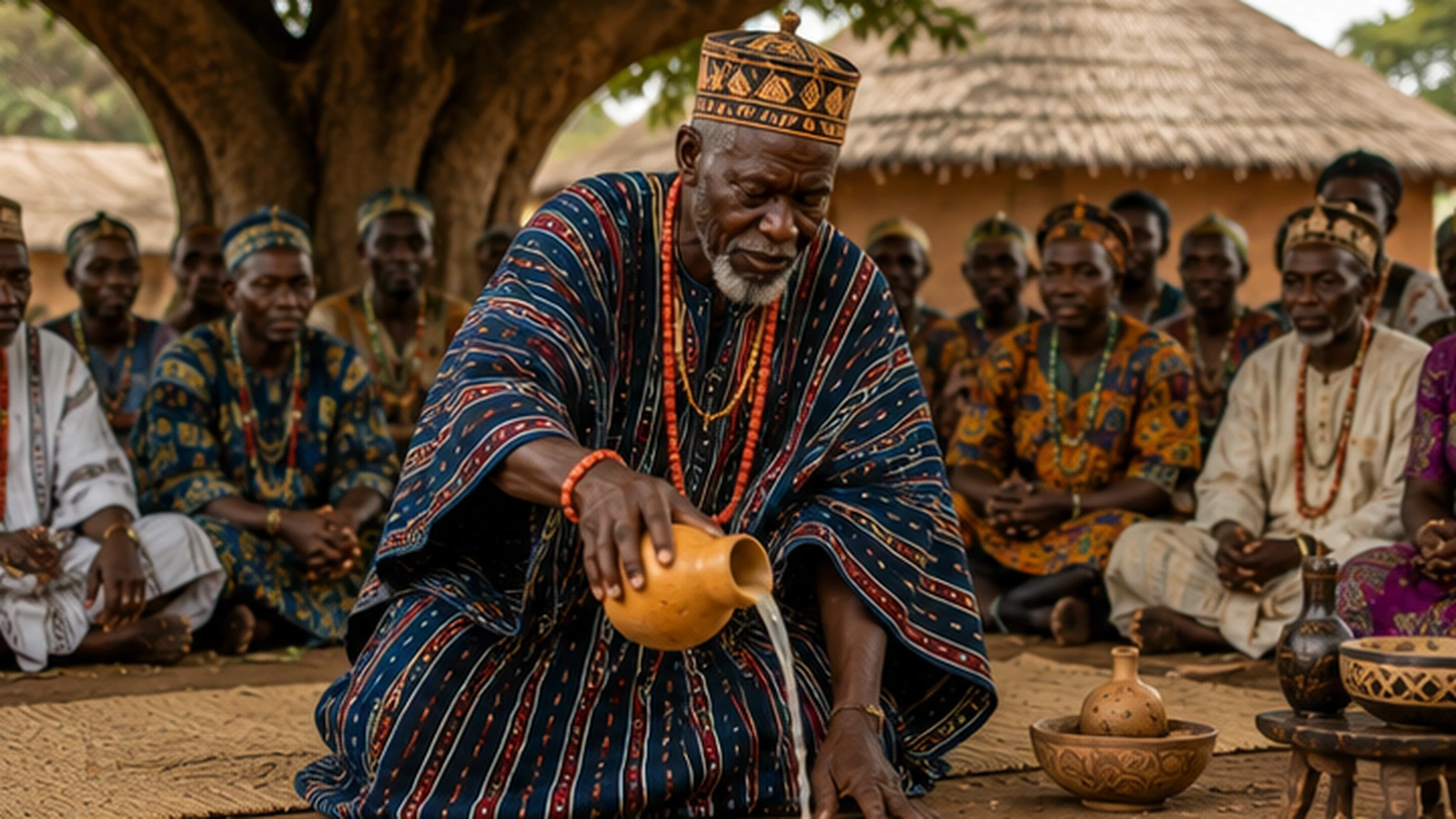
Across different African societies, water may be poured in remembrance, greeting, prayer, covenant, or communication with ancestors and spiritual powers.
However, African libation is not one standardized ceremony.
Some communities use water. Others use beverages or different liquids. The words, direction, vessels, officiants, and meanings vary.
A responsible article should describe a specific people’s practice rather than presenting a step-by-step universal libation formula.
Suggested internal links:
- Libation Rituals and Ancestral Memory — /blog/libation-rituals-ancestral-memory
- The Role of Ancestors in African Spirituality — /blog/role-of-ancestors-in-african-spirituality
Water Ceremonies in Asia
Kumbh Mela and Ritual Bathing in India
Kumbh Mela is a major Hindu pilgrimage held at four locations associated with sacred rivers.
Ritual bathing is central to the gathering. UNESCO explains that devotees understand bathing in the sacred river as spiritually purifying and connected with liberation from the cycle of birth and death.
The event also includes:
- Religious teaching
- Devotional practice
- Ascetic traditions
- Public worship
- Food distribution
- Temporary settlement
- Meetings among religious communities
It should not be reduced to a large bath or tourist spectacle.
Misogi in Shinto Tradition
In Shinto, misogi refers to ritual ablution in which the body is washed or exposed to water as part of purification.
Kokugakuin University’s Encyclopedia of Shinto connects the practice with purification from misfortune, tsumi, and kegare. Its mythological background is associated with Izanagi’s purification after returning from the underworld.
Everyday shrine visitors may encounter temizu, a shorter purification of the hands and mouth before worship. Kokugakuin describes shrine purification fonts as allowing worshippers to perform an abbreviated form of water purification.
Full misogi is a distinct practice and should not be copied casually, especially in dangerous natural waters or without guidance from an appropriate community.
Songkran and the Thai New Year
Songkran is the traditional Thai New Year festival.
UNESCO explains that pouring water during Songkran symbolizes cleansing, reverence, good fortune, and respect. Water may be offered to elders and monks, while Buddha images may be ceremonially bathed.
Modern public water play is widely visible, but it is only one part of a broader festival involving:
- Family reunion
- Merit-making
- Respect for elders
- Temple activities
- Community renewal
- Prayers for prosperity
Melasti in Bali
Before Nyepi, Balinese Hindu communities observe Melasti at the sea, lakes, rivers, springs, or other sacred waters.
Sacred objects associated with temples are carried in procession, while collective prayer centers on purification and preparation for the new year.
Official Indonesian cultural information describes Melasti as a ceremony for purifying participants and sacred temple objects at holy waters.
Melasti is not merely a beach parade.
Visitors should follow local rules concerning:
- Dress
- Photography
- Access
- Procession routes
- Sacred objects
- Temple authority
Water in Jewish, Christian, and Islamic Practice
The Jewish Mikveh
A mikveh is a Jewish ritual bath constructed or supplied according to detailed religious law.
Immersion is required in traditional conversion and is used in practices connected with family purity, marriage preparation, and other communal customs.
The purpose is ritual transition and religious status rather than ordinary hygiene.
Jewish communities differ in how frequently they use mikveh and in the additional meanings they attach to immersion.
Christian Baptism
Christian baptism uses water to signify entry into Christian life, forgiveness, new birth, union with Christ, and incorporation into the Church.
Christian denominations differ over:
- Infant or believer’s baptism
- Immersion or pouring
- Whether baptism is called a sacrament or ordinance
- The precise relationship between water, faith, salvation, and church membership
The Catholic Catechism describes baptism as regeneration through water and the word. It recognizes both immersion and pouring as forms of administering baptism.
Other Christian traditions explain the rite through their own scriptures, liturgies, and denominational teachings.
Wudu and Ghusl in Islam
In Islam, wudu is the ritual ablution commonly performed before formal prayer, while ghusl is a full ritual washing required in specified circumstances.
Qur’an 5:6 connects washing before prayer with purification and also provides for tayammum with clean earth when water is unavailable or cannot be used.
Wudu is not a festival and should not be treated as an exotic spectacle.
It is a recurring act of:
- Worship
- Intention
- Readiness
- Discipline
- Preparation for prayer
Legal details differ among Islamic schools, so educational summaries should avoid presenting one school’s method as the only form.
Māori Sacred Waters and Water Rites
Te Ara, the Encyclopedia of New Zealand, records that wai tapu—waters set apart as sacred—were used in rites including:
- Dedication of children
- Cleansing people from tapu
- Lifting tapu from warriors returning from battle
The tohi ceremony could include sprinkling a child with water and dedicating the child to an atua.
These traditions belong to Māori systems of:
- Whakapapa
- Atua
- Tapu
- Noa
- Whenua
- Tribal authority
They should be described with attention to iwi and hapū differences and not converted into generic wellness practices.
What These Ceremonies Share—and What They Do Not
Many water ceremonies involve movement from one condition to another:
- Unprepared to prepared
- Old year to new year
- Outsider to community member
- Ritual impurity to readiness
- Drought to hoped-for rain
- Ordinary gathering to sacred encounter
- One stage of life to another
Yet these similarities are structural, not proof of a single origin.
Timkat commemorates Christ’s baptism. Kumbh Mela belongs to Hindu pilgrimage worlds. Misogi operates within Shinto ideas of purification. Mikveh follows Jewish law. Wosana belongs to Bakalanga communities. Osun-Osogbo is rooted in Yoruba religion and sacred geography.
Not Every Use of Water Is “Cleansing”
Writers often label every ceremony involving water as cleansing.
That can erase important meanings.
Water may:
- Bless rather than cleanse
- Witness rather than wash
- Carry an offering
- Mark a boundary
- Cool sacred objects
- Remember the dead
- Request rain
- Dedicate a child
- Restore social balance
- Express gratitude
- Welcome a new year
Using the community’s own terminology is more accurate than forcing all practices into a single purification category.
Sacred Water and Environmental Responsibility
A river can be spiritually revered and environmentally threatened at the same time.
Pollution, overcrowding, unmanaged tourism, climate stress, and loss of access can damage both ecosystems and ceremonial life.
UNESCO has repeatedly discussed the need to manage tourism and conservation pressures connected with the Osun-Osogbo festival and sacred grove.
Respect for sacred water therefore includes practical responsibilities:
- Protecting riverbanks
- Reducing plastic and other waste
- Following sacred-site rules
- Supporting community-led conservation
- Avoiding contamination
- Refusing to remove sacred objects
- Respecting local access restrictions
- Refusing to treat sacred places as disposable photography backgrounds
How to Study Water Ceremonies Respectfully
Name the exact community, religion, location, and historical period whenever possible.
Use community-approved, scholarly, museum, government, or heritage sources rather than anonymous ritual instructions.
Do not copy restricted prayers, vessels, garments, songs, or procedures for personal experimentation.
Ask before photographing ceremonies, sacred objects, children, bathing participants, or restricted spaces.
Follow water-safety rules. Rivers, oceans, waterfalls, and cold-water immersion can be dangerous.
Avoid promises that ceremonial water guarantees healing, wealth, fertility, protection, or supernatural results.
Support the environmental health of sacred rivers, springs, wetlands, and shorelines.
Recognize that living communities may change how a ceremony is practiced without losing the right to define it.
Key Takeaways
Water ceremonies around the world reveal a recurring human truth: water is never only a symbol because life materially depends on it.
Communities have used rivers, rain, springs, seas, baths, and blessed vessels to express purification, renewal, covenant, memory, belonging, and hope.
The best comparative study holds similarity and difference together. It can recognize that immersion often marks transition while still respecting the distinct meanings of Timkat, Kumbh Mela, misogi, mikveh, baptism, Wosana, Melasti, Songkran, and Yoruba river devotion.
To approach sacred water responsibly is to honor both spiritual meaning and physical reality: the people who safeguard the tradition, the lands and waters that sustain it, and the future generations who will inherit them.
Frequently Asked Questions
What should readers know first about african spirituality and cultural history?
African spirituality and cultural history: Read clear guidance, key signs, practical steps, and private support from Ancestral Temple.
What causes Water Ceremonies Around the World?
The safest next step is to compare the signs, prepare clear details, and request private guidance when the matter feels personal.
How does Water Ceremonies Around the World work?
The safest next step is to compare the signs, prepare clear details, and request private guidance when the matter feels personal.
Is it possible to get private guidance for Water Ceremonies Around the World?
The safest next step is to compare the signs, prepare clear details, and request private guidance when the matter feels personal.
How long does Water Ceremonies Around the World take to understand?
The safest next step is to compare the signs, prepare clear details, and request private guidance when the matter feels personal.
Can Water Ceremonies Around the World affect relationships, family, work, or personal peace?
The safest next step is to compare the signs, prepare clear details, and request private guidance when the matter feels personal.
Why do people seek spiritual guidance for Water Ceremonies Around the World?
The safest next step is to compare the signs, prepare clear details, and request private guidance when the matter feels personal.
What signs should someone notice before asking about Water Ceremonies Around the World?
The safest next step is to compare the signs, prepare clear details, and request private guidance when the matter feels personal.
When should someone contact a private spiritual guide?
The safest next step is to compare the signs, prepare clear details, and request private guidance when the matter feels personal.
What causes african spirituality and cultural history?
African spirituality and cultural history: Read clear guidance, key signs, practical steps, and private support from Ancestral Temple. The safest next step is to compare the signs, prepare clear details, and request private guidance when the matter feels perso
Article Information
- Publisher
- Ancestral Temple
- Editor
- Ancestral Temple
- Last updated
- Jul 26, 2026
- Last reviewed
- Jul 13, 2026
- Content version
- cbdc769406
This educational article should be read as cultural and spiritual information, not as medical, legal, financial, or emergency advice.
Helpful Related Guidance
Explore This Topic
Libation Ceremonies In African Communities · African Spirituality And Cultural History
Related Topic Cluster
African Spirituality And Cultural History
Complete Guide Historical African Protection CeremoniesAbout the Author
 Ancestral Temple
Spiritual guide and practitioner with decades of experience in ancestral wisdom, rituals, and divine guidance.
Related Posts
View All
Leave a Comment
We'd love to hear your thoughts.
The final message about protecting people, water, and future generations is powerful.
I appreciated the clear warning not to photograph bathing participants without permission.
The article explains that a river can be sacred and still face pollution and tourism pressure.
The SEO metadata, glossary, FAQ schema, and related articles are publication-ready.
The article avoids giving personal spiritual advice as if it were traditional practice.
The Māori section was concise and careful about tribal authority.
The visitor etiquette section should be included in more cultural education articles.
The explanation of water as witness, offering, and boundary added depth.
This is a respectful global comparison with a strong African foundation.
The distinction between wudu, ghusl, and ordinary washing was useful.
The article consistently names communities instead of using vague labels.
The Balinese Melasti section makes clear that it is more than a public beach procession.
The Christian baptism section acknowledges differences among denominations.
The article gives a strong explanation of why similar symbols do not prove one common origin.
The FAQ answers are direct and suitable for search snippets.
The conclusion connects cultural respect with protection of actual rivers and springs.
The article treats sacred water as both spiritual and environmentally vulnerable.
The section on why water became sacred creates a strong historical foundation.
The mikveh section correctly emphasizes religious status and transition rather than hygiene.
The article is suitable for both general readers and students of religious history.
I appreciate the warning against mixing Yoruba, Shinto, Māori, and Hindu practices.
The Songkran section explains the respectful family and temple traditions beyond water play.
The distinction between misogi and temizu was very clear.
The internal linking plan is useful for building a complete knowledge hub.
The Wosana section helped me understand rainmaking as a whole community system.
I was glad to see Islamic ablution described as daily worship rather than spectacle.
The article would work well as a pillar page for spiritual cleansing and sacred places.
The safety guidance about rivers, oceans, and cold water is responsible.
This gives enough global context without taking attention away from African traditions.
The discussion of water, ancestors, and remembered landscapes was beautifully written.
The explanation of living heritage shows that these ceremonies are not museum relics.
The article avoids calling every practice a cleansing ritual, which is an important correction.
The glossary makes the cultural terms much easier for new readers.
The comparison between Kumbh Mela and other forms of immersion is careful and balanced.
I appreciate that the article does not reveal restricted ceremonial instructions.
The section about rainmaking and ecological knowledge was especially meaningful.
The article is detailed but still easy to follow because each tradition has its own section.
The Timkat section clearly explains why the festival is specifically Ethiopian Christian heritage.
The environmental responsibility section strengthens the spiritual discussion.
I liked the reminder that “water ceremony” is only an umbrella term.
This is a helpful overview of how water can represent blessing, memory, and transition.
The Wosana discussion avoids sensational language and keeps community authority at the center.
The Osun-Osogbo section was respectful and made the sacred landscape easy to understand.
I appreciated the strong distinction between physical washing and ritual purification.
The article explains shared water symbolism without pretending that every culture has the same ceremony.