
Origins of the Zodiac
Cornerstone Content

Quick Summary
The twelve-sign zodiac did not appear fully formed in one civilization. It developed from Mesopotamian star observation and Babylonian mathematical astronomy before being transformed in Hellenistic Egypt, India, Islamic scholarship, Europe, and modern astrology.
Origins of the Zodiac
The zodiac is one of the world’s most recognizable celestial systems.
Its twelve signs appear in birth charts, calendars, manuscripts, temple ceilings, jewelry, mobile applications, newspapers, and popular discussions about personality.
Yet the zodiac did not originate as a ready-made personality system.
Its history began with generations of sky observation, record-keeping, calendar development, mathematics, religious interpretation, and political forecasting. Mesopotamian scholars identified patterns near the apparent path of the Sun, Moon, and planets. Babylonian astronomers later divided that path into twelve equal sections. Greek-speaking scholars combined this framework with geometry and theories about individual birth. Egyptian temples and manuscripts incorporated zodiac imagery during the Ptolemaic and Roman periods. Indian, Islamic, and European scholars then translated and transformed the system.
The modern zodiac is therefore a product of cultural exchange.
It has Babylonian foundations, Hellenistic technical development, Egyptian settings of transmission, and later Indian, Iranian, Arab, North African, European, and global histories.
Quick Summary
The zodiac is a band of sky centered on the ecliptic, the apparent annual path of the Sun. The Moon and visible planets also appear close to this region.
The familiar twelve-sign system developed through several stages:
•Mesopotamian scholars recorded stars, planets, eclipses, and celestial omens.
•Babylonian astronomers organized the ecliptic into twelve equal divisions.
•Each division covered thirty degrees of a 360-degree circle.
•Signs were associated with constellations, animals, human figures, and objects.
•Greek-speaking scholars developed more elaborate horoscopic astrology.
•Ptolemaic and Roman Egypt became an important center of astrological exchange.
•Indian scholars adopted and transformed zodiacal astrology within Jyotisha.
•Muslim scholars translated, debated, calculated, and illustrated zodiac traditions.
•Medieval and Renaissance Europeans received much astrological knowledge through Greek, Arabic, Persian, and Latin texts.
•Tropical and sidereal astrologers later used different reference points.
•Astronomical constellations are not the same as twelve equal astrological signs.
•The Chinese zodiac is a separate twelve-year calendrical system, not a version of the Babylonian ecliptic zodiac.
What Is the Zodiac?
The zodiac is a region of sky extending along the ecliptic.
From Earth, the Sun appears to move through this region during the year. The Moon and the planets visible to ancient observers also travel close to it because the major planets orbit the Sun in broadly similar planes.
The word zodiac ultimately comes through Greek terminology connected with a circle of living figures or signs.
Many zodiac constellations represent animals, although the traditional set also includes human figures and objects such as the Twins, Maiden, Scales, Archer, and Water Bearer.
In Simple Terms
The zodiac is a map-like belt around the sky.
Ancient astronomers used it to describe where the Sun, Moon, and planets appeared.
Astrologers later interpreted those positions as signs connected with events, rulers, births, personalities, relationships, or timing.
The astronomical sky and the astrological zodiac are related, but they are not identical.
Why Does the Zodiac Follow the Ecliptic?
The ecliptic is the apparent path followed by the Sun over the course of a year.
This motion is apparent because Earth is orbiting the Sun. From Earth’s viewpoint, the Sun seems to move against different background stars during different parts of the year.
The visible planets also remain relatively close to the ecliptic.
That made this part of the sky especially important to ancient observers who wanted to track:
•Planetary movement
•Lunar movement
•Eclipses
•Seasons
•Calendars
•Agricultural cycles
•Celestial omens
•Royal or political predictions
The zodiac was therefore both an observational framework and, in astrological traditions, an interpretive system.
Why Are There Twelve Zodiac Signs?
Twelve works conveniently with a twelve-month year and a 360-degree circle.
Babylonian mathematical traditions used divisions that made calculations manageable. Dividing a circle into twelve sections produces twelve signs of thirty degrees each.
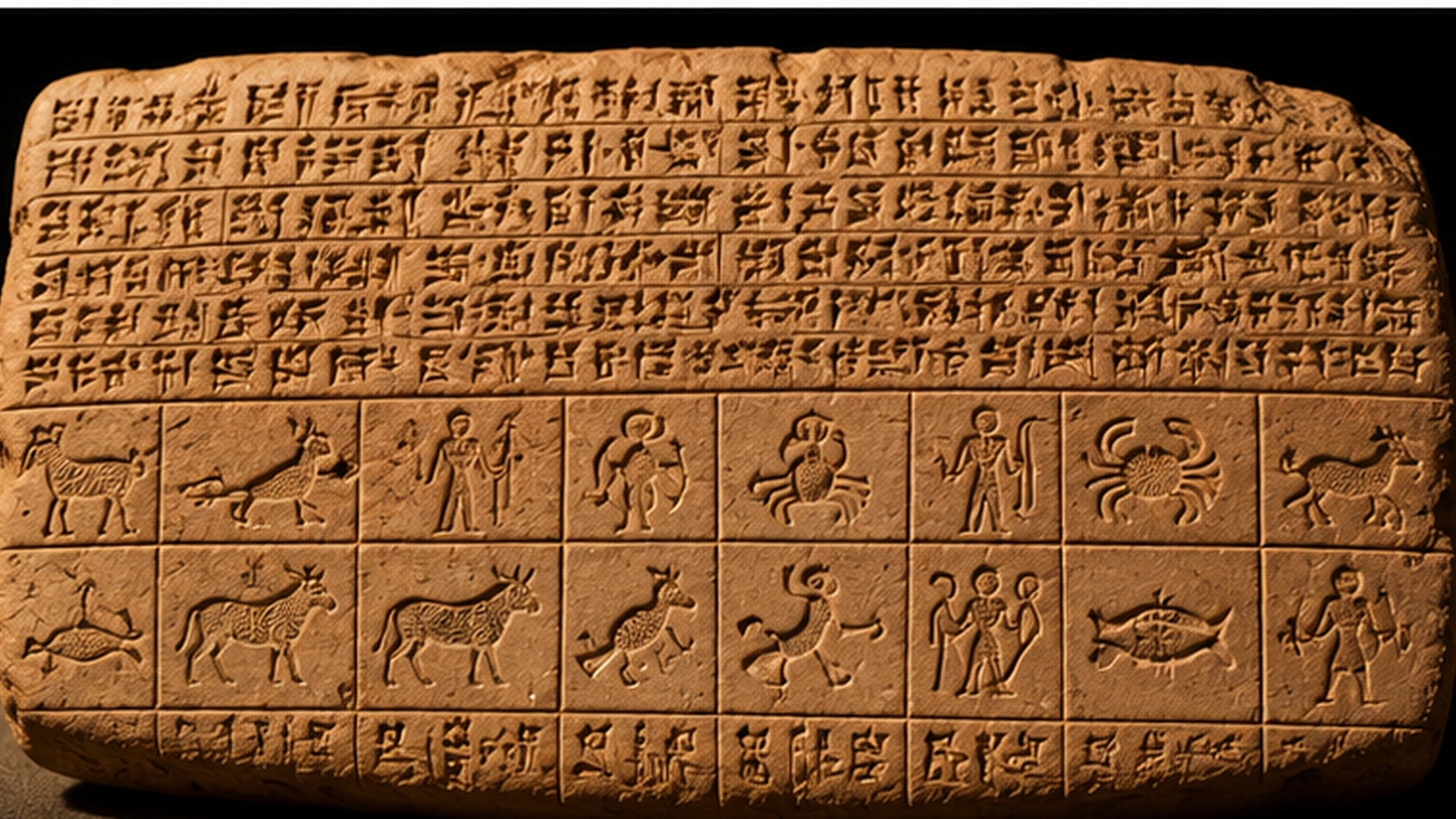
A Late Babylonian clay tablet dated to around 500 BCE lists months together with corresponding zodiac signs, showing that zodiacal signs had become integrated with calendrical organization by this period.
The twelve equal signs were not determined by the actual sizes of the constellations.
Astronomical constellations vary significantly in width along the ecliptic. Astrological signs are standardized mathematical sections.
This distinction remains essential today.
The Sky Before the Twelve-Sign Zodiac
The people of ancient Mesopotamia observed the sky long before the twelve-sign zodiac was standardized.
Scribes recorded:
•Rising and setting stars
•Planetary appearances
•Lunar phases
•Solar and lunar eclipses
•Unusual atmospheric events
•Calendar dates
•Seasonal patterns
•Celestial omens
Mesopotamian celestial divination developed within a cuneiform scholarly tradition that interpreted unusual or significant phenomena as signs concerning rulers, countries, harvests, warfare, disease, or social conditions.
These early traditions were not primarily the modern personality astrology seen in magazines and applications.
They often focused on the king and the welfare of the state.
Mesopotamian Star Lists and Constellations
Mesopotamian scholars organized stars and constellations into catalogues.
These catalogues helped them locate celestial bodies, maintain calendars, and record planetary motion.
A Neo-Assyrian planisphere in the British Museum contains constellation images, mathematical figures, and information connected with astrological calculation. It belonged to the scholarly world represented by the Library of Ashurbanipal.
Mesopotamian constellation traditions included figures that later contributed to the zodiac, including:
•A bull
•Twins
•A lion
•A scorpion
•A goat-fish
•Fish
•A figure associated with pouring water
The meanings and names changed as the figures moved between languages and societies.
It would be inaccurate to assume that every modern sign has remained visually and symbolically unchanged since the earliest Mesopotamian records.
Babylonian Celestial Omens
In Babylonian celestial divination, a phenomenon could be interpreted as a message from the gods.
An eclipse, unusual planetary appearance, or other event might be connected with possible consequences for a ruler or region.
Scholars copied, consulted, commented on, and expanded collections of omens. This required careful observation and preservation of records over long periods.
The tradition joined what modern people often separate into astronomy and astrology.
Accurate interpretation depended upon accurate calculation.
The Babylonian Twelve-Sign Zodiac
During the first millennium BCE, Babylonian astronomers increasingly used a standardized zodiac of twelve thirty-degree signs.
This created a coordinate system for locating the Moon and planets without relying entirely upon irregular constellation boundaries.
A planet could be described as occupying a certain number of degrees within a sign.
That mathematical standardization was one of the zodiac’s most influential developments.
A Late Babylonian tablet from around 500 BCE preserves a list connecting months with zodiac signs, while later tablets contain zodiac divisions, planetary information, and detailed constellation imagery.
From Omens to Personal Horoscopes
Babylonian astrology gradually expanded from state-centered celestial omens to individual horoscopes.
A personal horoscope recorded celestial conditions associated with a person’s birth and offered statements about possible future circumstances.
Babylonian horoscopes developed within the same scholarly environment as astronomical tables and celestial omen literature. They reveal how calculations of planetary positions became connected with individual lives.
This was a major historical change.
The sky was no longer interpreted only for kingdoms and rulers. It could also be interpreted for a particular person.
How the Zodiac Reached the Greek World
After the conquests of Alexander the Great in the late fourth century BCE, Greek-speaking kingdoms extended across Egypt, Mesopotamia, Persia, and parts of Central and South Asia.
This political geography created environments in which Greek and Babylonian scholars, texts, calculations, and intellectual traditions could interact.
Modern scholarship describes Hellenistic astronomy and astrology as products of exchange rather than the isolated invention of one culture.
Greek scholars adopted the twelve-sign zodiac and transformed it through:
•Geometry
•Philosophical theories
•Planetary rulership
•Angular relationships
•Houses or places
•Interpretations of individual birth
•Theories of fate and character
Technical horoscopic astrology developed especially in the Greek-speaking Hellenistic world from approximately the third and second centuries BCE onward.
Hellenistic Astrology
Hellenistic astrology combined at least two major foundations:
1Babylonian zodiacal and planetary traditions
2Greek systems of mathematical astronomy, geometry, and philosophical interpretation
Egyptian religious, calendrical, and astronomical traditions also formed part of the environment in which this synthesis developed.
The resulting system included many concepts still recognizable in Western astrology:
•Twelve zodiac signs
•Seven traditional planets
•Birth horoscopes
•Ascendant
•Houses or places
•Planetary aspects
•Planetary rulership
•Benefic and malefic classifications
•Techniques for timing periods of life
Greco-Roman personal astrology was established around the second century BCE through the combination of Babylonian and Greek elements.
Did Ancient Egypt Invent the Zodiac?
Ancient Egypt had sophisticated calendars, stellar observations, temple astronomy, decans, and religious ideas about the sky long before the familiar zodiac entered Egypt.
However, the standardized twelve-sign zodiac was Babylonian in origin and was introduced into Egypt after the Greek conquest.
Egypt then became one of the most important places in the zodiac’s later development.
Ptolemaic and Roman Egypt brought together:
•Egyptian religious imagery
•Babylonian zodiacal structure
•Greek language and mathematics
•Mediterranean planetary traditions
•Temple scholarship
•Personal horoscopes
It is therefore more accurate to describe Egypt as a major center of adaptation, synthesis, preservation, and transmission—not the sole birthplace of the twelve-sign zodiac.
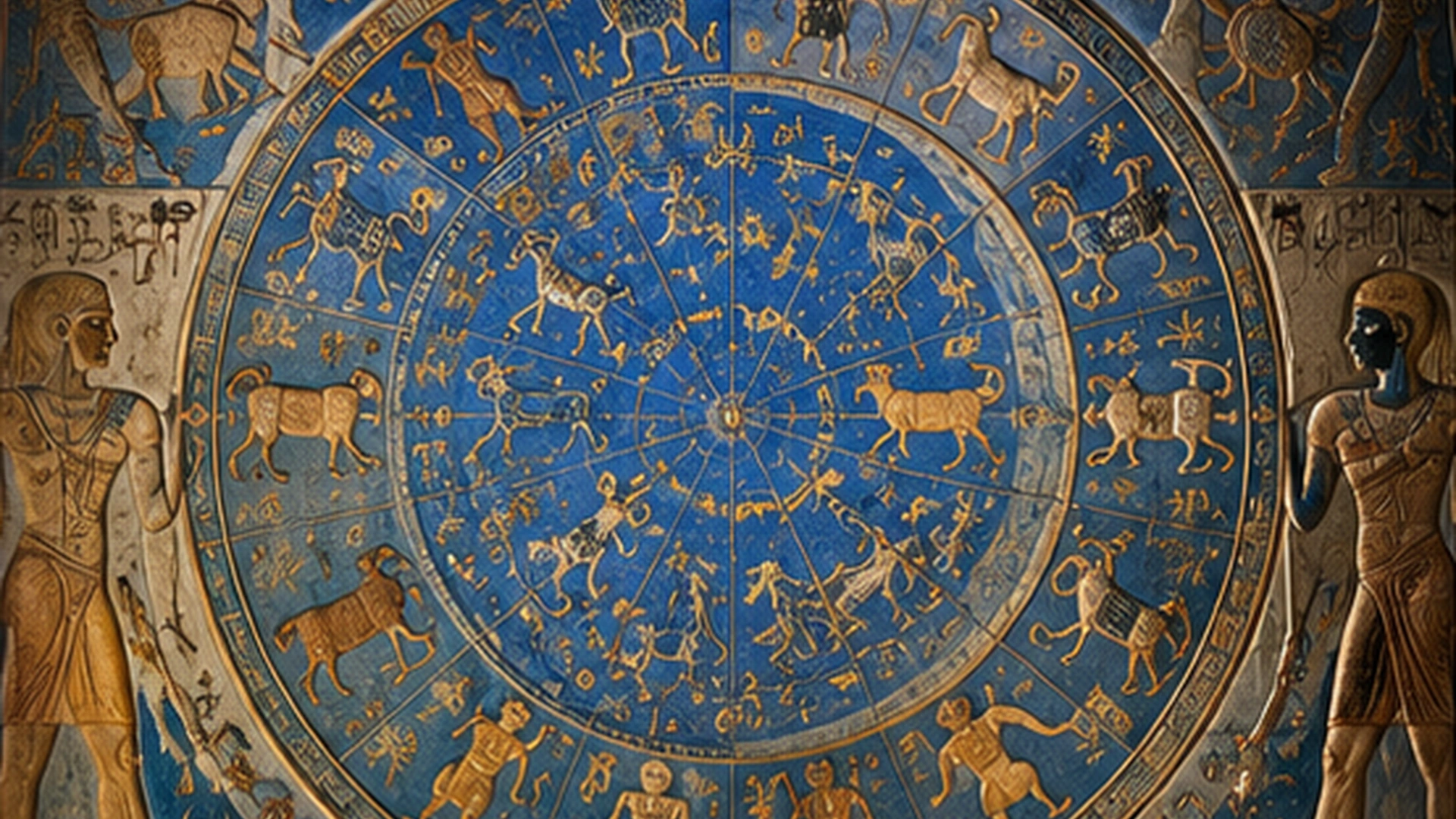
The Dendera Zodiac
The Dendera Zodiac is one of the most famous ancient zodiac monuments.
It originally formed part of a ceiling in a chapel connected with the Temple of Hathor at Dendera in Upper Egypt. The original relief is now in the Louvre.
The Louvre dates the circular zodiac to the period of Cleopatra VII and Ptolemy XIII, around 50 BCE. Its imagery includes twelve zodiac constellations, the five planets known to ancient observers, and representations interpreted as solar and lunar eclipses.
The Dendera Zodiac combines Egyptian figures with zodiac imagery that had developed through Babylonian and Greek traditions.
It should not be used as evidence that the familiar zodiac existed unchanged in Egypt thousands of years earlier.
The Twelve Signs in Greco-Roman Tradition
Greek and Roman artists and astrologers helped establish forms that became familiar in later Western traditions.
Zodiac sign
Traditional image
General historical note
Aries
Ram
Connected with a springtime sign and earlier Mesopotamian imagery
Taurus
Bull
Related to the Bull constellation and older Near Eastern traditions
Gemini
Twins
Developed from traditions involving paired heroic or divine figures
Cancer
Crab
A crustacean figure near the summer-solstice region
Leo
Lion
Connected with a prominent lion constellation
Virgo
Maiden
Developed from female, agricultural, and celestial imagery
Libra
Scales
Became a distinct sign from the claws region associated with Scorpio
Scorpio
Scorpion
Retained strong Mesopotamian and Mediterranean continuity
Sagittarius
Archer
Greek artists reshaped an older composite archer figure
Capricorn
Goat-fish
Preserved an unusual Mesopotamian composite creature
Aquarius
Water bearer
Developed from an older water-associated celestial figure
Pisces
Two fish
Derived from linked fish traditions in the Near East
The signs acquired new myths as they moved through Greek and Roman literature.
A modern explanation that gives each sign only a Greek myth may overlook earlier Mesopotamian history.
Why Libra Is Different
Libra is the only familiar Western zodiac sign represented primarily by an inanimate object.
In some earlier traditions, the region was understood as the claws of the Scorpion. Greek and Roman traditions gradually strengthened the independent image of the Scales.
The scales could be associated with balance, equality, judgment, or the seasonal balance around the equinox.
This illustrates how zodiac signs changed rather than remaining fixed.
The Zodiac in Roman Life
Astrology became widespread throughout the Roman world.
Zodiac imagery appeared on:
•Mosaics
•Coins
•Jewelry
•Manuscripts
•Calendars
•Sculptures
•Household objects
•Public monuments
Roman rulers sometimes consulted astrologers while also restricting them when political forecasts appeared threatening.
The zodiac became connected with birth, destiny, imperial authority, time, seasons, and the organization of the cosmos.
How the Zodiac Entered India
India already possessed advanced traditions of calendars, lunar mansions, ritual timing, mathematics, and sky observation.
Translations and adaptations of Hellenistic Greek texts on natal astrology later had a major influence on Indian mathematical astronomy and astrology. Indian scholars transformed these imported techniques within South Asian intellectual and religious traditions.
Indian astrology did not simply reproduce Greek astrology.
It developed distinctive systems involving:
•A sidereal zodiac
•Nakshatras or lunar mansions
•Planetary periods
•Regional house systems
•Marriage matching
•Election of favorable times
•Karma and religious interpretation
•Sanskrit and regional technical vocabularies
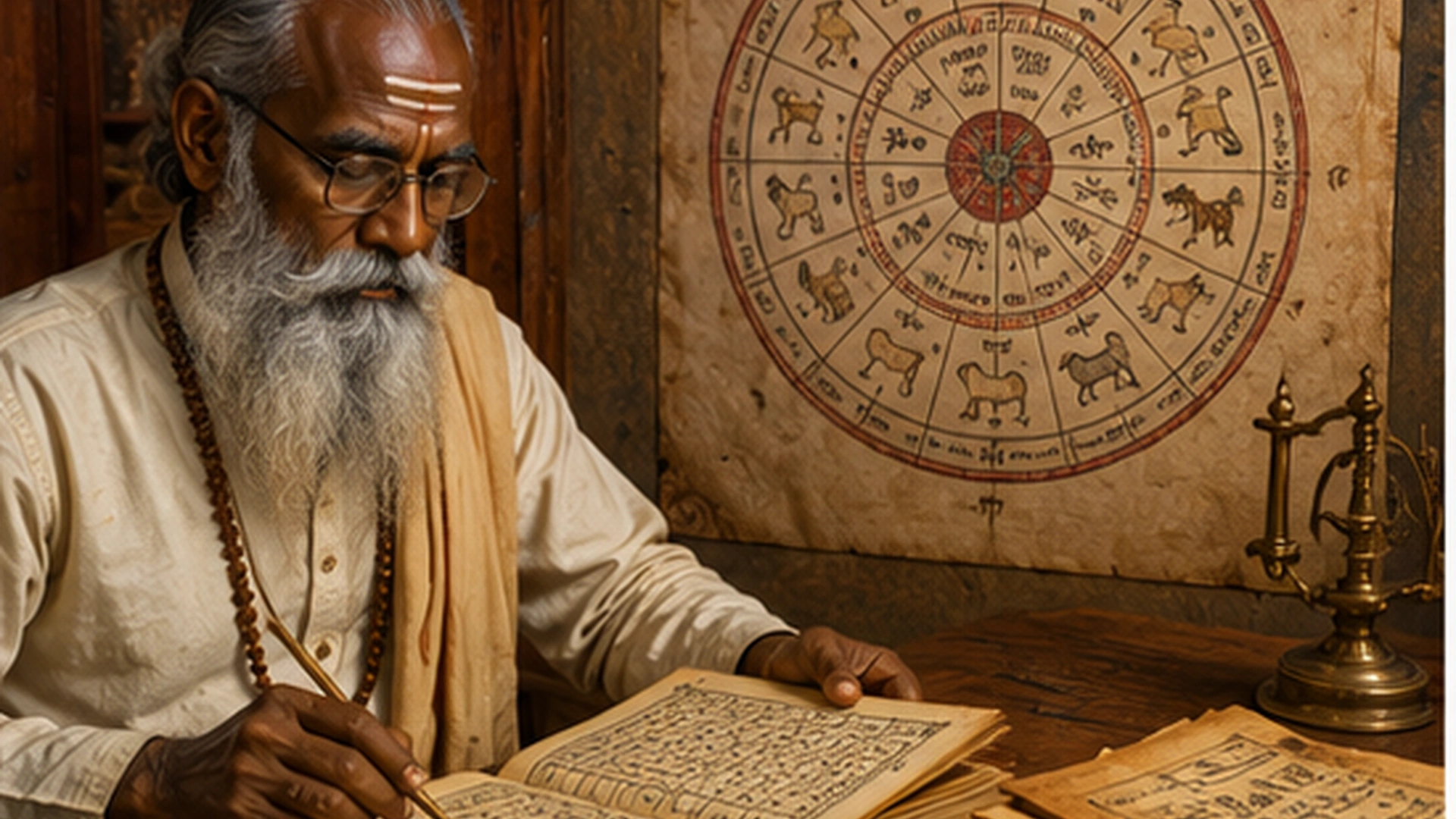
Illustrated Indian horoscope scrolls could record birth information, planetary positions, zodiac signs, and interpretations commissioned for a child.
The Zodiac in the Medieval Islamic World
From the eighth century onward, scholars working in Arabic and Persian translated, studied, corrected, and expanded Greek, Indian, Persian, and earlier astronomical traditions.
Astronomy and astrology could be connected with:
•Calendar calculation
•Planetary tables
•Court advice
•Medicine
•Geography
•Navigation
•Prayer times
•Horoscope calculation
•Artistic imagery
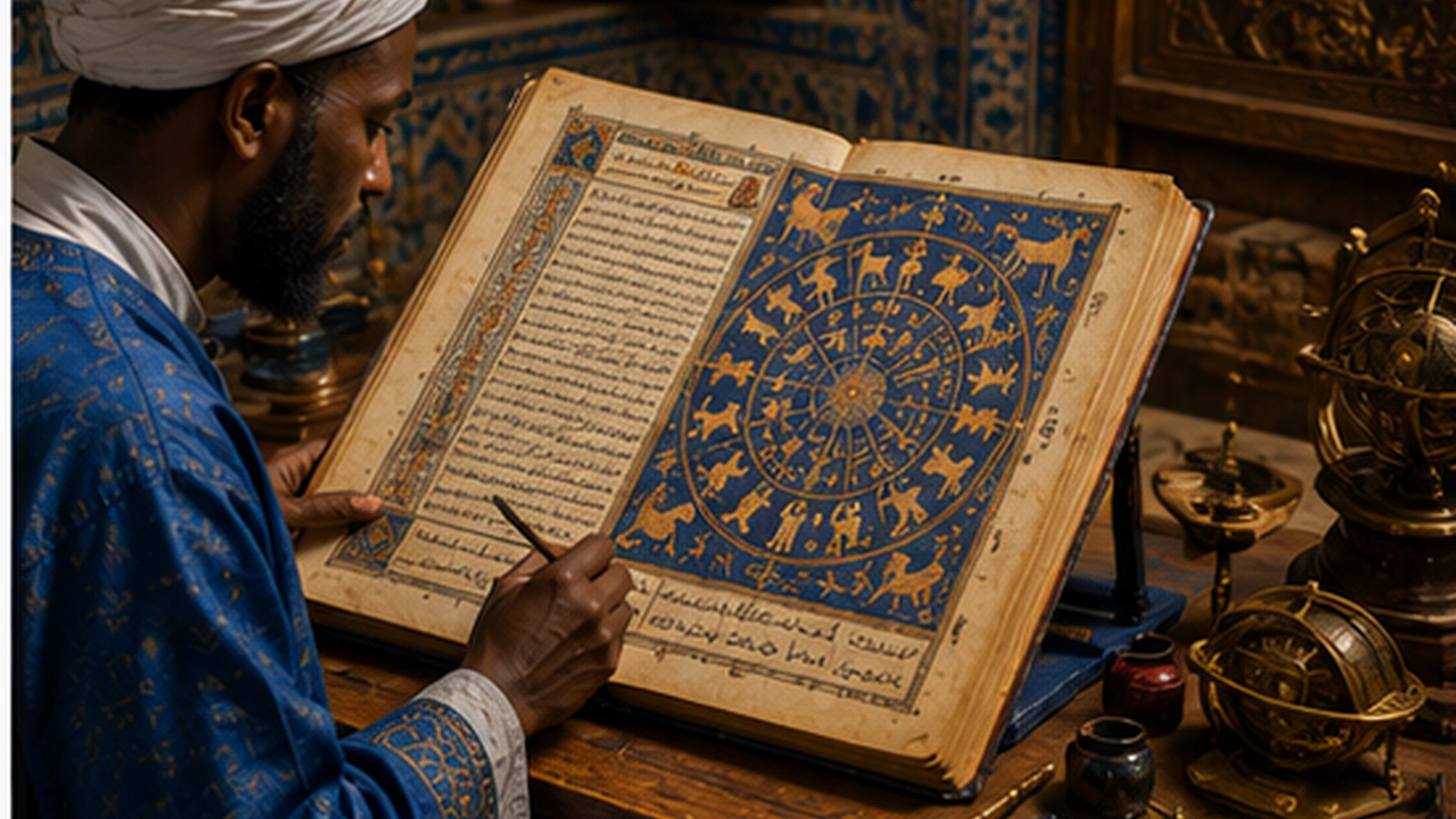
Medieval Islamic artists generally adapted zodiac images inherited from Greek models, including the ram, bull, twins, crab, lion, maiden, scales, scorpion, archer, goat, water bearer, and fish.
Zodiac signs and planetary figures appeared on manuscripts, metalwork, ceramics, textiles, scientific instruments, and courtly objects, especially between the twelfth and fourteenth centuries in regions including Egypt, Syria, Iran, and Anatolia.
Muslim Debates About Astrology
Muslim scholars did not hold one universal view of astrology.
Some distinguished mathematical astronomy from predictive astrology. Others accepted limited forms of weather, medical, or natural forecasting while rejecting claims that stars independently determined human fate.
Astrological learning nevertheless influenced Arabic and Persian scholarship, literature, political culture, and art.
This history should not be summarized as either “Islam accepted astrology” or “Islam rejected astrology.”
Views varied by scholar, period, legal interpretation, court, and intellectual tradition.
The Zodiac in North Africa and African Scholarship
Egypt and North Africa were important locations in the transmission of zodiacal astronomy and astrology.
Greek, Coptic, Arabic, Latin, Hebrew, and other scholarly traditions circulated through cities, religious institutions, courts, trade routes, and libraries.
African manuscript collections also preserve evidence of astronomical and astrological calculation.
The libraries of Timbuktu contain manuscripts involving astronomy, calendars, mathematics, and horoscope-related study, demonstrating participation in wider Islamic scholarly networks.
This should not be generalized into one universal “African zodiac.”
Many African societies developed their own forms of star knowledge connected with seasons, navigation, rain, agriculture, ritual calendars, and oral tradition. Those systems are not automatically versions of Babylonian astrology.
How the Zodiac Returned to Western Europe
After the decline of many ancient institutions in Western Europe, complex Greek astrological works became less accessible there.
European scholars later recovered major parts of ancient astronomy and astrology through:
•Byzantine manuscripts
•Arabic-to-Latin translation
•Jewish scholarly networks
•Universities
•Courts
•Monastic and cathedral libraries
•Contact with Islamic Spain and the Mediterranean
Works by influential astrologers writing in Arabic, including Abu Maʿshar, were translated into Latin and became important in medieval Europe.
The zodiac subsequently appeared in European:
•Cathedral sculpture
•Books of hours
•Medical diagrams
•Agricultural calendars
•Almanacs
•Court astrology
•University texts
•Renaissance art
The Zodiac and Medieval Medicine
Medieval European medical traditions sometimes connected zodiac signs with body parts, illnesses, bloodletting, and treatment timing.
Images known as zodiac men placed signs around a human body.
These historical diagrams are valuable for understanding medical culture, but zodiac medicine is not a scientifically validated diagnostic system.
Astrology must not replace qualified medical treatment.
The Zodiac During the Renaissance
Renaissance scholars studied Greek, Roman, Arabic, Persian, and Hebrew texts.
Zodiac imagery appeared alongside new developments in observational astronomy.
This period included figures who practiced or studied both astronomy and astrology because the modern institutional separation between them had not yet become complete.
The same mathematical tables could be used to calculate:
•Planetary positions
•Eclipses
•Calendars
•Horoscopes
•Navigation
•Religious dates
Later advances in physics and astronomy changed scientific explanations of the heavens, but zodiac imagery remained influential in art and popular culture.
Tropical and Sidereal Zodiacs
Two major modern zodiac frameworks are the tropical and sidereal systems.
Tropical zodiac
The tropical zodiac begins Aries at the March equinox.
Its signs remain tied to the seasonal cycle rather than to the present astronomical positions of the constellations.
This system is commonly used in modern Western astrology.
Sidereal zodiac
Sidereal systems attempt to align signs with stellar reference points.
They are widely used in Indian astrology and by some Western astrologers.
Different sidereal traditions may use different calculations for the offset between tropical and sidereal positions.
What Is Precession?
Earth’s rotational axis slowly changes direction in a motion called axial precession.
This gradual movement changes the relationship between equinox points and background stars over long periods.
As a result, the tropical sign Aries no longer corresponds precisely with the constellation Aries.
The tropical zodiac remains anchored to the equinox. The stellar constellations continue to shift relative to that seasonal framework.
This is not a recent discovery that suddenly invalidated an unchanged system.
Ancient and later astronomers observed precessional effects, while different astrological traditions made different choices about how to define the zodiac.
Zodiac Signs Versus Zodiac Constellations
This distinction solves many common misunderstandings.
Astrological signs
•Twelve equal sections
•Thirty degrees each
•Total of 360 degrees
•Used in horoscopes
•Defined mathematically
Astronomical constellations
•Unequal areas of sky
•Defined by modern astronomical boundaries
•Contain physical stars at very different distances
•Used to map celestial regions
•Do not occupy equal thirty-degree sections
A person may therefore be born while the Sun is astronomically in one constellation but assigned a different tropical astrological sign.
What About Ophiuchus?
The Sun passes through the astronomical region assigned to Ophiuchus under modern constellation boundaries.
This has led to repeated claims that astrology should have thirteen zodiac signs.
However, the twelve-sign astrological zodiac is not simply a list of every constellation touched by the Sun.
It is a mathematical division of the ecliptic into twelve equal parts.
Ophiuchus can be an ecliptic constellation without becoming a thirteenth sign in the traditional twelve-part tropical zodiac.
An astrologer could create a thirteen-sign system, but that would be a modified system rather than the rediscovery of a forgotten universal zodiac.
Is the Chinese Zodiac Related to the Western Zodiac?
The Chinese zodiac is a different system.
It commonly assigns twelve animals to a repeating twelve-year cycle rather than dividing the ecliptic into twelve thirty-degree signs.
The twelve-year animal cycle operates within wider Chinese calendrical systems involving heavenly stems, earthly branches, yin and yang, and five phases or elements.
Smithsonian sources describe the Chinese zodiac as a twelve-year animal cycle integrated into a sixty-year calendrical rotation.
The Western and Chinese systems both use the number twelve, but they organize time and symbolism differently.
They should not be treated as translations of each other.
Why Do So Many Systems Use Twelve?
Twelve appears frequently because it is mathematically convenient.
It can be divided evenly by:
•Two
•Three
•Four
•Six
It also approximates the number of lunar cycles in a solar year.
Twelve therefore appears in calendars, timekeeping, religious symbolism, measurement, and celestial classification.
Shared use of twelve does not prove that all twelve-part systems came from one civilization.
The Zodiac in Modern Popular Astrology
Modern popular astrology often focuses on the Sun sign.
Newspaper horoscopes developed a simplified format in which readers were grouped according to the zodiac sign occupied by the Sun around their date of birth.
Traditional birth-chart astrology normally considers much more:
•Moon
•Ascendant
•Mercury
•Venus
•Mars
•Jupiter
•Saturn
•Houses
•Aspects
•Additional points
Sun-sign astrology helped make the zodiac widely accessible, but it represents only one modern use of the system.
Zodiac Symbols in Modern Culture
The zodiac now appears in:
•Fashion
•Jewelry
•Social media
•Mobile applications
•Tattoos
•Entertainment
•Branding
•Spiritual services
•Personality discussions
•Dating profiles
Modern use often separates signs from their historical contexts.
A Capricorn symbol may be marketed without explaining the ancient goat-fish. Egyptian imagery may be presented as though ancient Egyptians created every element of modern horoscope astrology. Chinese zodiac animals may be mixed with Western planetary rulerships.
Creative adaptation is not automatically wrong, but it should be described honestly.
Did the Zodiac Always Describe Personality?
No.
Early Mesopotamian celestial omens were often concerned with rulers, regions, weather, harvests, warfare, disease, and political events.
Individual birth astrology emerged later.
Detailed psychological sign descriptions are especially associated with modern astrology.
The zodiac’s history moved through several broad functions:
1Celestial observation
2Calendar and location system
3State and royal omen interpretation
4Personal horoscopes
5Medical and electional timing
6Personality and psychological symbolism
7Popular entertainment and digital culture
These functions overlapped rather than replacing one another completely.
Is the Zodiac Scientifically Proven?
The zodiac is historically important as a system of astronomy, chronology, art, religion, and divination.
However, scientific research has not established that zodiac signs reliably determine personality or predict individual events.
Astronomy studies stars, planets, and celestial motion through evidence, measurement, physical theory, and repeatable observation.
Astrology interprets signs symbolically.
The distinction does not make zodiac history unimportant. It means cultural and historical significance should not be confused with scientific validation.
Common Misconceptions
“One person invented the zodiac”
False.
The zodiac developed over generations through observation, calculation, writing, translation, and cultural exchange.
“Ancient Egypt created all twelve signs”
False.
The standardized twelve-sign zodiac was Babylonian in origin and later adapted in Ptolemaic and Roman Egypt.
“The zodiac has always been about personality”
False.
Early celestial omen traditions often focused on rulers, kingdoms, weather, disease, and public events.
“Zodiac signs are the same size as constellations”
False.
Signs are equal thirty-degree divisions. Constellations are unequal regions of sky.
“Precession added a new zodiac sign”
False.
Precession changes the relationship between seasonal points and background stars. It does not automatically alter the traditional twelve-part mathematical zodiac.
“Ophiuchus proves there must be thirteen signs”
False.
Ophiuchus is an astronomical constellation along the Sun’s path, but the traditional astrological zodiac is deliberately divided into twelve equal signs.
“The Chinese zodiac is the same system with different animals”
False.
The Chinese zodiac is primarily a twelve-year calendrical cycle.
“Every African celestial tradition is astrology”
False.
Many communities observe stars for agriculture, navigation, seasons, religion, or oral history without using birth horoscopes or zodiac signs.
“The modern sign meanings are unchanged from Babylon”
False.
Images and interpretations developed through Mesopotamian, Greek, Egyptian, Roman, Indian, Islamic, European, and modern traditions.
“Historical importance proves predictive accuracy”
False.
A tradition can be culturally influential without being scientifically validated.
Ethical Boundaries
Zodiac interpretations should not be used to:
•Diagnose illness
•Decide whether someone is abusive
•Predict death as certainty
•Deny medical treatment
•Control marriage decisions
•Discriminate in employment
•Judge a child’s intelligence
•Guarantee pregnancy
•Promise financial success
•Replace legal advice
•Encourage fear of a sign
•Claim one sign is morally superior
•Pressure clients to pay large fees
•Present cultural inventions as ancient fact
No zodiac sign proves that a person is dangerous, dishonest, cursed, incompatible, unintelligent, or destined to fail.
How to Study Zodiac History Responsibly
Separate astronomy from astrology
Explain whether a source is discussing celestial observation, mathematical coordinates, religious symbolism, or predictive interpretation.
Identify the historical period
“Ancient zodiac” can refer to very different periods:
•Neo-Assyrian
•Neo-Babylonian
•Hellenistic
•Ptolemaic Egyptian
•Roman
•Medieval Islamic
•Medieval European
•Renaissance
•Modern
Identify the culture
Avoid treating Babylonian, Greek, Egyptian, Indian, Persian, Arab, Chinese, and African traditions as interchangeable.
Use museum objects carefully
An object’s collection label should be checked for:
•Date
•Place of production
•Archaeological context
•Language
•Ownership history
•Modern interpretation
•Possible colonial collection history
Acknowledge uncertainty
Some constellation names and images changed over centuries.
It is better to state that an interpretation is debated than to present a guess as established history.
Key Takeaways
•The zodiac is a band of sky centered on the ecliptic.
•Its twelve signs are equal thirty-degree divisions.
•Mesopotamian scholars developed detailed celestial observation and omen traditions.
•Babylonian astronomers standardized the twelve-sign zodiac.
•A Late Babylonian tablet from around 500 BCE links months with zodiac signs.
•Individual birth horoscopes developed from earlier celestial-divination traditions.
•Greek-speaking scholars transformed Babylonian zodiacal knowledge into technical horoscopic astrology.
•Hellenistic and Roman Egypt became major centers of adaptation and transmission.
•Ancient Egypt did not independently invent the entire modern twelve-sign zodiac.
•The Dendera Zodiac dates to the Ptolemaic period around 50 BCE.
•Indian scholars adopted and transformed Hellenistic zodiacal astrology.
•Muslim scholars translated, expanded, debated, and illustrated zodiac traditions.
•Tropical signs are anchored to the equinoxes and seasons.
•Sidereal systems use stellar reference points.
•Axial precession causes tropical signs and astronomical constellations to shift relative to one another.
•Ophiuchus is an astronomical constellation but not a required thirteenth sign in a twelve-part zodiac.
•The Chinese zodiac is a separate twelve-year calendrical system.
•Zodiac history is culturally important, but personality and predictive claims are not scientifically established.
People Also Ask
Where did the zodiac originate?
The standardized twelve-sign zodiac originated in ancient Babylonia, building upon older Mesopotamian star catalogues and celestial-omen traditions.
Who invented the zodiac signs?
No single person invented them. Babylonian astronomers standardized the twelve-sign structure, while Greek, Egyptian, Roman, Indian, Islamic, and later scholars transformed its imagery and interpretation.
Why are there twelve zodiac signs?
Babylonian astronomers divided the 360-degree ecliptic into twelve equal thirty-degree sections, corresponding conveniently with a twelve-month calendar.
Did the zodiac come from ancient Egypt?
Egypt became a major center of zodiacal astrology, but the standardized twelve-sign zodiac was introduced from Babylonia during the Hellenistic period.
How old is the zodiac?
Evidence for the standardized zodiac dates to the first millennium BCE, including Late Babylonian tablets from around 500 BCE.
What is the Dendera Zodiac?
It is a Ptolemaic-period Egyptian ceiling relief showing zodiac constellations, planets, and celestial phenomena.
Why do zodiac signs not match constellations?
Astrological signs are equal mathematical divisions, while astronomical constellations have unequal sizes. Axial precession has also shifted their relative alignment.
Is Ophiuchus the thirteenth zodiac sign?
Ophiuchus is an ecliptic constellation, but it is not part of the traditional twelve equal signs used in Western tropical astrology.
Is the Chinese zodiac connected to the Western zodiac?
They are distinct systems. The Chinese zodiac uses a twelve-year animal cycle, while the Western zodiac divides the ecliptic into twelve signs.
Is the zodiac scientifically proven?
The zodiac is historically and culturally significant, but scientific research has not established that signs reliably determine personality or predict events.
Frequently Asked Questions
1. What does the word zodiac mean?
It refers to a circle or band of celestial figures positioned around the apparent path of the Sun.
2. Where was the twelve-sign zodiac developed?
It was standardized in ancient Babylonia from older Mesopotamian astronomical and divinatory traditions.
Frequently Asked Questions
What should readers know first about african spirituality and cultural history?
African spirituality and cultural history: Read clear guidance, key signs, practical steps, and private support from Ancestral Temple.
What causes Origins of the Zodiac?
The safest next step is to compare the signs, prepare clear details, and request private guidance when the matter feels personal.
How does Origins of the Zodiac work?
The safest next step is to compare the signs, prepare clear details, and request private guidance when the matter feels personal.
Is it possible to get private guidance for Origins of the Zodiac?
The safest next step is to compare the signs, prepare clear details, and request private guidance when the matter feels personal.
How long does Origins of the Zodiac take to understand?
The safest next step is to compare the signs, prepare clear details, and request private guidance when the matter feels personal.
Can Origins of the Zodiac affect relationships, family, work, or personal peace?
The safest next step is to compare the signs, prepare clear details, and request private guidance when the matter feels personal.
Why do people seek spiritual guidance for Origins of the Zodiac?
The safest next step is to compare the signs, prepare clear details, and request private guidance when the matter feels personal.
What signs should someone notice before asking about Origins of the Zodiac?
The safest next step is to compare the signs, prepare clear details, and request private guidance when the matter feels personal.
When should someone contact a private spiritual guide?
The safest next step is to compare the signs, prepare clear details, and request private guidance when the matter feels personal.
What causes african spirituality and cultural history?
African spirituality and cultural history: Read clear guidance, key signs, practical steps, and private support from Ancestral Temple. The safest next step is to compare the signs, prepare clear details, and request private guidance when the matter feels perso
Article Information
- Publisher
- Ancestral Temple
- Editor
- Ancestral Temple
- Last updated
- Jul 26, 2026
- Last reviewed
- Jul 13, 2026
- Content version
- ed5a0c5196
This educational article should be read as cultural and spiritual information, not as medical, legal, financial, or emergency advice.
Helpful Related Guidance
Explore This Topic
What Is Astrology · Planetary Influence Meaning
Related Topic Cluster
African Spirituality And Cultural History
Complete Guide Why Homes Have Been Blessed Throughout HistoryAbout the Author
 Ancestral Temple
Spiritual guide and practitioner with decades of experience in ancestral wisdom, rituals, and divine guidance.
Related Posts
View All




Leave a Comment
We'd love to hear your thoughts.
This was a balanced and well-researched explanation of the zodiac’s origins.
A glossary page for Babylonian astronomy terms would be useful.
The final summary captured the long history very clearly.
I appreciated the warning against inventing one universal African zodiac.
Did ancient astrologers use the same planetary rulerships used today?
The comparison between tropical signs and astronomical constellations was helpful.
I would enjoy an article about how the zodiac entered medieval European medicine.
The article handled scientific criticism without dismissing cultural history.
Could you write a separate article about the goat-fish origin of Capricorn?
I appreciated that Greek myths were not presented as the earliest meanings of every sign.
The explanation of why Ophiuchus does not automatically become a sign was very clear.
I would like to learn more about zodiac imagery in medieval art.
The section about Islamic scholarship added an important part of the story.
A downloadable zodiac-history timeline would be useful.
I appreciated the point that astrology and astronomy were historically intertwined.
The article was detailed but remained easy to read because of the headings.
Could you explain how precession was discovered historically?
The warning against using zodiac signs to judge someone’s character was necessary.
A visual comparison of Babylonian and Greek sign imagery would be interesting.
The article made the connection between calendars and zodiac signs much clearer.
Why did Babylonian astronomers choose 360 degrees for the circle?
The glossary definitions were detailed and useful.
I appreciated that the Dendera Zodiac was given a clear historical date.
Could you write more about North African zodiac manuscripts?
The article correctly avoided claiming that all African sky knowledge is astrology.
The explanation of Libra’s development was fascinating.
I would enjoy an article focused entirely on Babylonian celestial omens.
The Indian astrology section showed that imported ideas can be transformed locally.
How were birth times measured accurately in the ancient world?
I appreciated the balanced section about cultural importance and scientific evidence.
The distinction between early political omens and modern personality astrology was important.
I would like a full article comparing tropical and sidereal astrology.
The article showed clearly why the zodiac is a history of cultural exchange.
Could you create a timeline showing how the zodiac moved between different regions?
Thank you for explaining that the Chinese zodiac is a different calendrical system.
The Ophiuchus section answered a question I have had for years.
A separate guide to the Dendera Zodiac would be valuable.
I appreciated that the article credited Babylonian, Greek, Egyptian, Indian, and Islamic scholars.
The explanation of the ecliptic was easy to understand.
Could you write more about how Babylonian astronomers calculated planetary positions?
I did not know that the twelve signs were mathematical thirty-degree divisions.
The section about ancient Egypt corrected several claims I have seen online.
I would enjoy a detailed article about Mesopotamian star catalogues.
The distinction between zodiac signs and actual constellations was especially helpful.
I appreciated the explanation that the zodiac developed over time rather than being invented by one person.