
Prayer Across Cultures: Meaning, Forms, and Living Traditions
Cornerstone Content
Quick Summary
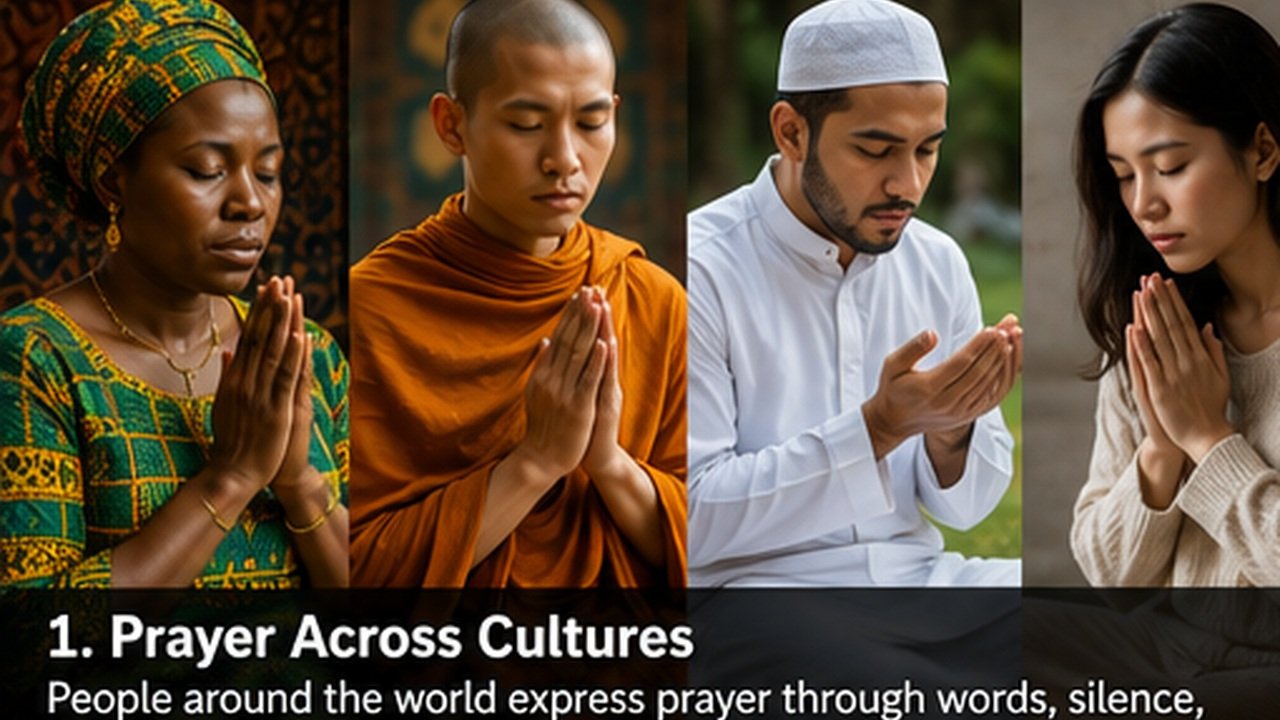
Prayer may be spoken, sung, whispered, embodied, silent, scheduled, or spontaneous. This guide compares culturally specific prayer traditions while respecting the different beliefs, languages, authorities, and sacred boundaries that give each practice meaning.
IMAGE 1 PLACEMENT
prayer-across-cultures-global-traditions.jpg
Alt text: People from different cultures engaged in culturally specific forms of prayer and sacred attention
What This Topic Means
Prayer is one of humanity’s most recognizable religious activities, yet it is also one of the easiest to oversimplify. A person may pray by speaking aloud, singing, whispering, standing silently, bowing, prostrating, pouring a libation, lighting a lamp, reciting inherited words, or sitting in disciplined attention.
From a distance, these actions may look like versions of the same practice. Within their communities, however, they may express very different understandings of God, deities, ancestors, sacred power, moral responsibility, the self, and the purpose of religious life.
Prayer across cultures is therefore best studied as a family of culturally specific practices rather than one universal method. The English word prayer can be useful for comparison, but it does not translate every tradition perfectly. Terms such as salah, du’a, puja, mantra, norito, karakia, and Buddhist chanting carry meanings that should not be flattened into an imported category.
This article offers a respectful global introduction with substantial attention to African examples. It explains public and educational aspects of prayer without reproducing restricted formulas or presenting any community’s practice as a guaranteed route to healing, wealth, protection, or supernatural results.
What Is Prayer?
Prayer may be described as intentional communication, devotion, sacred attention, or ritual speech directed toward a divine, spiritual, ancestral, or transcendent reality. Depending on the tradition, it can also include disciplined silence, contemplation, visualization, recitation, remembrance, or aspiration.
It is too narrow to define prayer only as asking a deity for help. Communities pray to praise, give thanks, confess, lament, intercede, remember, bless, dedicate, seek forgiveness, renew covenant, express dependence, cultivate compassion, or align life with sacred teaching.
Prayer can be personal or communal, spontaneous or fixed, brief or extended, ordinary or restricted. Some prayers are expected every day. Others belong to weddings, funerals, harvests, pilgrimages, initiations, royal ceremonies, illness, reconciliation, or the opening of a public gathering.
Why the Word “Prayer” Requires Care
Translation creates both connection and risk. Calling a practice prayer may help an unfamiliar reader recognize its sacred purpose, but it may also impose assumptions from another religion.
For example, Islamic salah is a prescribed act of worship with defined times, bodily movements, recitation, direction, and conditions of ritual readiness. It is not simply a private request. Hindu puja can include hospitality offered to a divine presence through light, water, flowers, food, fragrance, mantra, and gesture. Māori karakia may include invocations, ritual formulas, blessings, and words used to navigate relationships involving atua, tapu, mana, and community responsibility.
Buddhist traditions also challenge narrow definitions. Some communities chant prayers, aspirations, sutras, mantras, or the names of buddhas and bodhisattvas. These acts may cultivate compassion, merit, concentration, gratitude, protection, or aspiration rather than address an all-powerful creator.
The responsible approach is to use the community’s own word first, explain what practitioners say it means, and use prayer only as a careful comparison.
Major Purposes of Prayer
Praise and Adoration
Praise directs attention toward sacred greatness, beauty, power, compassion, holiness, or generosity. It may be expressed through spoken language, hymns, drumming, chant, poetry, names, or repeated acclamations.
Petition and Supplication
Petition asks for help, guidance, forgiveness, rain, protection, peace, health, wisdom, or another need. In many traditions, the request also expresses dependence and responsibility rather than an attempt to command the sacred.
Intercession
Intercession is prayer offered for another person, family, community, leader, nation, or the wider world. Communal intercession can make suffering a shared concern rather than a private burden.
Thanksgiving
Thanksgiving recognizes life, food, survival, harvest, healing, hospitality, family, ancestors, or divine grace. It may occur before meals, after danger, at seasonal festivals, or when a vow has been fulfilled.
Confession, Repentance, and Reconciliation
Prayer may acknowledge wrongdoing, seek forgiveness, repair relationships, or prepare a person to return to community life. The meaning of repentance differs by religion and should not be generalized.
Lament and Protest
Prayer is not always calm or celebratory. Lament gives sacred language to grief, injustice, abandonment, anger, and uncertainty. It can preserve honesty when easy answers would be disrespectful.
Remembrance and Ancestral Relationship
Some communities invoke ancestors, speak family names, pour offerings, or ask remembered generations to witness communal responsibilities. Such practices should not be reduced to a universal idea that all ancestors are worshipped or believed to possess the same powers.
Contemplation and Inner Formation
Prayer may train attention, humility, compassion, patience, moral awareness, or awareness of divine presence. The immediate goal may be transformation of the person praying rather than a visible external result.
The Body in Prayer
Prayer is often described as words, but the body can be equally important. People stand, kneel, bow, sit, dance, sway, raise their hands, fold their palms, cover their heads, turn toward a sacred direction, or place the forehead on the ground.
These gestures may express reverence, readiness, equality, surrender, dignity, grief, praise, concentration, or communal unity. The same posture can mean different things in different traditions.
It is therefore inaccurate to treat posture as decorative. In Islamic salah, bodily movements belong to the structure of worship. The Jewish Amidah is associated with standing. Christian communities may kneel, stand, sit, cross themselves, or raise hands according to denomination and context. Hindu worshippers may join the palms in añjali, while Buddhist communities may bow or prostrate as part of devotion and training.
Sound, Silence, and Sacred Language
Prayer may depend on ordinary speech, archaic liturgical language, poetry, tonal recitation, music, call-and-response, or silence. Some traditions value exact preservation of sounds because pronunciation, rhythm, and sequence are considered part of the inherited practice.
Sacred language may preserve history and identity. Ge’ez remains important in Ethiopian and Eritrean Orthodox liturgy. Hebrew structures Jewish prayer. Arabic unites Muslim ritual recitation while Muslims may make personal supplications in other languages. Sanskrit, Pali, Tibetan, Japanese, Māori, and many African languages carry prayer traditions whose meanings cannot be separated from sound and cultural memory.
Silence is not simply the absence of prayer. It may indicate listening, contemplation, reverence, grief, disciplined attention, or the protection of restricted knowledge.
Prayer Traditions in Africa
IMAGE 2 PLACEMENT
ga-libation-prayer-homowo-ghana.jpg
Alt text: Ga elder offering a culturally specific libation prayer during a community ceremony in Ghana
Africa contains Indigenous religions, Christianity, Islam, Judaism, Hinduism, Buddhism, and many locally formed or blended communities. There is no single African prayer style.
African prayers may be spoken by household members, elders, priests, imams, pastors, prophets, healers, praise singers, or designated ritual custodians. They may occur in homes, mosques, churches, shrines, groves, royal courts, marketplaces, riversides, gravesides, and public festivals.
The following examples illustrate diversity rather than provide a complete map of the continent.
Ga Libation Prayer During Hɔmɔwɔ in Ghana
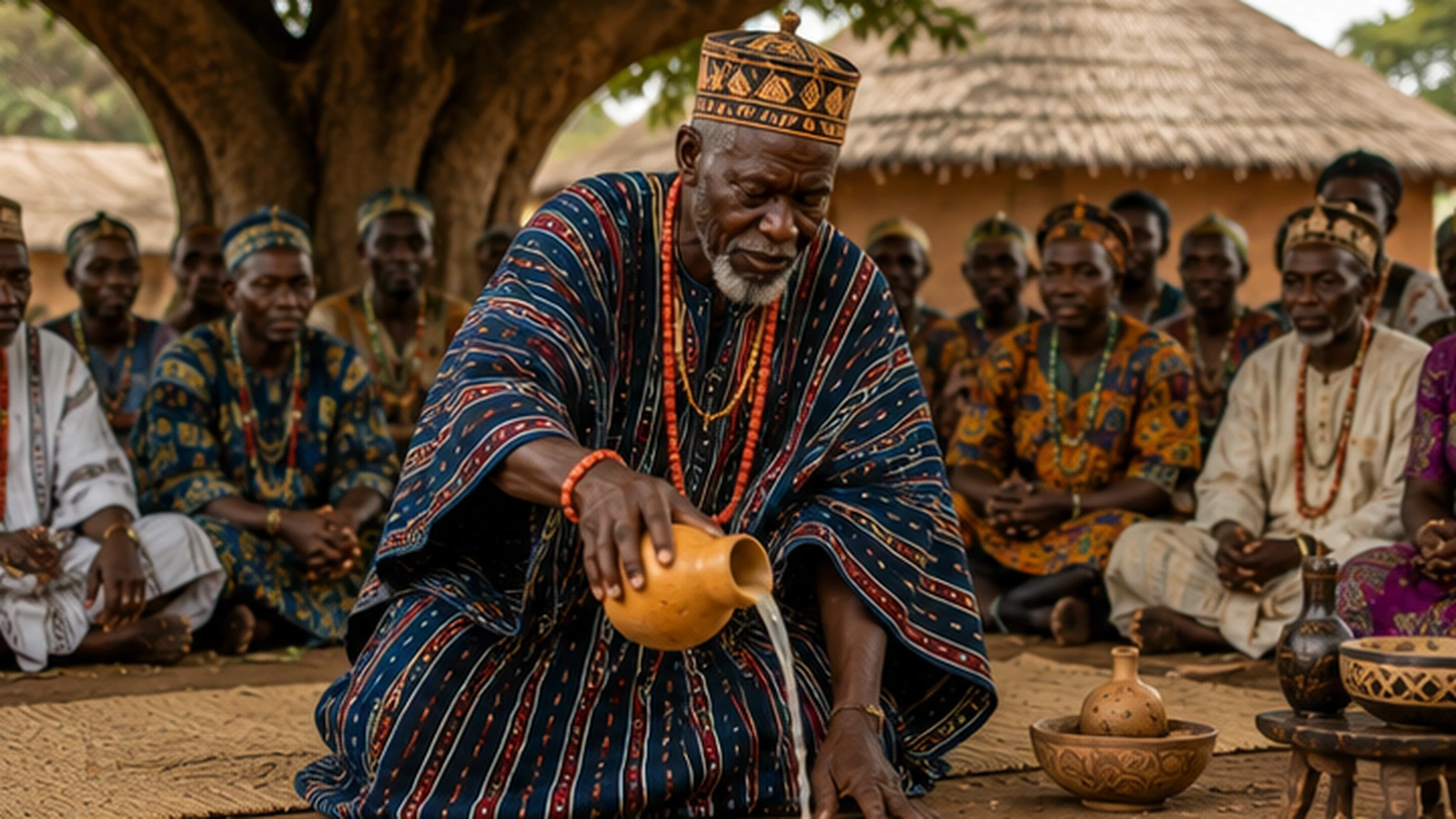
Among Ga communities in Ghana, libation prayer can form part of the Hɔmɔwɔ festival cycle. Research by Ghanaian ethnomusicologist Laryea Akwetteh describes a Teshie ritual segment called ŋkpaiyeli, a libation prayer in which prayers are offered to ancestors and deities for the physical, psychological, political, and religious well-being of society.
The prayers described in that setting include peace for the town and nation and concern for non-Ga residents. This makes the prayer communal and civic as well as religious. It is connected with a particular festival, ritual authority, language, and understanding of social renewal.
This example should not be turned into a generic African libation script. Other Ghanaian peoples and other African communities use different liquids, words, sequences, authorities, and theological interpretations.
Ethiopian Orthodox Prayer and Chant
Ethiopian Orthodox Christian life includes spoken prayer, biblical recitation, liturgical chant, processions, fasting, vigils, and the use of Ge’ez as a liturgical language. Manuscript collections preserve psalters, prayer books, antiphonaries, and specialized chant traditions.
Timkat, the Ethiopian Epiphany, demonstrates the public and communal dimensions of prayer. The festival commemorates the baptism of Jesus Christ and includes processions, hymns, overnight prayer, blessing of water, and the return of tabots to their churches.
It is misleading to describe Ethiopian Orthodox prayer as simply an African version of European Christianity. Its liturgical language, music, manuscripts, calendar, architecture, and historical development belong to an ancient African Christian tradition with its own authority.
Islamic Prayer Across African Communities
Muslim communities across Africa participate in salah, the prescribed ritual prayer performed at defined periods of the day. Salah includes Qur’anic recitation, standing, bowing, prostration, sitting, and orientation toward the Kaaba in Makkah.
Muslims may also make du’a, personal or communal supplication, in Arabic or other languages. Salah and du’a are related but not identical. The first has a defined ritual structure; the second can include personal requests, gratitude, remembrance, and intercession in many settings.
African Muslim prayer reflects both shared Islamic obligations and local histories. Mosque architecture, scholarly lineages, devotional poetry, clothing, call-and-response traditions, and languages vary across Senegal, Mali, Morocco, Egypt, Sudan, Somalia, Uganda, Tanzania, South Africa, and other regions.
African Christian Prayer Beyond One Style
African Christian prayer includes ancient Orthodox liturgy, Catholic Mass and devotional prayer, Anglican and Protestant worship, African Independent Churches, Pentecostal intercession, contemplative communities, and many local-language hymn traditions.
Some congregations emphasize fixed liturgy and quiet reverence. Others use extended singing, clapping, dancing, spontaneous intercession, testimony, or all-night prayer. These differences reflect denomination, theology, local history, and community preference rather than a single African Christian character.
Jewish Prayer and the Amidah
IMAGE 5 PLACEMENT
jewish-amidah-standing-prayer.jpg
Alt text: Jewish worshippers standing in prayer during the Amidah
Jewish prayer includes blessings, psalms, scriptural passages, communal services, private devotion, songs, and prayers associated with meals, festivals, mourning, and daily life.
The Amidah, whose name refers to standing, is a central prayer of Jewish worship. It is traditionally recited while standing and includes praise, petition, and thanksgiving, with weekday, Sabbath, and festival forms.
Jewish prayer demonstrates how body, text, time, community, and memory can be joined. Hebrew may connect worshippers across regions and generations, while many communities also use local languages for teaching, interpretation, and additional prayer.
Christian Prayer
IMAGE 6 PLACEMENT
christian-communal-prayer-africa.jpg
Alt text: African Christian congregation praying together with culturally appropriate worship
Christian prayer is shaped by scripture, the teachings of Jesus, church tradition, and denominational practice. It may be vocal, sung, meditative, contemplative, spontaneous, or liturgical.
Common forms include blessing and adoration, petition, intercession, thanksgiving, praise, confession, lament, and contemplation. The Lord’s Prayer provides a widely shared pattern, although wording and liturgical use differ among churches and languages.
Christian prayer may occur during the Eucharist or Communion, the Liturgy of the Hours, family worship, healing services, funerals, pilgrimages, revivals, private devotion, or silent retreat. No single posture or emotional style defines all Christians.
Islamic Salah, Du’a, and Dhikr
Islam distinguishes several related forms of worship and remembrance. Salah is the prescribed ritual prayer offered five times each day by practicing Muslims. It structures time and joins recitation with bodily discipline.
Du’a is supplication or calling upon God and can be made in many circumstances. Dhikr refers to remembrance of God and may include repeated phrases, Qur’anic recitation, or devotional practices that vary among communities and spiritual lineages.
Cleanliness, intention, orientation, and timing matter in salah. These features show why translating it simply as a conversation with God is incomplete. Salah is worship enacted through a received form.
Hindu Puja, Mantra, and Devotional Prayer
IMAGE 7 PLACEMENT
hindu-puja-mantra-offerings.jpg
Alt text: Hindu devotee participating in puja with lamp, flowers, water, and mantra
Hindu prayer practices are highly diverse. Worship may take place at a home shrine, temple, river, festival, roadside shrine, or wherever a devotee turns attention toward the Divine.
Puja can involve welcoming and honouring a divine presence through offerings such as water, flowers, food, fragrance, light, and sound. Mantras, names, hymns, bells, lamps, and gestures focus attention and express devotion.
Some prayers are directed toward a particular deity or manifestation of the Divine. Others are philosophical, meditative, or addressed to ultimate reality without a single personal form. Regional, sectarian, family, and temple traditions differ greatly.
Because puja is more than spoken petition, describing it only as prayer can hide its dimensions of sacred hospitality, embodied offering, vision, sound, and reciprocal blessing.
Buddhist Chanting, Aspiration, and Devotion
IMAGE 8 PLACEMENT
buddhist-chanting-monastery-ladakh.jpg
Alt text: Buddhist monks chanting sacred texts in a Ladakh monastery
Buddhist practice is sometimes inaccurately presented as meditation without prayer. In reality, many Buddhist traditions include chants, aspirations, vows, mantras, scripture recitation, offerings, bows, prostrations, and invocations of buddhas or bodhisattvas.
UNESCO’s description of Buddhist chanting in Ladakh notes that lamas chant sacred texts representing Buddhist teachings and may pray for well-being, purification, peace of mind, and blessing.
Pure Land communities may recite the name of Amitabha Buddha as an expression of faith, gratitude, and aspiration. Tibetan and Vajrayana traditions may use mantra, visualization, lineage prayers, and dedication of merit. Theravada communities may chant teachings, protective texts, and blessings.
These practices should not be forced into a Christian or Islamic model of prayer. Their meaning depends on Buddhist teachings about awakening, compassion, merit, mind, interdependence, and liberation.
Shinto Norito in Japan
In Shinto, norito are ritual liturgies or incantatory texts recited by ritual performers at ceremonies and festivals involving kami. They may include praise, reporting, petition, purification language, and the presentation of offerings.
The formality of norito shows that prayer can be public, institutional, and carefully transmitted. The words belong to a ritual relationship among kami, shrine, community, offerings, place, and officiant.
Visitors should not treat norito as a script to remove from its shrine context. Public educational translations can be studied, but ceremonial authority remains with the relevant tradition.
Māori Karakia
IMAGE 9 PLACEMENT
maori-karakia-community-blessing.jpg
Alt text: Māori community members participating respectfully in karakia at a gathering
Karakia are spoken or chanted formulas used in Māori life to communicate, invoke, bless, dedicate, protect, open, close, or guide important undertakings. Te Ara explains that karakia historically included many classes and were connected with relationships involving atua and the spiritual dimensions of everyday life.
Karakia may accompany hui, journeys, funerals, the opening of buildings, healing, food gathering, carving, fishing, birth, and other activities. Contemporary karakia can include traditional forms, Christian prayer, or newer compositions, depending on iwi, hapū, institution, and occasion.
The term is sometimes translated as prayer, but it can also mean invocation or incantation. Respectful use requires attention to whakapapa, tribal authority, language, pronunciation, and context.
Prayer, Time, and Direction
Many traditions organize prayer through time. Daily schedules, weekly gatherings, lunar calendars, fasts, seasons, and festivals prevent prayer from depending only on mood.
Direction can also matter. Muslims face the Kaaba during salah. Christian churches have often developed directional symbolism, though practice varies. Hindu household or temple arrangements may orient worship in particular ways. Indigenous prayers may be tied to a river, mountain, ancestral home, sunrise, or other feature of a living landscape.
Time and direction turn prayer into a relationship with community memory, cosmology, and place.
Objects and Sacred Spaces
Prayer may involve prayer beads, mats, books, icons, lamps, incense, water, staffs, drums, bells, garments, shawls, head coverings, altars, or offerings.
These objects are not interchangeable decorations. A Muslim prayer rug, Catholic rosary, Hindu murti, Buddhist mala, Jewish tallit, Shinto tamagushi, and African libation vessel belong to different systems of meaning and use.
Sacred objects may support concentration, preserve sequence, mark identity, embody memory, or participate in ritual. Some are publicly visible; others are restricted or require consecration.
Individual and Communal Prayer
Private prayer allows personal honesty, silence, and reflection. Communal prayer creates shared language and can unite people around grief, celebration, duty, or hope.
In communal prayer, authority matters. A priest, imam, rabbi, elder, cantor, monk, ritual specialist, or family head may lead, while the community responds through silence, repeated phrases, song, bodily movement, or consent.
Leadership does not always mean that only the leader prays. A designated speaker may voice concerns understood to belong to the whole community.
Prayer and Oral Tradition
Before widespread literacy, prayer was preserved through listening, repetition, apprenticeship, music, rhythm, and memory. Oral transmission remains essential even where written texts exist.
UNESCO’s documentation of Vedic chanting emphasizes the careful oral preservation of sacred verses through precise recitation. Similar principles of disciplined transmission appear in other traditions, though the methods and meanings differ.
Prayer teaches language as well as belief. Children may learn names, histories, ethical expectations, gestures, and communal identity through repeated participation.
Restricted and Public Prayer
Not every prayer is intended for publication. Some formulas belong to initiated specialists, families, clans, priesthoods, healing lineages, or particular ceremonies.
Recording or translating a restricted prayer without consent can expose knowledge that a community protects. Even a publicly audible prayer may not be freely reusable in advertising, entertainment, or an invented ritual.
Writers should distinguish among public liturgy, community teaching, restricted ritual language, and personal prayer.
Prayer at Interfaith Gatherings
Interfaith events can promote solidarity, but they also raise difficult questions. A prayer that feels inclusive to one group may contain theological claims another group cannot affirm.
Organizers can respond by inviting several traditions to offer clearly identified prayers, using silence, offering non-coercive reflections, and explaining that participation does not require agreement.
The goal should not be to manufacture a blended universal prayer that removes every community’s distinct beliefs. Respectful plurality is often more honest than forced sameness.
Prayer in the Digital Age
Prayer now travels through livestreams, messaging groups, mobile applications, audio recordings, social media, and video calls. These tools allow dispersed families and religious communities to gather across distance.
Digital access can support people who are ill, disabled, travelling, displaced, or unable to reach a sacred site. It can also create problems involving privacy, commercialization, unauthorized recording, misinformation, and the circulation of restricted material.
Communities differ on whether a livestreamed service, remote prayer request, or app-based recitation has the same status as physical participation. Outsiders should not decide that question for them.
Health, Prayer, and Responsible Claims
Prayer may provide comfort, belonging, meaning, discipline, or hope. It can accompany medical treatment and community care.
However, educational or commercial content should not claim that prayer guarantees a cure, replaces professional treatment, removes every spiritual problem, or proves that suffering results from weak faith.
Respectful language can describe what practitioners believe while protecting vulnerable readers from coercion or false certainty.
How to Learn About Prayer Traditions Respectfully
Use the community’s own name for the practice before applying the English word prayer.
Identify the religion, people, language, location, and historical context.
Learn from recognized practitioners, community institutions, scholars, museums, universities, and heritage bodies.
Do not combine words, clothing, objects, and gestures from unrelated traditions into an invented ceremony.
Ask before recording, translating, photographing, or publishing prayers and sacred objects.
Do not imitate restricted formulas or claim authority based only on online reading.
Avoid promising supernatural, medical, romantic, or financial outcomes.
Recognize that traditions change and that living communities retain the right to define respectful practice.
Key Takeaways
Prayer across cultures reveals that human beings do more than speak toward the sacred. They shape time, body, memory, sound, silence, place, community, and moral responsibility around acts of devotion and attention.
Some prayers ask. Others praise, lament, remember, confess, bless, chant, contemplate, or renew a community’s relationship with its past and future.
The most responsible comparison does not claim that every prayer is secretly the same. It recognizes recurring human concerns while preserving the different theologies, languages, authorities, and histories that make each tradition meaningful.
To study prayer respectfully is to listen before borrowing, name before generalizing, and recognize that sacred words often belong not only to the individual speaker but also to a living community.
Editorial note on cultural specificity: Before publication, verify community names, diacritics, image details, and restricted-practice boundaries with current community-approved sources. The article is educational and should not be presented as ritual instruction.
Frequently Asked Questions
What should readers know first about african spirituality and cultural history?
African spirituality and cultural history: Read clear guidance, key signs, practical steps, and private support from Ancestral Temple.
What causes prayer-across-cultures?
The safest next step is to compare the signs, prepare clear details, and request private guidance when the matter feels personal.
How does prayer-across-cultures work?
The safest next step is to compare the signs, prepare clear details, and request private guidance when the matter feels personal.
Is it possible to get private guidance for prayer-across-cultures?
The safest next step is to compare the signs, prepare clear details, and request private guidance when the matter feels personal.
How long does prayer-across-cultures take to understand?
The safest next step is to compare the signs, prepare clear details, and request private guidance when the matter feels personal.
Can prayer-across-cultures affect relationships, family, work, or personal peace?
The safest next step is to compare the signs, prepare clear details, and request private guidance when the matter feels personal.
Why do people seek spiritual guidance for prayer-across-cultures?
The safest next step is to compare the signs, prepare clear details, and request private guidance when the matter feels personal.
What signs should someone notice before asking about prayer-across-cultures?
The safest next step is to compare the signs, prepare clear details, and request private guidance when the matter feels personal.
When should someone contact a private spiritual guide?
The safest next step is to compare the signs, prepare clear details, and request private guidance when the matter feels personal.
What causes african spirituality and cultural history?
African spirituality and cultural history: Read clear guidance, key signs, practical steps, and private support from Ancestral Temple. The safest next step is to compare the signs, prepare clear details, and request private guidance when the matter feels perso
Article Information
- Publisher
- Ancestral Temple
- Editor
- Ancestral Temple
- Last updated
- Jul 26, 2026
- Last reviewed
- Jul 13, 2026
- Content version
- 2ebb518a52
This educational article should be read as cultural and spiritual information, not as medical, legal, financial, or emergency advice.
Helpful Related Guidance
Explore This Topic
Libation Ceremonies In African Communities · African Spirituality And Cultural History
Related Topic Cluster
African Spirituality And Cultural History
Complete Guide Why Homes Have Been Blessed Throughout HistoryAbout the Author
 Ancestral Temple
Spiritual guide and practitioner with decades of experience in ancestral wisdom, rituals, and divine guidance.
Related Posts
View All

Leave a Comment
We'd love to hear your thoughts.
The final message preserves both shared humanity and cultural difference.
The section on lament and protest shows that prayer can hold difficult emotions honestly.
The article would be helpful for students of religion, culture, and oral tradition.
The image plan is culturally specific and avoids mixing unrelated traditions in one scene.
The publishing package is detailed and ready for a structured blog system.
The explanation of prayer as moral formation adds depth beyond ritual description.
The article gives African traditions substantial attention within a global comparison.
The conclusion about listening before borrowing is memorable.
I appreciate the instruction to ask before recording or publishing sacred words.
The article makes a strong distinction between public prayer and restricted ritual language.
The explanation of oral preservation connects prayer with memory and identity.
The health section is responsible and does not undermine professional care.
The article uses culturally specific names instead of vague labels.
The FAQ answers are direct and suitable for search and AI summaries.
The internal linking plan creates a strong cultural-education topic cluster.
The article explains why direction and timing can be part of prayer rather than minor details.
The comparison between personal and communal prayer is balanced and practical.
I liked the point that a designated leader may voice the concerns of an entire community.
The section on African Christian diversity avoids a single stereotype of worship.
The glossary makes unfamiliar terms easier for general readers.
The article treats living communities as present-day authorities rather than relics of the past.
The digital-prayer section raises important questions about privacy and authority.
The interfaith section offers a respectful alternative to forcing every tradition into one blended prayer.
The article shows why similar gestures can carry different meanings in different religions.
The explanation of sacred language and oral transmission was especially useful.
The article would work well as a pillar page linking to prayer, ritual, and sacred-space topics.
The Māori karakia section is careful about language, whakapapa, and community authority.
The Shinto norito section explains the importance of ritual authority and inherited wording.
The Buddhist section corrects the idea that all Buddhists only practise silent meditation.
The discussion of puja makes clear that Hindu worship is more than spoken petition.
The Jewish Amidah section is concise and explains why standing matters.
I appreciate that the article does not promise guaranteed healing or supernatural outcomes.
The explanation of communal intercession shows how prayer can make suffering a shared responsibility.
The section about lament is valuable because prayer is not always joyful or calm.
The article balances shared human themes with real theological differences.
The warning against copying restricted prayers is important for online cultural education.
The Ethiopian Orthodox section recognizes an ancient African Christian tradition on its own terms.
The article avoids treating sacred objects as interchangeable decorations.
The section on prayer postures helps readers understand that the body can carry religious meaning.
I liked how the article keeps African Orthodox, Muslim, Christian, and Indigenous practices distinct.
The difference between salah and du’a was explained clearly and respectfully.
The discussion of sound and silence shows that prayer can involve much more than spoken words.
The Ga Hɔmɔwɔ section gives a specific African example without presenting it as a universal ritual.
I appreciated the warning that the English word prayer does not translate every tradition perfectly.
The article explains that prayer is broader than asking for help, which makes the comparison much clearer.