
Sun and Moon Symbolism Across Cultures: Meaning and Significance
Quick Summary
The sun and moon are among humanity’s most visible and enduring symbols. Their regular movements have helped communities mark time, organize agriculture, navigate landscapes, shape...
The sun and moon are among humanity’s most visible and enduring symbols. Their regular movements have helped communities mark time, organize agriculture, navigate landscapes, shape political authority, tell sacred stories, and think about life, death, continuity, and change. Yet there is no single sun meaning or moon meaning shared by every society.
Across cultures, the sun may represent life-giving power, royal legitimacy, divine order, watchfulness, heat, danger, or rebirth. The moon may represent measured time, fertility, change, night travel, insight, ancestral presence, or regeneration. When paired, the two may express alternation, complementarity, totality, marriage, cosmic government, or passage between visible and hidden realms. The interpretation depends on the community, period, object, story, and ritual context.
Quick Answer
Sun and moon symbolism commonly concerns life, time, change, authority, renewal, and relationships between contrasting forces. The sun is often associated with illumination, vitality, and public power, while the moon is often linked with cycles, night, reflection, and transformation. These are recurring patterns, not universal rules. Specific meanings differ greatly among cultures and historical periods.
What Is Sun and Moon Symbolism?
Sun and moon symbolism is the use of solar and lunar images, stories, deities, calendars, colors, materials, directions, and rituals to communicate ideas beyond the physical bodies in the sky. A disk with rays, a crescent, a chariot, a bird, a rabbit, a crown, a drum, a temple orientation, or a festival date can all carry celestial meaning. The meaning does not come from shape alone. It comes from the cultural system in which the form is used.
UNESCO includes knowledge and practices concerning nature and the universe within the domain of intangible cultural heritage. This is important because celestial traditions are not simply old myths or decoration. They can remain part of living calendars, oral traditions, seasonal practices, crafts, ceremonies, and community identity. UNESCO also emphasizes that living heritage is transmitted, recreated, and recognized by communities themselves, which cautions outsiders against freezing traditions into timeless stereotypes.[1][20]
Why the Sun and Moon Became Powerful Human Symbols
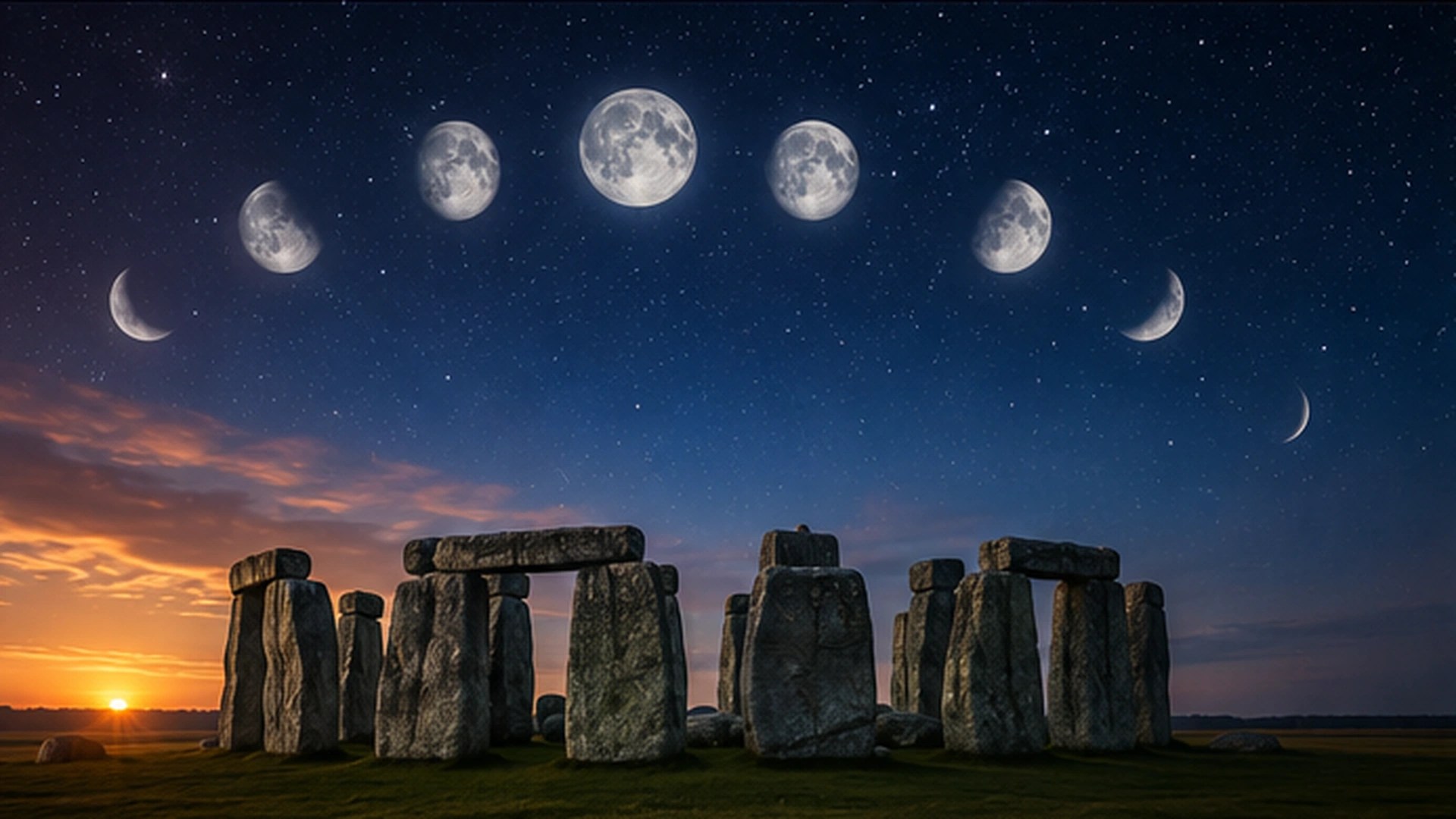
The symbolism begins with observation. The sun provides light and warmth and structures the day. Its apparent path changes through the year. The moon does not produce its own light; moonlight is reflected sunlight. As the moon orbits Earth, people see a changing portion of its illuminated half, producing a repeating phase cycle of about 29.5 days.[2]
These regular patterns made the sky useful for timekeeping. Solstices and equinoxes result from Earth’s tilted axis and its orbit around the sun, not from the sun physically moving north and south around Earth. Even so, shifting sunrise points, shadows, day length, and seasonal light are directly visible. Communities could connect those patterns with planting, herding, navigation, public ceremony, political schedules, and historical memory.[3]
Symbolic meaning grew around practical relationships. A dependable sunrise could represent order or renewal. Waxing and waning could suggest growth, decline, disappearance, and return. An eclipse, which occurs through alignment among the sun, moon, and Earth, could interrupt expected patterns and attract fear, wonder, ritual attention, political interpretation, or scientific study.[4]
| Recurring theme | Why it appears | Important caution |
|---|---|---|
| Life and vitality | Sunlight supports ecosystems and agriculture | Religious claims about divine life-force are beliefs, not scientific measurements |
| Time and calendars | Solar years and lunar cycles are observable | Calendars differ; not every lunar calendar works in the same way |
| Renewal | Sunrise and returning lunar phases repeat | Repetition may symbolize rebirth, but not in every tradition |
| Authority | The sun’s prominence can support royal or divine imagery | Solar authority may serve political systems as well as religion |
| Fertility and growth | Seasonal light and lunar timing can be linked with agriculture and reproduction | Claims that moon phases directly control human fertility are not established scientific facts |
| Complementarity | Day and night form an apparent pair | The pair is not always male and female, good and evil, or equal opposites |
Specific culture or historical context: Culturally neutral astronomical observation; no claim that the landscape represents one sacred tradition.
People shown: Two distant adults with natural anatomy; people occupy less than ten percent of the frame.
Location: Open mountain plateau with an unobstructed horizon.
Clothing: Practical contemporary outdoor clothing in subdued natural tones.
Architecture: None, apart from a low dry-stone boundary if composition requires it.
Objects: Field notebooks, pencils, and a simple non-branded tripod.
Lighting: Warm sunrise light with cool pre-dawn shadows and realistic haze.
Composition: Single full-bleed 16:9 landscape; sun on one side and moon higher on the opposite side; no split-screen effect.
SEO-friendly filename: sun-and-moon-symbolism-across-cultures.webp
Image title: Sun and Moon Symbolism Across Cultures
Alt text: The rising sun and a fading moon visible above a mountain horizon at dawn
Caption: The visible rhythms of the sun and moon have shaped calendars, stories, rituals, and symbols in many societies.
Recommended placement: After the section explaining why the sun and moon became powerful symbols.
Article section supported: Why the Sun and Moon Became Powerful Human Symbols
Important elements to avoid: No fantasy sky, impossible multiple moons, zodiac wheel, sacred geometry, embedded text, logos, collage, or culturally mixed ritual clothing.
A Necessary Caution: There Is No Universal Symbolic Code
Modern spiritual writing often presents a neat formula: sun equals masculine, rational, active energy, while moon equals feminine, emotional, receptive energy. Some historical systems use comparable contrasts, but the formula fails as a universal rule. In ancient Egypt, major solar and lunar deities were often male. In Japan, the principal sun deity Amaterasu is female, while Tsukuyomi is male. In other traditions, celestial bodies may be ancestors, rulers, spouses, siblings, animals, calendrical powers, or cosmic signs without a fixed gender.
A responsible interpretation asks four questions: Which community? Which historical period? Which object or story? Which function? A motif on royal regalia can mean something different from the same shape in a folktale, agricultural calendar, temple, tattoo, or modern brand.
Sun and Moon Symbolism in Ancient Egypt
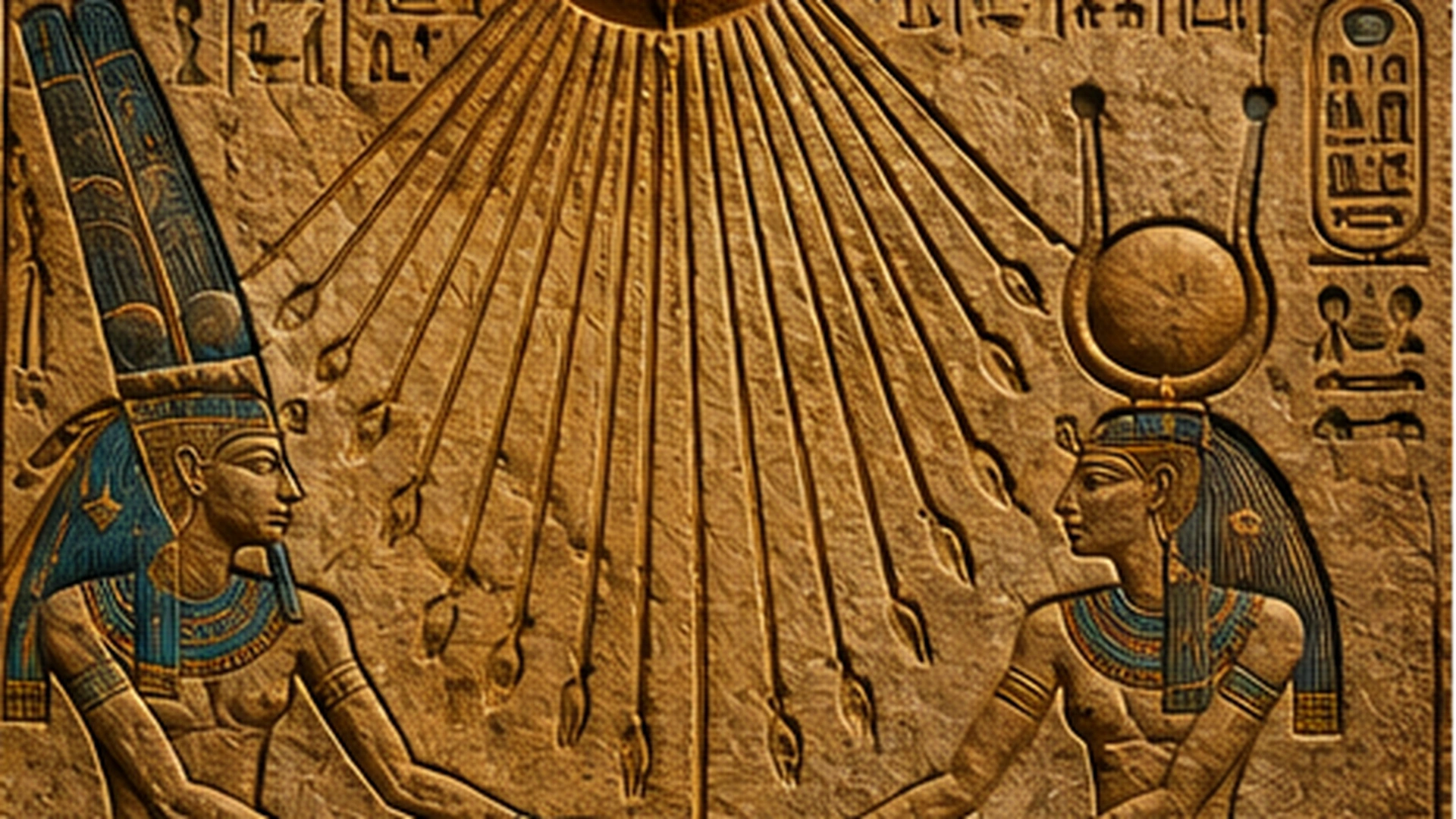
Ancient Egyptian religion developed several overlapping solar and lunar associations rather than one fixed pair. Re, or Ra, was a major sun god whose recurring journey expressed cosmic continuity. The Metropolitan Museum of Art explains that Re’s morning birth, daytime passage across the sky, and night journey through the underworld preserved maat, the Egyptian ideal of right order. The cycle connected sunlight, kingship, creation, death, and renewed life.[5]
Solar symbolism therefore communicated more than physical brightness. It could represent the successful maintenance of the cosmos. The sun’s daily disappearance was not simply an ending; in religious imagery it became part of an ongoing passage through danger toward another dawn. This helps explain why solar forms appear in royal, temple, funerary, and amuletic settings.
The moon also had several divine associations. Khonsu is identified in Egyptian art by a lunar disk, often set above a crescent, and by attributes connected with his place in the Theban triad. The Met’s Khonsu figure shows how lunar identity could be expressed through the body, headdress, age, and temple relationship of a deity.[6]
Another form, Osiris-Iah, links the moon with the continual rebirth of Osiris. A crown combining the moon disk and crescent encompasses the phases, and the monthly movement from crescent toward fullness becomes an image of regeneration. This is a documented Egyptian interpretation, not evidence that every culture sees the moon as rebirth.[7]
Egyptian solar and lunar signs could also appear together inside a layered religious image. Their relationship was not a simple contest between light and darkness. They could indicate the ordered completeness of the sky, different measures of time, or different divine powers participating in a shared cosmos.
Specific culture or historical context: Ancient Egypt, with reference to New Kingdom through Late Period religious art; artifact study rather than invented ceremony.
People shown: No full figures; optional conservator hands only.
Location: Controlled museum conservation studio or Egyptian gallery.
Clothing: Neutral conservation gloves and sleeve if hands appear.
Architecture: Museum wall or conservation table; artifact dominates.
Objects: Stone relief, archival support, and conservation tools positioned away from the artifact.
Lighting: Raking side light revealing carved depth and mineral texture.
Composition: Close three-quarter view with solar and lunar signs clearly visible; shallow depth of field.
SEO-friendly filename: ancient-egypt-sun-moon-symbolism.webp
Image title: Solar and Lunar Symbols in Ancient Egypt
Alt text: Ancient Egyptian relief with a solar disk and lunar crescent under museum lighting
Caption: Ancient Egyptian solar and lunar signs participated in complex ideas of divine order, kingship, time, and regeneration.
Recommended placement: After the ancient Egypt section.
Article section supported: Sun and Moon Symbolism in Ancient Egypt
Important elements to avoid: No Hollywood costumes, generic pyramid backdrop, glowing magic, fake hieroglyphs presented as readable text, mummy sensationalism, captions, or watermark.
Solar and Lunar Meanings in Selected African Traditions
Africa contains thousands of communities and many distinct systems of celestial knowledge. It is inaccurate to speak of one African meaning of the sun or moon. The Smithsonian National Museum of African Art’s African Cosmos project presents a broad field: ancient Egyptian and Nubian deities, agricultural and ritual calendars, cosmological arts, leadership symbols, divination, oral traditions, and modern artistic interpretations.[8]
Akan and Asante Celestial Symbols
Among Akan peoples of Ghana, celestial motifs can communicate political and ethical ideas. A chief’s crown documented by the National Museum of African Art uses stars and crescent moons in relation to leadership, faith, reliance on others, faithfulness, and the interdependence of women and men in marriage. The museum also explains that the star can suggest the king’s reliability in contrast with changing lunar phases.[9]
This example shows why symbols must be read through local proverbs, institutions, and historical events. The moon is not merely an abstract sign of emotion, and the star is not merely hope. The forms participate in a language of court conduct, social responsibility, and political authority.
Luba and Tabwa Lunar Imagery
The Smithsonian also records lunar associations among Luba and Tabwa communities in the Democratic Republic of the Congo. In specific artistic and ritual contexts, moonlight, white pigment, reflective materials, dreams, divinatory insight, hope, and rebirth may be connected. Such examples should be described as Luba or Tabwa interpretations, not as proof that all African societies define the moon in the same way.[8]
Celestial Knowledge as Living Practice
The value of celestial observation is not limited to museum objects. Knowledge may be carried in songs, proverbs, agricultural timing, ceremonies, and community instruction. It can be practical and spiritual at the same time, because measuring a season and explaining a community’s place in the universe are not always treated as separate activities.
Specific culture or historical context: Akan peoples, especially Asante court arts in present-day Ghana.
People shown: No people required; optional Ghanaian curator in the distant background, not posing.
Location: Ghanaian museum or carefully staged heritage gallery.
Clothing: Contemporary professional clothing if a curator appears.
Architecture: Simple gallery interior with neutral walls and a dark-wood display base.
Objects: Chief’s crown, adinkra cloth, conservation mount, and discreet unlabeled base.
Lighting: Soft directional gallery lighting highlighting gold and fabric without theatrical glow.
Composition: Mid-range still life; crown in the foreground and celestial motifs visible behind.
SEO-friendly filename: akan-asante-moon-star-symbolism.webp
Image title: Akan and Asante Celestial Leadership Symbols
Alt text: Akan chief’s crown and adinkra cloth decorated with crescent moon and star motifs
Caption: In specific Akan court contexts, celestial motifs can communicate leadership, faithfulness, interdependence, and ethical responsibility.
Recommended placement: After the selected African traditions section.
Article section supported: Solar and Lunar Meanings in Selected African Traditions
Important elements to avoid: No generic pan-African pattern, invented tribal regalia, mixed Maasai or other unrelated clothing, staged ritual, text, logo, or split-screen collage.
The Sun and Moon in Greek and Roman Traditions
In Greek tradition, Helios personified the sun and Selene personified the moon. Artistic images often place them in chariots, translating celestial movement into narrative. On the Parthenon’s east pediment, Helios rises at dawn while Selene descends at the opposite side, framing the divine scene with a transition from night to day.[10]
The pairing establishes time and cosmic setting. It does not necessarily make the two deities moral opposites. In later Greek and Roman settings, Apollo could acquire solar associations and Artemis or Diana lunar ones, but those developments should not erase Helios and Selene or suggest that every region and period used identical identities.
Roman imperial images sometimes joined the sun and moon with Aeternitas, or eternity. In that political setting, the paired bodies could support an idea of unbroken imperial duration. The meaning came from coinage, state ideology, and the claim to enduring order, not from a universal philosophy of romantic balance.
Hindu and Buddhist Solar-Lunar Imagery in South Asia and Nepal
Surya and Chandra are important solar and lunar personifications in Hindu traditions, and they also appear within Buddhist and Jain visual worlds. A fourteenth-century Nepalese mandala presents Surya in a chariot drawn by seven horses, surrounded by other planetary deities. The object joins solar power with ritual, karma, patronage, artistry, and the wider navagraha system rather than reducing Surya to the single idea of confidence.[11]
A related Nepalese mandala presents Chandra as the personification of the moon and one of the nine planetary deities. Chandra is enthroned on a chariot and surrounded by figures that place lunar identity within cosmic order, consecration, worship, music, donors, and family devotion.[12]
In some South Indian temple settings, a crescent-shaped frame drum called candra pirai is used with a round sun-shaped drum. This material example demonstrates that celestial symbolism may be sounded, worn, performed, carried, or placed in ritual space, not only represented as a picture.
South Asian traditions are internally diverse. Vedic hymns, temple practices, Buddhist mandalas, village deities, courtly art, and modern astrology do not form one unchanging system. Surya and Chandra should be interpreted through the text, community, region, and ritual setting in which they appear.
Chinese Sun and Moon Symbols
Chinese traditions contain several long-lived celestial images. A red sun may contain a three-legged crow, while the moon may contain a jade rabbit. A Daoist priest’s ritual robe at the Met places the sun with a gold crow and the moon with a jade rabbit inside a larger embroidered cosmic system of directions, animals, immortality symbols, and celestial architecture.[13]
The moon is also associated with Chang’e in Chinese folklore. On a Tang-dynasty bronze mirror, Chang’e appears in the lunar realm with a toad and a rabbit preparing the elixir of immortality. The story gathers themes of separation, transformation, immortality, loss, and the moon as another world.[14]
Festival practice adds further meanings. The full moon of the Mid-Autumn season may be associated with gathering, reunion, longing, poetry, food, and family memory. These meanings come from living social life and historical literature. They should not be collapsed into the statement that the Chinese moon simply means femininity.
Yin, Yang, and Celestial Pairing
Sun and moon imagery can participate in yin-yang cosmology, especially in later artistic and philosophical interpretations. Yet yin and yang are relational and transforming categories, not a rigid checklist of male objects versus female objects. Their significance depends on movement, season, direction, function, and context. Treating them as two static personalities removes much of the idea’s complexity.
Japanese Sun and Moon Symbolism
Japan provides a clear challenge to the universal male-sun and female-moon formula. The Kojiki tradition identifies Amaterasu as the sun goddess and Tsukuyomi as the moon god. A Japanese government cultural overview recounts the myth in which Amaterasu withdraws into a cave, leaving the world dark, and emerges so that light returns.[15]
The story can communicate light, withdrawal, social disruption, ritual performance, restored order, and divine presence. It has informed kagura performance traditions, although living forms vary and may contain Shinto, Buddhist, courtly, and local elements. It should not be treated as one unchanged ritual performed in the same way throughout Japan.
Japanese sun-and-moon folding screens combine celestial bodies with mountains, water, seasonal plants, day, night, and changing weather. The British Museum notes long associations with Onmyodo, the Way of yin and yang, while also emphasizing that art historians interpret these works from several religious and aesthetic perspectives.[16]
The pair therefore does not have one exclusive meaning. It can mark seasonal totality, ritual space, alternating time, landscape order, or the coexistence of different forms of light. The image’s materials, ownership, temple use, and visual arrangement matter as much as the circles representing sun and moon.
Specific culture or historical context: Japanese sun-and-moon screen tradition with seasonal, Buddhist, Onmyodo, and aesthetic associations.
People shown: One distant East Asian museum visitor or curator seen from behind.
Location: Japanese art museum gallery.
Clothing: Contemporary modest museum attire.
Architecture: Minimal gallery with low platform and controlled display environment.
Objects: Gold- and silver-toned folding screens and a discreet gallery barrier without readable labels.
Lighting: Even museum lighting preserving metallic surfaces and seasonal details.
Composition: Symmetrical wide shot, screens filling most of the frame; no artificial split-screen or added emblems.
SEO-friendly filename: japanese-sun-moon-seasonal-screens.webp
Image title: Japanese Sun and Moon Seasonal Screens
Alt text: Japanese folding screens showing the sun, moon, mountains, water, and seasonal plants
Caption: Japanese sun-and-moon screens can combine day, night, season, landscape, ritual use, and cosmological thought.
Recommended placement: After the Japanese symbolism section.
Article section supported: Japanese Sun and Moon Symbolism
Important elements to avoid: No anime styling, oversized yin-yang symbol, invented calligraphy, random torii gate, mixed Chinese-Japanese motifs, labels, borders, or collage.
Inka and Andean Sun and Moon Symbolism
In Inka traditions, Inti was the sun and a central divine ancestor connected with political legitimacy, agriculture, and sacred geography. An Inka creation account presented by the National Museum of the American Indian states that Tiqzi Wiracocha created Inti, Mamaquilla the moon, the stars, plants, animals, and people. This places sun and moon inside a larger created universe rather than treating them as isolated decorative signs.[17]
The Inka origin story also describes Inti sending Manco Capac and Mama Ocllo to bring order and found Cusco. Such narratives connect solar ancestry with the authority of the ruling line and with the organization of place. They are not merely nature metaphors; they participate in political and historical identity.[19]
Mama Quilla was associated with the moon and calendrical order. In broader Andean contexts, the celestial family of sun, moon, stars, earth, and Milky Way can remain present in contemporary ceremonies, stories, place-based identities, and artistic traditions. These living continuities should be described alongside the disruptions and transformations caused by colonialism, conversion, tourism, state heritage programs, and modern Indigenous cultural renewal.
Modern Inti Raymi celebrations in Peru are public performances shaped by historical memory, regional identity, heritage policy, tourism, and contemporary community practice. They should not be described as an unchanged survival of every detail of precolonial state ritual.
Specific culture or historical context: Inka sacred geography and the colonial transformation of Qorikancha, Cusco, Peru.
People shown: Two Peruvian heritage professionals or archaeologists, small in the frame.
Location: Qorikancha and Santo Domingo complex, Cusco.
Clothing: Contemporary field or museum clothing appropriate for a cool Andean morning.
Architecture: Authentic Inka ashlar masonry with later colonial construction visible but not dominant.
Objects: Notebook, measuring rod, and non-branded camera; no ritual props.
Lighting: Crisp golden morning light with realistic high-altitude clarity.
Composition: Low-angle diagonal view emphasizing masonry, light, and historical continuity.
SEO-friendly filename: qorikancha-inka-sun-symbolism-cusco.webp
Image title: Qorikancha and Inka Solar Symbolism
Alt text: Morning sunlight crossing Inka stone walls at Qorikancha in Cusco, Peru
Caption: At Qorikancha, solar devotion, sacred geography, political authority, and calendrical organization were closely connected.
Recommended placement: After the Inka and Andean section.
Article section supported: Inka and Andean Sun and Moon Symbolism
Important elements to avoid: No invented sacrifice, fantasy gold-covered temple, inaccurate feather crown, pan-Indigenous costume mixture, mystical energy effects, text, logo, or collage.
What Does the Sun Commonly Symbolize?
Across the traditions discussed above, several solar themes recur. They are useful as starting points, but each must be checked against context.
Light and visibility: The sun makes the world visible, so it can represent knowledge, revelation, watchfulness, or public order.
Life and growth: Sunlight and seasonal warmth support agriculture and ecological cycles, leading to symbolism of vitality and abundance.
Authority and kingship: Solar imagery may legitimize rulers by connecting political power with cosmic order, as in Egyptian and Inka contexts.
Daily renewal: Sunrise can suggest return, continuity, resurrection, or a new beginning.
Heat and danger: The sun may also signify severity, drought, destructive force, exposure, or divine anger.
Measurement: Solar movement helps establish days, seasons, solstices, orientations, and ceremonial schedules.
What Does the Moon Commonly Symbolize?
The moon’s changing appearance encourages symbolism based on visible transformation, but lunar meanings are equally diverse.
Cycles and measured time: Lunar phases help structure months, calendars, and ceremonial schedules.
Growth, decline, and return: Waxing and waning can represent development, aging, disappearance, renewal, or regeneration.
Night and reflected light: The moon may symbolize guidance, reflection, concealment, dreams, or insight.
Fertility and reproduction: Some traditions connect lunar timing with agricultural or human fertility, though popular biological claims should not be treated as settled science.
Community memory: Festivals and stories can connect the moon with reunion, separation, ancestors, or seasonal identity.
Political or ethical change: In Akan royal symbolism, changing lunar phases may be contrasted with the desired reliability of leadership.
What Do the Sun and Moon Symbolize Together?
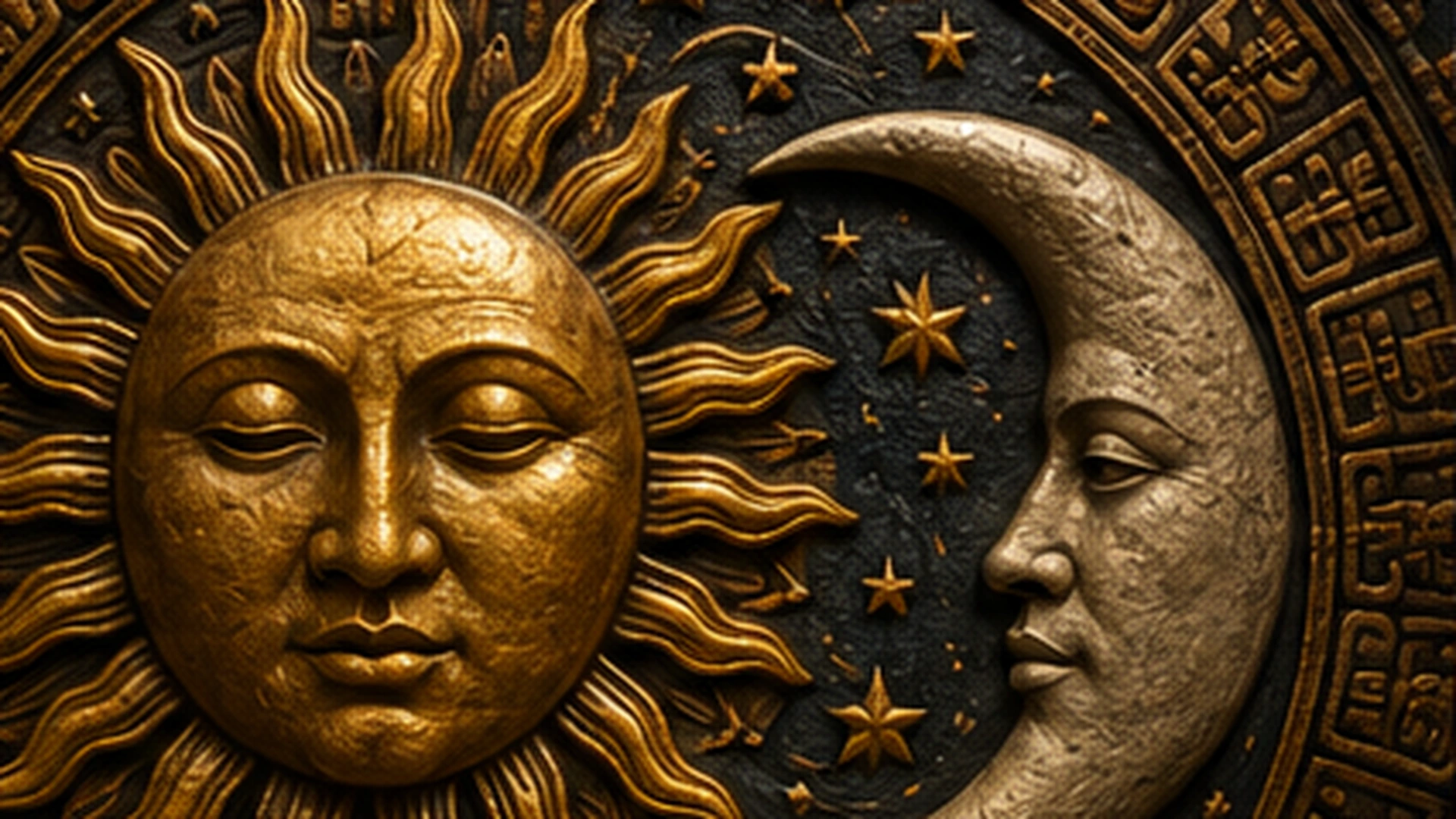
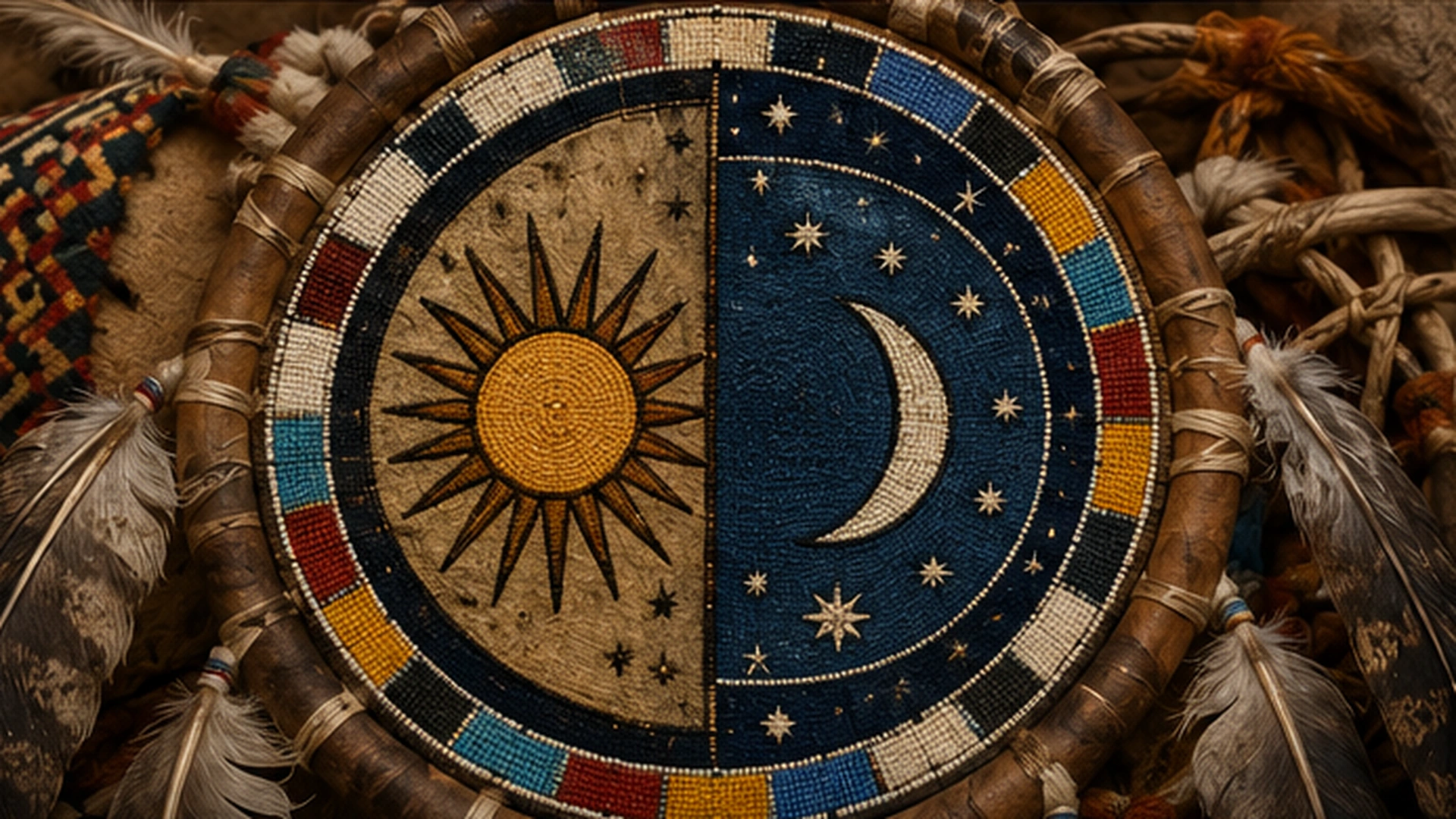
When the sun and moon appear together, the safest broad interpretation is relationship across difference. The pair may represent day and night, visibility and concealment, continuity and change, two forms of authority, different measures of time, or a whole cosmos governed by more than one rhythm.
In some works, the pair creates complementarity. In others, one body rises while the other sets, emphasizing succession rather than equality. They may be spouses, siblings, separate deities, cooperating powers, political emblems, or markers that locate a scene in cosmic time. A sun-and-moon design cannot be interpreted accurately without knowing where it came from.
Are the Sun and Moon Always Masculine and Feminine?
No. Gender assignments vary. Some modern Western esoteric systems describe the sun as masculine and the moon as feminine. Comparable patterns occur in particular historical settings, including the Inka pairing of Inti and Mama Quilla and some East Asian discussions of yang and yin. Other systems reverse the pattern or avoid it.
Amaterasu is a female sun deity in Japan, while Tsukuyomi is male. Ancient Egypt had prominent male lunar deities such as Khonsu and lunar forms of Osiris. The sun and moon may also appear through animals, objects, ancestors, rulers, or relatively ungendered cosmological principles. Gendered symbolism should be reported as a feature of a particular tradition, not as a law of nature or a universal human belief.
Sun, Moon, Agriculture, and Traditional Knowledge
Celestial symbolism is often rooted in practical observation. UNESCO’s account of Suri Jagek among the Kalasha in the Hindu Kush describes a knowledge system based on the sun, moon, stars, shadows, and local topography. It has been used to guide sowing, animal husbandry, calendars, festivals, and social events, with knowledge transmitted through stories, songs, proverbs, and practice.[18]
This example shows why it is misleading to separate symbolism from knowledge too sharply. A shadow can be practical evidence, a calendar marker, a teaching device, and part of a sacred worldview at the same time. Cultural astronomy often combines empirical observation with social meaning, language, memory, and responsibility to place.
Such systems are also vulnerable. Changes in education, technology, land use, language, and livelihood can reduce intergenerational transmission. Safeguarding should therefore involve community participation rather than extracting isolated facts for outside audiences.
Eclipses: Scientific Events and Cultural Interpretations
Scientifically, a solar eclipse occurs when the moon passes between the sun and Earth and casts a shadow. A lunar eclipse occurs when Earth’s shadow falls on the moon. Eclipses do not happen every month because the moon’s orbit is tilted by about five degrees relative to Earth’s orbital plane.[4]
Culturally, an eclipse may be interpreted as danger, interruption, conflict, transformation, royal crisis, sacred time, or an opportunity for ritual. These are historical or religious responses to an unusual visible event. They should not be presented as scientific causes or as guaranteed predictions of political, medical, or personal outcomes.
Modern Sun and Moon Symbols in Jewelry, Tattoos, and Design
Today, sun-and-moon designs are common in jewelry, tattoos, fashion, wellness branding, home decoration, and digital art. A wearer may intend love between opposites, friendship across difference, personal balance, transformation, grief and continuity, or a relationship that survives separation.
A personal meaning can be sincere without being historically ancient. The problem begins when a modern design is marketed as the universal African meaning, an authentic ancient ritual symbol, or a guaranteed source of protection, fertility, healing, wealth, or spiritual power without evidence.
How to Interpret or Use the Symbols Responsibly
Identify the cultural source before assigning a historical meaning.
Separate personal symbolism from claims about an entire religion or community.
Check whether the motif belongs to royal, sacred, restricted, or funerary contexts.
Avoid combining unrelated cultural symbols into an invented tribal design.
Do not claim supernatural, medical, fertility, or financial outcomes as facts.
Credit artists, communities, museums, and scholars when adapting documented imagery.
When uncertain, use a culturally neutral astronomical design rather than copying sacred regalia or ritual objects.
Common Misunderstandings
The Sun Always Means Good and the Moon Means Darkness
Both bodies can have constructive and dangerous meanings. The sun can sustain crops or represent destructive heat. The moon can guide time or be associated with uncertainty. Moral labels depend on the story and the community.
All Ancient People Worshipped the Sun
Many societies honored solar powers, but worship is too broad to describe every form of observation, art, kingship, seasonal ceremony, navigation, or calendrical practice. Some communities emphasized the moon, stars, ancestors, landscapes, or creator deities more strongly.
Moon Phases Control Human Behavior
The moon’s phases are real astronomical changes in how reflected sunlight is viewed from Earth.[2] Cultural beliefs about mood, fertility, sleep, or destiny should not automatically be presented as scientifically proven effects.
A Similar Shape Has the Same Meaning Everywhere
A crescent can represent a lunar deity, a phase of time, a festival, royal identity, faithfulness, seasonal change, or modern aesthetics. Visual similarity does not prove shared origin or identical meaning.
Traditional Symbolism Never Changes
Living traditions change as communities respond to migration, conversion, colonialism, education, technology, new political conditions, and creative innovation. Change does not make a tradition false. It means interpretation must be historically specific and attentive to the people who maintain it.
Key Takeaways
Sun and moon symbolism is culturally specific, even when broad themes recur.
The sun often relates to light, vitality, order, authority, time, and renewal.
The moon often relates to phases, measured time, change, night, fertility, memory, and return.
Together, the sun and moon may represent complementarity, succession, totality, or cosmic relationship.
Gender symbolism varies; the sun is not universally male and the moon is not universally female.
Living traditions should be described with respect for community authority, historical change, and restricted knowledge.
Astronomical explanations and spiritual interpretations should be clearly distinguished.
People Also Ask
What do the sun and moon symbolize?
They commonly symbolize life, time, change, renewal, and the relationship between different cosmic rhythms. Exact meanings depend on culture and context.
What does the sun symbolize spiritually?
In many traditions, the sun is associated with divine power, illumination, vitality, authority, order, or rebirth. It can also represent danger, judgment, or destructive heat.
What does the moon symbolize spiritually?
The moon may symbolize cycles, night, measured time, transformation, fertility, insight, ancestral memory, or regeneration. These meanings are not universal.
What do the sun and moon mean together?
Together they often represent relationship across difference, such as day and night, constancy and change, or two complementary ways of organizing time.
Is the sun masculine and the moon feminine?
Not always. Some traditions use that pattern, but Japan has a female sun deity and male moon deity, while ancient Egypt had prominent male lunar deities.
Why did ancient cultures honor the sun?
Sunlight supports life and visibly regulates days and seasons. Solar powers could therefore be connected with agriculture, divine order, kingship, and renewal.
Why is the moon linked with time?
The moon’s phases repeat about every 29.5 days, making them useful for counting months and organizing social or ritual calendars.
What can eclipses symbolize?
Depending on the tradition, eclipses may symbolize interruption, danger, conflict, transition, royal crisis, or sacred time. Scientifically, they result from celestial alignment.
Frequently Asked Questions
Is sun and moon symbolism the same in every religion?
No. Religions and communities assign different deities, genders, stories, ethical meanings, and ritual functions to the sun and moon.
What does a sun-and-moon tattoo mean?
It can represent balance, partnership, change, resilience, or personal identity. Its historical meaning depends on whether it copies a specific cultural motif.
Does the crescent moon always symbolize Islam?
No. Crescent imagery predates Islam and appears in many cultures. In a specific Islamic context it may carry Islamic associations, but shape alone is not enough to identify meaning.
Are sun and moon symbols scientifically powerful?
They represent real astronomical bodies and cycles, but claims that a symbol guarantees healing, protection, fertility, wealth, or destiny are not scientifically established.
Can I combine symbols from several cultures?
A modern personal design can combine influences, but it should not be falsely presented as an authentic ancient symbol. Avoid restricted, sacred, royal, or funerary motifs without context and permission.
What is the best way to research a celestial symbol?
Begin with the community, object, place, period, and source. Prioritize museums, universities, heritage institutions, community scholarship, and peer-reviewed research.
Conclusion
The sun and moon became enduring symbols because they are simultaneously physical realities, measures of time, sources of practical knowledge, and powerful materials for thought. Their apparent movements help structure days, months, seasons, stories, governments, ceremonies, and works of art.
The most responsible interpretation avoids turning cultural diversity into one mystical formula. The sun does not always mean masculinity, and the moon does not always mean femininity. They can be rulers, siblings, spouses, animals, ancestors, deities, calendars, or signs of a changing universe. Their significance becomes clear only when we respect the people, histories, objects, and places that give the symbols meaning.
Research Sources and Further Reading
[1] UNESCO Intangible Cultural Heritage. What Is Intangible Cultural Heritage?
[2] NASA Science. Moon Phases
[3] NASA Science. Seeing Equinoxes and Solstices from Space
[4] NASA Science. Why Do Eclipses Happen?
[5] The Metropolitan Museum of Art. Divine Egypt: Ruling the Cosmos
[6] The Metropolitan Museum of Art. Khonsu
[7] The Metropolitan Museum of Art. Osiris-Iah
[8] Smithsonian National Museum of African Art. African Cosmos: Stellar Arts
[9] Smithsonian National Museum of African Art. Crown, Akan Peoples, Ghana
[10] British Museum. Helios from the East Pediment of the Parthenon
[11] The Metropolitan Museum of Art. Mandala of the Sun God Surya
[12] The Metropolitan Museum of Art. Mandala of Chandra, God of the Moon
[13] The Metropolitan Museum of Art. Daoist Priest’s Ritual Robe with Celestial Palace
[14] The Metropolitan Museum of Art. Mirror with Moon Goddess and Rabbit
[15] Government of Japan. A Literary History of the Heavens
[16] British Museum. Sun and Moon, Mountains and Water Screens
[17] National Museum of the American Indian. The Creator - Tiqzi Wiracocha
[18] UNESCO Intangible Cultural Heritage. Suri Jagek (Observing the Sun)
[19] National Museum of the American Indian. Ways of Living: The Inka Empire
[20] UNESCO Intangible Cultural Heritage. Knowledge and Practices Concerning Nature and the Universe
5. Supporting Content and Internal-Link Opportunities
| Recommended supporting article | SEO and topical purpose |
|---|---|
| Moon Symbolism Across Cultures: Cycles, Time, and Transformation | Expand the lunar cluster and target moon-specific informational queries. |
| Sun Symbolism Across Cultures: Life, Power, and Renewal | Expand the solar cluster and reduce pressure on this comparison page. |
| Solar and Lunar Deities of Ancient Egypt | Deepen coverage of Re, Khonsu, Osiris-Iah, and related iconography. |
| African Cultural Astronomy: Stars, Calendars, and Sacred Knowledge | Build an Africa-focused cluster without treating the continent as one culture. |
| Amaterasu and Tsukuyomi: Sun and Moon in Japanese Tradition | Target named-entity and Shinto mythology queries. |
| Surya and Chandra: Solar and Lunar Deities in South Asian Art | Support Hindu, Buddhist, Jain, and Nepalese visual-culture queries. |
| Inti, Mama Quilla, and the Inka Sacred Calendar | Deepen the Andean cluster. |
| What Does a Sun and Moon Tattoo Mean? | Capture personal-design intent while linking back to the researched cultural guide. |
| Eclipse Symbolism Across Cultures | Target a distinct celestial-event topic if Search Console demand appears. |
Suggested Internal Anchor Text
meaning of ancestral symbols
African cultural astronomy
traditional lunar calendars
solar deities in ancient religions
sacred landscapes and seasonal observation
how to interpret cultural symbols responsibly
ancestral knowledge of the sky
Article Information
- Publisher
- Ancestral Temple
- Editor
- Ancestral Temple
- Last updated
- Jul 26, 2026
- Last reviewed
- Jul 26, 2026
- Content version
- d5b8b6be91
This educational article should be read as cultural and spiritual information, not as medical, legal, financial, or emergency advice.
Helpful Related Guidance
Explore This Topic
Related Topic Cluster
Dreams & Symbolism
About the Author
 Ancestral Temple
Spiritual guide and practitioner with decades of experience in ancestral wisdom, rituals, and divine guidance.
Related Posts
View All






Leave a Comment
We'd love to hear your thoughts.