
Personal Blessing Ceremonies Explained
Cornerstone Content
Quick Summary
Personal blessing ceremonies recognize an individual during a meaningful moment such as birth, marriage, travel, recovery, graduation, leadership, or a new beginning. This guide explains their possible meanings, cultural differences, ethical boundaries, and respectful planning.
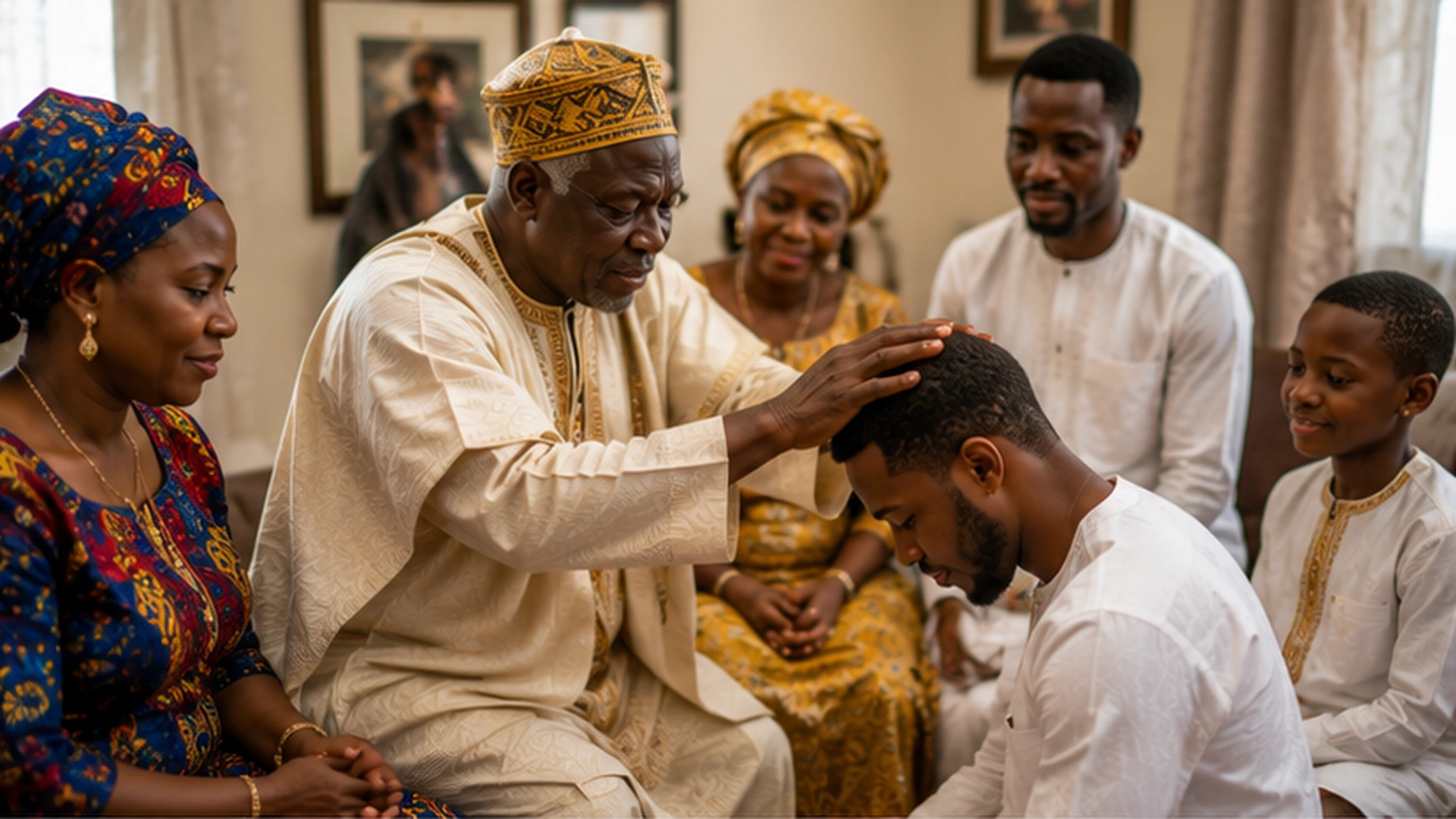
A personal blessing ceremony is a meaningful gathering focused on one individual, couple, family, or small group.
It may recognize a new child, marriage, graduation, journey, home, leadership role, recovery period, retirement, birthday, or another important transition.
Some personal blessing ceremonies are firmly rooted in established religious traditions. Others are connected with family customs, community authority, or a particular cultural institution. Modern families may also create simple ceremonies based on encouragement, gratitude, prayer, and shared responsibility.
These different practices should not be treated as interchangeable.
A blessing offered by a parent at home is not automatically the same as a blessing performed by an ordained minister. A clan naming ceremony cannot be reproduced simply by changing the names and clothing. A prayer led by a Muslim scholar has a different religious framework from a Jewish Priestly Blessing, a Catholic sacramental, or an elder’s public words at a family gathering.
The term personal blessing ceremony is therefore best used as a broad description rather than the name of one universal ritual.
Key Points
A personal blessing ceremony is an occasion centered on the well-being, responsibilities, hopes, or life transition of a particular person.
It may include:
- Prayer
- Advice
- Spoken goodwill
- Family stories
- Music or song
- A meaningful reading
- Words from parents or elders
- A symbolic gift
- A meal
- Community witnesses
- A statement of commitment
- Recognition of a new role
The ceremony may be religious, cultural, familial, or largely secular.
Its value often comes from the relationship between the speaker and recipient, the meaning of the occasion, and the support offered by those present.
A blessing should not be presented as a guarantee of healing, protection, pregnancy, love, wealth, legal victory, or business success.
What Is a Personal Blessing Ceremony?
A personal blessing ceremony is a structured moment in which someone receives prayer, goodwill, guidance, encouragement, recognition, or formal approval.
The word personal means that the occasion is directed toward a particular individual or small group rather than an entire congregation, nation, or community.
The word does not necessarily mean private. A ceremony can be personal while taking place before family members, religious communities, or invited guests.
A personal blessing may be offered for:
- A newborn child
- A person receiving a name
- Someone entering adulthood
- A couple preparing for marriage
- A student completing education
- A person beginning a new job
- A traveler
- Someone entering leadership
- A person moving into a home
- Someone recovering from hardship
- A retiree
- A family beginning a new chapter
The exact meaning depends on the tradition and occasion.
Plain-Language Meaning
A personal blessing ceremony is a special way of surrounding someone with supportive words and meaningful relationships.
The message may be:
- We recognize this important moment.
- We hope you move forward wisely.
- We are praying for you.
- You are not facing this change alone.
- Remember your responsibilities.
- May your life be guided by peace and good judgment.
- We support you as you begin this new stage.
The ceremony may be brief or elaborate. Its importance does not depend on expensive decorations, large crowds, or dramatic claims.
Is “Personal Blessing Ceremony” a Traditional Name?
Usually, no.
Many communities have their own names for specific ceremonies, prayers, rites, and religious services. The English phrase personal blessing ceremony is often used as a convenient umbrella term.
Using the umbrella term can be helpful for general education, but it can also hide important distinctions.
For example:
- A naming ceremony may establish kinship and social identity.
- A religious benediction may follow an authorized liturgy.
- A parent’s blessing may be an informal household practice.
- An elder’s blessing may depend on family seniority or community office.
- A commissioning may recognize a new responsibility.
- A secular ceremony may offer encouragement without invoking a spiritual being.
Writers should use the specific name of a tradition whenever reliable community-informed information is available.
UNESCO emphasizes that living heritage is identified by the communities, groups, and individuals who create, maintain, and transmit it. Outside observers should therefore not rename a culturally specific practice merely to make it sound more marketable or universal.
What Makes a Blessing Personal?
It focuses on a particular person
A general prayer may ask for peace throughout a community. A personal blessing applies those hopes to a particular person’s circumstances.
For example, the ceremony may acknowledge that someone is:
- Becoming a parent
- Leaving home
- Starting a profession
- Recovering after loss
- Entering marriage
- Accepting leadership
- Reconnecting with family
- Beginning a period of study
It recognizes an individual story
A personal ceremony may include memories, values, names, achievements, or responsibilities that are meaningful to the recipient.
This does not mean private information should be disclosed without consent.
The organizer should ask which parts of the person’s history may be discussed publicly.
It involves relationships
A personal blessing is rarely only about the words.
Its meaning may come from who speaks them:
- A parent
- A grandparent
- An aunt or uncle
- A family head
- A religious leader
- A teacher
- A mentor
- A community elder
- A spouse
- A close friend
The same sentence can carry different significance depending on the relationship and recognized authority of the speaker.
It marks a transition
Many personal blessings occur at a threshold between one stage and another.
Anthropologists often describe ceremonies surrounding transitions as rites of passage, although not every blessing ceremony is a formal rite of passage.
The ceremony may help participants pause, recognize change, and communicate expectations for what follows.
Personal Blessings in Historical and Religious Context
Personal blessing ceremonies are not modern inventions, although the contemporary umbrella phrase may be recent.
Households and religious institutions have long used words of blessing in connection with children, marriage, food, travel, work, leadership, illness, worship, and major transitions.
The exact historical origin cannot be identified because many early blessings were transmitted orally.
Jewish Priestly and Family Blessings
The blessing in Numbers 6:24–27 asks for divine protection, graciousness, favor, and peace. It became known as the Priestly Blessing, or Birkat Kohanim, and is recited by kohanim—people of priestly descent—within Jewish worship. Customs concerning when it is recited vary between Israel and diaspora communities.
The same biblical words have also influenced family blessings, including blessings spoken over children in some Jewish households.
This does not mean every Jewish family follows the same practice or uses identical gestures.
Jewish communities differ according to religious movement, family history, region, language, and ancestry.
Christian Personal Blessings
Christian churches use blessings in worship and in connection with particular people, meals, marriages, homes, journeys, objects, and places.
In Catholic teaching, blessings are among the sacramentals. They praise God and pray for divine gifts rather than presenting the minister as the independent source of supernatural power.
Other Christian traditions may offer:
- Pastoral blessings
- Marriage blessings
- Child dedications
- Commissioning prayers
- Prayers before travel
- Prayers for students
- Blessings at retirement
- Household prayers
- Final benedictions
Eastern Orthodox, Oriental Orthodox, Anglican, Lutheran, Methodist, Pentecostal, Evangelical, Catholic, and African Independent churches do not all use the same theology or ceremony.
Some blessings require ordained leadership. Others may be spoken by parents, household members, or fellow believers.
Islamic Understandings of Blessing
The Arabic term baraka is commonly translated as blessing or divine grace.
The term has appeared in Islamic devotional life, scholarship, prayer, family traditions, objects, and written expressions of goodwill.
Historical Islamic ceramics and textiles sometimes carried inscriptions wishing blessing, good fortune, or a favorable outcome for their users. A tenth-century bowl in the Metropolitan Museum of Art, for example, bears the word baraka in Kufic script.
A personal Muslim blessing may involve supplication, or duʿā, asking God for mercy, guidance, well-being, protection, or success in a permissible undertaking.
Muslim communities differ in their interpretations of inherited charisma, saints, shrines, devotional objects, Sufi lineages, and other practices associated with baraka.
A general article should not present one local interpretation as a rule for all Muslims.
Personal Blessings in Specific African Cultural Contexts
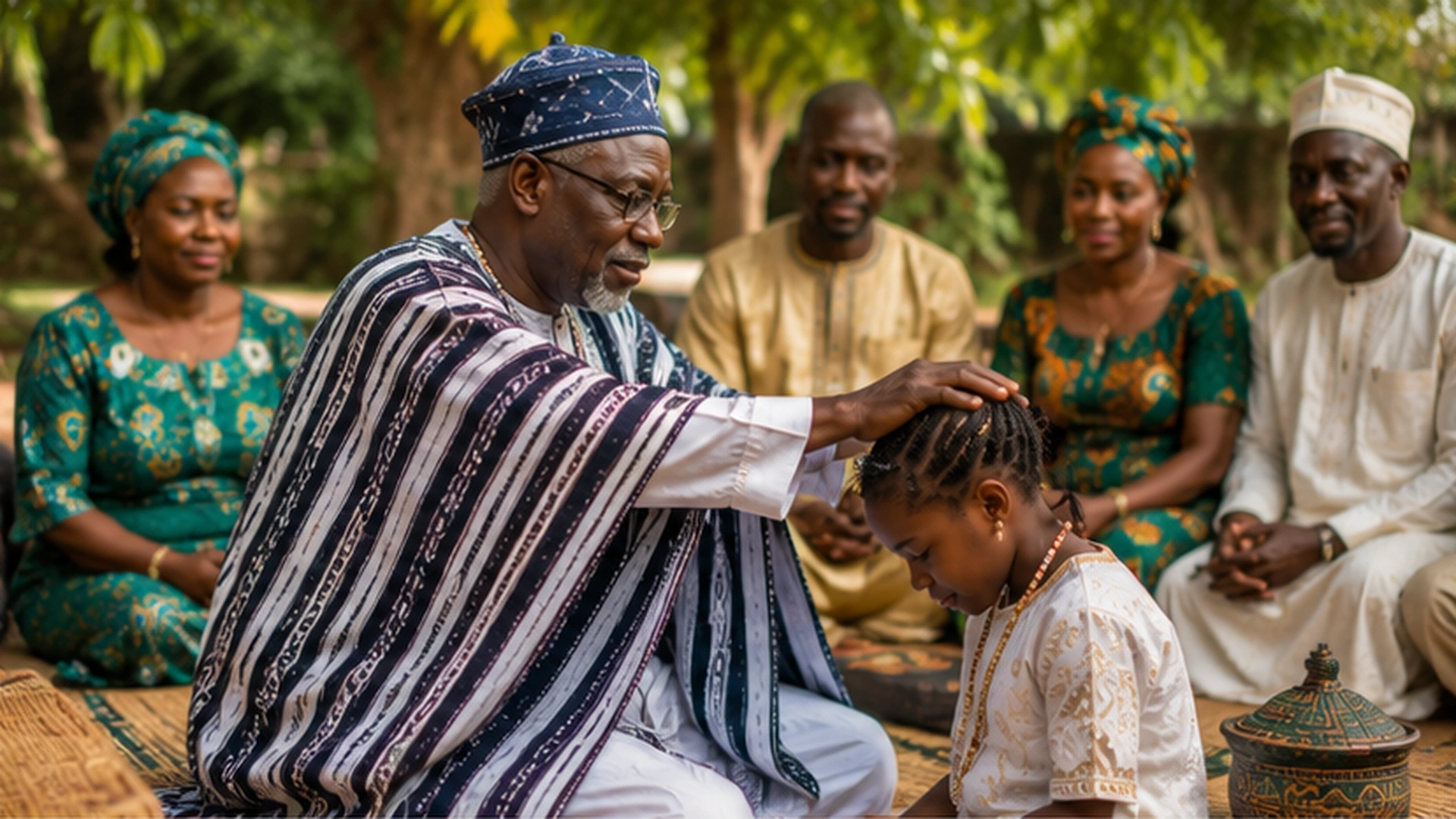
There is no single African form of personal blessing.
African societies include diverse kinship systems, religions, languages, age organizations, monarchies, professions, and community offices.
The following examples illustrate different ways an individual may be recognized. They are not templates for imitation.
Empaako naming in western Uganda
The Empaako tradition is practiced among Batooro, Banyoro, Batuku, Batagwenda, and Banyabindi communities in western Uganda.
An Empaako name is bestowed during a ceremony held in the home and presided over by a clan head. Paternal aunts and other relatives participate in recognizing the child. The name becomes a meaningful form of respectful and affectionate address connected with identity, social relationships, peace, and belonging.
This is more than a generic baby blessing.
It is a culturally specific naming institution involving recognized names, relatives, and clan authority. An outsider should not take a list of Empaako names and invent an imitation ceremony without community knowledge and permission.
Family elders and blessings in the Upper Gambia region
Research concerning a Gambian life history notes that blessings in the village setting discussed were primarily associated with parents and family elders. This observation demonstrates how blessing may operate through kinship seniority rather than a separate professional priesthood.
It should not be generalized to all Gambian or West African families.
The authority of a parent or elder depends on the specific community, family structure, religion, and circumstances.
Mijikenda Kaya elders in Kenya
Research among Mijikenda communities has examined the public role of Kaya elders, including situations in which political figures sought their blessings.
The example also reveals debate about commercialization, expertise, and who has legitimate authority to represent tradition.
A personal blessing involving a recognized Kaya elder is therefore not simply a service that can be reproduced by anyone wearing culturally styled clothing.
It involves institutions, historical authority, community recognition, and ongoing political questions.
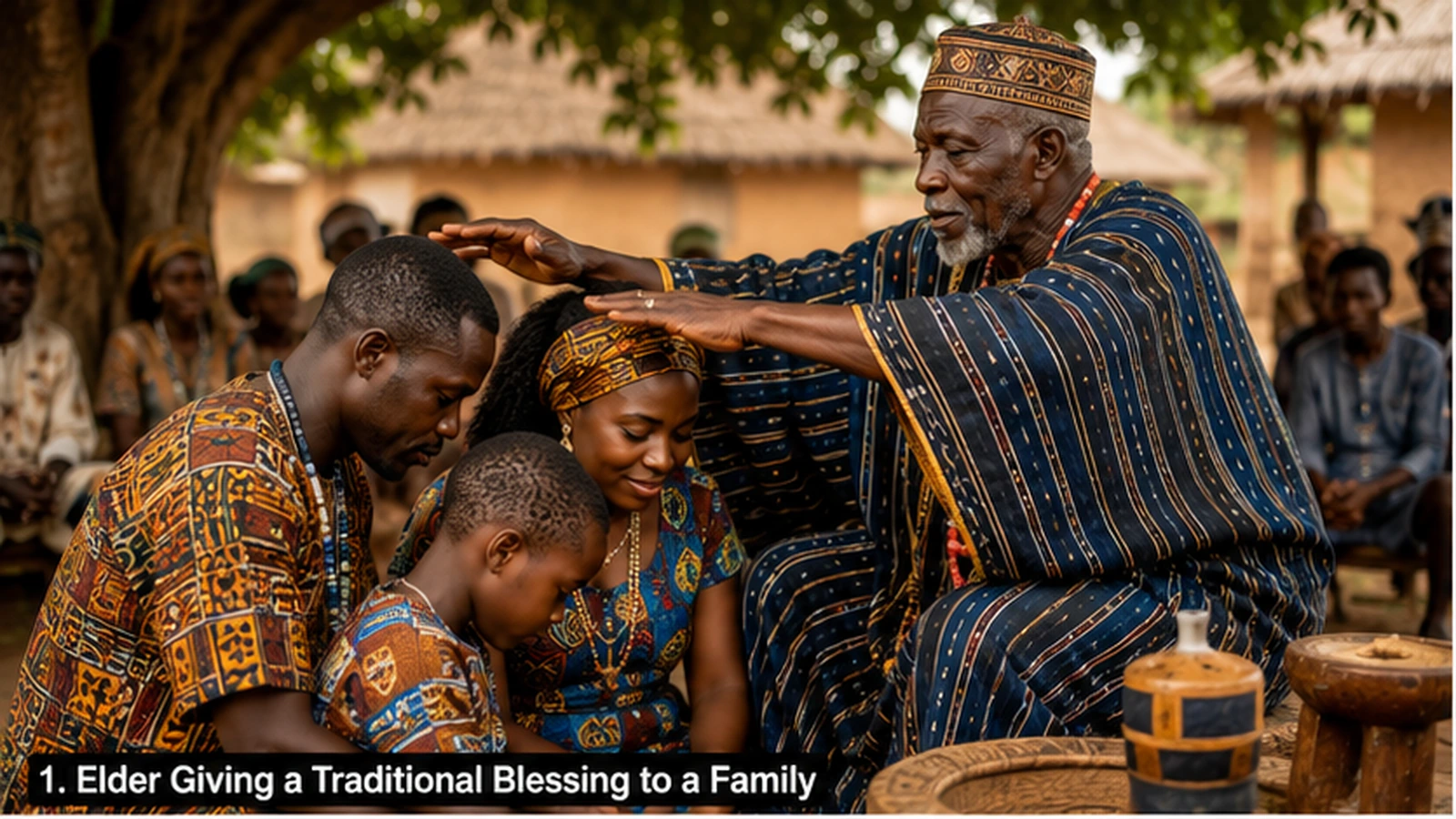
A Blessing From an Elder: What Does It Mean?
The phrase elder blessing should be used carefully.
An elder may be respected because of:
- Age
- Family seniority
- Experience
- Clan position
- Religious training
- Political office
- Professional knowledge
- Community service
- Recognized moral authority
Age alone does not make every person a cultural or spiritual authority.
A senior relative may appropriately bless their own child or grandchild while having no authority to perform a restricted community ceremony.
A younger ordained minister or trained practitioner may hold a role that an older family member does not.
A reliable description should ask:
- Which elder?
- Recognized by whom?
- In what role?
- For what ceremony?
- According to which family or religious tradition?
- Is the knowledge public or restricted?
Common Occasions for Personal Blessing Ceremonies
Birth and Naming
A birth or naming blessing may welcome a child, acknowledge relatives, explain a name, and express hopes for health, wisdom, dignity, and belonging.
The ceremony may be led by parents, relatives, clan authorities, or religious officials.
Medical claims should be avoided. A blessing cannot replace prenatal care, vaccination, pediatric care, or emergency treatment.
Adulthood and Personal Responsibility
A ceremony may recognize that a young person is accepting greater responsibility.
Public themes may include:
- Integrity
- Education
- Respect for others
- Financial responsibility
- Community service
- Personal safety
- Consent
- Care for younger relatives
Restricted initiation rites should not be copied or described in instructional detail.
Graduation and Education
Families may bless a student completing school, entering university, or beginning professional training.
The ceremony may combine:
- Gratitude to teachers and relatives
- Encouragement
- Prayer
- A symbolic book or gift
- Recognition of sacrifice
- A commitment to use education responsibly
The blessing should not suggest that success is guaranteed without continued effort.
Marriage and Partnership
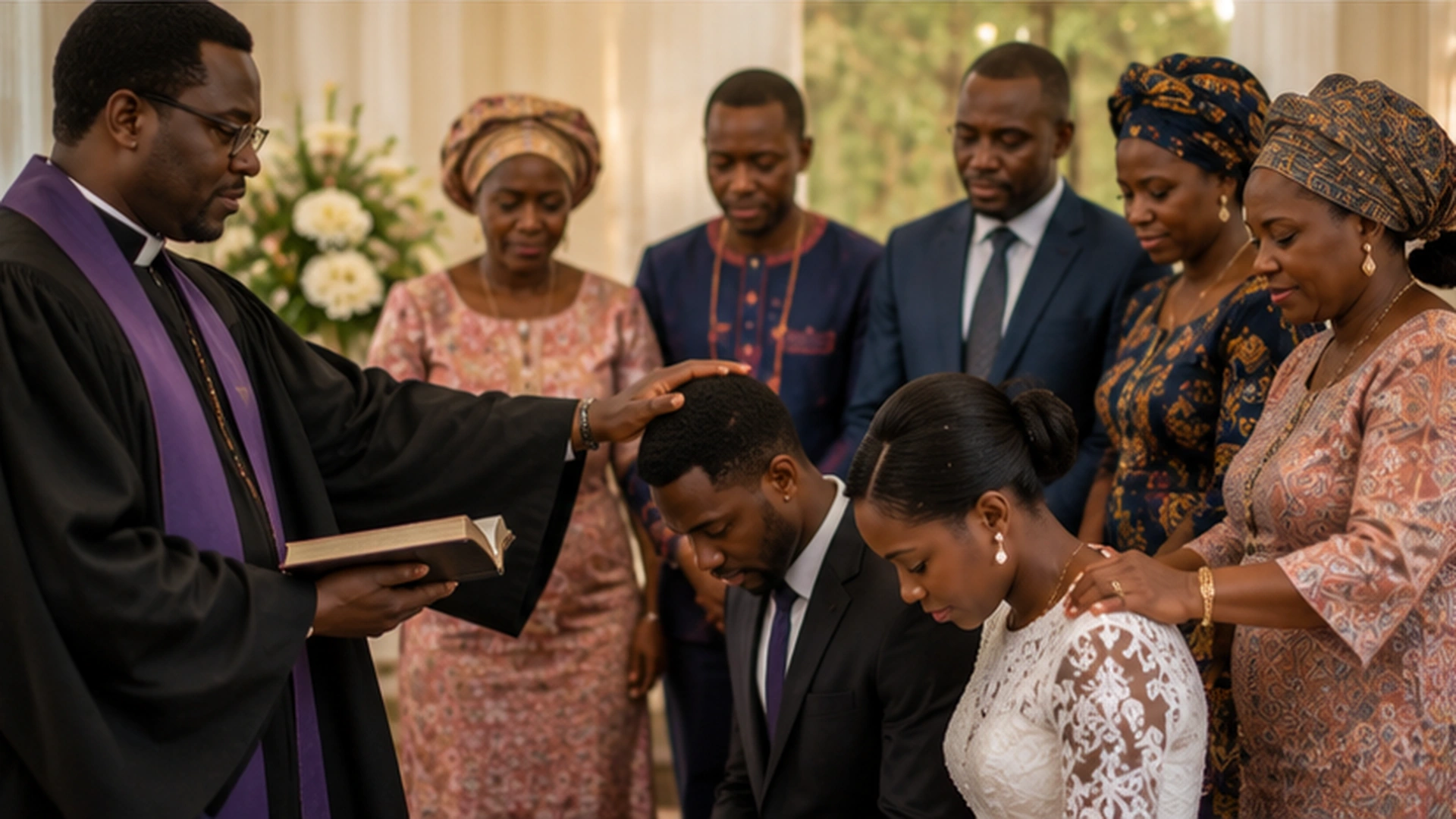
A marriage blessing may express hopes for mutual respect, faithfulness, patience, honest communication, safety, and responsible cooperation.
It should never replace legal marriage requirements where legal recognition is intended.
A ceremony should not pressure anyone into a relationship or excuse coercion, abuse, or unequal treatment.
Pregnancy and Parenthood
A family may gather around expectant parents with encouragement, practical support, prayer, and commitments to help after birth.
No blessing can guarantee conception, a safe pregnancy, a particular sex of child, or an uncomplicated delivery.
Qualified prenatal and maternity care remain essential.
Travel and Migration
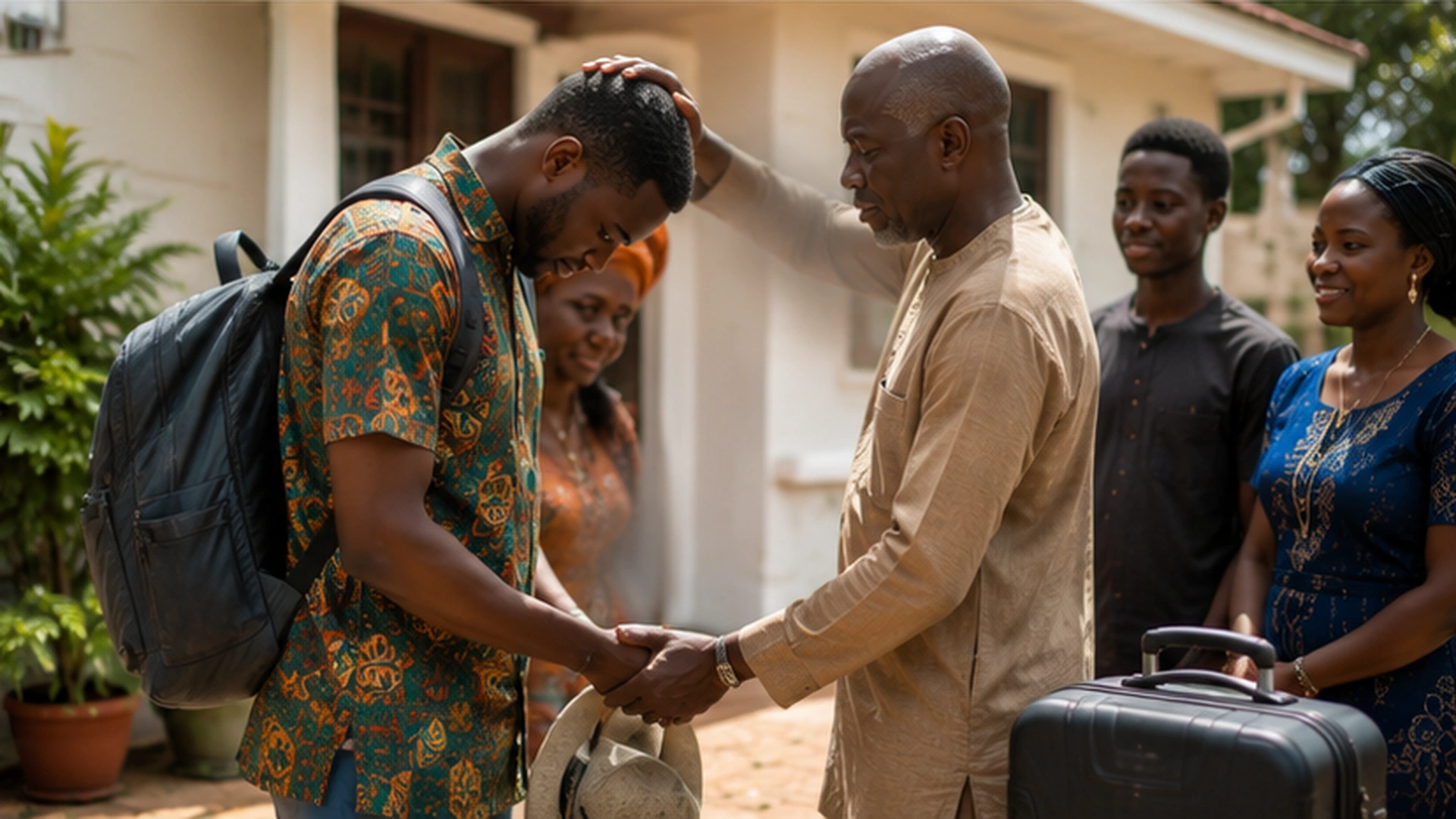
A traveler may receive advice, prayer, food, a meaningful object, or words reminding them to remain connected with family.
The ceremony may acknowledge both hope and uncertainty.
It does not replace passports, visas, insurance, safety planning, vaccinations, or professional travel advice.
A New Home
A personal or household blessing may recognize a new residence and the responsibilities associated with maintaining it.
Depending on the tradition, the event may include religious prayer, a meal, family visits, or expressions of hospitality.
It does not provide physical security. Locks, fire safety, structural checks, and insurance remain practical necessities.
Recovery and a New Beginning
Someone recovering after illness, grief, addiction treatment, imprisonment, displacement, or another major difficulty may appreciate a ceremony recognizing perseverance and community support.
Organizers should follow the person’s wishes and avoid publicly disclosing private medical, legal, or personal information.
A ceremony must not replace clinical treatment, mental-health care, rehabilitation, medication, legal assistance, or safety services.
Leadership and Commissioning
A person entering leadership may receive prayer, advice, public affirmation, or a formal commissioning.
A responsible blessing should emphasize accountability rather than presenting the leader as unquestionable.
Themes may include:
- Fairness
- Service
- Listening
- Transparency
- Protection of vulnerable people
- Respect for law
- Responsible use of authority
Retirement and Elderhood
A retirement blessing may express gratitude for a person’s work and recognize their changing role.
In some settings, age may bring new advisory or family responsibilities. In others, retirement is primarily a professional transition.
The ceremony should reflect the person’s actual life rather than impose stereotypical ideas about elderhood.
What May Be Included in a Personal Blessing Ceremony?
The following elements can appear in public, family, or religious ceremonies. They are not a universal ritual formula.
- Possible element
- Possible purpose
- Welcome
- Explains why people have gathered
- Family history
- Connects the occasion with relationships and memory
- Reading
- Expresses values through scripture, poetry, or literature
- Prayer
- Addresses God or another recognized sacred recipient
- Words from an elder
- Offers advice or family recognition
- Music
- Creates reflection and shared participation
- Symbolic gift
- Marks the occasion with a lasting reminder
- Commitment
- States how the recipient or community will act
- Witnesses
- Confirm collective support
- Shared meal
- Extends hospitality and strengthens relationships
- Closing blessing
- Brings the gathering to a respectful conclusion
Objects and gestures should have a genuine connection with the family or tradition.
Random masks, feathers, staffs, candles, herbs, bowls, cloths, or symbols should not be added merely to make the event look “spiritual.”
Who Can Lead a Personal Blessing Ceremony?
The appropriate leader depends on the ceremony.
Possible leaders include:
- A parent
- A grandparent
- A family head
- A recognized elder
- A priest
- A pastor
- A deacon
- An imam
- A rabbi
- A chaplain
- A clan head
- A traditional officeholder
- A trained cultural practitioner
- A mentor
- The recipient
- A secular celebrant
Not every leader is appropriate for every ceremony.
A secular celebrant can help organize a modern gathering but should not claim priestly, clan, ancestral, or initiatory authority they do not possess.
A family member may speak from love and experience without pretending to represent an entire cultural tradition.
Can a Person Bless Themselves?
A person can create a private moment of reflection, prayer, gratitude, or commitment.
They may:
- Read meaningful words
- Pray according to their faith
- Write personal commitments
- Reflect on lessons learned
- Express gratitude
- Ask trusted people for support
- Mark a new beginning
However, self-reflection should not be falsely presented as a traditional community ceremony.
Some formal blessings depend on another person’s religious or social office. An individual cannot grant themselves that office simply by copying words found online.
How to Plan a Respectful Personal Blessing Ceremony
Define the purpose
Start with a clear question:
What is being recognized?
Possible answers include:
- A birth
- Graduation
- Marriage
- Journey
- Recovery
- New home
- Leadership role
- Retirement
- Reconciliation
- Personal commitment
A ceremony without a clear purpose may become a collection of unrelated symbols.
Ask what the recipient wants
The person receiving the blessing should understand and consent to the event.
Ask about:
- Religious preferences
- Cultural identity
- Privacy
- Guest list
- Photography
- Language
- Sensitive topics
- Desired level of formality
- Whether they want prayer
Do not surprise someone with a public spiritual ceremony they may not welcome.
Choose the appropriate leader
Select someone whose relationship or office fits the occasion.
A parent, mentor, pastor, imam, rabbi, elder, or family head may each be appropriate in different circumstances.
Do not hire someone solely because they look “traditional.”
Use language you understand
Words should reflect the actual beliefs and values of the participants.
Avoid copying prayers in languages no one present understands unless a qualified speaker explains their meaning and use.
Do not use sacred names or formulas taken from restricted sources.
Keep symbols culturally coherent
A family Bible, Qur’an, Torah text, photograph, book, cloth, certificate, heirloom, or practical gift may be meaningful when it belongs naturally to the participants’ history.
Combining objects from unrelated traditions can turn a respectful gathering into a costume-like performance.
Include responsibilities, not only wishes
A meaningful blessing may recognize what the community will do.
For example:
- Parents commit to supporting a child.
- Relatives commit to helping new parents.
- A graduate commits to using knowledge responsibly.
- A leader commits to fairness.
- A couple commits to mutual care.
- Friends commit to supporting someone in recovery.
This prevents the ceremony from becoming a promise that words alone will solve practical problems.
Document only with permission
Photography and video may help preserve family memory, but not every participant wants to be recorded.
UNESCO’s ethical principles for safeguarding living heritage emphasize respect for communities and the people who maintain cultural practices. Documentation should not override privacy, customary access, or community interests.
Personal Blessings and Cultural Appropriation
Cultural appropriation can occur when people copy culturally specific practices without understanding, permission, acknowledgment, or accountability.
Warning signs include:
- Claiming a ceremony is “ancient African” without naming a community
- Mixing unrelated cultures
- Inventing a title such as “ancestral priest” without recognized training
- Wearing sacred or official clothing as costume
- Copying restricted prayers
- Selling guaranteed blessings
- Using random masks or ritual objects
- Claiming authority based only on ancestry testing
- Presenting a commercial service as an authentic community tradition
A respectful modern ceremony can be simple.
There is no need to imitate a restricted tradition. Families can use their own languages, relationships, beliefs, music, memories, and values.
Personal Blessings in Interfaith Families
Interfaith families may include people with different religious beliefs or levels of observance.
A shared ceremony may focus on:
- Gratitude
- Peace
- Family support
- Ethical responsibility
- Hospitality
- Hope
- Respect for each person’s conscience
Religious leaders should be informed about the interfaith context.
Participants should not be pressured to repeat prayers or declarations that contradict their beliefs.
In some cases, separate blessings may be more respectful than combining incompatible practices into one invented ritual.
Secular Personal Blessing Ceremonies
A ceremony does not have to make supernatural claims.
A secular gathering may use the word blessing to mean goodwill, gratitude, recognition, or community support.
It may include:
- A welcome
- Personal reflections
- Poetry
- Music
- Letters from family
- Commitments of support
- A symbolic gift
- A shared meal
- Closing wishes
Organizers should explain the intended meaning so guests do not assume a religious ceremony is taking place.
Virtual and Long-Distance Blessings
Families separated by migration, work, health, or cost may gather through video calls.
A virtual ceremony can include:
- A scheduled welcome
- Short contributions from relatives
- A live or prerecorded prayer
- Music
- Shared photographs
- A digital memory book
- A closing message
Organizers should test sound, internet access, and recording permissions.
Private links should be used when the ceremony includes sensitive family information.
Safety and Ethical Boundaries
Personal blessing ceremonies should never involve:
- Forced participation
- Threats of spiritual punishment
- Pressure to pay excessive fees
- Non-consensual touching
- Dangerous substances
- Unknown herbal preparations
- Harm to animals
- Illegal activity
- Public disclosure of private information
- Pressure to stop medication
- Claims of guaranteed results
- Forced reconciliation with an abuser
- Coercion into marriage
- Secret initiation presented as entertainment
A blessing does not replace medical care, mental-health treatment, legal advice, financial planning, emergency assistance, or safety services.
Traditional and complementary practices require responsible, evidence-informed use where health claims are involved. WHO describes safe integration as requiring evidence, quality standards, ethical practice, and respect for cultural knowledge.
Common Misconceptions
“A personal blessing ceremony is one specific African ritual”
False.
It is a broad English description. Specific African communities have their own names, institutions, and practices.
“Every blessing must be led by an elder”
False.
The appropriate leader may be a parent, religious official, clan head, mentor, celebrant, or another recognized person.
“Every elder has spiritual authority”
False.
Authority depends on family relationship, office, knowledge, training, and community recognition.
“A personal blessing guarantees protection”
False.
A ceremony may express faith and support but cannot guarantee safety or control future events.
“More ritual objects make the ceremony more authentic”
False.
Unrelated or invented objects usually reduce cultural accuracy.
“A blessing is always religious”
False.
Some personal blessings are familial or secular expressions of goodwill.
“Anyone can copy a traditional ceremony from a video”
False.
Public footage may not show preparation, authorization, language, restricted knowledge, or community rules.
“A blessing can repair every relationship”
False.
Words cannot replace accountability, boundaries, counseling, legal protection, or changed behavior.
Key Takeaways
- A personal blessing ceremony focuses on a particular individual, couple, family, or small group.
- It may be religious, cultural, familial, interfaith, or secular.
- “Personal blessing ceremony” is an umbrella term, not the name of one universal ritual.
- Different religions define blessing according to their own theology.
- African blessing traditions must be identified by specific community and context.
- Empaako naming is a particular western Ugandan institution, not a generic baby blessing.
- An elder is not automatically a priest, healer, or authorized ritual specialist.
- Personalization should come from the person’s real relationships, values, and circumstances.
- Participants should consent to prayer, touching, photography, and public disclosure.
- Culturally specific or restricted ceremonies should not be copied without permission.
- A blessing should include practical support and responsibility where appropriate.
- No ceremony guarantees healing, wealth, protection, pregnancy, love, or success.
- Blessings do not replace medical, legal, financial, or mental-health services.
People Also Ask
What happens during a personal blessing ceremony?
Participants may offer prayer, advice, readings, music, gifts, commitments, or words of goodwill centered on a particular person or transition.
Are personal blessing ceremonies religious?
Some are religious, while others are familial, cultural, interfaith, or secular.
Who can give a personal blessing?
The appropriate person may be a parent, elder, family head, mentor, religious leader, cultural officeholder, or secular celebrant.
What occasions are suitable for a personal blessing?
Births, naming, marriage, graduation, travel, recovery, leadership, retirement, moving house, and other major transitions may be recognized.
Can I organize my own blessing ceremony?
Yes, provided it is honestly described as a personal or family gathering and does not falsely claim restricted cultural or religious authority.
Do personal blessings guarantee protection or success?
No. They express hope, faith, recognition, or support but cannot guarantee future outcomes.
Can an elder bless someone from another family?
Possibly, depending on the elder’s role, the community, the family’s invitation, and the nature of the ceremony.
What is the difference between a blessing and a prayer?
A prayer is directed toward a sacred recipient. A blessing may include prayer but can also express goodwill, approval, or recognition.
Can a blessing ceremony include traditional objects?
Only when the objects genuinely belong to the relevant tradition and are used with appropriate knowledge and permission.
How long should a personal blessing ceremony last?
There is no universal length. A simple ceremony may last a few minutes, while a family or religious event may form part of a longer gathering.
Frequently Asked Questions
1. What is a personal blessing ceremony?
It is a structured occasion centered on offering prayer, encouragement, guidance, recognition, or goodwill to a particular person, couple, family, or small group.
2. Are personal blessing ceremonies connected with one religion?
No. Jewish, Christian, Muslim, Indigenous, family, interfaith, and secular contexts may all include different forms of personal blessing.
Frequently Asked Questions
What should readers know first about african spirituality and cultural history?
African spirituality and cultural history: Read clear guidance, key signs, practical steps, and private support from Ancestral Temple.
What causes Personal Blessing Ceremonies Explained?
The safest next step is to compare the signs, prepare clear details, and request private guidance when the matter feels personal.
How does Personal Blessing Ceremonies Explained work?
The safest next step is to compare the signs, prepare clear details, and request private guidance when the matter feels personal.
Is it possible to get private guidance for Personal Blessing Ceremonies Explained?
The safest next step is to compare the signs, prepare clear details, and request private guidance when the matter feels personal.
How long does Personal Blessing Ceremonies Explained take to understand?
The safest next step is to compare the signs, prepare clear details, and request private guidance when the matter feels personal.
Can Personal Blessing Ceremonies Explained affect relationships, family, work, or personal peace?
The safest next step is to compare the signs, prepare clear details, and request private guidance when the matter feels personal.
Why do people seek spiritual guidance for Personal Blessing Ceremonies Explained?
The safest next step is to compare the signs, prepare clear details, and request private guidance when the matter feels personal.
What signs should someone notice before asking about Personal Blessing Ceremonies Explained?
The safest next step is to compare the signs, prepare clear details, and request private guidance when the matter feels personal.
When should someone contact a private spiritual guide?
The safest next step is to compare the signs, prepare clear details, and request private guidance when the matter feels personal.
What causes african spirituality and cultural history?
African spirituality and cultural history: Read clear guidance, key signs, practical steps, and private support from Ancestral Temple. The safest next step is to compare the signs, prepare clear details, and request private guidance when the matter feels perso
Article Information
- Publisher
- Ancestral Temple
- Editor
- Ancestral Temple
- Last updated
- Jul 26, 2026
- Last reviewed
- Jul 13, 2026
- Content version
- 1cb724be8b
This educational article should be read as cultural and spiritual information, not as medical, legal, financial, or emergency advice.
Helpful Related Guidance
Explore This Topic
Traditional African Ways Of Seeking Blessings · Libation Ceremonies In African Communities
Related Topic Cluster
African Spirituality And Cultural History
Complete Guide Historical African Protection CeremoniesAbout the Author
 Ancestral Temple
Spiritual guide and practitioner with decades of experience in ancestral wisdom, rituals, and divine guidance.
Related Posts
View All

Leave a Comment
We'd love to hear your thoughts.
The conclusion clearly connected supportive words with practical responsibility.
A downloadable planning checklist would be useful for families.
I liked the statement that the right people and clear purpose matter more than dramatic presentation.
The discussion of Jewish family and Priestly Blessings was informative without overgeneralizing.
Could you write more about personal blessings connected with education and professional careers?
The article showed that a meaningful ceremony does not need expensive decorations.
The section on cultural appropriation would be useful for event planners.
I appreciated the warning that ceremonies should not force reconciliation with an abusive person.
Can an elder record a blessing on video for a relative living abroad?
The explanation of secular blessings was balanced and inclusive.
The FAQ about self-organized ceremonies answered a question I had.
I would like an article about welcoming a newborn without revealing private family customs.
The article provides useful safety boundaries without dismissing cultural traditions.
Could a memory book be presented as part of a personal blessing ceremony?
I liked the recommendation to use objects that genuinely belong to the family’s history.
The section about retirement and changing family roles was thoughtful.
How can a family preserve the words of a blessing for future generations?
The article was clear about not copying restricted ceremonies from social media.
I would appreciate a follow-up article focused on personal blessings for a new home.
The advice about photography consent should be followed at every family ceremony.
Can a ceremony include both a religious blessing and a secular family speech?
I liked that the article did not treat every African elder as a priest.
The leadership section was strong because it emphasized accountability.
Could you explain how to choose readings that respect guests from different faiths?
The article helped me understand how a family can create a new tradition honestly.
I would like more information about blessings offered before travel in different religious communities.
The historical discussion of baraka inscriptions was interesting.
I appreciate that the article did not promise pregnancy, healing, or guaranteed protection.
Can a personal blessing be included during a birthday celebration?
The section about recovery ceremonies correctly protected private medical information.
I liked the difference between a blessing, a prayer, and a commissioning.
A follow-up article about virtual family blessings would be helpful for diaspora families.
The article clearly explains why age alone does not give someone authority over every ceremony.
I appreciated the section about interfaith families and respecting each person’s conscience.
Could you write a sample structure for a secular graduation ceremony without using a traditional ritual?
The reminder that practical support should accompany words of blessing was meaningful.
The table of possible ceremony elements made the article easy to follow.
I would enjoy a detailed article comparing blessings in Judaism, Christianity, and Islam.
The section about consent before prayer or touching was especially important.
Can a mentor lead a personal blessing when relatives are unable to attend?
I liked the warning against adding random cultural objects simply to make a ceremony look spiritual.
The Empaako example was handled respectfully and identified the specific western Ugandan communities.
I would like a separate guide about planning a graduation blessing with family members.
The distinction between a parent’s blessing and an ordained religious blessing was very useful.
I appreciated the explanation that a personal blessing ceremony is an umbrella term rather than one traditional ritual.