
Spiritual Traditions of Ancient Egypt
Cornerstone Content
Quick Summary
Ancient Egyptian spiritual traditions linked divine beings, kingship, household devotion, temple ritual, ethical order, healing, magic, death, and the afterlife. These traditions changed across more than three thousand years and differed by region, social setting, and historical period.
Ancient Egyptian spiritual life was not a separate part of society. It shaped kingship, law, medicine, family life, agriculture, architecture, burial, artistic production, and understandings of the natural world.
The civilization developed along the Nile in northeastern Africa and lasted for more than three thousand years. Its religious traditions were therefore not fixed. Deities rose or declined in prominence, local cults interacted, royal policies changed, and new practices appeared alongside older ones.
Ancient Egyptians recognized many gods and goddesses with different responsibilities in maintaining life, balance, fertility, kingship, health, and cosmic order. Divine beings could appear in human, animal, hybrid, or symbolic form.
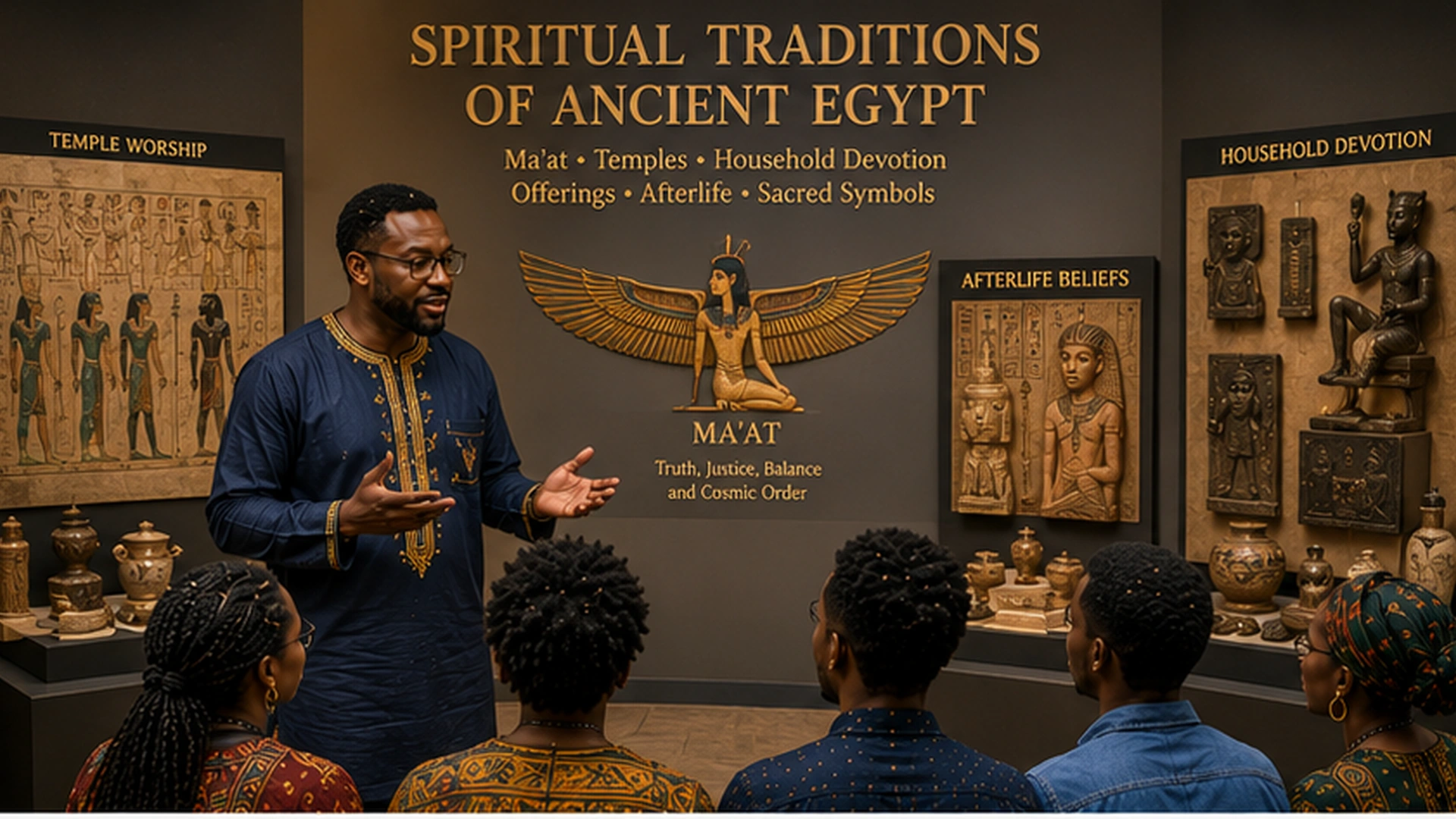
The central principle called ma'at referred to truth, justice, balance, right order, and the proper functioning of society and the cosmos.
This article uses public archaeological, textual, and museum evidence. It does not present ancient Egypt as one unchanging religion or claim that ancient objects guarantee supernatural outcomes today.
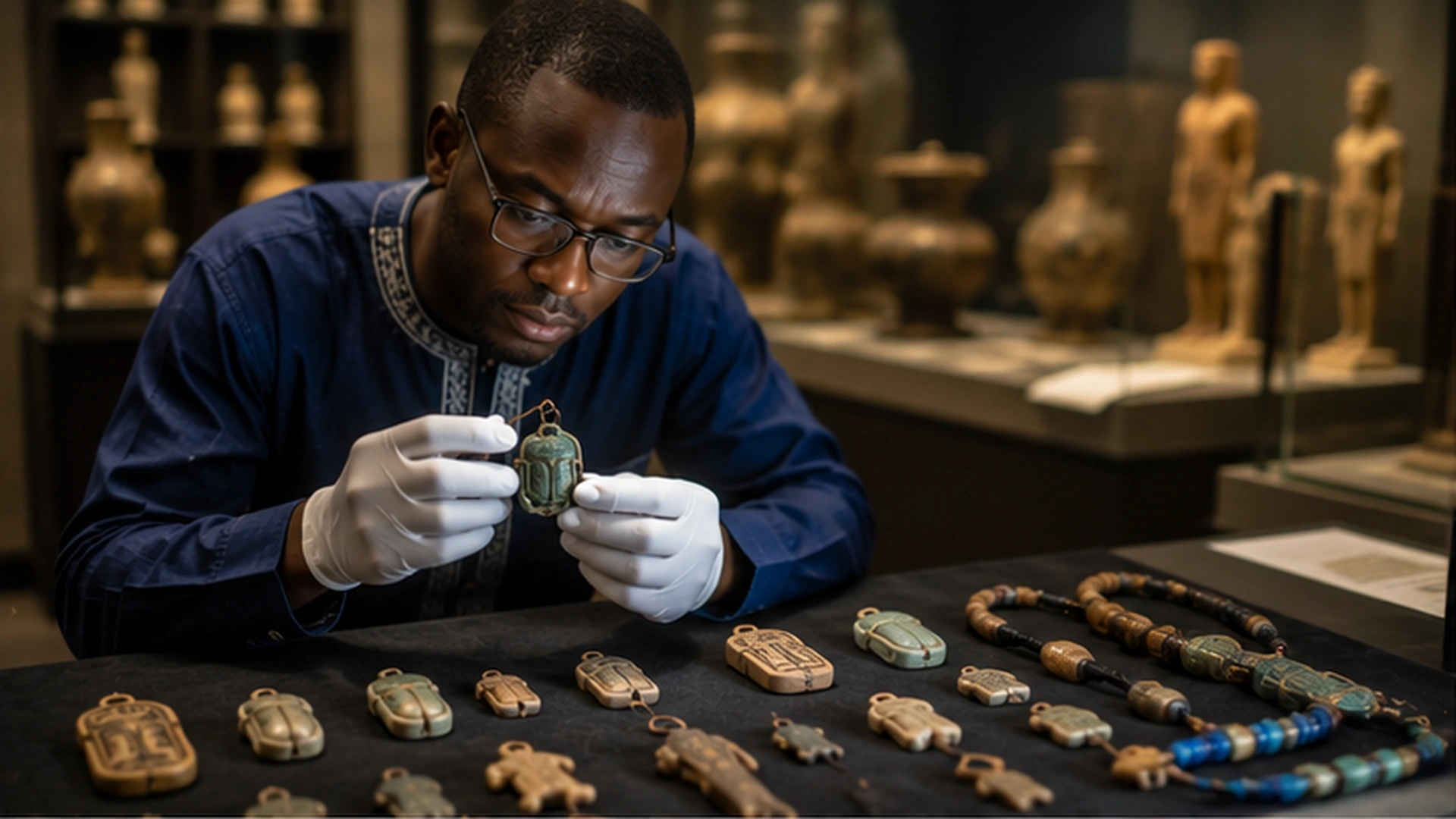
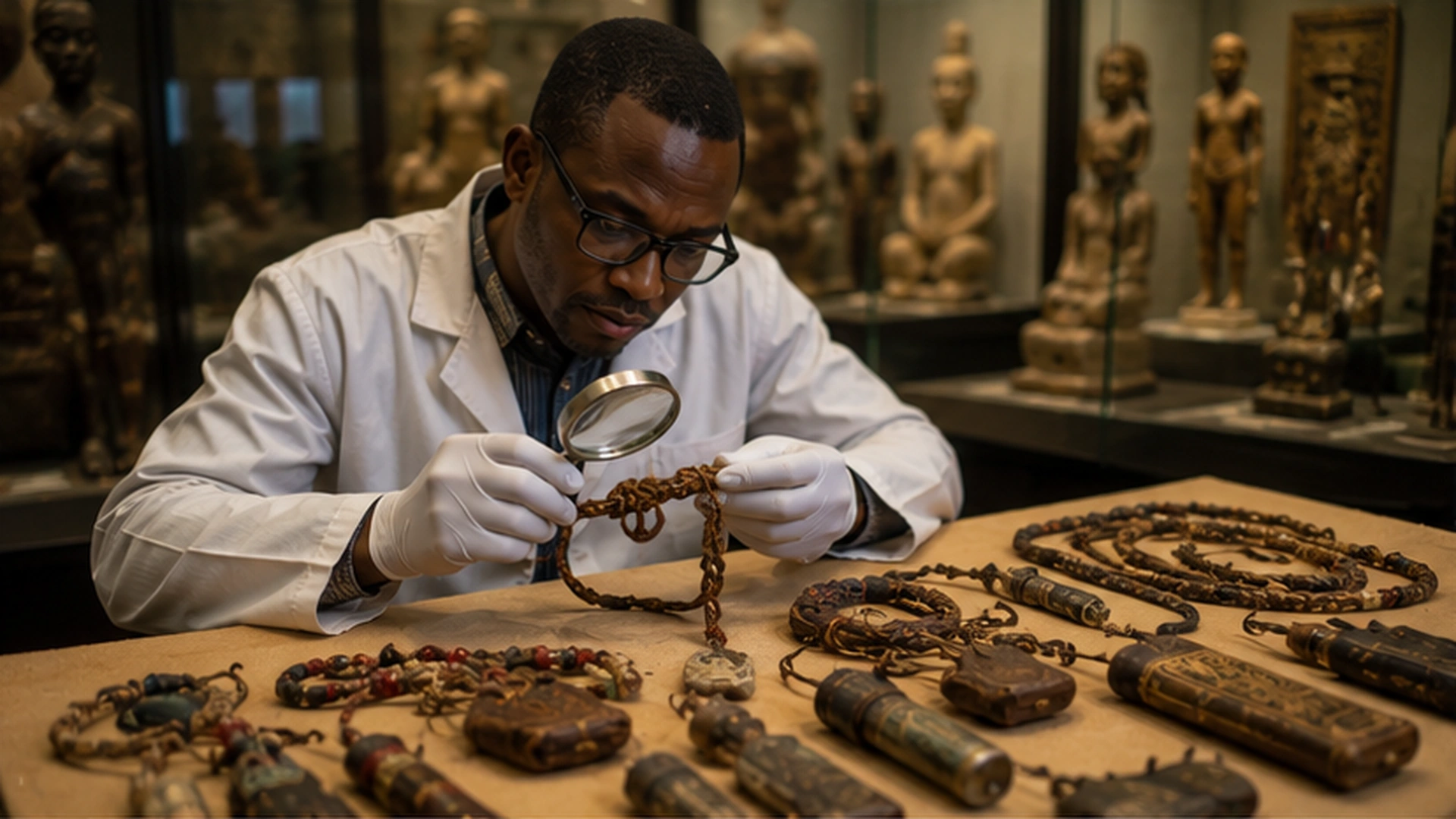
Suggested scene: Black African Egyptologist introducing ma'at, temple worship, household devotion, offerings, funerary beliefs, and sacred symbols through separate museum displays.
Key Points
Ancient Egyptian spiritual traditions developed over more than three millennia and changed through time.
Ma'at expressed truth, justice, balance, and proper cosmic and social order.
Temples were divine households where authorized personnel cared for sacred images through daily offerings and purification.
Most people participated through festivals, processions, offerings, prayers, oracles, and local shrines rather than entering the innermost sanctuary.
Household devotion involved protective deities, ancestors, amulets, healing, birth, and family concerns.
Heka was understood as an effective power built into creation and used in religious, medical, protective, and funerary contexts.
Death was a transformation requiring ritual, moral vindication, remembrance, and continued offerings.
Animal cults involved divine associations, sacred individuals, and votive offerings rather than worship of every animal.
Akhenaten elevated the Aten and restricted older cults, but traditional worship returned after his reign.
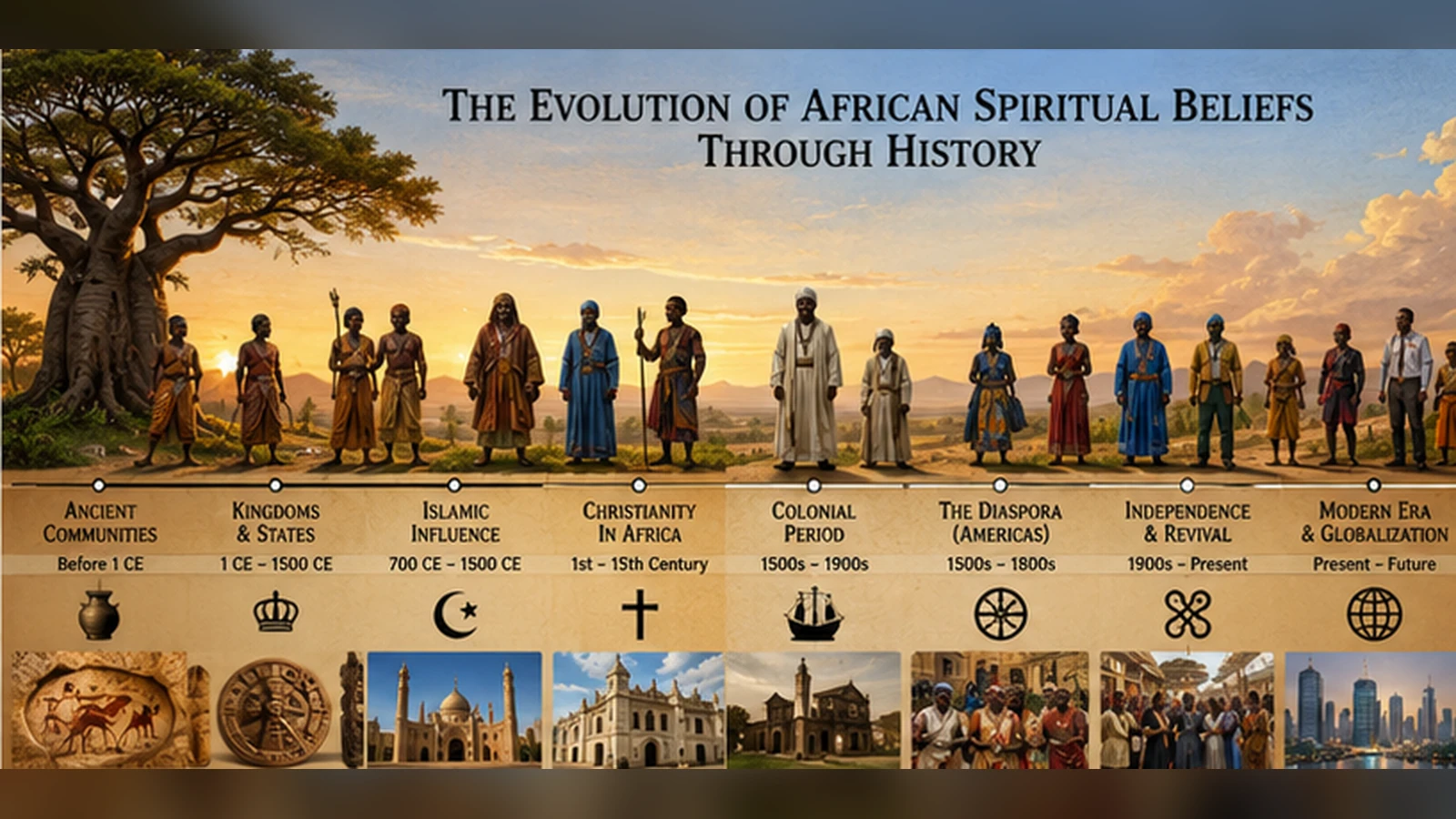
A Timeline of Religious Change
Period
Approximate dates
Important developments
Predynastic and Early Dynastic
before c. 2686 BCE
Regional deities, burial customs, sacred landscapes, and emerging royal ritual.
Old Kingdom
c. 2686-2181 BCE
Royal mortuary cults, pyramids, solar theology, and Pyramid Texts.
Middle Kingdom
c. 2055-1650 BCE
Expanded funerary texts, Osirian belief, local cults, and wider access to afterlife traditions.
New Kingdom
c. 1550-1069 BCE
Large temple institutions, Amun, festivals, royal tombs, and Books of the Dead.
Amarna Period
c. 1353-1336 BCE
Akhenaten elevated the Aten and suppressed or restricted traditional cults.
Late, Ptolemaic, and Roman Periods
664 BCE-4th century CE
Animal-votive industries, foreign dynasties, temple continuity, and Egyptian-Greek-Roman interaction.
1. Ma'at: Truth, Justice, and Cosmic Order
Ma'at was both an ethical principle and a divine personification. It referred to the balanced order that allowed the Nile, seasons, kingship, society, and the divine world to function properly.
Living according to ma'at involved truthful speech, fair judgment, proper ritual, responsible leadership, and opposition to disorder.
In funerary imagery, the heart of the deceased could be weighed against the feather of Ma'at, expressing moral evaluation and fitness for the blessed afterlife.
2. Many Gods and Local Traditions
Ancient Egyptians recognized many divine beings with overlapping powers and local forms. Ra, Amun, Osiris, Isis, Horus, Hathor, Ptah, Thoth, Anubis, Sekhmet, Bastet, and Sobek were among the best-known.
A deity could be human, animal, hybrid, or symbolic. Divine identities could combine, as in Amun-Ra, without erasing every local distinction.
Egypt had several creation traditions associated with Heliopolis, Memphis, Hermopolis, and Thebes. These accounts could coexist.
Frequently Asked Questions
What should readers know first about african spirituality and cultural history?
African spirituality and cultural history: Read clear guidance, key signs, practical steps, and private support from Ancestral Temple.
What causes spiritual-traditions-of-ancient-egypt?
The safest next step is to compare the signs, prepare clear details, and request private guidance when the matter feels personal.
How does spiritual-traditions-of-ancient-egypt work?
The safest next step is to compare the signs, prepare clear details, and request private guidance when the matter feels personal.
Is it possible to get private guidance for spiritual-traditions-of-ancient-egypt?
The safest next step is to compare the signs, prepare clear details, and request private guidance when the matter feels personal.
How long does spiritual-traditions-of-ancient-egypt take to understand?
The safest next step is to compare the signs, prepare clear details, and request private guidance when the matter feels personal.
Can spiritual-traditions-of-ancient-egypt affect relationships, family, work, or personal peace?
The safest next step is to compare the signs, prepare clear details, and request private guidance when the matter feels personal.
Why do people seek spiritual guidance for spiritual-traditions-of-ancient-egypt?
The safest next step is to compare the signs, prepare clear details, and request private guidance when the matter feels personal.
What signs should someone notice before asking about spiritual-traditions-of-ancient-egypt?
The safest next step is to compare the signs, prepare clear details, and request private guidance when the matter feels personal.
When should someone contact a private spiritual guide?
The safest next step is to compare the signs, prepare clear details, and request private guidance when the matter feels personal.
What causes african spirituality and cultural history?
African spirituality and cultural history: Read clear guidance, key signs, practical steps, and private support from Ancestral Temple. The safest next step is to compare the signs, prepare clear details, and request private guidance when the matter feels perso
Article Information
- Publisher
- Ancestral Temple
- Editor
- Ancestral Temple
- Last updated
- Jul 26, 2026
- Last reviewed
- Jul 13, 2026
- Content version
- 07bbdafd6a
This educational article should be read as cultural and spiritual information, not as medical, legal, financial, or emergency advice.
Helpful Related Guidance
Explore This Topic
Traditional Cleansing Herbs Used Around The World · Property Protection Rituals
Related Topic Cluster
African Spirituality And Cultural History
Complete Guide Why Homes Have Been Blessed Throughout HistoryAbout the Author
 Ancestral Temple
Spiritual guide and practitioner with decades of experience in ancestral wisdom, rituals, and divine guidance.
Related Posts
View All
Leave a Comment
We'd love to hear your thoughts.
I appreciated the explanation of ma'at as ethics and cosmic order.
The article clearly showed that Egyptian religion changed across many centuries.