
Ancestor Blessing Rituals: Offerings, Prayers and Respectful Remembrance
Pillar Article
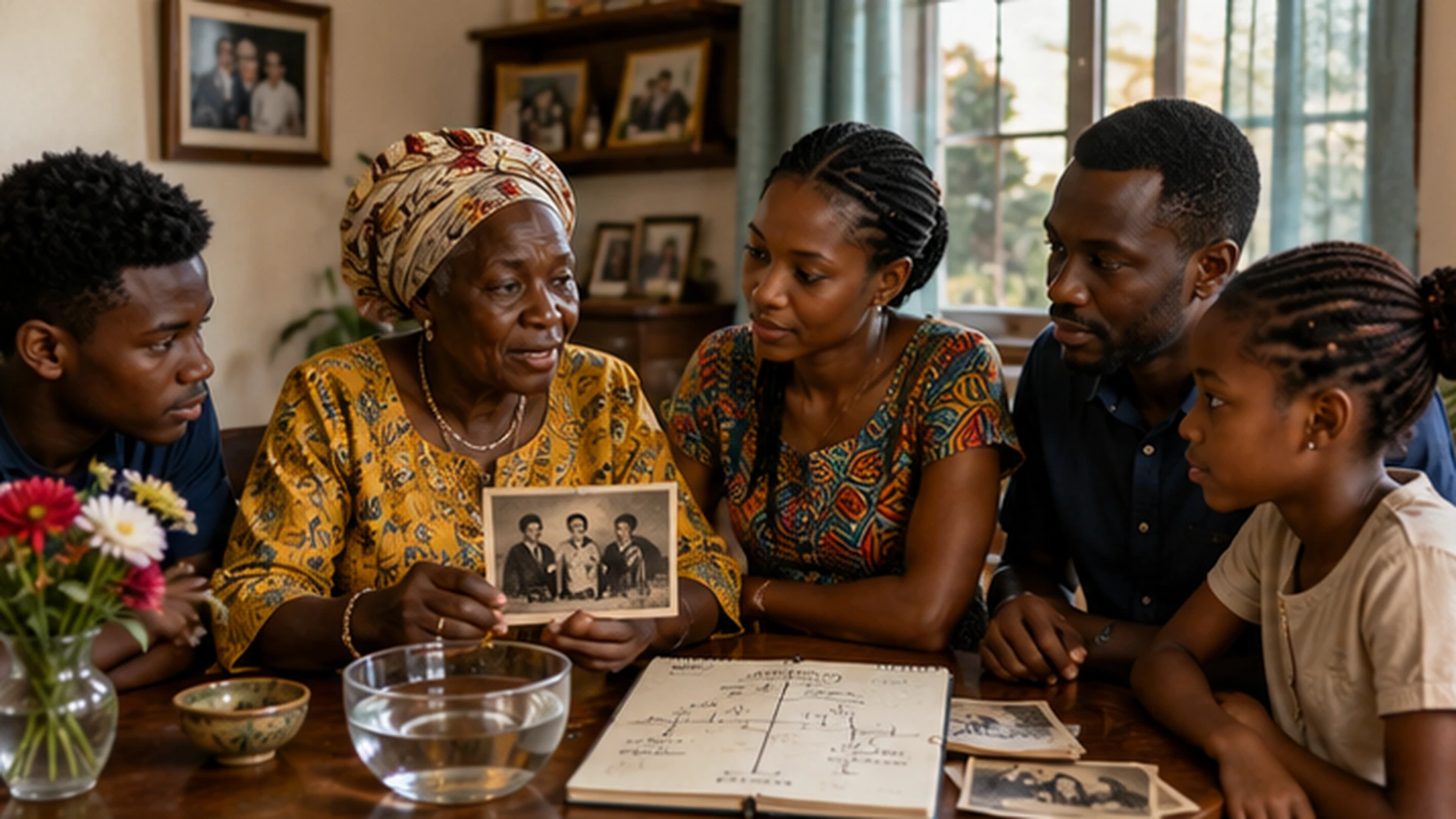
Quick Summary
Ancestor blessing rituals are culturally specific ways of remembering and honouring deceased relatives, founders, elders or community figures who remain important to the identity a...
Ancestor blessing rituals are culturally specific ways of remembering and honouring deceased relatives, founders, elders or community figures who remain important to the identity and moral life of the living. A ritual may include prayer, libation, food, flowers, light, grave care, storytelling, music, memorial objects or commitments made in the ancestor’s name.
The phrase ancestor blessing ritual is a broad modern description, not the official name of one universal African ceremony. Across Africa, ideas about who becomes an ancestor, who may speak, what may be offered and whether the dead are approached directly differ by community, lineage, religion and historical period. The same caution applies outside Africa: a Fon asen, a Benin royal altar, a Chinese Qingming offering and a Japanese Obon household observance belong to different spiritual and social worlds.
Respectful remembrance begins by asking whose tradition is involved, who has authority, what is public and what should remain private. It also avoids promises. Offerings and prayers may express faith, gratitude, continuity or hope, but they cannot guarantee protection, wealth, healing, fertility, reconciliation or communication with the dead.
Quick Answer
An ancestor blessing ritual is a culturally grounded act of remembrance through which a family or community may offer prayer, food, drink, flowers, stories, music or service in honour of deceased people. There is no universal recipe. The safest approach is to follow one’s own family or religious tradition, obtain consent and avoid copying restricted rites or claiming guaranteed spiritual results.
What Is an Ancestor Blessing Ritual?
An ancestor blessing ritual is an organized act through which the living acknowledge a deceased person or recognized ancestor and connect that memory with present responsibilities. The word blessing may mean asking a supreme being to bless the family, receiving guidance associated with ancestral memory, thanking the ancestor, or dedicating a good action to the person’s legacy.
Not every community uses the word blessing, and not every ancestor ceremony asks the dead for anything. Some practices are devotional; others are memorial, political, artistic or genealogical. A family may remember a grandparent by reciting names and sharing food, while a royal court may maintain an altar that legitimizes dynastic continuity.
Older scholarship often used ancestor worship as a broad category. Ancestor reverence can be more precise when the relationship involves respect, filial duty, remembrance or moral authority rather than treating the ancestor as a god. Even these English terms remain imperfect translations and should not replace local vocabulary.
Ancestor Blessing, Reverence, Worship and Memorial: What Is the Difference?
| Term | Usual emphasis | Important caution |
|---|---|---|
| Ancestor blessing | A request for wellbeing, favour, peace or responsible continuity connected with ancestral memory | May be directed to God, a deity, an ancestor or the family, depending on the tradition |
| Ancestor reverence | Respectful recognition of deceased family or community members | May include stories, names, grave care, offerings, moral conduct or ceremony |
| Ancestor worship | A scholarly or religious label for ritual relations with ancestors | Can be accurate in some contexts but overly broad or misleading in others |
| Memorial observance | Remembering the dead without necessarily claiming continued spiritual agency | May include photographs, candles, flowers, food, silence, charity or public commemoration |
| Invocation | Calling upon a spiritual being or ancestor within an authorized ritual | Not appropriate to improvise where training, lineage or initiation is required |
Why Families Remember Ancestors
To preserve names and genealogy
Remembering ancestors can maintain family names, migration histories, kinship relationships, inheritance records and knowledge of where a lineage has lived.
To teach moral responsibility
A deceased relative may be remembered for generosity, courage, skill, service, care for children or failures that the family does not want to repeat. Remembrance becomes an ethical lesson rather than only a request for supernatural help.
To maintain belonging
Families separated by migration may use photographs, graves, annual gatherings and digital archives to keep relationships across generations visible.
To express grief and gratitude
Offerings, silence, prayer and storytelling can give grief a shared form while allowing people to thank those whose work made present life possible.
To recognize political or community continuity
Royal, chiefly and territorial ancestors may represent a broader public history, legitimate office or responsibility toward land and community. These traditions are not simply private family devotion.
Origins and Historical Limits
No single origin can be identified for ancestor blessing rituals. Oral household practices usually predate complete written documentation, and similar actions developed independently in different societies. This is an inference supported by the wide historical distribution and diversity of ancestor rites rather than evidence for one first ceremony.
Ancient Chinese ritual vessels held food and wine offered to ancestors, while later Chinese household, ancestral-hall and graveside practices developed through changing Confucian, Buddhist and Daoist settings. African societies developed many forms of lineage, royal and territorial ancestor relations that cannot be reduced to one model.
Historical sources must be interpreted critically. Colonial writers sometimes treated African traditions as timeless or primitive, while museum collections often separated sacred objects from the families and institutions that gave them meaning. A responsible article distinguishes documented history from oral tradition, current belief, museum classification and modern spiritual reinterpretation.
Offerings: What They Mean and Why They Differ
An offering is something presented within a recognized relationship. It may be food, drink, water, flowers, light, incense, cloth, chalk, music, labour, charity or a memorial object. The object is not automatically an ancestor offering simply because it appears on a table. Its meaning comes from the words, timing, place, authority and tradition surrounding it.
Offerings can express hospitality, gratitude, continuity, nourishment, sacrifice, status, covenant or remembrance. In one setting, water may be poured as libation; in another, tea is placed before a grave; elsewhere, flowers or food are arranged at a household altar. These actions are not interchangeable recipes.
A public educational article should not reveal restricted formulas, sacrificial instructions or private names. It should also avoid turning offerings into consumer products that promise fixed outcomes.
Common Categories of Offerings
Water or libation
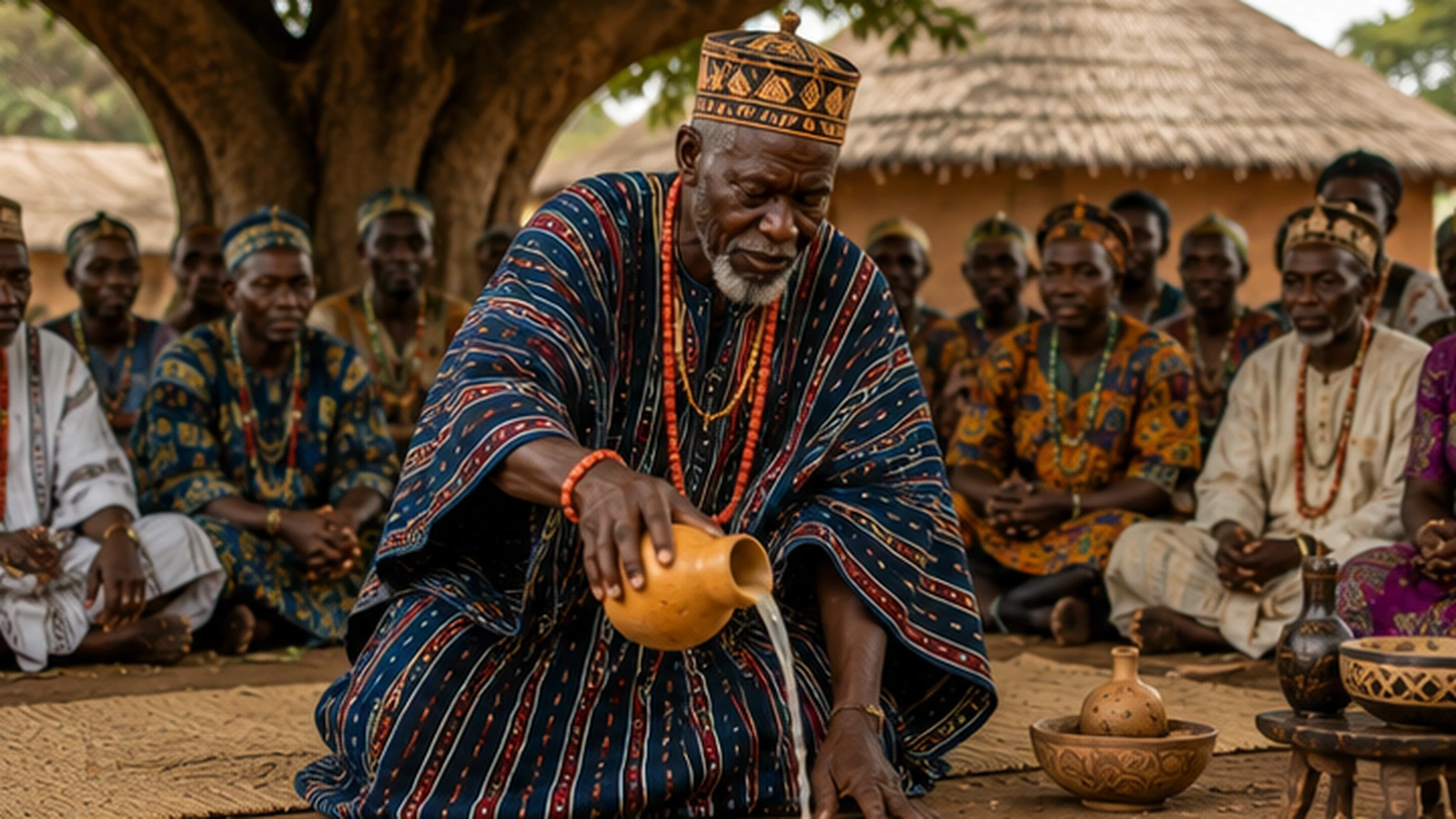
A liquid may be poured while names, praise or petitions are spoken. The liquid, order of names and authorized speaker vary. Libation is not one universal African practice.
Food and drink
Families may share or present foods connected with the deceased, the season or religious law. Food hygiene, dietary rules and cemetery regulations still apply.
Flowers and plants
Flowers can express beauty, mourning or seasonal memory. Plants should not be taken from protected areas or assigned invented meanings.
Light and fragrance
Candles, lamps or incense may symbolize welcome, prayer or memory. Smoke and open flame require ventilation, supervision and culturally appropriate use.
Memorial objects
Photographs, names, tools, textiles and crafted objects can preserve biography. A memorial object is not necessarily a shrine or source of spiritual power.
Service and charity
Repairing a grave, supporting relatives, teaching family history or donating in the ancestor’s name can embody remembrance through practical responsibility.
Prayers and Words of Remembrance
Prayer does not have one direction in ancestor traditions. Some people address a creator or deity while naming their ancestors as part of the family. Others speak directly to ancestors as senior members, witnesses or intermediaries. Some religious communities reject direct address to the dead but permit remembrance, thanksgiving and prayer for the deceased.
The words used may include praise names, genealogy, apology, gratitude, petitions, promises and requests for peace. The order of names may matter. In traditions with recognized ritual specialists, an outsider should not improvise formulas or imitate sacred language.
A respectful family remembrance can use plain, truthful language without claiming authority: “We remember the life of…,” “We give thanks for…,” and “May we continue the good they taught us.” These sentences preserve memory without pretending to reproduce a traditional invocation.
African Examples: Specific Traditions, Not One System
Africa contains thousands of communities and multiple Indigenous, Christian, Muslim and other religious histories. The examples below illustrate difference rather than a universal pattern.
Fon Asen Memorial Altars in Benin
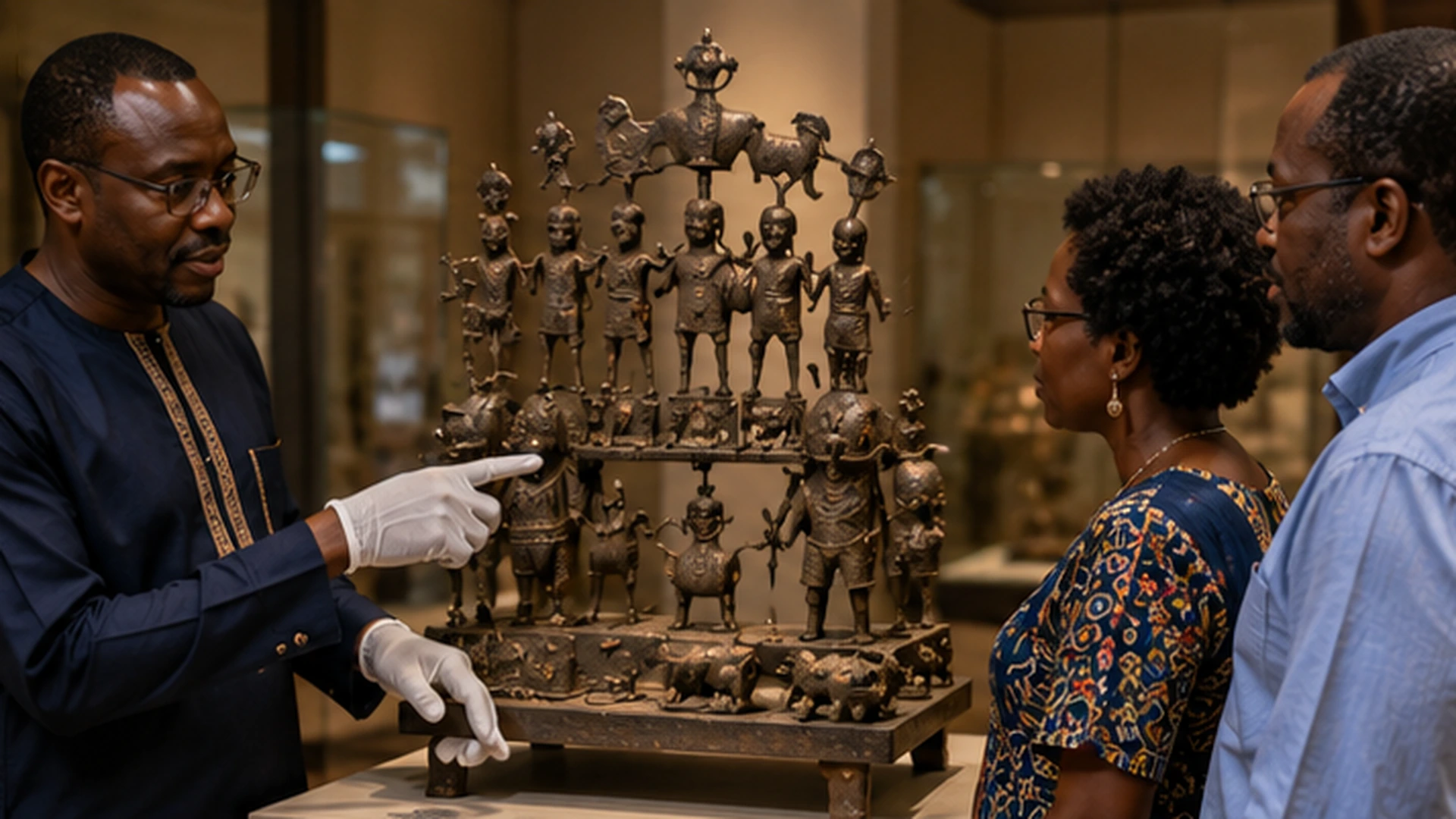
Among Fon communities in the Republic of Benin, metal memorial altars known as asen may be dedicated by a family to a particular deceased person or to several people. Smithsonian museum descriptions compare them with visual obituaries because their figures and symbols can refer to occupation, religious affiliation, family relationships, proverbs and personal names.
The meaning is not fully readable to every viewer. Museum documentation notes that the maker and the donor may be the people best able to interpret the symbols. This is a useful warning against treating sacred or memorial art as a universal code that outsiders can decode from appearance alone.
An asen is therefore not simply an “ancestor altar kit.” It is a commissioned relationship among a deceased person, surviving family, artist, local history and memorial practice.
Benin Kingdom Royal Ancestral Altars
In the Benin Kingdom, royal ancestral altars have included commemorative heads and carved ivory tusks associated with past obas. The objects express dynastic memory, status, political authority and the continuing obligations of the reigning court.
These altars were also affected by colonial violence. Many palace objects were removed during the British military invasion of 1897, and later rulers commissioned restored altar groupings. Responsible discussion should therefore include provenance and restitution history rather than presenting museum objects as detached spiritual decorations.
Royal ancestral art should not be copied as a private household ritual. Its authority belongs to the Benin court and institutions connected with the monarchy.
Shona and Zezuru Ancestral Memory in Zimbabwe
Shona traditions distinguish among different ancestral and territorial spirits, and ritual authority may involve family elders, mediums, musicians or other recognized participants. These distinctions vary across Shona subgroups and historical settings.
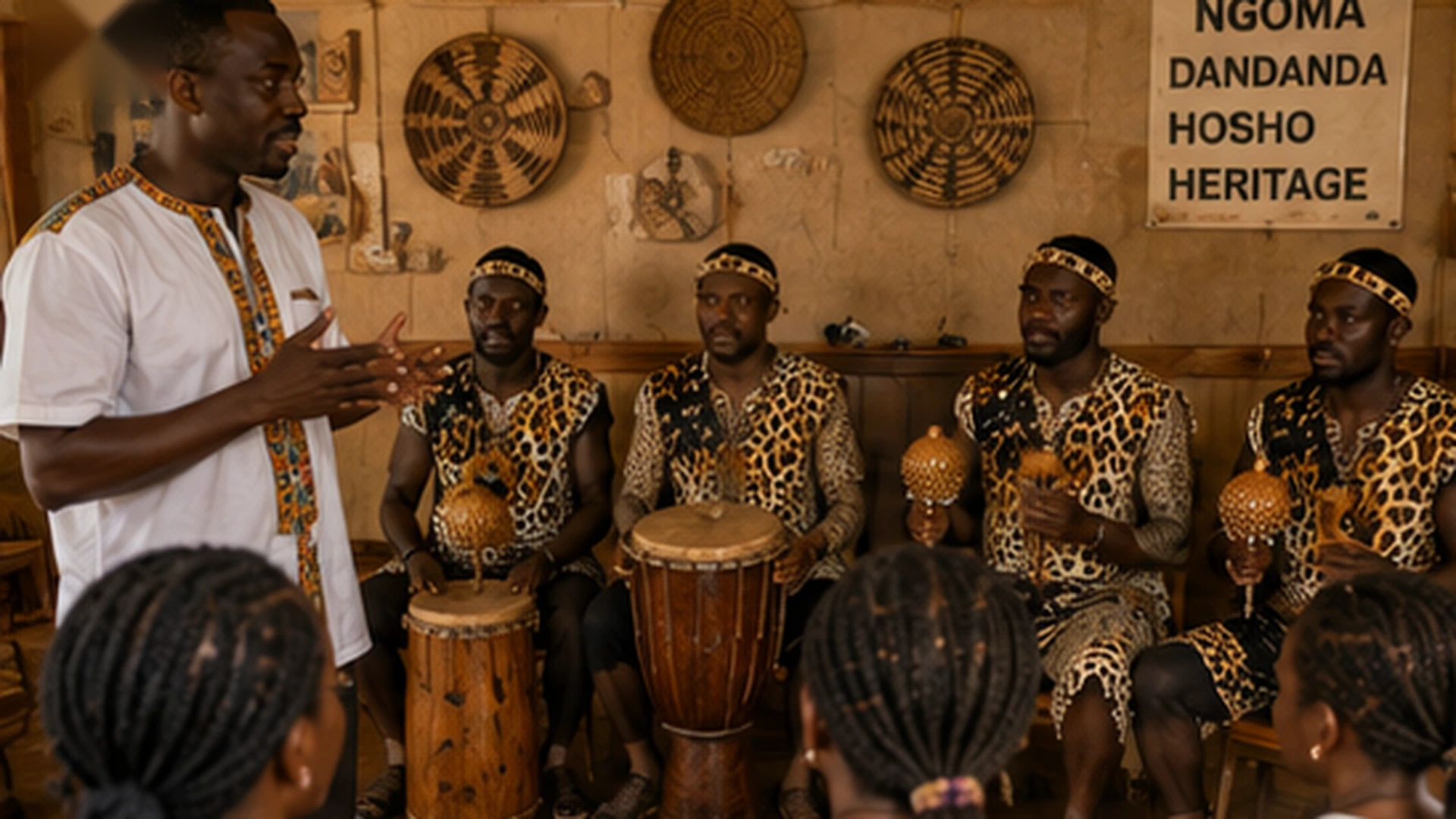
Research on Dandanda among Zezuru communities describes ngoma drum, hosho rattle, song and dance in ceremonies associated with ancestral spirits as well as in public performance. The same repertoire can therefore move between sacred and secular settings without making every performance an ancestor ritual.
Outsiders should not stage possession, imitate a medium or publish private songs as a generic Shona blessing. Public cultural education can discuss history, instruments and community interpretation while leaving restricted practice with its custodians.
Ghanaian Chieftaincy, Ancestors and Ritual Office
University of Ghana research on Christian chiefs notes that some Ghanaian chiefly institutions connect the officeholder with ancestral stools and understand the chief as a mediator between the living and ancestors. Christianity has created debate and adaptation around those obligations.
This example shows why ritual authority cannot be inferred from age or personal interest. A chief, lineage head, priest, elder and ordinary descendant may hold different responsibilities. One person’s Christian or Muslim faith may also change how ancestral memory is interpreted.
Family remembrance should not imitate chiefly rites or use royal stools, titles and regalia without legitimate connection.
Chinese Qingming and Ancestral Offerings
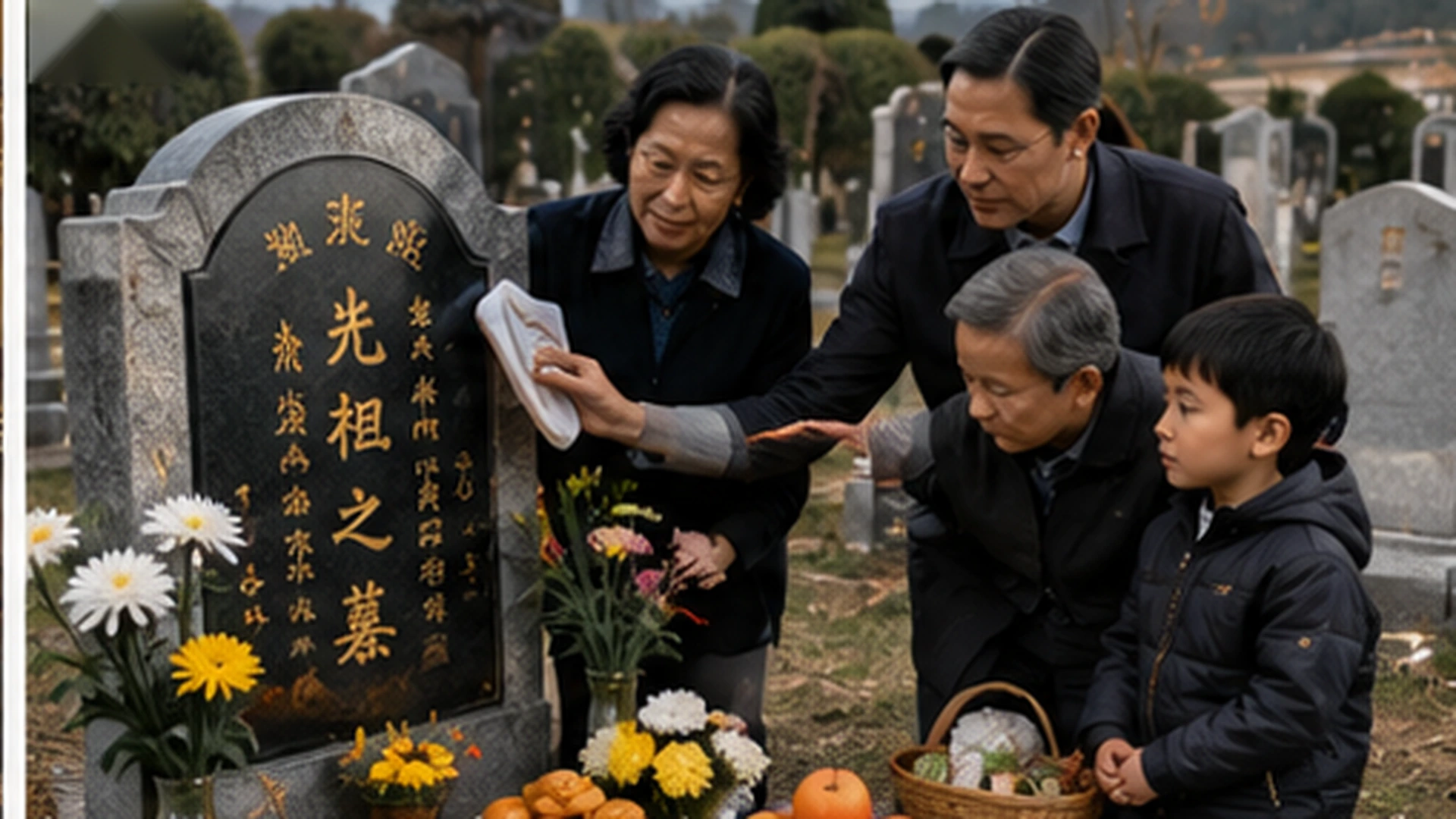
Qingming, often called Tomb-Sweeping Day, combines springtime, grave care and remembrance of deceased relatives in Chinese communities. Families may clean graves, renew the site and present flowers, tea, wine, fruit or food. Customs differ by region, family and religious orientation.
Chinese ancestor rites have a long history. Bronze ritual vessels in early China held food and wine offerings, while later domestic and lineage traditions used tablets, household altars, ancestral halls and graveside ceremonies. The history includes major changes through Confucian, Buddhist, Daoist, state and family institutions.
Paper offerings and fire are used in some settings, but they should not be recommended universally. Fire restrictions, pollution, cemetery rules and local community guidance must be respected.
Japanese Obon and Family Remembrance
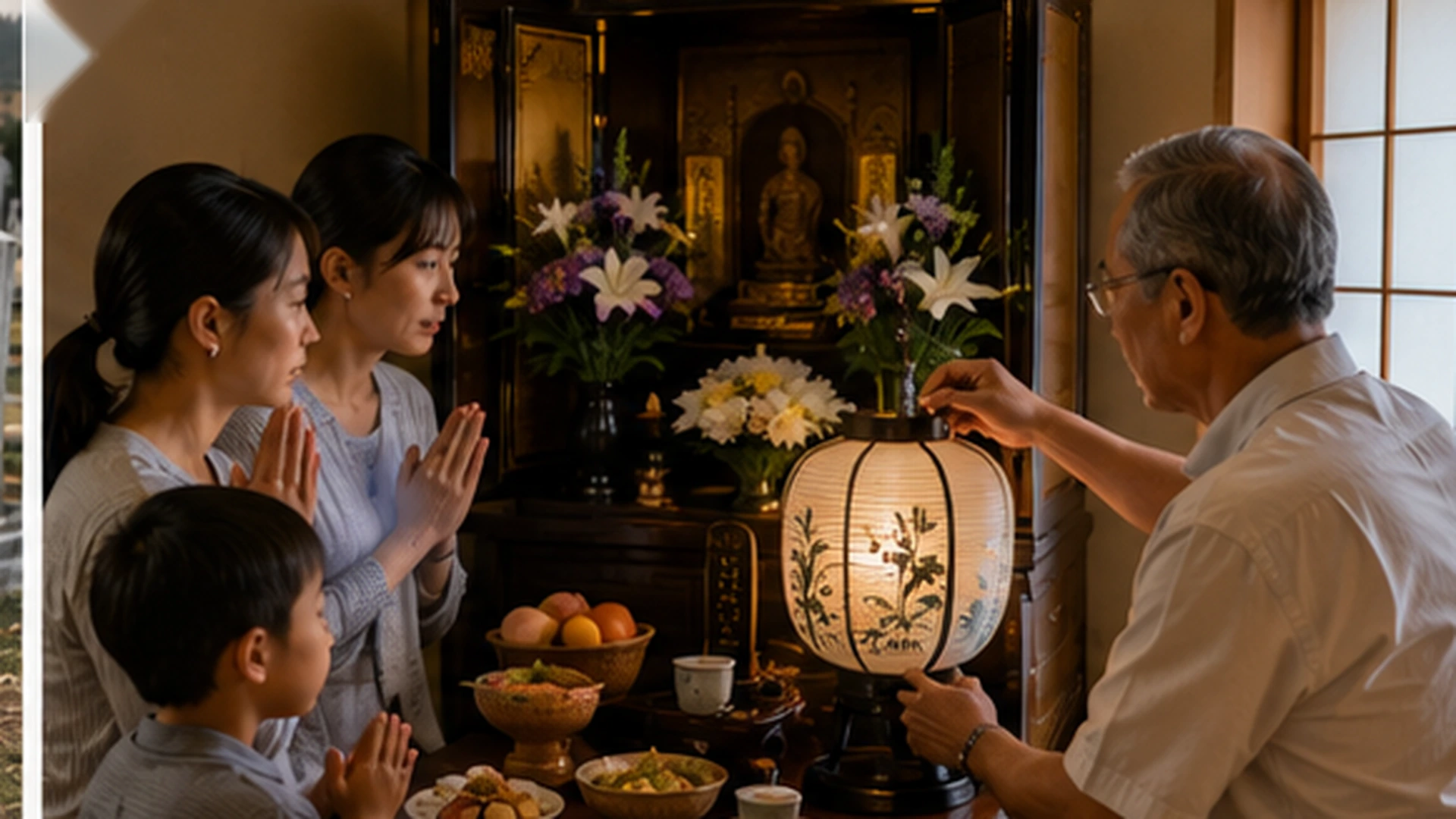
Obon is a Japanese Buddhist and family season of ancestor remembrance observed at different dates in different regions. Families may return to their hometowns, clean graves, prepare food offerings, arrange household altars and participate in local dances or lantern customs.
Official Japanese cultural sources describe welcoming and farewell fires, offerings at a butsudan and grave visits as common elements, while emphasizing regional variety. Public festivals such as Bon Odori may be joyful community events even though they are connected with remembrance of the dead.
Obon should not be reduced to decorative lanterns or copied as a generic spirit-invitation ceremony. Buddhist denomination, household practice, region and family history shape what is appropriate.
How to Create a Respectful Family Remembrance Gathering
The following is an original modern framework for families who want to remember their own deceased relatives. It is not presented as an African traditional rite and should not replace community-specific guidance.
1. Clarify the purpose
Decide whether the gathering is for genealogy, grief, gratitude, a death anniversary, a family reunion or spiritual devotion. Avoid promising communication or guaranteed blessings.
2. Confirm family consent
Ask relatives whether photographs, names, graves, stories and private events may be discussed. Grief and family history should not be exposed without permission.
3. Choose a simple place
Use a clean table, family room, grave or other lawful space. Do not enter burial land or sacred sites without permission.
4. Select accurate memorial objects
Use photographs, names, letters, tools, clothing or objects whose connection is known. Do not buy random “ancestral” symbols from unrelated cultures.
5. Offer only what belongs to your family or tradition
Water, flowers or a favourite food may be appropriate in some families. Follow religious rules, allergies, food safety and local regulations.
6. Speak names and stories
Share what is known, identify uncertainty and avoid turning rumours into history. Let younger relatives ask questions.
7. Use original words of gratitude
Thank the deceased for specific contributions and ask the living to continue what was good. Do not imitate restricted invocations.
8. Make a practical commitment
Preserve records, repair a grave, support an elder, reconcile a minor disagreement, teach a skill or contribute to a cause connected with the person.
9. Close clearly
Remove perishable food, extinguish flames, clean the space and record what the family learned. A ceremony should have a respectful end rather than leave participants frightened or uncertain.
Original Words for a Family Remembrance
The text below is an original non-denominational example. It is not a translation of any traditional prayer:
| We remember those whose lives made ours possible. We speak their names with gratitude, and we preserve their stories truthfully. May the good they taught us continue through our conduct. May the harm of the past not be repeated. May our family care for the living, honour the dead and leave a responsible inheritance for those still to come. |
|---|
When Not to Improvise an Ancestor Ritual
When the practice belongs to an initiated society, priesthood, royal court, lineage office or recognized medium.
When family members object to direct prayer, offerings, photographs or public discussion of the dead.
When the deceased’s burial place is private, protected or governed by cemetery rules.
When trauma, abuse or unresolved conflict makes public praise unsafe or dishonest.
When a practitioner uses fear to demand money, claims a curse without evidence or promises guaranteed results.
When substance use, uncontrolled fire, animal harm or illegal removal of heritage objects is involved.
When severe grief, hallucinations or fear require support from a qualified mental-health professional or trusted community leader.
Safety and Environmental Care
Food left for long periods can attract insects and animals. Remove perishable offerings promptly unless a community tradition provides another safe and lawful procedure. Do not leave plastic, glass, wax or food waste at graves, rivers, forests or public sites.
Candles, charcoal, incense and burning paper create fire and smoke risks. Use stable holders, ventilation and supervision, and choose electric lights or smoke-free remembrance where children, animals, asthma or fire restrictions are involved. The World Health Organization identifies candle and incense burning as possible indoor sources of particulate pollution.
Alcohol should not be poured where it may damage graves, plants, waterways or public property. Follow cemetery, environmental and religious rules.
No offering should involve endangered plants, wildlife products, looted antiquities or human remains. Cultural respect includes lawful provenance and environmental responsibility.
Common Misunderstandings
“All African families perform ancestor rituals.”
False. African communities and individuals differ by religion, family, history and personal belief.
“Every dead relative automatically becomes an ancestor.”
False. Some traditions require adulthood, descendants, moral standing, funeral rites, title or continuing recognition.
“An ancestor offering works because of the object itself.”
False or incomplete. Meaning depends on relationship, words, authority, timing and belief.
“Libation is one universal African formula.”
False. Liquids, speakers, order, recipients and meanings vary.
“A photograph creates an ancestral altar.”
Not automatically. It may be a memorial display, family archive or sacred object depending on how the family understands it.
“Ancestor reverence is always worship.”
False. It may involve worship in some settings and remembrance, filial duty or moral authority in others.
“A ritual guarantees protection and success.”
False. Rituals may express faith or hope but cannot control future events.
“Copying an offering reproduces the original tradition.”
False. Objects without language, authority and community relationship do not recreate a ceremony.
“Respect means hiding difficult history.”
False. Responsible remembrance can acknowledge harm, conflict and lessons without humiliating living relatives.
Cultural and Ethical Boundaries
Name the exact community, country, language group, lineage or religious institution whenever possible.
Distinguish public heritage from private or initiated knowledge.
Ask before photographing altars, graves, offerings, mourners or ritual specialists.
Do not combine Fon asen, Benin royal altars, Shona ceremonies, Chinese Qingming and Japanese Obon into one universal ritual.
Do not expose praise names, sacred formulas or family conflicts without consent.
Credit artists, families, elders, museums and community scholars.
Investigate provenance before buying memorial or sacred objects.
Describe spiritual effects as beliefs, not scientific facts or guarantees.
Let communities correct inaccurate descriptions and control how living traditions are documented.
Key Takeaways
Ancestor blessing rituals are culturally specific, not one universal African practice.
Offerings may include water, food, flowers, light, memorial objects, music or service, but their meanings differ.
Prayer may be directed to God, a deity, ancestors or the living family depending on the tradition.
Fon asen, Benin royal altars and Shona ancestral ceremonies illustrate different African histories and authorities.
Qingming and Obon show distinct Chinese and Japanese forms of family remembrance.
A family can create an honest modern remembrance gathering without falsely claiming ancient authority.
Restricted rites should not be improvised or commercialized.
Fire, smoke, food, cemetery and environmental safety remain important.
No ancestor ritual guarantees protection, wealth, healing or communication with the dead.
People Also Ask
What is an ancestor blessing ritual?
It is a culturally grounded act of remembrance that may include prayer, offerings, stories, grave care, music or commitments made in honour of deceased people.
What offerings can be given to ancestors?
Offerings vary. Water, food, drink, flowers, light, incense, memorial objects or charitable acts may be appropriate in some traditions but not others.
Can I pray to my ancestors?
That depends on your religion and family tradition. Some people address ancestors directly, while others pray to God for the deceased or simply speak words of remembrance.
Is ancestor reverence the same as worship?
Not always. Reverence may mean respect, remembrance and filial responsibility, while worship implies a more explicitly religious relationship.
Do all African cultures honour ancestors in the same way?
No. Beliefs and rituals differ by community, lineage, religion, office and historical period.
Can I make an ancestor table at home?
You can create a family memorial table with consent and accurate objects, but it should not be presented as a traditional altar unless it belongs to a recognized practice.
What is a libation for ancestors?
A libation is a culturally specific pouring of liquid accompanied by words, names, prayer or petition. There is no universal formula.
Can ancestor rituals guarantee protection?
No. They may express faith, remembrance or moral commitment but cannot guarantee future outcomes.
Frequently Asked Questions
1. Who counts as an ancestor?
The answer varies. Some traditions recognize parents and grandparents; others require adulthood, descendants, moral standing, funeral rites, title or community recognition.
2. Must an ancestor ritual include food?
No. Stories, names, flowers, grave care, music, prayer or service may be more appropriate.
3. Can Christians honour ancestors?
Many Christians remember deceased relatives, maintain graves and thank God for their lives. Direct prayer to ancestors is interpreted differently among denominations.
4. Can Muslims remember ancestors?
Muslims commonly pray for deceased relatives and visit graves within Islamic guidance, but practices that imply worship of the dead may be rejected. Families should consult trusted religious authorities.
5. Can I use a deceased person’s favourite drink?
Only when it fits the family or religious tradition and is legal, safe and environmentally responsible. Alcohol is not appropriate in every setting.
6. Should offerings be eaten afterward?
Practices differ. Follow family and religious guidance and use normal food-safety rules.
7. Is it acceptable to use photographs?
Usually for a family memorial, with consent. Some religions or families avoid images, and private photographs should not be published without permission.
8. Can adopted people honour biological and adoptive ancestors?
Yes, in ways that respect known relationships, privacy and the beliefs of everyone involved. Unknown ancestry should not be filled with invented cultural claims.
9. What if my ancestors caused harm?
Remembrance need not become praise. A family can name harm truthfully, reject destructive behaviour and commit to repair without humiliating living relatives.
10. Can I honour ancestors I never knew?
Yes, through genealogy, grave care, archival research and cautious family storytelling. Separate documented facts from assumptions.
11. How often should remembrance happen?
There is no universal schedule. Families may choose anniversaries, festivals, reunions or occasional gatherings.
12. Can a ritual prove that an ancestor is communicating?
No. Personal experiences may be spiritually meaningful, but a ritual cannot scientifically verify communication with the dead.
Conclusion
Ancestor blessing rituals are meaningful because they connect memory with responsibility. An offering can express hospitality. A prayer can express gratitude. A photograph can preserve a name. A song can carry history. A repaired grave or supported elder can turn remembrance into practical care.
The similarities should not erase the differences. Fon asen, Benin court altars, Shona ancestral ceremonies, Qingming and Obon belong to different communities and authorities. Respectful learning names those differences and accepts that some knowledge should remain private.
A family does not need to invent an ancient ritual to remember its dead. Truthful stories, consent, gratitude, responsible action and care for the living can form a dignified remembrance without guaranteed claims or cultural appropriation.
Final Summary
Ancestor blessing rituals may involve offerings, prayers, storytelling, music, memorial objects and ethical commitments. Their forms differ across families and cultures. Responsible remembrance begins with accurate history, recognized authority, consent, environmental and fire safety, and a clear distinction between belief and guaranteed outcomes.
Article Information
- Publisher
- Ancestral Temple
- Editor
- Ancestral Temple
- Last updated
- Jul 30, 2026
- Last reviewed
- Jul 30, 2026
- Content version
- efce46f936
This educational article should be read as cultural and spiritual information, not as medical, legal, financial, or emergency advice.
Helpful Related Guidance
About the Author
 Ancestral Temple
Spiritual guide and practitioner with decades of experience in ancestral wisdom, rituals, and divine guidance.
Related Posts
View All






Comments
We'd love to hear your thoughts.