
Frankincense vs Myrrh: Differences, Origins and Cultural Significance
Quick Summary
Frankincense and myrrh are two aromatic resins with closely connected histories, yet they come from different trees and offer noticeably different scents, colors and traditional us...
Frankincense and myrrh are two aromatic resins with closely connected histories, yet they come from different trees and offer noticeably different scents, colors and traditional uses. Frankincense is obtained from trees in the genus Boswellia, while commercial myrrh is most commonly associated with Commiphora myrrha and related Commiphora species. Both genera belong to the Burseraceae family, which helps explain why the resins share some broad characteristics without being the same substance. [1][2]
Their stories cross the dry landscapes of southern Arabia and the Horn of Africa, the caravan roads of the ancient incense trade, Egyptian temples and perfumes, Jewish sacred formulations, Christian worship, Arabian hospitality and modern fragrance workshops. The two resins were valuable because they combined rarity, portability, aroma, ritual usefulness and long-distance demand. [3][4][5][6]
Today, frankincense and myrrh are sold as raw resin, incense blends, essential oils, perfumes, cosmetics and herbal products. That modern marketplace can blur the differences between species, grades and preparations. A culturally responsible comparison should therefore begin with the plants themselves and separate documented history from marketing claims.
Quick Answer
| Quick Answer |
|---|
| Frankincense is usually a pale to golden resin from Boswellia trees with a brighter citrus, pine and balsamic aroma. Myrrh is usually a reddish-brown resin from Commiphora trees with a darker, earthy, bitter and smoky scent. Their trade histories overlap, but their botany, fragrance profiles and cultural roles are not identical. |
| Field | Specification |
|---|---|
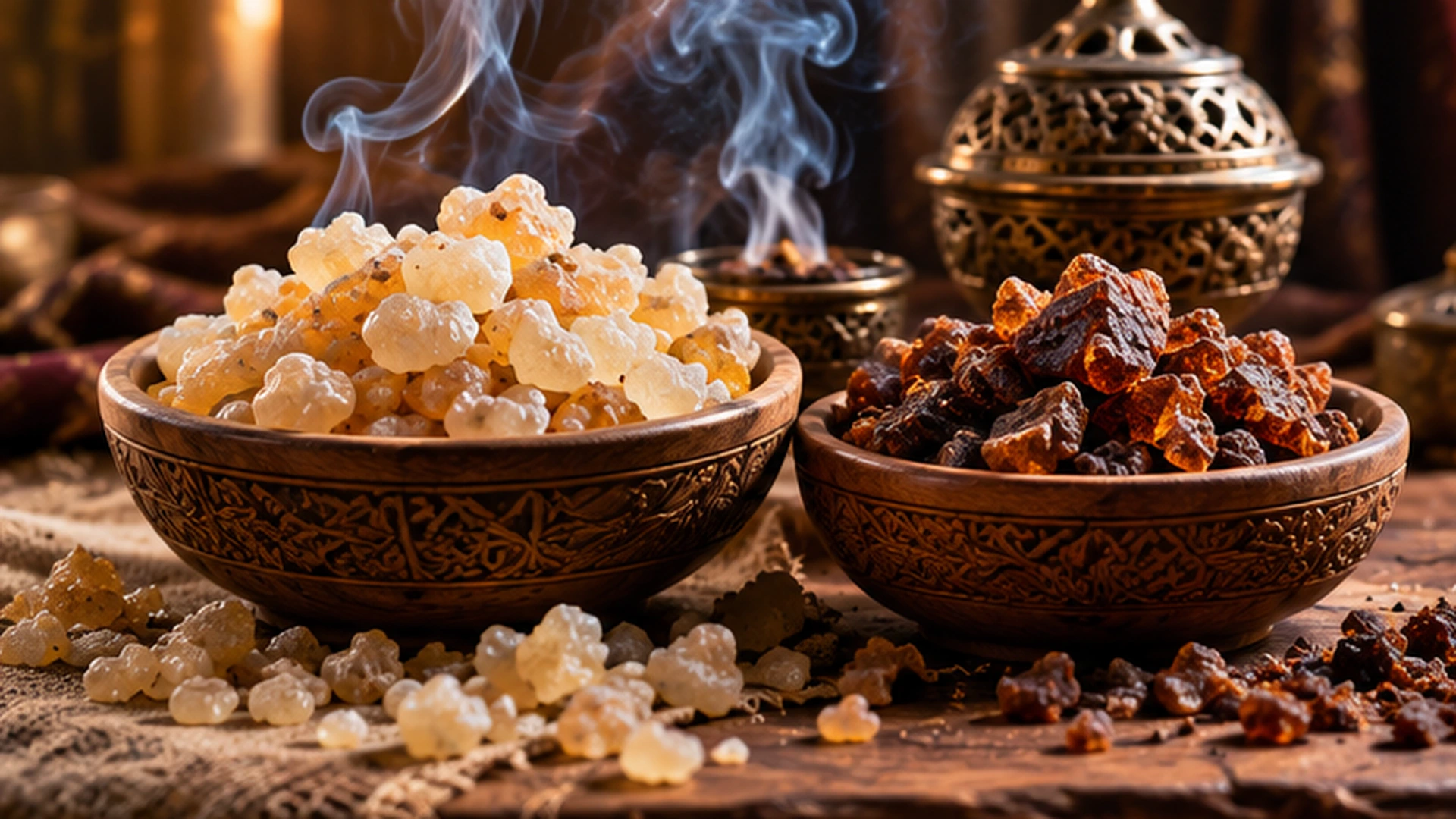
| Image number | 1 |
| Purpose | Featured comparison image that immediately distinguishes the two resins without using labels inside the image. |
| Detailed scene | A museum-quality editorial still life on a weathered wooden table: pale ivory-to-golden frankincense tears in a light stone bowl on the left and reddish-brown myrrh pieces in a darker clay bowl on the right. Behind them are a small Boswellia branch with papery bark and a thorny Commiphora branch, positioned clearly but naturally. A simple brass incense burner sits farther back, unlit. |
| Specific culture or historical context | Contemporary educational botanical display drawing on Arabian and Horn of Africa resin traditions without claiming one unified ritual. |
| People shown | No people. |
| Location | Open-air shaded worktable overlooking a dry, rocky landscape suggestive of southern Arabia and the Horn of Africa. |
| Clothing | Not applicable. |
| Architecture | Only a subtle stone wall or woven shade structure in the background. |
| Objects | Two bowls, resin tears, botanical branches, bark samples and one unlit incense burner. |
| Lighting | Soft golden side light with accurate resin texture and natural color. |
| Composition | 16:9 landscape. Frankincense occupies the left third, myrrh the right third, with balanced negative space and shallow depth of field. One continuous scene, not a collage. |
| SEO-friendly filename | frankincense-vs-myrrh-differences.webp |
| Image title | Frankincense and Myrrh Resins Compared |
| Alt text | Pale frankincense tears and reddish-brown myrrh resin displayed in separate bowls with their source branches |
| Caption | Frankincense and myrrh are related aromatic resins, but they come from different tree genera and have distinct colors and scent profiles. |
| Recommended placement | Immediately after the Quick Answer. |
| Article section supported | Introduction and direct comparison. |
| Important elements to avoid | No embedded text, product labels, fantasy glow, flames, religious symbols, mixed ceremonial props, logos, watermarks or artificial neon colors. |
Frankincense vs Myrrh at a Glance
| Feature | Frankincense | Myrrh |
|---|---|---|
| Main plant source | Boswellia species; Boswellia sacra is a major source in Somalia, Yemen and Oman. | Commiphora species; Commiphora myrrha is a major commercial source in East Africa and the southern Arabian Peninsula. |
| Plant family | Burseraceae | Burseraceae |
| Typical resin color | Pale cream, yellow, greenish or golden; some grades are reddish. | Amber, reddish-brown to dark brown; often less translucent. |
| Typical scent | Bright, citrus-like, piney, balsamic, slightly sweet or mineral. | Earthy, bitter, smoky, medicinal, warm and slightly spicy. |
| Common historical roles | Temple incense, domestic fragrance, trade luxury, perfumery and traditional remedies. | Perfume, anointing mixtures, temple offerings, funerary contexts, incense and traditional remedies. |
| Common modern forms | Raw resin, incense, essential oil, perfume material and Boswellia extracts. | Raw resin, tincture, mouth or skin preparations in some regulated herbal products, essential oil and perfume material. |
| Main geographic associations | Southern Arabia and northern/northeastern Somalia, with other Boswellia species across Africa and India. | Ethiopia, Kenya, Somalia and the southern Arabian Peninsula, with many other Commiphora species across Africa and Arabia. |
| Are they interchangeable? | Not exactly. They can complement each other, but their aromas, chemistry and cultural uses differ. | Not exactly. Myrrh is usually heavier and more bitter, so smaller proportions may dominate a blend. |
What Are Frankincense and Myrrh?
Both materials are oleo-gum-resins: complex plant exudates containing resinous and gummy components, with volatile aromatic compounds that contribute to scent. When the bark is cut or naturally damaged, the tree releases a sticky substance. It gradually hardens into irregular drops or “tears” that can be collected, sorted and traded.
The words frankincense and myrrh describe commercial aromatic materials rather than one perfectly uniform product. Different species, growing areas, harvest seasons, collection methods, grades and storage conditions can change the appearance and aroma. A bag labeled “frankincense” may come from Boswellia sacra, Boswellia papyrifera, Boswellia frereana, Boswellia serrata or another Boswellia species. “Myrrh” most commonly refers to Commiphora myrrha in international trade, but related Commiphora resins also circulate under names such as sweet myrrh, opoponax or regional trade names. [1][2][12]
Frankincense: Boswellia Resin
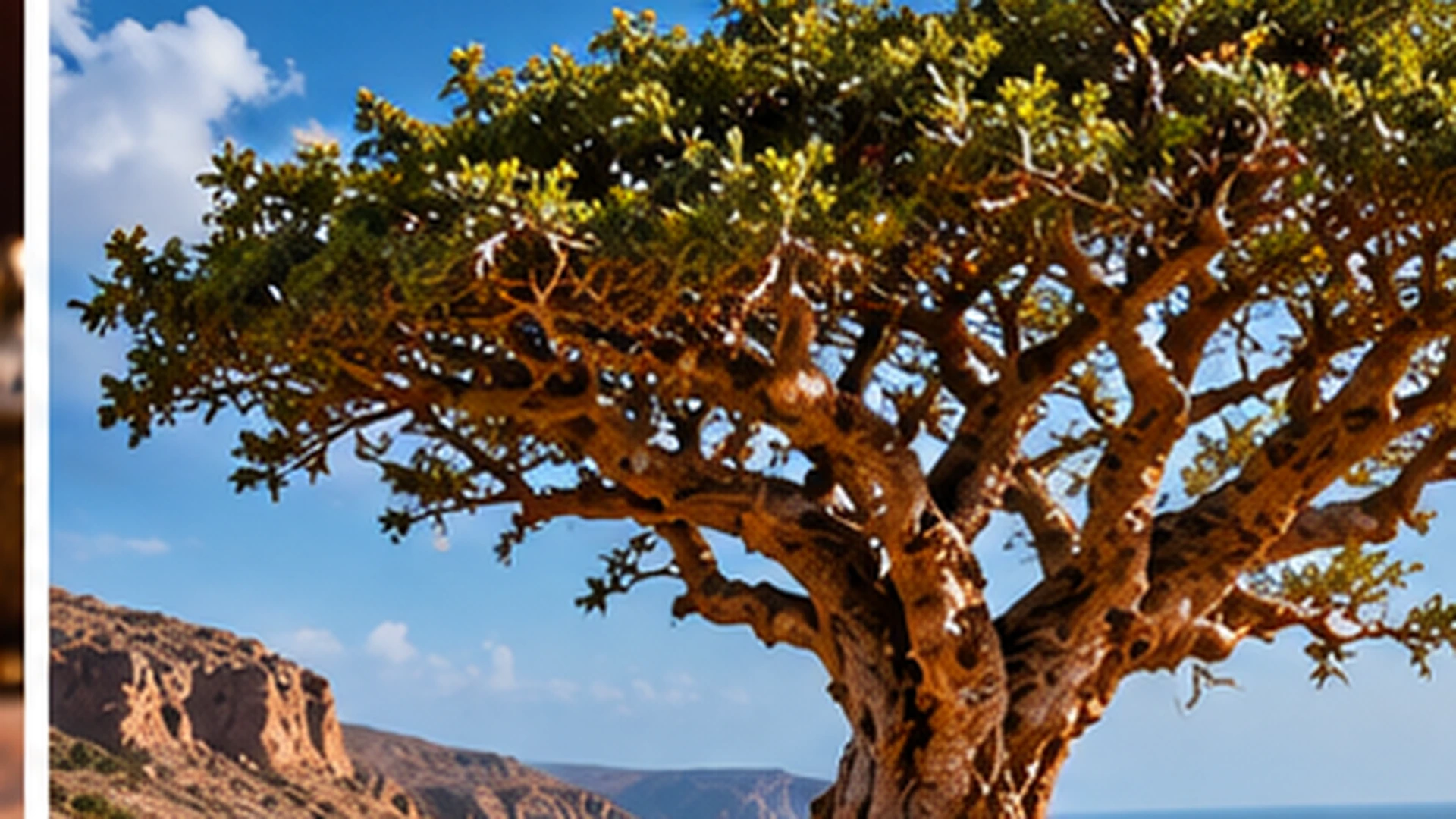
Boswellia sacra is an accepted species native to northern and northeastern Somalia and from southern Yemen to southwestern Oman. It grows in desert or dry shrubland environments, often on rocky slopes where its papery bark and swollen trunk base help it survive harsh conditions. Royal Botanic Gardens, Kew describes the resin as frankincense or olibanum and notes a long history of religious, social, perfumery and traditional medicinal use. [1]
Frankincense is not limited to Boswellia sacra. Ethiopian and Eritrean trade commonly includes Boswellia papyrifera, India is associated with Boswellia serrata, and Somalia is also known for Boswellia frereana. These resins can differ substantially. For example, some are prized for burning, some for chewing, some for distillation and some for extracts. A trustworthy article or product should identify the botanical species when possible rather than treating every Boswellia resin as chemically identical.
Myrrh: Commiphora Resin
Commiphora myrrha is an accepted species whose native range extends from eastern and southeastern Ethiopia to northeastern Kenya and across parts of the southern Arabian Peninsula. It is a thorny shrub or small tree adapted to dry bushland and shallow soils. Its exudate hardens into a translucent yellowish to reddish-brown gum-resin that develops the familiar deeper myrrh aroma. [2]
Botanical naming around myrrh can be confusing. Historical texts and modern trade may use the word for more than one Commiphora resin, and the exact species behind an ancient reference is not always certain. Kew notes, for example, that Commiphora guidottii is a related source associated with scented myrrh and that scholars have debated which species best matches particular biblical descriptions. That uncertainty should be stated rather than hidden behind a single confident label. [12]
How the Resins Are Harvested
Harvesting generally involves making controlled cuts in the bark so resin flows to the surface and hardens. The first exudate may be cleared away, followed by later collections that can produce cleaner or larger tears. Timing, cut depth, rest periods and the number of tapping rounds affect both resin quality and tree health.
Kew describes Boswellia collectors making slight incisions in stout lower branches, allowing the gum to harden before collection. The best-known frankincense landscapes of Dhofar include Wadi Dawkah, part of UNESCO’s Land of Frankincense World Heritage property, where Boswellia sacra remains connected to a historic network of production, caravan routes and ports. [1][3]
Myrrh collection follows the same broad principle of obtaining hardened exudate from Commiphora bark, but local methods vary. Harvesting knowledge belongs to specific communities and families; it should not be reduced to a universal “ancient secret.” Responsible buyers should favor suppliers who can explain the source, species and harvesting relationships rather than relying only on romantic packaging.
| Field | Specification |
|---|---|
| Image number | 2 |
| Purpose | Show frankincense harvesting in its ecological and cultural setting. |
| Detailed scene | A realistic Omani frankincense harvester in Dhofar examines a mature Boswellia sacra tree growing among pale limestone rocks. One small, careful tapping cut is visible and a few hardened resin tears cling to the bark. The harvester holds a traditional-style tapping tool safely at his side rather than actively cutting. |
| Specific culture or historical context | Contemporary Dhofar, Oman, where frankincense harvesting remains part of local heritage connected with the UNESCO Land of Frankincense. |
| People shown | One Omani adult man with natural appearance and accurate anatomy. |
| Location | Wadi Dawkah-type dry valley with scattered Boswellia trees and distant Dhofar escarpment. |
| Clothing | Practical contemporary Omani field clothing, modest and unbranded; no ceremonial costume. |
| Architecture | No prominent architecture. |
| Objects | Boswellia tree, small tapping tool, woven collection pouch and a few natural resin tears. |
| Lighting | Clear early-morning desert light with realistic bark and rock textures. |
| Composition | 16:9 medium-wide photograph; tree dominates the center, harvester on one third, landscape visible behind. |
| SEO-friendly filename | frankincense-harvesting-dhofar-oman.webp |
| Image title | Harvesting Frankincense in Dhofar |
| Alt text | Omani harvester examining resin tears on a Boswellia sacra tree in the rocky Dhofar landscape |
| Caption | Frankincense is collected from controlled bark incisions, and careful harvest timing is important for resin quality and tree health. |
| Recommended placement | After the harvesting section. |
| Article section supported | How frankincense and myrrh are harvested. |
| Important elements to avoid | No excessive wounds, piles of resin, tourist costume, fantasy desert, camel caravan, embedded text, logos or watermarks. |
Appearance and Scent: How They Differ
The easiest everyday difference is sensory. Frankincense usually looks lighter and smells more lifted. Myrrh usually looks darker and smells heavier. These are useful tendencies, not absolute grading rules.
What Frankincense Looks and Smells Like
Good frankincense often appears as cream, pale yellow, golden or green-tinted tears. Some material is reddish because of bark contact, age, species or grade. When warmed, many frankincense resins release a bright opening that people describe as lemony, pine-like, balsamic or slightly peppery. The smoke can become warmer, mineral and resinous as the material continues to heat.
The word olibanum is widely used in perfumery and trade for frankincense. It does not automatically identify one species or superior grade. Terms such as hojari, maydi, beyo, luban and serrata may refer to regions, species, grades or local categories; their meaning depends on the supplier and cultural context.
What Myrrh Looks and Smells Like
Myrrh is commonly reddish-brown, amber or dark brown, sometimes with dusty surfaces and irregular shapes. Its aroma is generally earthier and less sparkling than frankincense. People often notice bitter, smoky, leathery, medicinal, warm spice or dry wood qualities. In perfume, a small amount can add depth, shadow and long-lasting resinous warmth.
Myrrh can smell harsh when burned too hot. Gentle warming may reveal a more rounded balsamic sweetness beneath the bitterness. As with frankincense, scent varies by species, source, age and handling. “Myrrh smells like death” or “frankincense smells holy” are cultural associations, not objective scent descriptions.
Can Frankincense and Myrrh Be Burned Together?
Yes. The brighter lift of frankincense can balance the darker weight of myrrh, which is one reason the materials appear together in historical and modern blends. Start with more frankincense than myrrh if you want an accessible aroma, because myrrh can dominate. A simple exploratory ratio is three parts frankincense to one part myrrh, adjusted by scent rather than treated as a sacred formula.
Use an electric resin warmer or a small amount on properly prepared charcoal in a heat-safe burner. Provide ventilation, keep smoke away from children, pets and people with respiratory sensitivities, and never leave hot charcoal unattended. Combustion produces particulate matter, so “natural” smoke is not the same as harmless air. [11]
Origins: Where Frankincense and Myrrh Come From
The two resins are strongly associated with a broad dryland zone spanning southern Arabia and the Horn of Africa. That geographic overlap helped them enter many of the same trade networks, but the trees are not distributed identically.
Frankincense Landscapes
Boswellia sacra is native from northern and northeastern Somalia through southern Yemen to southwestern Oman. Other frankincense-producing Boswellia species occur across Ethiopia, Eritrea, Sudan, Somalia and India. The National Museum of Oman describes Dhofar as one of the places where Boswellia sacra thrives naturally, supported in part by the seasonal khareef monsoon and the distinctive fog-influenced environment of the coastal mountains. [1][8]
UNESCO’s Land of Frankincense property links living tree habitat at Wadi Dawkah with the caravan oasis of Shisr and the ports of Khor Rori and Al-Baleed. Together, the sites demonstrate how resin moved from inland production areas to maritime and overland trade routes over many centuries. [3]
Myrrh Landscapes
Commiphora myrrha is native from Ethiopia into Kenya and parts of the southern Arabian Peninsula, and commercial myrrh has long been connected with Somali and wider Horn of Africa trade. The plant grows in dry Acacia-Commiphora bushland, often over limestone and under low rainfall. [2]
Ancient Egyptian sources associated myrrh and other aromatics with Punt, a region whose exact boundaries remain debated but which is generally connected with lands south and southeast of Egypt around the Red Sea and Horn of Africa. The temple of Hatshepsut at Deir el-Bahari famously depicts an expedition to Punt and resin-bearing trees or goods. The Global Egyptian Museum identifies myrrh among the valued aromatic materials represented in this context. [6]
| Field | Specification |
|---|---|
| Image number | 3 |
| Purpose | Show myrrh’s distinct plant source and Horn of Africa environment. |
| Detailed scene | A Somali adult woman resin collector stands beside a thorny Commiphora myrrha shrub in dry bushland, carefully examining naturally hardened reddish-brown resin on a shallow bark cut. A woven basket contains only a modest amount of resin. Acacia-like vegetation and pale limestone soil establish the environment. |
| Specific culture or historical context | Contemporary Somali or Somaliland dryland livelihood setting, presented as respectful editorial documentation rather than a staged ritual. |
| People shown | One Black African adult woman with natural appearance and accurate hands. |
| Location | Arid Horn of Africa bushland with low thorny shrubs and distant rocky ridges. |
| Clothing | Practical modest contemporary clothing and head covering appropriate to field work, with no fantasy or ceremonial styling. |
| Architecture | No buildings; a distant shade shelter may be barely visible. |
| Objects | Commiphora shrub, woven basket, small collection tool and reddish resin pieces. |
| Lighting | Warm late-morning sunlight, realistic dryland colors and clear plant texture. |
| Composition | 16:9 landscape, collector on the right third and thorny Commiphora plant filling the left and center. |
| SEO-friendly filename | myrrh-harvesting-horn-of-africa.webp |
| Image title | Myrrh Resin in the Horn of Africa |
| Alt text | Somali woman examining reddish myrrh resin on a thorny Commiphora tree in dry bushland |
| Caption | Commercial myrrh is commonly associated with Commiphora myrrha and dryland communities of East Africa and southern Arabia. |
| Recommended placement | After the origins section. |
| Article section supported | Myrrh botany, geography and harvesting. |
| Important elements to avoid | No tribal fantasy styling, oversized resin deposits, unsafe cutting, ritual smoke, text, logos, watermarks or mixed Omani scenery. |
The Ancient Incense Trade
Frankincense and myrrh became globally famous because dryland production zones were connected to powerful trade networks. The resins were compact, durable and high-value, making them suitable for caravan and maritime transport. They traveled with spices, textiles, metals, ivory, gems and other luxury goods.
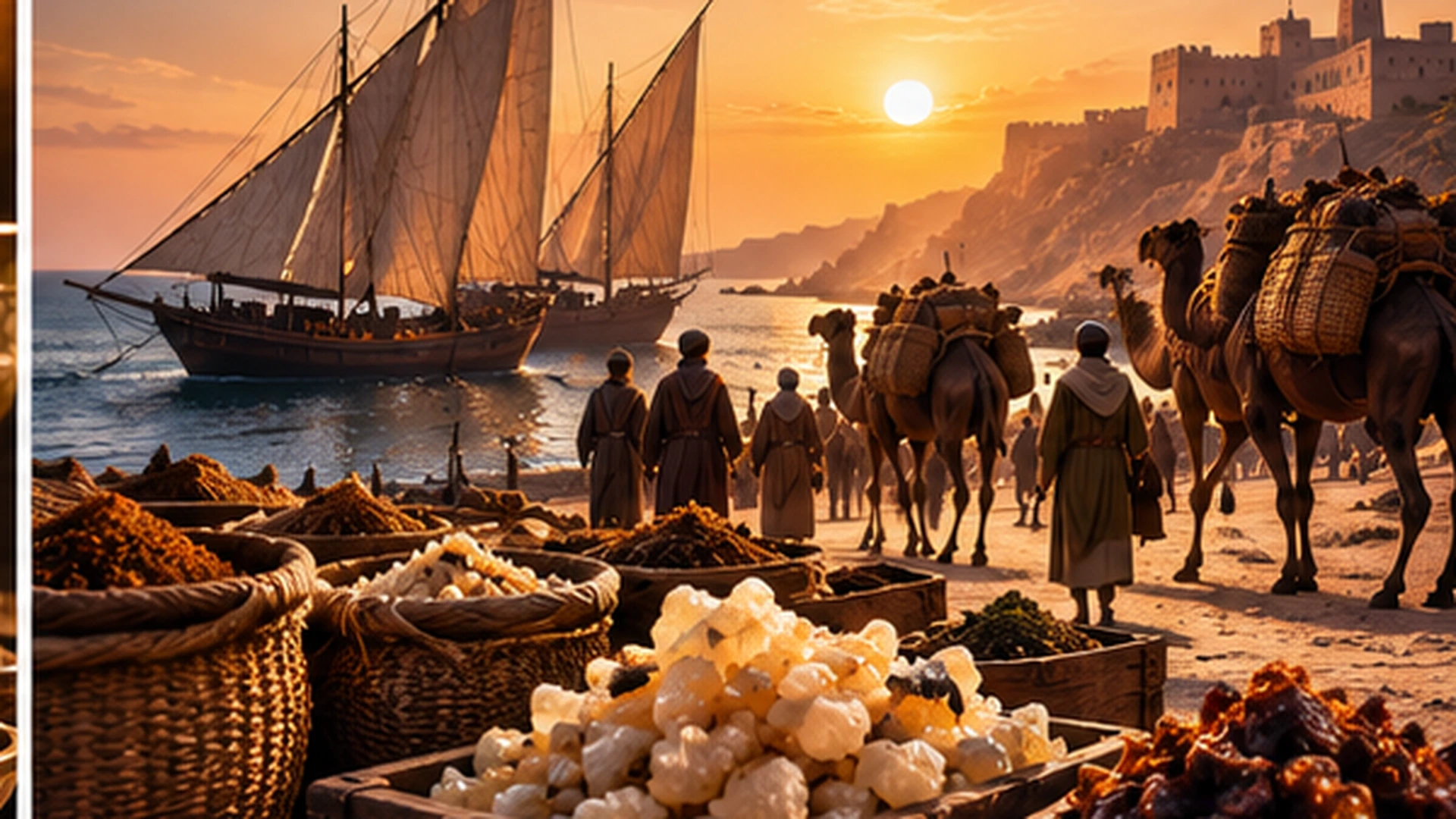
The Smithsonian’s National Museum of Asian Art describes caravans carrying incense from southern Arabia toward the Red Sea, Sinai and Mediterranean markets. Trading cities provided water, security, taxation and storage. Exchange with Greek, Roman and Persian worlds carried not only commodities but also artistic ideas and cultural practices. [4]
The Metropolitan Museum of Art likewise notes that South Arabian merchants moved frankincense and myrrh alongside goods arriving from Africa, India and farther east. Frankincense was burned in temples, palaces and private houses, while prosperity from incense trade supported distinctive artistic traditions in southwestern Arabian kingdoms. [5]
It is tempting to imagine one continuous “Incense Route,” but the historical reality involved changing networks: inland caravan roads, Red Sea crossings, Indian Ocean ports and regional middlemen. Control shifted over time, and not every resin traveled along the same path. The phrase is best used as a convenient description of interconnected routes rather than one permanent road.
| Field | Specification |
|---|---|
| Image number | 4 |
| Purpose | Visualize the ancient trade system that connected Arabian and African resins with wider markets. |
| Detailed scene | Museum-quality historical reconstruction of a late first-millennium BCE caravan station near a South Arabian port. Traders weigh pale frankincense and darker myrrh in separate woven baskets while camels rest beside stacked amphorae and textile bundles. A fortified stone settlement and inlet are visible in the distance. |
| Specific culture or historical context | South Arabian incense trade, broadly inspired by the archaeological landscapes of Khor Rori and caravan routes linked to Dhofar; no claim that one exact event is depicted. |
| People shown | Four or five Arab and African traders of varied ages, respectfully dressed and accurately proportioned. |
| Location | Dry coastal Arabian landscape with a natural harbor, caravan track and fortified stone structures. |
| Clothing | Historically plausible simple woven garments and head coverings; no fantasy armor or royal costumes. |
| Architecture | Fortified stone trade settlement and storehouses inspired by ancient South Arabian archaeology. |
| Objects | Camel tack, woven resin baskets, balance scale, amphorae, textiles and wooden crates. |
| Lighting | Late-afternoon sunlight with dusty but natural atmosphere. |
| Composition | 16:9 medium-wide scene, weighing activity in foreground, caravan and port landscape providing depth. |
| SEO-friendly filename | ancient-frankincense-myrrh-trade-route.webp |
| Image title | The Ancient Trade in Frankincense and Myrrh |
| Alt text | Historical reconstruction of traders weighing frankincense and myrrh at a South Arabian caravan station |
| Caption | Frankincense and myrrh moved through changing caravan and maritime networks linking Arabia, Africa and Mediterranean markets. |
| Recommended placement | After the ancient incense trade section. |
| Article section supported | Trade history and economic significance. |
| Important elements to avoid | No pyramids, Roman legionaries, modern saddles, giant resin heaps, readable signs, fantasy city, text overlays, logos or watermarks. |
Cultural and Religious Significance
Frankincense and myrrh did not carry one universal meaning. Their significance depended on the community, period, text and occasion. Aroma could mark sacred space, hospitality, royal status, mourning, healing, purification, beauty or ordinary household fragrance. The same resin might be devotional in one setting and commercial or cosmetic in another.
Ancient Egyptian Contexts
Ancient Egyptians imported aromatic resins from regions to the south and east, including Punt. Myrrh was used in perfume, while frankincense and other aromatics appeared in temple and funerary contexts. The Egyptian use of fragrant smoke cannot be reduced to “mysticism”; incense also carried practical sensory, social and political meaning. Imported aromatics demonstrated access to distant lands and the ability of temples or rulers to mobilize trade. [1][6]
Claims that one resin had a single fixed Egyptian meaning should be treated cautiously. Recipes changed across dynasties, the names of ancient materials do not always map neatly onto modern botanical species, and archaeological residues can be difficult to identify with certainty.
Jewish Tradition
In the Hebrew Bible, frankincense appears in offerings and in the sacred incense described in Exodus 30. Myrrh appears in the anointing oil described in the same chapter and in poetic or royal contexts elsewhere. These passages show that the resins participated in specific ritual formulations; they do not provide a generic recipe for every modern reader to reproduce. The text itself restricts certain sacred mixtures from ordinary imitation.
For educational writing, it is important to distinguish biblical description from modern commercial language. A product marketed as “biblical frankincense” may refer to a region, a species claim or simply a marketing theme. The phrase is not an independent scientific grade.
Christian Tradition
The Gospel of Matthew names gold, frankincense and myrrh among the gifts presented to Jesus. Christian interpretation later connected frankincense with worship or divinity and myrrh with mortality, suffering or burial, although those symbolic readings developed through theology and preaching rather than being explained directly in the gift scene itself.
Myrrh also appears in New Testament passion and burial narratives, while incense became important in several Christian liturgical traditions. In Roman Catholic and Eastern Orthodox worship, fragrant smoke from a censer is commonly interpreted as prayer rising toward heaven. The Metropolitan Museum of Art notes the long Judeo-Christian use of aromatic resins and their continuing presence in church incense. [7]
Arabian and Muslim-Majority Cultural Contexts
Across parts of Oman, Yemen, the Gulf and the Horn of Africa, resins and blended incense may be used to perfume homes, clothing and gathering spaces, welcome guests or accompany religious and family occasions. Practices vary by region, household and community. They should not be presented as one mandatory “Islamic ritual.” Kew documents frankincense use in churches and mosques, while Omani heritage institutions emphasize the resin’s place in Dhofar history and identity. [1][8]
Arabic terms such as luban can refer broadly to frankincense, while bakhoor usually describes a prepared incense blend that may include woods, resins, oils and other aromatics. Frankincense is therefore an ingredient or raw material; it is not automatically the same thing as every bakhoor blend.
African Production Communities and Living Heritage
A large share of the world’s resin knowledge and supply comes from African drylands, especially Somalia, Ethiopia, Eritrea, Kenya and Sudan, depending on species. Local names, grading systems, customary access rights and harvesting schedules can be as important as the Latin plant name. These communities are not merely anonymous “sources” for biblical or Western wellness products; they are contemporary custodians, workers, traders and entrepreneurs.
Culturally respectful sourcing acknowledges local expertise and economic realities. It also avoids blending unrelated Somali, Ethiopian, Omani, Jewish, Christian and Egyptian practices into a fictional universal ceremony. Shared materials do not erase differences between traditions.
Modern Uses of Frankincense and Myrrh
| Use | Responsible explanation |
|---|---|
| Raw incense | Both resins can be gently warmed alone or blended. Frankincense tends to lift a blend; myrrh adds depth and bitterness. |
| Perfumery | Olibanum materials provide citrus, mineral and balsamic effects. Myrrh materials add dark, smoky, leathery and warm resin notes. |
| Religious practice | Used in some churches, mosques, temples, homes and community ceremonies, with meanings determined by the specific tradition. |
| Cosmetics and fragrance | Extracts, essential oils and fragrance accords appear in soaps, creams, body oils and perfumes. Product composition varies widely. |
| Herbal preparations | Boswellia extracts and regulated myrrh preparations have been studied or traditionally used for limited indications, but raw incense resin is not a substitute for medical treatment. |
| Education and heritage | Museums, botanical gardens and heritage sites use the resins to explain ancient trade, plant adaptation and cultural exchange. |
Perfumery: Why the Resins Work Differently
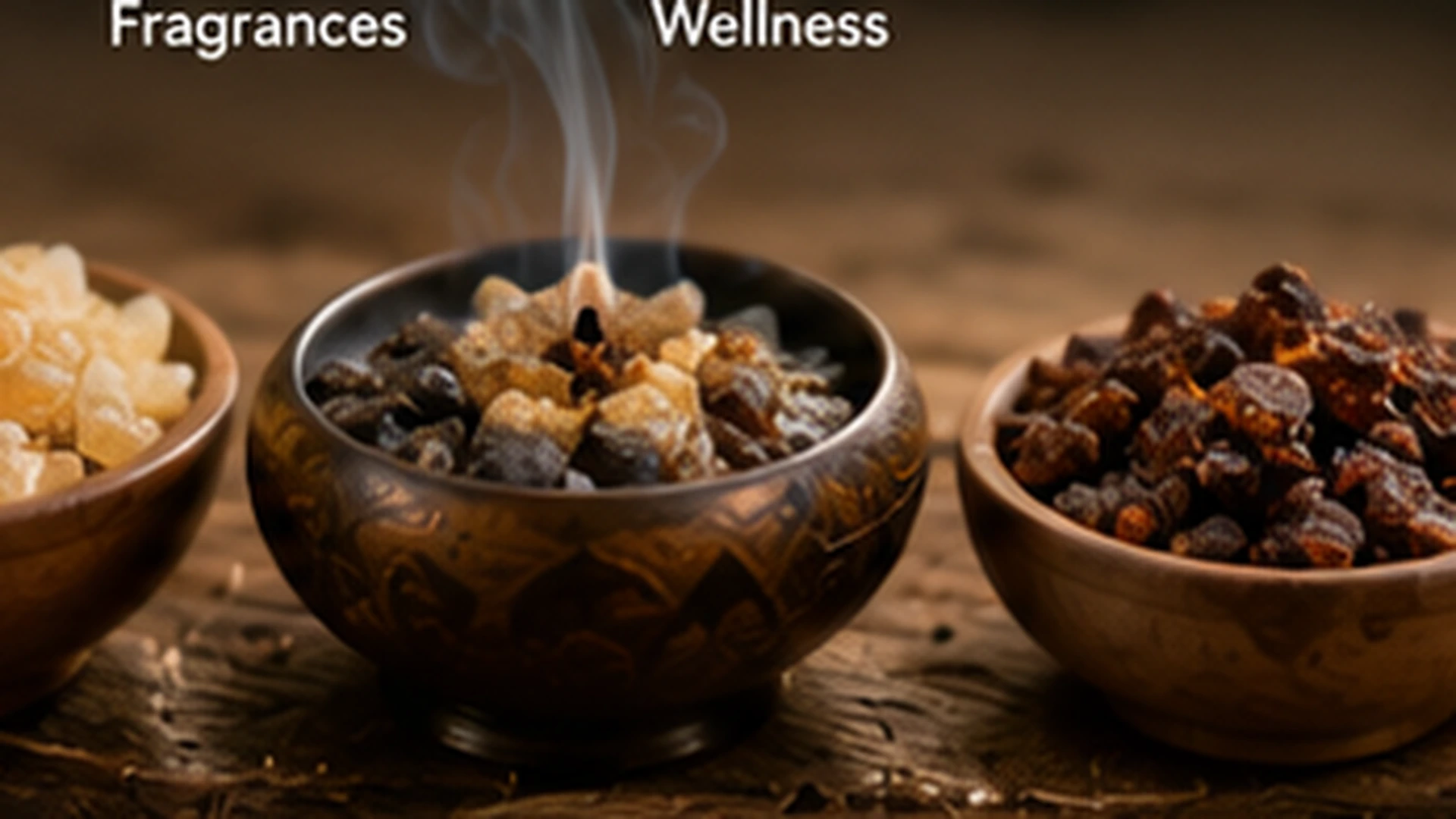
In natural perfumery, frankincense is often used to create air, lift and a dry sparkling resin quality. It can connect citrus top notes to woody or amber bases. Myrrh is usually heavier and slower. It can deepen florals, woods, spice and amber compositions, but too much may create a medicinal or bitter impression.
Steam-distilled essential oil does not smell exactly like burning resin, and solvent extracts or resinoids preserve different parts of the aroma. A perfume listing “frankincense” or “myrrh” may also use reconstructed fragrance materials rather than raw botanical extracts. That does not automatically make it fraudulent; modern perfumery often combines natural and synthetic materials for consistency, safety and conservation.
Traditional Medicine and Scientific Evidence
Both resins have long histories in traditional medicine, but traditional use is not the same as proven clinical effectiveness. Frankincense supplements often use extracts of Boswellia serrata rather than Boswellia sacra incense resin. The U.S. National Center for Complementary and Integrative Health states that there is not enough high-quality evidence to determine whether Boswellia is useful for any health condition, although small studies have investigated osteoarthritis, asthma and other conditions. [9]
The European Medicines Agency recognizes specific traditional uses of myrrh preparations for minor mouth or skin conditions under defined product standards, while also noting that strong clinical-trial evidence is insufficient and that allergic reactions may occur. This does not mean raw myrrh, essential oil and a regulated medicinal tincture are interchangeable. [10]
Do not ingest essential oils, swallow raw resin as a general remedy or replace prescribed treatment with frankincense or myrrh. People who are pregnant, breastfeeding, taking medication or managing a chronic condition should discuss concentrated products with a qualified clinician or pharmacist.
Safety When Burning Resin
Use a stable, heat-resistant burner on a nonflammable surface.
Choose an electric warmer when possible, or use only a small piece of properly ignited charcoal.
Open a window or provide cross-ventilation. Burning candles and incense adds particulate matter to indoor air. [11]
Keep smoke away from babies, people with asthma or respiratory illness, and animals that are sensitive to airborne fragrance.
Never hold hot resin or charcoal with bare hands, and never leave it unattended.
Stop if the smoke causes coughing, headache, eye irritation, nausea or breathing discomfort.
Do not assume spiritual value requires dense smoke. A small amount, symbolic unburned resin or smoke-free fragrance can be more appropriate.
How to Choose Between Frankincense and Myrrh
| Goal | Better starting point |
|---|---|
| You want a bright, clean or meditative aroma | Start with frankincense. |
| You want a dark, earthy or solemn aroma | Start with a small amount of myrrh. |
| You are new to raw resin | Choose frankincense first; it is often easier to appreciate when gently warmed. |
| You are creating a balanced blend | Use frankincense as the larger portion and add myrrh gradually. |
| You are following a religious tradition | Use the material and preparation recognized by that community rather than inventing a universal formula. |
| You want a medical product | Look for a regulated, clearly labeled preparation and professional guidance; do not use incense resin as medicine. |
| You care about sustainability | Ask for species, country, harvest information and traceable community or cooperative sourcing. |
Buying Authentic and Responsibly Sourced Resin
Appearance alone cannot guarantee authenticity, but transparent labeling reduces confusion. A reliable seller should be able to provide more than a spiritual-sounding product name.
Botanical identity, ideally including the species rather than only “frankincense” or “myrrh.”
Country or region of origin and, when possible, the harvest community or cooperative.
Whether the product is raw resin, essential oil, extract, resinoid, tincture or fragrance blend.
A realistic grade description based on local trade standards, not invented terms such as “miracle,” “prophetic” or “medical grade.”
Information about harvest timing, tree-rest practices and supply-chain relationships.
Batch testing when the material is intended for cosmetics, supplements or other regulated applications.
Conservation concerns differ by species and region. Boswellia trees can face poor regeneration, overharvesting, grazing pressure, fire, conflict and climate stress. Ethical purchasing cannot solve every problem, but traceability and fairer compensation give producers more reason and capacity to protect tree populations. [1]
| Field | Specification |
|---|---|
| Image number | 5 |
| Purpose | Show modern, careful evaluation and use of the two resins without presenting health or supernatural claims. |
| Detailed scene | A Black African woman natural perfumer in a bright contemporary workshop compares frankincense and myrrh on separate ceramic dishes. She smells one paper scent strip while a small electric resin warmer sits safely nearby. Botanical reference books, glass sample jars and handwritten batch cards are present, but no writing is readable. |
| Specific culture or historical context | Contemporary African fragrance and botanical research setting, emphasizing expertise, traceability and respectful modern use. |
| People shown | One Black African adult woman with accurate hands and natural professional posture. |
| Location | Clean artisan perfumery or botanical workshop with wooden shelves and good ventilation. |
| Clothing | Simple professional apron over contemporary neutral clothing, no costume or mystical jewelry. |
| Architecture | Modern workshop with window, wooden workbench and plain shelves. |
| Objects | Two resin dishes, scent strips, sample jars, electric warmer, notebook and botanical reference books. |
| Lighting | Soft daylight from a large window with warm highlights on the resins. |
| Composition | 16:9 editorial photograph, perfumer on the left third and organized resin workspace across the right. |
| SEO-friendly filename | frankincense-myrrh-modern-perfumery.webp |
| Image title | Frankincense and Myrrh in Modern Perfumery |
| Alt text | Black African perfumer comparing frankincense and myrrh resins in a well-ventilated fragrance workshop |
| Caption | Modern perfumers evaluate the two resins separately because their aromas, extraction methods and blending roles differ. |
| Recommended placement | After the sourcing and modern-use sections. |
| Article section supported | Perfumery, authenticity and responsible use. |
| Important elements to avoid | No open charcoal, heavy smoke, mystical altar, laboratory claims, readable labels, brand logos, watermarks, distorted fingers or white-coat medical styling. |
Common Misunderstandings
“Frankincense and myrrh come from the same tree.”
They come from different genera, Boswellia and Commiphora, although both belong to Burseraceae.
“All biblical frankincense is Boswellia sacra and all biblical myrrh is Commiphora myrrha.”
These are important modern identifications, but ancient material names and species attribution can be uncertain.
“The lighter resin is always better.”
Color is only one grading factor. Species, aroma, cleanliness, intended use and local grading standards matter.
“If it is natural, the smoke is harmless.”
Burning plant material produces particles and gases. Use small amounts and good ventilation.
“Frankincense cures inflammation and myrrh cures infections.”
Research and regulated traditional uses do not justify broad cure claims or replacing medical care.
“Myrrh represents death everywhere.”
That association is prominent in some Christian interpretations and funerary histories, but myrrh has also been used in perfume, anointing, incense and household fragrance.
“Using both resins recreates an ancient ritual.”
The same materials appeared in many different formulations. Without a specific documented tradition, a modern blend is simply a modern blend.
“A high price guarantees ethical sourcing.”
Luxury branding does not prove species identity, fair compensation or sustainable harvesting. Traceability matters more.
Key Takeaways
Frankincense and myrrh are related aromatic gum-resins, not the same substance.
Frankincense comes from Boswellia trees and is usually brighter, lighter and more citrus-balsamic.
Myrrh comes mainly from Commiphora trees and is usually darker, earthier, bitter and smoky.
Their major source regions overlap across southern Arabia and the Horn of Africa, but species distributions differ.
Ancient value came from rarity, aroma, portability, ritual use and long-distance trade.
Cultural meanings vary across Egyptian, Jewish, Christian, Arabian, African and other traditions.
Modern health claims should remain evidence-based; incense resin, essential oil and standardized herbal extracts are not interchangeable.
Small amounts, ventilation and traceable sourcing are central to responsible modern use.
People Also Ask
What is the main difference between frankincense and myrrh?
Frankincense comes from Boswellia trees and usually has a brighter citrus-pine, balsamic aroma. Myrrh comes from Commiphora trees and usually smells darker, earthy, bitter and smoky.
Do frankincense and myrrh come from the same place?
Their source regions overlap in southern Arabia and the Horn of Africa, but the main tree species have different native ranges. Frankincense is strongly associated with Somalia, Yemen and Oman; myrrh with Ethiopia, Kenya, Somalia and southern Arabia.
Why were frankincense and myrrh valuable?
They were rare, fragrant, portable and useful in worship, perfume, medicine and elite households. Long-distance demand supported caravan cities, ports and merchant networks.
What did frankincense and myrrh symbolize?
There is no single universal meaning. In later Christian interpretation, frankincense often represented worship or divinity and myrrh mortality or burial. Other cultures connected them with fragrance, status, purification, anointing, hospitality or sacred space.
Can the resins be burned together?
Yes. Frankincense can brighten the blend while myrrh adds depth. Use a small amount, a heat-safe method and good ventilation.
Which is better, frankincense or myrrh?
Neither is universally better. Frankincense is usually easier for people who prefer bright, clean resin aromas; myrrh suits those who prefer earthy, solemn and bitter notes.
Is frankincense the same as olibanum?
Olibanum is a common trade and perfumery name for frankincense. It still does not identify one exact Boswellia species unless the label provides it.
Is myrrh safe to use on the skin?
Raw resin and essential oil should not be applied casually. Some standardized myrrh preparations have regulated traditional uses, but allergic reactions and irritation can occur. Follow product instructions and professional advice.
Frequently Asked Questions
Are frankincense and myrrh tree sap?
They are often casually called sap, but “oleo-gum-resin” is more precise. The aromatic exudate hardens after it leaves damaged or deliberately tapped bark.
What color is real frankincense?
Depending on species and grade, it may be cream, pale yellow, golden, greenish or reddish. Color alone does not prove authenticity or quality.
What color is real myrrh?
Commercial myrrh is commonly amber, reddish-brown or dark brown, often in irregular chunks. Different Commiphora resins can look different.
Does myrrh always smell bitter?
Bitterness is a common impression, especially when burned hot, but gentle warming can reveal warm balsamic, smoky and slightly sweet notes.
Can I put resin directly on a candle flame?
No. Resin can flare, smoke heavily or damage the candle. Use a purpose-made electric warmer or a properly prepared charcoal burner on a heat-safe surface.
Can frankincense or myrrh be eaten?
Do not assume raw incense resin is food or medicine. Some cultures and products use specific resins in controlled ways, but species, cleanliness and preparation matter. Follow qualified medical or product guidance.
Are essential oils the same as resin?
No. Essential oil captures volatile compounds through distillation, while raw resin contains nonvolatile components as well. Their scent, chemistry, dose and safe use differ.
What is “sweet myrrh”?
The term may refer to opoponax or other Commiphora resins rather than Commiphora myrrha. Ask for the botanical name.
What is the best frankincense grade?
There is no universal best grade for every purpose. Large pale tears may be prized for appearance, while a darker or different species may perform better for chewing, incense, distillation or perfumery.
Did the Magi bring essential oils?
The Gospel text names frankincense and myrrh as valuable gifts but does not describe modern bottled essential oils. Raw resins or prepared aromatic commodities are historically more plausible categories.
Can Christians use frankincense and myrrh at home?
Practices differ by denomination and conscience. Some Christians use incense devotionally, while others do not. The materials should not be treated as magical guarantees.
How should resin be stored?
Keep it sealed in a cool, dry, dark place away from heat and strong odors. Label the species and source when known, because unlabeled resins are easy to confuse.
Can I use incense when someone has asthma?
Smoke may trigger symptoms. Choose a smoke-free alternative, avoid burning around the person and follow their medical guidance.
How can I support resin-producing communities?
Buy from traceable suppliers, cooperatives or businesses that name the source, explain harvest relationships and pay producers fairly. Avoid products that erase the people behind the resin.
Conclusion
Frankincense and myrrh are often mentioned together because they traveled through overlapping landscapes, trade routes and religious histories. Their partnership, however, should not hide their differences. Frankincense is a Boswellia resin usually valued for a bright, balsamic lift. Myrrh is a Commiphora resin usually valued for darker, bitter and earthy depth.
Understanding the two materials requires more than memorizing a symbolic slogan. It means recognizing the trees, the dryland environments that sustain them, the harvesting knowledge of Arabian and African communities, the merchants and ports that moved them, and the many cultures that gave fragrant resin different meanings.
The most responsible modern approach is simple: identify the botanical material, respect the specific tradition, avoid medical or supernatural guarantees, burn only small amounts with ventilation and support traceable supply chains that value both people and trees.
Final Summary
| Final Summary |
|---|
| Frankincense and myrrh are distinct aromatic resins from related plant genera. Their scents, colors and uses differ, but both became culturally important through ancient trade, worship, perfume and healing traditions. Study them with botanical precision, historical context, safe handling and respect for the communities that continue to harvest and use them. |
Research Sources and Further Reading
[1] Royal Botanic Gardens, Kew — Boswellia sacra, Plants of the World Online
[2] Royal Botanic Gardens, Kew — Commiphora myrrha, Plants of the World Online
[3] UNESCO World Heritage Centre — Land of Frankincense
[4] Smithsonian National Museum of Asian Art — Ancient Incense Trade
[5] Metropolitan Museum of Art — Trade between Arabia and the Empires of Rome and Asia
[6] Global Egyptian Museum — Myrrh
[7] Metropolitan Museum of Art — Offering Incense
[8] National Museum of Oman — The Land of Frankincense
[9] U.S. National Center for Complementary and Integrative Health — Boswellia: Usefulness and Safety
[10] European Medicines Agency — Myrrha herbal medicinal product
[11] U.S. Environmental Protection Agency — Sources of Indoor Particulate Matter
[12] Royal Botanic Gardens, Kew — Commiphora guidottii and related myrrh information
[13] Primary religious texts — Exodus 30; Matthew 2:11; Mark 15:23; John 19:39
5. Internal Linking Plan
| Suggested internal page | Anchor/placement | Purpose |
|---|---|---|
| Sacred Resins and Incense: A Beginner’s Guide | Link from the first definition of aromatic resin. | Build the incense-materials topic cluster. |
| The Ancient Incense Route: Arabia, Africa and the Mediterranean | Link from the trade-history section. | Expand historical search intent without overloading this page. |
| How Frankincense Is Harvested | Link from the harvesting section. | Support Boswellia-specific queries. |
| Myrrh Resin: Species, Scent and Traditional Uses | Link from the Commiphora section. | Support myrrh-specific queries. |
| How to Burn Natural Resin Incense Safely | Link from the safety section. | Provide a deeper smoke, charcoal and ventilation guide. |
| Incense in African Spiritual and Cultural Traditions | Link from the living-heritage section. | Add culturally specific examples without claiming a single African tradition. |
| How to Honor Your Ancestors | Link contextually where incense may accompany remembrance in some families. | Connect to the ancestor-remembrance cluster without claiming incense is required. |
| Dreaming About Smoke or Incense | Link only if a relevant dream article exists. | Connect symbolic content while avoiding fixed predictions. |
6. Supporting Article Recommendations
| Supporting article | Why it deserves a separate page |
|---|---|
| Boswellia Species Explained: Sacra, Papyrifera, Frereana and Serrata | Different species are frequently confused in commerce and wellness content. |
| Myrrh Types Explained: Commiphora myrrha, Guidottii and Opoponax | Clarify trade names and botanical uncertainty. |
| The Incense Route: How Aromatic Resins Connected Arabia and Africa | Target historical and trade-route queries. |
| How to Identify Quality Frankincense Resin | Address grade, source, scent and traceability without turning this page into a buyer guide. |
| How to Burn Resin Incense Safely Indoors | Expand ventilation, charcoal, electric warmers and respiratory cautions. |
| Frankincense in Christianity: History, Worship and Symbolism | Serve denomination-specific and biblical search intent. |
| Aromatic Resins in Ancient Egypt: Evidence and Uncertainty | Explore Punt, temple incense, perfume and funerary materials carefully. |
| Sustainable Frankincense: Trees, Harvesters and Supply Chains | Build environmental and ethical authority. |
Article Information
- Publisher
- Ancestral Temple
- Editor
- Ancestral Temple
- Last updated
- Jul 26, 2026
- Last reviewed
- Jul 26, 2026
- Content version
- 9b82b93887
This educational article should be read as cultural and spiritual information, not as medical, legal, financial, or emergency advice.
Helpful Related Guidance
Explore This Topic
Related Topic Cluster
Dreams & Symbolism
About the Author
 Ancestral Temple
Spiritual guide and practitioner with decades of experience in ancestral wisdom, rituals, and divine guidance.
Related Posts
View All








Leave a Comment
We'd love to hear your thoughts.