
Workplace Favor and Promotion Rituals: Meaning, Ethics and Cultural Beliefs
Pillar Article

Quick Summary
Workplace advancement carries practical and emotional weight. A promotion can bring higher pay, authority, security, recognition and a stronger sense that effort has been seen. Whe...
Workplace advancement carries practical and emotional weight. A promotion can bring higher pay, authority, security, recognition and a stronger sense that effort has been seen. When the process feels uncertain, many people combine ordinary career preparation with prayer, blessing, meditation, symbolic objects or cultural traditions associated with success and opportunity.
The phrase “workplace favor” needs careful handling. In religious language, favor may mean grace, goodwill, an open door or help in using one’s abilities well. In organizational language, favoritism means unfair preference based on personal relationships or irrelevant characteristics rather than competence and transparent criteria. The first can be a sincere spiritual hope. The second can damage trust, exclude qualified workers and become discriminatory or corrupt.
This guide explains how workplace favor and promotion rituals are interpreted, how several traditions approach work and prosperity, and where ethical boundaries must be drawn. It also provides a practical plan for asking for advancement without manipulation, bribery or false promises.
| Quick Answer Workplace favor and promotion rituals are prayers, blessings, symbolic actions or reflective routines used to seek confidence, opportunity, goodwill or success at work. They can support focus and meaning, but they do not guarantee promotion or control a manager’s decision. Ethical advancement depends on competence, trustworthy conduct, clear evidence of impact, fair criteria and respectful communication. Any practice involving bribery, coercion, secret substances, surveillance, sexual pressure, retaliation or promises to dominate another person crosses a serious boundary. |
|---|
Workplace Favor, Favoritism and Fair Opportunity
In ordinary speech, a worker may ask for “favor” before an interview, evaluation or promotion review. The intention may be confidence, clear communication, supportive relationships or an opportunity to demonstrate ability. Used this way, favor is close to blessing or goodwill. It does not need to mean bypassing standards.
Favoritism is different. It occurs when a decision-maker gives an advantage because of friendship, family connection, loyalty, gifts, romance, shared identity or another factor unrelated to the role. The International Labour Organization emphasizes equality of opportunity and treatment across the employment relationship, including promotion, training and skills development. It also describes merit and the inherent requirements of the job as central reference points for fair decisions. [1][2]
Not every professional relationship is improper. Mentors, sponsors and colleagues can provide information, feedback and visibility. Ethical sponsorship makes a qualified worker’s achievements visible; it does not require the sponsor to ignore criteria or conceal conflicts of interest. The key questions are whether the opportunity is transparent, whether others can compete fairly and whether the recommendation is supported by evidence.
| Concept | Meaning | Ethical test |
|---|---|---|
| Favor or blessing | Hope for goodwill, opportunity, clarity or divine help | Does it preserve another person’s freedom and the organization’s criteria? |
| Mentoring | Advice, feedback and skill development | Is the relationship professional and accessible without coercion? |
| Sponsorship | A senior person advocates for a qualified employee | Is advocacy based on demonstrated readiness and transparent expectations? |
| Networking | Building reciprocal professional relationships | Are interactions honest rather than transactional or deceptive? |
| Favoritism | Unfair preference unrelated to job requirements | Would the same decision be defensible if relationships were disclosed? |
| Bribery | Offering value to improperly influence a decision | It is unethical and may be illegal; do not proceed. |
What Is a Promotion Ritual?
A promotion ritual is any repeated or symbolic practice used before a career decision. It may be formal prayer, a visit to a place of worship, a family blessing, meditation, dressing with special care, organizing a workspace, carrying an approved religious item, writing an intention or reviewing accomplishments in a consistent order. The same outward act can have different meanings. A candle may belong to a specific liturgy, a private devotional practice or simple home ambience. A notebook may be a prayer journal or a performance record.
The safest rituals are those that organize the seeker rather than attempt to control the evaluator. A useful ritual can reduce distraction, remind a worker of values and create a transition from anxiety to action. It becomes ethically dangerous when it promises domination, secretly targets a named person, uses another person’s belongings without consent, places substances in an office, encourages stalking or frames sexual access, gifts or money as a path to advancement.
A Safe and Ethical Promotion-Preparation Ritual
Choose a private and physically safe setting. Do not burn incense or candles in a workplace unless explicitly permitted and safe.
Name the outcome without claiming entitlement: “I seek a fair opportunity to present my readiness for greater responsibility.”
Review the role description, promotion policy and evaluation criteria.
List three to five results with dates, numbers, feedback or examples of business impact.
Identify one skill gap and the plan already underway to close it.
Pray, meditate or breathe according to your own tradition for integrity, courage and clear speech—not control over another person.
Rehearse a respectful request and prepare questions about criteria, timeline and next steps.
End by choosing one concrete action: schedule the meeting, update the portfolio, request feedback or enroll in training.
| A grounded intention “May I speak truthfully about my work, receive fair consideration, accept useful feedback and act with integrity whether the answer is yes, not yet or no.” |
|---|
Christian Prayer for Work and Advancement
Christian traditions do not contain one universal “promotion ritual.” Prayer about work may ask for vocation, daily provision, justice, wisdom, courage or the ability to serve others. The United States Conference of Catholic Bishops publishes a Prayer for Work that thanks God for human talents and asks for work that is decent and fair, connecting employment with dignity and stewardship rather than personal status alone. [3]
A Christian worker may pray before a review, but the ethical emphasis remains truthful witness, service, justice and responsible use of gifts. Prayer should not be presented as a technique that forces a supervisor’s decision. Nor should a denied promotion automatically be interpreted as weak faith or divine punishment. Organizations can make biased or poorly informed decisions, and faithful workers can still need feedback, advocacy or a formal complaint process.
Islamic Prayer, Trustworthiness and Effort
Islamic teaching also resists the idea that prayer replaces effort or justice. Qur’an 28:26 describes the desirable worker as strong and trustworthy. Qur’an 4:58 commands that trusts be returned to those entitled to them and that judgments between people be made with justice. Qur’an 53:39 connects a person’s account with what they strive for, while Qur’an 62:10 joins prayer with going out to seek God’s bounty. [4][5][6][7]
A Muslim professional may make du‘a for lawful provision, beneficial work, confidence or a just outcome. The prayer should be paired with competence, amanah (trust), honest representation of results and respect for other candidates. It is inappropriate to invent Arabic phrases, sell a guaranteed “promotion du‘a,” or claim that a manager’s mind can be spiritually overridden.

Ganesha, New Beginnings and Career Beliefs
In Hindu traditions, Ganesha is widely associated with beginnings and the removal of obstacles. Museum descriptions identify him as a deity invoked before new undertakings and believed by devotees to bestow success or help clear obstacles. [8][9] This can make Ganesha relevant to starting a role, launching a business, beginning training or approaching a major transition.
The tradition should not be reduced to a universal office charm. Hindu practice varies by family, region, lineage and temple. A small image in a home or workspace may have devotional meaning for a practitioner, but outsiders should not copy sacred gestures carelessly or treat the image as a commercial device that guarantees promotion. The ethical interpretation is that prayer can accompany disciplined beginnings, wise action and humility.

Ebisu, Daikoku and Japanese Prosperity Beliefs
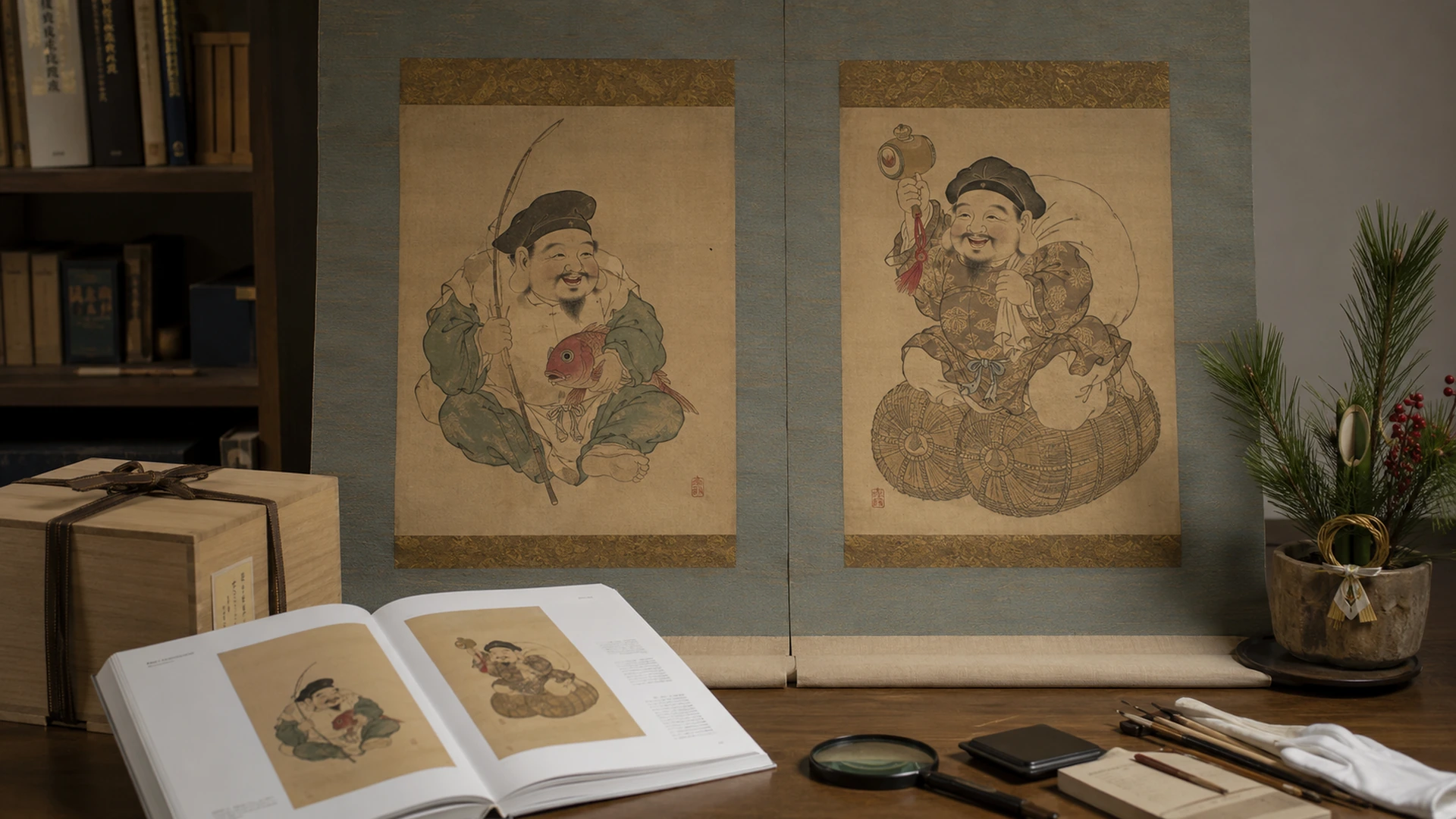
Japanese visual and religious culture includes deities associated with good fortune and prosperity. British Museum records describe Ebisu as one of the Seven Gods of Good Fortune and associated with wealth, often shown with a fishing rod and sea bream. A nineteenth-century hanging scroll pairs Ebisu with Daikoku, whose treasure sack and mallet are linked with wealth; paintings of these gods were popularly displayed at New Year to encourage fortune and prosperity. [10][11]
These traditions belong to specific religious, artistic and seasonal contexts. They are not evidence that hanging an image in an office will secure a promotion. A respectful interpretation recognizes the cultural history of commerce, livelihood and good fortune while keeping employment decisions within transparent organizational processes.

Astrology, Manifestation and Workplace Advancement
Some people choose promotion dates, colours or affirmations through astrology or manifestation practices. These can function as symbolic planning systems or motivational routines. They do not provide scientific evidence that planets, repeated phrases or visualization cause a supervisor to promote someone. A ritual may help a person organize thoughts or feel ready, but the causal work remains the person’s preparation, communication, opportunity and the organization’s decision process.
A responsible manifestation statement avoids entitlement and coercion. “I am preparing to show that I can lead this work” is safer than “My manager must choose me.” The first guides behaviour. The second treats another person’s agency as an obstacle to be overridden.
How to Build Workplace Favor Ethically
Positive regard at work is usually built through repeated evidence. Colleagues and managers learn whether a person keeps commitments, communicates risks early, gives credit, develops others and handles pressure without creating avoidable harm. This kind of trust can make a promotion case stronger without becoming favoritism.
Understand the next role. Obtain the job profile, competency framework or examples of work performed at that level.
Track outcomes. Record revenue protected or generated, costs reduced, time saved, quality improved, risks managed, customers served and people developed.
Ask for feedback before the promotion cycle. Give your manager time to identify missing evidence rather than raising the question only after decisions are complete.
Increase visibility without taking credit from others. Share concise updates that name contributors and explain business impact.
Seek both mentoring and sponsorship. A mentor helps you improve; a sponsor can describe your readiness in rooms where you are absent.
Build cross-functional trust. Promotions often require evidence that you can work beyond your current team.
Prepare a transition plan. Show how current responsibilities can be handed over rather than making yourself seem impossible to replace.
State the request clearly. Do not rely on hints, spiritual signs or the hope that effort will automatically be noticed.
A Respectful Promotion Conversation
| Suggested wording “I would like to discuss my readiness for the [role/level]. Over the past [period], I delivered [two or three outcomes], took responsibility for [scope] and developed [skill]. Could we review the promotion criteria, where my evidence is strong, what gaps remain and the timeline for a formal decision?” |
|---|
The conversation should produce information, not only praise. Ask what level of scope, independence, influence and results is expected. Ask who participates in the decision and when evidence must be submitted. After the meeting, send a short factual summary of agreed actions. Documentation protects clarity; it should not be used as a threat.
When a Promotion Does Not Happen
A “not yet” answer can be useful if it includes specific evidence gaps, opportunities to demonstrate readiness and a review date. A vague answer repeated indefinitely may require a more formal approach. Ask for written criteria, request examples of the expected level and compare the explanation with policy and past feedback.
Request a development plan with measurable milestones and a date for reassessment.
Ask whether budget, headcount or restructuring—not performance—prevented the decision.
Seek a second perspective from a mentor, union representative, HR partner or ombudsperson where available.
Preserve performance reviews, job postings, relevant emails and your own contemporaneous notes.
Use formal grievance, anti-discrimination or whistleblowing channels when facts support that step.
Consider an external opportunity if the organization cannot offer transparent growth or repeatedly changes the rules.
Employment law differs by country and contract. This article is educational, not legal advice. A qualified local adviser can assess discrimination, retaliation, contractual promises or corruption concerns.
Ethical Boundaries: What Promotion Rituals Must Never Do
Do not offer money, gifts, sexual access, private services or anything of value to influence a promotion decision.
Do not place oils, powders, liquids, smoke, food or unknown substances on a colleague, desk, doorway or office property.
Do not steal photographs, hair, clothing, signatures, personal data or private documents for a ritual.
Do not stalk a manager, monitor private accounts or engineer repeated “accidental” encounters.
Do not spread rumours, sabotage another candidate or present their failure as part of your spiritual success.
Do not claim that discrimination or abuse occurred because a worker lacked faith or performed a ritual incorrectly.
Do not pay a practitioner who guarantees a promotion, demands secrecy, requests escalating fees or threatens spiritual harm if you stop.
Do not use religion to pressure employees or require participation in workplace prayer.
| Red-flag promise “I can control your boss, remove your rival or guarantee promotion within a fixed number of days” is not a credible ethical service. It combines impossible certainty with coercive intent and may be part of a financial scam. |
|---|
People Also Ask
What is a workplace favor ritual?
It is a prayer, blessing, symbolic practice or reflective routine used to seek confidence, opportunity or goodwill at work. It should support ethical action rather than attempt to control a decision-maker.
Can prayer help me get promoted?
Prayer may support confidence, patience, values and clear thinking. It does not guarantee promotion. Advancement still depends on evidence, criteria, opportunity and human decisions.
Is asking for favor the same as workplace favoritism?
No. Asking for fair opportunity or spiritual help is different from receiving an unfair advantage based on relationships, gifts or irrelevant characteristics.
How do I ask my boss for a promotion?
Present specific results, explain the scope you are already handling, ask to review the role criteria and agree on gaps, next steps and a decision timeline.
Are manifestation rituals for promotion scientifically proven?
No. Visualization and routines may help motivation or preparation, but they have not been shown to cause another person to grant a promotion.
What should I do about an unfair promotion?
Document facts, review policy, request criteria and feedback, and use HR, union, ombuds or legal channels appropriate to your location and circumstances.
Frequently Asked Questions
1. Can I keep a religious object at my desk?
That depends on workplace policy, safety rules and local law. A small personal item may be permitted, but it should not obstruct work, pressure colleagues or include unsafe flame, smoke or substances.
2. Is networking a form of favoritism?
Not automatically. Ethical networking exchanges information and builds professional relationships. Favoritism occurs when relationships replace fair criteria or create undisclosed conflicts of interest.
3. Should I tell my manager that I performed a promotion ritual?
Usually the relevant workplace information is your readiness, results and request. Personal faith can remain private unless you choose to share it and the context is appropriate.
4. Can Ganesha worship guarantee career success?
Devotees may pray to Ganesha in connection with beginnings and obstacles, but no religious practice guarantees a promotion. The tradition should be represented respectfully and within Hindu context.
5. Is Ebisu a Japanese god of business?
Ebisu is one of Japan’s Seven Gods of Good Fortune and is associated with wealth and livelihood in art and popular belief. This does not turn his image into a guaranteed business or promotion device.
6. What evidence should I bring to a promotion meeting?
Bring a concise role-aligned portfolio: major outcomes, metrics, feedback, examples of leadership, scope already handled, skills developed and a plan for the next level.
7. What is the best prayer for favor with a boss?
There is no universal formula. A safer prayer asks for justice, courage, truthful speech, wisdom and the ability to accept a fair outcome—not control of another person.
8. Should I leave if promotion criteria are always vague?
Persistent opacity is a warning sign. Seek written expectations and a dated plan first. If the organization cannot provide a credible path, external opportunities may be reasonable.
Key Takeaways
Workplace favor can mean goodwill or blessing; workplace favoritism means unfair preference.
A safe ritual organizes the seeker’s values, evidence and courage rather than trying to control a manager.
Christian and Muslim teachings connect work with dignity, justice, trust, effort and responsibility.
Ganesha and Japanese prosperity imagery belong to distinct cultural and religious histories and do not guarantee promotion.
Promotion readiness should be demonstrated through results, scope, competence, trustworthiness and a clear request.
Bribery, sexual coercion, sabotage, secret substances, stolen personal items and guaranteed-control claims are unacceptable.
If a process appears unfair, document facts and use appropriate organizational, union, regulatory or legal channels.
Conclusion
Workplace promotion sits at the meeting point of ambition, identity, livelihood and institutional power. It is understandable that people seek spiritual reassurance when the outcome is uncertain. Prayer and culturally meaningful symbols can help a worker remember who they want to be under pressure. Their value is strongest when they deepen integrity rather than promise control.
The most reliable promotion practice is not secret. It is visible over time: competent work, trustworthy conduct, documented results, respectful relationships, clear communication and a willingness to keep learning. A blessing may accompany that path. It should never replace it—or justify harming another person to move ahead.
Article Information
- Publisher
- Ancestral Temple
- Editor
- Ancestral Temple
- Last updated
- Jul 30, 2026
- Last reviewed
- Jul 30, 2026
- Content version
- f3ab3ae067
This educational article should be read as cultural and spiritual information, not as medical, legal, financial, or emergency advice.
Helpful Related Guidance
Explore This Topic
Related Topic Cluster
Workplace Favor And Promotion Rituals
Complete Guide Betrayal and Infidelity Healing Rituals: Spiritual Practices for Peace and RecoveryAbout the Author
 Ancestral Temple
Spiritual guide and practitioner with decades of experience in ancestral wisdom, rituals, and divine guidance.
Related Posts
View All









Leave a Comment
We'd love to hear your thoughts.