
Job-Interview Prayers and Rituals: Cultural Beliefs About Confidence and Favor
Pillar Article

Quick Summary
A job interview concentrates uncertainty into a short conversation. A candidate may have prepared for weeks, yet still worry about forgetting examples, misreading the interviewer o...
A job interview concentrates uncertainty into a short conversation. A candidate may have prepared for weeks, yet still worry about forgetting examples, misreading the interviewer or losing an opportunity that matters to the household. In many religious and cultural settings, people respond to that uncertainty with prayer, blessing, scripture, a visit to a place of worship, an amulet or a small personal routine.
These practices do not all mean the same thing. A Christian may pray for courage and truthful speech. A Muslim may recite the Qur’anic prayer of Moses for ease and clarity, or perform istikhara while deciding whether a position is good. A Hindu devotee may invoke Ganesha before a new undertaking. A Sikh may offer Ardas. A Jewish applicant may draw on Psalms about divine favor and the work of human hands. A Buddhist practitioner may use breath awareness to meet anxiety without suppressing it. In Japan, some people carry an omamori associated with success or visit a shrine connected with business prosperity.
None of these traditions guarantees employment. An interview remains a human selection process shaped by qualifications, communication, organizational needs, bias, competition and chance. The most responsible approach combines spiritual meaning with honest preparation, respect for other applicants and freedom from manipulative promises.
Quick Answer
A job-interview prayer or ritual is a faith-based or personally meaningful practice used to seek calm, clarity, courage, guidance, blessing or acceptance before a hiring conversation. Examples include prayer, scripture, dua, Ardas, devotional offerings, carrying an amulet, mindful breathing or following a consistent preparation routine. Such practices may support emotional readiness, but they cannot guarantee an offer and should never replace research, practice, truthful answers or professional care for severe anxiety.
What Are Job-Interview Prayers and Rituals?
The phrase includes several different activities. Prayer addresses God, a deity or a sacred reality. It may ask for courage, wisdom, right speech, protection, discernment or a good outcome. Blessing may be offered by the applicant, a relative, clergy member or community. Devotional practice can include reciting scripture, visiting a shrine, making an offering or carrying an object associated with protection or success. Personal ritual may be religious or secular: arranging materials in the same order, breathing slowly, repeating a meaningful sentence or calling a trusted person before entering the interview.
The modern job interview is relatively recent, so most religions do not possess an ancient rite written specifically for a video call with a recruiter. What people commonly call a “job-interview prayer” is usually an application of broader traditions concerning work, vocation, speech, decision-making, new undertakings, courage or livelihood.
That distinction matters. A Qur’anic prayer should not be marketed as a magic formula created for corporate hiring. A Ganesha devotion belongs to a living Hindu religious world, not a generic productivity hack. An omamori is not simply a decorative good-luck pouch. A personal breathing routine may be useful without being called Buddhist unless it is actually practiced within that framework.
Responsible language names the tradition, explains the broader purpose and avoids promising that a specific sequence of words will compel another person to hire the speaker.
Confidence, Favor and the Meaning of a “Successful” Interview
Three hopes commonly appear in interview prayers: confidence, favor and success.
Confidence does not have to mean feeling no fear. It can mean remembering one’s preparation, speaking at a workable pace, acknowledging uncertainty and recovering after a difficult question. A prayer for confidence may ask for steadiness rather than dominance.
Favor has different theological meanings. It may refer to grace, goodwill, a fair hearing, appropriate timing or an outcome that contributes to the person’s wellbeing. It should not be confused with favoritism. Ethical prayer does not require the interviewer to ignore stronger evidence, discriminate against another applicant or surrender independent judgment.
Success can be defined more broadly than receiving an offer. It may include presenting qualifications honestly, learning whether the workplace is safe, asking useful questions, recognizing that the job is not suitable or leaving the conversation with dignity. In Islamic istikhara, for example, the goal is guidance toward what is good rather than control over one desired result.[8]
A responsible prayer can therefore include openness: “Help me communicate clearly, recognize what is true about this opportunity and accept the outcome without losing my sense of worth.” This kind of language supports purpose without turning rejection into proof of spiritual failure.
Why Interviews Produce Anxiety
Interviews combine evaluation, uncertainty and social performance. Candidates must remember relevant experiences, interpret questions, monitor body language and present themselves while knowing that the result may affect income, identity and family plans.
Research confirms that interview anxiety is not imaginary. A large study of more than 8,000 applicants in virtual interviews found that higher interview anxiety was associated with lower performance ratings and less favorable reactions to the hiring process.[3] Other studies show that anxiety does not affect every person or every interview in the same way, but self-focused attention, rumination and fear of evaluation can interfere with fluent communication.
The goal should not be to shame a nervous candidate or demand perfect calm. Experimental work with Chinese students in simulated interviews found that reappraisal and acceptance reduced anxiety more effectively than suppression.[4] A separate set of performance studies found that reframing arousal as excitement could improve performance compared with trying to force oneself to calm down.[5]
Prayer can fit this approach when it helps a person acknowledge anxiety and redirect attention toward values, preparation and service. It becomes less helpful when it adds a second layer of fear—such as believing that one missed word, interrupted ritual or unwanted thought will spiritually ruin the interview.
Christian Traditions: Vocation, Courage and Honest Speech
Christian approaches to employment usually draw from broader themes of vocation, work, daily provision, courage and service. The Church of England’s vocation resources ask people to recognize gifts, move beyond feelings of inadequacy and speak courageously about how those gifts may serve others.[9] Its daily prayer cycle also includes workers, commerce, stressful employment and people who are unemployed.
Catholic tradition frequently connects work with Saint Joseph. Vatican teaching presents Joseph the worker as an example of faithful service and describes work as part of human vocation and dignity, while also praying that people not be denied employment or fair pay.[10]
A Christian prayer before an interview may therefore ask for truthful speech, humility, memory, courage, discernment and concern for the people the work would serve. It need not ask God to make the interviewer prefer the applicant regardless of merit.
A simple tradition-consistent structure is:
Gratitude: Give thanks for the opportunity, skills, teachers and people who offered support.
Confession or honesty: Acknowledge fear, exaggeration, resentment or desperation without pretending to be spiritually composed.
Petition: Ask for wisdom, clear speech, courage and fair treatment.
Surrender: Entrust the outcome to God and commit to act honestly.
Different Christian denominations use different language, scripture and forms of prayer. Applicants seeking a formal blessing should follow their own church’s teaching rather than combining unrelated traditions into an invented ritual.
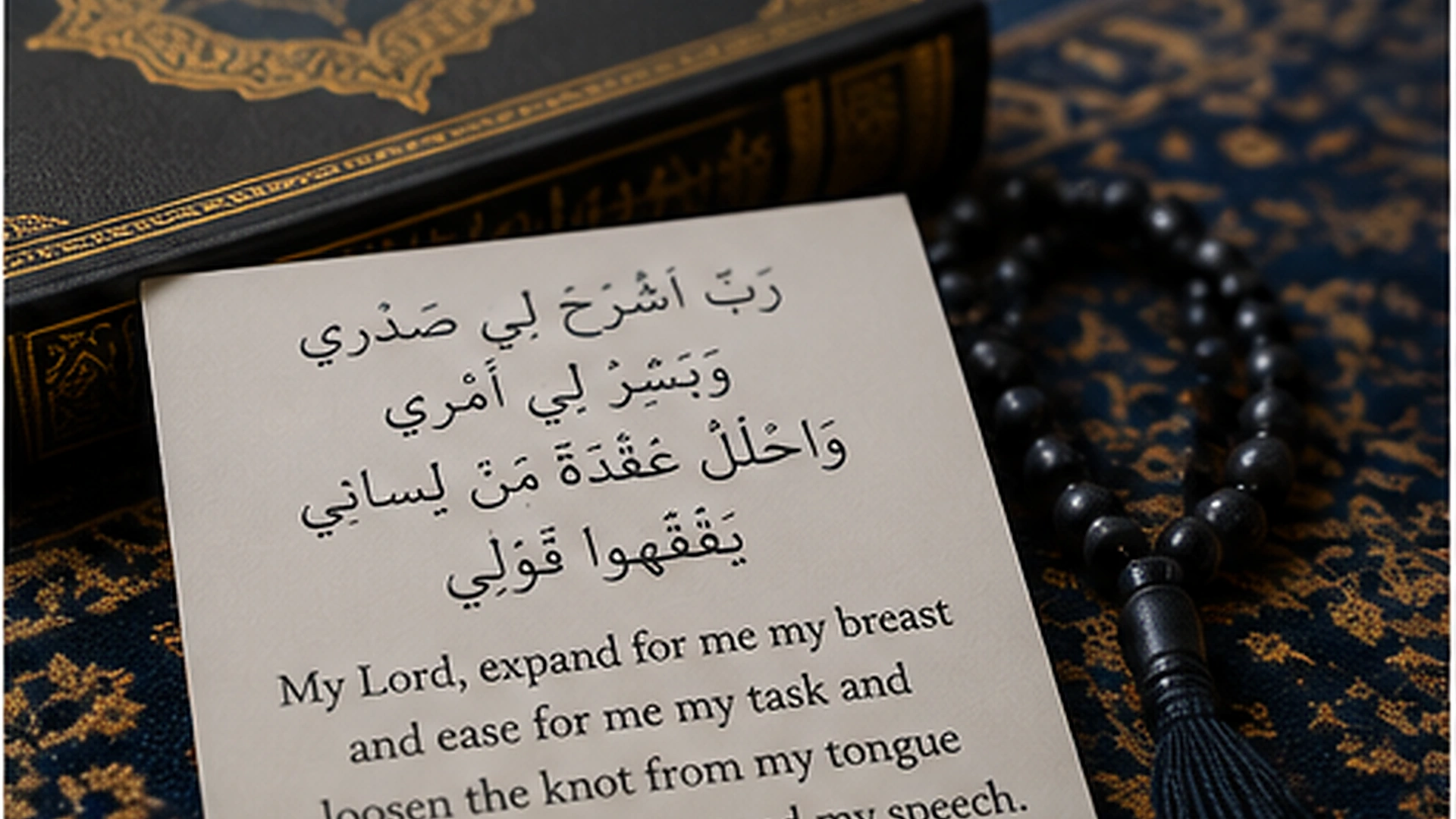
Islamic Traditions: Dua for Ease, Speech and Guidance
Muslims may make personal dua before an interview, asking Allah for ease, beneficial provision, clarity and a good outcome. A frequently cited Qur’anic passage is the prayer of Moses before a demanding confrontation: he asks his Lord to expand his breast, ease his task and loosen the knot from his tongue so that people may understand his speech.[7] The passage is not a job-interview spell; it is a scriptural prayer for courage and intelligible communication in a difficult assignment.
Some Muslims also perform salat al-istikhara when deciding whether to pursue or accept a job. The hadith in Sahih al-Bukhari describes a two-unit voluntary prayer followed by a request that the matter be facilitated if it is good for the person’s religion, livelihood and outcome, or turned away if it is harmful.[8]
Istikhara is often misunderstood as a demand for a dream or a guarantee that a preferred employer will say yes. Its wording is more open: the worshipper acknowledges limited knowledge and asks to be guided toward what is good. Practical investigation still matters. Salary, duties, workplace ethics, location, prayer needs, safety and family consequences should be considered.
A Muslim applicant may also make ordinary preparations, dress according to religious commitments and ask for reasonable accommodations when necessary. Prayer and reliance on Allah do not conflict with researching the employer, practicing answers or clarifying work conditions.
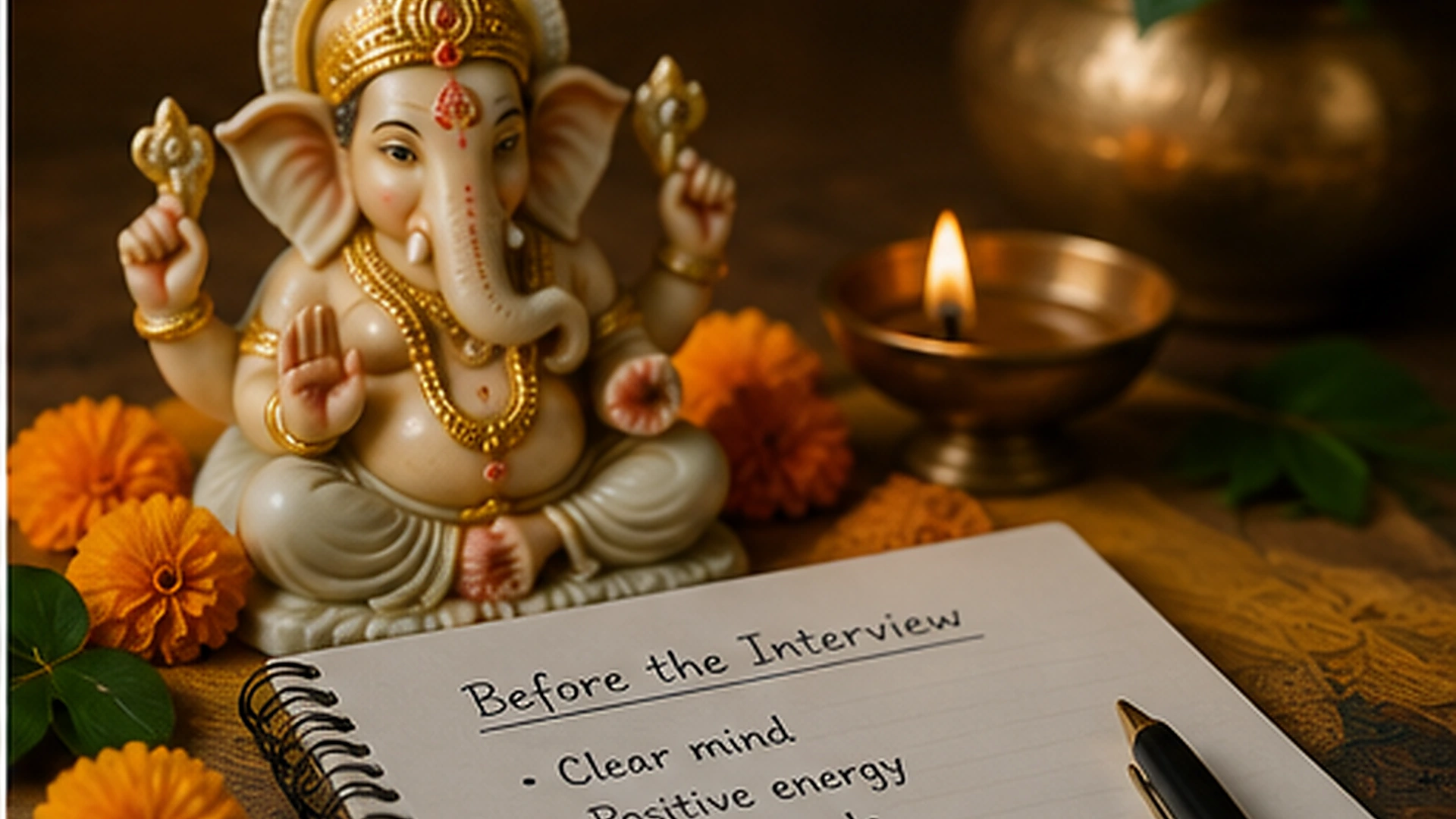
Hindu Traditions: Ganesha and New Undertakings
Hindu traditions are internally diverse, but Ganesha is widely associated with beginnings and the removal of obstacles. Museum scholarship describes him as a deity invoked before important tasks and new undertakings, with regional forms extending across India, the Himalayas and Southeast Asia.[11]
A Hindu applicant might offer a brief prayer at a household shrine, visit a temple, receive family blessings or simply remember Ganesha before leaving for an interview. Others may pray to Saraswati for learning and articulate speech, to Lakshmi in relation to prosperity or to a family deity. These practices differ by region, household and devotional lineage.
It is misleading to present a single mantra as the universal “Hindu job spell.” Sanskrit pronunciation, initiation, temple protocol and theological meaning can matter, and many devotional practices are not designed as transactions in which a fixed offering purchases employment.
The symbolism of obstacle removal can be interpreted ethically. The obstacle may be panic, poor preparation, pride, a misleading opportunity or an inability to recognize one’s own limitations. Devotion can accompany practical action: checking transport, reviewing the job description, preparing examples and treating reception staff respectfully.
Commercial content should avoid placing a Ganesha image beside cash, corporate logos or a promise that a recruiter’s will can be controlled. For practitioners, the image is sacred, not motivational décor.
Sikh Tradition: Ardas, Clear Reason and Just Endeavor
Ardas is a central Sikh prayer that remembers Sikh history, expresses humility and asks for spiritual strength and the wellbeing of all. The Shiromani Gurdwara Parbandhak Committee describes it as a basic religious activity and publishes the formal prayer within Sikh tradition.[12]
The English rendering published by the SGPC includes requests for faith, discipline, knowledge, mutual trust, self-confidence, calm passions and reason guided by Waheguru. These themes can be meaningful before an interview, especially when the applicant wants to act with integrity rather than fear.
A Sikh may offer personal prayer, participate in Ardas at a gurdwara, listen to kirtan or receive a hukam according to community practice. It would be inappropriate to rewrite the formal Ardas into a commercial “job-attraction chant” or to present a random line of Gurbani as a guaranteed hiring formula.
Sikh teachings also place value on honest work, service and justice. An interview prayer should therefore be compatible with truthful qualifications, fair competition and respect for workers. Seeking success through deception, bribery or discrimination would contradict the ethical frame in which prayer is offered.
People unfamiliar with the tradition should not imitate gurdwara rituals for aesthetic effect. They can instead learn about Ardas, respect Sikh applicants’ articles of faith and recognize that religious confidence is not the same as magical entitlement.
Jewish Traditions: Favor and the Work of Human Hands
Jewish applicants may use personal prayer, Psalms, blessings, charity or consultation with family and community before an important decision. There is no single universally required “job-interview prayer.”
Psalm 90:17 asks that divine favor rest upon the community and that the work of human hands be established or prosper.[13] The verse offers a useful balance: blessing is sought, but human hands still perform the work. Applied to an interview, prayer may accompany preparation rather than replace it.
Other people may recite Psalm 121, give tzedakah or add a personal request during regular prayer. Customs differ across Orthodox, Conservative, Reform, Reconstructionist and other Jewish communities, and individuals may relate to prayer in different ways.
The language of favor must be handled carefully. A prayer for graciousness, livelihood or a fitting role is not a license to demand that another candidate be treated unfairly. Jewish ethical reflection on work also includes honesty in business, fair treatment and responsibility toward others.
Online anecdotes sometimes present one visit, Psalm or charitable act as the reason a person received an offer. Such stories may be meaningful testimony, but they are not controlled evidence and should not be converted into guaranteed instructions. A responsible account preserves both faith and uncertainty.
Buddhist Practice: Meeting Anxiety Without Suppression
Buddhism does not center prayer to a creator deity, and Buddhist traditions should not be reduced to a generic relaxation technique. Depending on lineage, practitioners may take refuge, chant, recollect the Buddha, cultivate loving-kindness, make offerings or meditate before a difficult event.
For an interview, a brief breath-awareness practice can help a practitioner notice bodily arousal without fighting it. Theravada teacher Bhante Henepola Gunaratana has described pausing and focusing on the breath even in a difficult situation as a practical way to regain steadiness.[15] The purpose is not to make anxiety vanish on command, but to reduce automatic reactivity.
A short practice might involve feeling the feet on the floor, noticing three natural breaths, naming the experience—“anxiety is present”—and returning attention to the question being asked. Loving-kindness may also shift the frame from “I must defeat the interviewer” to “May I and the people in this conversation act with clarity and goodwill.”
Applicants should avoid using meditation to suppress legitimate information. If the role appears unsafe, discriminatory or dishonest, calm awareness should help the person see that more clearly, not persuade them to ignore it.
Severe social anxiety, panic or trauma may require support from a qualified mental-health professional. Spiritual practice can accompany care but should not be presented as a universal treatment.
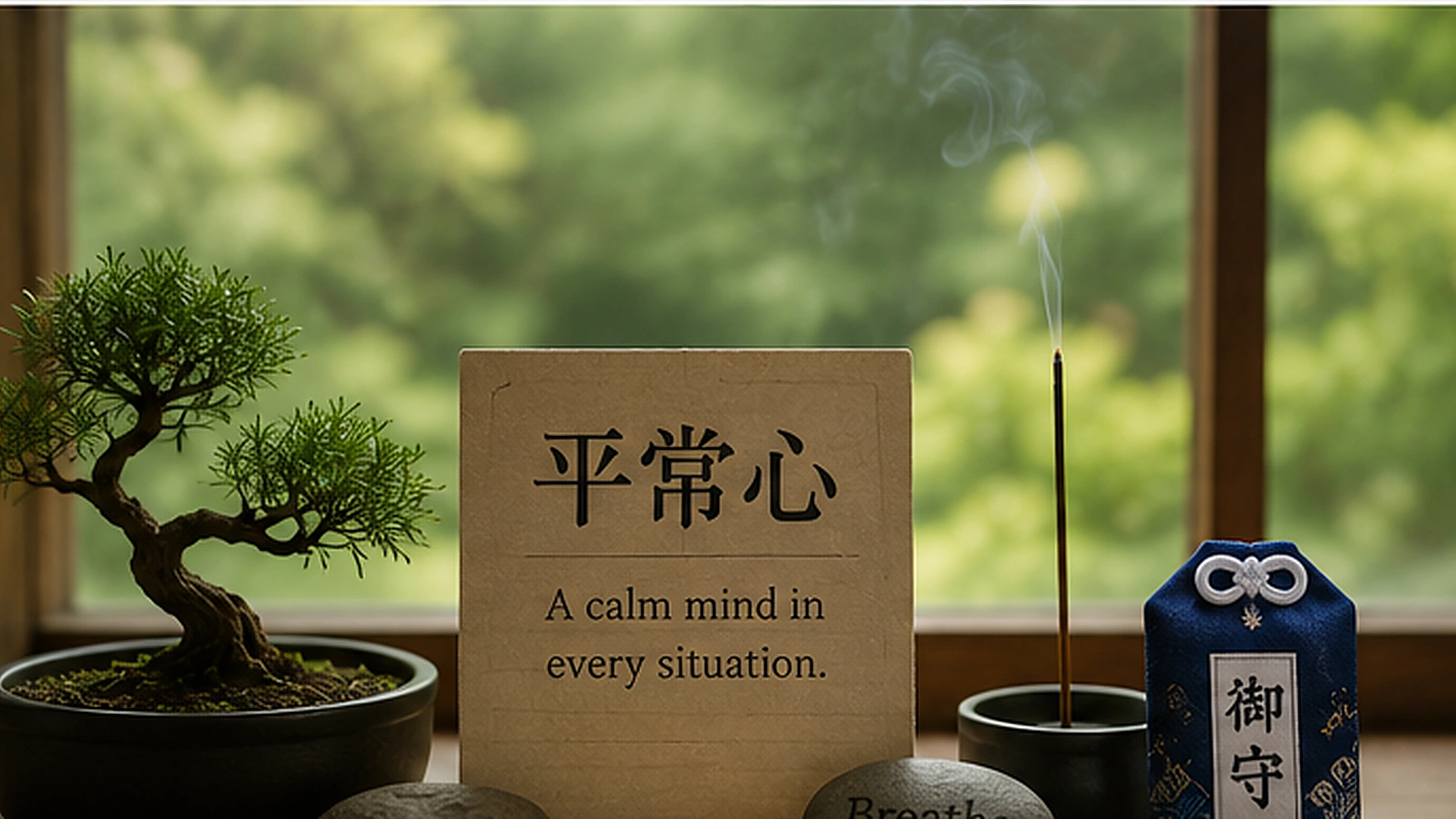
Japanese Omamori, Ema and Prayers for Success
Japanese Shinto shrines and Buddhist temples offer omamori, small amulets associated with forms of protection or benefit. Official Japanese tourism materials describe amulets for success, study, business prosperity and general good fortune, as well as ema plaques on which visitors write wishes.[14]
Some job seekers may carry a success amulet, visit a shrine associated with business prosperity or write a wish before an interview. These practices are part of Japanese religious and social life, even when a participant describes them casually as custom rather than formal belief.
An omamori should not be opened, copied as a decorative pouch or presented as a universal Asian charm. It is associated with a particular shrine or temple and usually has an expected cycle of respectful use and return. Practices vary by institution.
The role of the object is symbolic and relational. It can remind a person of a prayer, a visit, family support or a commitment to proceed with courage. It does not alter the applicant’s qualifications or force a company to hire them.
Visitors should follow site rules, avoid photographing private wishes and not treat a shrine as a theatrical backdrop for corporate content. Cultural respect matters even when the person does not share the underlying belief.
Do Rituals Actually Improve Interview Performance?
The evidence requires caution. A preregistered neuroscience experiment found that performing a repeated ritual reduced a neural response associated with performance errors, but it did not demonstrate improved task performance.[6] This suggests that structured actions may change how people respond to mistakes without proving that ritual produces better hiring outcomes.
A highly publicized 2016 paper claiming that rituals reduced anxiety and improved performance was formally retracted in 2024 after the authors reported that they no longer had confidence in the data.[18] Responsible articles should not continue quoting its conclusions as settled evidence.
Stronger interview-specific evidence supports preparation and adaptive emotion regulation. Participation in coaching, role-play and study groups has been associated with better situational-interview performance.[2] A program using targeted mock interviews reduced several dimensions of anxiety among medical applicants preparing for virtual interviews. Research also supports acceptance and reappraisal rather than trying to suppress all signs of nervousness.[4][5]
This does not make prayer meaningless. Religious value is not established or erased by a performance study. Prayer may provide identity, community, moral orientation, hope and a way to tolerate uncertainty. The scientific claim should simply remain proportionate: a meaningful routine may help some people organize attention, while no study shows that prayer guarantees selection.
A Responsible Pre-Interview Prayer and Preparation Routine
The following routine is deliberately non-denominational. A practitioner should substitute the prayers and gestures of their own tradition.
The Night Before
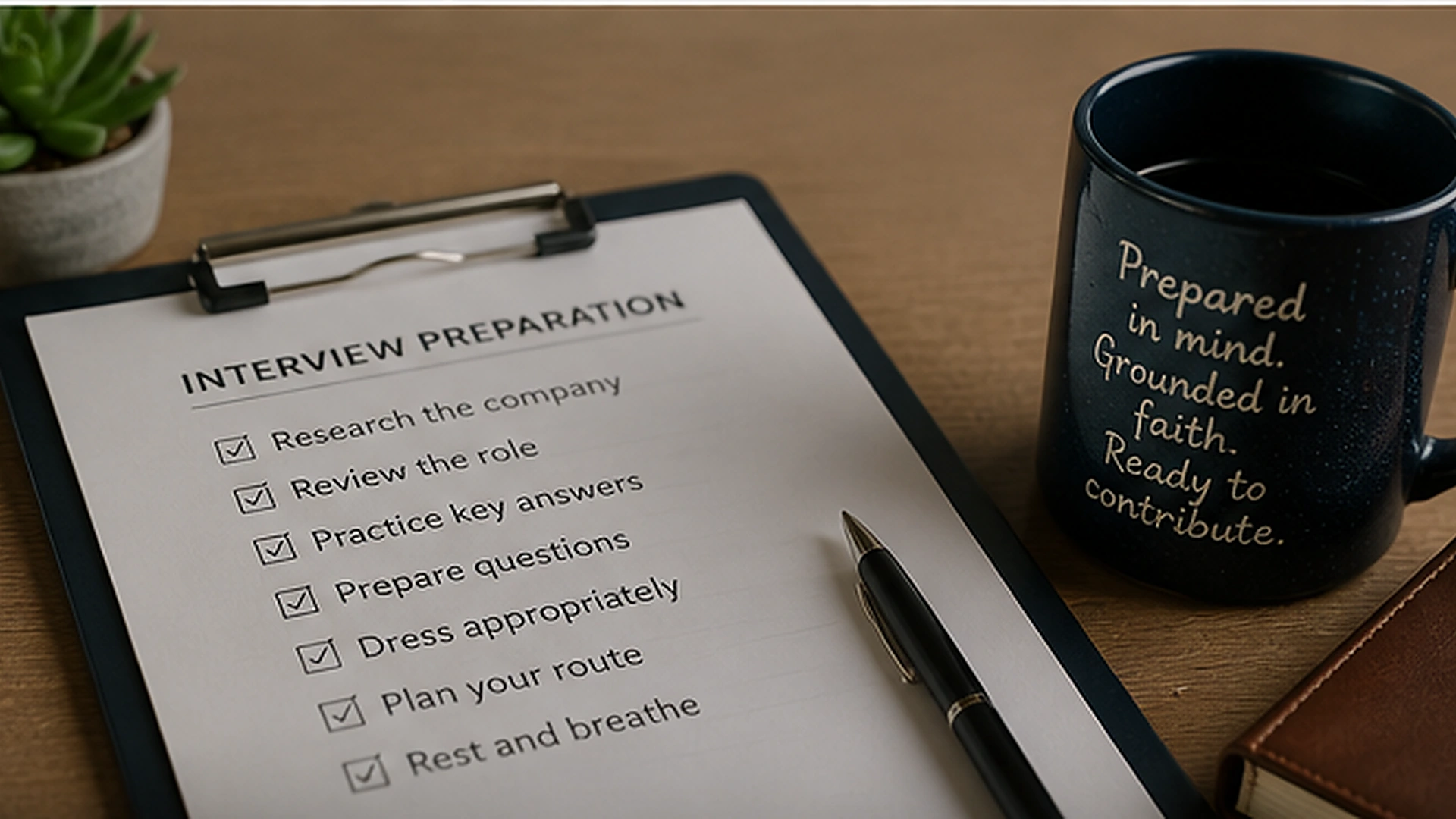
Confirm the time, time zone, location, platform, interviewer names and required documents. Research the organization, reread the job description and choose four or five examples that demonstrate relevant skills. CareerOneStop recommends researching the employer and practicing answers aloud with concrete examples.[1]
Prepare clothing, transport, identification, internet connection and a backup contact method. Then use a brief prayer or reflection to release repetitive worry rather than continuing to rehearse until exhausted.
Ten Minutes Before
Silence unnecessary notifications. Place water, notes and questions within reach. Use the restroom and check the camera frame if the interview is virtual.
Pray, recite scripture, breathe or follow a familiar routine for one or two minutes. Keep the practice simple enough that an interruption does not feel catastrophic.
During the Interview
Listen to the whole question. Pause briefly. Answer with a real example, explaining the situation, action and result. It is acceptable to ask for clarification or take a moment to think.
After the Interview
Write down what was asked, send an appropriate thank-you message and identify one lesson. Prayer after the interview may express gratitude and surrender rather than repeatedly trying to reverse the result.
Virtual Interviews and the Need for a Technical Ritual
Virtual interviews create a second source of uncertainty: the technology. A practical “ritual” can be useful because it converts several avoidable risks into a repeatable checklist.
Test the camera, microphone, lighting, internet connection and meeting link. Close bandwidth-heavy applications, charge the device and keep the recruiter’s contact details nearby. Position notes so they support memory without causing constant eye movement away from the camera.
Research comparing interview formats suggests that technology-mediated interviews can produce different performance ratings even when anxiety and strain do not differ greatly from face-to-face interviews.[3] This makes familiarization important. Practice on the same device and platform when possible.
Religious practice can be included discreetly before joining the call. The person might complete prayer in another part of the room, carry a permitted religious item or take a minute of silence. The goal is not to create a complicated sequence that collapses when the interviewer arrives early.
A good routine is resilient. If the link fails, the prayer is interrupted or the camera freezes, the candidate can repair the problem and continue. Treating every disruption as a bad omen increases rather than reduces uncertainty.
Ethics: What Prayer Should Not Be Used to Justify
Job-interview spirituality becomes ethically problematic when it is used to excuse harm or deception.
A prayer should not be used to justify lying about qualifications, hiding serious conflicts of interest, bribing an official, manipulating a vulnerable recruiter or claiming that God has ordered the employer to hire a particular person. Religious confidence does not remove another person’s agency.
It is also harmful to blame applicants for rejection by saying they lacked faith, prayed incorrectly, carried the wrong object or failed to give enough money. Hiring decisions are affected by many factors, including market conditions, internal candidates, organizational budgets and discrimination.
Theological language about favor should remain compatible with fairness. A candidate can ask to be seen accurately and treated justly without asking for another applicant to be humiliated or excluded.
Cultural appropriation is another concern. Selecting a Hindu mantra, Sikh prayer, Qur’anic verse or Japanese amulet only because it looks powerful strips the practice from community and meaning. People can learn respectfully, but should not market borrowed rituals as secret techniques.
Finally, a person should never be pressured to disclose private belief during an interview. In the United States, questions about an applicant’s religious affiliation are generally considered non-job-related and problematic, with limited exceptions for certain religious organizations.[19] Laws differ elsewhere, but fair hiring should focus on relevant capability.
Religious Accommodation During the Hiring Process
Applicants sometimes need an interview time, dress rule or process adjusted because of a sincerely held religious practice. In the United States, the Equal Employment Opportunity Commission states that employers generally must provide reasonable accommodation to applicants and employees unless it would impose substantial hardship in the context of the business.[16]
Examples can include rescheduling an interview that conflicts with a religious holiday, permitting religious clothing or addressing prayer-time needs. An applicant does not need to reveal every detail of their theology, but should explain that a work or interview requirement conflicts with a religious practice and request a workable adjustment.
This section is not legal advice. Standards vary by country, employer and role, and safety requirements can affect what is feasible. Applicants should consult the relevant labor or equality authority in their jurisdiction.
A request for accommodation is different from asking the interviewer to participate in prayer. Religious expression should remain voluntary. Interviewers should not test an applicant’s faith, ask for clergy references or favor applicants who share their beliefs unless a lawful religious-employer exception applies.
Avoiding Guaranteed-Job and Spiritual-Exploitation Scams
Job seekers are vulnerable to both employment scams and spiritual exploitation. Warning signs include a prophet, psychic, ritual seller or “career healer” who guarantees an offer, claims that a curse is blocking employment, demands repeated payments or insists that secrecy is required.
The Federal Trade Commission warns that honest employers do not require applicants to pay in order to get paid or obtain a job. Fake recruiters may request money, banking details or identity documents before a genuine interview.[17]
Spiritual scammers can attach themselves to the same fear. They may sell expensive oils, candles, charms, certificates or “activation fees,” then blame the client when the promised job does not appear. No ethical religious leader can guarantee the independent decision of an employer.
Seek transparent support. A trusted clergy member, community elder, career counselor or therapist should be able to explain what they can and cannot provide. Prayer, pastoral care and interview coaching may be valuable, but pricing and expectations should be clear.
Never send money, intimate photographs, passport data, banking information or employer credentials to someone who claims they need them to perform a ritual. Report suspected job fraud to the relevant consumer-protection or law-enforcement authority.
Common Misunderstandings
“If I am nervous, my prayer failed.” Nervousness is a normal response to evaluation. The goal may be to act skillfully while nervous.
“Favor means the interviewer must choose me.” Favor may mean a fair hearing, clarity or an outcome that is ultimately beneficial. It is not control over another person.
“A traditional prayer eliminates the need to practice.” Most religious traditions value responsible action. Preparation is part of stewardship, effort or disciplined conduct.
“Every successful person used the right ritual.” Success stories are selectively remembered. Many qualified, faithful and well-prepared people experience rejection.
“All pre-interview rituals are irrational.” A familiar routine can organize attention or express identity. The problem begins when it becomes compulsory, harmful, exploitative or a substitute for evidence.
“One tradition’s prayer can be copied without context.” Sacred language and objects belong to communities with their own rules, histories and meanings.
People Also Ask
What should I pray before a job interview?
Pray in the language of your own tradition for clear speech, wisdom, courage, honesty, fair treatment and openness to the right outcome. Pair the prayer with research and practiced examples.
Is there a prayer for clear speech?
Muslims often draw on Qur’an 20:25–28, the prayer of Moses for ease and understandable speech. Christians, Jews and others may use their own scriptures or personal petitions for wisdom and courage.
Can prayer guarantee that I get the job?
No. Prayer may provide meaning, guidance and emotional support, but hiring depends on many human and organizational factors.
What does favor mean in an interview prayer?
It may mean grace, goodwill, a fair hearing, right timing or a beneficial outcome. It should not mean unfair preference or control of the interviewer.
Is istikhara a prayer for getting a specific job?
Istikhara asks Allah to facilitate a matter if it is good and turn it away if it is harmful. It is guidance, not a guaranteed yes.
Can a ritual reduce interview anxiety?
A familiar routine may help some people regulate attention. Evidence is stronger for practice, acceptance, reappraisal and coaching than for claims that ritual automatically improves performance.
Frequently Asked Questions
Should I tell the interviewer that I prayed?
Only if it is relevant and you genuinely want to share it. Religious belief is generally private, and the interview should focus on job-related qualifications.
Is it acceptable to carry a religious object into an interview?
Usually, personal religious clothing or small objects are compatible with an interview, but security and safety rules may apply. Ask about accommodation when necessary.
What if I forget my prayer or the routine is interrupted?
Continue with the interview. A responsible spiritual practice should not make a harmless interruption feel like a curse or prediction.
What is the best practical preparation?
Research the organization, understand the role, prepare real examples, practice aloud, plan questions, test technology and arrive early.
When should interview anxiety receive professional help?
Consider qualified support when anxiety repeatedly causes panic, severe avoidance, sleep disruption or major impairment. Spiritual care and mental-health care can be used together.
Can I pray for someone else’s interview?
Yes, within many traditions. A supportive blessing should respect the person’s beliefs and ask for courage, clarity and wellbeing rather than control of the outcome.
Conclusion
Job-interview prayers and rituals reveal how people bring faith, culture and personal meaning into a modern institution. Christian vocation prayers, Islamic dua and istikhara, Hindu devotion to Ganesha, Sikh Ardas, Jewish Psalms, Buddhist mindfulness and Japanese amulets all emerge from different histories. They should not be blended into one universal success formula.
The most constructive practice supports honest communication, fair treatment and the ability to tolerate uncertainty. It does not guarantee employment, erase preparation or make rejection a moral verdict.
A candidate can pray deeply and practice thoroughly. They can ask for favor while respecting the other applicants. They can seek confidence without pretending to be fearless. And they can define success as showing up with integrity, learning what the role truly requires and remaining open to work that is both sustainable and right.
Article Information
- Publisher
- Ancestral Temple
- Editor
- Ancestral Temple
- Last updated
- Jul 30, 2026
- Last reviewed
- Jul 30, 2026
- Content version
- 5a0d756f40
This educational article should be read as cultural and spiritual information, not as medical, legal, financial, or emergency advice.
Helpful Related Guidance
About the Author
 Ancestral Temple
Spiritual guide and practitioner with decades of experience in ancestral wisdom, rituals, and divine guidance.
Related Posts
View All








Comments
We'd love to hear your thoughts.