
Ancient Egyptian Protective Symbols
Cornerstone Content
Quick Summary
Ancient Egyptian protective symbols appeared on amulets, jewelry, coffins, temple walls, household objects, royal regalia, and mummy wrappings. Their meanings depended on form, material, color, inscription, placement, deity, and historical period. This guide explains the best-documented symbols without turning them into generic modern magic.
Ancient Egyptian Protective Symbols explains the cultural and historical meaning of egyptian protection symbols without treating one tradition as universal. The article preserves safety cautions, distinguishes spiritual interpretation from medical or legal advice, and avoids guaranteed-result claims.
Ancient Egyptian protective symbols formed part of a wider religious and social system in which words, images, materials, deities, ritual actions, and objects could support life, health, order, regeneration, and safe passage into the afterlife.
The symbols were not merely decorative logos. A wedjat eye worn as an amulet, a djed pillar placed among mummy wrappings, a uraeus on a royal crown, and a Taweret figure used in a household setting carried different meanings because they belonged to different people, places, and purposes.
The ancient Egyptian concept often called heka was understood as an effective force woven into life, medicine, religion, justice, childcare, and funerary practice. The British Museum describes heka as central to both life and the afterlife. This historical framework should not be reduced to modern ideas about energy products or guaranteed supernatural results.
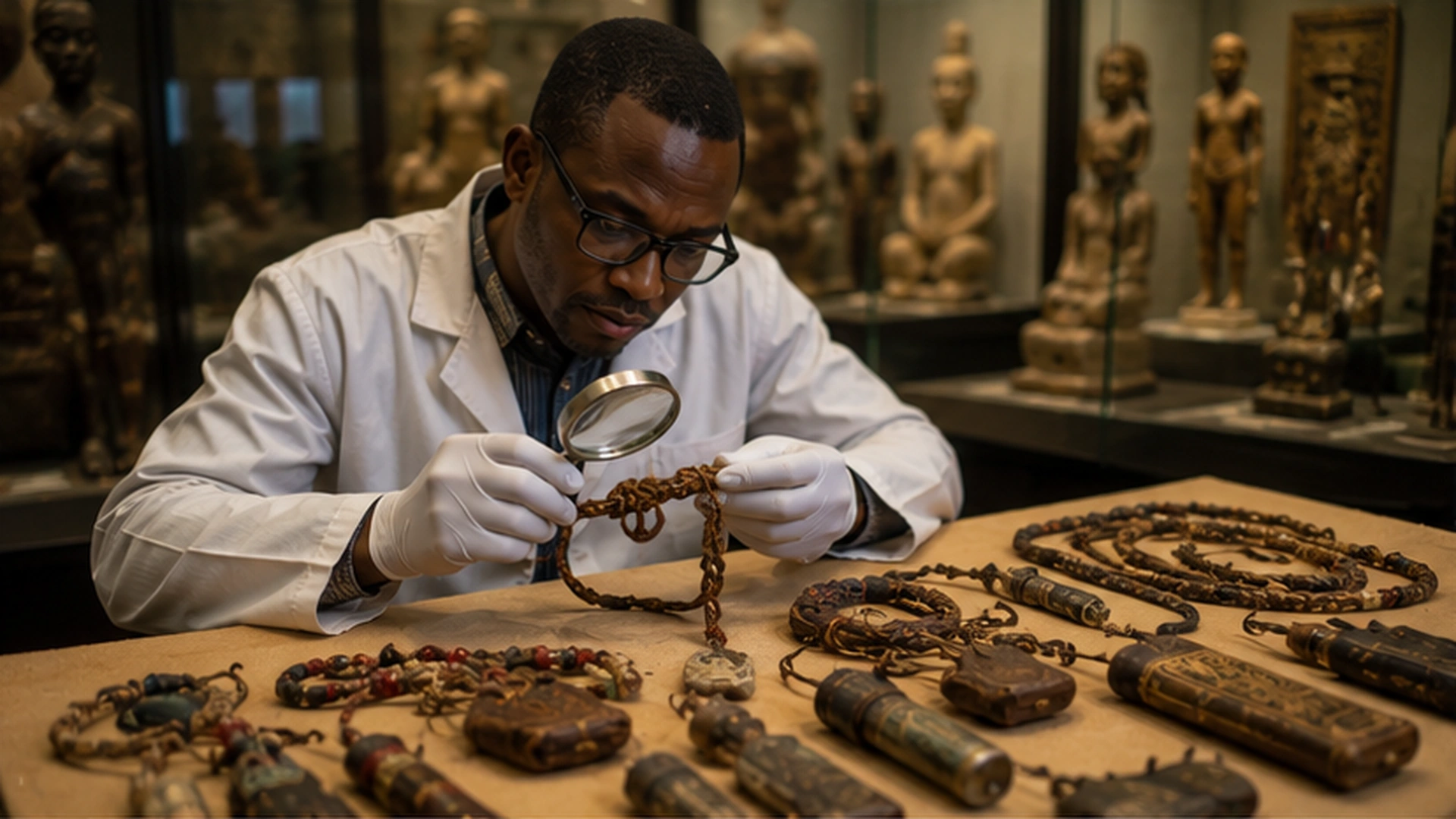
Museum collections demonstrate that amulets were worn by the living, placed with the dead, incorporated into jewelry, attached to clothing, and combined with inscriptions or images. Historical use is well documented, but it does not scientifically prove that a symbol guarantees healing, protection, fertility, or good fortune.
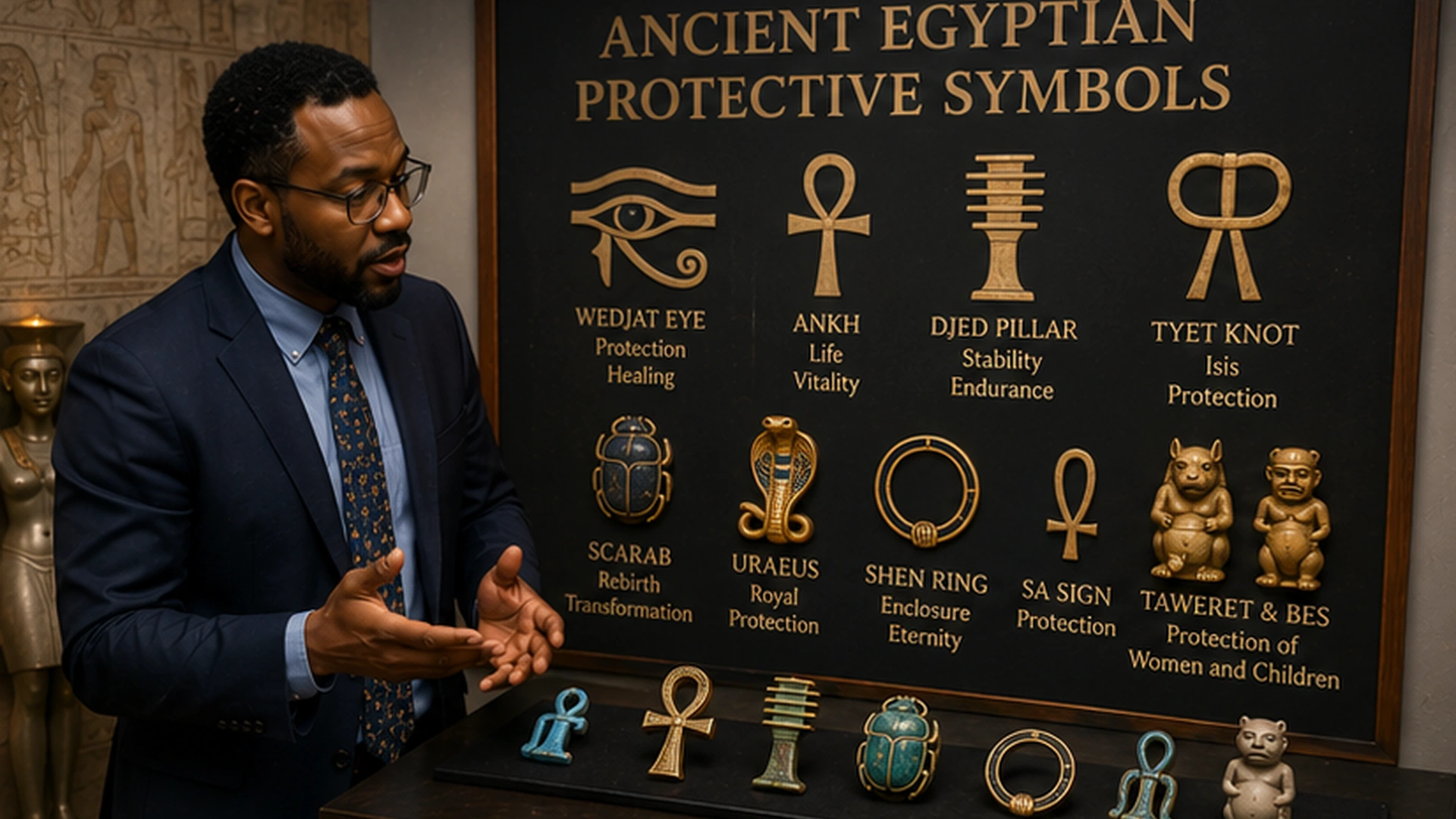
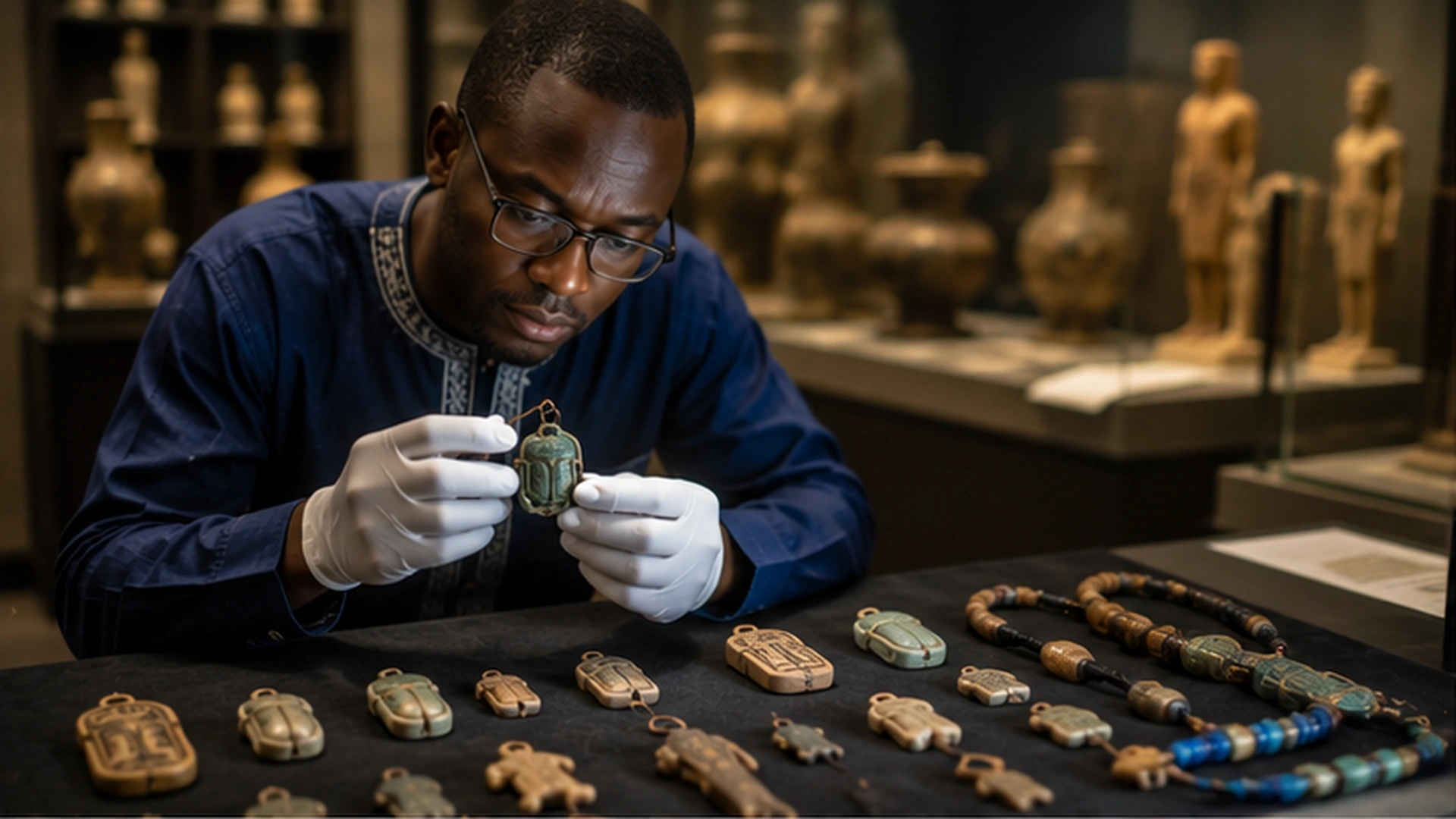
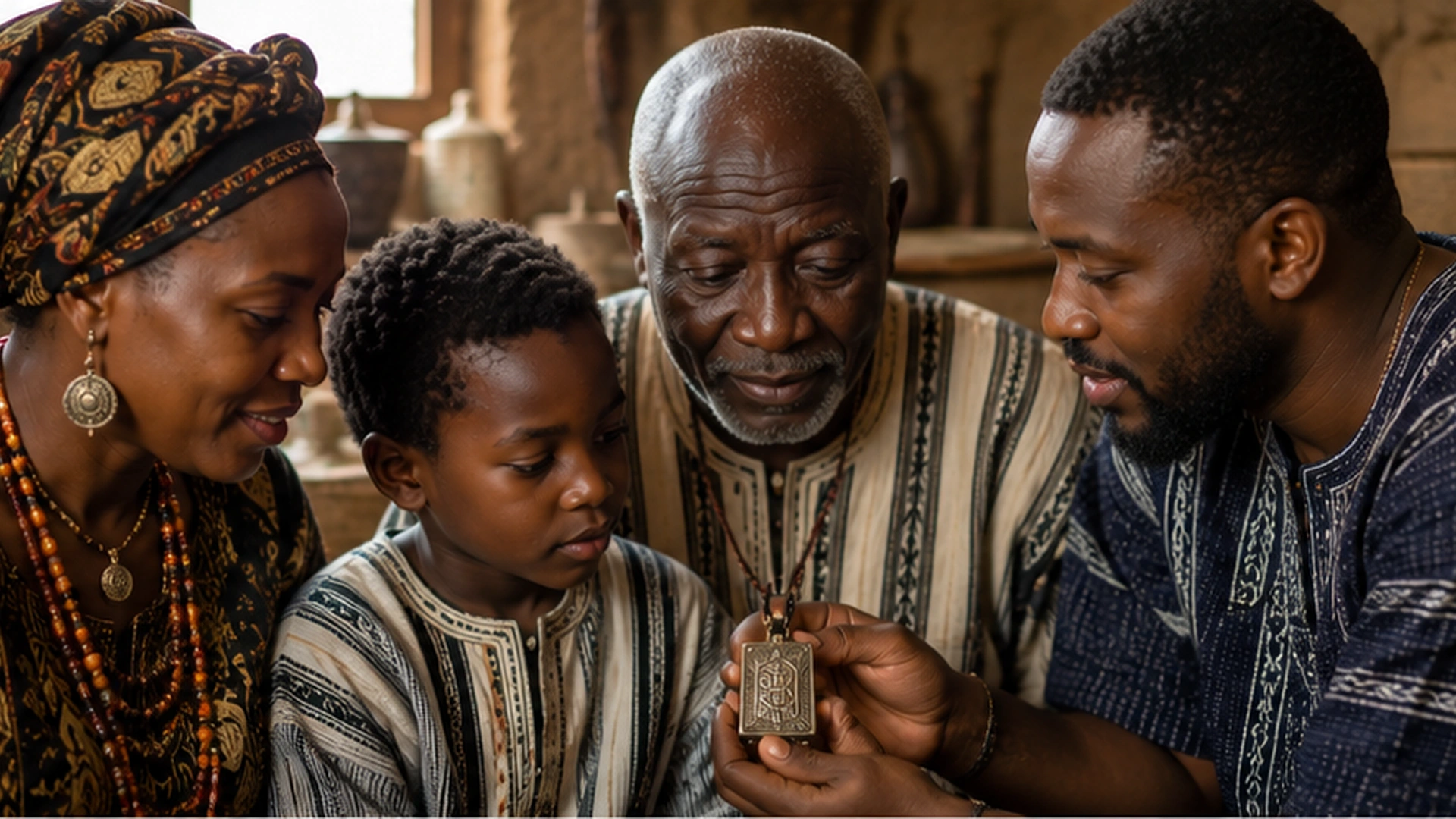
Suggested scene: Black African Egyptologist introducing the wedjat eye, ankh, djed, tyet, scarab, uraeus, shen ring, Taweret, and Bes in a museum teaching gallery.
Key Points
The wedjat eye represented restoration, well-being, healing, and protection.
The ankh represented life and could appear with other symbols of power and stability.
The djed pillar represented endurance, stability, and the restored body of Osiris.
The tyet or knot of Isis was connected with Isis, protection, and funerary regeneration.
Scarabs symbolized renewal and solar rebirth; heart scarabs served a distinct funerary role.
The uraeus cobra represented royal and divine protection, especially on crowns.
The shen ring symbolized encircling protection and continuity.
The sa sign was associated with protection and frequently accompanied protective deities.
Taweret and Bes were strongly connected with household, pregnancy, childbirth, and infant protection.
Material, color, inscription, placement, and period changed how a symbol functioned.
Ancient symbols should be studied through Egyptian history rather than marketed as guaranteed modern remedies.
How Protective Symbols Worked
An ancient Egyptian symbol gained meaning through more than its outline. Its function could depend on several connected factors.
Factor
Why it mattered
Shape
The form could represent a deity, body part, hieroglyph, animal, plant, or cosmic concept.
Material
Gold, stone, faience, glass, wood, and other materials carried associations with durability, color, divinity, rebirth, or status.
Color
Blue-green could suggest regeneration, water, vegetation, and renewed life; gold could evoke divine flesh and solar permanence.
Inscription
Names, prayers, titles, and protective texts could specify the object’s owner and purpose.
Placement
A symbol worn on the body differed from one placed on a coffin, crown, temple wall, household object, or mummy.
Ritual context
Consecration, funerary rites, temple use, healing, childbirth, and royal ceremony changed interpretation.
Historical period
Meanings and popularity developed across dynasties and regions.
The Metropolitan Museum notes that Egyptian amulets were believed to possess positive properties that could pass to their owners. Its collections also show that several symbols were combined because each contributed a different protective quality.
1. The Wedjat Eye
The wedjat eye, commonly called the Eye of Horus, was one of the most widespread protective symbols in ancient Egypt.
The word wedjat means the one that is sound or restored. In myth, the eye of Horus was injured or taken during conflict with Seth and later restored. The healed eye therefore came to represent restoration, completeness, health, rebirth, perception, and protection.
The symbol combines features of a human eye and the eye markings of a falcon, the animal closely associated with Horus.
Where It Appeared
Pendant amulets
Rings and necklaces
Coffins and funerary equipment
Mummy wrappings
Scarabs and seals
Temple and household imagery
The Metropolitan Museum calls the wedjat eye one of ancient Egypt’s most popular amulets. The British Museum describes examples as protective and connected with Horus, whose eyes could be identified with the sun and moon.
Common Misconception
The Eye of Horus was not one single modern symbol with an identical meaning in every period. Paired eyes, solar and lunar associations, the goddess Wadjet, healing, royal protection, and funerary regeneration could overlap differently according to context.
2. The Ankh
The ankh is the hieroglyphic sign most commonly translated as life.
It appears in temple scenes where deities present life to a king, and it appears in jewelry, inscriptions, funerary art, and combinations with the djed and was signs.
The ankh was not exclusively a protection symbol in the narrow sense. Its protective significance came through its connection with life, vitality, divine favor, continuity, and survival beyond death.
Common Uses
Divine gifts of life in temple reliefs
Amulets and pendants
Coffins and funerary equipment
Combinations with stability and power symbols
Names and religious inscriptions
Modern phrases such as key of life are popular explanatory labels, but interpretations should remain grounded in ancient Egyptian language, imagery, and archaeological context.
Frequently Asked Questions
What should readers know first about african spirituality and cultural history?
African spirituality and cultural history: Read clear guidance, key signs, practical steps, and private support from Ancestral Temple.
What causes ancient-egyptian-protective-symbols?
The safest next step is to compare the signs, prepare clear details, and request private guidance when the matter feels personal.
How does ancient-egyptian-protective-symbols work?
The safest next step is to compare the signs, prepare clear details, and request private guidance when the matter feels personal.
Is it possible to get private guidance for ancient-egyptian-protective-symbols?
The safest next step is to compare the signs, prepare clear details, and request private guidance when the matter feels personal.
How long does ancient-egyptian-protective-symbols take to understand?
The safest next step is to compare the signs, prepare clear details, and request private guidance when the matter feels personal.
Can ancient-egyptian-protective-symbols affect relationships, family, work, or personal peace?
The safest next step is to compare the signs, prepare clear details, and request private guidance when the matter feels personal.
Why do people seek spiritual guidance for ancient-egyptian-protective-symbols?
The safest next step is to compare the signs, prepare clear details, and request private guidance when the matter feels personal.
What signs should someone notice before asking about ancient-egyptian-protective-symbols?
The safest next step is to compare the signs, prepare clear details, and request private guidance when the matter feels personal.
When should someone contact a private spiritual guide?
The safest next step is to compare the signs, prepare clear details, and request private guidance when the matter feels personal.
What causes african spirituality and cultural history?
African spirituality and cultural history: Read clear guidance, key signs, practical steps, and private support from Ancestral Temple. The safest next step is to compare the signs, prepare clear details, and request private guidance when the matter feels perso
Article Information
- Publisher
- Ancestral Temple
- Editor
- Ancestral Temple
- Last updated
- Jul 26, 2026
- Last reviewed
- Jul 13, 2026
- Content version
- 506671d559
This educational article should be read as cultural and spiritual information, not as medical, legal, financial, or emergency advice.
Helpful Related Guidance
Explore This Topic
Protective Symbols Used Throughout History · Ancient Symbols Of Protection
Related Topic Cluster
African Spirituality And Cultural History
Complete Guide Why Homes Have Been Blessed Throughout HistoryAbout the Author
 Ancestral Temple
Spiritual guide and practitioner with decades of experience in ancestral wisdom, rituals, and divine guidance.
Related Posts
View All
Leave a Comment
We'd love to hear your thoughts.
I appreciated that the symbols were not treated as interchangeable.
The explanation of the wedjat eye as restoration was very clear.