
New Moon Spiritual Meaning: Symbolism, Traditions and Cultural Beliefs
Quick Summary
The new moon is often described as a symbol of beginnings, inward reflection and possibilities that have not yet become visible. In contemporary spiritual practice, people may use...
The new moon is often described as a symbol of beginnings, inward reflection and possibilities that have not yet become visible. In contemporary spiritual practice, people may use it as a recurring moment to pause, set an intention or begin a project. Yet there is no single universal new moon meaning. Religious calendars, local traditions, modern astrology and folklore interpret the lunar cycle in different ways.
A careful explanation must also distinguish the astronomical new moon from the first visible crescent. Astronomically, the new moon occurs when the Moon is positioned roughly between Earth and the Sun, leaving the side facing Earth largely unlit. The slender crescent seen after sunset appears later. In several traditions, that first sighting - not the invisible conjunction itself - marks the practical beginning of a month.[1][2]
This article explains the most common spiritual interpretations, shows how specific communities use lunar time, examines new moon superstitions and clarifies what science can and cannot support.
Quick Answer
Spiritually, the new moon commonly symbolizes a beginning, quiet potential, reflection and the chance to choose a direction before visible action begins. This is a modern and cross-cultural interpretation, not a universal doctrine. Specific traditions may treat the new moon or first crescent as a calendrical, religious, agricultural or communal marker rather than a manifestation ritual.
Image number: Image 1 - Featured image
Purpose: Introduce the article's themes of darkness, reflection and beginnings without falsely showing a visible new moon.
Detailed scene: A realistic editorial night landscape with a single adult standing on a low hill beneath a deep, star-filled sky. The Moon itself is not visible. A faint pre-dawn glow rests on the horizon, suggesting transition and possibility.
Specific culture or historical context: Contemporary, culturally neutral reflective scene; not presented as a ritual from any named tradition.
People shown: One adult shown from behind at a respectful distance; no identifiable ethnicity required, though a Black adult is preferred for site representation.
Location: Open East African highland or savanna-edge landscape with natural vegetation.
Clothing: Simple modern, weather-appropriate clothing in natural fabrics; no ceremonial costume.
Architecture: None, or a distant unobtrusive rural silhouette.
Objects: No crystals, tarot cards or invented sacred objects.
Lighting: Natural starlight and subtle horizon glow; realistic low-light exposure.
Composition: Wide 16:9 landscape; person on lower third; generous dark sky for editorial impact.
SEO-friendly filename: new-moon-spiritual-meaning-dark-sky.webp
Image title: The Dark Sky of the New Moon
Alt text: A person standing beneath a dark star-filled sky during the new moon phase
Caption: The astronomical new moon is usually invisible, making darkness a common metaphor for beginnings not yet seen.
Recommended placement: After the introduction and Quick Answer.
Article section supported: Introduction and core spiritual meaning.
Important elements to avoid: Visible crescent or full moon, fantasy glow, embedded text, ritual props, halos, supernatural figures.
What Is a New Moon?
A new moon is one of the eight commonly named lunar phases. The Moon does not produce its own light; it reflects sunlight. During the new moon, the Moon is near the Sun in the sky, and the illuminated half is turned mostly away from Earth. The phase recurs about every 29.5 days.[1]
Because the Moon is close to the Sun's apparent position, it usually rises and sets near the Sun and is difficult or impossible to see with the unaided eye. The exact astronomical moment is called conjunction. A visible waxing crescent normally appears after the new moon, depending on the Moon's position, atmospheric conditions, geography and the observer's eyesight.[2]
This difference matters culturally. Popular language often calls the young crescent a 'new moon,' while astronomers reserve the term for conjunction. Religious communities may also use their own definitions when establishing the start of a month.
New Moon Versus the First Visible Crescent
The astronomical new moon is the dark phase at conjunction. The first visible crescent is a later observational event. They belong to the same lunar transition, but they are not the same moment.
Confusing them can create inaccurate claims. A photograph showing a bright crescent should not be labeled as the exact new moon. At the same time, it is historically accurate to discuss crescent sighting when explaining calendars that begin through observation.
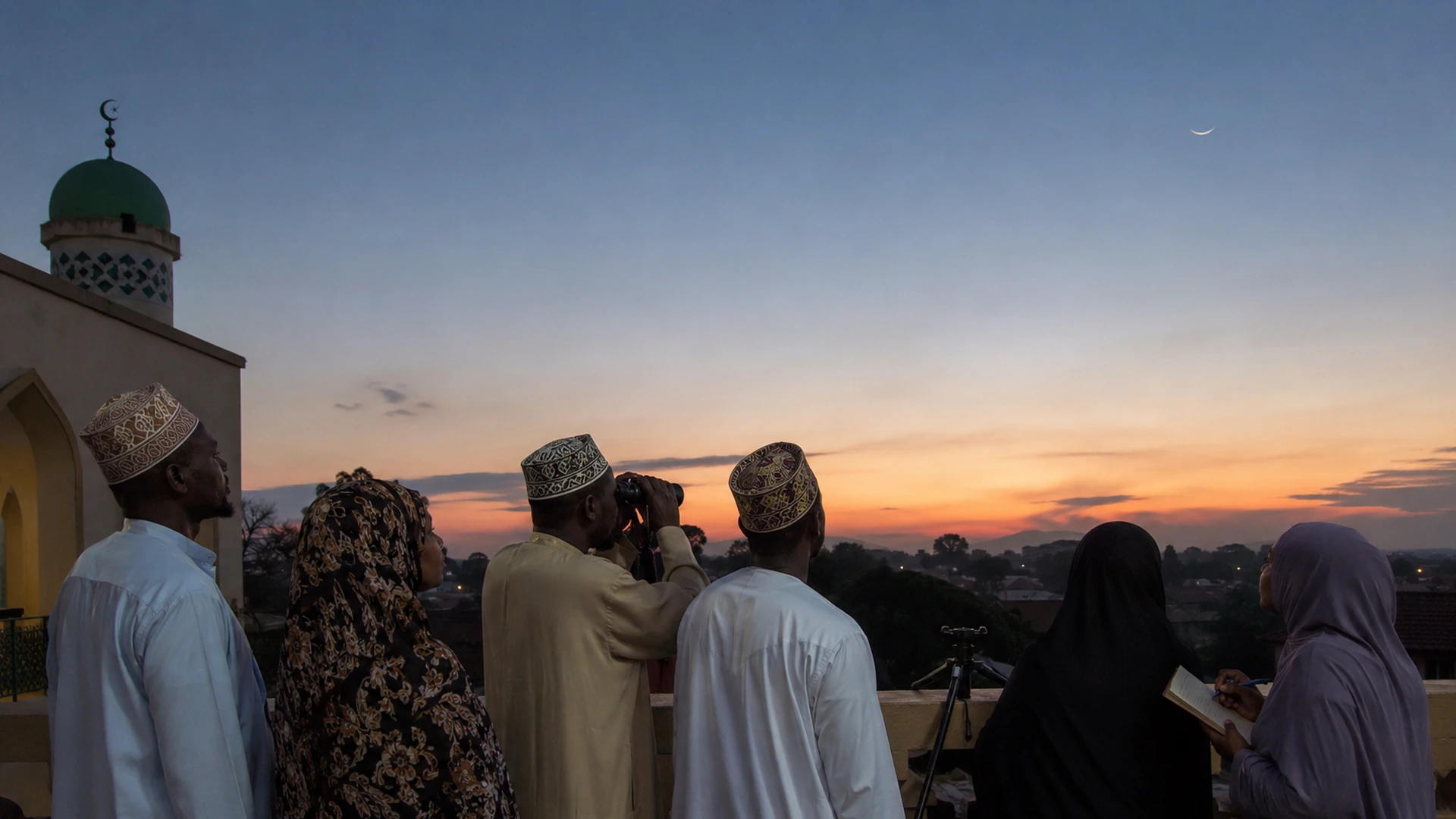
Image number: Image 2
Purpose: Explain the astronomical alignment that creates the new moon phase.
Detailed scene: Museum-quality scientific reconstruction showing the Sun, Moon and Earth aligned in space, with the Moon between Earth and the Sun and the Earth-facing lunar hemisphere dark.
Specific culture or historical context: Modern astronomy education.
People shown: None.
Location: Space visualization with accurate scale cues, though not necessarily to scale.
Clothing: Not applicable.
Architecture: None.
Objects: Sun, Earth, Moon and subtle orbital path only.
Lighting: Physically plausible sunlight, dark background, clearly visible terminators.
Composition: Clean 16:9 horizontal scientific illustration with no labels or text inside the image.
SEO-friendly filename: new-moon-sun-earth-alignment.webp
Image title: How the New Moon Forms
Alt text: Scientific illustration of the Moon positioned between Earth and the Sun during new moon
Caption: At new moon, the Moon is near the Sun in the sky and the side facing Earth is largely unlit.
Recommended placement: After 'New Moon Versus the First Visible Crescent.'
Article section supported: Astronomical definition and scientific clarification.
Important elements to avoid: Incorrect shadows, eclipse depiction unless alignment is explicitly slightly offset, labels, arrows with text, fantasy colors.
What Does the New Moon Mean Spiritually?
In modern spiritual language, the new moon is most often interpreted through the visual logic of the lunar cycle: the sky is dark, the old cycle has ended, and the next crescent has not yet appeared. This makes the phase a useful metaphor for beginnings that are real but not yet visible.
The meanings below are interpretive themes rather than scientifically measured forces. People may find them personally or religiously meaningful without claiming that the Moon guarantees an outcome.
1. New Beginnings
The most familiar new moon symbolism is a fresh start. The phase begins a new lunation, so it can represent starting a habit, reopening a neglected plan or deciding what deserves attention during the coming month.
A beginning does not have to be dramatic. The symbolism works especially well for private decisions made before public action: choosing a direction, gathering information or creating a first small step.
2. Unseen Potential
The Moon has not disappeared during the new moon; its sunlit side is simply turned away from Earth. Spiritually, this can symbolize potential that exists before it becomes observable. A plan may be developing even when there is no visible result.
This interpretation can encourage patience, but it should not be used to promise that every wish will materialize. Potential still requires judgment, effort and realistic conditions.
3. Inward Reflection
The darker night can serve as a prompt for inward attention. Some people use the new moon for journaling, prayer, meditation or reviewing priorities. These activities can be valuable as reflective practices even without attributing a supernatural power to the lunar phase.
Reflection is different from withdrawal. A new moon pause can help a person identify what to carry forward and what to stop repeating.
4. Intention and Direction
Contemporary astrology, modern Pagan communities and popular wellness culture often connect the new moon with intention-setting. The practice usually involves naming a goal, writing it down and choosing an action that can be reviewed over the lunar month.
Modern Paganism is a diverse family of newer religions rather than a single unchanged survival from antiquity. Scholars such as Ronald Hutton have shown that contemporary Pagan and witchcraft traditions developed through modern historical movements, even when they draw inspiration from older religions and folklore.[9] Therefore, claims that one universal new moon ritual was practiced by 'all ancient cultures' should be treated cautiously.
5. Release Before Renewal
A new beginning often requires an ending. Some spiritual practitioners interpret the dark phase as a time to acknowledge disappointment, complete unfinished work or release an expectation that no longer fits.
The emphasis is not on erasing the past. It is on learning from one cycle before entering another.
Why the New Moon Became a Symbol of Renewal
The symbolism of renewal comes from repeated observation. The Moon seems to diminish, disappears from ordinary view, then returns as a growing crescent. This reliable sequence gives human communities a visible model of recurrence, continuity and change.
Lunar months also helped organize calendars. In many ancient and living systems, a month is tied to the interval between one new moon and the next. A synodic month averages about 29.5 days, which is why lunar months commonly contain 29 or 30 days.[1][3]
Renewal is therefore both metaphorical and practical. The Moon can symbolize personal change, while its cycle also structures communal time, festivals, agriculture and historical chronology.
New Moon Meaning in Religious and Cultural Traditions
The phrase 'new moon spirituality' can hide major differences among traditions. Some communities emphasize sighting the crescent. Others use calculated calendars. Some associate the date with worship, ancestors, fasting or festivals. Others use lunar phases mainly for seasonal and agricultural organization.
The examples below are specific illustrations, not a complete map of world belief.
Islamic Crescent Sighting and the Beginning of a Month
The Islamic calendar is lunar, and months are connected to the appearance of the young crescent, known as the hilal. In many communities, observation on the twenty-ninth day helps determine whether a new month has begun; other authorities use astronomical calculation, and practices differ by country and legal tradition.[2][4]
The significance is communal and religious. Crescent sighting affects the timing of Ramadan, Eid and other observances. It should not be reduced to the modern idea that the new moon is simply a private manifestation portal.
Astronomically, the crescent sighted after sunset is later than conjunction. This is a clear example of why spiritual, calendrical and scientific vocabulary must be distinguished.
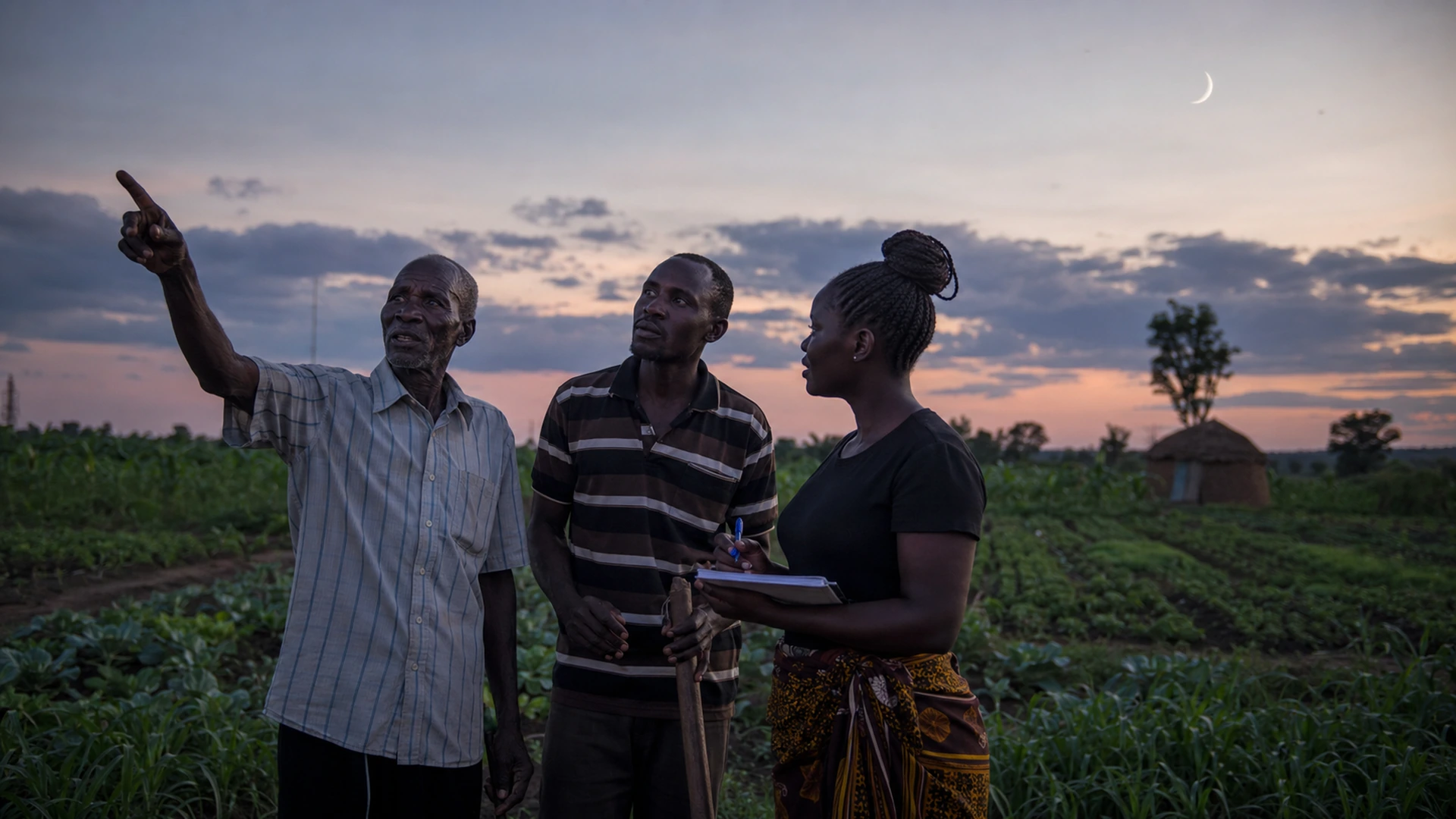
Image number: Image 3
Purpose: Document crescent sighting as a living communal calendrical practice.
Detailed scene: A small East African Muslim community and an astronomy-informed observer respectfully watching the western horizon just after sunset for the first thin crescent. One person uses binoculars while others look with unaided eyes.
Specific culture or historical context: Contemporary Islamic crescent sighting in East Africa; calendrical observation rather than a generic mystical ritual.
People shown: Four to six Black East African adults of mixed ages, including women and men, represented respectfully.
Location: Mosque courtyard or open rooftop in Kampala or coastal East Africa with a clear western horizon.
Clothing: Accurate contemporary modest clothing; no costume exaggeration.
Architecture: Subtle mosque architecture appropriate to the region, not an invented monumental fantasy.
Objects: Binoculars, notebook, optional small tripod; no astrology charts.
Lighting: Natural dusk, warm horizon fading into blue sky; extremely thin realistic crescent if visible.
Composition: Documentary 16:9 photograph; observers in foreground, horizon and crescent in upper third.
SEO-friendly filename: east-african-muslim-crescent-sighting.webp
Image title: Observing the First Crescent
Alt text: East African Muslim observers looking for the first crescent after sunset
Caption: In many Muslim communities, the first visible crescent helps establish the beginning of a lunar month.
Recommended placement: After the Islamic crescent-sighting subsection.
Article section supported: Religious and cultural traditions.
Important elements to avoid: Calling the crescent the exact astronomical conjunction, stereotypes, mixed unrelated clothing, prayer postures invented for the scene, embedded text.
Rosh Chodesh in Jewish Tradition
Rosh Chodesh means the beginning or 'head' of a Hebrew month. Historical Jewish calendars commonly began months through observation of the new crescent, while later fixed calculations became standard. Scholarly evidence also shows diversity and historical change rather than one unchanging method.[5]
In contemporary Jewish practice, Rosh Chodesh has semi-festive or minor-holiday status in many communities, with additional prayers and customs. Renewal is a meaningful Jewish interpretation of the waxing and waning Moon, but it belongs within Jewish religious history and should not be detached from that context.
Amavasya in Hindu Calendars
Amavasya is the new-moon tithi, or lunar date, in Hindu calendrical systems. Indian calendars are diverse: some months are reckoned from new moon to new moon, others from full moon to full moon, and regional observances vary.[7]
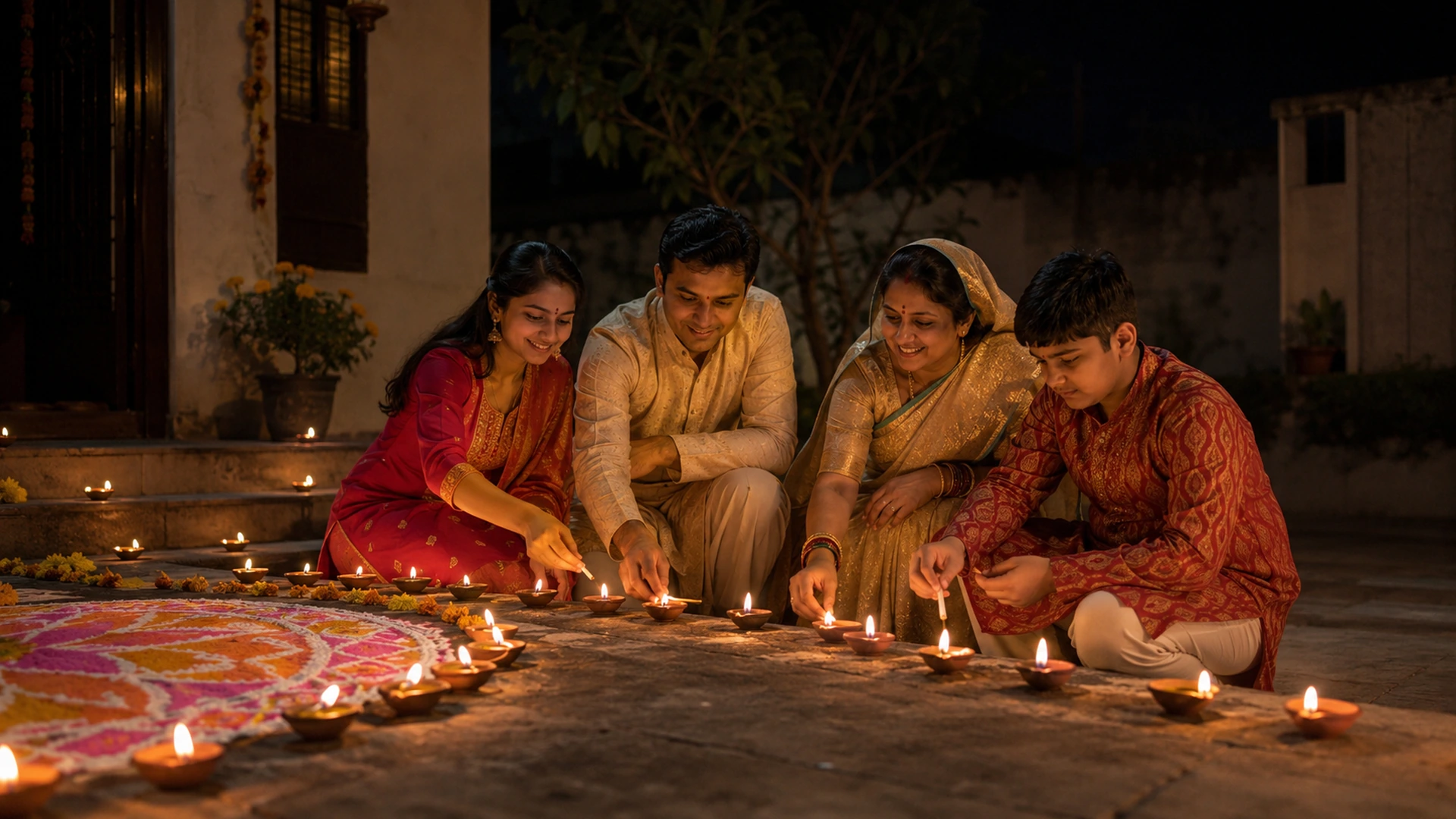
Amavasya can be associated with fasting, pilgrimage, ancestor-related rites or particular festivals, depending on region, lineage and month. Diwali, for example, coincides with an Amavasya in the Hindu lunisolar calendar, while other Amavasya observances have distinct local meanings.[13]
It would be inaccurate to say that every Hindu treats every new moon as a time for the same ritual or as a universal symbol of personal goal-setting.
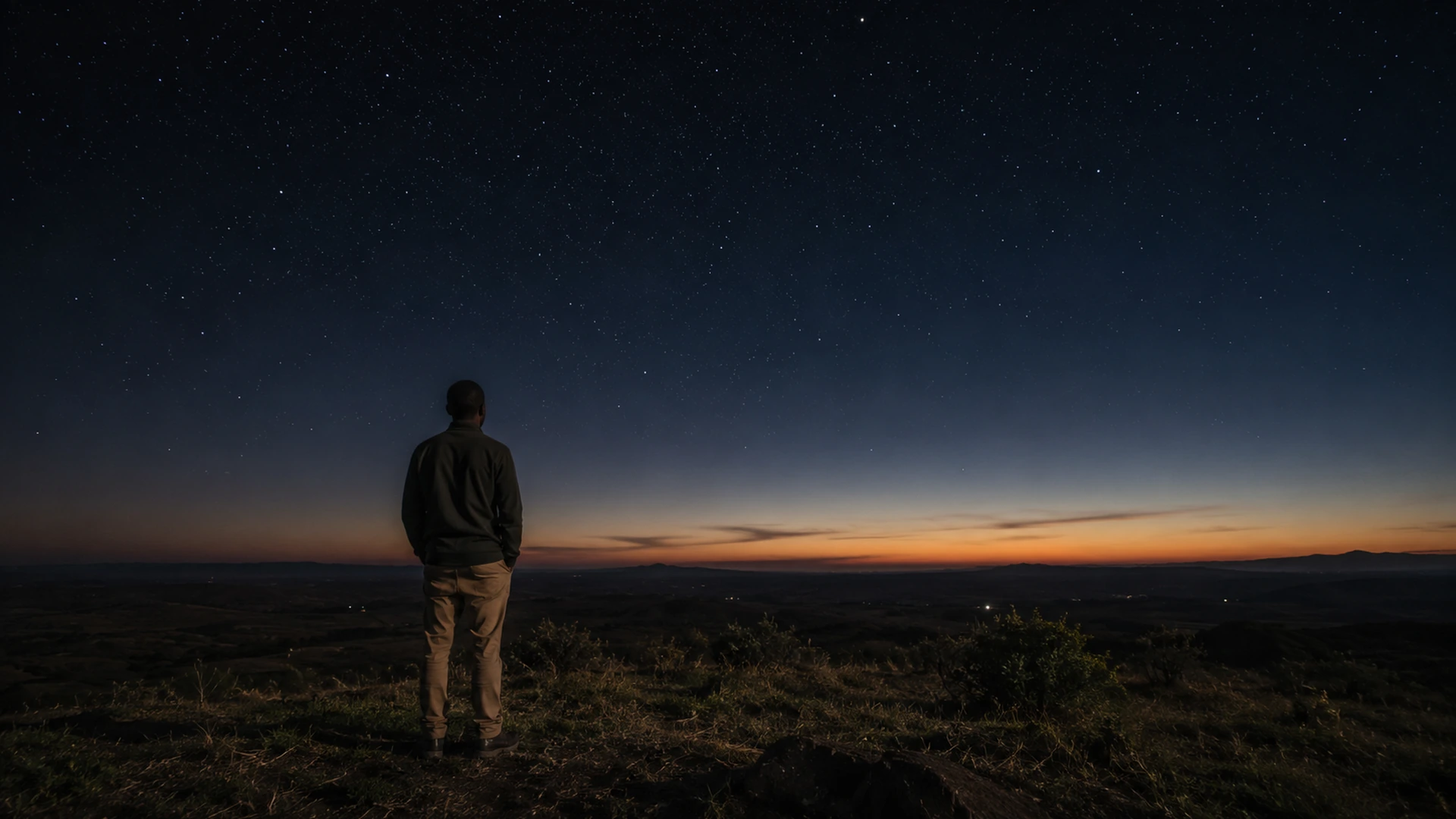
Image number: Image 4
Purpose: Show a documented Hindu festival context connected with Amavasya without claiming one universal Hindu new moon ritual.
Detailed scene: A family courtyard in India on Diwali night with rows of clay oil lamps being carefully lit. The night sky is dark, and the focus is on light emerging within darkness.
Specific culture or historical context: Contemporary Diwali observance on Amavasya; specific festival context.
People shown: An Indian family of three or four adults and older children, respectfully shown preparing lamps.
Location: Residential courtyard in North or Central India.
Clothing: Accurate festive Indian clothing with regional coherence and natural detail.
Architecture: Realistic domestic courtyard with rangoli near the entrance; no palace fantasy.
Objects: Clay diyas, matches or taper, modest floral decoration; no unrelated occult objects.
Lighting: Warm lamp light against a dark natural night; realistic skin tones and shadows.
Composition: Editorial 16:9 scene with lamps leading the eye through the frame.
SEO-friendly filename: diwali-amavasya-new-moon-lamps.webp
Image title: Light on an Amavasya Night
Alt text: An Indian family lighting clay lamps during Diwali on the Amavasya new moon night
Caption: Diwali coincides with an Amavasya, but Hindu new moon observances vary by region, month and tradition.
Recommended placement: After the Amavasya subsection.
Article section supported: Hindu calendrical and festival context.
Important elements to avoid: Invented rites, inaccurate deity depictions, excessive spectacle, mixed regional costumes, embedded text, watermarks.
The New Moon in the Chinese Agricultural Calendar
The traditional Chinese Agricultural Calendar is lunisolar: it combines lunar months with solar-seasonal calculations. The Hong Kong Observatory explains that each lunar month begins at the new moon, calculated when the Moon and Sun share the same ecliptic longitude.[6]
Here, the new moon is fundamental to the structure of the calendar. Its cultural importance is tied to months, festivals and seasonal coordination, not to one standardized spiritual interpretation. The first day of the first lunar month begins the New Year cycle, while solar terms keep the calendar connected to the seasons.
Lunar Timekeeping Among the Lango of Northern Uganda
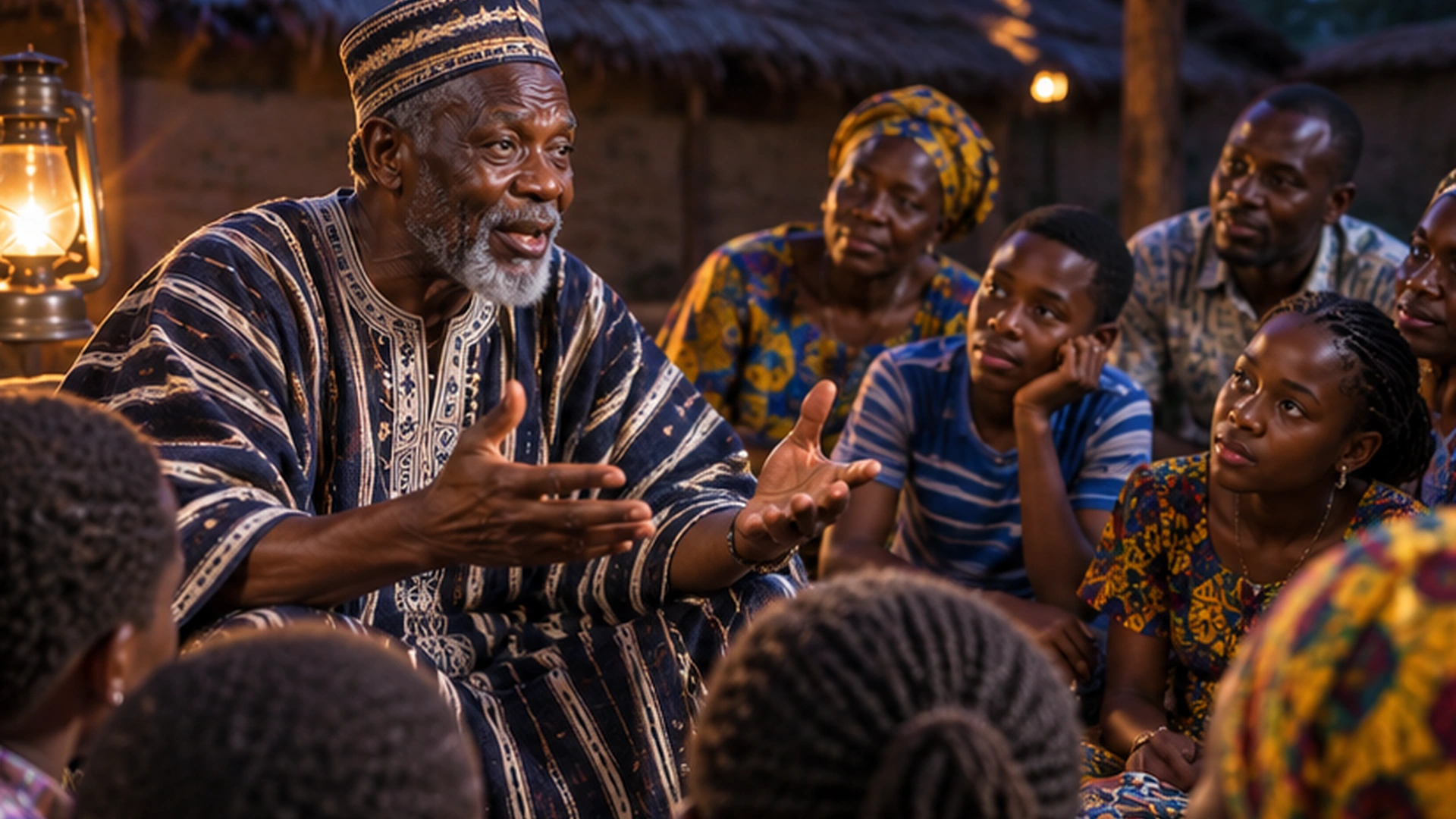
A 2026 ethnographic study documents the traditional Lango lunar calendar, Dwete a Lango, as an indigenous knowledge system connected with agriculture, food security, environmental observation, social organization and cultural life in Northern Uganda.[8]
This example is important because it shows that African lunar knowledge should not be flattened into a vague category of 'African moon spirituality.' The Lango calendar has its own language, ecological setting, historical development and community custodians. The available study emphasizes seasonal knowledge and livelihoods; it does not justify inventing a single Lango new moon ritual.
Responsible writing should credit the Lango people and researchers, recognize that knowledge changes over time and avoid publishing restricted or unverified ritual claims.
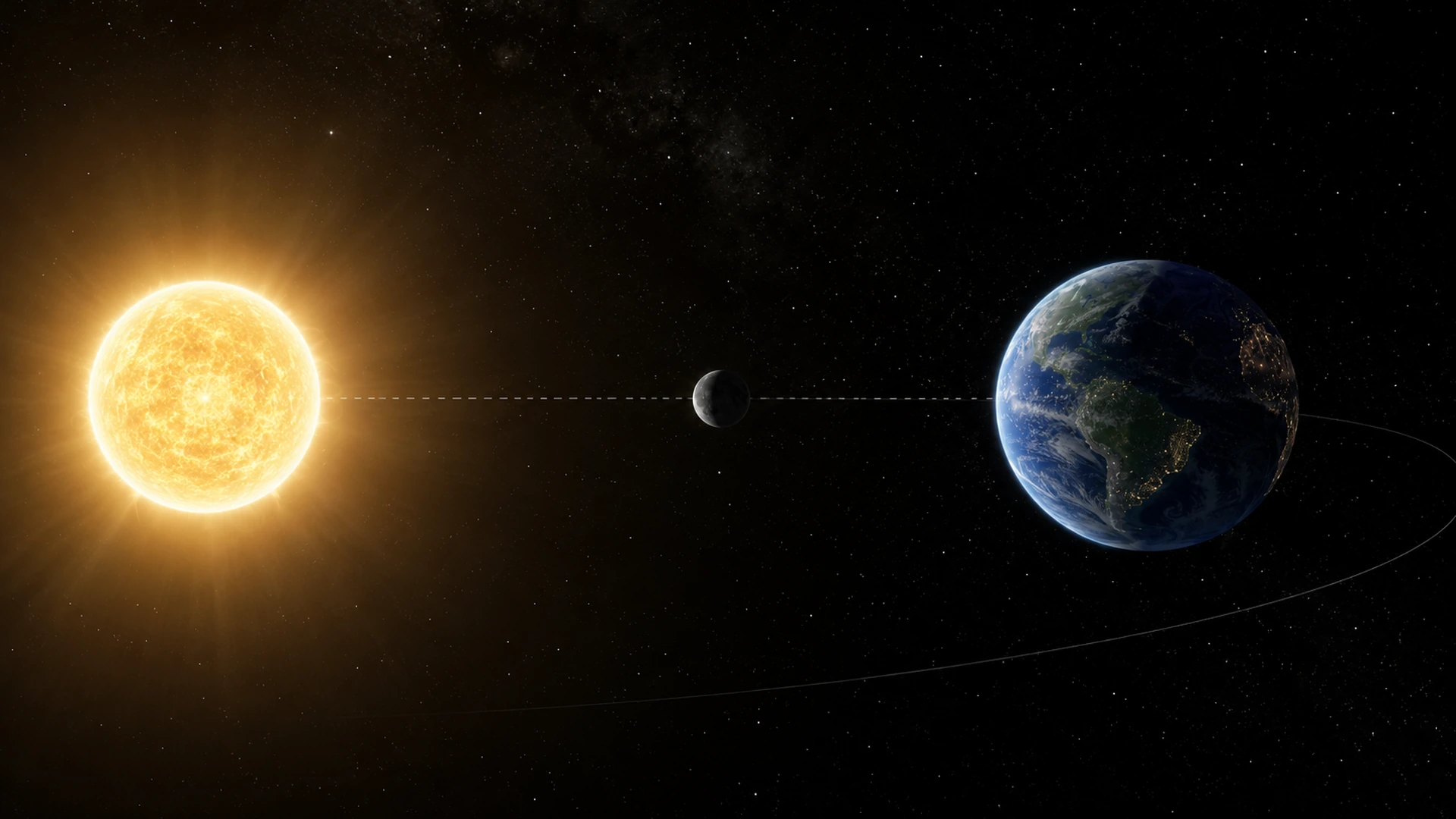
Image number: Image 5
Purpose: Represent lunar timekeeping as community-held ecological knowledge in Northern Uganda.
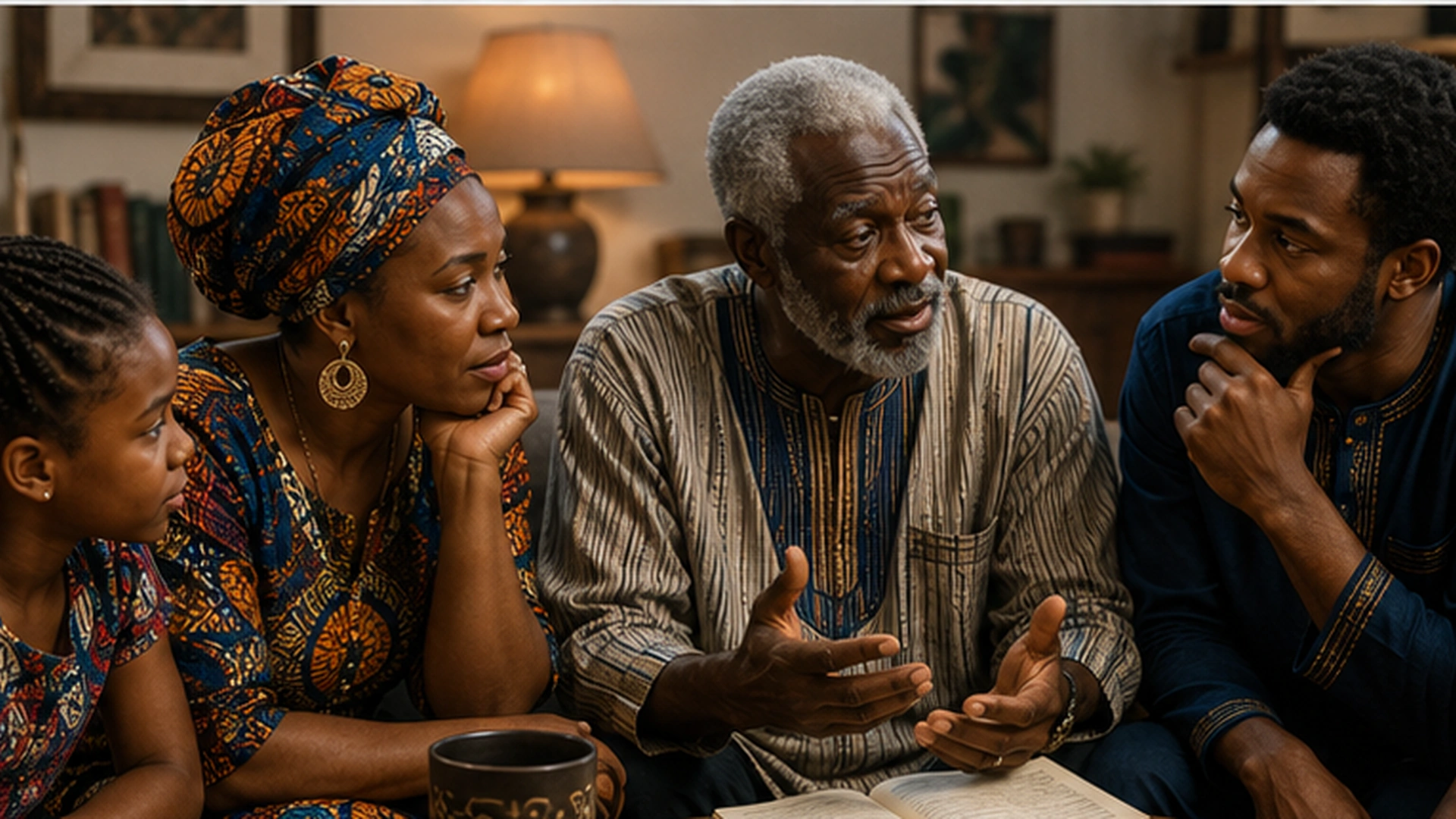
Detailed scene: A Lango elder and two younger farmers discussing seasonal timing beside cultivated fields at twilight. The elder gestures toward the sky while a younger person records notes, emphasizing knowledge transmission rather than a staged ceremony.
Specific culture or historical context: Contemporary Lango community in Northern Uganda; inspired by documented lunar-seasonal knowledge, not an invented ritual.
People shown: Three Black Lango adults of different generations, represented naturally and with dignity.
Location: Rural Lango sub-region, Northern Uganda, with fields and local vegetation.
Clothing: Contemporary rural Ugandan clothing appropriate to work and evening weather; no fabricated 'tribal' costume.
Architecture: Distant regionally plausible homestead only if needed.
Objects: Notebook, farming tools placed naturally, crops appropriate to the landscape.
Lighting: Soft twilight with realistic sky; no supernatural lunar glow.
Composition: Documentary 16:9 photograph, people on one side and agricultural landscape extending behind them.
SEO-friendly filename: lango-lunar-calendar-northern-uganda.webp
Image title: Lunar Timekeeping and Seasonal Knowledge
Alt text: Lango farmers in Northern Uganda discussing seasonal knowledge at twilight
Caption: The documented Lango lunar calendar connects timekeeping with agriculture, ecology and community knowledge.
Recommended placement: After the Lango lunar timekeeping subsection.
Article section supported: African cultural astronomy and responsible cultural specificity.
Important elements to avoid: Invented ceremony, masks, body paint, generic safari imagery, exoticizing poses, unrelated cultural symbols, embedded text.
New Moon Superstitions and Folklore
New moon superstitions are best understood as folklore: beliefs transmitted through families and communities, often with regional variations. Their value lies in cultural history and social meaning, not in scientific proof.
Irish and British folklore collections record customs connected with the first sight of the young crescent. One widespread belief advised turning a coin in the pocket so that money would remain plentiful. Other accounts warned against seeing the new crescent through glass, while some encouraged making a wish.[14]
These examples refer to the first visible crescent, although collectors often called it the 'new moon.' They should not be generalized to all of Ireland, Britain or Europe, and they should not be presented as guaranteed ways to obtain wealth or luck.
Folklore also changes. A belief may be adapted, forgotten, revived online or combined with modern astrology. Calling every contemporary practice 'ancient' erases that history.
What Is the Symbol for a New Moon?
In digital text, the Unicode character U+1F311 is named NEW MOON SYMBOL and is usually rendered as a dark lunar disk. It is commonly displayed as an emoji, but the underlying character has a standardized Unicode name.[10]
A crescent is a symbol of the Moon more generally and can represent a young or old crescent depending on its orientation and the observer's hemisphere. It is not an exact diagram of the astronomical new moon.
For educational graphics, the clearest symbol is either a dark disk or a Sun-Moon-Earth alignment showing the Moon between Earth and the Sun. Avoid labeling a bright crescent as the exact conjunction.
A Responsible New Moon Reflection Practice
A person can use the new moon as a reflective calendar marker without claiming supernatural certainty. The following practice is intentionally simple, non-medical and non-denominational.
First, review the previous month. Identify one action that helped, one pattern that caused difficulty and one unfinished responsibility that still matters.
Second, choose one intention. Phrase it as a direction you can influence, such as 'I will protect two hours each week for study,' rather than a guaranteed prediction about another person or an external event.
Third, define the first observable step. Make it small enough to begin within twenty-four hours.
Fourth, schedule a review near the first quarter or full moon. The purpose is accountability, not proof that the Moon caused the outcome.
People following a particular religion should prioritize the guidance of their own community, texts and qualified teachers rather than replacing established observance with a generic online ritual.
What Science Says About New Moon Effects
Science supports the astronomical lunar cycle and the Moon's role in tides. It does not establish that the new moon automatically causes manifestation, emotional cleansing, financial gain, fertility or spiritual protection.
Research on lunar phases and human behavior has generally found no reliable broad effect. Reviews have criticized proposed mechanisms and inconsistent results, while studies of violence and large population studies of sleep have often reported no significant association.[11][12]
A smaller body of research has reported possible links between lunar timing and sleep or individual biological rhythms, but findings remain mixed, effects are often small and methods differ. This uncertainty does not validate sweeping spiritual claims.[12]
A balanced conclusion is that lunar symbolism can be psychologically or culturally useful as a framework for reflection, while spiritual outcomes remain matters of belief rather than established scientific fact.
Common Misunderstandings
The new moon is not normally a visible black object in the night sky. It is usually hidden in the Sun's glare.
The new moon and first crescent are related but distinct events.
No single new moon meaning belongs to every religion or culture.
Modern intention-setting practices should not automatically be described as unchanged ancient traditions.
A spiritual symbol can be meaningful without being a scientifically proven force.
A crescent symbol does not always identify Islam, nor does every lunar symbol carry the same meaning across regions and periods.
Key Takeaways
The new moon commonly symbolizes beginnings, inward reflection and unseen potential in modern spirituality.
Astronomically, it is a conjunction and is usually invisible; the first visible crescent comes later.
Islamic, Jewish, Hindu, Chinese and Lango examples show different calendrical, religious and ecological uses of lunar time.
New moon superstitions are regional folklore, not scientific guarantees.
U+1F311 is the standardized Unicode new moon symbol, while a crescent is a broader lunar image.
Responsible practice separates personal meaning, living belief, historical evidence and scientific evidence.
People Also Ask
What does a new moon mean spiritually?
It commonly represents a new beginning, inward reflection, quiet potential and the choice of a direction. This is an interpretive meaning, not a universal teaching shared by every culture.
Why is the new moon associated with new beginnings?
It begins a new lunar cycle. Because the Moon moves from invisibility to a growing crescent, people often use it as a metaphor for a beginning that has not yet become visible.
Can you see the new moon?
Usually not. At conjunction, the side facing Earth is mostly dark and the Moon is close to the Sun in the sky. The thin waxing crescent appears later.
What is the symbol for the new moon?
Unicode names U+1F311 as NEW MOON SYMBOL, rendered as a dark lunar disk. In scientific diagrams, the phase is shown through the alignment of the Sun, Moon and Earth.
Are new moon rituals ancient?
Some religions and cultures have ancient lunar observances, but many popular intention-setting rituals are modern or have changed substantially. Each practice should be traced to a specific community and source.
Frequently Asked Questions
Is the new moon good luck?
Some folklore traditions treat the first visible crescent as lucky, but this is a cultural belief rather than a proven effect. Other traditions attach different meanings or no luck symbolism at all.
Is the new moon a good time to start something?
It can be a useful recurring date for planning or beginning a habit. Success depends on the quality of the plan and the action taken, not on a guaranteed lunar influence.
Does the new moon affect emotions?
Scientific evidence does not show a consistent broad effect on human emotions or behavior. Personal expectations, culture, sleep, routine and other factors may shape how someone experiences a lunar phase.
What is the difference between a dark moon and a new moon?
Usage varies. Astronomically, new moon refers to conjunction. In some modern spiritual communities, 'dark moon' describes the final invisible period before conjunction, while others use the terms interchangeably.
Do all lunar calendars begin with the new moon?
Many lunar and lunisolar calendars organize months around conjunction or the first visible crescent, but methods differ. Some use calculation, some observation and some combine both.
Conclusion
The spiritual meaning of the new moon is best understood as a family of interpretations rather than one universal rule. For many modern practitioners, it represents a fresh start, inward attention and potential that has not yet taken visible form. For religious and cultural communities, the lunar transition may instead mark a month, a festival, a fast, a prayer cycle, agricultural timing or communal identity.
The most respectful approach is to name the tradition, distinguish conjunction from crescent sighting and avoid presenting belief as scientific certainty. Used in that way, the new moon can remain a powerful symbol of renewal while preserving the histories and communities that give lunar time its many meanings.
Research Sources and Further Reading
[1] NASA Science. 'Moon Phases.' NASA, updated 2026. https://science.nasa.gov/moon/moon-phases/
[2] Hoffman, Roy E. 'Observing the New Moon.' Monthly Notices of the Royal Astronomical Society 340, no. 3 (2003): 1039-1051. https://doi.org/10.1046/j.1365-8711.2003.06382.x
[3] Oxford Handbook of Science and Medicine in the Classical World. 'Theorization, Measurement, and Standardization of Calendrical Time.' Oxford University Press.
[4] University of Cambridge. 'Changing Month by the Moon: How the Islamic Calendar Is Linked to the Lunar Cycle.' 2023. https://www.cam.ac.uk/stories/changing-month-by-the-moon
[5] Stern, Sacha. Calendar and Community: A History of the Jewish Calendar, 2nd Century BCE to 10th Century CE. Oxford University Press, 2001, chapter 3, 'The New Moon.'
[6] Hong Kong Observatory. 'The Chinese Agricultural Calendar Explained.' https://www.hko.gov.hk/en/education/astronomy-and-time/time-service/00413-the-chinese-agricultural-calendar-explained.html
[7] SATHEE, Indian Institute of Technology Kanpur. 'Astronomy in India.' Based on NCERT Knowledge Traditions and Practices of India materials. https://sathee.iitk.ac.in/ncert-books/class-11/knowledge-traditions-and-practices-of-india/chapter-05-astronomy-in-india/
[8] Agea, Jacob Godfrey, and Marus Eton. 'Dwete a Lango: Lunar Timekeeping, Culture, and Sustainability in Northern Uganda.' African Journal of History and Geography 5, no. 1 (2026): 144-164. https://doi.org/10.37284/ajhg.5.1.5305
[9] Hutton, Ronald. The Triumph of the Moon: A History of Modern Pagan Witchcraft. Oxford University Press, 1999; 2nd ed. 2019.
[10] Unicode Consortium. Unicode NamesList, U+1F311, NEW MOON SYMBOL. https://www.unicode.org/charts/nameslist/n_1F300.html
[11] Culver, Roger, James Rotton, and I. W. Kelly. 'Moon Mechanisms and Myths: A Critical Appraisal of Explanations of Purported Lunar Effects on Human Behavior.' Psychological Reports 62, no. 3 (1988): 683-710.
[12] Cordi, Maren, et al. 'Bad Sleep? Don't Blame the Moon! A Population-Based Study.' Sleep Medicine 16, no. 11 (2015): 1321-1326; and Turányi et al., 'Mysteries of the Moon,' Biological Rhythm Research 55, no. 1 (2024): 58-71.
[13] Government of India, Ministry of Tourism. 'Deepotsav' and related Incredible India festival resources describing Diwali's coincidence with Amavasya.
[14] National Folklore Collection, University College Dublin, The Schools' Collection; and Henderson, William. Notes on the Folk-Lore of the Northern Counties of England and the Borders (1879), records of new-moon coin-turning and related beliefs.
Article Information
- Publisher
- Ancestral Temple
- Editor
- Ancestral Temple
- Last updated
- Jul 26, 2026
- Last reviewed
- Jul 26, 2026
- Content version
- fbc9f5adf3
This educational article should be read as cultural and spiritual information, not as medical, legal, financial, or emergency advice.
Helpful Related Guidance
Explore This Topic
Related Topic Cluster
Moon, Sun and seasons
Complete Guide The 8 Phases of the Moon in Order: Names, Meanings and SymbolismAbout the Author
 Ancestral Temple
Spiritual guide and practitioner with decades of experience in ancestral wisdom, rituals, and divine guidance.
Related Posts
View All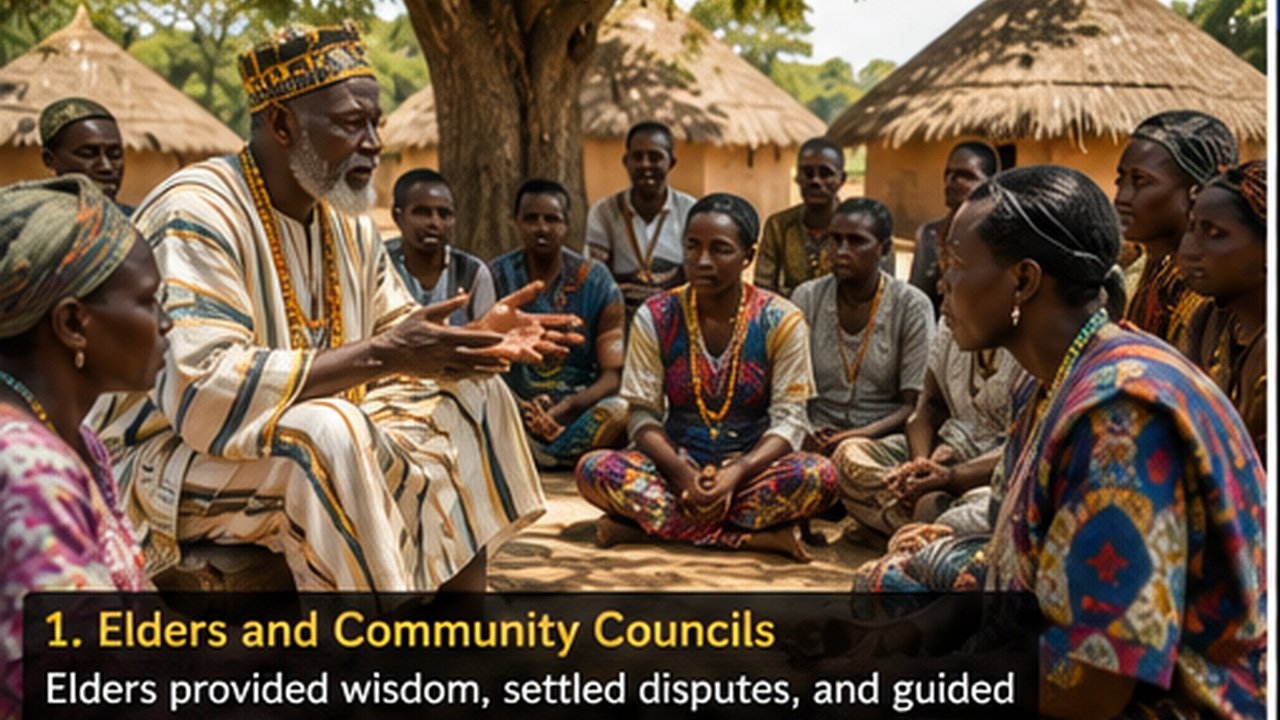






Leave a Comment
We'd love to hear your thoughts.