
Candle Rituals Explained
Pillar Article
Quick Summary
Candle Rituals Explained: Colors, Meanings and Traditional Uses Candle rituals are intentional acts in which a flame is used during prayer, remembrance, meditation, celebration, of...
Candle Rituals Explained: Colors, Meanings and Traditional Uses
Candle rituals are intentional acts in which a flame is used during prayer, remembrance, meditation, celebration, offering or symbolic reflection. A person may light a candle to mark sacred time, honor someone who died, focus attention, express hope, accompany a religious service or represent a chosen intention. The flame can carry powerful meaning because it transforms wax into light, makes time visible as it burns and creates a clear focal point in darkness.
There is no single worldwide system of candle rituals. Christian, Jewish, Buddhist, Hindu, African diaspora and modern esoteric practices have different histories, authorities and purposes. In many older traditions, the ritual object was an oil or butter lamp rather than a wax candle. Archaeological and museum evidence from Coptic Egypt, for example, shows small molded clay lamps fueled by castor or sesame oil, sometimes decorated with Christian symbols believed to protect the owner. [1]
The popular online charts that assign white to purification, red to love, green to prosperity and black to protection belong mainly to modern spiritual and commercial systems. They can be useful as reflective conventions, but they should not be described as a universal ancient code. Color symbolism changes across communities, eras and situations, and the same color can carry several meanings. [2]
Quick Answer
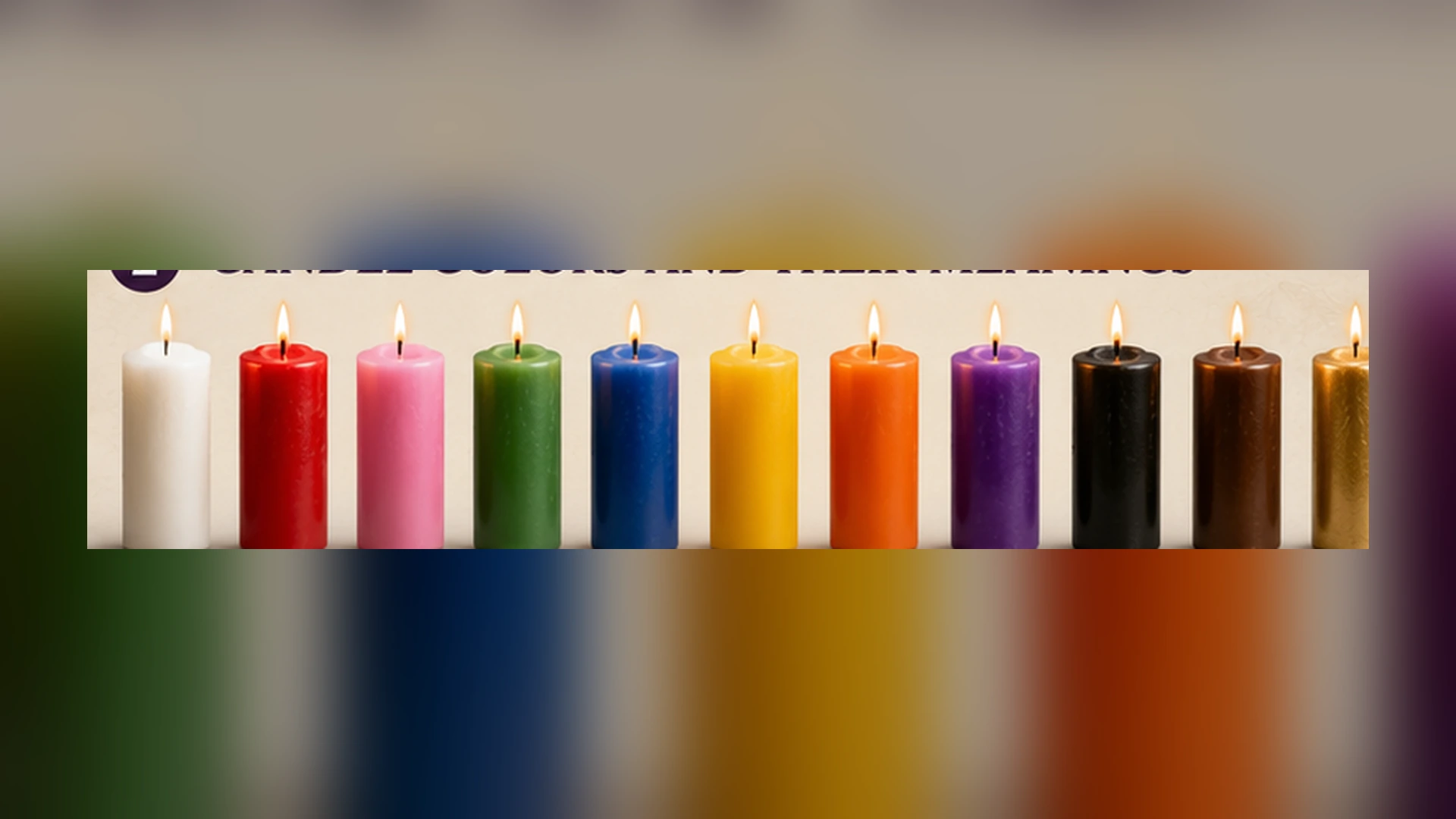
A candle ritual is the deliberate lighting of a candle for prayer, remembrance, meditation, celebration or symbolic intention. Common modern color associations include white for clarity, red for vitality or love, green for growth, blue for peace, yellow for confidence, purple for spiritual reflection and black for boundaries or mourning. These meanings vary by tradition and do not guarantee supernatural results.
What Is a Candle Ritual?
A ritual is a patterned action given meaning by a person or community. In a candle ritual, the action may include selecting the candle, preparing a space, saying a prayer, recalling a name, observing silence, lighting at a prescribed time or allowing the flame to burn for a defined period. The candle is not always the central object; it may support a larger liturgy, family custom or private act of reflection.
Candle rituals can serve several purposes:
Illumination: providing literal light in a sacred or domestic space.
Attention: giving the eyes a stable focal point during prayer or meditation.
Remembrance: representing continuing memory of a deceased person or historical event.
Offering: presenting light before a sacred image or in a place of worship.
Transition: marking the beginning or ending of a holy day, ceremony or life stage.
Community identity: repeating a practice shared by a religious, national or cultural group.
Personal symbolism: assigning a color or flame to a hope, commitment or emotional process.
These purposes can overlap. A Shabbat candle provides light, welcomes sacred time and expresses religious duty. A yahrzeit candle supports remembrance. A Paschal candle represents Christ in Catholic Easter liturgy. A Kwanzaa candle marks one of seven principles. A modern personal candle may simply help someone sit quietly and formulate a practical goal.
Where Did Candle Rituals Come From?
Lamps Came Before Many Modern Candles
Humans used controlled flame long before the modern wax candle. In many ancient and medieval settings, people burned plant oil, animal fat or clarified butter in clay, metal or stone lamps. The wick drew fuel toward the flame. Museum examples from Roman and Coptic Egypt show that such lamps served everyday lighting and could also bear religious symbols. [1]
Wax candles became important in some regions because they were portable and self-contained. Historical candle fuels included beeswax and tallow, the rendered fat of animals. Organic-residue analysis at twelfth-century Fountains Abbey identified both tallow and beeswax in candleholders, including evidence that used beeswax from church candles could be mixed with tallow for domestic lighting. [3]
Beeswax generally burned more cleanly and pleasantly than tallow but was more costly. Religious institutions and wealthy households could therefore use materials differently from ordinary domestic users. Later developments included stearin and paraffin. The industrial refining of paraffin during the nineteenth century helped make molded candles more consistent and widely available. [4]
Ritual Meaning Developed in Specific Communities
The existence of a flame does not prove that every use was religious. A lamp might illuminate a workshop; a candle might light a meal. Ritual meaning comes from context: where the object was placed, who lit it, what words accompanied it and what the community understood the action to signify.
Over time, light became a powerful symbol in many traditions because it can represent presence, knowledge, hope, vigilance, life, revelation or the defeat of darkness. Yet the exact interpretation differs. A Buddhist butter-lamp offering is not a Christian votive candle, and neither is the same practice as a modern intention candle.
Traditional Religious and Cultural Uses
Christian Candles: Worship, Prayer and the Light of Christ
Christian traditions use candles in several ways, although practices vary by denomination. In Catholic worship, the Paschal candle is a central Easter symbol of Christ as divine light. During the Easter Vigil, light is shared from the Paschal candle to candles held by the congregation. The candle also appears in baptismal contexts, where a smaller flame can symbolize the newly baptized person being enlightened by Christ. [5]
Votive candles are lit as acts of prayer or devotion, often near an image of Christ, Mary or a saint. The candle may continue burning after the person leaves, materially extending the prayer in the worship space. A funeral or memorial setting may use light to express hope, remembrance and resurrection faith.
The color of a Catholic liturgical season is normally expressed through vestments and church textiles, not through a universal requirement that every prayer candle match that color. Official liturgical colors include white, red, green, violet, rose and, in some contexts, black, gold or silver. Those rules should not be confused with internet candle-magic charts. [6]
Jewish Candle Lighting: Sacred Time and Memory
In Jewish life, Shabbat candles are lit before sunset on Friday to honor and welcome Shabbat. The practice creates light for the household and marks the transition from ordinary time to sacred time. Customs concerning who lights, how many candles are used and the exact time vary across communities and families. [7]
A yahrzeit candle is traditionally lit in memory of someone who has died, commonly on the anniversary of the death and at certain memorial observances. The flame is associated with remembrance and the soul, but the practice belongs to a defined Jewish framework rather than a general “ancestor candle” system. [8]
Hanukkah involves the ceremonial lighting of a menorah over eight nights. The number of lights increases each night. The ritual centers on the festival's religious history and the public display of sacred light; it is not primarily a color-coded candle ritual.
Buddhist Butter Lamps: Offering Light
In Tibetan Buddhist practice, butter lamps may be placed before sacred images and filled with ghee or another suitable fuel. Museum records describe elaborate lamps designed to receive these offerings. [9] The offering of light may be associated with wisdom and the dispelling of ignorance, but forms and explanations vary across Buddhist communities.
Calling every butter lamp a candle can hide important material differences. A traditional lamp is a vessel repeatedly filled with fuel, while a candle contains fuel around a wick. The broader category is ritual light, not one identical technology.
Hindu, Jain and Sikh Festivals of Light
Diwali or Deepavali is celebrated in several religious traditions and regions, with different stories and theological meanings. Rows of small lamps are a defining visual feature. Smithsonian historical interpretation notes that the name is connected with rows of lamps and that the light can symbolize protection from spiritual darkness. [10]
Modern celebrations may use wax candles and electric lights as well as traditional clay lamps. It is more accurate to discuss Diwali as a festival of light than to reduce it to a candle-color ritual.
Kwanzaa: Colors, Principles and Cultural Education
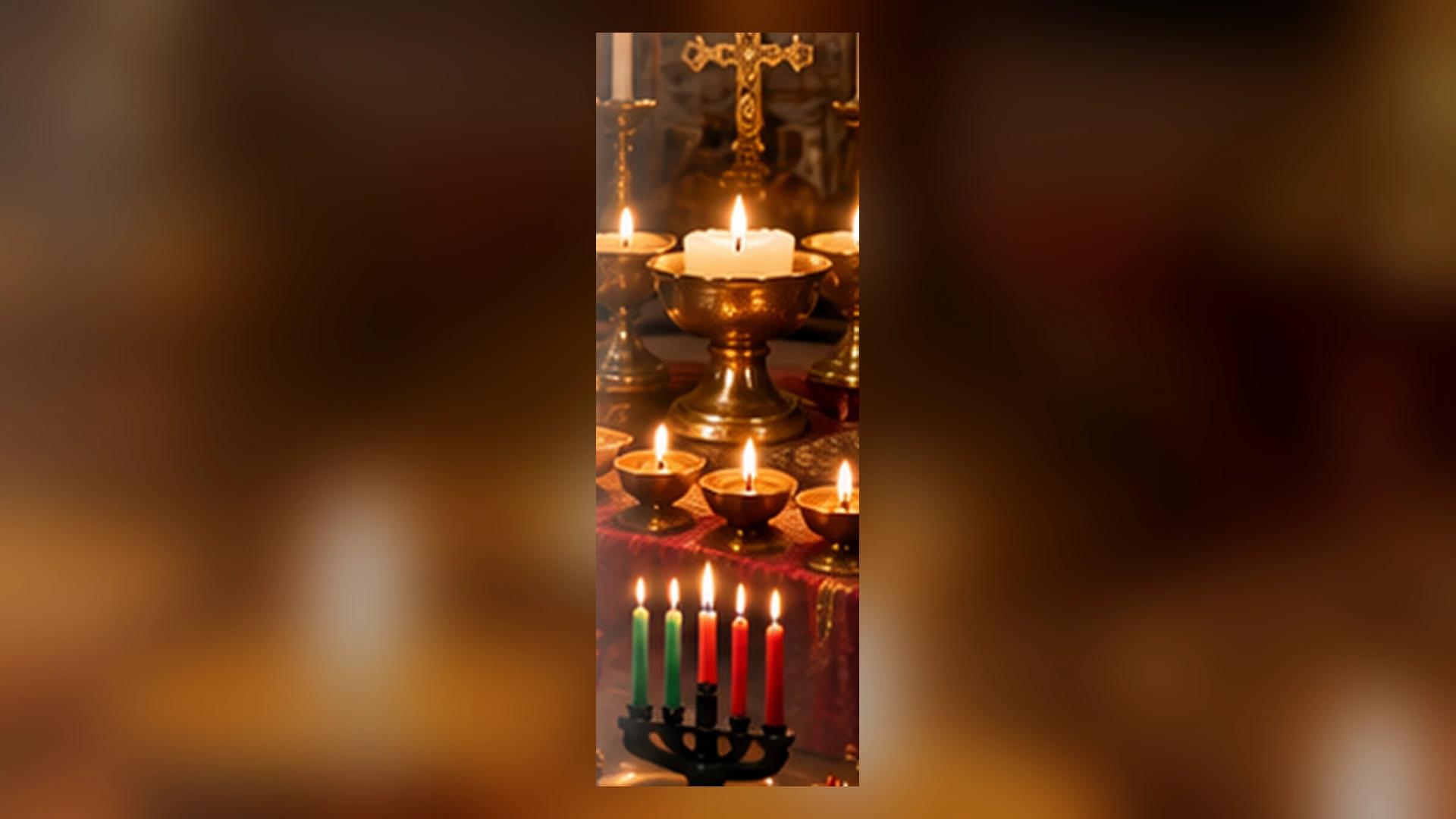
Kwanzaa uses a seven-branched candleholder called a kinara. A black candle, three red candles and three green candles represent the people, struggle and future within Pan-African symbolism. One candle is lit for each day and principle of the celebration. The National Museum of African American History and Culture emphasizes that candle lighting accompanies reflection on the seven principles and community activities. [11]
This is a strong example of a color system whose meanings are documented and tradition-specific. It should not be mixed with unrelated charts claiming that every red candle universally means romantic love or that every green candle is a money spell.
Do Candle Colors Have Universal Meanings?
No. Color meanings are influenced by language, religion, politics, environment, trade, art, mourning customs and individual experience. Academic work on color symbolism shows that associations can be durable within a tradition but still differ across time and place. [2]
White may suggest purity in one setting, mourning in another and political surrender in another. Red can mean love, danger, sacrifice, vitality, authority or political struggle. Black may represent death, dignity, protection, mystery, protest or the people, as it does in Kwanzaa. Green can evoke vegetation, renewal, Islam, national identity or money, depending on context.
A useful candle-color guide should therefore be treated as a set of common modern symbolic options, not as a law of spirituality.
Common Candle Color Meanings
The following table summarizes widely circulated modern associations in Western esoteric, New Age and popular spiritual practice. It is suitable for personal reflection only when the user understands that traditions differ.
| Candle color | Common modern associations | Responsible ways to use the symbolism | Important cautions |
|---|---|---|---|
| White | Clarity, peace, purification, remembrance, spiritual focus | Quiet prayer, a fresh-start reflection, memorial light | White is not universally “pure”; in some cultures it is connected with mourning |
| Red | Vitality, courage, passion, love, urgency | Reflecting on courage, affection, motivation or boundaries | Do not use it to claim control over another person's feelings |
| Pink | Tenderness, friendship, compassion, reconciliation | Writing a kind message, practicing self-compassion, repairing a relationship responsibly | Reconciliation requires consent and honest communication |
| Green | Growth, fertility of ideas, prosperity, health, nature | Budget planning, career goals, gardening commitments, gratitude for resources | A green candle cannot guarantee money, pregnancy or medical recovery |
| Blue | Calm, truth, communication, devotion, emotional steadiness | Preparing for a difficult conversation or quiet prayer | It does not replace mental-health or conflict-resolution support |
| Yellow or gold | Confidence, learning, attention, success, solar imagery | Study sessions, presentations, creative planning | The association with “success” is symbolic, not predictive |
| Orange | Energy, opportunity, creativity, social confidence | Beginning a project or planning a practical next step | Avoid treating urgency as proof that a result is destined |
| Purple | Dignity, spiritual reflection, authority, wisdom | Contemplation, study of sacred texts or leadership ethics | Purple has different royal, religious and mourning histories |
| Black | Boundaries, mourning, absorption, protection, endings | Grief reflection, ending an unhealthy habit, establishing a boundary | Black does not inherently mean evil; avoid fear-based claims |
| Brown | Stability, home, land, work, practical matters | Household organization, land stewardship or employment planning | Meanings are largely modern and not universal |
| Silver or gray | Reflection, transition, intuition, lunar imagery | Journaling through uncertainty or observing a transition | Metallic color has no proven influence on intuition |
| Multicolored | Several goals, diversity, celebration or a tradition-defined sequence | Use only when the particular tradition or personal framework clearly explains the colors | Do not combine unrelated cultural systems into one invented rite |
Detailed Meanings of Popular Candle Colors
White Candle Meaning
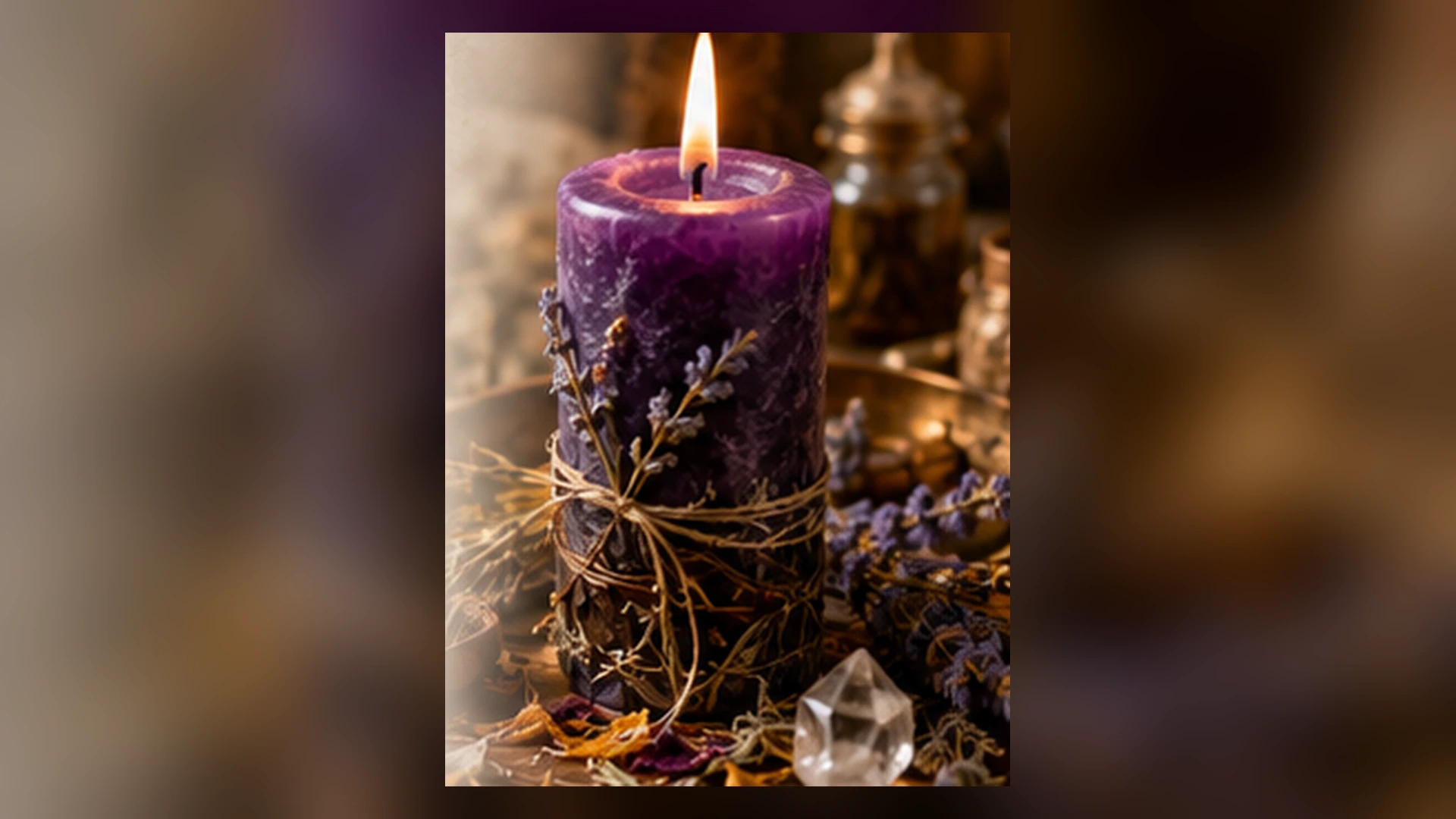
White is the most flexible color in modern candle practice. It is often associated with clarity, peace, cleansing and remembrance because it visually suggests light, simplicity and an unmarked beginning. White candles are also easy to obtain and are frequently used in churches and memorial settings.
A white candle can be used as a neutral focal point when no specific color is required. However, calling white a universal replacement for every other color is a convention of some modern systems, not an ancient worldwide rule.
Red Candle Meaning
Red is commonly linked with blood, heat, fire, vitality, courage and romantic passion. In Christian liturgical color, red can signify the Holy Spirit, martyrdom or the Passion rather than romance. In Kwanzaa, red represents struggle. These examples show why context matters.
A responsible personal use might focus on courage before a difficult task or on expressing affection honestly. A ritual should not be used to justify coercion, stalking, manipulation or the belief that another person's consent can be spiritually overridden.
Green Candle Meaning
Green commonly evokes vegetation, renewal, growth and material prosperity. Modern spiritual shops frequently market green candles for money, business or luck. A more grounded ritual connects the symbol to practical action: making a budget, applying for work, reviewing a business plan, planting food or giving thanks for available resources.
A flame cannot generate wealth or guarantee investment returns. Financial claims should remain symbolic and should never replace professional advice or careful risk assessment.
Blue Candle Meaning
Blue may suggest sky, water, calm, loyalty, truth or devotional feeling. It is often chosen for peaceful communication, emotional steadiness and prayer. A short blue-candle reflection can help someone slow down before speaking, but any benefit comes from attention, breathing, preparation and meaning rather than a scientifically established power in the wax color.
Purple Candle Meaning
Purple has histories of rarity, elite status, religious authority, penitence and mystical reflection. Modern candle guides connect it with wisdom, intuition or spiritual development. This can be used as a prompt for study, humility and ethical leadership rather than a promise of psychic powers.
Black Candle Meaning
Black is among the most misunderstood colors. It can represent mourning, solemnity, protection, boundaries, endings, dignity or political identity. In some modern esoteric systems, practitioners use a black candle symbolically to contain, banish or end an unwanted influence. That is a belief-based interpretation, not a measurable physical effect.
Black should not automatically be described as negative or dangerous. Such language can reproduce cultural bias. A safe personal use may be to mark the end of a harmful habit, remember the dead or write down a boundary that will be supported through concrete action.
Modern Candle Magic and African American Conjure
Candle magic is a broad modern label for practices in which candle color, dressing oils, written petitions, timing and flame observation are used within a spiritual or magical framework. Some forms draw from European ceremonial magic, folk Catholicism, Spiritualism, metaphysical religion, commercial occult publishing and African diaspora traditions.
African American Hoodoo or Conjure developed through the historical experiences of Black communities in the United States, incorporating African, European, Indigenous and Christian elements in changing regional forms. Scholars such as Yvonne Chireau and Katrina Hazzard-Donald emphasize its complex history and warn against reducing the tradition to commercial products or outsider inventions. [12][13]
Candles became increasingly visible in twentieth-century urban spiritual-supply culture, where glass-encased candles could be sold with printed colors, saints, Psalms, goals or instructions. That commercial history helps explain why modern color charts look standardized even when older regional practice was more diverse.
It is inaccurate to say that all African spiritual traditions use the same colored candles. Many African religious systems historically relied on local materials, lamps, fire, water, plants, food, textiles, earth, metal or spoken ritual rather than manufactured color-coded candles. Contemporary African practitioners may use candles, but their meanings should be learned from the specific community rather than assumed from an internet chart.
How to Create a Respectful Personal Candle Ritual
A private symbolic ritual does not need elaborate objects. The most responsible approach is transparent about what the practice is: a structured moment of attention, prayer or reflection rather than a guaranteed mechanism for changing external events.
1. Define an Ethical Purpose
Choose a purpose that concerns your own conduct or a situation you can responsibly influence. Examples include:
Preparing to apologize.
Remembering someone who died.
Committing to a study plan.
Reviewing a budget.
Practicing gratitude.
Establishing a personal boundary.
Beginning a period of prayer or meditation.
Avoid intentions that seek to override another person's consent, punish someone, diagnose illness, guarantee pregnancy, influence a court illegally or replace professional care.
2. Choose a Candle for Practical Reasons First
Use a stable, good-quality candle that fits the available holder and burn time. Color can support the theme, but safety matters more. An unscented candle may be better around children, animals, people with asthma or anyone sensitive to fragrance.
3. Prepare the Space
Clear paper, fabric, dried herbs, curtains and other combustible materials away from the flame. Place the candle on a stable, heat-resistant surface. Keep water nearby only for general readiness; use an appropriate extinguisher for a spreading fire and follow local emergency guidance.
4. State the Intention Honestly
A simple statement is enough: “I light this candle while I remember...” or “During this time, I will identify the next practical step...” A religious practitioner should use prayers and procedures appropriate to that faith rather than inventing language and presenting it as traditional.
5. Connect Symbolism With Action
After the quiet period, complete one realistic action. Send the application, make the appointment, write the budget, speak with the person, attend the service or seek qualified help. Symbolism is most constructive when it supports responsibility.
6. Extinguish the Flame Safely
Do not interpret snuffing a candle as spiritually harmful when safety requires it. Traditions differ on whether candles are allowed to burn out, pinched, snuffed or blown out. Household safety takes precedence over a modern superstition.
Candle Flame Reading: Symbolism and Limitations
Some practitioners interpret a tall flame, flickering, smoke, wax patterns or the speed of burning as messages. Such systems are forms of divination or folk interpretation. Their rules differ, and no controlled scientific method has established that a flame predicts future events or reveals hidden intentions.
Ordinary physical factors can explain much candle behavior:
A long or poorly trimmed wick can create a large flame or soot.
Drafts cause flickering and uneven burning.
Fragrance, dye and wax composition affect melt behavior.
A tilted holder produces an uneven wax pool.
Dust, herbs and oils can clog or enlarge the flame and create a fire hazard.
Changes in room temperature influence how quickly wax softens.
A person may still find metaphorical meaning in watching a flame, just as one may reflect on poetry or art. The responsible boundary is to call it interpretation, not objective evidence.
What Candle Rituals Can and Cannot Do
What They May Do
A candle ritual may help organize attention, create a memorable transition, support prayer, reinforce a community practice or make grief and hope tangible. Research on ritual more broadly suggests that structured actions can influence expectation, emotion and subjective experience, especially when the setting and symbolism are meaningful. [14]
What They Cannot Scientifically Guarantee
There is no scientific evidence that candle color or flame shape can guarantee:
Romantic attraction or the return of a former partner.
Pregnancy, safe childbirth or recovery from disease.
Business profits, lottery winnings or debt cancellation.
Court outcomes, visas, promotions or examination results.
Protection from every accident or harmful person.
Removal of a measurable substance called negative energy.
Accurate prediction of another person's thoughts or future actions.
A spiritual belief may be important to a practitioner without becoming a scientific claim. Medical, legal, financial and safety decisions require qualified professional support.
Candle Safety Is Part of Responsible Ritual
A candle is an open flame. The National Fire Protection Association advises keeping candles away from anything that can burn, using stable holders and extinguishing candles before leaving a room or going to sleep. [15]
Use these minimum precautions:
1. Keep candles at least 12 inches, or about 30 centimeters, from combustible objects.
2. Place them on a sturdy, uncluttered and heat-resistant surface.
3. Keep them beyond the reach of children and pets.
4. Trim the wick according to the manufacturer's guidance.
5. Never leave a burning candle unattended.
6. Do not carry a lit candle through crowded rooms.
7. Avoid adding loose herbs, powders, paper, excessive oils or glitter near the wick.
8. Stop using a container candle if the glass is cracked or overheats.
9. Use battery-operated flameless candles where open flames are unsafe or prohibited.
10. Follow the rules of the home, building, place of worship and local fire authority.
People with respiratory conditions should also consider fragrance and smoke exposure. “Natural” does not automatically mean non-irritating. Ventilate appropriately and choose unscented alternatives when needed.
Common Misunderstandings
“Every Color Has One Ancient Meaning”
Color meanings are contextual. Modern charts combine ideas from several sources and often reflect recent publishing and retail practices. Use them as optional symbolic vocabulary, not archaeological fact.
“Black Candles Are Evil”
Black has many meanings, including dignity, mourning, boundaries, protection and political identity. The assumption that black is inherently evil is historically and culturally biased.
“A White Candle Can Be Used in Every Tradition”
Some modern practitioners treat white as a neutral substitute, but a formal religion or community ceremony may require specific objects and procedures. Respect those rules.
“More Ingredients Make a Ritual Stronger”
Adding oils, herbs, paper, powders or glitter can increase smoke and fire risk. Complexity does not prove authenticity or power.
“If the Flame Goes Out, the Ritual Failed”
A flame may go out because the wick is wet, too short, poorly centered or deprived of oxygen. Safety and physics should be checked before symbolic interpretation.
“Candle Rituals Replace Action”
A symbolic act cannot complete an application, repair a relationship, diagnose illness or create a safety plan. Ritual is most helpful when paired with responsible action.
Ethical and Cultural Boundaries
Before adopting a candle practice, ask:
Is this a public practice or restricted community knowledge?
Does the community itself use candles, or am I projecting a modern object onto it?
Am I using a religious symbol without understanding its theology?
Am I buying an item marketed with false claims about Africa, Indigenous peoples or ancient Egypt?
Does the ritual involve coercion, fear, medical claims or financial exploitation?
Can I describe the practice accurately as personal symbolism rather than inherited tradition?
Respectful study names the community, period and source. It does not combine Shabbat candles, Kwanzaa colors, Buddhist offerings, Catholic saints and African ancestral practices into one fictional “ancient candle ceremony.”
Key Takeaways
Candle rituals are diverse practices that use flame during prayer, remembrance, celebration, offering, transition or personal reflection. Their power for participants comes from meaning, repetition, community and attention.
Traditional uses often emphasize timing, number, words and religious context more than wax color. Fixed color charts are mostly modern and should be presented as flexible associations. White, red, green, blue, yellow, purple and black can support personal reflection, but their meanings are neither universal nor scientifically causal.
The safest and most ethical candle ritual is one that respects cultural boundaries, avoids coercive or guaranteed claims, connects symbolism with practical action and treats the flame as a real fire hazard.
People Also Ask
What are candle rituals?
Candle rituals are intentional practices in which a flame accompanies prayer, remembrance, meditation, celebration, offering or a symbolic personal goal. Their procedures and meanings differ across religions and cultures.
What do candle colors represent?
In common modern spiritual practice, white may represent clarity, red vitality, green growth, blue calm, yellow confidence, purple reflection and black boundaries or mourning. These meanings are flexible rather than universal.
Which candle color is used for protection?
Modern guides may recommend white, black or blue for protection, depending on the system. No color guarantees physical or spiritual safety. Real protection also requires practical planning, boundaries and professional help where necessary.
Why are candles used in religious ceremonies?
Candles and lamps provide light and can symbolize divine presence, memory, wisdom, sacred time, hope or communal identity. Each religion defines the meaning through its own teachings and rituals.
Is candle magic ancient?
Ritual light is ancient, but today's standardized colored-candle charts are largely modern. Older societies often used oil lamps, butter lamps, torches or plain candles, and their meanings were tradition-specific.
Can a candle ritual bring someone back into a relationship?
A candle cannot override consent or guarantee reconciliation. It can support reflection before an apology or conversation, but a healthy relationship depends on mutual willingness, communication and safety.
Frequently Asked Questions
1. Can any candle be used for prayer?
In private prayer, a plain safe candle may be sufficient. Formal religious services may have requirements concerning candle type, number, material, blessing or placement, so follow the relevant community's guidance.
2. Do scented candles have stronger spiritual effects?
There is no scientific evidence that scent increases supernatural power. Fragrance can affect mood and memory, but it may also irritate sensitive people.
3. Must a ritual candle burn completely?
No universal rule applies. Safety may require extinguishing it. Follow the rules of the specific tradition and never leave a candle unattended.
4. What does a flickering flame mean?
Drafts, wick length, wax composition and airflow commonly cause flickering. Some practitioners interpret it symbolically, but such readings are not scientifically validated.
5. What does candle smoke mean?
Smoke often results from an overlong wick, impurities, drafts, additives or incomplete combustion. Correct the physical cause and ventilate the space rather than assuming a supernatural message.
6. Can a black candle attract harm?
A candle color does not physically attract harm. Black carries many cultural meanings and may be used for mourning, boundaries, dignity or protection in different systems.
7. Is a candle ritual the same as meditation?
Not necessarily. A ritual may include prayer, offering, remembrance or divination. Flame-focused meditation is one possible use.
8. Are candle rituals African traditions?
Some contemporary African communities and practitioners use candles, but Africa has no single candle system. Practices differ by community, religion, region and history, and many older traditions used other materials.
9. What is a votive candle?
A votive candle is lit as an offering or expression of prayer, devotion or a vow, particularly in Christian contexts. Its exact meaning depends on the church and worship practice.
10. What is a memorial candle?
A memorial candle is lit to remember a deceased person or an event. Examples include Jewish yahrzeit candles and many secular or interfaith commemorations.
11. Can LED candles be used?
Flameless candles are appropriate where open flames are unsafe or forbidden. Whether they fulfill a formal religious requirement depends on the tradition and its authorities.
12. How should unused ritual candles be stored?
Keep them in a cool, dry place away from direct sunlight, heat, children and pets. Store scented products separately if their oils may transfer to other materials.
Conclusion
Candle rituals are best understood as culturally shaped uses of light. A flame may welcome sacred time, represent divine light, preserve memory, accompany an offering, organize community education or help an individual focus on an ethical intention. The object is simple, but the surrounding meanings can be complex.
A common color chart can be a starting point for personal reflection, not a substitute for history or community knowledge. The most responsible approach is to ask where a practice comes from, what the tradition itself teaches, what the color means in that setting and whether the act respects consent and safety.
Use candles with care. Let the flame support prayer, remembrance or constructive action, but do not present symbolism as guaranteed control over health, money, relationships, legal outcomes or the future.
Final Summary
Candle rituals use light for prayer, remembrance, offering, celebration, transition and reflection. Traditional meanings vary widely. Modern color associations are flexible: white for clarity, red for vitality, green for growth, blue for calm, yellow for confidence, purple for spiritual reflection and black for boundaries or mourning. No color guarantees an outcome, and every candle must be treated as an open flame.
Article Information
- Publisher
- Ancestral Temple
- Editor
- Ancestral Temple
- Last updated
- Jul 30, 2026
- Last reviewed
- Jul 30, 2026
- Content version
- 9fbe953c5c
This educational article should be read as cultural and spiritual information, not as medical, legal, financial, or emergency advice.
Helpful Related Guidance
About the Author
 Ancestral Temple
Spiritual guide and practitioner with decades of experience in ancestral wisdom, rituals, and divine guidance.
Related Posts
View All






Comments
We'd love to hear your thoughts.