
Commitment and Marriage Rituals
Pillar Article
Quick Summary
Commitment and Marriage Rituals: Spiritual Traditions for Serious Relationships Commitment and marriage rituals are structured actions that turn a private relationship into a recog...
Commitment and Marriage Rituals: Spiritual Traditions for Serious Relationships
Commitment and marriage rituals are structured actions that turn a private relationship into a recognized responsibility. A couple may speak vows, meet each other's families, sign a contract, exchange rings or gifts, walk together, share food, receive prayer or stand before witnesses. The exact form depends on culture, religion, law, family history and the couple's own values.
The ceremony is important, but it is not the commitment itself. A ritual cannot manufacture love, force fidelity, create compatibility or make an unwilling person ready for marriage. It can express a freely chosen promise, define responsibilities, gather witnesses and mark the beginning of a new social or legal status. The marriage is then sustained through truthful communication, care, consent, shared work, boundaries and accountability.
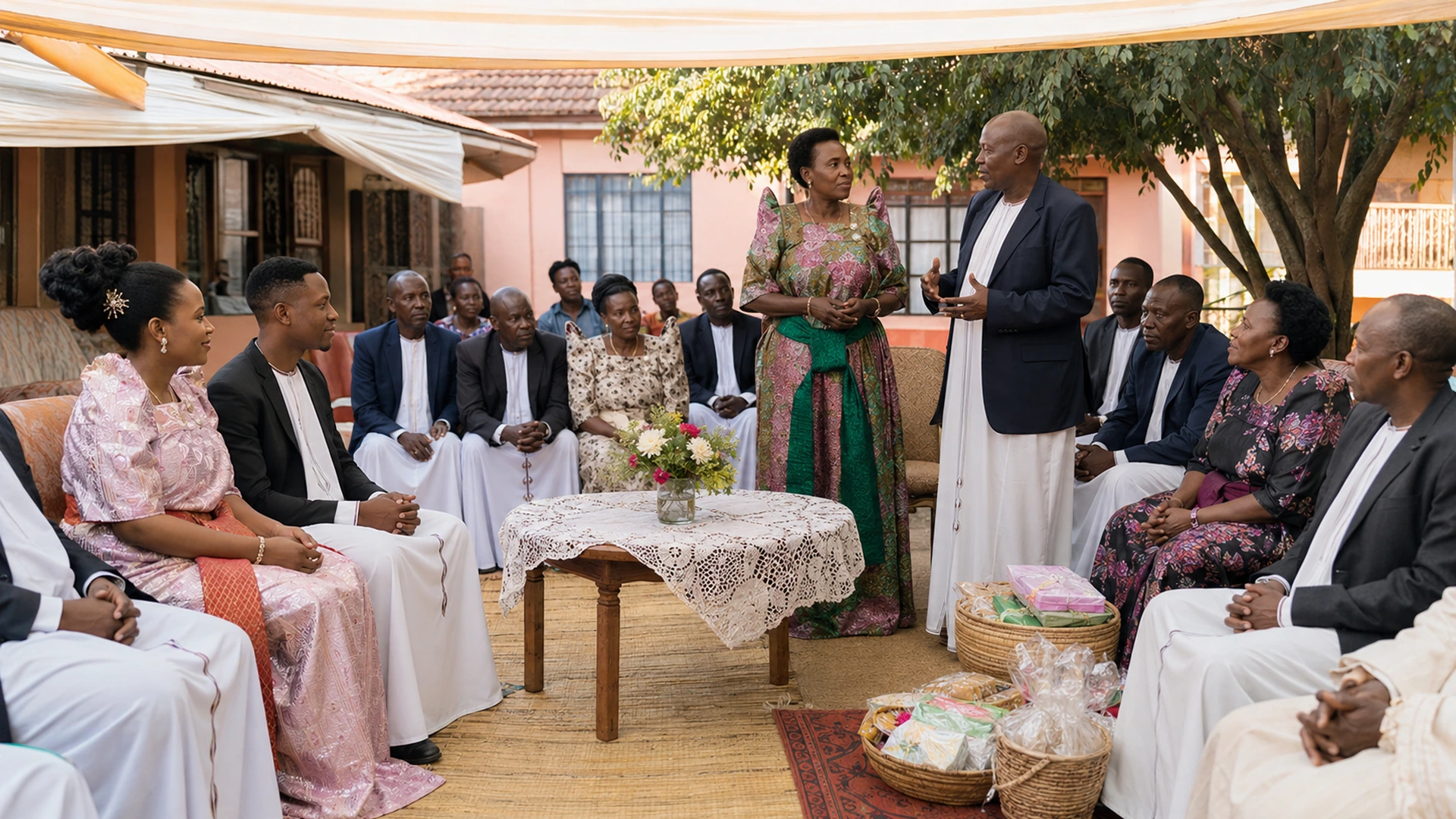
Marriage traditions also differ greatly. In Buganda, Kwanjula formally introduces the intending husband and his family to the woman's family and connects families and clans. Christian services place vows, rings, witness and blessing at the center. Jewish weddings use a ketubah as a marriage document. Many Muslim marriages include a nikah contract and a mahr owed to the bride. In some Hindu marriages, the seventh of the saptapadi steps completes the marriage within the applicable custom and law. None of these traditions should be treated as interchangeable.
Quick Answer
Commitment and marriage rituals are public or private practices that mark a couple's decision to accept lasting responsibilities toward each other. Common elements include free consent, family introduction, vows, contracts, rings or gifts, witnesses, prayer, blessing and a shared meal. Their meanings vary by culture, and a spiritual or customary ceremony does not automatically create legal marriage rights.
What Is a Commitment Ritual?
A commitment ritual is a deliberate action through which two people express that their relationship carries responsibilities beyond casual dating. It may be private, family-based, religious, customary, civil or a combination of several forms.
Examples include:
Exchanging promises about exclusivity, honesty or shared plans.
Introducing a partner formally to parents, elders, children or close friends.
Becoming engaged or betrothed.
Signing a relationship, marriage or property agreement.
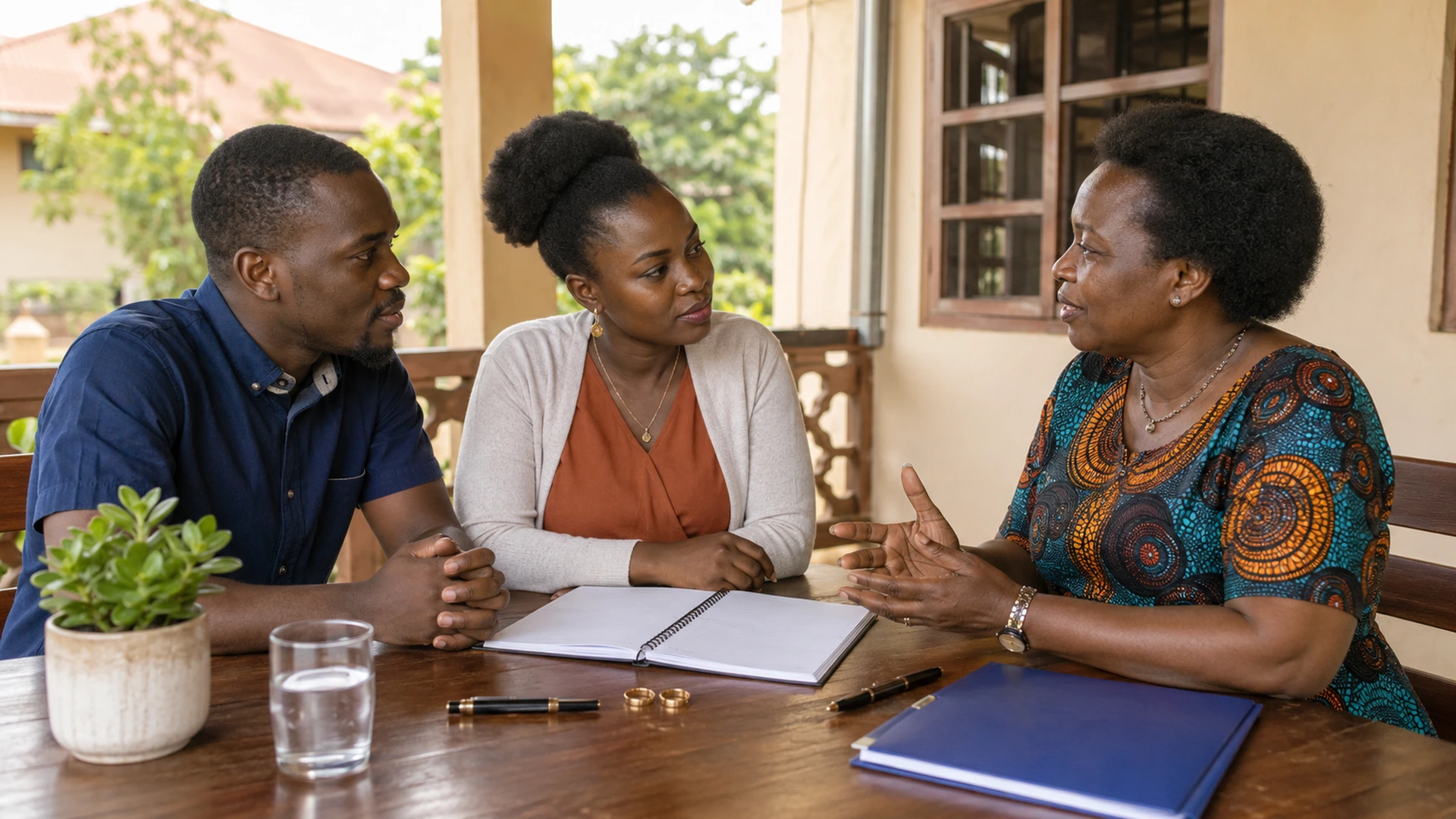
Receiving premarital counseling or instruction.
Exchanging rings or another mutually chosen symbol.
Praying or receiving a blessing.
Registering a civil or customary marriage.
Holding a meal where families recognize the union.
A commitment ritual can be meaningful even when it is not a wedding. However, the couple must describe it honestly. One partner should not call the ceremony “basically a marriage” while the other sees it as a temporary promise. Shared meaning is part of consent.
What Is a Marriage Ritual?
A marriage ritual is a ceremony or set of practices through which a community, faith tradition, family or state recognizes a marital union. In many societies, marriage is not a single moment but a process. It may begin with investigation of kinship, a proposal, family visits, negotiations, engagement, instruction and gift exchange before reaching vows, a contract, religious blessing, celebration and registration.
The words wedding and marriage are related but not identical. A wedding is the event or ceremony. Marriage is the continuing relationship and, where recognized by law, a legal status carrying rights and obligations. A beautiful wedding does not prove that the marriage will be safe or stable. A modest ceremony can begin a deeply responsible marriage.
The Five Foundations of a Responsible Marriage Ritual
1. Free and Full Consent
Both partners must be able to choose the marriage without threats, deception, intoxication, financial captivity or family punishment. Consent to dating is not consent to engagement, sex, marriage, pregnancy, relocation or financial control. It must remain active and freely given.
International human-rights standards recognize the right to choose a spouse and enter marriage only with free and full consent. Child marriage cannot meet that standard because a child is not equipped to make an adult lifelong decision on equal terms. [11][12]
2. Adult Readiness
Legal minimum ages and procedures vary by country, but a culturally respected ceremony should never be used to hide child marriage or forced union. Readiness includes more than age. Couples should understand the responsibilities they are accepting and have enough freedom to refuse or postpone the ceremony.
3. Honest Disclosure
Serious commitment requires honest conversation about previous marriages, children, debt, health, fertility expectations, faith, residence, work, caregiving, immigration plans and legal status. A ritual performed while one partner conceals an existing marriage, major debt or a second household is not strengthened by secrecy.
4. Clear Responsibilities
Vows and contracts define what the commitment asks of each person. These responsibilities may include care, fidelity, financial support, mutual respect, protection of children, shared decision-making and support during illness. Traditions describe these duties differently, and modern couples should discuss how they will be practiced in everyday life.
5. Recognition and Accountability
Witnesses do more than decorate photographs. They hear the promises, recognize the new relationship and may be expected to support or hold the couple accountable. Legal registration creates a public record that can affect property, inheritance, parental rights, benefits, immigration and separation.
How Marriage Rituals Usually Work
Although cultures vary, many marriage processes contain several recognizable movements.
| Ritual movement | Common purpose | Possible forms |
|---|---|---|
| Preparation | Determine readiness and remove obstacles | Counseling, family inquiry, kinship checks, legal documents, health discussions |
| Introduction | Bring the relationship into public family knowledge | Home visit, Kukyala, Kwanjula, engagement meal, meeting elders |
| Negotiation | Define obligations and exchanges | Bridewealth discussions, mahr, property agreement, guest and residence plans |
| Declaration | State consent and commitment | Vows, offer and acceptance, public “I will,” spoken promises |
| Exchange | Give a visible or material sign | Rings, gifts, contract, clothing, food, symbolic objects |
| Witness | Make the commitment socially recognizable | Family, congregation, elders, friends, civil officer |
| Blessing | Place the union within a spiritual or moral framework | Prayer, scripture, water, sacred fire, pastoral or elder blessing |
| Celebration | Welcome the new relationship | Feast, dance, procession, music, gifts, speeches |
| Integration | Begin life after the ceremony | Registration, moving home, family visits, first-week customs, ongoing support |
No table can capture every tradition. A single community may also change its practices over time because of urbanization, intermarriage, religion, law and economics.
Kwanjula in Buganda: Introducing Families and Clans
In Buganda, Kwanjula refers to the formal introduction of an intending husband and his people to the woman's family. The Luganda word relates to bringing something into the open or introducing it. A related form called Kwandhula is found among the Basoga. Research by Stephen Kaduuli describes the ceremony as an elaborate cultural engagement or marriage practice that joins not only two individuals but families and clans. [1]
The process commonly involves preparation before the main day. Depending on the family and current practice, a smaller visit called Kukyala may introduce the relationship to key relatives before Kwanjula. During the main ceremony, representatives and spokespeople help the families identify one another, communicate formally and manage symbolic questions, requests and gifts.
Kwanjula should not be described as a generic “African wedding.” It is rooted in Buganda's social structure, language, clan relationships and changing history. Other Ugandan communities have their own terms, rules and ceremonies.
What Kwanjula Expresses
At its best, Kwanjula makes several things visible:
The relationship is no longer hidden or casual.
Both families know the intended union.
Kinship and clan concerns have been considered.
The intending husband accepts a relationship with the woman's family, not only with the individual bride.
Gifts express respect, hospitality and capacity to participate in family life.
Elders and relatives become witnesses who may support the marriage.
The ritual has also changed. Urban weddings, large guest lists, hired décor, social media and competitive gift displays can shift attention from relationship-building to performance and debt. Cultural continuity does not require financially damaging extravagance. Families can preserve dignity, dialogue and recognition without treating the ceremony as a test of wealth.
Vows, Rings and Witnesses in Christian Marriage
In the Church of England marriage service, the couple makes declarations and vows before God, family and friends. The official vows describe a lifelong commitment through better and worse, wealth and poverty, sickness and health. Rings are given as signs of unending love, and the congregation is asked to support the marriage beyond the wedding day. [2][3]
This structure shows why the spoken promise matters more than decoration. The vows name a responsibility that continues when emotion changes. The ring is a reminder of the promise; it does not enforce the promise by itself.
Christian traditions differ in theology, wording, sacramental understanding and marriage law. Some churches permit personalized promises alongside required legal or liturgical vows. Others use prescribed texts. Couples should follow the rules of their own church rather than copying a ceremony from a different denomination without understanding it.
Jewish Marriage Contracts: The Ketubah
A ketubah is a Jewish marriage document. Historical examples record the names of the couple, date, place, witnesses and obligations, while artistic styles reflect the communities in which the documents were made. A nineteenth-century Iranian ketubah in the Metropolitan Museum of Art combines traditional structure with local visual design. Library of Congress collections similarly show decorated ketubot from different Jewish communities. [4]
The ketubah demonstrates that a marriage ritual may be both spiritual and legal within a religious system. The document is not merely a romantic certificate; it defines obligations. Modern Jewish communities differ in wording, interpretation and ceremony, so one historical ketubah should not be treated as a universal template.
Nikah, Consent and Mahr in Muslim Marriages
In many Muslim communities, marriage is formalized through a nikah, a marriage contract based on mutual agreement. A mahr is an obligatory gift or financial entitlement from the groom to the bride, belonging to her rather than to her family. The Qur'an instructs that women be given their marriage gifts and condemns inheriting women against their will. [6]
Islamic marriage practices vary across legal schools, countries and communities. Family celebration, witnesses, sermon, recitation, clothing and written registration may take different forms. Mahr should not be confused with payment to purchase a woman. Consent, dignity and the bride's own rights remain central ethical concerns.
Saptapadi in Hindu Marriage
Hindu marriage traditions vary by region, language, caste, family and religious school. In ceremonies that include saptapadi, the couple takes seven steps together before the sacred fire. Section 7 of India's Hindu Marriage Act states that where the applicable rites include saptapadi, the marriage becomes complete and binding when the seventh step is taken. [5]
The seven steps are often interpreted through shared hopes and responsibilities, but wording and ritual details vary. A couple from one Hindu community should not assume that a social-media list represents every Hindu marriage.
Tlemcen Bridal Rites in Algeria
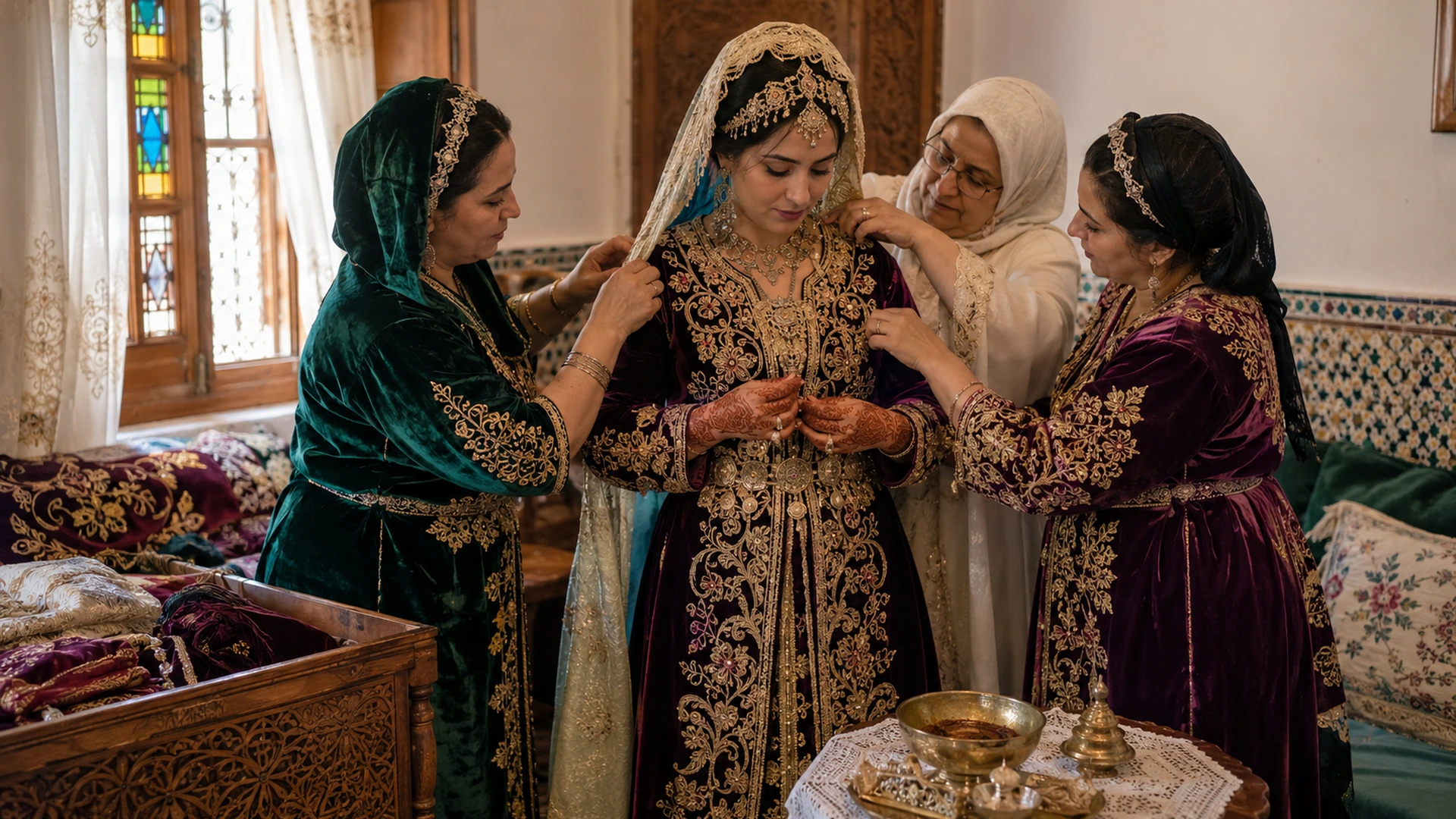
UNESCO documents the wedding costume tradition of Tlemcen in northwestern Algeria. The bride is dressed in a golden silk garment and embroidered caftan with the help of married female relatives. Henna, jewelry, veil and facial designs carry local meanings connected with protection, purification, family alliance and continuity between generations. The craftsmanship and knowledge are transmitted within the community. [7]
This example shows that clothing can be more than decoration. It can embody family memory, women's knowledge, craft labor and local identity. Outsiders should not extract the costume, henna or protective meanings and market them as a generic “North African marriage spell.”
Xeedho in Djibouti: A First-Week Marriage Gift
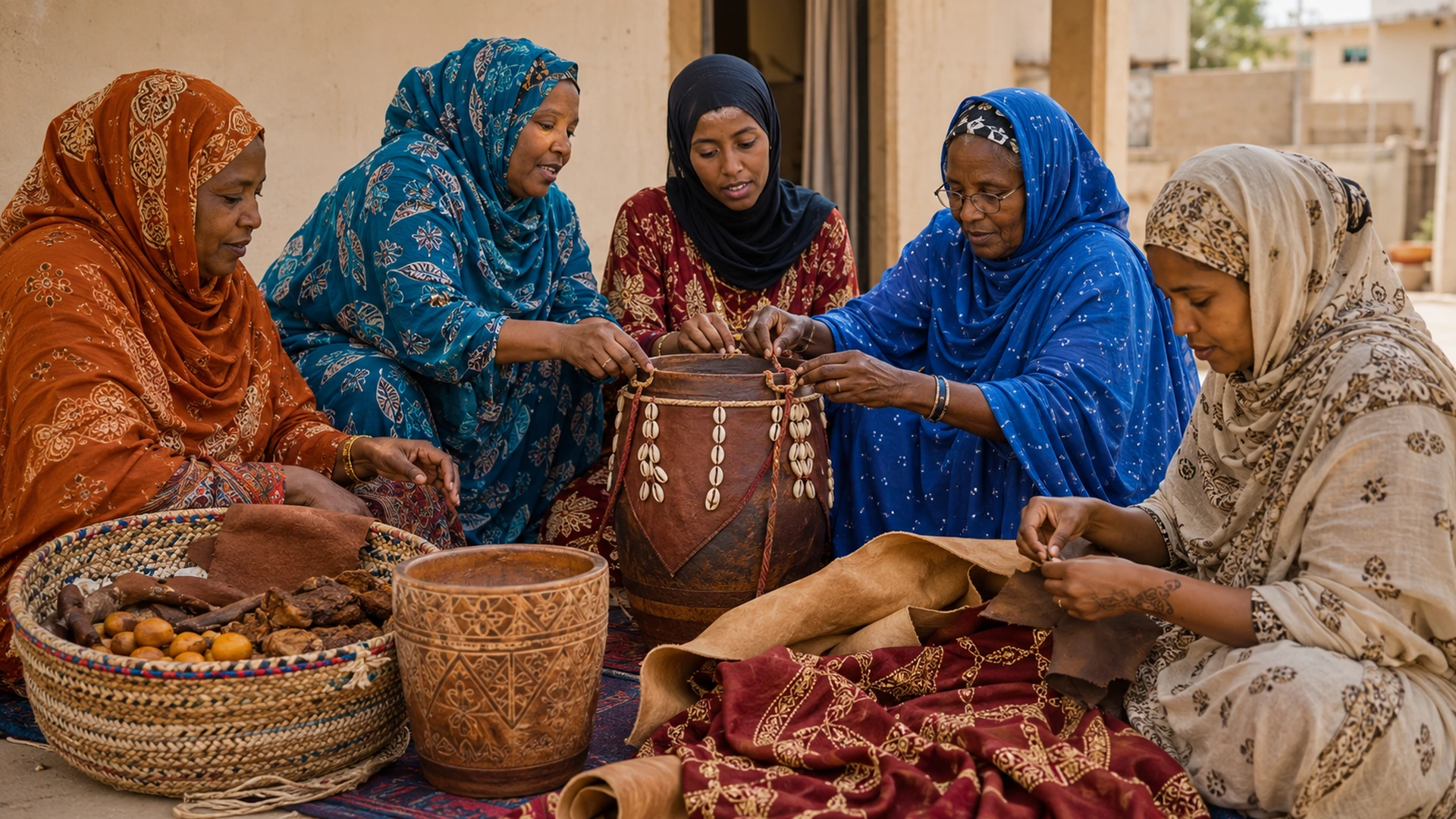
UNESCO describes Xeedho as a wedding tradition among Somali communities in Djibouti. A bride's mother and female relatives prepare a decorated container holding preserved pieces of dromedary meat. It is presented to the son-in-law during the first week of the marriage and accompanied by riddles, poetry and other gifts. The practice strengthens social ties and represents a commitment involving the bride's family. [8]
Xeedho reminds us that marriage rituals continue after the main wedding day. Welcoming a new relative, feeding the couple and maintaining respectful ties can be part of the marriage process. The particular container, food, wrapping and knowledge belong to the bearer community and should not be reproduced as a generic “commitment gift.”
Bridewealth, Lobola and the Ethics of Marriage Gifts
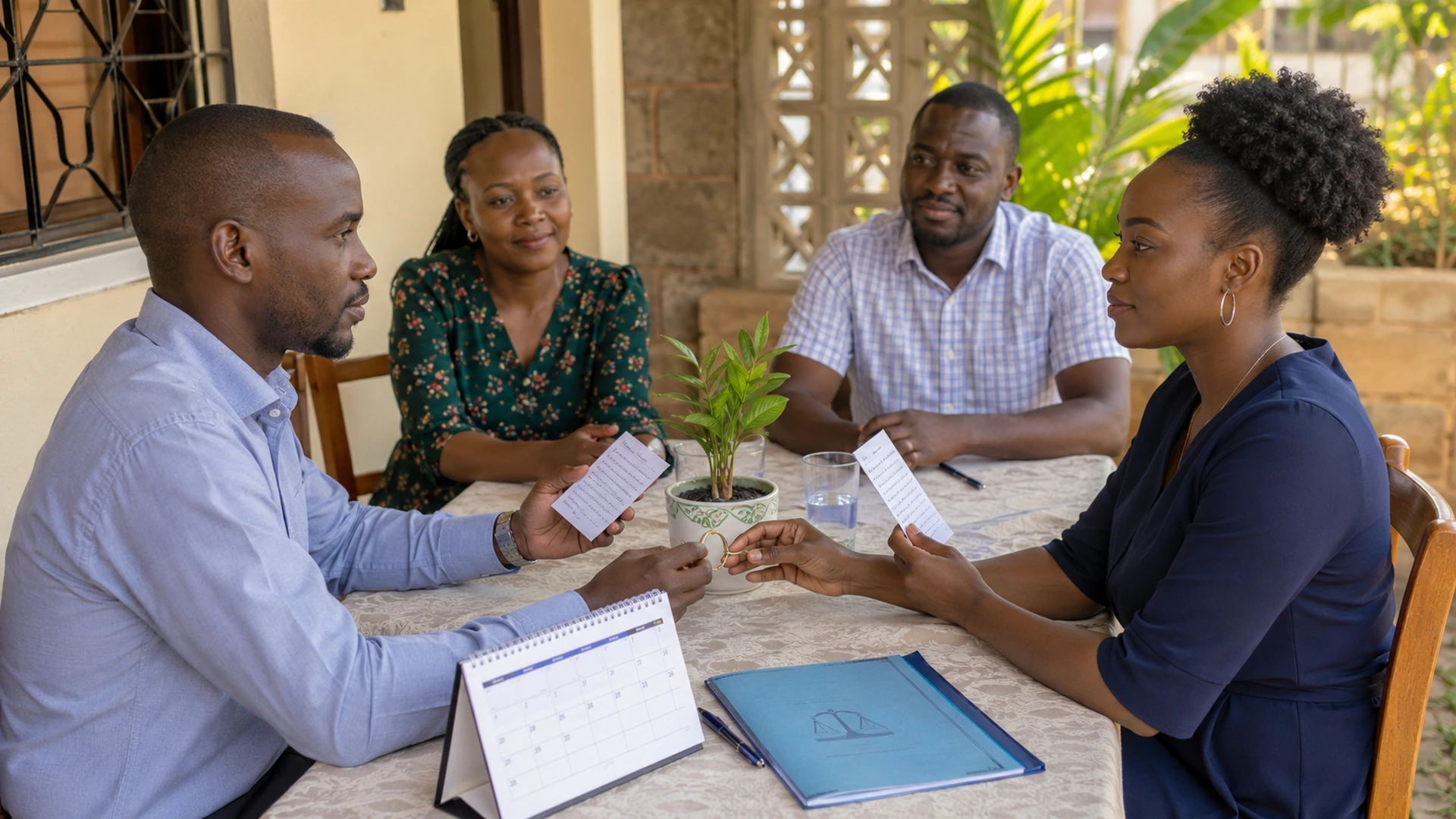
Marriage exchanges can include cattle, money, cloth, jewelry, food, labor or symbolic gifts. Their meanings differ. They may express appreciation, establish relationships, recognize obligations or help organize a new household. They can also become harmful when families treat a person as property, demand unaffordable payments or claim that an exchange removes the spouse's right to leave an abusive relationship.
In South Africa, customary marriage law requires adult age, consent and a marriage negotiated and entered into according to the relevant customary law. Government guidance states that lobola is not itself necessary for the validity of a customary marriage, although payment may provide evidence that negotiations occurred. The law recognizes equal status and capacity of spouses. [9][10]
This legal example matters because “tradition” is not a license for coercion. Bridewealth must never be interpreted as ownership. No family payment cancels a person's bodily autonomy, property rights, right to safety or freedom to seek divorce under the applicable law.
Questions Families Should Ask About Gifts
Is the gift voluntary and affordable?
Does the couple understand its meaning?
Is the exchange strengthening relationships or creating debt and humiliation?
Are women and men participating in decisions rather than being spoken for entirely?
Is anyone implying that payment purchases sexual access or permanent obedience?
Are legal registration and property arrangements being handled separately?
Spiritual Meaning of Marriage
Marriage may be understood spiritually as covenant, sacrament, sacred contract, household vocation, alliance, companionship or a path of moral responsibility. The meaning depends on the tradition.
Several themes recur without becoming universal definitions:
Mutual Promise
The couple gives words that can later guide behavior. A vow makes love accountable to action.
Witness
Marriage is often witnessed because the relationship affects families, children, property and community. Witnesses recognize that new responsibilities exist.
Blessing
Prayer or blessing places the union within a faith's understanding of God, ancestors, moral order or communal well-being. A blessing does not remove the need for consent and safety.
Shared Household
Many rituals mark the creation or recognition of a household. Food, keys, clothing, vessels and home-entry customs express the practical side of partnership.
Continuity
Marriage can connect generations through names, stories, craft, kinship and care. Continuity should not be used to pressure couples to have children or remain in danger.
The Meaning of Common Marriage Symbols
| Symbol or action | Possible meaning | Important caution |
|---|---|---|
| Rings | Continuity, visible commitment, shared status | A ring cannot enforce fidelity or consent |
| Vows | Spoken responsibilities and promises | Vague promises should be discussed before the ceremony |
| Contract | Rights, duties, property or religious obligations | Legal effect depends on jurisdiction and correct procedure |
| Water | Purification, blessing, transition or new life | Meanings differ; it is not medical cleansing |
| Sacred fire or lamp | Witness, guidance, divine presence or continuity | Open flame requires safety and belongs to specific traditions |
| Clothing and veil | New status, family identity, modesty, protection or craft heritage | Do not copy restricted or culturally specific attire casually |
| Gifts or bridewealth | Appreciation, alliance, provision or social obligation | Never treat a person as purchased property |
| Shared food | Hospitality, unity and integration of families | Food rules and symbolism vary |
| Steps or procession | Movement into a new status | Do not invent “ancient” meanings for every number or direction |
| Family witness | Recognition, support and accountability | Family involvement must not become coercive control |
Does a Spiritual or Customary Ceremony Make a Marriage Legal?
Not necessarily. Legal recognition depends on the country, type of marriage, authorized officiant, documents, witnesses and registration rules. A church, mosque, temple, customary or private ceremony may be spiritually meaningful while failing to create some or all civil rights if legal requirements are not met.
In Uganda, the marriage-registration function was officially transferred from the Uganda Registration Services Bureau to the National Identification and Registration Authority in April 2025. Couples should verify the current procedure with NIRA or a qualified legal professional because requirements differ for civil, customary, Muslim, Hindu and church marriages. [13]
A couple should confirm:
Whether the person conducting the ceremony is legally authorized.
Which documents and witnesses are required.
Whether a customary marriage certificate or return must be filed.
How property ownership will be treated.
Whether previous marriages were legally dissolved.
What rights arise for inheritance, children, benefits and immigration.
How the marriage can legally be ended if necessary.
A private commitment ceremony is not dishonest when both partners clearly understand that it is symbolic. It becomes risky when one partner is led to believe that legal marriage rights exist when they do not.
A Respectful Commitment Ceremony for a Serious Couple
Couples may want a simple ritual before engagement, before marriage or when a legal wedding is not currently planned. The following practice does not imitate a named cultural or religious ceremony. It is based on mutual consent and practical promises.
Step 1: Define the Status Honestly
Complete this sentence together:
> After this ceremony, we will describe our relationship as __________.
Possible answers include exclusive partners, engaged, committed life partners or married under a specific law and ceremony. Do not use a title that one partner has not accepted.
Step 2: Discuss Non-Negotiable Questions
Before selecting music or clothing, discuss money, faith, children, fidelity, residence, careers, caregiving, sex, health, conflict, family boundaries and legal plans. Postpone the ritual if major answers are hidden or incompatible.
Step 3: Choose Witnesses
Invite one or two people who respect both partners and will not use the ceremony to pressure them. Witnesses should understand whether the commitment is spiritual, private, engaged, customary or legally marital.
Step 4: Write Mutual Promises
Each partner should write promises that describe their own behavior rather than control the other person. For example:
I will speak honestly about money and debt.
I will not use threats, silence or humiliation to control conflict.
I will respect your consent and bodily autonomy.
I will protect time for our relationship and shared responsibilities.
I will seek help when a problem is beyond what we can manage alone.
Avoid promises such as “You will never leave me” or “You must obey me.”
Step 5: Exchange a Simple Symbol
Use rings, a written copy of the promises, a plant, a household key or another object that belongs to your own life. The symbol should remind the couple of the commitment, not claim magical power.
Step 6: Speak the Promises
Each partner asks and answers a direct consent question:
> Do you freely choose this commitment and the responsibilities we have discussed?
The answer must be unpressured. A pause, uncertainty or refusal ends the ceremony without punishment.
Step 7: Take One Practical Action
After the ceremony, schedule premarital counseling, open a transparent household budget, complete legal registration, update emergency contacts or plan the next family meeting. Ritual becomes durable through follow-through.
Step 8: Review the Commitment
Set a date three or six months later to discuss what has been practiced, what needs repair and whether both partners still consent to the planned next stage.
Questions to Discuss Before Marriage
A ritual should follow serious conversation, not replace it.
Values and Faith
Which beliefs guide your life?
Will either partner be expected to convert?
How will holidays, prayer and children's religious education be handled?
What role will clergy, elders or spiritual practitioners have in private decisions?
Money and Work
What income, debt and property does each person have?
Will accounts be separate, joint or mixed?
Who pays which expenses?
How will unpaid caregiving be valued?
What financial decisions require both partners' agreement?
Family and Boundaries
How much influence will parents and extended family have?
Where will the couple live?
What support is expected for relatives?
How will disrespect, intrusion or competing loyalties be handled?
Children and Care
Do both partners want children?
What happens if pregnancy is delayed or impossible?
How will parenting, schooling and discipline be approached?
Who will care for older relatives or dependents?
Conflict and Safety
How does each person behave when angry?
What conduct is unacceptable?
Can either partner safely disagree or say no?
Who can help when conflict becomes serious?
Is there any history of violence, stalking, coercion or addiction that requires professional support?
Legal and Practical Status
Which type of marriage will be registered?
Are previous marriages legally ended?
What property regime will apply?
Are wills, beneficiaries, citizenship or immigration issues involved?
What Marriage Rituals Cannot Do
A ritual cannot:
Force another person to propose or marry.
Guarantee fidelity or permanent love.
Make an abusive relationship safe.
Change someone's sexual orientation, beliefs or personality.
Create fertility or guarantee children.
Remove legal obligations from a previous marriage.
Replace registration where registration is required.
Resolve debt, incompatibility or untreated addiction by symbolism alone.
Transfer ownership of one spouse to the other.
Make consent permanent and irrevocable.
A ceremony may motivate people to honor their responsibilities, but the responsibility remains a choice made repeatedly.
Warning Signs of Coercive or Exploitative Rituals
Pause the ceremony and seek help when:
One partner is underage or unable to consent.
A family threatens violence, expulsion or shame if the person refuses.
A spiritual helper claims the couple must pay immediately or suffer death, infertility or madness.
One partner hides an existing marriage.
Bridewealth is described as proof that the spouse can be controlled.
A ritual requires sex, nudity, ingestion of unknown substances or isolation without informed consent.
The couple is told not to register the marriage or seek legal advice.
Domestic violence is reframed as a spiritual test that must be endured.
The ceremony is being used to obtain immigration, money or property through deception.
UN Women describes domestic violence as a pattern used to gain or maintain power and control over an intimate partner. Spiritual language does not make control acceptable. [15]
Cultural Respect and Interfaith Marriage
Interfaith and intercultural couples often want to honor both families. Respect requires more than combining attractive objects from two ceremonies.
Ask knowledgeable people what each practice means.
Identify which elements are public and which are restricted.
Do not make one partner's tradition decorative while the other controls the legal and spiritual meaning.
Explain the ceremony to guests without claiming that all members of a religion practice it identically.
Decide how future family life will handle faith, holidays, food, children and funerals.
Obtain consent from cultural custodians before using sacred clothing, texts or ritual roles.
Allow the couple to omit practices that conflict with safety, equality or conscience.
A respectful blended ceremony can include separate moments rather than forcing unrelated traditions into one fictional ritual.
People Also Ask
What is a commitment ritual in a relationship?
It is a structured action through which partners define their relationship and accept responsibilities. It may include spoken promises, rings, witnesses, a family introduction, counseling or a written agreement. It should be mutual and clearly distinguished from legal marriage when it has no legal effect.
What rituals happen before marriage?
Common preparations include family introductions, engagement, betrothal, counseling, kinship checks, financial discussion, gift negotiation, religious instruction and legal paperwork. Practices vary widely by culture and law.
Why are witnesses important in marriage?
Witnesses hear the couple's consent, recognize the new status and may support the marriage. In some religious or legal systems, particular witnesses are required for validity.
What does exchanging rings mean?
Rings commonly represent continuing commitment and visible marital status. The symbolism varies, and the ring itself cannot guarantee love or fidelity.
What is Kwanjula?
Kwanjula is a Buganda formal introduction and customary marriage process in which an intending husband and his family are introduced to the woman's family. It connects families and clans through structured communication, recognition and gifts.
Is bridewealth the same as buying a bride?
No responsible interpretation should treat a bride as purchased property. Bridewealth may express alliance, appreciation or obligation in a specific customary system, but it never cancels consent, autonomy or legal rights.
Can a couple be spiritually married but not legally married?
Yes. A religious, customary or private ceremony may have spiritual meaning without meeting civil-law requirements. Couples should verify registration and legal consequences in their jurisdiction.
Do marriage rituals make a relationship last?
No ritual guarantees durability. Ritual can clarify promises, strengthen memory and involve support, but a lasting relationship depends on behavior, safety, communication, compatibility and accountability.
Frequently Asked Questions
1. Can unmarried couples perform a commitment ritual?
Yes, provided both partners understand its meaning and do not misrepresent it as a legal marriage. The ceremony can mark exclusivity, engagement or shared plans.
2. Is a family introduction the same as a wedding?
Not always. In some customary systems, the introduction may form part of the marriage itself. In others, it precedes a separate religious or civil wedding. Local law and community practice matter.
3. Must parents approve an adult marriage?
Adults may value family blessing, but free and full consent belongs to the intending spouses. Legal rules vary, and family approval should not become coercion.
4. Can a marriage blessing repair a troubled relationship?
A blessing may support reflection and hope, but it cannot repair abuse, dishonesty or untreated addiction without concrete change and appropriate help.
5. Should couples combine traditions from both families?
They may, with understanding and permission. It is often better to include separate, clearly explained moments than to merge sacred practices inaccurately.
6. Is an expensive ceremony a stronger commitment?
No. Cost measures spending, not consent or responsibility. Debt and competition may weaken the couple's practical beginning.
7. Can a spiritual practitioner guarantee marriage?
No trustworthy practitioner can guarantee that another person will marry, remain faithful or surrender free will. Guaranteed outcomes and fear-based payment demands are warning signs.
8. What if one partner wants a ritual but not legal marriage?
Discuss the reasons and consequences openly. The other partner should not accept a symbolic ceremony under the false belief that it provides inheritance, property or spousal rights.
9. What if our families demand conflicting rituals?
The couple should identify non-negotiable beliefs, legal requirements and safety boundaries. A counselor, clergy member or respected mediator may help, but the couple's free consent remains essential.
10. Can vows be changed later?
Couples can review and add practical agreements as life changes. Legally or liturgically required vows may have fixed wording, while private commitments can be updated by mutual agreement.
11. Should we register a customary marriage?
Follow the current law in the country where the marriage is concluded. Registration often protects evidence of status and may affect property, inheritance and children.
12. What is the most important marriage ritual?
No single object or action is universally most important. The central elements are free consent, truthful promises, clear responsibilities, lawful recognition where desired and behavior that continues after the celebration.
Key Takeaways
Commitment rituals mark a relationship as serious, but they do not create commitment without ongoing behavior.
Marriage may involve family, religious, customary and civil stages rather than one event.
Kwanjula is a specific Buganda family-introduction and marriage tradition, not a generic African ceremony.
Vows, contracts, rings, gifts, clothing, food and witnesses carry meanings that vary by community.
Bridewealth or lobola must never be treated as ownership of a spouse.
Legal marriage rights depend on current law, authorized procedure and registration.
Free and full consent is more important than family pressure, cost or spiritual claims.
A private commitment ceremony should define the relationship honestly and include practical promises.
No ritual can force marriage, fidelity, fertility or reconciliation.
Cultural respect requires specificity, permission and refusal to blend unrelated traditions carelessly.
Conclusion: The Ceremony Begins the Responsibility
Commitment and marriage rituals give shape to a decision that affects more than one day. They make promises audible, bring families into relationship, create records, identify witnesses and place the couple within a moral, spiritual or legal framework. Their beauty comes from meaning, not from expense or spectacle.
A responsible ritual begins before the guests arrive. The couple must be able to say yes freely, discuss difficult realities, understand the obligations and know whether the marriage will be legally recognized. Family support can strengthen the union, but family authority must not erase the couple's consent. Gifts can express respect, but they do not purchase a person. Blessing can deepen hope, but it does not excuse harm.
The ceremony marks the threshold. Marriage is built afterward through the promises that are kept when nobody is watching: honest money decisions, care during illness, respectful conflict, protection of children, shared work, fidelity to agreed boundaries and willingness to seek help.
The strongest marriage ritual is therefore not a secret object or guaranteed spell. It is a truthful promise made freely, witnessed clearly and practiced repeatedly.
Final Summary
Commitment and marriage rituals include family introductions, vows, contracts, rings, gifts, blessings, meals and public witness. They vary by culture and religion and should never be blended into one universal tradition. A ceremony is meaningful when both partners freely consent, understand their obligations, clarify legal status and continue practicing the commitment through everyday responsibility.
Article Information
- Publisher
- Ancestral Temple
- Editor
- Ancestral Temple
- Last updated
- Jul 30, 2026
- Last reviewed
- Jul 30, 2026
- Content version
- 6f0e47c405
This educational article should be read as cultural and spiritual information, not as medical, legal, financial, or emergency advice.
Helpful Related Guidance
About the Author
 Ancestral Temple
Spiritual guide and practitioner with decades of experience in ancestral wisdom, rituals, and divine guidance.
Related Posts
View All






Comments
We'd love to hear your thoughts.